

Be vigilant, still, and pray this Advent, and we will be ready for Jesus’ coming.
As the earth turned again one more time on its axis last night, and the shadows began to fall, night slowly crept over each part of our planet. Our sacred text, our sacred word, is not only written in the Bible, but the finger of God has traced his word across all of the earth, the galaxy, the universe, the whole of the created order. For God continues to write his love song. The ground, foundation, and source of creation and our very being is the outpouring of the Trinitarian Love eternally and ongoingly expressed between God the Father, God the Son, and God the Holy Spirit.
As the sun appeared to set, and night gently made its way across our minuscule earth in this part of the Milky Way, the vigil began and so also the beginning of the new liturgical year and the season of Advent. We heard or will hear again today the words of Jesus to his disciples in today’s Gospel for the first Sunday of Advent: “Be vigilant at all times and pray that you have the strength to escape the tribulations that are imminent and to stand before the Son of Man” (Lk 21:36).
Advent comes from the latin, Adventus, which comes from the Greek, Parousia, and which we translate in English to mean coming. In our first reading, Jeremiah picks up on the prophecy of Isaiah in which “a shoot shall sprout from the stump of Jesse” (Isaiah 11:1) by stating that God “will raise up for David a just shoot” (Jeremiah 33:15). Both Isaiah and Jeremiah are pointing to the coming of the messiah. Faithful Jews would continue to watch and pray for the coming of the messiah to set the world aright.
Zedekiah was the king of Judah during the time of Jeremiah. He, as well as much of the leadership and chosen people of God would not listen to the guidance of the prophet and Jerusalem and the Temple fell at the hands of the Babylonians. From that time forward, from 587 BC, those exiled and even when they returned and rebuilt the Temple again, began the long, expected wait for the messiah. As Christians, we believe that Jesus, the Son of God and Son of Mary, is the promised messiah.
Our season of Advent not only is the opening of the new year, the new liturgical calendar. Advent is the season we wait, the season we prepare to remember the first coming of Jesus into the world as a baby.
The Gospel reading from Luke picks up on the momentum that we listened to during last week’s celebration of Christ the King. We also in Advent, prepare for the second coming of Jesus at the end of time. Jesus himself quotes from Daniel 7:13-14 by calling himself by a title he uses often, the “Son of Man” (Luke 21:27). This second coming will be different than his first coming. He will not come under the cover of darkness in the humble means of sleeping vulnerably in an animal’s trough in a cave wrapped in swaddling clothes. Jesus when he comes again to judge, will come “in a cloud with power and great glory” and when that time comes our “redemption” will be “at hand” (Luke 21:28).
During Advent then we are to prepare for celebrating again of the first coming of Jesus, while at the same time, we prepare for his second coming, the time or the hour only the Father knows. In the midst of these two, there is also a preparation for a third coming, which will help us to prepare better for Christmas and for our Lord’s second coming.
This Advent, this coming, is Jesus’ coming to us in the present moment. This is why the psalmist guides us to sing, “To you, O Lord, I lift my soul” (Psalm 25:1). Turning our hearts and minds, our very souls to God is one way we can watch and pray for Jesus who is already with us in each present moment, waiting for us to slow down, to breathe, to be still, so that we might hear his word and be aware of his presence at hand. In doing so, we recognize how close Jesus is to us. He reminds us who and whose we are, God’s beloved daughters and sons.
Advent is a season in which we are invited to slow down to receive, rest, and experience in the love that God wants to share with us. We are invited to resist the temptations of the stress and strain, the anxiety and angst that seek to divert and distract us. We will resist better when we allow ourselves to meditate upon the words and invitation of St. Paul: “May the Lord make you increase and abound in love” (1 Thessalonians 3:12).
As we make time to be still, to breathe and receive God’s love, his love in us will increase. Our experience of peace will replace the stress and anxiety that can arise because of our busyness and expectations. May we be vigilant and watch for the first signs of a snow ball of anxiety beginning to roll, stop, breathe, and turn to God. From a posture of watching and praying, may this season be one freer of the hustle and bustle going on all around us. Instead, may we rest with Jesus so to be the eye, the calm, in the midst of the storm.
This Advent, let us put into practice such spiritual exercises as breathing, praying, and being vigilant to root out any influences not of God and renounce them. Choosing to spend more time in God’s word, and focusing on the real meaning of why we are doing what we are doing – to grow in our relationship with Jesus, his Father, will help us to better experience the love of the Holy Spirit.
As we are vigilant at all times and pray, and increase our spiritual disciplines, we will grow in our spiritual strength, in our relationship with Jesus, and we will be better prepared to celebrate Christmas. We will more easily be able to surrender to his reign and help to support the coming of his kingdom, so to be ready when he comes again at the end of the age, or when our time on this earth comes to an end and we face our personal judgment.
We have been created by Love to love, to experience the closeness of Jesus. As gently as the night gave way to the morning rays of the sun this morning, may we live and move more gently upon this earth. May our thoughts, actions, and words be filled with kindness, compassion, understanding, thanksgiving, forgiveness, and love to overflowing in our relations with one another during this Advent.
————————————————————–
Photo: Advent sky back at St. Vincent de Paul Regional Seminary, Boynton Beach, a year ago September. If ever you feel a bit down this Advent, head outside and look up. God has something to share!
Link for the Mass readings for Sunday, December 1, 2024

Called to be still awhile and then to go out on mission.
He said to them, “Come after me, and I will make you fishers of men” (Mt 4:19).
Today’s Gospel account recalls Jesus’ call of Simon Peter, Andrew, James, and John. An interesting contextual point is that Jesus was the one doing the calling. Spiritual teachers were common during the time of Jesus within and without of Judaism. The most common practice was that the disciples sought out and came to the master. It was the rarer case that the master would search out and call his followers.
Another interesting point is that Jesus met the brothers in the midst of their everyday activities of fishing, in the midst of their work. The encounter with Jesus was not on some isolated mountain top, it was not at a revival, nor at the temple or synagogue. Jesus met them in the midst of Simon and Andrew casting their nets and James and John mending their father’s nets.
The third point from this short account is that Jesus immediately followed his invitation to Simon and Andrew with the insistence that they will be fishers of people. They are not entering their new apprenticeship with Jesus having any false notion that they will wait for others to come to them. They will travel out of their comfort zones. They were called to leave their current way of life, financial security, and to trust in Jesus as they learned about and shared the Good News that the kingdom of God is at hand.
The three points above apply directly to us as well. Jesus seeks us out and invites us to join him. Are we willing to receive this invitation and say yes as Simon, Andrew, James, and John had done. Jesus meets us in our everyday moments. He meets us in our workplaces, our interactions with family and friends, in our class and dorm rooms, as well as in our activities and leisure. He meets us in our conflicts, struggles, suffering, as well as our joys, successes, and moments of wonder. Jesus also encounters us during our unpreparedness for interruptions, in our times of prayer, and worship.
The very desire to pray does not actually begin with us. Noticing that we want to pray is our awareness of Jesus’ calling us. When we take the time to pray we slow down and become more aware of Jesus’ presence in our lives. We experience him and his love for us. Doing so, we are then more able to see him in the midst of our daily activities. The goal of taking time to step back and pray, to give us anchor moments in each day to spend quietly with Jesus, will help our times of activity to be an extension of our times of meditation and contemplation. Experiencing stillness and peace regularly will eventually carry into our daily engagements and encounters.
Jesus calls us to spend time with him and then sends us out to share what we have experienced and learned from our encounter with him. No matter how small. We will make mistakes, we will not be perfect, but as we put into practice his teachings, we will learn and grow as his disciples. Remember who he called? Peter, Andrew, James, and John. There are four Gospels full of accounts of their false starts, gaffes, and “Oops”. We grow and learn as they did, by doing. As we crawl, we will soon learn to walk, as we walk we will soon learn to run, and as we run, we will soon learn to fly!
Jesus calls us to participate in his life and to put his teachings into practice. This is the gift of transformation. We are not just a religion, a people of the book, we are a people of encounter. We encounter Jesus the Christ, the Son of the living God. Once we experience, breathe, receive, rest, and abide in his love, we are forever changed and want more. For to experience the love of God is our deepest longing, and what we have been created for. And just as we receive something wonderful in our lives, our first instinct is to share. That is what happened with the Apostles and what we are invited to experience as well.
St Andrew, pray for us!
Photo: Rosary walk: time with Jesus and Mary to be quiet, still, to wind down, and renew each evening so to be ready to serve again the next day.
Link for the Mass readings for Saturday, November 30, 2024

When we remember we will die, we will live better now.
“Heaven and earth will pass away, but my words will not pass away” (Lk 21:33).
All that exists and that we know will pass away eventually because all things are finite, they are limited and material. The readings of this week repeat the same theme that we are not to place our hope and trust ultimately in the things of this world. The longer we live, the more we will experience loss, even the death of those closest to us. I remember my maternal grandfather share with me when he was around ninety years old that most of the people he grew up with were no longer alive.
All that which is physical and finite will pass away, but the words of Jesus will not pass away. Jesus’ words are life. He is God, the second Person of the Holy Trinity. He is the Logos, the Word, the very reality of God. Hearing his word is not enough though. Once we hear his word, we are to then mediate and ponder his words, put his words into action and practice them in our lives. In doing so, Jesus becomes one with us in our humanity and we, one with him in his divinity. In God’s time, we will begin to bear fruit. We will become like the fig trees when their buds burst open.
Momento Mori is the Latin phrase that means, remember you will die. Accepting the reality of death and contemplating on our own deaths is not a morbid exercise when we enter this pondering with the end goal in mind that we will be one day be with God for all eternity. Also, those who contemplate their deaths more regularly live their lives more fully now. When we keep the our awareness of death available to us, we take our life and the lives of others for granted less because we come to see the fragile nature of our human condition. We also come to realize that we do not know the time or hour when others or we ourselves will die.
Contemplating our death from time to time, also helps us to determine who and what is important to us. Dr. Leo Buscaglia, a professor at USC, while he was still alive had assigned his students an invitation to imagine that they had one week to live. They were to come up with a list of what they would want to do for that week and with whom they would want to spend it with. After they turned in their assignments, Dr. Buscaglia then returned the papers and said, “Why not live this way now? Why do you have to wait until you are dying to start living your life more fully?”
Jesus invites us to resist the temptation to avoid uncomfortable situations as well as to resist clinging to wonderful experiences once they are gone. This healthy indifference helps us to experience the present gift of the moment where we will experience God and hear his guidance more clearly. Jesus helps us to live in this way because he lives in the eternal present. We are going to die someday, putting off until another day may be too late, so let us start living now.
Jesus, please help us to remember that we are going to die so that we may better appreciate and experience each moment. Help us to discern the path you would have us to walk, guide us through the challenges and trials that will arise, and to bloom where we have been planted. Help us to recognize that we will have less regrets when we listen to, meditate upon, and put the words of Jesus into practice, so that we may live now and experience your peace, joy, and love.
Photo: Sometimes knowing the time we have left can be a blessing. Enjoying our final two months together with JoAnn, July 4th weekend, 2019. Swan boat ride on Echo Lake in, LA.
Link for the Mass readings for Friday, November 29, 2024

May we be thankful for God, and those who have been and are still in our lives.
They stood at a distance from him and raised their voices, saying, “Jesus, Master! Have pity on us!” (Lk 17:12-13). They raised their voices and asked Jesus to have pity on them. Did the ten seeking a healing all call in unison. Did one shout out first and then each not wanting to be left out all joined in calling out? Then did their calling reach a fever pitch? Luke is not specific as to how they called out but that all of them did. Jesus then healed the their leprosy with his word, they began to praise God and may have walked away in even a more joyful raucous than their calling for their healing. Yet one, a Samaritan, after realizing he was healed, returned to thank Jesus.
It is a good practice to spend some time each day to reflect on what we are thankful for. To see where God has entered our lives and provided assistance. At times when we feel a bit down and out, or in a bit of a funk, often the reason may be that we are focusing, on what we do not have instead of on what we do have. There is a quote, I am not sure of the source, that goes: “I cried because I had no shoes, and then I came upon a man with no feet.” We can be so bombarded by the mass appeal to the material, that we forget the truly important realities of this life and the many blessings that we have been given.
Today is Thanksgiving Day, unless you are reading this the night before. Thanksgiving is a time of family coming together, which hopefully as joy filled as those lepers walking away realizing that they are healed. But with the promise of such gatherings, there is all the cleaning, setting up and the prep for the big dinner, the travel, the unresolved issues of life, and there are the wonderful gifts of diverse personalities and points of view. Making time to periodically stop and take a few breaths can make a big difference in how the day is played out. A moment of quiet may help us to be like the Samaritan leper who when realizing that he was healed, was thankful. Slowing down a bit, might just help us to appreciate each other a bit more and grumble a little less.
As Jesus reminds us, we do not know the time or the hour. Life is finite and fragile in the best case scenarios. We will not be here forever nor will those we love. November is a time in the Church when we remember those who have joined the communion of saints as well as those on the way. I know too many who have lost those close to them. And since becoming a priest, I have walked with eleven more who have journeyed from this life to the next. My prayer is that they and JoAnn are now home with God. May each of us remember those who have gone before us and be thankful for the time that we have had together, while at the same time, may we appreciate those still in our lives.
My thoughts and prayers are with you who are reading these words this day. May we allow the warm embracing arms of our loving God and Father to embrace us in a moment or two of silence. In these quiet moments, may we remember that we are never alone and that God cares for each and every one of us and our loved ones here with us, and now preparing for us in the next life to come.
Jesus, please help us to remember that life is a precious gift that you have given us, and may we appreciate every moment. Help us to be thankful for our lives and the lives of those near and far that we are blessed to call family and friends. May we also remember and pray that the Holy Spirit may provide comfort and aid for those who may be alone, struggling, or without family, food and/or a home this day.
———————————————————————————————-
Photo: Was not aware that this would be our last Thanksgiving together. A reminder to not take the time we have together for granted. Happy Thanksgiving!!!
Link for the Mass readings for Thursday, November 28, 2024

When we know God and rest in his love, we can experience his peace even in times of conflict.
Jesus said to the crowd: “They will seize and persecute you, they will hand you over to the synagogues and to prisons, and they will have you led before kings and governors because of my name” (Lk 21:12).
Each of the predictions above; being seized, persecuted, handed over, and led before the rulers happened to Jesus’ disciples as was recorded by Luke in his second volume, the Acts of the Apostles. Jesus did not nor does he hide or paint a rosy picture of discipleship. He consistently shared and modeled in his own life how demanding it will be to follow his lead, the will of his Father, the demands of discipleship, as well as the reality of having to endure persecutions. This continues to be true today. In fact, the number of Christian martyrs in the twentieth century rose to a higher level than at any other time in history combined.
Since the first days of Jesus’ public ministry, there have been those who have said yes to the invitation to be his disciple and this has continued generation after generation up to an including today. Each of us has to make our own commitment to Christ. It is a personal invitation and a personal response. Though the demands, the sacrifices, and the expectations are high, Jesus is present with us through the journey. St. Paul equated discipleship with running a race: “Every athlete exercises discipline in every way. They do it to win a perishable crown, but we an imperishable one” (I Cor 9:25).
Any athlete, musician, artist, or person engaged in any serious endeavor, must discipline themselves to accomplish their goal of freedom for mastery, for excellence. A lack of concerted discipline will not lead to the fluency and the freedom for the sought after goal. The same is true with discipleship.
The discipline required that Jesus presents in today’s Gospel of Luke is to remain firm in authentically living out our faith even in the face of pushback, persecution, and hostility. This pressure may not just come from those who would seek us harm, but from family, friends, and/or peers. This is where the issue of putting God first comes to bear. We are not to be belligerent, get in someone’s face, or shut down dialogue about what we believe but meet others with love, mercy, and respect. Nor ought we back down from what we believe.
It is important to share, listen, respect and allow another the opportunity to do the same. From a place of mutual respect and honoring each other within and without of our own faith traditions, as well as those having none, we grow. People are free to decide as they wish. Sometimes people will react emotionally, rudely, crudely, or even violently. Yet that is not an excuse nor does it provide the green light for us to respond in kind. If we do, then we will often feed into and justify another person’s preconceived notions.
Archbishop Fulton Sheen said: “There are not one hundred people in the United States who hate the Catholic Church, but there are millions who hate what they wrongly perceive the Catholic Church to be.” As disciples of Jesus Christ, it is important that we know our faith, can explain what we believe, live it out authentically, clarify as needed through respectful dialogue, and above all to be icons of hope and love. We need not be afraid. The Holy Spirit will give us the words to speak as well as the ears to hear. The gift of respectful dialogue will result in the deepening of our relationship with the one who has made us for himself and one another. For where there is the truth, there is God who is Truth.
Photo: Making friends with silence, helps us to listen better to God and one another. We will also then know better when and what God wants us to speak.
Link for the Mass readings for Wednesday, November 27, 2024
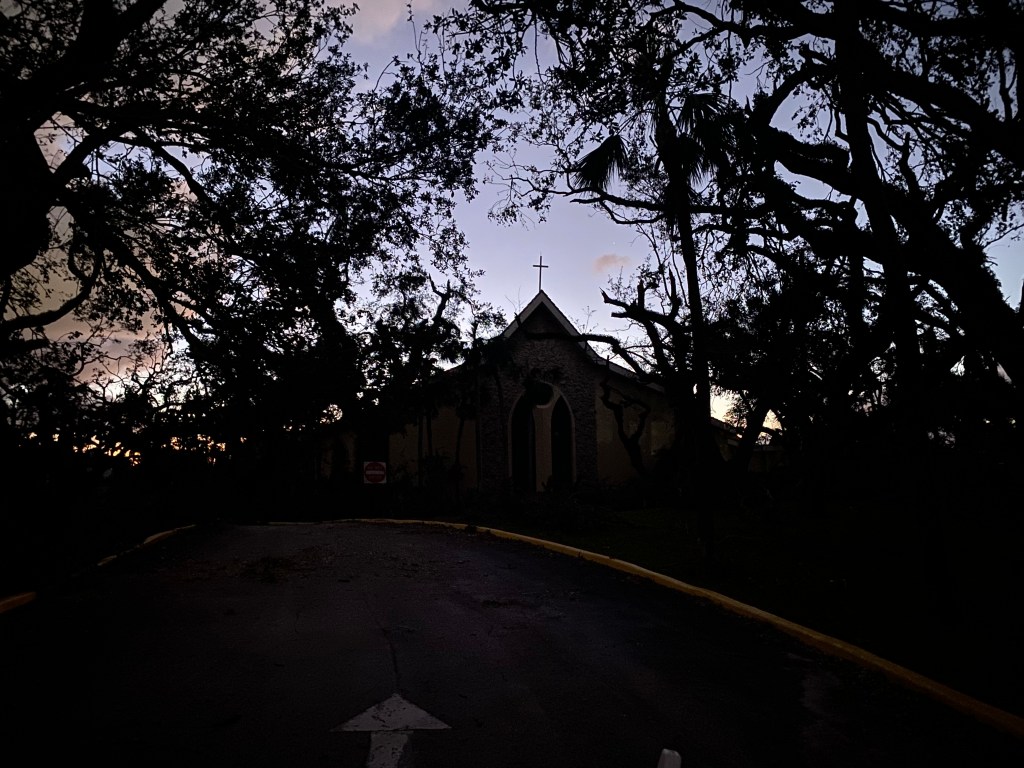
The end? Better to trust in Jesus and live well the days we have been given.
While some people were speaking about how the temple was adorned with costly stones and votive offerings, Jesus said, “All that you see here– the days will come when there will not be left a stone upon another stone that will not be thrown down” (Lk 21:5-6).
As we read yesterday, Jesus observed the widow donating her two coins. Today Jesus observes those who are commenting about the wonders of Herod’s temple. Jesus responds by sharing, as did Jeremiah, that the temple will fall, and not a stone upon another stone will be left. The reality of this statement would come to pass in 70 AD when the Romans destroyed the temple and crushed the Jewish rebellion during the Jewish War from 66-70 AD. The only significant remnant of the temple still to this day is the western retaining wall, also known as the Wailing Wall.
The people of the ancient Near East certainly witnessed and passed on tales of the rise and fall of mighty kingdoms beginning with Egypt’s impressive reign from about 3,000 to 721 BC, followed by Assyria who then gave way to Babylon. The Babylonian army would destroy Solomon’s temple as predicted by the prophet Jeremiah. The Persians would then overtake the Babylonians and push west only to be repelled by the unification of the Greek city-states under the Macedonian Philip and then his son Alexander the Great who would continue south and east all the way to India. The massive Greek empire would then give way to Rome. Rome would then fall in 476 AD.
As each empire fell, and especially during the fall of Rome, there was a great concern that the end of the world drew nigh. Throughout the ages up until the present day, nation has continued to “rise against nation, and kingdom against kingdom…” and the world has experienced “powerful earthquakes, famines, and plagues from place to place” (Lk 21:10-11). Each made their historical impressions on those who lived through them. There has also been a plethora of end of the world predictions from the ancients up to the more well known modern prognosticators such as Jeane Dixon, Pat Robertson, a handful of predictors around 2000, and most recently Harold Camping who caught a lot of attention with his prediction of the end of the world that was to have happened on October 21, 2011.
As of this typing, we are still here. The Gospels of Mark and Matthew record Jesus addressing the same concern of those questioning him: “But of that day or that hour no one knows, not even the angels in heaven, nor the Son, but only the Father” (see Mark 13:32 and Matthew 24:36, RSV translation). In Luke’s presentation from today’s Gospel, he moves further away from Mark and Matthew’s eschatological or end of times talk and spoke more toward the destruction of the temple.
We have a few more days of Luke and Ordinary Time to go before the end of the liturgical year. Kingdoms have and will continue to rise and fall (hopefully not in these next few days). Abuse of power continues worldwide. Storms and fires rampage. So many are displaced from war, terrorism, violence and too little are reaching out to provide compassion and support. Too many are enamored by our technological ingenuity and advancements, as were those who were admiring the adornment of Herod’s temple. Are we in the final days? Only the Father knows.
Yet, we are not to be anxious about tomorrow as Pope Francis encouraged those in his homily when he spoke at Tokyo Stadium in Japan a few years ago. We are to seek first the kingdom of God and “to re-evaluate our daily decisions and not to become trapped or isolated in the pursuit of success at any cost… [that] leave us profoundly unhappy and enslaved, and hinder the authentic development of a truly harmonious and humane society”.
We need to place our hope and trust in Jesus, the Son who knows the Father. He will help us to embrace the wonder and the marvelous gift of all life; human as well as all of God’s creation. Our investments ought to be in relationships not in anxiety and worry. We are called to encounter, accompany, and support each person in the realm of our influence, while at the same time strive to be better stewards of God’s creation. In this way, we can make decisions, not just for what we can get now, but ones that will positively impact the next seven generations.
Photo: Sun setting on Holy Cross and Ordinary Time.
Link for the Mass readings for Tuesday, November 26, 2024
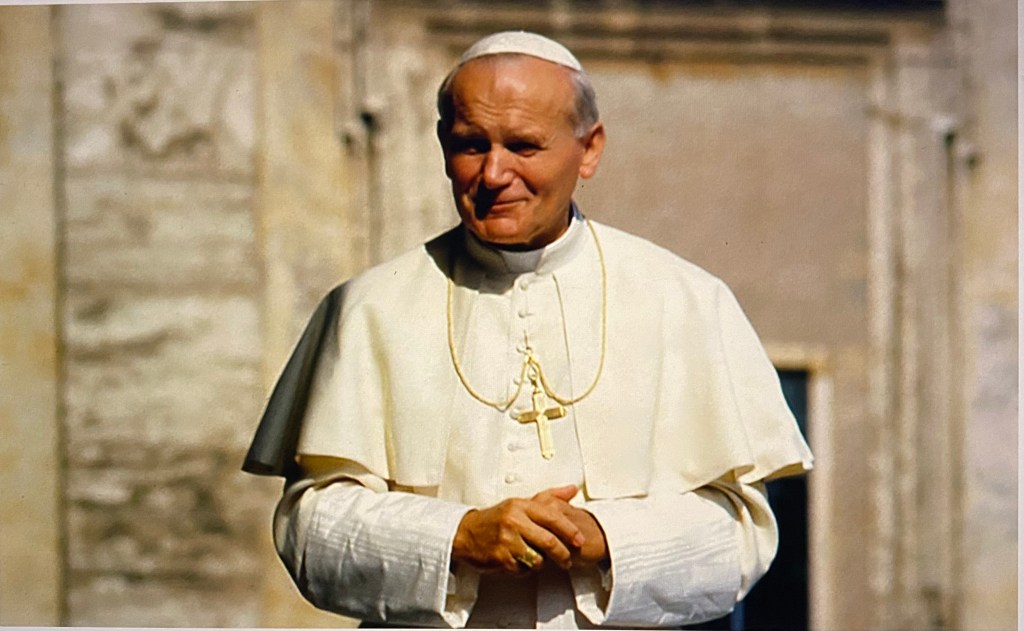
144,000 + 2 = faith + trust
Our readings today hold up those who are faithful to God and his the covenant he has made with them. They have resisted the temptations of the world and given all to follow Christ, the Lamb who was slain. The Lamb, who though slain, rose again and as we celebrated yesterday is the King of kings and the Lord of lords.
The 144,000 from our first reading from Revelation represent those who were “undefiled” from worshipping idols. The worship of any other gods, or the the beast as shared in the Book of Revelation, was considered to be adultery. Those numbered were faithful to the covenant they had made with Jesus. Throughout Revelation, John equated a covenant between God and his people. The imagery he uses is the Church as the bride of the Lamb.
In the Gospel of Luke, we return to the widow we read about recently. She came to the Temple in Jerusalem as others came to share their offerings. These offerings were placed in the Shofar-chests in the Temple. Scholars recognize that there were thirteen chests in the Temple and each one for a specific offering that ranged from annual dues, sacrificial offerings, and freewill offerings.
As Jesus pointed out, most of those who were giving, gave out of their excess, but this widow, who most likely had no support as her husband had died, gave all that she had in giving her last two coins. What she gave an offering too we do not know, but she showed a radical trust in God. She did not even hold back one of the coins. She instead gave all.
The widow, like the 144,000, represent those who have trusted in and been faithful to God throughout the ages. They followed the commandment of Jesus to love God with their whole heart, mind, soul, and strength and their neighbor as themselves. They resisted the temptations that could have lead them astray and instead placed all their trust and faith in God.
There are many distractions and diversions that can lead us astray, temptations from without and within. Jesus remains faithful to us and the covenant that he made with us. We, as his bride, are invited to remain faithful to and trust in him. May those who have gone before us, the triumphant saints who now reign with Jesus the Lamb, who is seated at the right hand of the Father, intercede for, guide, and empower us in our lives to trust and be faithful as they were. May we be willing to be led by the tender chords of the love of the Holy Spirit into a deeper communion with God and one another.
Photo: “God, our supreme good, is the source of all good things. I hope that you will all be ‘good’, that is, faithful witnesses to the love of our heavenly Father who fills us with so many gifts” – St. John Paul II, Audience, February 5, 1997.
Link for the Mass readings for Monday, November 25, 2024

Lord of lords and King of Kings!
Today is the last Sunday in Ordinary Time. Next Sunday we will begin the new liturgical year in the Church calendar as we begin Advent. In today’s Gospel from John, Jesus faces the Roman procurator, Pontius Pilate:
“So Pilate said to him, “Then you are a king?” Jesus answered, “You say I am a king. For this I was born and for this I came into the world, to testify to the truth. Everyone who belongs to the truth listens to my voice” (Jn 18:37).
Jesus was brought before Pilate because the Jewish leadership believed that he was a blasphemer. He spoke and acted as if he were God. They knew that Pilate would not care about their religious concerns, so they sought to present a case of treason, stating that Jesus said that he was a king and setting him up to be a competitor to Caesar. The charge they brought before Pilate was the accusation of treason.
For his time and ours, this means that Jesus was either a liar in that he was knowingly misleading those who followed him. He was a lunatic in that he believed he was who said was while not being so. Or he is the Lord of lords, because he is who he says he is and who now Pilate says he is, a king.
Yes, Jesus is king, and not just any king in the way of other kings who have gone before him or followed after. As Jesus said, “My kingdom does not belong to this world” (Jn 18:36). The Son of God came among us to re-orient and to re-align the worldly order. Leadership is to not to be about the aggrandizement of self nor to be sovereign at the expense of others. God was very aware of the suffering of his people. He sent Moses to free his people from slavery from Egypt and he sent his Son to free all humanity from our slavery to sin.
As we end the liturgical year it is fitting that we remember Jesus is the “King of kings and the Lord of lords.” He is our hope, the One in whom we are to place all our trust, the One who is Lord over all kingdoms, all nations, all of the cosmos, and all of creation! We would do well to ponder this truth and reality because, if this is true, we have a choice to make.
Who do we choose to serve, who is our lord? Will it be Pharaoh or Moses, Pilate or Jesus, our self or God, life or death. It may appear that death has the final answer, is the ultimate power, for all dies, and nothing will remain. Jesus entered into and conquered death and in so doing became the first born of the new creation and invites us to be a part of his eternal kingdom.
If we seek to be free from the shackles of our slavery to sin, the choice is clear that we are to listen to the voice of the Way, the Truth, and the Life, Jesus the Christ, the Son of the living God, the King of the Universe. We are to serve, Christ the King, and be his subjects. We may bristle at the idea, but we do so as a reaction to the oppressive regimes of the world. Jesus as Lord of lords himself submits to and serves the Father and he leads not for his own self aggrandizement. He fights for the salvation of all of our souls. He fights to win our freedom from anything that would bind us, turn us away from our relationship with him, and to lead us back to the truth of who we are and who we have been created to be.
On this solemnity of Christ the King, let us allow Jesus to re-orient and re-align the order of our lives so that we may help him to promote his kingdom here on earth as it is in heaven. Jesus gives us not only the blueprint on how to be his collaborators with him, he empowers us to accomplish that which he guides us to do. Following Jesus is not about our worthiness, for we all fall short of the glory of God. Following Jesus is about our willingness to answer his call. Jesus came into the world to testify to the truth. Let us listen to his voice and follow him!
——————————————————————-
Photo: Miss this view of Christ the King while celebrating Mass here at Holy Cross.
Link for the Mass readings for Sunday, November 24, 2024

 Spiritual Stepping Stones