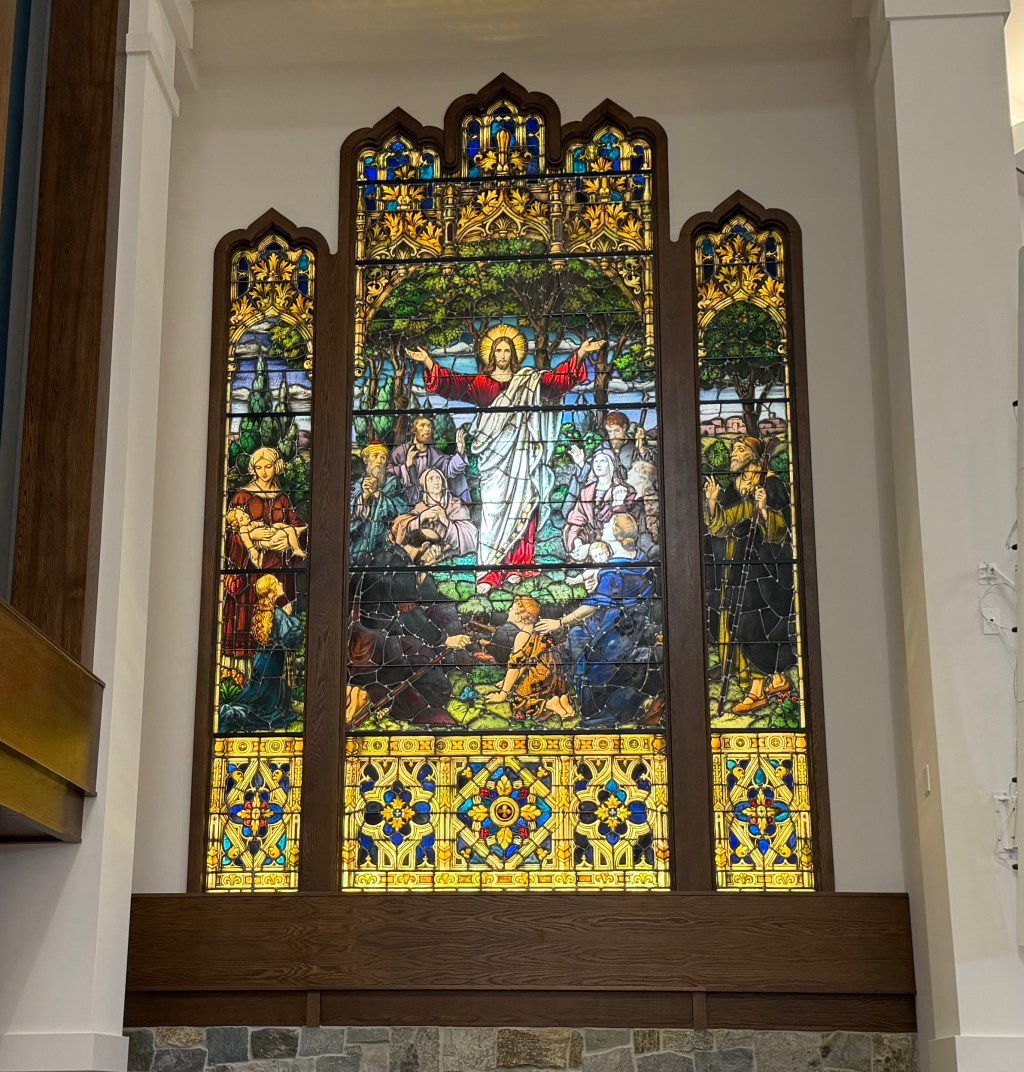
Jesus the Christ, the Son of God, will make all things new.

Hospitality was a key virtue for people of the ancient Near East. Martha approached Jesus as he was teaching looking for support from her sister Mary in preparing the meal. Mary was sitting at Jesus’ feet with the male disciples gathered around him while Martha appeared do be doing all the work. Martha was hoping that Jesus would support her in her request. Jesus not only did not, but said that Mary had chosen the better part and that Martha was “anxious and worried about many things” (cf. Luke 10:38-42).

We don’t know how Martha reacted to Jesus. A subtle key in today’s Gospel account from John may shed light on their last encounter and Martha’s reaction. Martha’s boldness was on display again. As soon as she was aware that Jesus was coming near, she did not wait for him to arrive but “went to meet him” (Jn 11:20). Martha’s brother, Lazarus, had now been dead for four days and Jesus, who had the time to arrive before his death, was not present to help his friend, her brother, Lazarus in his time of need.

How many times have we been in Martha’s position? Feel that Jesus was not there when we needed him most? Why do bad things happen to good people? Part of the answer is that we live in a fallen world of sin and self-centeredness. God does not bring about suffering but he does allow it. God loves us so much that he is willing to give us the free will to reject him. The cost of our freedom to choose means that there are consequences to our choices which can be detrimental or beneficial. We are all interconnected so when we choose to act on our own apart from God’s guidance and the welfare of others, the damage that ensues affects not only those around us but everyone. On the other side of the coin, there is the presence of grace, forgiveness, and love when we choose to draw close to God, especially in challenging times.

When we choose God, we will find out that we are not alone in our suffering, especially, when we do as Martha did and go out to meet Jesus. She most likely did not holding back any of the full range of her hurt and pain. Martha’s words expressed her anguish, “Lord, if you had been here, my brother would not have died” (Jn 11:21). We can only see from our limited point of view, especially with our own experiences of grief. Yet God sees far beyond our finite perspectives and Jesus helps to not only bring about a greater good, though it may take time to come to understand and experience, he accompanies us in each agonizing breath of our suffering.

Jesus came too late to heal his friend, which Martha and Mary could not understand. What he came to do, was beyond their wildest imaginings. Jesus came to restore Lazarus to life, which would also be a foreshadowing of his own Resurrection. The difference being that Jesus would not merely be resuscitated as Lazarus was and die again.

Martha was not holding a grudge from their last exchange. She came directly to him. She knew he could have healed her brother if he had been there, but did not say so accusingly. Martha immediately followed instead with: “But even now I know that whatever you ask of God, God will give you” (John 11:22). Then even before Jesus called Lazarus back to life, Martha showed her faith. Jesus asked if Martha believed. Martha, as did Peter, made the affirmation of our faith: “Yes, Lord. I have come to believe that you are the Messiah, the Son of God” (John 11:27).

We have been blessed by the witnesses of Martha, Mary, and Lazarus. Each show their trust in Jesus in their own unique way and follow his guidance. Those of us who have suffered the loss of a loved one, or more, know something of the pain that Martha and Mary experienced. May we also all trust in Jesus, the Son of God, the “resurrection and the life” who conquered death and became the firstborn of the new creation. We need not fear our time of suffering or death, our own, or for our loved ones as long as we give our lives to him. When we call on Jesus he will give us the strength to endure and overcome, in this life and into the next.


Painting: The Raising of Lazarus – Caravaggio, Martha, Mary, and Lazarus help us to trust and have faith in Jesus as you did. Pray for us!

Link to the Mass readings for Tuesday, July 29, 2025

With each small act of love, we help God to embrace one more person in need.

“The Kingdom of heaven is like a mustard seed that a person took and sowed in a field. It is the smallest of all the seeds, yet when full-grown it is the largest of plants.” (Mt 13:31-32).

God can do so much with so little. This is so because even the smallest detail is important to God. Just think of the immensity, not only of our solar system and galaxy but the whole cosmos. Despite the grandiosity and massive expanse of all creation, not even a sparrow can fall to the ground without the notice of God. Even all the hairs of our head he has counted (cf Mt 10:29-30). Our life, who we are, and who we are becoming matters to God.

Jesus is revealing through these parables of small beginnings, seed sown in a field, a mustard seed, and yeast allude to how God begins small and often hidden to fulfill his plan of salvation. What God has begun, he will bring to fruition. The gathering in of the nations is an Old Testament theme that Ezekiel especially highlights when he shares that God will break off and plant a tender cedar shoot and from this small shoot it will become a, “majestic cedar. Every small bird will nest under it, all kinds of winged birds will dwell in the shade of its branches” (Ezekiel 17:22-23). God has a plan for the unity of all of humanity and creation and Jesus is inviting us to be a part of the collaborative effort.

God builds up his kingdom one person at a time and sows his seeds of divine grace which is a movement of the outpouring of his divine love. He watches over us, his children, and shares his life with us. We can accept or reject this love which falls afresh upon us like the morning dew upon the grass. To accept and abide in the reality that God loves us is a gift. When we say yes to the outpouring of God’s love, we become more aware of the gift already bestowed. As we experience and savor this nourishing gift of God’s love we then have something to share with others.

What we will come to realize is that as we give more of God’s love away, we receive more in return. Our smallest thoughts, words, or deeds make a significant difference to those on the receiving end of God’s love flowing through us. We have an opportunity today to think, speak, and act as bearers of our loving God and Father. We can share a smile, a word of encouragement, a wave, and/or a hug, send a text, and/or just follow through on the the myriad stirrings of the Holy Spirit and offer a simple act of the will to love and truly be present with someone. No matter how small a sharing, it will mean more than we will ever know or can even imagine to the one who receives.


Photo: This colonnade at St. Mary of the Lake is fashioned after the colonnade in St. Peter Square. Both represent the welcoming arms of the Church seeking to embrace the people of the world.

Link for the Mass readings for Monday, July 28, 2025

“Lord teach us to pray”.

Prayer is God’s initiative. God initiates prayer because he wants to be in relationship with us. When we feel the desire to pray, prayer has begun because this is our first awareness of God’s invitation to relationship. By our very nature, we are prayerful beings, we want to belong, to be a part of, and to be in communion. We seek to receive love and love in return. The challenge is that we can be led astray and seek disordered affections and substitutes for that which and who will fulfill our greatest desire for communion and love which is answering our deepest yearning as a living, craving, hunger and desire to be one with God and each another.

Yet, as Jesus’ Parable of the Sower shows, the desire to pray is not enough. The enemy can easily divert, distract, and steal our desire. We may not know how to pray or how to really pray. This was true for the disciples as well. Even though they prayed, most likely by reciting the Shema (Deuteronomy 6:4-9) each morning and evening as well as the Psalms, they saw something different about Jesus in his prayer. So we hear in the Gospel today from Luke: “Lord, teach us to pray” (Luke 11:1). Jesus then shared with his disciples the model and form of prayer which can help us today as well.

The first movement in our prayer is to acknowledge God’s invitation for dialogue, for relationship, and truth. Jesus teaches, “Father, hallowed be your name” (Luke 11:2). The very first instinct is to acknowledge that God, as Jesus teaches, is our Father. In our prayer with Jesus we acknowledge and so recognize that we are children of God. God is God and we are not. God is infinite and we are finite, created beings. May sound obvious but if we don’t get this starting point correct, we will be frustrated with prayer.

We can be frustrated if we approach God like a gum ball machine, seeking to get what we want, when we want, and how we want. We will be frustrated by seeking to bend God’s will to our own. God does not operate that way. God knows what we seek, need, and what will be best for us, better than we do. Our Father will give us that which we need and will fulfill us, especially the best gift of all which Jesus shares at the end of today’s reading: “If you then, who are wicked, know how to give good gifts to your children, how much more will the Father in heaven give the Holy Spirit to those who ask him” (Luke 11:13)?

The Holy Spirit, is the greatest gift we can receive. The Holy Spirit, the love shared between the Father and the Son, is who we seek in the depth of our souls. It is in following the promptings of the Holy Spirit that we not only come to know God, we come to know ourselves. The Holy Spirit gently leads us and each time we follow, we begin to recognize his voice and distinguish it from the father of lies. “Each act of fidelity to an inspiration is rewarded by abundant graces, especially by more frequent and stronger inspirations” (Philippe, 22).

As we follow the lead of the Holy Spirit in our prayer, come to breathe, receive, rest, and abide in God’s love, we will also be better able to do so in our daily lives and interactions with one another. We will better identify the lies, apparent goods, and even competition of actual goods so that we can clearly follow with each thought, word, and action the guidance of the Holy Spirit.

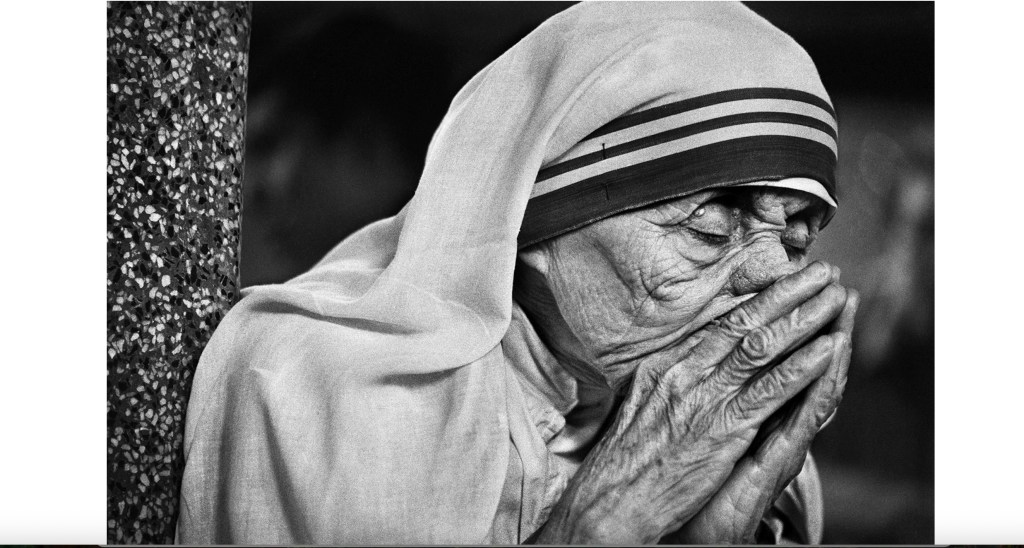
To get to this point of closer intimacy with God takes intention, daily time committed to meditating, praying, and contemplating his word. Also, when he leads to just be silent, for as St. Mother Teresa taught, “God speaks in the silence of our heart.” Oral prayer is the easiest way to begin. It is the first way to accept God’s invitation to pray. We can pray the Our Father, the Rosary, read Scripture, speak to him directly, and then from our time of vocal prayer, we can meditate and ponder what the Lord has given us to reflect upon. When the Holy Spirit inspires us to then be still and listen, let us do so. Our Father will speak to us in his word, in his silence, and/or sometimes with consolations.

Prayer is not so much about what we do. Prayer is more about lifting our hearts and minds to God and allowing ourselves to slow down enough to be aware of what God wants to do in us. Our Father seeks to helps us to identify our sins so that we can be free and confess them, he leads us to heal those places where we have preferred to keep locked up, and he wants to shine the light on how we are to serve him so that his kingdom will come and and his will, will be done on earth as it is in heaven.

To enter deeper into a life of prayer we need to trust Jesus. That is what made a big difference in the first days of my 30 day silent retreat in July of 2023. I followed the lead of my spiritual director and started to imagine myself sitting with Jesus as I read and meditated upon these words a few times, “to know the love of Christ that surpasses knowledge, so that you may be full of the fullness of God” (Ephesians 3:19), I leaned over and asked Jesus, “How can I know your love?”

He said, “Trust me.”

I did and that made all the difference in the following holy hours and successive days of the retreat, as well as the last two years.

We have been created to live a life of prayer. Jesus will teach us to pray, just as he taught his disciples. As we trust him and ask for the guidance of the Holy Spirit, God our Father will grant our request. My invitation to you who have read this far, is to set aside some time today, sit in a comfortable quiet place, take a few deep breaths, read through today’s Gospel account Luke 11:1-13 a few times, trust in Jesus, ask for the Holy Spirit, follow their lead, and let God happen!


Photo: Bench view from where I sat with my first encounter with Jesus as related above and during many more of my holy hours back in July of 2023.

Link for the Mass readings for Sunday, July 27, 2025

“Let them grow together until the harvest.”

“’Master, did you not sow good seed in your field? Where have the weeds come from?’ He answered, ‘An enemy has done this.’ His slaves said to him, ‘Do you want us to go and pull them up?’ He replied, ‘No, if you pull up the weeds you might uproot the wheat along with them. Let them grow together until harvest” (Mt 13:27-30).

One of my favorite trees is the Maple. When JoAnn, the kids, and I moved to Florida over twenty years ago, the thought did not cross my mind that Maples grew in Southern Florida. A few years after we moved into our home, I was walking in our backyard and thought I saw a maple leaf. I squatted down for a closer look and found that not only was it a maple leaf but a sapling with three leaves! I carefully cleared some of the weeds and grass growing among and around it, but otherwise let it be because it was so fragile. As it grew I cleared more around it. Today it is a fully mature Swamp Maple!

A few years ago, I saw a new Maple sapling emerging, though this time, some poison ivy was growing around it. I sprayed poison ivy killer, thinking I avoided the tiny sapling. Unfortunately, I must have gotten some of the poison spray on the Maple leaves because it also shriveled up and died.

I can relate to Jesus’ parable from today’s Gospel. The master warned his servants to let the wheat and weeds grow together until they were more mature at the time of the harvest, so as not to pull up the wheat with the weeds. Weeds in this verse is translated from the original “Greek [as] zizanion [which] refers to a noxious weed that in its early stages closely resembles wheat and cannot be readily distinguished from it” (Harrington 2007, 204). This plant, darnel, as it grows along with the wheat entwines its roots with the roots of the wheat (Mitch and Sri 2010, 180). Both, in their immature state, were indistinguishable and in pulling up the weeds, there was a strong chance that the wheat would be pulled up as well.

Jesus is calling us to resist the temptation of judging one another. Even when there are those who commit heinous acts of evil, we may feel justified in our judgment and condemnation. Jesus says no. We may convict the person of their action and we are certainly to hold each other accountable, but judge and condemn, no. The Father is the ultimate arbiter and judge of someone’s salvation.

All of humanity has been created in the image and likeness of God, each of us are a unique gift to this world. We have been created good, yet all of us fall short of the glory and grace of God and because of our fallen nature we have lost our likeness to God, that likeness has dimmed. God seeks to restore our glory and our likeness which we call growing in holiness. As we do so, we are to assist others in doing the same.

God the Father will judge at the end of time between the wheat and the weeds. Let us leave the judgment to God, and let us instead be about learning and following the teachings of Jesus, repenting, and encouraging each other in the maturation process which can include, convicting others when needed, yes, but also encouraging and supporting each other to heal, be forgiven, and grow in holiness.

We need to resist falling into the temptation of condemnation and gossip and spreading poison in our misguided attempt to be of help. In dealing with one another, let us pray for patience, understanding, and seek forgiveness for our sins. Having experienced the love, mercy, and forgiveness of God, may we be willing to forgive each other. Life, even when going well, is hard. We need the encouragement and support of each other if we are to mature and actualize the fullness of who God calls us to be and strive, through God’s grace, to put his will into action. “Encourage each other while it is still today” (Hebrews 3:13).
—————————————

Photo: Some young Maples standing tall in the forefront that I came across on a Rosary walk at University of Saint Mary of the Lake.

Link for the Mass readings for Saturday, July 26, 2025

Harrington SJ, Daniel J. “The Gospel of Matthew”. In vol. 1, Sacra Pagina Series, edited by Daniel J. Harrington. Minnesota, Liturgical Press, 2007.

Mitch, Curtis and Sri, Edward. “The Gospel of Matthew”. In Catholic Commentator Series, edited by Peter S. Williamson and Mary Healy. Grand Rapids, Michigan, Baker Academic, 2010.

“Can you drink the cup that I am going to drink?” Matthew 20:22

“The mother of the sons of Zebedee approached Jesus with her sons and did him homage, wishing to ask him for something. He said to her, ‘What do you wish?’ She answered him, ‘Command that these two sons of mine sit, one at your right and the other at your left, in your Kingdom’” (Mt 20:21-22).

The context of this request from the mother of the sons of Zebedee, James and John, comes from reading a few verses before the quote above. Start reading at Matthew 20:17 and you will see that Jesus and his twelve apostles are heading toward Jerusalem. Jesus stops to share with them, for the third time, that he will be condemned and crucified.

The request of James and John, through his mother, in the eyes of the world would seem a reasonable request. To them, Jesus was marching toward Jerusalem to claim his throne as king. To sit on his right and left, was an acknowledgment of their willingness to follow him, and serve as support for and witnesses of his kingship. It was also a preemptive strike before any of the other apostles could make that claim. There is a problem with their understanding though.

Jesus’ third statement of his imminent suffering and death appears to be ignored by or it goes over the heads of James and John, again, as well as their mother. The other ten are indignant, not because of the apparent lack of acknowledging Jesus’ upcoming passion, but because they entered into a free for all for position of which of them would be the greatest! It is easy to imagine how chaotic this scene quickly escalated! Saint John Chrysostom offered this insight: “See how imperfect they all are: the two who tried to get ahead of the other ten, and the ten who were jealous of the two” (Chrysostom 1975, 1552)!

This event made an impact for it was recorded in Matthew, Mark, and Luke. Mark has James and John speaking for themselves, not their mother, as in Matthew. Luke does not even record the initial request of James and John and instead comes in at the point of the apostle’s dispute. What all record, including the Gospel of John, is how Jesus made it clear that he came to serve, not to be served. To follow Jesus meant, not that James and John would be given positions of honor and power, the sitting at his right or his left, but that they were to serve as he served, to love as he loved.

The right and left that James and John asked for, Jesus shared was not his to give. That assignment would come directly from the Father. He also said, “You do not know what you are asking” (Matthew 20:22). For if James and John did, they would have thought twice about asking him. The ones who would assume the right and left were the two thieves on either side of him as Jesus was lifted up on the cross.

As disciples of Jesus, we too are called to show our love, not a sentimental love, but a love willing to serve and sacrifice for one another. Most of us are not accustomed or naturally disposed to either. A good way to begin is to be truly present to another, done most effectively when we actively listen. We learn this best in times set aside to meditate and pray with God. As we are able to quiet our minds, slow our heartbeats, and listen to God, we can begin to do so with one another.

Listening happens when we look up, put the phone, paper, or magazine down, turn away from the computer and/or turn off the tv. Then as we take a few breaths, we can open our hearts and minds to listen, and hear. When we learn to listen to God and one another, we will hear where the needs are. When we allow our hearts to be moved with compassion, we will be more willing to truly love by sacrificing and serving one another.

—————————————

Painting: “St. James the Greater” by Guido Reni. James learned the art of service and became the first to drink Jesus’ cup. St. James, pray for us!

Chrysostom, St John. Homily. The Liturgy of the Hours: According to the Roman Rite. Vol. 3. NY: Catholic Book Publishing, 1975.

Parallel Gospel passages to review:
Mark 10:35-45; Matthew 20:20-28; Luke 22:24-27 and John 13:12-17

Link for the Mass readings for Friday, July 25, 2025

Trusting in Jesus will help us to heal and prepare fertile soil to receive God’s Word.

The root of the message offered in today’s Gospel is what is foundational to the beginning and continuing as a disciple of Jesus. This being the disposition of our hearts. Are we closed to receiving the message of the Gospel, or are we open to embrace the invitation Jesus shares with us to become more active in living out our faith in our everyday lives?

The exchange of Jesus with his disciples in today’s reading from Matthew comes after his sharing of the Parable of the Sower (Mt 13:1-9). In this parable, Jesus offers scenarios regarding the conditions of seeds sown. Some fell on a hardened path, some on rocky ground, some fell among thorns, and some fell on the rich soil. The seeds on the hardened path could not even germinate. Those in rocky ground and among thorns germinated and began to even sprout but would not come to full maturity. The seed that was sown in rich soil germinated, sprouted, matured, and bore fruit.

As disciples, we are meant to bear fruit and that means we need to prepare ourselves so that we will have rich soil. The beginning step is to have open hearts and minds. If we have a desire to pray, the hardened soil has given way somewhat. The seed has penetrated, died and has begun to grow. God is the originator of our prayer. The desire to spend time in prayer is good news. The devil has not stolen that from us. Now if we do not follow through on the inspiration of nor follow the nudging of the Holy Spirit, means we have some tilling to do. We need to remove the rocks of resistance, distraction, and diversion so that we can get deeper.

Daily coming to a place that we have created and set aside for ourselves to breathe and be still will help us to begin the work of facing those internal resistances and diversions. We can begin to see where are hearts and minds may have been hardened. By breathing and slowing down, we get in touch with our body and may be surprised by how tense we are. With just a few breathes we may notice that our shoulders come to a more peaceful place of rest. Our neck and our hips can begin to let go. Once we have prepared the soil, the next preparation is the weeding. Among good soil grows what has been planted, the seeds of the enemy as well as the seeds of God.

As we continue to return each day and allow God to happen, to acknowledge his presence and closeness, we can begin to then allow his light to reveal to us those thorns and other weeds that seek to choke the growth that has begun. Anxieties, worries, frustration, and reactions all choke out the peace, faith, confidence, and love that God seeks to sow and grow within us. Being diligent and disciplined in showing up, allows us to begin to feel safe in the place we have set aside. In encountering God each day, we begin to know him. In this place of stability, we come to know that God is our refuge and strength, and we begin to feel safe. From this place of safety, we can begin to face and breathe into where we notice our bodies hold anxiety, fear, and stress.

God helps us to tend the gardens of our souls patiently and gently. Thoughts of condemnation and shame are the weeds of the enemy that seek to choke out our healing, growth, and spiritual maturity. The gentle light of Jesus is that light that brings warmth and safety. The conviction he brings is the light that helps us to identify that which needs to be weeded and pruned so that our soil becomes richer and our growth can continue unimpeded. In time and with disciplined attention, daily coming to our places of quiet with the Lord, spending time in his word, we will be forgiven, healed, and freed from that which seeks to stunt our growth and we will continue to mature and begin to bear good fruit, the gifts and charisms that the Holy Spirit has sown within our good soil.

Whatever the state of the soil of our soul that we bring to this reading whether it be a hardened and worn path, rocky ground, weeds and thorns, know that there is some soil to work with. Like any garden that is to grow, mature plants that bear good fruit will take time, energy, and work. The most difficult state and the one Jesus addressed in today’s Gospel is the heart of indifference that is closed, the seed falling on the well-trod path, that is hard and packed so nothing gets through. For these people, “they look but do not see and hear but do not listen or understand” (Mt 13:13). Yet, even this soil can be turned and tilled. Even the hardest heart can be softened if one is willing to turn to Jesus.

Jesus, in his explanation of why he spoke in parables, returned to the inaugural message of his ministry: “This is the time of fulfillment. The kingdom of heaven is at hand. Repent and believe in the Gospel” (Mk 1:15). Before we may be willing to repent, we may need to first acknowledge the places in our hearts and minds that are closed, those areas that are hardened from real or perceived past pain or trauma, those situations in which we chose to shut down and separate ourselves from God and others.

When we allow Jesus in, we can experience his healing touch. When we take the risk to accept his help, we will receive his forgiveness and healing. When we trust in Jesus, are willing to take his hand, follow his lead, and learn from our mistakes, turn away from our sins, and return to him for healing and confession, our hearts will soften and our minds will open.

Jesus wants to help us to turn over the rocks we have been hiding our pain under so that we can experience those deeper wounds that we have kept buried. This will only happen when we trust Jesus and feel safe. Spending quiet time each day, surrendering and being docile to the Holy Spirit, helps us to do just that. In time, we will feel safer and more confident to turn over those stones, pull up the weeds, and begin to till the fertile soil underneath. Through experiencing our pain, our emotions, and facing our fears, we help to prepare the fertile soil, in which the seed of God can thrive and in which we will mature to bear good fruit the will last.


Photo: Enjoying the fruit of this tree in bloom on my walk after morning prayer at University of St. Mary of the Lake.

Link for the Mass readings for Thursday, July 23, 2025

Let us follow the invitation of the Holy Spirit.

“… the shortest way to holiness is faithfulness to the inspirations of the Holy Spirit.”

Fr. Jacques Philippe in his book, In the School of the Holy Spirit, offered the above quote in italics from St. Faustina. All of us are called to be holy, to be set apart from the mundane and secular. This call does not make us better, it makes us more human. God invites us through the quiet whisperings of the Holy Spirit to experience something better for our lives, his love.

The question for each of us in this moment is, are we willing to listen to the quiet and gentle invitations of the Holy Spirit? If the answer is yes, then invite the Holy Spirit to lead you and help you to see and hear his guidance. We have experienced his promptings since our youth, but just may not have been aware he has been doing so. Being more intentional in asking to be led, taking some time to reflect to see when and where we actually have received and followed his guidance, will help us to be aware a little more today than yesterday.

May you give yourself a few moments to take some deep breaths and invite the Holy Spirit to lead you and then follow.

My usual postings on the daily Gospel readings will be absent and possibly not daily. I am away for the next twelve days as I continue my studies for the Certificate Program in the Ministry of the Spiritual Exercises of St. Ignatius of Loyola here at St. Mary of the Lake University in Mundelein, Illinois. I still wanted to send some reflections along, so we shall see what the Holy Spirit has planned. Please pray those of us who are leading and those engaged in 3, 5, 8, and 30 days of silent retreat. I will be praying for you!!!


Photo: Ending the evening with some silent one on one time with Jesus.

“Courage daughter! Your faith has saved you.”

“If only I can touch his cloak, I shall be cured.” Jesus turned around and saw her, and said, “Courage, daughter! Your faith has saved you.” And from that hour the woman was cured (Mt 9:21-22).

Just to touch his cloak may seem a small and insignificant act, but by doing so, this woman showed tremendous courage. Suffering from hemorrhaging for twelve years, broke from spending all her resources to be healed, she risked. She could have been severely punished, beaten, or stoned for this small act. Under the Levitical code, her condition deemed her unclean, in the same category as a leper, a pariah. Touching someone else in that condition would then make them unclean. Yet, in that small touch, that great act of courage, “power had gone forth from him” (Mk 5:30), and she was completely healed.

In the parallel account from Mark 5:21-43, he reveals more details than Matthew does in today’s reading. Not only did the woman exhibit the courage to touch Jesus, but she was then willing to admit that she had done so when Jesus questioned who had touched him. Many of the disciples looked at Jesus wondering how he could ask such a question because so many people had been around and touching him. She could have easily slinked away, but she didn’t. She admitted to touching him and would receive whatever the consequence for doing so.

So many around Jesus as his disciples pointed out, and yet why was she the only one healed? Pope Leo addressed this in his June 25, 2025 audience: “In his commentary on this point of the text, Saint Augustine says – in Jesus’ name – “The crowd jostles, faith touches” (Sermon 243, 2, 2). It is thus: every time we perform an act of faith addressed to Jesus, contact is established with Him, and immediately his grace comes out from Him. At times we are unaware of it, but in a secret and real way, grace reaches us and gradually transforms our life from within.”

Jesus recognized immediately that the power came out from him. He may indeed have known who received his grace and gave the woman the chance to be healed on a deeper level and to set aside her fears completely. When she did so, Jesus did not reprimand but affirmed her faith and courage. In this act of healing, Jesus restored her to the community from which she had been ostracized. Jesus restored her dignity.

Pope Francis in his general audience from August 31, 2016, stated: “Once again Jesus, with his merciful behavior, shows the church the path it must take to reach out to every person so that each one can be healed in body and spirit and recover his or her dignity as a child of God”. May we too establish contact with Jesus, and experiencing his grace, reach out, in-person and online, and encounter others offering the same dignity, love, mercy, and respect we have received.


Photo of painting from Magdala.org

Link for the Mass readings for Monday, July 7, 2025

“Let us build a Church founded on God’s love.”

“At that time the Lord appointed seventy-two others whom he sent ahead of him in pairs to every town and place he intended to visit” (Lk 10:1). Jesus did not stop with this action, he continued and continues to call people to himself and sends them on mission to proclaim the same words: “The kingdom of God is at hand for you” (Lk 10:9).

To be a disciple of Jesus is to be both about maintaining the Church he instituted and going out on mission. This is why at the end of each Mass the deacon or priest in the absence of a deacon will say, “Go and proclaim the Gospel of the Lord” or three other formulas of being sent to be missionaries in our communities. This is not a call for clergy and religious only but for all of the baptized.

Pope Leo XIV said emphasized this same sentiment well at the close of his homily on May 18: “With the light and the strength of the Holy Spirit, let us build a Church founded on God’s love, a sign of unity, a missionary Church that opens its arms to the world, proclaims the word, allows itself to be made “restless” by history, and becomes a leaven of harmony for humanity. Together, as one people, as brothers and sisters, let us walk towards God and love one another.”

There is much here in the Pope’s words to meditate upon and put into action. We are not just to go out and do missionary work, to evangelize and share the Gospel, we are to embody mission. We “are to be a leaven of harmony for humanity.” At the moment of our conception we existed as unique individuals already distinct from our parents. We are endowed with dignity and worth just by the fact that we exist. In embracing that gift and dignity of our lives, in allowing ourselves to slow down long enough to be loved by God, then we can begin to see each other as brothers and sisters and begin to reach out in love toward one another.

The “Church founded on God’s love” is the Church established by Jesus Christ. In Luke recording how Jesus “appointed seventy-two others”, we see the further establishment of the Church leadership that Jesus instituted. This hierarchy echoes the one established by God through Moses (See Exodus 24:1-11). When Moses ratifies the covenant, he has with him Aaron the high priest with Nadab and Abihu, along with the twelve young men offering sacrifices, each representing the twelve tribes of Israel, along with seventy elders. Jesus is following the same pattern in calling Peter as the leader of the twelve apostles, along with James and John, and the seventy-two. Jesus is calling to himself those who would first preach to Israel, the twelve, and the seventy-two, to preach to the Gentile nations, and eventually the whole world.

The deposit of faith that Jesus handed on to Peter and the twelve along with the seventy-two has continued to be shared with each successive generation up to and including our own. We are to continue in our own time to receive the message of Jesus and share it as well. Each and EVERYONE of us are a unique gift to the world that has never been nor will ever be again. Jesus has called us to himself with the purpose to send us out on mission.

I agree with Pope Leo that, “this is the hour for love! The heart of the Gospel is the love of God that makes us brothers and sisters.” This is “the hour for love”, for: “The kingdom of God is at hand” (Lk 10:9). Let us go forth as missionary people, as contemplatives in action, to promote peace and reconciliation, to glorify the Lord with our every thought, word, and deed.  Let us open our hearts and minds to God’s love, receive, rest, and abide in his love, so that we may go out to prepare the way for others to receive the love of Jesus as we have. This is the Church Jesus calls us to continue to build up.


Photo: Pope Leo arriving at his first weekly general audience on May 21, 2025 (Credit: Gregoria Borgia, AP, accessed from America Media).

Homily of Pope Leo XIV from May 18, 2025

Link for the Mass readings for Sunday, July 6, 2025

As we allow ourselves to be loved by God, we are transformed and become new wine skins.

“Rather, they pour new wine into fresh wineskins, and both are preserved” (Mt 9:17).

Mark, Matthew, and Luke all record the reference of pouring new wine into fresh wineskins. What Matthew adds is, “and both are preserved.” Luke adds: “[And] no one who has been drinking old wine desires new, for he says, ‘The old is good.’”

The Gospel authors offer this teaching of Jesus in the context of the tensions between those who would reject Jesus and those who would follow him and his new way. The new wine represents the acceptance of the Gospel, the Good News of the kingdom of God in their midst. To receive this new wine though means to change one’s mind and heart. “The tension, and often incompatibility, between the old and the new is part of every religious tradition and attends every change within that tradition. Matthew and Luke wrestled with it and adapted it to their community situation. Contemporary Christians have no less a challenge” (The Gospel of Mark, Donahue, SJ, p. 109). Matthew shared with his community that Jesus is the new Temple, the old had been destroyed in 70 AD.

Following Jesus meant that both the old and new covenants would be preserved. Jesus did not come to abolish the law and prophets, but fulfilled and raised what went before him to a higher level.

We are invited to wrestle as well. The Church is called to change, to be transformed by the Living God. Many say the Church needs to change this and that, not realizing that we are the Church, the People of God, the Body of Christ. If the Church is to mature and grow each of us is to embrace transformation, being made anew through the guiding presence of the Holy Spirit. This invitation is a call to let go of those habits, lifestyles, behaviors, mindsets, attachments, and addictions that are weighing us down or worse holding us in bondage and slavery to our sin, and ultimately keeping us separated from God. Much of the material and finite things we hold onto prevents us from receiving the new life God wants to pour into us.

Jesus has come to set us free from our enslavement to sin by inviting us to try some new wine which consists of contemplating upon and living the message of his teachings and actions as recorded in the Gospels. We do not have to be afraid of the change and transformation Jesus is calling us to experience. As St Irenaeus, the second-century bishop of Lyons is attributed to have written: “The Glory of God is man fully alive!” Jesus is inviting us to live our lives and live them to the full!

To become new wineskins then, we are called to identify and let go of those selfish and sinful inclinations that keep us constricted, rigid, and curved in upon ourselves. We are to let go of our fears so that we can be healed from them. We also must let go of what appears to be good, but in truth is not the good that God offers. We let go when we give our lives to God and follow his will.

When we do so, we will experience the Father’s love and can then love as Jesus loves. Through this transformation, we are expanded and open to receive the new wine the Holy Spirit wants to pour into us. We are called to go beyond the foundation of our identities that we have found safety and comfort in. We are transformed to be people of integrity, free to follow God’s will in and out of season. Our identity gives us roots and our integrity received through trusting and following the guidance from the Holy Spirit gives us wings to fly.

Each time we come to God in stillness, we will experience opportunities to experience distractions. These distractions become invitations to purify that which we need to let go of, so that we may grow deeper in our relationship with God and one another. With each identification and willingness to let go, our false self begins to be burned away. We become new wineskins, capable of receiving God’s love, and expanding as we follow God’s will and receive the freedom to be who he calls us to be.


Photo: May each of us be full wineskins, filled with he love of the Holy Spirit to overflowing!

Donahue, John R. S.J., and Daniel J. Harrington, S.J. The Gospel of Mark. Vol. 2 of Sacra Pagina, edited by Daniel J. Harrington, S.J. Collegeville, MN: Liturgical Press, 2002.

Parallel Scriptural accounts: See Mark 2:22, Matthew 9:16-17 and Luke 5:37-39

Link for the Mass readings for Saturday, July 5, 2025