Baptism, foot washing, and crucifixion show the depth of Jesus’ love for us.

Today’s Gospel from John begins as Jesus had just finished washing the feet of his disciples. Jesus then said, “Amen, amen, I say to you, no slave is greater than his master nor any messenger greater than the one who sent him” (Jn 13:16). Jesus not only taught the truth that God the Father sent his Son to serve and not be served, he modeled this practice consistently.

From his conception, gestation, and birth, the Son of God developed as a human being in the very simplest of conditions and endured the hardships of those on the margins. Joseph, Mary, and Jesus were political refugees very soon after his birth. The young family was forced to flee from Bethlehem to Egypt. When Herod the Great died they returned to Nazareth, and other than the incident when he remained in the Temple while Jospeh and Mary left him, we hear nothing about the life of Jesus until he begins his public ministry. The most likely reason for this was that there was nothing to tell. Jesus most likely apprenticed with Joseph, in the trade of a simple tektōn, a woodworker, which was pretty low on the rung of the social ladder.

Through the short time of his ministry, Jesus modeled for his disciples what a follower of his entailed and what it meant to be one of his successors. To follow in his footsteps they would need to participate in servant leadership. He not only taught them but lived and modeled that there is no task too menial that we can’t roll up our sleeves and dive in to help. There is no person too other that we can’t assist when they are in a need.

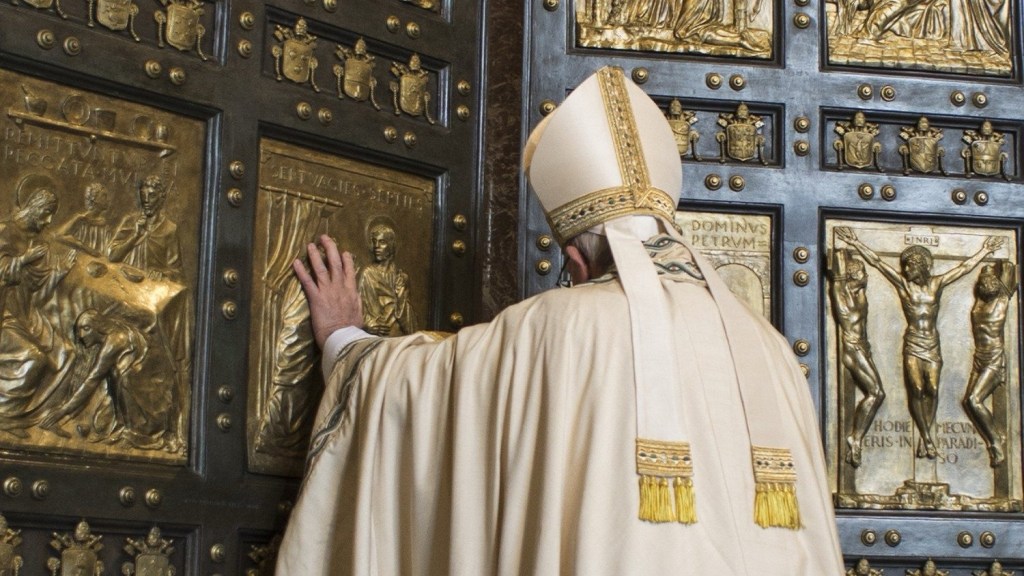
In this act of washing the feet, Jesus is also revealing something deeper. The depth of his love for the apostles and each of us. The Son was willing to come close, to become one with us in our humanity, to be in solidarity with us even in our sin, so that he could take the sin of the world upon himself first at his baptism and then upon the cross. In the washing of the feet, he is also showing the depth of his love in caring for them in such a menial way, that is another foreshadowing of the depths of his love in his willingness to give his life in a humiliating and horrific way for all of humanity.

Jesus, as fully divine, did not grasp at his divinity or lord it over anyone. He was willing to be baptized even though he is free of sin, to wash the feet of his apostles in the most menial of tasks even as master and teacher, and was willing to experience crucifixion and death as the Messiah. In each of these acts, Jesus reveals the full giving of himself and holding nothing back of himself from us. Jesus is encouraging his apostles and us with every breath, thought, word, and action to love each other as he has loved us.

A good prayer and meditation for us today is to ask Jesus to reveal for us how we have resisted his urgings in the past regarding serving and loving others as well as when we have refused to interact or treat someone with anything less than the basic human dignity which they deserved which is to love each other, to will each other’s good. Have we ever thought that what he was asking of us was beneath us? Have there been people we have kept at arm’s length or refused to reach out to? For those ways in which we have withdrawn within ourselves and refused to be of help may we ask for his forgiveness.

Being willing to allow Jesus to shed some light on our lack of embracing opportunities to be loved and to love in return is a good place to begin. Then renewed with his forgiveness, mercy, healing touch, and having been loved, may we be more willing to be bearers of the love, mercy, and understanding that we have received. May we be more open to each of the people and/or tasks that God will place before us, the discernment to know his will, and the clarity and courage to act as his servant with humility, with love, and without hesitation.
—————————————————————————-
Photo: Are we willing to reveal our needs to Jesus, to allow him wash our feet, to allow him to address our needs, and then be willing to serve the needs of others?

Link for the Mass readings for Thursday, May 15, 2025

When we are willing to die to our selfishness, we will love as God loves us.

“I have told you this so that my joy might be in you and your joy might be complete” (John 15:11).

What is this referring too? “If you keep my commandments, you will remain in my love, just as I have kept my Father’s commandments and remain in his love.”

And what is his commandment? “This is my commandment: love one another as I love you.”

Even when life appears pretty dark and division and suffering seem to be waiting around every corner, we need not give up or fall into despair. God wants us to experience fulfillment, meaning, and joy despite our experiences and not through being lemmings or slaves but as Jesus said, his “friends”. The friends of Jesus are those who hear the word he has received and shared from his Father which are his commandments, the greatest of these is the commandment to love as Jesus and the Father have loved us.

If we truly want to be happy, fulfilled, and have meaning in our lives, Jesus invites us to align our wills with the will of God who is Love. St. Irenaeus taught that the joy of God is the human being fully alive. For us to be fully alive, we need to allow ourselves to be loved by and then love as God loves us. God knows what will fulfill us. Many of us do not experience the fullness of this joy because we are distracted and diverted by apparent goods, instead of striving for what actually is good. Time and discernment with the guidance of the Holy Spirit can help us to distinguish the difference.

Neither will we experience fulfillment and joy through denying, covering over, or being so busy that we don’t face the sufferings in our or other’s lives. We ease suffering by entering into it and receiving God’s loving embrace. He will heal us when we are willing to experience our pain. When we experience our pain with him, we receive his mercy and love, and experience healing at the root. As we heal, as we experience God’s love, we can then help to alleviate some of the sufferings of those around us.

“To love as God does, we must be constantly dying to our own sinfulness and selfishness and living for God. And we live for God by obeying the Father’s will and loving one another” (Martin and Wright, 260). Each day we are invited to choose to curl up in our shell of selfish concern or allow ourselves to be loved and to love in return, to come out of our shell, to risk, and become agents of healing and love. As agents of God’s love and mercy we can help to make our corner of the world a little better.


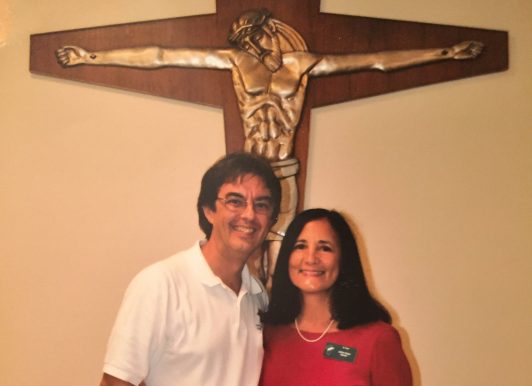
Photo: With JoAnn, who taught me how to come out of my shell, to live, and to love.

Martin, Francis and Wright IV, William M. The Gospel of John. Grand Rapids, MI: Baker Academic, 2015.

Mass readings for Wednesday, May 14, 2025

“No one can take them out of my hand.”

Jesus continues to present the imagery of the shepherd in today’s Gospel reading from John. He offers the assurance of security and protection that is to be found for those that are in his fold when he says, “No one can take them out of my hand. My Father, who has given them to me, is greater than all, and no one can take them out of the Father’s hand. The Father and I are one” (Jn 10:28-30). How does one enter the fold of the Good Shepherd? All who hear his voice, believe in, and follow him will be known by him, come to know him, and so be a part of his flock.

Yet, there are those who hear his voice and do not recognize the Shepherd. They do not follow him and so are not known by him, although he seeks them out. They may know about the Shepherd, have heard of him, but do not know him. Their hearts and minds are closed. They do not believe in his miracles, his exorcisms, his teachings, and the question of those opposing him in today’s reading is, “If you are the Messiah, tell us plainly” (Jn 10:24). Jesus did just that by saying that he and the Father are one. The response to the forthright comment of Jesus is that those who are closed to his answer pick up rocks to throw at him (see Jn 10:31).

Jesus offers the gift of relationship with him and his Father, to experience the love shared between them, the Holy Spirit. Jesus offers eternal life. Jesus is open about who he is, who we are, and who we can become in participation with him. Those who say no to his invitation do so for their own reasons. Just as Jesus invites us to freely come to him, he will only come so far as we are willing to receive him. He does not conform to us or to our will.  Jesus does not need us nor does he force his will upon us, yet he loves us by willing our ultimate good.

Even we who have said yes, only go so far. We hedge our bets, dip our toes into the water, and maybe go in ankle-deep, but not too many of us are willing to relinquish control, let go, and surrender fully all at once. Jesus offers, eternal life, true, but also a life of meaning and fulfillment now. A perfect life? No, there will continue to be challenges, conflicts, mistakes, and missteps, all the while, Jesus’ voice continues to call us to follow him, to trust him, and seek freedom from our anxieties, fears, wounds, weakness, and sins. He empowers us to face our conflicts and resistances, to let go of our control and defense mechanisms, and to be more disciplined in resisting temptations and apparent goods.

Through all our experiences, the ups and downs, the only assurance is that we are not alone. No matter what we may face today or tomorrow, we can be assured that Jesus will never let us go and no one can take us out of his hand. Each step of the journey we take, we can be confident that Jesus, our Good Shepherd, will be there to guide and protect us as he leads us to experience deeper intimacy with him, his Father, and the Holy Spirit.

——————

Painting: Accessed on Amazon.com wall art

Link for the Mass readings for Tuesday, May 13, 2025

Let us trust in the Good Shepherd who loves and will take care of us.

“[T]he shepherd calls his own sheep by name and leads them out” (John 10:4)

Jesus, distinguished himself as the Good Shepherd who cared for his sheep instead of “thieves and robbers” who sought to harm the sheep. In referencing, “thieves and robbers” Jesus continued his calling out those Pharisees from chapter nine. Those who did not listen to his voice and those who were not leading God’s sheep with care.

The imagery of the shepherds is an echo back to past abuses such as in the time of Ezekiel who spoke out against those leaders who had “been pasturing themselves”, and who failed to “strengthen the weak nor heal the sick nor bind up the injured”. Thus the sheep of God’s flock, were scattered for lack of a shepherd, and became food for all the wild beasts. They were scattered and wandered over all the mountains and high hills; over the entire surface of the earth my sheep were scattered. No one looked after them or searched for them” (Ezekiel 34:2-10).

God, the eternal Shepherd, spoke through Ezekiel and said: “I will take my sheep out of their hand and put a stop to their shepherding my flock, so that these shepherds will no longer pasture them” (Ezekiel 34:10). Jesus is the fulfillment of Ezekiel’s prophecy. Jesus is the Son who God sent to do just that. Jesus has come to gather the lost sheep and bring them to green pastures, and lead them with his voice to eternal life.

Even today, we have experienced so much abuse of power and corruption, self-seeking and self-aggrandizement, that we are weary and have lost faith in our leaders and institutions. Yet, all is not lost. Jesus is still among his flock and calling his sheep to himself. Let us not be deaf to the call of the Good Shepherd because of the “robbers and thieves” that have climbed over the fence and into the sheepfold.

Let us instead, listen for the voice of the Good Shepherd. We do so when we make the time to be still and wait upon the Lord to call. We do so when we resist the temptation to run away or react out of fear. We do so when we are patient and trust in the voice of the Good Shepherd who has our best interest in mind and will care for us. Jesus will not harm us, he loves us. We may have been wounded or hurt when we have gone astray or even when we thought we were safe in the sheep pen. We can trust Jesus when he seeks to come close. His healing may provide suffering for a time, as healing will do, but as we remain close to him, his healing balm will prevail. We will be healed, renewed, and restored.

Jesus loves us, knows and calls each of us by name. Mary Magdalene in her grief didn’t recognize Jesus when she met him after his resurrection, but when he called her by name she recognized his voice. May we, like Mary, remain still long enough so that we can allow the Good Shepherd to come close, trust him, and his voice even amidst the cacophony of so many other voices, robbers, and thieves. May we be patient and only move when the Good Shepherd calls our name and then follow his lead.


Photo: Accessed from IG Post: Strength_in_jesus_1

Link for the Mass readings for Monday, May 12, 2025

When we spend time with the Good Shepherd, we will come to know his voice, as well as know, trust and follow him.

“…the sheep follow him, because they recognize his voice” (Jn 10:4). This verse is one of the keys to growing in the spiritual life and becoming a disciple of Jesus. Amidst all the voices, distractions, diversions, and temptations clamoring for our attention, we want to develop an ear to hear and a mind to discern the voice of the Good Shepherd. There are so many directions we can take and opportunities we can be enticed by, many that are detrimental, but more challenging those that are good in and of themselves.

Jesus came to us so that we “might have life and have it more abundantly” (Jn 10:10). To live life, not merely survive, and do so abundantly, it is imperative to be able to discern the distinction between apparent goods and the true Good. An apparent good is appealing, attractive, and desirable, though once experienced, we conclude that it was indeed not good for us after all. We can see this in the promotion of processed foods, with additives and an excess incentive of enticing the taste buds with salts and sugars. The experience of eating many of these products is that they taste good going down, especially if eaten quickly and not savored, such that we can often eat them to excess. They not only have little, if any nutritional value, more importantly, if this is the main source of our nutrition, over time, we will feel the ill effects of eating in this way. They will actually sap our life force.

The same is true regarding how we spend our time and treasure. We all have the same amount of time in the day. In what ways do we use our time, who is it that we are listening to regarding how we use the time we have been given? What are we investing our time and treasure in? Do we listen to the Father of Lies or the Good Shepherd?

A good practice for developing an ear to hear the voice of the Good Shepherd is to resist making decisions impulsively, unconsciously, or from reaction, no matter how small the decision may be. When we discern, let us slow ourselves down by first taking a few, deep slow breaths and call on the guidance of the Good Shepherd. This is good to do in all areas of our lives. Let us pray before we speak, think, or do anything! We can ask ourselves each time, is what I am about to decide hindering or helping me to become a better disciple, to grow closer in my relationship with God, to be true to myself and who God is calling me to be?

When we combine this with a daily practice of reading, praying, and meditating with the words of the Bible, participating in Mass, and Confession, over time and through various experiences, we will come to better discern the voice of Jesus. Having a core group of people who we can trust is another avenue of hearing God. Having the humility to receive their perspectives and to help keep us accountable helps us to stay on the path. In dedicating ourselves to follow the way of the Good Shepherd and resisting to stray when distractions and diversions arise, we will not only be more confident in knowing the voice of the Shepherd, we will begin to know the Shepherd himself.

The wicked shepherds of the Old Testament and the religious leaders we heard about today, refused to listen to the voice of God or Jesus.  Jesus shared that he and the Father are One, and the line of hardening of the heart continued. They did not know the Shepherd’s voice nor do they know him. They did not know the Son nor the Father who sent him. Ezekiel prophesied that God would come himself to gather his flock (cf. Ezekiel 34). He did so in the person of his Son whom he sent. For as Jesus said, “I and the Father are One” (John 10:30). Do we believe, do we hear, and if we do, will we follow the Good Shepherd this day and each day?


Photo: Accessed from stlukesokc.org

Link for the Mass readings for Sunday, May 11, 2025

Jesus is the “bread from Heaven” and “the Holy One of God”. Are we convinced?

Even though Jesus had fed the five thousand and they were satisfied and there was plenty more where this gift of grace came from, even though they traveled by boat and followed him to Capernaum seeking a sign, the discourse regarding eating his Flesh and drinking his Blood was just too far of a stretch for most of the disciples to take. In fact: Many of the disciples of Jesus who were listening said, “This saying is hard; who can accept it” (Jn 6:60)?

Many of his disciples walked away from Jesus at that point and returned to their former ways of life. They could not believe because they did not fully appreciate who Jesus was, the One from above, who was sent by the Father. They had not developed a deep enough relationship with him such that they could trust him and that what he said was true, they could not believe in the One whom God had sent.

Jesus then said to the Twelve, “Do you also want to leave?” Simon Peter answered him, “Master, to whom shall we go? You have the words of eternal life. We have come to believe and are convinced that you are the Holy One of God” (Jn 6:67-69). Peter’s response is one of belief, trust, and love. Peter probably had the same doubts as those disciples who left Jesus but he trusted Jesus enough that even though his teaching was hard, even inconceivable, he stayed and believed that Jesus would make sense of it for them.

May this be our response as well. When we find some of Jesus’ teachings hard to digest, let us resist the temptation to walk away. Instead, may we follow Mary’s model of pondering, as she did when Gabriel shared she would bear the Savior of the world. Mary did not understand, but trusted God, and said, “Yes.” May we also follow Peter, who most likely dealt with mixed emotions and doubts, and yet, remained firm in his belief in Jesus. Peter trusted that Jesus was the “Holy One of God”. Peter had experienced that Jesus had known what he was saying and doing before, and he would continue to trust him this time as well.

More than a good model to follow, Jesus is so much more! Jesus did not want to die, but he was willing to submit his human will to his Father because he trusted him and knew he would bring about a greater good. Jesus gave his life and in so doing he conquered death, transcending the time and space of our present dimension so that he could be present to us in the Sacrament of the Eucharist. Jesus lives, he is the firstborn of the new creation, and he wants to not only lead us to eternal life, but impart his life within us, in such an intimate way that we may consume him, that we may be one with him in this life and for all eternity! May we with Peter come to believe and be convinced, that Jesus is the Holy One of God!

“Amen. Amen.
I’m alive, I’m alive,
Because he lives.
Amen. Amen.
Let my song join the One that never ends.
Because he lives.”
The verse from Matt Maher’s song, “Because He Lives (Amen)”.

—————————————————————

Photo: Accessed from Pinterest.

Link for video: Because He Lives (Amen), Matt Maher, from cd: Saints and Sinners, 2015

Link for the Mass readings for Saturday, May 10, 2025

When we eat the Body and drink the Blood of Christ we have eternal life.

All that Jesus has been building up to is now coming to a climax. Any silent shock of disbelief or quiet murmuring has now escalated. The Jews quarreled among themselves, saying, “How can this man give us his Flesh to eat” (Jn 6:52)? Jesus hears the growing concern and disbelief. If he was speaking in a figurative or symbolic way, this would be the moment to clarify his point.

Jesus does speak, but he does not walk back or qualify his comments. Jesus doubles down: “Amen, amen, I say to you, unless you eat the Flesh of the Son of Man and drink his Blood, you do not have life within you” (Jn 6:53). Jesus does not only repeat that his disciples are to eat his Flesh but he also insists that they are to drink his Blood. Drinking or even eating meat with the blood of an animal was inconceivable for devout Jews. Also, the Greek used here in John’s Gospel for eat is trogein, which is used to describe how an animal eats, by gnawing and tearing at the flesh. The imagery that Jesus is using here is more graphic than the customary use of phagein, which would be used for chewing, as a human would chew their food.

Jesus continues to make his point that whoever does eat his Flesh and drink his Blood, will not only remain in him, but also Jesus will remain in them, and they will have eternal life. A wonderful end goal, but would any be able to make the leap of faith to get there? In tomorrow’s Gospel reading we will be able to see the response to Jesus’ claims.

Almost two thousand years later, we continue to have the opportunity to celebrate daily the person of Jesus in our midst. This happens through participating in “the source and summit of the Christian life” (Catechism of the Catholic Church, 1324), the Mass. Our hearts have the opportunity to be set on fire as we hear the word proclaimed during the Liturgy of the Word, and then Jesus is made known to us in the breaking of the bread in the Liturgy of the Eucharist. We are invited to experience an intimate encounter with the Son of God, as we consume him, Body, Soul, and Divinity.

That we eat the Flesh and Blood of Jesus may sound just as bizarre as it did to Jesus’ followers. The term we have for this miraculous transformation of bread and wine is transubstantiation. What happens at the calling down of the Holy Spirit and the words of institution which are invoked by the priest is that the substance, the reality, of the bread and wine is transfigured into the Body and Blood of Jesus, while the accidental form or appearance remains the same. So we consume Jesus’ unbloody, acceptable sacrifice. We consume his glorified body that has transcended the three dimensional realm as we know it.

Jesus is giving all of who he is corporally, holding nothing back of himself so that we receive all of him – Body and Blood, Soul and Divinity. The miracle does not stop there because in the receiving of Jesus’ fullness in the appearance of bread and wine, we also become divinized through our participation in his life as he permeates our whole being. We receive eternal life! This takes the saying, we are what we eat, to a whole new level.

This gift we get to then share. We are dismissed at the end of the Mass to go, like Mary, to bear Jesus Christ, to love others as Jesus loved us. In seeing and receiving Jesus in the Eucharist, we better see him in each other and are then inspired to serve one another. For what we do to the least of our brothers and sisters, we do to Jesus (cf. Mt 25:40). Jesus is risen, he has risen indeed, and he has not left us orphans but remains with us now and for all ages most intimately in the Eucharist! We are alive and given eternal life, because the Bread of Life lives within and among us! Amen. Alleluia!

——————————————————–

Photo: “Christ with the Host”, by Paolo de San Leocadio

Link for the Mass readings for Friday, May 9, 2025

“The bread that I will give is my flesh for the life of the world”

Those in the crowd who Jesus is speaking are those who experienced his multiplication of the loaves and fish. Step by systematic and deliberate step, Jesus is setting the stage for today’s insertion into his presentation.

Jesus begins slowly, but with each successive addition in his presentation, he is not willing to be tamed. He, as the One from above, the One who has seen and has been sent by the Father, is fully divine, as well as fully human, is speaking among those who have come to him. He has responded to the people’s request regarding how they were to “accomplish the works of God” (see John 6:28-29) and his response is that they are to believe in him, he who had been sent by God. They were to “work for food that endures for eternal life, which the Son of Man will give” (John 6:27). Jesus with the multiplication of the loaves and fish provided for those who were hungry in the moment. He provided physical nourishment. He is now moving from satisfying physical needs, to how he will provide food that will endure for eternal life. Jesus shared that he is this food, the bread from heaven, that will give life to the world.

What Jesus has shared thus far and what he shares in today’s Gospel message has been given to him to say from his Father and is for everyone who is willing to accept his invitation: “I am the living bread that came down from heaven; whoever eats this bread will live forever; and the bread that I will give is my flesh for the life of the world” (John 6:51). We have an advantage, that those listening to Jesus, did not have. We just experienced Lent and we can certainly draw a line to how Jesus certainly does give his very life, his Flesh, that is sacrificed and hung on the cross. Jesus died and experienced utter God forsakenness by giving his very life for the life the world.

But for those in the crowd who only the day before sought to unanimously make him their Messiah by popular acclamation are, with each word expressed by Jesus, growing a bit uncomfortable. This discourse is moving away from what might have initially appeared to be a figurative discussion to a more dramatic and concrete presentation with horrific implications. After an initial gasp or two, some murmuring started to circulate, maybe centering around such questions as:

“Did Jesus really just say he would give his flesh?”

“Jesus is equating himself with the bread from heaven, and the bread he is offering is his flesh?”

“Is Jesus saying what I think he is saying?”

Yes! The Jesus is stating clearly that he is the Bread of Life, and this Bread is his very Flesh. The Father has given all that he is, holding nothing back, emptying himself into the Son. The Son has received all that the Father is and returns himself, giving all that he is, holding nothing back, to the Father. This eternal giving and receiving, this eternal communion of Love shared between the Father and the Son is the Holy Spirit. Jesus is offering his listeners and continues to offer us today participation in this perichoresis, this divine dance of infinite communion. Jesus offers all that he is to be consumed. He is holding nothing back in his offer to us of his very Body.

Just as he gave all of himself on the cross, he gives all of himself, holding nothing back in his glorified Body present in the Eucharist. We are invited not only to receive all that Jesus is, we are also invited to give ourselves away in return. As we receive, we become who we eat. We are transformed by the love of Jesus’ presence in our being as we consume him so that we to, as Jesus did, give of ourselves to serve others.
—————————————-

Photo: Newly generated AI image of Jesus from the Shroud of Turin.

Link for the Mass readings for Thursday, May 8, 2025

“I will not reject anyone who comes to me.”

“Everything that the Father gives me will come to me, and I will not reject anyone who comes to me, because I came down from heaven not to do my own will but the will of the one who sent me” (Jn 6:37-38).

Jesus does not reject us when we seek him out and when we come to him. He accepts us because he knows that we come because we have on some level listened to his Father and allowed our hearts and minds to be moved by his love. Jesus has come to do his Father’s will which is to lead us all to salvation, to be redeemed and restored to the proper order of freedom from our enslavement to sin. Even when we turn away, are diverted by distractions, misled by our sin, or misunderstandings, Jesus will seek us out. In the depths of our souls, we all seek the love of God that we have been created for.

This is why Jesus met Cleopas and the other disciple on the road to Emmaus. Even though they were walking the wrong way, Jesus did not tell them that. He came upon them, walked among them, and opened up the Scriptures to them. In doing so, the fire that had been dimmed by the despair of Jesus’ death, was rekindled in Jesus’ breaking open the word for them, in sharing salvation history for them, such that when Jesus moved to continue on, they invited him to stay with them. Then, in the breaking of the bread, they recognized Jesus who they thought they lost. They experienced in their presence and were nourished by “the bread of life” (John 6:35).

It was through sharing a meal with them that they recognized him. How many meals had they shared together before his death? A close reading of Sacred Scripture shows how important table fellowship is for Jesus and his followers before his death and after his Resurrection. True, Jesus eating with his disciples after his Resurrection shows that he is no ghost, he is human, but also he is reestablishing the cornerstone of his ministry, table fellowship.

Not only are the basic needs of sustenance met, but also in sharing his time and conversation with anyone willing to eat with him, no matter their level of ritual purity, they were touched at the deepest hunger within their hearts, which is to belong, to be accepted for who we are. The majority of the crowd that Jesus spoke to has continued to come to him because he fed them with only a few loaves and some fish. In the miraculous multiplication, Jesus provided for their bodily nourishment, but also was also inviting them to experience the deeper spiritual nourishment of the soul which can only be nourished by his Body and Blood.

Jesus loves us, he wills the best for us. Many resist this truth for different reasons. It could be the callouses, scars, and growing cynicism as a result of wounds inflicted by others, those who did not fulfill expectations, betrayal. Each of us could have experience the same and have also been let down by those we have looked up to and trusted. If we are involved in a relationship long enough, we will experience disappointment or worse. This is because sooner or later, when we draw close the masks will come down and who we truly are, the fullness of our wounds and our gifts will come to the fore. Conflicts will arise because we are finite and imperfect, human beings. We are still a work in progress.

None of us are perfect. We are all on a journey. On our own, we will consistently fall short of our goal. That is why we need a savior. We need someone that we can trust that will be there for us when we are let down and when we fall down face-first into the mud. Someone who, when that happens, will lay down in the mud with us, look us in the eye, and smile.

Even if we are not able to look past the predicament, or smile in return, we might just be able to catch his eyes looking at us and then we will see him offer us his hand. We can then rise together, and stand again. That is how Jesus shows his mercy and love for us. He enters into our chaos and meets us in the midst of the muck and mire of our mistakes, wounds, and sins. He loves us there, and when we are ready to accept his offer of love, he invites us to get up, and begin to walk again.

As our relationship grows and deepens and as our trust strengthens, we begin to believe that we belong and have dignity. We begin to heal and realize that we are a part of something greater than ourselves. Then with wobbly steps, begin to offer attempts of the same mercy, forgiveness, and unconditional love to others that we have received. This is the path of discipleship. This is the road we are on, together. This is not a hundred-yard dash but a long and winding road. Let us be willing to: persist, be led, love, be there for, and accompany one another as we take the hand of Jesus and allow him to lead us on the Way. Jesus will not reject any of us who walk with him. May we help others as Jesus helps us when we fall to rise up and begin again.

———————————————————————————

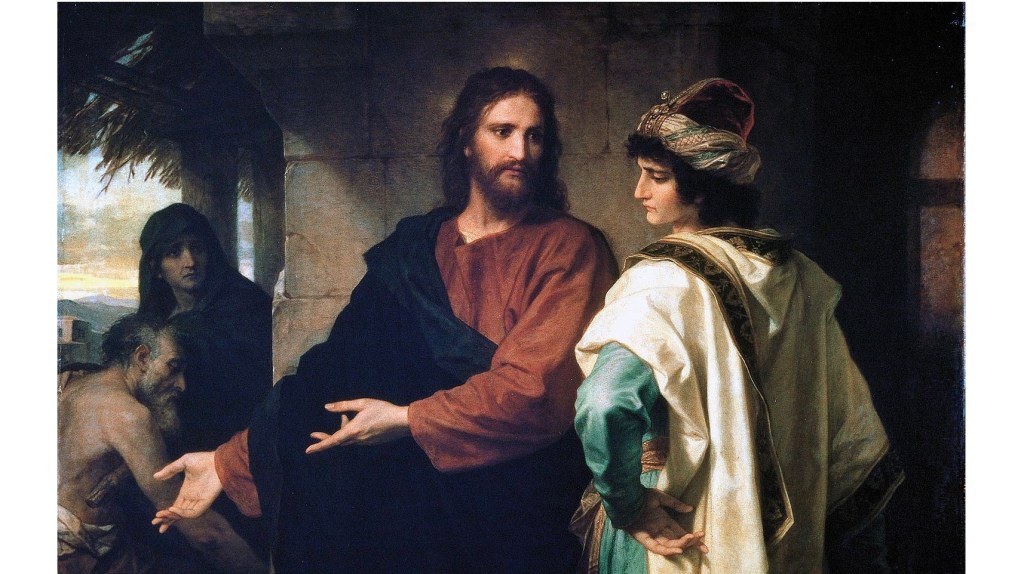
Painting: Figure of Christ by Heinrich Hofmann

Link for the Mass readings for Wednesday, May 7, 2025

“I am the bread of life.”

Yesterday and today’s Gospel readings from John are laying the groundwork for Jesus’ Bread of Life discourse. In yesterday’s account, Jesus shared with the people who gathered about him, the people who had already received the miraculous multiplication of bread, that they were not to “work for food that perishes but for the food that endures for eternal life” and Jesus also shared that they were to “believe in the one [God] sent” (see Jn 6:27-29).
In today’s account, Jesus asserted that he was even greater than Moses. The people, who believed that Moses gave them bread from heaven, asked Jesus for a similar sign, to prove he was who he said he was. Jesus reminded them first and foremost that his Father, not Moses, had given them the bread from heaven, and also as he often did, met their request but built upon it: “My Father gives you the true bread from heaven. For the bread of God is that which comes down from heaven and gives life to the world” (Jn 6:32-33). Certainly, this offer is appealing, and so the people not only want some of this bread also, they want an endless supply of it. Jesus continued to build on the foundation he had been building to the core structure of his point: “I am the bread of life; whoever comes to me will never hunger, and whoever believes in me will never thirst” (Jn 6:35).
Jesus encouraged his listeners to pursue the food that “endures for eternal life” to believe in the one his Father sent, then he shared how his Father gave them the true bread from heaven, “for the bread of God is that which comes down from heaven and gives life to the world.” Jesus is the one his listeners are to build their relationship with, for he is the very presence of God in their midst. Jesus is the promise of eternal life. Jesus is the one sent by his Father to give life to the world. Jesus is the bread of life!
We are a living craving, hunger, and desire to be one with God and each other, and this is true for the atheist and the believer alike. That which God has created, he has created good, but the material and finite will not fulfill us. We, in short order, experience the limitations of the finite and seek something more. This is how we are wired, because ultimately, our deepest hunger, craving, and desire, is that which we seek to fulfill us, and is eternal. The only One to satisfy our eternal hunger is the bread of life, Jesus the Christ, the Son of the living God.
Do we believe this to be true? Do we believe that Jesus is the bread of life, that he is the source and sustenance, the very foundation of our being and existence?
If we have been caught up: in the business of life, in the mere existence or survival mode of the day-to-day, or stuck in our sin, addiction, wounds, or disillusionment, or if we feel like we are just running on empty. If we have just taken this reality for granted, then let us seek to, “believe in the one who God sent”, commit or recommit our selves, our very life, to the one who is our source and sustainer, Jesus, the Bread of Life. When we encounter Jesus in his glorified body, present in the consecrated host, we encounter our Savior, the bread of everlasting life who will satisfy our deepest hunger and thirst.
——————————————————————-
Photo: “…this is my BODY, which will be given up for you.”