We need to be willing to see each other beyond surface judgments.

In the Gospel reading today, Jesus is accused of being an agent of Beelzebul, the prince of demons, because he was exorcising a demon from a man that was mute. Jesus addressed the critique and showed the polarizing nature of the onlookers who were unwilling to see the healing before them for what it was. Jesus then stated the obvious: “Every kingdom divided against itself will be laid waste and house will fall against house” (Lk 11:17).

If Jesus was an agent of the prince of demons, he was not a very good one. Satan seeks to sow discord and division. Jesus seeks to bring about unity. Now it is true, that five verses later in the Gospel of Luke, Jesus is recorded as saying: “Do you think that I have come to establish peace on the earth? No, I tell you, but rather division” (Lk 12:51). Anyone feeling a bit confused? Welcome to the wonderful world of the Bible!

To understand Scripture, we need to understand the context of the whole of Scripture, not just isolated verses. Throughout the ministry of Jesus, he seeks the unity that all may be one as he and the Father are one (cf. John 17:21), yet he has consistently experienced those that rejected his message and healings as witnessed in today’s Gospel account. Because of their hardness of heart, they are unwilling to acknowledge that Jesus is the Son of God and so there must be a reason for how he performs exorcisms and miracles.

The reason is that Jesus drives out demons, “by the finger of God” (Luke 11:20). His listeners would have picked up on this referential term, for the Pharaoh’s magicians and sorcerers made this same statement when they could no longer produce the effects of Moses and Aaron’s plagues after their infesting the land with gnats (Exodus 8:19). So just as Moses and Aaron were operating through the will, the finger of God, so too was Jesus.

In so doing, Jesus demands a choice. Then and now. We need to decide if we are either going to be for him or against him (cf. Lk 11:23). The division Jesus is talking about results from those who choose not to recognize that Jesus is who he says he is and reject him and those who accept him for who he is and follow him. This choice continues to cause division within households, families, and friends even today.

The greater take away from this verse and Jesus’ teachings as a whole, is that when we are unified, embracing the gift of our diversity, we are stronger than when we are divided by limiting ourselves to mere labels. In our modern context, labels, such as liberal and conservative are not helpful, whether they are being used in a political or religious context. Life is not as black and white as many would like it to be. It is certainly easier to cast labels, but interactions with people and developing relationships are much more nuanced. We are not mere cardboard cut outs, or caricatures.

To better understand the essence of who we are as human beings demands greater time and experience of each other than an outward appearance or isolated statement may portray. Many more of us, if we shake off any label for a moment, could honestly admit to believing in and supporting issues that are important to us from both sides of the so called left or right.

Many times, once we have cast a label, we believe that we have “defined” the person. They are classified in their box and tied up in a neat and pretty bow, and woe to the person who resists being boxed and bowed. I remember reading from one of the books from the tracker, Tom Brown, Jr., in which he described how many people when seeing a bird, such as a blue jay, robin, or crow, are often satisfied with the label, the naming of it, and move on from that sighting self-satisfied. They think that in that simple identification they now have come to understand all that there is to know about that particular species of bird. So much of the essence of one of God’s amazing creatures is missed by such a simplistic and limiting classification!

Unfortunately, we do the same with each other. We can prejudge others, as did some of the crowd who said that Jesus cast out this demon because he was in league with Beelzebub instead of through the power of God. We can also falsely believe we know everything there is to know about a person or group we prejudge. This is a very limiting and divisive approach. Jesus invites us to encounter people, to spend time, get to know one another, and break bread with each other just as Jesus did. In spending time with one another and being open to dialogue, the caricatures can be filled in with some substance and we can come to know a little better the person beyond the prejudgment.

If it walks like a duck and quacks like a duck, it may very well be a duck, but the duck is also so much more than its classification. This is much truer for us as human beings as well.

———————————————————————————

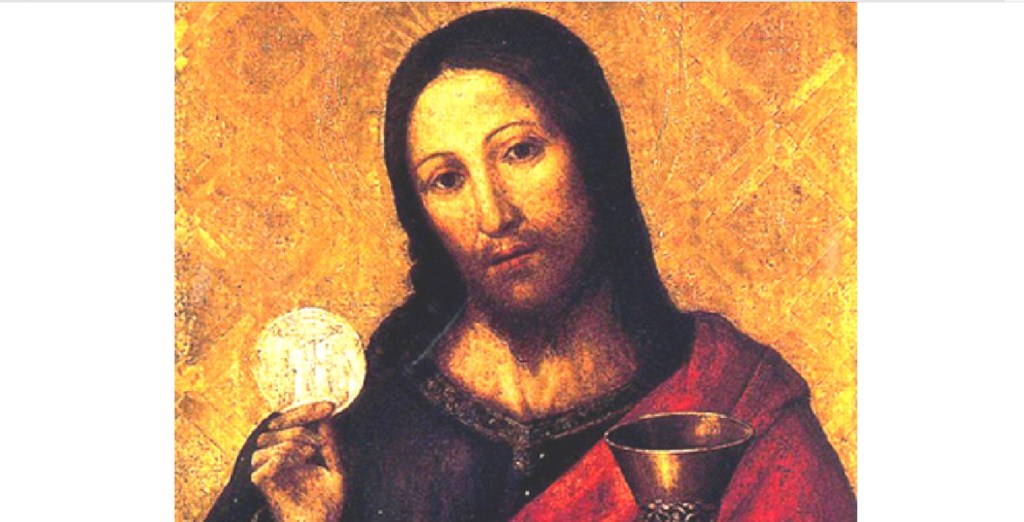
Photo: Spending quiet time with Jesus helps us to know him and to better see others as he sees them.

Link for the Mass readings for Thursday, March 27, 2025

We really can learn and put Jesus’ teachings into practice, but only with his help.

Jesus not only tells his disciples that he has not come to abolish but to fulfill the law, he constantly teaches how this is true, models how to put his teachings into practice, and empowers them to do so. This elaboration on the law and the prophets, the entirety of Jewish scripture, is highlighted well in Jesus’ Sermon on the Mount. This is evident in his Beatitudes with one example being, “Blessed are the poor in spirit for theirs is the kingdom of heaven”, and another example from his Six Antithesis show the building on the Torah more vividly: “You have heard that it was said ‘an eye for an eye,’ but I say to you offer no resistance to one who is evil”. Jesus clearly begins with quoting the law, “You have heard that is was said”, and then offers his elaboration by stating with authority, “But I say to you”.

If we seriously take the time to read through Jesus’ teachings, we will see quickly how challenging they are. Jesus is not lowering the bar of discipline for his followers, but instead, raising it. Jesus is not putting heavy burdens on us for burden’s sake, he seeks to make us holy, to guide us to be restored to our original glory that God has intended from the beginning. He himself lives what he preaches, but Jesus is no ordinary teacher or mentor. The principles that he teaches, forgiving seventy-seven times, loving our enemy, giving up all to follow him, seemed impossible to his disciples then and to us today as well.

At face value, we may think that many of Jesus’ teachings are not possible to put into practice or very practical in our day and age. This is why many people do not follow in the tradition and walk away. Attempting to do so with our willpower alone may lead to coming up short each time, and feeling more frustrated, and/or not wanting to even put in the time and effort to do so. Jesus does not expect nor desire us to accomplish living as his followers on our own efforts. Much to the opposite. We are to yolk ourselves with him and be open to the transforming power and love of the Holy Spirit acting through us. This happens when we daily invite Jesus into our lives and are humble enough to follow his lead and to ask for his help in putting into practice what he requires of us.

We become a disciple of Jesus when we are willing to study his life, learn and put his teachings into practice, and surrender ourselves to his will through prayer, discipline, worship, service, and participation in the sacraments. Ultimately though, it is nothing we do, other than ask for his help, open our hearts and minds to and allow Jesus to live his life in and through us. As we are transformed and see that with Jesus all things are possible, we are transformed by his love and conformed to his life such that we can say with Paul, it is no longer I who live but Jesus who lives in me (cf. Galatians 2:20).

The path of faith is not a sprint or a one-time event, but a marathon, a life-long journey. Each one of us can be assured that Jesus is with us for the long haul, every step of the way. No matter what trials or challenges arise, we can meet them with Jesus. We need to resist focusing on the temptations, refuse to make decisions from a fearful or reactive state, and instead lean into Jesus and on each other. We will not only make healthier decisions, we will grow stronger and closer to God and one another, no matter what arises.

————————————————————————–

Photo: View coming out of our hall after leading Tuesday night Bible study. God’s word is indeed alive!

Link for the Mass readings for Wednesday, March 26, 2025

Mary, the model of faith, can help us to grow in our faith.

Why celebrate the Annunciation at the beginning of the third week of Lent? Simple math. If we celebrate the birth of Jesus on December 25, it is logical to celebrate his conception nine months earlier on March 25.

Gabriel, an angel, a messenger of God, a spiritual being, interacts with a human being; though Mary is not the first one to experience such an encounter. There are personal encounters with God and his messengers throughout the Bible. This is how the God of Israel, the God of Jesus Christ acts, person to person, through invitation, either directly himself or indirectly through one of his angels.

We can read such encounters going back to Genesis. God invited Abraham to be the father of a people that God would call to be his own. This reality would come to be with the birth of Isaac, while Sarah, like Elizabeth, was well past child-bearing years. Jacob would wrestle all night with an angel and become the father of the twelve tribes of Israel, during the time of the Judges the mother of Sampson, and Hannah, the mother of Samuel, both barren women would encounter angels bearing the message that each would give birth to those who would grow to lead the people Israel in their time of need. Moses, the judges, David, and the prophets all would hear and answer God’s invitation. Zechariah had an encounter in the temple and his wife Elizabeth, also barren and older, would give birth to John the Baptist. God has communicated and reached out to his created beings in history, at specific times and in specific places.

With Mary, this announcement and encounter was different, for, at this appointed time, the Son of God himself would become, while remaining fully divine, a human being in the womb of Mary. The God who is. Period. Full stop. He is not a being, not a human, or even a supreme being. Infinite Act of Existence, the Sheer Act of to Be, at the appointed time was sent to take on flesh. This is the message that Mary receives, and we can understand why she might be “troubled”. Mary, the model of discipleship, pondered what this might mean as Gabriel said to her:

“Do not be afraid, Mary, for you have found favor with God” (Lk 1:30).

Mary, who knew the arch of salvation history as briefly sketched above, knew of the encounters God had with his people, her ancestors. She knew of the promised coming of the Messiah as she and Joseph were both of the line of David. She would now be the bridge between heaven and earth, the bridge between the old and the new covenant, the bridge between a people lost and a people to be found. Mary in her fiat, her “yes,” would become Theotokos, the God-bearer.

This is a solemnity that we celebrate each year because the Son of God has been born to us because Mary said “yes.” Yet, her yes is not in isolation. It was made possible by so many who had gone before her. Joachim and Anna, Mary’s parents who provided care and guidance, as well as the many named above and not named throughout the Biblical tradition who said, “yes” to God and played a part in making this moment possible. Mary is not alone in the Annunciation, not alone in this definitive moment. This is the distinctive feature of Judaism and Christianity: We cannot save ourselves. We are not God. Our very life as created beings is a gift from God and we are in need of constant help and support from God and one another (cf. Lohfink, 254).

God invites us, not just today as we celebrate the feast day of the Annunciation, but every day. Each day is a day to ponder, to wonder, to be still, to be silent, to be in awe. The Son of God, the Second Person of the Trinity, loves us so much more than we can ever imagine, more than we can ever even begin to conceive, that he became one with us in our humanity so that we can become one with him in his divinity. Us, you reading this, me writing this, and each unique person taking a breath on this earth.

No matter how much we have messed up, no matter how distant we feel we may be from him, no matter how confused, overwhelmed, disillusioned, Jesus, is present for and with us. The question is not whether we are worthy to play a part in salvation history, for none of us are worthy. The question is, “Are we willing?”

Are we willing to trust as Mary did even when we may not understand God’s will for our lives. Mary’s answer to her invitation was: “Behold, I am the handmaid of the Lord. May it be done to me according to your word” (Lk 1:38). We too are called to participate in God’s invitation. What will our response be?
——————————————

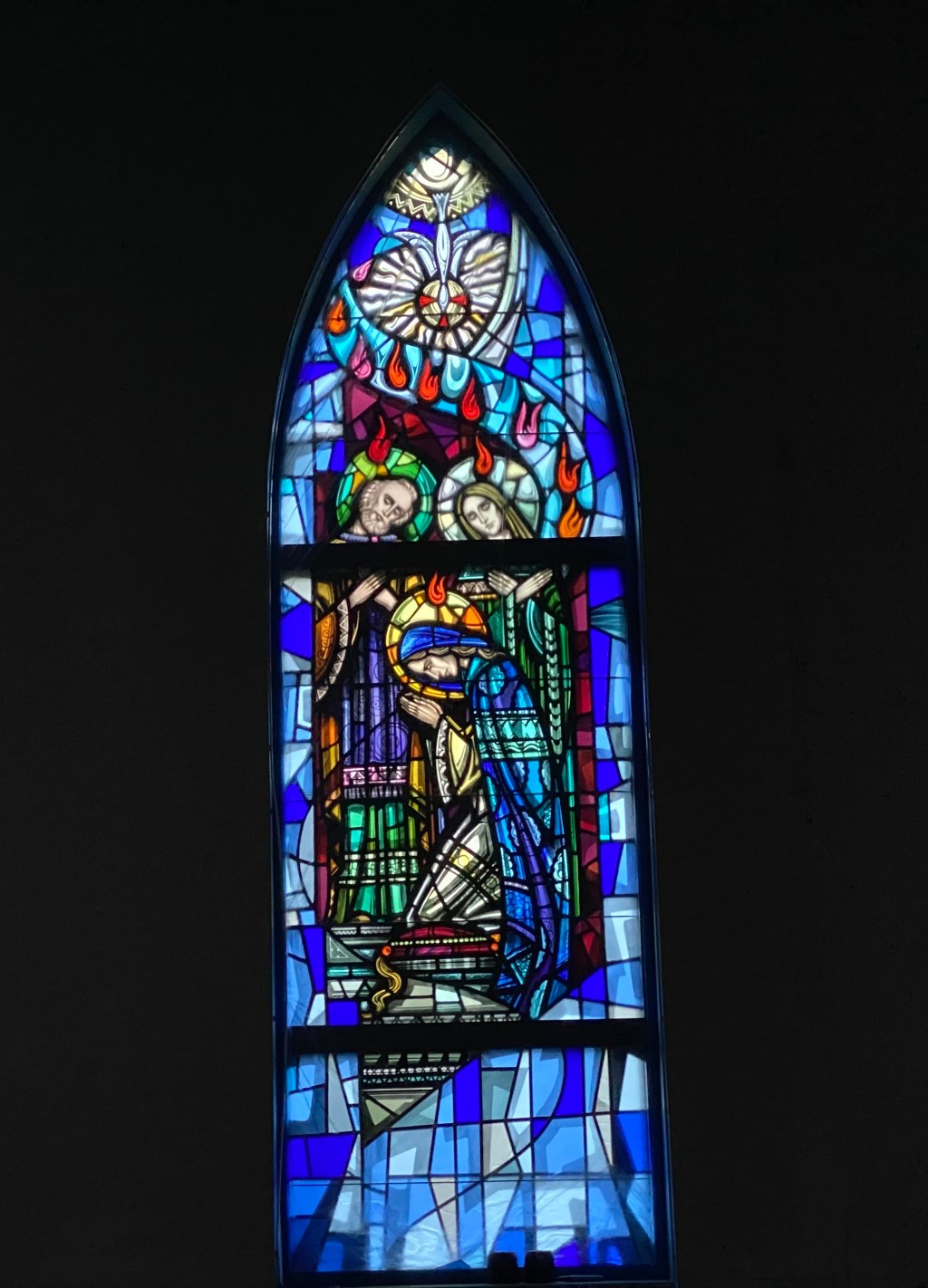
Painting: Some quiet time with Mary, Holy Cross Catholic Church, Vero Beach, FL.

Lohfink, Gerhard. No Irrelevant Jesus: On Jesus and the Church Today. Collegeville, MN: Liturgical Press, 2014.

Link for the Mass readings for Tuesday, March 25, 2025

Would we accept Jesus reaching out to those we consider “Gentiles” – other?

The people in Jesus’ hometown synagogue in Nazareth are incensed, rise up to drive him out of town, “and led him to the brow of the hill on which their town had been built, to hurl him down headlong” (Lk 4:29). What got Jesus’ hometown crowd so twisted and contorted? Not only did he stand up earlier in this account of Luke and proclaim that he, the carpenter, was the fulfillment of the prophecy of Isaiah, but it was to the widow of Zarephath that Elijah came and Naaman the Syrian that Elisha healed.

All three of these points may be a big ho-hum to us, but they were a big deal to his people. Being a carpenter, more likely a simple day laborer, was not high on the social status ladder even in a poor town like Nazareth. The gospel writers even show the sensitivity of this. In the Gospel of Mark, Jesus is mentioned in this scene as  “the carpenter” (6:3), in Matthew, “the carpenter’s son” (13:39), and in today’s Gospel of Luke, “Joseph’s son” (4:22). By the time we get to Luke’s account, Jesus is not even associated with the trade of carpenter, how could someone of such simple and humble means assert the mantle of a prophet, let alone the Messiah?

Jesus does not go quietly in the night as the people’s wonder at his words turn to doubt and consternation. Jesus instead gives two seemingly obscure examples of people who receive God’s blessings. There were many widows and lepers in Israel, but it was to the widow of Zarephath that Elijah came and from Elisha that Naaman the Syrian received healing. The significance of these two people was that they were Gentiles, they were other, they were not part of the chosen people. Jesus is aligning himself in the prophetic tradition of Isaiah with the universal promise of God’s salvation that would also go out to the Gentile world. Jesus is invoking a choice that will consistently ripple throughout the remainder of his public ministry. People will either embrace his universal ministry or they will oppose it.

Jesus said to his own people, from his hometown, “Amen, I say to you, no prophet is accepted in his own native place” (Lk 4:24). We may look and wonder why Jesus would say such a thing and why after speaking of the widow of Zarephath and Naaman the Syrian that these same people were “filled with fury” and sought to throw him headlong out of town. One concrete reason is that Gentiles had been oppressing the Jewish people for generations. Beginning with the slavery they experienced in Egypt, the conquering of the ten northern tribes of Israel by the Assyrians, the Babylonians decimated the remaining southern tribes, exiled, and destroyed the Temple. After their return from exile, they suffered the occupying power of the Greeks, and during the time of Jesus’ preaching, the Romans. The hope of most Jews was that the Messiah would come to evoke a military uprising and overthrow their Roman occupiers.

Jesus’ hometown crowd was none too happy with Jesus’ universal message. We might too quickly judge them, but if we resist domesticating Jesus and allow ourselves to hear his words echoed today from our podiums and ambos, might we feel some of the same angst that the people of Nazareth felt? Who might we not be willing to welcome into the universal invitation of salvation that Jesus is still inviting us to experience in our day?

Would we embrace his message or begin to cross our arms and seethe? Would we too want to rise up and reject Jesus outright? If we are humble this Lent, we can walk up to Jesus and ask him to heal us of our own prejudices and biases, we can come to realize what gifts he has given us, and ask him to show us what ways we can bring glad tidings to those in our families, parishes, and communities. The choice is ours. Will we be an obstacle to Jesus’ healing or welcome the Holy Spirit to fall afresh upon us?


Photo: Jesus in the synagogue of Nazareth from Jesus of Nazareth, Franco Zeffirelli film, 1977

Link for the Mass readings for Monday, March 24, 2025

Jesus helps us to repent, to prune, and to uproot so that we may receive the life of God within us.

In today’s Gospel, Jesus presented the importance of repentance, of changing our minds and hearts, to turn away from our sins and to turn back to God. This means we need to acknowledge anything that we are placing before God. Anything or anyone that we place before God is going to be off the mark, for we are to seek God and his kingdom first and all else then has a better chance to be properly ordered as we grow in our relationship with God.

In our first reading, Moses is faced with an interesting sight, a bush on fire. The interesting feature is that this bush is not being burned. Moses draws closer and is welcomed by the voice of God to remove his sandals and approach. Moses does and God calls Moses further to go to Egypt to free his people. Although, we do not read in this account about Moses resistance to this invitation, Moses does resist but repents from his hesitation and lack of trust in God and follows his guidance. Because he does so, Moses frees the Hebrews from their slavery.

Jesus then in the Gospel of Luke has been sent as was Moses, but God to free us from our slavery to sin. He recalls to historical tragedies in which men from Galilee are horrifically and sacrilegiously killed at the hand of Pontius Pilate, and then tragically, how eighteen people were killed when the tower of Siloam fell on them. In both cases, Jesus stated that the reason for their deaths was not because of their sins while at the same time after relaying each account he shared with his listener’s: “If you do not repent, you will all perish as they did” (Luke 13:3, 5).

Just the prophetic rhetoric that causes the jaw to drop and the mind to be shaken awake. Jesus will follow with a gentler expression of the mercy of God by sharing the parable of a fig tree. The owner of the orchard wants to cut it down because it has born no fruit. The gardener appeals to the owner: “‘Sir, leave it for this year also, and I shall cultivate the ground around it and fertilize it; it may bear fruit in the future. If not you can cut it down.’” (Luke 13:8-9).

Jesus is the gardener who has asked to cultivate, prune, and weed. This is why since he began his public ministry he said, “This is the time of fulfillment, the kingdom of Heaven is at hand, repent and believe in the Gospel” (Mark 1:15). Jesus’ mission is to help us to understand the importance and need to repent, to turn away from sin and turn back to God. He is inviting us to nothing less than “a radical reorientation of our whole life, a return, a conversion to God with all our heart, an end of sin, a turning away from evil, with repugnance toward evil actions we have committed” (Catechism of the Catholic Church, 1431).

Jesus does not define us by our worst mistakes, yet he also recognizes that we cannot just go along and do whatever we want to do on our own terms apart from God. In doing so, we will continue to not bear fruit because with each action and decision opposed to the will of God, the source and sustenance of our lives, our growth becomes stunted and disordered.  Jesus meets us where we are, loves us as we are, and then cares enough to show us the branches that need to be pruned and the weeds that need to be uprooted. Are we willing to receive his love and nourishment? Are we willing to repent and begin to prune and uproot? If so, pray this prayer with me to Jesus.

Jesus, help me to recognize that your grace is sufficient and builds upon our nature. May we trust in you as our Divine Gardener to: prune our pride, that we may bear the fruit of humility; our envy, that we may bear the fruit of mercy; our anger, that we may bear the fruit of meekness; our greed, that we may bear the fruit of generosity; our lust, that we may bear the fruit of chastity; our gluttony, that we may bear the fruit of temperance; our sloth, that we may bear the fruit of diligence; and our sadness, that we may bear the fruit of joy.


Photo: One of our oaks struck by the tornado last year. The dead limbs were cut, branches pruned, and new life has begun.

Link for the Mass readings for Sunday, March 23, 2025

Lent is a time for reconciliation and to come home to the Father.

Those who edited the lectionary readings for the day chose to present the parable of the lost son and skip the parable of the lost sheep and the lost coin. This trilogy of parables is found in Luke chapter 15. Reading the three together allows us to get a better sense of what Jesus is showing. There is great joy in finding what has been lost, there is great joy in being found! Maybe we can recall something or someone that had been lost and then found, or have we ever experienced a time where we had been lost or separated, or a time when we have experienced a time of reconciliation from someone that we have been estranged from?

I was somewhere in the age range from about six to eight when I came to the realization that I was separated from my parents in the Enfield Mall in Connecticut. I believe it was close to Christmas and we were in the toy store. I must have become distracted by something interesting, and stayed to investigate, while my parents and sister continued on. At some point, I became aware of that fact. It did not take long for the anxiety and fear to rise within me and the tears to well up. I walked through a few isles with no success in finding my family and then I headed toward the entrance that led out into the main mall.

Before continuing on I remembered my mother telling me that if I ever got lost, that I was to stay where I was and she would find me. As I stood indecisively and wondering what to do, a woman noticed my predicament and led me to a stone bench outside the store. We sat and she stayed with me until my parents returned. I am sure the time of separation seemed a lot longer to me than the actual time, and much of the memory is fuzzy, but the anxiety of separation had an impact on me as did the relief and joy of reconciliation!

In my story as well as each of these parables, there is a great joy for that which has been lost and found. How many of us are not even aware of our separation from God or each other? While I was in my own world of material wonder, I was left behind. The son who had squandered every bit of the inheritance he asked of his father before his death, realized not so much that he had really messed up, but that he was in a dire situation, and he made the right decision to come back home. His father never stopped looking for him, he actually saw his son returning “while he was still a long way off” and “filled with compassion. He ran to his son, embraced him and kissed him” (Lk 15:20).

This father is not seeking his son to bow before him and prove his repentance, his loyalty, and allegiance. The father runs to his son without hesitation. This act is no small thing, for an elder to run to a younger family member was unheard of and simply not done. He was breaking this social taboo, most likely to redirect the focus away from his returning son; the one who had betrayed his father, the son who would receive glares and snide remarks. Instead, the father rushed out with a reckless abandonment of love to embrace his son. The jaw-dropping, followed by echoes of gossip surely rose in chorus about the father’s present actions, not his son’s past actions.

God is watching and waiting, seeking opportunities to run to us with compassion and love to welcome us home as the father did in the parable of the prodigal son. God is also like the shepherd who does the absurd in his outpouring act of love, leaving the ninety-nine sheep to go and find the one stray. God seeks each and every one of us just like that shepherd. God is represented by the woman who rejoices over finding one seemingly insignificant coin, for God rejoices in our turning back to him because not one of us is insignificant to him. We are all precious to God, each in our own unique way, and he loves us more than we can ever imagine.

No matter the reason that we have strayed, no matter the temptations and distractions we have fallen for, and/or how far we have wandered away, God loves us more than we can ever mess up. Lent is a season to open our eyes and recognize where we are in our relationship with God and with each other, to recognize the separation our choices have caused, and begin to turn back to God and those we are estranged from within our lives. There is indeed great joy in the healing of relationships and reconciliation! Lent is a time to be found, Lent is a time to come home.

——————————————————————–

Painting: “The Return of the Prodigal Son” by Esteban Murillo

Link for the Mass readings for Saturday, March 22, 2025

Envy and greed are deadly, thankfulness and generosity give life.

A foundational quality of a good leader, whether he or she be a political or religious leader, would be that they are seeking the best interest of those they serve. They also seek to be good stewards. Unfortunately, self-interest is a tremendous temptation. For how long are they willing to approach the position as one who is willing to serve instead of being served? Another important attribute in a leader is their openness to critique and guidance when they are in need to hear it.

Jesus in today’s parable presents a landowner who turns his vineyard over to tenant farmers. They are to oversee the crops to bring about a productive yield of grapes come harvest time. A mutually decided upon part of the harvest would then be offered to the landowner. Unfortunately: “When vintage time drew near, he [the owner] sent his servants to the tenants to obtain his produce. But the tenants seized the servants and one they beat, another they killed, and a third they stoned” (Mt 21:34-35). Eventually, the owner sends his own son, and the tenants kill him.

Jesus offered this parable as a mirror to the “tenants” of his time, the chief priests and Pharisees. The vineyard is an image used to represent Israel. Clearly, the owner is God, and the tenant farmers are those in leadership positions overseeing the care of Israel. We do not know which leaders hearing this parable took it to heart and changed their minds and repented from their self-centered focus. We do know that there were those who carried out exactly what Jesus laid out in the parable. They persecuted, beat, and killed the prophets, and would do the same to Jesus.

Jesus offered this parable hoping to soften the hearts of the leaders who were seeking to arrest him. He was hoping that they would repent, like Isaiah and the prophets had sought to influence the generations before him. The leaders that Jesus shared this parable with unfortunately did not receive Jesus’ message, as was highlighted vividly when Jesus asked what the owner ought to do to with the wicked tenants. The chief priests and the elders did not show any mercy at all but instead, called for the death of the unfaithful tenant farmers. In refusing to repent and condemn those in the parable, they heaped punishment upon themselves.

Jesus said, “the kingdom of God will be taken from you and be given to a people that will produce its fruit.” The parable was not just for the chief priests and the elders, nor just for his disciples then, but also is for us today. All of us are stewards awaiting the return of the Son of the Land Owner. May we have eyes to see and ears to hear so that we may resist the temptation of the unfaithful tenant farmers. Let us not grasp at but instead receive and be grateful for what God has given us, resist the deadly sins of envy and greed, and be good stewards, as generous as God is with us.

—————————————————————————————-

Photo: 6th century, Eastern Orthodox icon of Jesus. Grateful for his life, teachings, love, and guidance.

Link for the Mass readings for Friday, March 21, 2025

Ourselves first or God first, will impact our discernment in helping others.

The Parable of the Rich Man and Lazarus that is offered for us today from the Gospel of Luke 16:19-31 is well worth the read. Jesus challenges us through parables such as these. For the people of his time, those who had wealth and status in society did so, it was believed for the most part, because they were blessed by God. And likewise, those who were poor, were so because of God’s punishment. When the rich man and the beggar, Lazarus, die, I am sure Jesus paused to allow his listeners to imagine what would happen to these two men and to give their presumptions some time to ferment. Many would not have predicted what happened next.

Lazarus was taken up “by angels to the bosom of Abraham” (Lk 16:22). The rich man found himself suffering from the torment of flames, such that he was parched, begging just for a drop of water from Lazarus (cf. Lk 16:23-24). Abraham, the model of faith and father of Judaism, was not sitting with the rich man, who must have always been seated at the highest places in his day. Now that seat, at the bosom of Abraham, was offered to Lazarus. There was no hope at this moment for the rich man to cross over because of the wide chasm that separated them. An ironic subtlety was afoot as well in Jesus’ telling of the parable to the Pharisees. Lazarus the poor beggar is named, whereas, the rich man is not. Some biblical scholars, based on the context of this exchange with Jesus and the Pharisees, believe that Jesus was alluding to the rich man to be Herod Antipas and indirectly calling out the Pharisees for their too close of an association with Herod, especially in leading to the death of John the Baptist.

This state of suffering and separation for this rich man, the uncrossable chasm, is a revelation of the life he lived prior to his death. He walked over or by Lazarus day after day not giving him even a second look. Lazarus would have been grateful even for the mere scraps that fell from the rich man’s table, just as the rich man now sought just a drop of water from the finger of Lazarus. The rich man committed the root offense from which sprouts much of our sin; he failed to bother, to care, to love his brother, to will his good. He failed to come close to Lazarus who was in need.

Jesus’ parable of the Rich Man and Lazarus, echoes very closely Matthew 25:40, “whatever you did for one of the least brothers of mine, you did for me.” How we treat others matters. Failing to care, to reach out to those in need around us is sinful. We, probably like those who first heard this parable, experience time and again, a wicked mind storm that swirls with reasons, rationalizations, and justifications as to why we do not reach out to help others. The majority, if any, are not valid. We are invited to give and to love joyfully from a natural, not a hesitant disposition, to provide aid and support.

Almsgiving is one of the three pillars of Lent. The first step is to be aware of those who are in need. This can be in our own home! Second, when we see someone in need and we feel the wind and the waves of our mind surging with reasons of why not to help, it is important to take a breath and call on Jesus to calm the storm of our minds. In that moment of pause, may we allow our eyes to adjust so that we can see the person before us as a human being, as a brother or sister with dignity, value, and worth.

What we are to seek in each moment of encounter with another is the guidance of Jesus. We are to allow him to work through us so that we may be present and allow God to happen in whatever form or act of kindness that he directs us to take. We can do this best when we are daily entering into God’s word and allowing the Old and New Testament readings to shape and transform us. In this way, when we trust “in the Lord”, we will be “like a tree planted beside the waters” (Jeremiah 17:7-8).

Almsgiving as one of the pillars of Lent is a helpful practice that will help us to grow in compassion and generosity. What will help us to grow in the practice of this pillar as disciples of Jesus is to seek to be nourished by God’s word and his laws that teach us how to love one another. If not sure where to begin, we can pause and listen to Mary and do the same as she directed the servants at the wedding feast, “Do whatever he tells you” (John 2:5).

——————————————————————-

Photo credit: “The Rich Man and Lazarus” by John Everett Millais

Link for the Mass readings for Thursday, March 20, 2025

Discerning? Trust in Jesus, Joseph, and the angel of the Lord.

Who do we want to be? It is so easy to get caught up in being busy, taking care of children, the home, school assignments, work, as well as a myriad of other activities that each of us, experiencing our unique vocation in life, can add to the list. These can all be good things, but we can lose ourselves in our business and responsibilities such that we slip into a state of survival mode or merely existing. One day can move into one week, into one month, into one year, and then we wake up one morning and wonder where the last ten years have gone!

We can fall into the trap of being defined by what we do instead of who we are and who God is calling us to be. God has a plan for each one of us with the end result being eternal communion with him in heaven. Living a life of holiness and becoming saints is who God seeks each of us to be. We need to remind ourselves of this from time to time, by assessing where we are now and if we are listening to the guidance of God.

Our Gospel account from Matthew today gives us an opportunity to see holiness in action. Joseph has become aware that Mary, his betrothed, is with child and he is not the Father. Joseph, “a righteous man” follows the law, but is “unwilling to expose her to shame, decided to divorce her quietly” (Mt 1:19). Joseph’s life of righteousness pulls him to follow the law, yet he shows that discernment in matters of the dignity of the person is just as important. Joseph not only was unwilling to make Mary into a public spectacle but was also unwilling to allow the possibility of her to be stoned to death.

Joseph pondered the idea of divorcing her quietly. Before he made his final decision, Joseph slept on the matter, which is often a good course of action when weighing such a heavy issue. How many times do we rush into decisions only to regret them later? Joseph receives God’s direction through the angel of the Lord in a dream.

When Joseph awoke in the morning, he did not dig in his heels feeling that he knew best, that he knew better than Gabriel, and returned to his original decision. Joseph did not let fear or anxiety about the possible scenarios that were running through his mind regarding what others may say or think sway him, nor did the possible and real difficulties he could envision deter him. Joseph trusted in God. With confidence and assurance of who he was and what God called him to do, Joseph acted on the guidance he had received.

St. Joseph is a model for us. When faced with decisions to make, we need to remember who we are, whose we are, and who we are called to be. We are children of God, and that means we belong to God, a God who loves and cares for us. He has a plan for each of our lives. Every decision and action is a step in fulfilling that plan.

When we are discerning, no matter how large or small, we are invited to gather information, look at the reasonable options available, all the while, continuing to seek God’s guidance. God will guide us through many means and ways such as a thought, a family member or friend sharing an insight at an opportune time, as well as through our dreams. Joseph followed these steps and God granted him not only the guidance he sought but the support to fulfill the commission he received. We can be assured that God will do the same as we discern his direction too.

St. Joseph, pray for us!

——————————————————————–

Painting: Closeup of Rembrandt’s “Dream of St. Joseph”

Link for the Mass for Wednesday, March 19, 2025

Jesus will not let us down, and he will help us to be faithful even when we fall.

The challenge of Jesus’ convicting the hypocrisy of the Pharisees may be one for which most hearers and readers would agree with: “For they preach but they do not practice. They tie up heavy burdens hard to carry and lay them on people’s shoulders, but they will not lift a finger to move them” (Mt 23:3-4).

We have an innate sense that alerts us to hypocrisy and when hypocrisy raises its head with religious leadership it can be catastrophic because many look to our leaders, and rightly so, as representatives of the God they are to be serving. The inexcusable behavior not only affects how we look at our leaders, it also affects the way we look at the institution, as well as God. The Catholic Church is still reeling from not only those clergy who have abused children, but those bishops who have covered up the abuse.

As horrific as these acts are, and even though there have been many improvements that have been made to put practices and protocols in place, the damage is still there and will take time to heal. There also are many other ways that people have been hurt or disillusioned by the hypocritical actions and statements of priests and leaders in the church. It is easy to give up, walk away and say this is not my problem, to point fingers and justify our own acts of hypocrisy by saying well at least I am not that bad. Yet even the human frailty and fallen nature of each of us does not change the truth that Jesus is the way, the truth, and the life. He is the source of our being and fulfillment.

Even for those who have left the Church, many would say they are still spiritual. This is true because, we all have the inborn desire to be in relationship with the God who has created us. Those of us who are followers of Jesus, are to receive the message as he gave it then directed toward the religious leadership of his time, as well as it was given for his disciples, and as well as each of us who follow him today. The standard that is set and for which we strive after is to live as Jesus lived his life. Jesus always pointed the way to the Father. We as human beings are finite and we are going to make mistakes and sin. While Jesus is our model, even more, he is the source for our living faithfully to his teachings. Through his forgiveness and love working through us and directed out toward others, we are capable of standing up for the dignity of those entrusted to us within our realm of influence. For we are to be our brothers’ and sisters’ keepers.

If we want to guide someone in the ways of our faith tradition it is not enough to say this is what you need to do and live accordingly. We need to put into practice and live what we are sharing, be willing to accompany, assist, and walk with them along the way. As a Christian, just giving someone the Bible, saying there you go, that’s all you need, and quoting a couple of scripture passages is not enough. If we are sharing a principle to put into practice and we are not willing to lift a finger to help them, or worse to not put it into practice ourselves, we do more damage than if we said nothing.

Jesus has been calling us again this Lent to resist judging and condemning, to love our enemies, to be forgiving, and merciful. Powerful actions to live up to and even a heavier lift than the laws of the Pharisees. To say that the bar Jesus sets is high is an understatement, but he who lived them out calls us to do so. We not only learn how to act from reading about the life and teachings of Jesus but even more importantly, when we pray with, meditate upon, contemplate, and then seek to put into action his teachings, Jesus empowers and assists us to live them out. Apart from him we will not be able, with him all things are possible.

Even when our leaders fall, we need to remain in the Church. Nor can we use poor leadership as an excuse not to be willing to see where we sin and seek to improve. When we miss the mark, let us be humble, ask Jesus for forgiveness, and his help to continue on step by step. From our own experiences of falling down and getting back up, we are better able to help others. The most important guidance we can give anyone is to help them to encounter and experience Jesus for themselves. Even when we fall, they will still have Jesus as their ultimate guide. Then we can hold each other accountable and help each other as we continue our journey through this life side by side.

————————————–

Photo: Mosaic of Christ Blessing, in the cathedral in Cefalu, Sicily, Italy. Cover image from The Gospel of Matthew by Mitch and Sri, Baker Academic, 2010.

Link for the Mass readings for Tuesday, March 18, 2025