When we allow God to love us, we can love as well, even our enemies.

Jesus said to his disciples: “To you who hear I say, love your enemies, do good to those who hate you, bless those who curse you, pray for those who mistreat you” (Luke 6:27-28).

If we thought the beatitudes and the woes that we experienced yesterday was a challenge, today, Jesus takes things up a notch higher. The Prince of Peace is inviting us to walk along the path to peace. The peace that Jesus invites us to engage in is not just an absence of violence but a peace that is grounded in mutual respect and unity. No matter where we might look, there are very few examples or models for us to see this Gospel being put into practice. We instead see a consistent engagement in rhetoric, language, and outright hostility that promotes dehumanization, division, contempt, hatred, and vileness. These voices not only rise in our secular and political discourse but also there is a growing din within the Church as well.

Jesus is also leading us away from the temptation to swing the pendulum the other way, such that what we think, say, and do has the substance of milk toast. We become so careful not to offend that we don’t share our ideas or what we truly believe to avoid conflict. Staying away from hot button issues and the taboos of talking religion and politics is not a way to bring about peaceful coexistence nor solve important issues.

Neither an overly aggressive nor a bland tolerance of engagement is what Jesus is presenting in today’s Gospel. Jesus is inviting us to allow ourselves to be healed and transformed from the survival mentality of fight or flight or paralyzed by trauma. To move beyond our primal, reactive instincts, we need to feel safe. By breathing and allowing ourselves to be loved by God through meditation on his word and listening to him and his guidance in silence each day, we can begin to as we started yesterday, to move beyond placing anyone and anything else before God. As we grow in relationship with God, he becomes our rock foundation.

With God as our foundation, we can begin to open up to the reality of what Jesus offers in today’s Gospel. Who of us would agree to love our enemies, those who hate, curse, and mistreat us? Jesus is calling us to love one another as he loves each and every one of us. This love is more than the emotional or sentimental surface level of love we are used to. Jesus calls us to a higher love, to have a sincere intent to will the good of each other, even and especially when we feel or think there is nothing to like about a person. This is how we can love even an enemy, by willing their good, wanting the best for them, which also is best for us.

If we want to see a change in our divisive and polarized time this 9/11, we need to begin with ourselves, receive the message of Jesus, and begin, little by little to put his teachings into practice. We need to encounter one another, one person at a time, sit down, talk, and listen, and love one another. Easy, no, possible, yes, when we allow God to open our hearts and minds to the love God wants to share with each of us. As we breathe, receive, rest, and abide in his love there is a better chance we can love one another.

——————

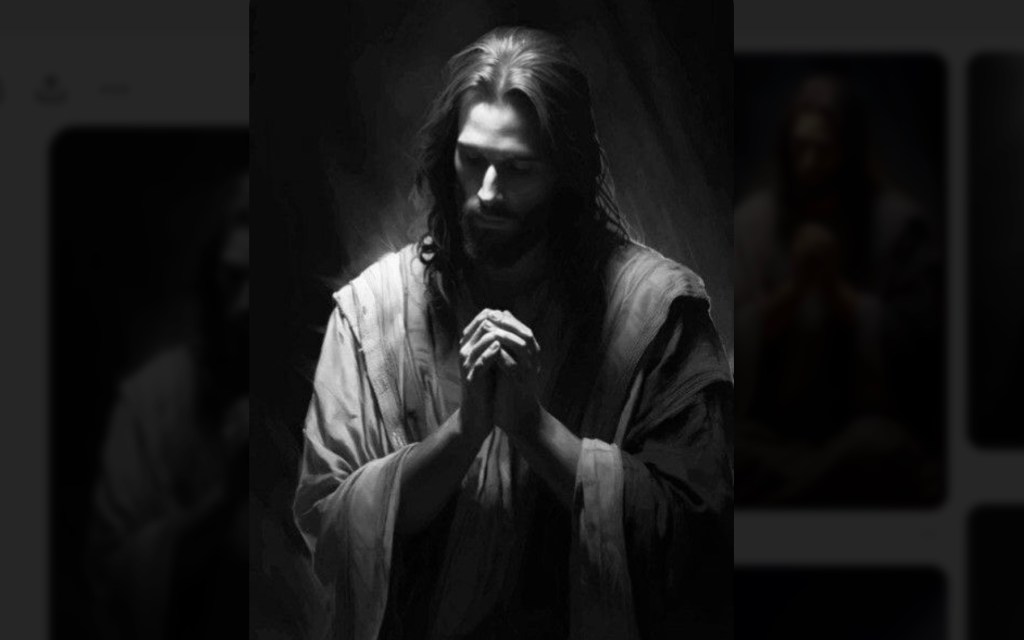
Photo: Praying for our country that we can turn away from violence and embrace the love of God.

Link for the Mass readings for Thursday, September 11, 2025

The beatitudes lead us away from the false promises of this world to experience real joy!

Blessed are you when people hate you, and when they exclude and insult you, and denounce your name as evil on account of the Son of Man” (Lk 6:22).

The Beatitudes are contrary to much of what too many of us are tempted by when seek our satisfaction, security, and fulfillment. Much of us are lured in some form or fashion, by power, fame, wealth, pleasure, and celebrity. What is more, how many of us who proclaim to be people of faith resist Jesus’ teachings because of self-centered reasons? We hold on to things that keep us from God, that really do not make us happy.

In today’s Gospel account from Luke, Jesus began to teach his disciples on a deeper level. He had just chosen the twelve by name and that number would not have slipped by them. Their thoughts were more than likely moving closer to the realization that Jesus was the Messiah, the promised heir of David. Would he be gathering them together to restore the twelve tribes of Israel and overthrow the occupying power of Rome? Yes, but not in the way they were thinking.

Jesus’ presentation was not about taking up military or physical armaments, but spiritual ones of attaining the  kingdom through four blessings and dashing the common hope with four woes. Jesus’ message is a universal message, an invitation to and for all who have ears to hear as well as hearts and minds open to receive. Jesus spoke not only to his twelve newly hand picked followers as wells as those from “Judea and Jerusalem” but also those from the “coastal region of Tyre and Sidon” (Luke 6:17). That Jesus did not dismiss but was teaching those from Tyre and Sidon would not have been missed either. They were from Gentile territory.

Jesus’ teachings challenged all present and they challenge us today to evaluate where we are placing our trust and security. If we are placing our trust in the things of this world, the four woes section is for us, for that which is finite and material are fleeting and passing. By placing our trust in Jesus, his Father and the love shared between them, the Holy Spirit, the beatitudes will lead us to experience joy.

Being poor, hungry, in mourning, hated, excluded, insulted and denounced as evil will bring us happiness? Yes. Because each of them counter the typical substitutes that we can be tempted by and place before our relationship with God. Each of the beatitudes that Jesus offers are invitations to experience true joy. We just need to be willing to relinquish putting self first and seeking pursuits apart from God’s will.

When we rely more on God and less on material things, even relationships, when we depend more on God alone, our relationships and our pursuits will be more properly ordered. With God first, we will experience order and peace and… what is so fleeting to so many who seek both in the things of the world, we will experience real rest. If we are serious about being Jesus’ disciple, then a good place to start is learning and living the beatitudes. This is no easy task but when we look at each one and begin to detach from the attachments they allude to, “we will rejoice and leap for joy” (Lk 6:23)!

Joy because we will then have the inner freedom to experience the good things that God gives and less ensnared by them. We will be fueled not by the advancement or aggrandizement of self, but by emptying our ego, we will have room to receive the love of Jesus, the source of our joy, which wells up from within and never runs dry! Jesus is the kingdom of Heaven that is at hand and he will lead us, if we are willing to follow, to the ultimate desire and deepest craving and hunger of our being, to be in communion with God and one another.

———————————–

Photo: EnJOYing another beautiful sunset painted on God’s canvas of creation Sunday evening. May you experience a taste of the joy God is seeking to bring you today!

Link for the Mass readings for Wednesday, September 10, 2025

Spending consistent time alone with God will help us to get to know Him.

Jesus departed to the mountain to pray, and he spent the night in prayer to God (Lk 6:12).

In the midst of a busy ministry, Jesus spent time alone with God in prayer. In Luke’s Gospel, Jesus often did so before making important decisions, as in today’s reading that recorded the choosing of his Apostles. Prayer is an important, foundational principle to experiencing and knowing God as well as discerning his will for living a fully human life.

The Mystery of God is not a problem to be solved. In our language today, we often use mystery and problem interchangeably, as, “I lost my keys, it is such a mystery.” Strictly speaking, the loss of keys is a problem that can be solved. We can backtrack our steps, and through a process of elimination, the problem becomes smaller until we solve the whereabouts of the missing keys. We cannot solve or prove God exists as if he is a problem to be solved. This is because God is not a being, not even the supreme being. God is a mystery that transcends any finite dimension of reality. We have nothing to measure him by, no point of reference, we cannot prove his existence, nor can we solve him as we would a problem.

God is so beyond our finite minds, and yet, we can come to know God intimately. Even though he is transcendent, beyond our reach and comprehension, Augustine let us know that he is at the same time closer to us than we are to ourselves. We are only capable of knowing God because he created us with the capacity to do so. We come to know God through his invitation, and as we enter into the mystery of his reality through developing a relationship with him, we come to know him.

God does not become smaller because he is infinite, always beyond. His mystery is luminous as if we were in a completely dark room and someone turned on and shined a flashlight into our eyes. We wince from its brightness, yet in time, our eyes adjust and we eventually are able to see what was beyond our ability apart from the light. Jesus wants us to experience and embrace the mystery of the radiance and warmth of his Father’s light and love.

Jesus called each apostle by name. He calls us by name too and invites us to pray with him as he prayed when he walked this earth. Prayer is the most important thing that we can do every day and our prayer begins to mature when we move away from only saying words and directing those words toward a Person. We move away from knowing about God, having an idea, philosophical or theological approach with God, and come to sit with him.

Why not pray everyday and often? One reason is because the devil and his minions know how important and imperative praying is. Praying with God and coming to know him is the last thing the enemy wants us to do and he will distract, divert, tempt, and lead us to do anything but pray. If we resist and make the time for prayer, he will tempt us to keep our time of prayer superficial, speaking words, but not directing them to a Person or quieting our minds and allowing ourselves to be still and listen to God’s voice.

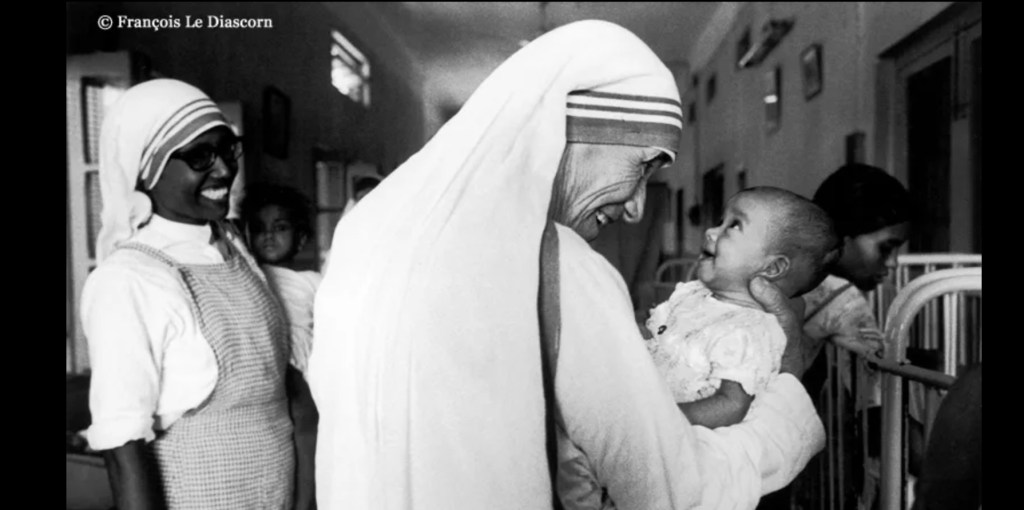
“To know God as the person He really is, it requires being alone with Him frequently. Without actual time spent with God, there is a danger that we will never come to know Him as his own person” (Sattler, 28). St. Mother Teresa also encouraged her sisters in the same way asking, “Do you really know the living Jesus, not through books, but by being with him in your heart” (Sattler, 20)?

Sometimes we resist being still and quiet with God because our minds are so full of everything but God, maybe because we are afraid of aspects of ourselves that we would rather not see or admit. God sees the fullness of who we are and loves us there. He wants to help, but will not do so uninvited. Our relationship with Jesus grows when we invite him into our pain, our sins, and our fears, as well as our aspirations and our dreams.

Be not afraid to make friends with silence. In the silence, we will face our mental maelstroms, yet as we breathe more intentionally and call on Jesus’ name, we will begin to feel safer, slow down, and our minds will begin to quiet. Then we can begin an honest conversation with God, speaking and listening, sharing the good, the bad, and the ugly, and allowing God to love us there. That is when our prayer begins.

————————————

Photo: Evening walk with Jesus

Sattler, Fr. Wayne. Remain in Me and I in You: Relating to God as a Person not an Idea. Manchester, NH: Sophia Institute, 2025.

Link for the Mass readings for Tuesday, September 9, 2025

“Of her was born Jesus who is called the Christ.”

The Book of the genealogy of Jesus Christ, the son of David, the son of Abraham (Mt 1:1).

Many may gloss over the long genealogy of names that follows verse one. Matthew certainly had a reason, Luke also had his, as did other ancient writers for compiling genealogical lists, “for the ancient Jews, a genealogy was nit merely a catalogue of old names. Each name told a story and recalled key events in salvation history. Biblical genealogies also conferred identity and privileges on members of a family, bestowing a sense  of mission and responsibility” (Mitch and Sri, 33).

Matthew placed the context of the incarnation of the Son of God in history, in time, and in a place. Jesus belonged to a people. All of us, as human beings, have the same desire and yearning for belonging. Knowing where we come from, sharing stories of our families, of our culture, ethnicity, race, language, customs, celebrations, rituals, and religion, provide a place for us, provide stability and security. On the flip side, the more we lose the connectedness to our roots, the more we may feel adrift. The need to belong is primal.

Matthew penned for his community the roots of Jesus’ genealogy. Matthew invites us to hear them again, to recognize our place in the same saga of salvation history, for this is our genealogy also. The Church chose this Gospel today as we remember and celebrate the nativity of Mary. The whole of the Bible is a rich library of faith and a part of, not separate from, but an integral part of sacred Tradition. The Bible, from Genesis to Revelation, is a compilation from Mary and our ancestors who encountered God and shared their stories. They passed them on, generation after generation, to provide for us a foundation, so we can know that we are never alone, that we have a place, that we are a people, we stand in solidarity with one another, that we belong. We are a part of something greater than ourselves.

That rings out from the very first line of this genealogy. The announcement that Jesus is connected to Abraham the father of faith and David the prototype of the King who unified the twelve tribes of Israel. Matthew also adds, Christ. This is not Jesus’ surname, but the Greek title of “Anointed One” from the Hebrew, Messiah. Jesus is no mere teacher. He is the Christ the Son of the living God.

One thing that can weaken the richness of the foundation of our roots and identity is when it is corrupted by a lack of integrity. We see this time and again in the pages of the Bible continuing up to our present day. Those who not only turn their back on but usurp their faith, tradition, and God’s message for their own selfish means and purposes. Yet, even in the darkest of times, in those same pages there have been those judges, prophets, and people of integrity who have stood up to speak truth to power, to give voice and access to those on the peripheries.

Even today when we may feel like our country, world, or even our own lives are spinning out of control, let us remain faithful, seek courage and strength from our ancestors in the faith, those people of integrity who remained true, remained faithful, and did not turn and flee, but drew closer to God. Through our ancestors in faith and through Mary and Joseph, we are given rich models who because of their faithfulness, brought to us the gift of Jesus.

Jesus is more than a model of faith. Calling upon his name can be a prayer in itself. Jesus is Emmanuel, God with us. Proclaiming the name of Jesus places us in the very presence of the Son of God. Where the Son is, so is the Father and the Holy Spirit. We can also find refuge in the Son who became one with us in our humanity as the Son of Mary because he intimately understands each of us and our needs and challenges. He is present to us when we call upon him through the power of his name. Our lives are transformed when we allow Jesus to conform our hearts and minds to the will of his Father and become one with him in his divinity.

—————-

Photo: Mary, Mother of God, as we celebrate your birthday, we thank you for the greatest gift you could have given us, Jesus.

Link for the Mass readings for Monday, September 8, 2025

Real love has a cost.

Our Gospel today, may not appear to be related or confusing in the analogies that Jesus is making. Jesus first begins by stating that to be a disciple of his, there is a need to, first hate “father and mother, wife and children, brothers and sisters, and even his own life,” and then be willing to “carry his own cross” (cf Lk 14:26-27). Jesus continues to talk about the wise builder calculating the cost of materials and labor to be sure he has enough to complete his project. In the same way, a king preparing for battle, assesses whether he has enough soldiers to win, and if not, he needs to be honest and prudent enough to “ask for peace terms.”

With each point, Jesus is emphasizing the cost of his discipleship. Nowhere in the Gospels and definitely not here in today’s, does Jesus say, follow me and all will be wonderful, there will be no pain, no suffering, and you will have all the material pleasure this world can offer. There is a cost to discipleship and those who seek to follow him in his time and our’s must pause and be aware of the cost.

Is the cost really to hate our mother and father, family and friends, and ourselves? This is graphic language. It is also an important reminder that each word and phrase we read in the Bible is to be read in the context of the whole Bible, not on its own or in isolation. Dr. Brandt Pitre identifies where the same Greek work miseō translated here in Luke as hate is used in the same context in Genesis 29:31, “When the Lord saw that Leah was hated, he opened her womb…” The way miseō is used in this context in Genesis helps us to interpret Jesus’ usage which is to “prefer one person over another” (Pitre). Jesus is saying, starkly, that we are prefer God over and above anyone or anything else.

Another help to recall where Jesus himself, in Luke 7:27, is emphatic that we are to love our enemies. To say that we are to love our enemies and hate, in the sense of loathing, our family would not make sense. It does make sense in the context of we are to place God first before any other person. This interpretation also aligns with the fourth commandment which is to honor our father and mother. We honor our father and mother best by living out the first three commandments that have to do with putting God first.

Context also helps us to understand that the hyperbolic language used by Jesus is a rhetorical strategy common to rabbis to make a point by waking up their listeners to get their attention. This statement did just that and continues to do so. The Catholic author, Flannery O’Connor, can help us to understand what Jesus is doing in describing her own writing shared that: “To the hard of hearing you shout, and for the almost blind you draw large and startling figures”. 

Why? To awaken the listener’s from their spiritual stupor. But even when we step back from Jesus’ hyperbolic language, the message to a first century Israelite, as it is for us today, is still hard to fathom.  Jesus is making it clear to the multitude that is gathering around, and letting them know clearly, that if they really want to follow him, there will be a cost. God must be first in their lives before all else, even the closest of family members and most intimate of friends.

Throughout the gospels, Jesus is consistent about the demands of being a disciple of his. A relationship with God is not just knowing about him, but knowing him intimately, and that means transformation. Not only is God to be first before family and friends, God is to be first before even ourselves. Being self-reliant, self-focused, and self-centered will not do. St. Teresa of Avila puts it quite well: “We shall never learn to know ourselves except by endeavoring to know God; for, beholding his greatness, we realize our own littleness; his purity shows us our foulness; and by meditating upon his humility we find how very far we are from being humble.”

Jesus is inviting us today to be his disciple, his student, and to join him in the most wonderful experience and adventure known to humanity. The Son of God who became one with us in our humanity is inviting us to be one with him in his divinity and to share in the communion of love that he shares with the Father and the Holy Spirit. To do so, we need to be as prudent as the wise builder and king. We need to assess the cost that Jesus is demanding of us. We are in the same position in this moment as the young rich man was who asked Jesus, “What do I need to do to inherit eternal life” (see Mt 19:16-22). The man was not willing to accept the cost of discipleship and walked away sad.

We have been created by Love, to receive his love, and to love in return, God, ourselves, and one another. Love is the greatest gift that we can receive and what we all seek in the depths of our souls. Jesus is giving us the key to unlocking the treasure chest and that key is to put God first before family, friends, self, and anything else. The way we put God first is to spend time with him every day. The amount of time is not as important in the beginning. What is most important is to set up a time you can commit to, show up, and let God happen.

If you are not sure what to do when you show up, you can start simply. Make the Sign of the Cross, take three, deep breaths, one for the Father, one for the Son, and one for the Holy Spirit. Continue to breathe slowly and receive God’s love for you and you alone in this moment. Remain until your mind starts to wander, then you can pray one slow and intentional Our Father. One Our Father said with meaning is more important than a thousand rattled of with no meaning. They are just words. When we pray, we are not just speaking words, we are speaking with someone: God our Father, who created us for this very moment: to be loved.


Photo: Spending time with Jesus in prayer each day – priceless!

Dr. Brandt Pitre. “Mass readings explained.” 23rd Sunday in OT

Flannery O’Connor quote accessed from “Listening to Flannery O’Connor” National Catholic Reporter.

Link for the Mass readings for Sunday, September 7, 2025

Is the lord of the sabbath the Lord of our lives?

Then he said to them, “The Son of Man is lord of the sabbath” (Lk 6:5).

The disciples were traveling with Jesus, they gathered food where they could. In today’s Gospel, they picked heads of grain and rubbed them in their hands to make them easier to chew. The critique of those Pharisees, presumably, walking along with or close by to Jesus, was that his disciples were breaking the sabbath law by working and thus not keeping it holy.

The reason for this was that pious Jews would often practice what is called, building a hedge around the Torah, meaning that they would institute practices beyond the original law so that there would be no way of breaking it. Fr. Bill Burton, ofm, shared an example that has stuck with me since my Scripture studies in seminary.

There is a prescription in Exodus 23:19, that states that you should not cook a kid (baby goat) in its mother’s milk. So as not to even come close to breaking this law, observant Jews developed the practice, which continues from many today, to not cook any meat and dairy together; thus the idea of building a hedge around the Torah.

The hedge in today’s reading had to do with what constituted work and what did not to keep the sabbath rest intact and keep the sabbath holy. Jesus settled the debate by claiming that he was the lord of the sabbath.

The lord of the sabbath needs to be the Lord of our lives. We live in a fallen world, but even at its best, we live in a finite and fragile world. We as human beings can only do so much. The best we can do is to use our intellect and ability to reason while at the same time seek to discern God’s will and direction so that we may access the spiritual resources that God offers to us in our everyday affairs, especially when tragedy strikes.

Tragedy, pain, and suffering happen in our independent lives directly and in our world collectively, the list and variety are vast and varied. Each situation arises for different reasons, some sensible and others with no apparent rhyme or reason. The why to our own personal or broader national and international sufferings we may not ever receive an answer. Yet, in each instance, we are not abandoned, we are not alone. We need not despair because the Holy Spirit works with and through us when we turn to him and allow our hearts and minds to be open to his love working through us.

The Holy Spirit, through Mary’s yes, helped to bring our world a savior. When his time came, he healed, exorcised, preached and sought the unification of his people so to unify all of humanity. Many of the Pharisees could not accept that Jesus was the Messiah and instead saw him as a threat. In their minds, Jesus was disobeying God. If he wasn’t God incarnate, they would have been correct. That is the decision we need to make. If he is God, Jesus needs not only to be the lord of the sabbath, but the Lord of our lives, in and out of season, during our trials as well as our joys and celebrations.

—————————–

Photo: Jesus in the Wheat Field” by Hangwallz on Etsy

Link for the Mass readings for Saturday, September 6, 2025

Ready for something new?

And no one who has been drinking old wine desires new, for he says, ‘The old is good'” (Lk 5:39).

Jesus is most likely referring to those who do not see him as the promised Messiah, and they do not because they are holding onto he Old Covenant and so not able to receive the wine of the fulfillment of the law, the New Covenant. Many of us can relate to holding on to the old. The old can be more comfortable, the old is proven to be tried and true. A favorite wine, a pair of broken-in jeans or shoes, a favorite book read time and again, these are all part of the simple pleasures of life.

In Jesus’ parable, he is challenging us to go deeper. He is inviting us to recognize those things that we are holding onto that may be preventing us from more than just a mere existence or minimalist mode of living to instead actualizing the fullness of the potential of ourselves and for others. He is also challenging us to discern the difference between apparent goods and the real good. Even more of a challenge is the competition of goods between two actual goods, and yet the good to be chosen is not our but God’s will.

We have created patterns in our life that may appear and feel safe, but in actuality may be holding us back from a deeper and fuller experience in life. We may be influenced by cultural or social tremors that may dictate to us that we are too old, that we are too young, that to do this or that is too much of a risk… Each of these examples can be challenging on the material plane of existence, yet while Jesus seeks the best for us in our every day activities, at the same time, he is calling us to go even deeper spiritually.

God the Father is infinite and inexhaustible. Though the Gospel remains the same, there are always new ways, new means to hear the message, to go deeper, so to better be able to practice and share what we have learned. Each generation has to claim the deposit of faith offered and share it as God leads. Our faith is not some inanimate artifact passed on but an organic relationship that matures and deepens age after age.

Not knowing the first thing about Facebook, Instagram, LinkedIn, and WordPress, about eight or nine years ago, I felt led to share these daily reflections on those platforms. I was quite happy reading, learning, and sharing within the four walls of my classroom. That was safer and what I knew, but I felt Jesus urging me to reach out to those of my students that graduated, to parishioners and anyone else who might be interested. The idea was a risk to try some new wine.

My biggest fear was adding one more thing to my already full schedule. That initial fear of having less time with JoAnn was unfounded because writing these reflections opened up more time together each evening. We began to pray and read the daily Mass readings together, and I would then share my reflection. JoAnn critiqued them and we would discuss what we learned together. In trusting the lead of Jesus, we received more intimate time together with him and each other.

In what way is God calling you to take a step out of your comfort zone? In what way can you share your faith journey with others? As you take a look at the horizon, whatever time of day you can, and whatever it may look like in your corner of the world, take some deep breaths, realize that you have a unique gift or talent to share, a way that Jesus is inviting you to participate in building up his kingdom. A life surrendered to Jesus, lived in collaboration with him, is ever new, ever better, in a way we haven’t experienced before, and an opportunity to taste some new wine from a fresh wineskin!

————–

Photo: Not a bad view to experience as I was coming out of church after my holy hour.

Link for the Mass readings for Friday, September 5, 2025

Let us spend time with Jesus, trust, and follow where he leads.

After he had finished speaking, he said to Simon, “Put out into deep water and lower your nets for a catch.” Simon said in reply,” Master, we have worked hard all night and have caught nothing, but at your command I will lower the nets” (Lk 5:4-5).

Faith is to believe in God and that what he tells us is true. On our own initiative and will power we are limited as finite beings regarding what we can understand and do. Today’s Gospel reading provides an example of this. Simon had been fishing all night with no results. Simon Peter follows Jesus’ command to go back out and put into the deep, and Simon not only accomplishes what he originally set out to do, but he also did so beyond anything he had ever imagined!

When we follow God’s direction and initiative all things are possible for us as well.

God’s initiative and grace enter our lives daily just like Jesus entered Simon’s boat. Do we have eyes to see, ears to hear, and a willingness to listen and follow the initiative of Jesus? Remember the rich man who had followed all the commandments, but when Jesus invited him to sell all and come and follow him, he could not do it. All he was asking for was right in front of him, and yet, the man did not believe in Jesus.

Rejecting the offer is one way to miss the mark. We can also miss the mark as Simon the magician did. When he saw the works of Philip, Peter, and John, he wanted to buy the power of the Holy Spirit to heal for his own aggrandizement, but was rebuked. Turning away from Jesus’ invitation or seeking to manipulate Jesus for our own personal gain will not bring us the fulfillment that we seek. Discipleship with Jesus is about relationship with him.

A better example to follow is that of Mary, who when the archangel Gabriel shared God’s message with her that she was to bear a child, even though she did not understand how this could be, Mary entrusted herself to God. She conceived in her womb, through the overshadowing of the Holy Spirit, the God-Man, the incarnate Son of God, Jesus the Christ. Joseph also trusted. After hearing the news from Mary, he had decided to quietly divorce her. Gabriel also spoke to him in a dream and Joseph trusted.

Peter, James, and John, although less adept in their faith, are maybe even better examples for us. They followed Jesus’ request and lowered their nets, even though they did not see the point. They followed through and were amazed. Then led by Peter’s humility and contrition, they “left everything” and followed Jesus. They went on to announce the Gospel of the Lord and caught people for the Kingdom of heaven.

Where are we today in our faith journey? Are we walking away from Jesus, are we seeking to gain access to the power of Jesus on our own terms, or do we have the humility to follow Jesus, on his terms, even when we may feel or see no point in his request? God has a plan, as he did for Mary, Joseph, and the Apostles. In a quiet place in our soul, in the stillness of our hearts, Jesus is inviting us to follow him. What we may hear may seem unbelievable, or insignificant, we may even experience anxiety, fear, and/or trepidation. Yet, let us trust, risk, and follow Jesus where he leads and what he asks us to do.

I did just that a few years ago. After following JoAnn’s guidance to put everything on the table regarding my options of how to live my life without her, I whittled down eight options to two, and then asked God, “What do you want me to do?” In the silence of my heart, I heard quietly, but clearly, “priesthood.” The two years returning to seminary were not easy, and about two months in, when I told Jesus that, “I didn’t think I can this.” He said, “You can’t. But I can.” I trusted and followed his lead.

When we allow our hearts and minds to be open to where God is leading us, we will not only be happy, but we will find fulfillment and meaning in our lives, such that it overflows to others. As Pope Benedict put it during his first homily as Pope, “There is nothing more beautiful than to know him and to speak to others of our friendship with him” (Gadenz, 111). I agree.


Photo: St. Mary’s Chapel, St. Vincent de Paul Regional Seminary where I went often to listen.

The Gospel of Luke. Grand Rapids, MI: Baker Academic, 2018.

Link for the Mass readings for Thursday, September 4, 2025

Jesus continues to proclaim the Gospel today, and is inviting us to join him.

But he said to them, “To the other towns also I must proclaim the good news of the Kingdom of God, because for this purpose I have been sent” (Lk 4:43).

Jesus himself, the Son of God incarnate, fully divine and fully human, is the foretaste of heaven. His work of preaching, teaching, healing, and casting out demons, shows that the divine flow of the Father’s Love is infused into our fallen human condition. Jesus came to restore unity to that which had been divided and once he began his public ministry, he was ever on the go.

Through our Baptism, we have been conformed to and indelibly marked by Christ and for Christ. We are nourished by his Body and Blood in the Eucharist and we’re empowered through the laying on of hands by the bishop at our Confirmation. We have been divinized, grafted into the life of God through our participation in the life of Jesus the Christ. We too then are priests, prophets, and kings as we participate in his life. We also are, to preach and teach the same Gospel, to be his healing and comforting presence, to make Jesus present to those in our midst, and yes we too are called to cast out all demons, and to shine the light on negativity, dehumanization, and division in his name. As James teaches, we are to “submit [our]selves to God. Resist the devil, and he will flee” (James 4:7).

Jesus did not travel very far during his three and a half years of public ministry, yet his teachings have touched the corners of the world. That is because of those who have encountered him, said yes to his invitation, submitted to the will of his Father, and continued to spread his teachings and life in each generation. We too are called to experience “a resurrected new life”, just as the mother-in-law of Peter did. And what did she do once she was healed? Out of gratitude, she immediately rose and served him. She mirrored Jesus in her willingness to serve (cf. Gadenz, 107).

Moment by moment, in each circumstance, we are invited to surrender to the will of his Father, and follow the gentle guidance of the Holy Spirit. Each yes to the guidance of the Trinity is an embrace of the gift of the unique vocation we are called to put into practice. The time of fulfillment is now because Jesus is present in our midst, he is at hand. So let us repent and believe in the Gospel, (cf. Mk 1:15), and follow the lead of Jesus that we read about each day.

These are not just nice stories. They are invitations for transformation and participation. By reading, praying, and meditating with these scriptures, we deepen our relationship with Jesus and begin to experience the love of the Holy Spirit and we are given clearer sight about what to let go of that holds us back from a more intimate union with the Father. Each day is a new opportunity to learn from Jesus, follow his guidance, and be advocates of his love and healing in the unique expression he would have us share! Let us like, Peter’s mother-in-law, arise and serve.


Painting: The Exhortation to the Apostles by James Tissot

Gardens, Pablo T.. The Gospel of Luke. Grand Rapids, MI: Baker Academic, 2018.

Link for the Mass readings for Wednesday, September 3, 2025

Let us believe in and entrust ourselves to Jesus.

In yesterday’s reading, Jesus’ message in his hometown of Nazareth did not end so well, with his fellow Nazoreans running him out of town (Lk 4:29). In today’s account, Jesus continues on and teaches in the synagogue at Capernaum. The initial reaction to Jesus’ teaching was similar in both accounts; the people were “amazed” and “astonished” with his teaching. But no one in either group makes the bold statement that arises today: “I know who you are – the Holy One of God” (Lk 4:34)! This phrase was professed by a demon who taunted Jesus.

From the very beginning of Jesus’ ministry opposition was present. In Nazareth, the fallen nature of our humanity reared its head. The people he grew up with were unwilling to see beyond the ordinary Jesus they always knew. Wasn’t he just the son of Joseph, just the carpenter? Jesus was safe when he merely worked a quiet life, participated in the life of the synagogue, even when he returned from surrounding territories amidst words of praise, and even stepping up to read in the synagogue from the words of Elijah: he was the hometown boy making good. But once Jesus began to equate himself in the line of the prophets and share how God was working beyond the people of Israel, with his accounts of Elijah going to the Gentile widow, and Naaman, another Gentile, going to Elisha, highlighting that God worked beyond the people of Israel, even his own had enough. Jesus had to go (Lk 4:29).

In today’s account, another source of opposition is the taunting demon. Jesus rebuked the demon immediately and called him out of the man. Jesus faced time and again the fallen nature of humanity, disbelief, lack of faith, as well as the opposition of demons, and the temptations of Satan himself in the desert. He was also opposed by most of the religious establishment of the Sadducees, Pharisees, and scribes.

Where do we find our self in the scenes of Jesus’ ministry and teaching, in our own time today? Following Jesus is a day to day commitment and we must be willing to face the same challenges that his disciples did. We are faced with the challenges of living up to his teachings as well as facing our weaknesses, wounds, and  shortcomings as we seek to resist the lies of the enemy and conform our lives to the will of Jesus. By doing so, we will be confronted with the darkness and sin within ourselves. With true humility, we will be better able to resist defending and rationalizing where we fall short of the glory of God and instead repent, turn away from our sin, turn back to God, and receive forgiveness and be healed.

We also need to resist dismissing Jesus’ encounter with the demon in today’s Gospel too quickly. Demons do exist and play a role in the principalities and powers that influence us and our world. We ignore this reality to our own peril, for they will tempt and subtly attack us at our weakest and most vulnerable points. This is not a cause for anxiety and fear. The weakest Christian is stronger than the devil himself but we must be aware and vigilant. When faced with temptation by Satan or his demons, we just call on the name of Jesus and those of the dark will flee from the radiant light of Christ. This is why it is so important to regularly examine our conscience, to be aware of, and to confess our sin. In doing so, we will be free, otherwise, they can and will be used against us.

The closer we draw to Jesus, the more we experience his light and the more of our sin will be revealed. This is not a cause to run and hide but to humbly embrace the truth so that forgiveness and healing will happen. This also means that we will see more clearly the dark influences that plague our own thoughts and our world which we are blinded to when we turn in upon ourselves and feed our own selfishness, embrace our own pride, and allow ourselves to get caught up in the stream of the world.

Choosing to believe in and entrust our lives to Jesus with our first waking breaths and thoughts is an important way to begin each day. Doing so helps us to get ahead of the thoughts that will arise to distract, divert, and dissuade us from hearing the word and guidance of God. Beginning our day in quiet with Jesus is so important to do before we get up and running and return to the daily busy. When we resist moving on automatic pilot, we can realize that we can live our lives more intentionally. Moving more thoughtfully and seeking God’s guidance we can react less so to choose his will more. 

When we fall short, are distracted, fail, as did the apostles, we need to follow, not Judas, but Peter: repent, confess our love for Jesus, and begin again to hold one another accountable, support, and lift one another up in love, for Jesus is at our right hand. Even when we find ourselves in our darkest moments, we can turn to Jesus and stand firm for he is our refuge and our strength.


Photo: Following the light.

Link for the Mass readings for Tuesday, September 2, 2025