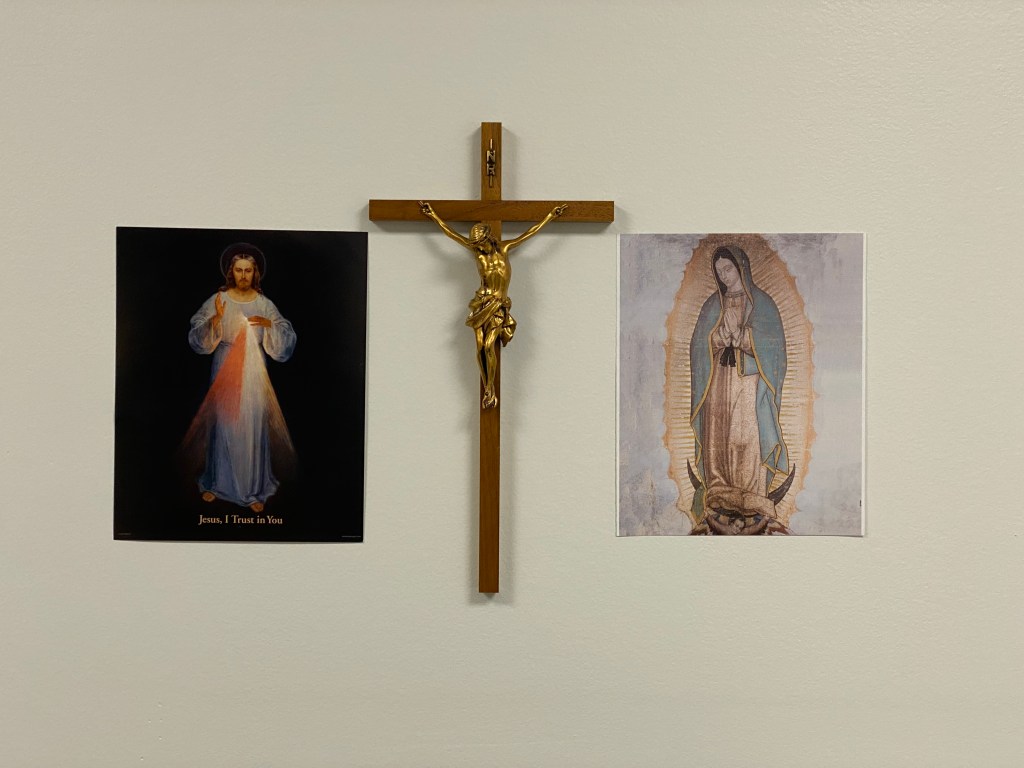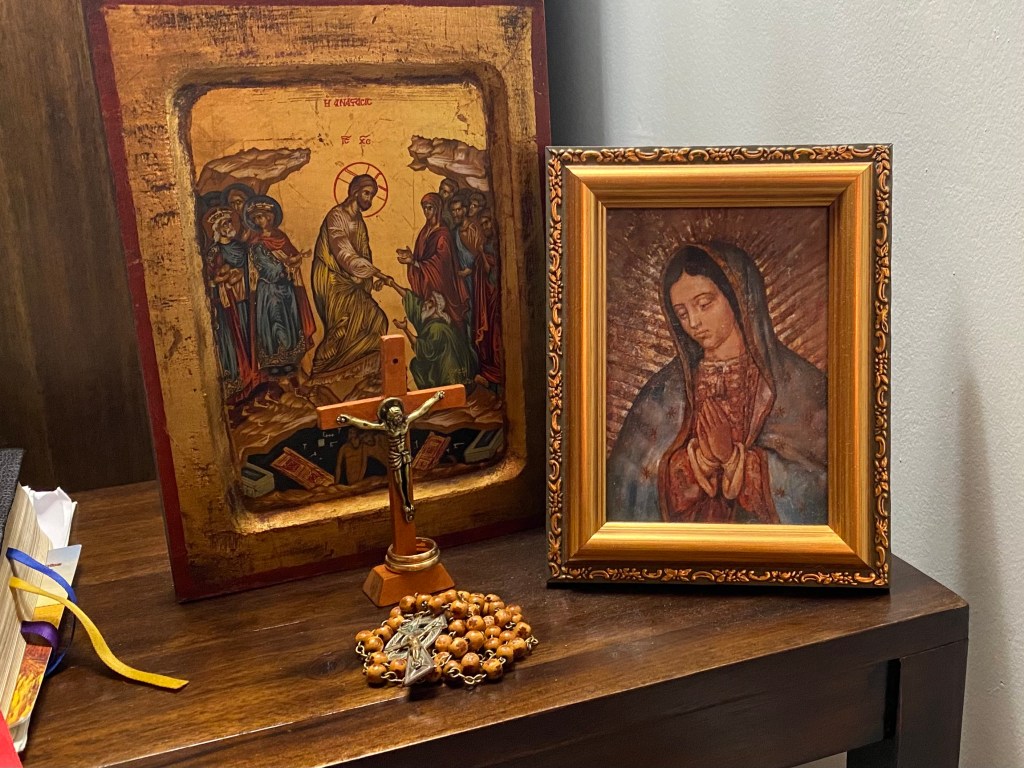
This Advent, more anxiety and stress or more joy and peace?

“Rejoice in the Lord always, I shall say it again rejoice!” (Philippians 4:4)

There is a running theme in each of our readings and why we call today, Gaudete Sunday. Gaudete is the Latin word for rejoice. We rejoice because we are half way through Advent, and Christmas, our celebration of the incarnation, is only eleven days away. We are also called to rejoice because as St. Paul wrote to the Philippians that we can rejoice always!

Can we really?

Yes, because Paul is not inviting us to rejoice, he is commanding us to do so and he did so not only once but twice. But how can we actually rejoice always? One way is to distinguish between happiness and joy. When we are happy it is because we are reacting to a pleasurable experience that we find good. Yet, what often happens when the experience goes away… so with it goes our happiness. We then seek more of the same to fill that need to be happy and we need more and more of what stimulation we seek. Our happiness can linger on a bit or return as we call to mind the memory of the experience, but even then, the memory will fade after a bit.

Joy is not dependent on external experiences. Joy is dependent on our closeness to God and the indwelling of the Holy Spirit within us. That is why even when we experience challenges, trials, and conflicts, we can still feel joy. The key is where we put our focus. Focusing on the externals, we will sink.  Keeping our eyes on Jesus, like Peter, we will walk on water! As long as we stay close to Jesus, we will experience his joy within. 

Paul gives us to recipe for rejoicing always when he says, “Have no anxiety about anything”. As soon as we experience the first stirrings of anxiety, we are to turn to God in prayer and thanksgiving and let our “requests be made known to God.” I first remember experiencing this when I was in my late teens. I had been experiencing a period of desolation and anxiety about the future ahead beyond high school. I had recently purchased a Bible and one evening opened it at random to Luke 12:22: “Therefore I tell you, do not worry about your life and what you are to eat, or about your body and what you will wear.”

Then I heard God letting me know that I would never win the lottery but he would continue to provide me with the means to work. He would provide for and take care of me. Having heard these words in the quiet of my heart, I then returned to reading the whole section about placing our dependence and complete trust in God. A feeling of not only joy but peace welled up within, and the anxiety and insecurity I went into the reading of the Bible with dissipated. Light and darkness, love and hate, nor anxiety and trust, cannot exist at the same time and in the same place. We actually can choose which we want to experience.

The word anxiety comes from the Greek merimnaō. Biblical scholar, Dr. Brant Pitre describes Paul’s usage of merimnaō as, “an imperative; it’s not just a suggestion. And he’s saying not to have it about anything. Now this Greek word merimnaō is closely related to the verb for ‘to remember’. So when a person is anxious about something, it keeps coming to their mind. They remember it” (Dr. Brant Pitre).

What we place our focus on is what governs our thoughts and also has a tremendous influence on what we feel. If we are consistently attentive to what we are stressed about, like a dog drilling down, worrying on a bone, we are going to be anxious – always. The other side is just as true. The more we focus on Jesus, breathe, receive, rest, and abide in his love for us, and we consistently place our trust in him in all situations, the good as well as the bad, we will move closer to aspiring to Paul’s command to, “Rejoice in the Lord always”.

We will also rejoice more often when we are willing to make time to stop and think about what we are grateful for. It is so easy to get caught up in the busy, in our work as well as our perceived recreation, pass out at the end of the day, and start over again the next. Taking time to wind down each evening away from channel or social media surfing, we could instead choose to truly relax and let go by being still, quiet and reflecting upon the day to see where God has been blessing us, where we have said, “yes” to his invitation and where we have said, ‘no.”

Calling to mind what we are thankful for and having the humility to ask Jesus for help to correct or sins and missteps, also deepens our relationship with him and rekindles the awareness of the love of the Holy Spirit within us. What then wells up again from his eternal spring is not only joy but God’s peace, that peace that surpasses all understanding. Knowing and experiencing that God is close, that his Son is at hand, will help us to experience more regularly the love that is shared between them, the Holy Spirit.

Being filled with the joy, love, and peace of God to overflowing will then move us to share what we have received with others in very practical ways. In giving and sharing the joy, love, and peace that we have received, does not diminish in any way the what we have received. Instead, our giving only increases the joy, love, and peace God has given us. Not a bad way to spend our final days of Advent which will lead us into celebrating the miracle of Emmanuel – God with us, always. And because he is, let us rejoice always!!!


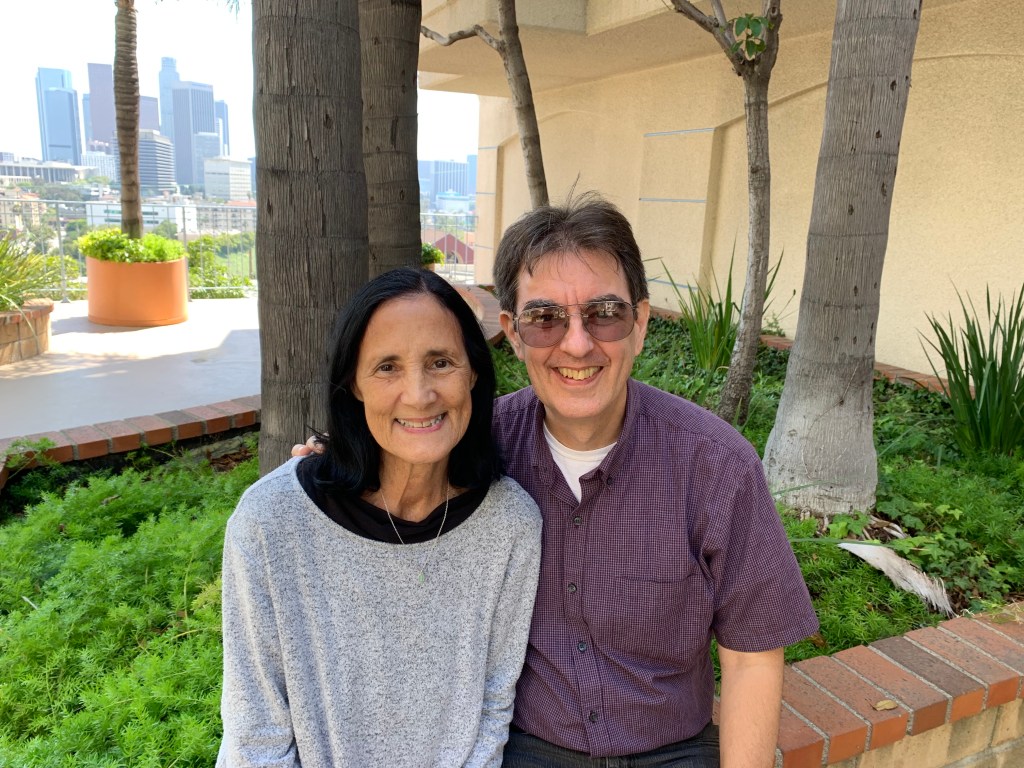
Photo: A different Advent. We were preparing for Jesus to come to bring JoAnn home to heaven. Because we had a better idea of the time and hour, we were able to appreciate each moment we had together. God blessed us with his joy, love, and peace to overflowing. I still look upon the last six months we had together as a blessing.

Dr. Brant Pitre. “Anxiety and Gratitude” from his video commentary: The Mass Readings Explained.
Link for the Mass readings for Sunday, December 15, 2024

Like Elijah and the prophets, let us trust in and follow the word of the Lord.

The disciples who asked the question, “Why do the scribes say that Elijah must come first?” (Mt 17:10) were Peter, James, and John, who had just witnessed the transfiguration of Jesus. They were walking down from the Mount of Transfiguration, tradition identifying this mountain as Mt. Tabor, and the context of the question had to do with, Moses and Elijah, who they saw with Jesus as he revealed to them his divinity.

As the disciples were attempting to digest this Mystery of the Transfiguration just witnessed, they were drawn back to what they knew. Most likely what they were referring to were the accounts in the Books of Sirach and Malachi. In Sirach 48:10 we too can read that, “You [Elijah] are destined, it is written, in times to come to put an end to the wrath before the day of the Lord, to turn back the hearts of the fathers toward their sons, and to re-establish the tribes of Jacob.” In the last chapter of the Book of Malachi, which is incidentally the last lines of the Christian Old Testament ordering of the canon, are the words: “Remember the law of Moses my servant, which I enjoined upon him on Horeb, the Statutes and ordinances for all Israel. Lo, I will send you Elijah, the prophet, before the day of the Lord comes, the great and terrible day” (3:22-23).

Moses in this encounter represents the Torah, the Law or Teachings, and Elijah represents the line of prophets. Elijah also, as we can read in 2 Kings 2:11, was taken up by God into heaven, amid “a flaming chariot and flaming horses… and Elijah went up to heaven in a whirlwind”, and, it was believed, that he was to return again at the appointed time of the Messiah’s coming. Jesus clarified for his disciples that John was indeed the new Elijah. In the revealing of his divinity to Peter, James, and John, Jesus showed that he was the fulfillment of the salvific paths forged by Moses, Elijah, the line of prophets, and John the Baptist.

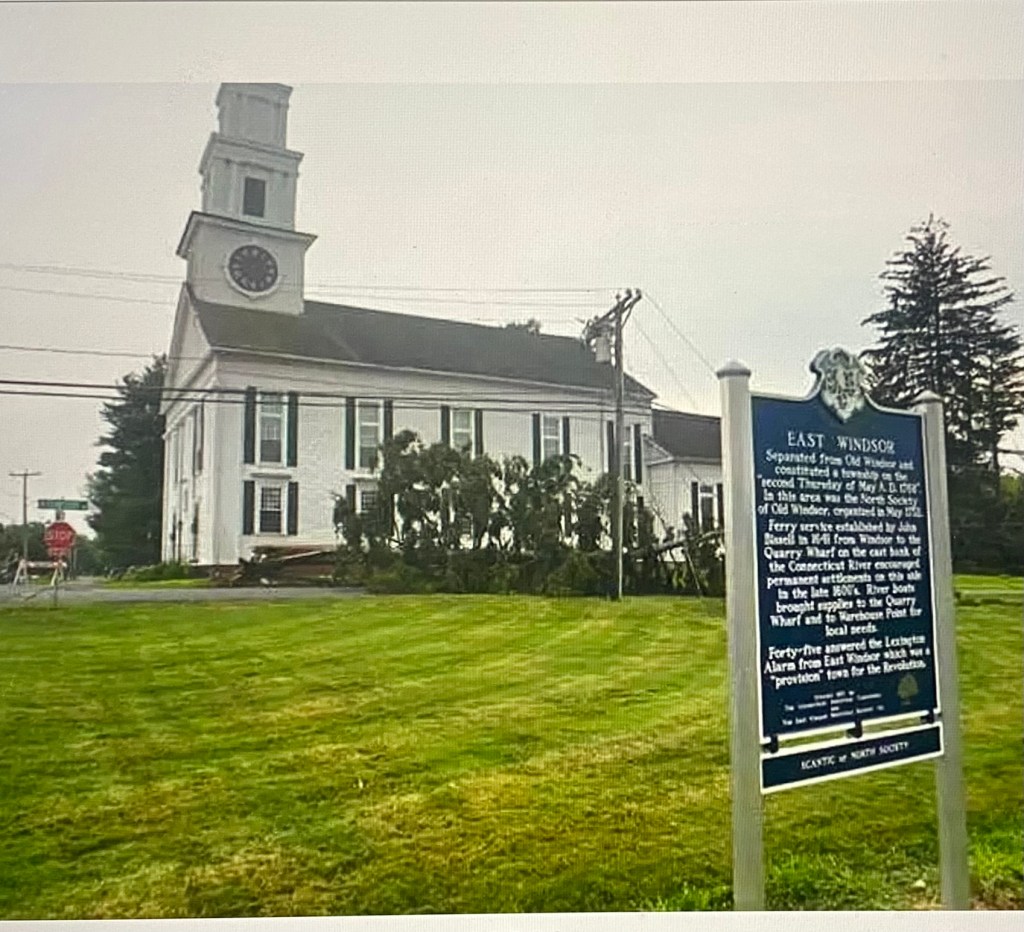
Jesus is the fulfillment of the Law and Prophets as well as our fulfillment. We are invited to prepare the Way of the Lord in our hearts and minds, to become less so that Jesus can become more, as well as to help prepare the way for others. When I began to attend church again in my late teens, I went to the Congregational Church that was about a half-mile walk from our home. At the end of that first service I attended, the interim pastor made an appeal for Sunday School teachers.

One of the things he said was that we do not know who Jesus’ Sunday School teacher was and he referenced that we could be teaching Jesus and not be aware. He was not speaking literally but his point rang true: we have the responsibility to continue to pass on the Greatest Story ever told. Also, his appeal was an avenue for the Holy Spirit to speak through him to me, and although I refused the invitation the first week, I accepted the following week. What might Jesus be inviting you to do this Advent? Trust in him and his invitation.

My, “yes”, to teaching Sunday School, not knowing the first thing about what I was doing, thinking I was too young and way too inexperienced, both true externally, would eventually lead me, through different twists and turns, back home to the Catholic Church, to becoming a school teacher, a permanent deacon, and now as I am typing, a priest. Let us all take heed of the invitation of John the Baptist, Jesus, and the Apostles: “This is the time of fulfillment. The kingdom of God is at hand. Repent, and believe in the Gospel” (Mk 1:15).
———————————————————
Photo credit (Jim Michaud / Hearst Connecticut Media Group) – First Congregational Church of East Windsor, CT, one of the early spiritual, stepping stones that led me to where I am today in Vero Beach, FL. They were also hit hard by a storm with tree damage this year.

Link for the Mass readings for Saturday, December 14, 2024

When we turn to and trust in Jesus and Mary we will have the strength to follow God’s will.

Jesus compared “this generation” to children who could not be satisfied. For when the flute was played for them they did not dance, when the dirge was played they did not mourn. There was no pleasing them. Jesus drew the parallel to the present bystanders who acted as fickle as the children. They criticized John as being possessed for practicing fasting and asceticism. They then accused Jesus of being a glutton and a drunkard because his choice of companions for table fellowship.

In today’s Gospel account, Jesus could have been addressing his detractors as well as his disciples. He encouraged his followers to be wary of wallowing in the mud of fickleness. He also wanted them to be sure that they were authentic dispensers of his truth and the will of his Father no matter the reaction of the people, for “wisdom is vindicated by her works” (Mt 11:19). Just as Jesus taught that false prophets would be revealed over time by their fruits (cf. Mt 7:16), so those who were true to his teachings would be vindicated, if not fully in this life, certainly then in the next.

Pope Francis said that “The first thing for a disciple is to be with the Master, to listen to him and learn from him” (Francis 2014, 15). May we pray for open hearts and minds eager and willing to hear the word of Jesus our Master and the courage to act upon his leading in our everyday circumstances. To do so, it is important that we slow down our pace and quiet our minds so that we can even hear his word. We also need to discern the difference between his voice, our own, as well as the many other voices, the enemy, distractions, diversions, and temptations that we hear.

God himself speaks to us in so many ways; directly in the silence of our hearts, through others, spiritual direction, small groups, fellowship, through the Bible, as well as our culture, and influences, as well as through his creation.

More often than not, we may not definitively know if what we discern or hear is coming from God. Yet, remaining paralyzed and doing nothing out of indecision will not help us to move forward. We can find support and confirmation from Scripture and Tradition, others who are wise and practiced in following God, then we can reassess our guidance and then act. If we are wrong, we learn from our mistakes, make adjustments, and begin again. If we are on the mark, this helps us to build our confidence in recognizing God’s voice.

Another important step in discipleship is that we are not to seek to impress, but to express. Adulation and acclaim for ourselves are not what we are about. Our firm intent is to become less so that Christ becomes more. We are also to resist moralizing and condemning others and instead be willing to meet people where they are, convict as needed, as we accompany and break open the word in practical ways so they see the benefits of having God in their lives. The invitation and life of a disciple of Jesus is not an easy one. Will we follow?

We need not be afraid that we cannot fulfill the teachings of Jesus in the gospels because we can’t on our own strength. That is the point. We need Jesus to do so. Just as in learning to walk, our beginning attempts more often than not ended with a thud and us sitting on the floor or ground looking up. Yet, we got up, and with continued practice, we gained strength, balance, made corrections, and so began to gain confidence and the ability to move forward, upright, step by wobbly step. When we seek the support of Mary, and we turn to and trust in Jesus, he will give us the strength to walk on.

Dr. Martin Luther King, Jr. put it more eloquently when he spoke to students at Spelman College in April of 1960. “If you can’t fly then run, if you can’t run then walk, if you can’t walk then crawl, but whatever you do you have to keep moving forward.” So it is in anything we do, but especially in the spiritual life. If we are not moving ahead we are falling behind.

Jesus, please help us to trust in you and accept your invitation to know you and your voice so that we may better know your will. Grant us the courage to follow your will, your plan for our good, and lead us on the path you would like us to go. Inspire us each day to be aware of those you would like us to serve and love. Help us to move forward one more step each day closer to you and being who you call us to be.

—————————————————————————–

Photo: Let us take the hand of Jesus and Mary as we begin each day and walk on.

Francis, Pope. The Church of Mercy: A Vision for the Church. Chicago: Loyola Press, 2014.

Link for the Mass readings for Friday, December 13, 2024

Mary’s Son will forgive us and fill us with joy!

“Mary set out and traveled to the hill country in haste” (Lk 1:39). Why? Because she was filled with joy. She had just experienced an incredible encounter with the angel Gabriel telling her that she was to bear the “holy, Son of God” (Lk 1:35). She also learned that her relative Elizabeth, who had been barren, was six months pregnant. Who better to understand and appreciate what she had gone through than Elizabeth? When we hear good news we want to share it with someone, especially when we believe another will fully appreciate our experience.

Is there a time when you felt overjoyed about something that you felt like you were going to burst and you couldn’t wait to share your experience? A memory may have already started forming in your mind, a smile and glow may already be radiating from your eyes as you re-experience that moment.

One such graced encounter I had was when I was in my early twenties and dealing with a heavy personal issue. I was living in Sharon, Connecticut at the time and had an opportunity to go to the Shrine of Divine Mercy in Stockbridge, Massachusetts to participate in a penance service. I walked up hesitantly to a kind-looking, elderly, polish Marian priest. His name alludes me now, but not his face. He radiated invitation and mercy. After a few stammering words, I let loose and shared what I had been dealing with. When he offered absolution, I felt the burden physically lift, I felt almost like levitating. Then a surge of joy welled up in me that lasted for days.

There is a great gift in sharing a burden with a trusted friend or family member, being heard and supported, and/or receiving absolution from a priest. We need to resist the temptation of turning within ourselves, trusting in the lie that we can handle our conflicts, challenges, and trials all on our own. There is a pearl of great price, God’s healing grace, that is available to us when we share our experiences. In this way, we come to realize concretely that we do not have to go through our pain and suffering alone!

Many of us are struggling with a lot, and sometimes we are not at our best, nor do we make our best decisions. We react instead of act, we get caught in the momentum of behavior that we know is not acceptable, and we continue to slide. The key is not to beat ourselves up and walk around feeling guilty. There are enough people who would be happy to sign up to do that. Instead, we will be better off to choose to practice a healthy sense of guilt, examine our conscience, be mindful, and admit when we have done something inappropriate, sinful, or wrong.

The key to reconciliation is to embrace in humility and  admit our sin, be contrite – sorry for what we have done, not upset, defensive or rationalize away our behavior, and to follow the counsel of James and “confess your sins to one another, and pray for one another so that you may be healed” (James 5:16). Having experienced the joy of forgiveness, while still experiencing the grace of our reconciliation, may we be like Mary who is full of grace, and go in haste to share with others the wonderful gift we have received!


Photo: Our Lady of Guadalupe, pray for us!

Link for the Mass readings for Thursday, December 12, 2024

Each day it is good to take time to rest and renew with Jesus.

Verses that we read, such as: “Come to me, all you who labor and are burdened, and I will give you rest” (Mt 11:28) really hit the spot, they arrive at the right time. I am sure that if you are reading these words you may also welcome Jesus’ invitation. Yet what is the labor and burden that we need to rest from? Teachers, administrators and students, of which I was a part for decades are coming into crunch time now as the end of the quarter or term is coming. Those in other occupations also work long hours, and sometimes, two or three jobs, just to get by.

Many also who oversee and care for their home, others with children, elder parents, family members, and dealing with family issues that can be enormous, especially at this time of year. Add to the above Christmas preparations: decorating, putting up lights, shopping, buying presents, cooking, baking, writing and mailing Christmas cards crushing can also add to feeling weighed down.

Unfortunately, there are way too many who are not so much burdened by work but the lack of access to gainful or meaningful employment. They are burdened with keeping the bills paid and a roof over their heads as the temperatures fall. Some have no home or family, they are burdened with getting from day to day, seeking ways to get food, clean clothes, a place to wash and relieve themselves. Christmas cards are a distant thought. Many others are burdened and living in fear that they or their family member or members may be deported.

Speaking of fear, how many of us are burdened by fear, anxiety, stress, and strain from a myriad of swirling reasons? Concerns about our family, community, country, and the world are a burden that can also weigh heavily. Advent and Christmas, even when life is more stable, are still times in which many buttons can be pressed and many stressors can be triggered. What is the adage that is offered when family and friends gather? Resist talking about politics, religion, and… we all can add a few others.

If you are feeling weary and worn as we draw close to the midway point of this Advent Season, it is a good opportunity to make some time to just stop and take a slow, deliberate breath. Notice your shoulders coming out of your ears. Embrace the invitation of Jesus and rest in him. Allow the burdens to come to mind, then visualize yourself giving them to Jesus, open yourself to his guidance, ask for his help for the day to day challenges, and seek who may be best able to assist you in any particular situation. Slowing down may help us to become more aware of any sins that we feel burdened by. This is a good time to rest and trust in the forgiveness of Jesus and confess to him in the Sacrament of Reconciliation. Jesus will forgive you and bring you a lightness and fresh start!

Our God “does not faint or grow weary, and his knowledge is beyond scrutiny. He gives strength to the fainting; for the weak he makes vigor abound” (Isaiah 40:28-29). We do not have to deal with anything alone. We have help and support. My friend, Pastor Jerry Scott, taught me years ago a life lesson which I still return to, more often in my fifties than in my twenties. When a person is chopping down a tree, exerting a lot of energy and effort, but finding the results insufficient, he or she needs to realize that they need to step back, take a breath, and sharpen their ax. With a little rest, renewal, and a sharpened blade, the job can be accomplished in half the time.

Let’s figuratively do the same daily with each of our endeavors. Let’s resist just putting our heads down and plowing through with blinders on and instead take some time to stop and assess from time to time what we need, where we need help, and yoke ourselves to Jesus for his guidance and strength. As Jesus carries the burden with us, as we follow his will, we can work smarter instead of harder. In developing a pattern and place of trust and hope in him, seeking his guidance and direction this Advent, we will renew our strength and soar as with eagle’s wings; we will run and not grow weary, we walk and not grow faint (cf. Isaiah 40:31)!


Photo: From 30 Day silent retreat I did in July 2023. Still seek each day some time to plant a few seeds of silence.

Link for the Mass readings for Wednesday, December 11, 2024

No matter how lost we may think we are, God remains close.

“What is your opinion? If a man has a hundred sheep and one of them goes astray, will he not leave the ninety-nine in the hills and go in search of the stray” (Mt 18:12)?

Many of those Jesus asked and us reading or hearing this Gospel today might share our opinion that the man leaving the ninety-nine to find the one would not be a wise choice. Jesus again appears to be turning the normal order of things upside down in painting a word picture of God’s folly. This parable clearly shows the abundant and extravagant love of his Father for each and every one of us. The act of this shepherd can appear not only unreasonable but unbelievable.

Yet, this is not the feeling to the sheep or the one who is lost. This extravagant love is a relief. It is the love that we can only experience if we are willing to resist slipping into judgment and pride, as did the elder son who was not willing to forgive his brother who was lost but found. The father loved the elder son with the same love as the son that was found, but he was closed off from receiving it for years, not realizing that he was just as lost as his younger brother.

God gives us a choice to reject or accept him because of his extravagant love for us. His greatest joy for us is that we experience being be fully alive. He also knows what will make us so, yet he won’t impose even what is best for us, on us. God is willing to risk us going astray such that we can come to realize the emptiness in any pursuit that ultimately does not bring us closer to him. God does not wish for any one of us to be lost.

God constantly coaxes, invites, and urges us to fulfill who he created us to be. He guides us along as a parent urging his child to walk. Yet, though he lovingly implores us along, we can be distracted, turn, crawl away, and go in a different direction.

During Advent, we are invited to slow down a bit, to breathe and examine where we have taken our eyes off and turned away from our Father, where we have crawled away from his invitation to walk with him. No matter how far we think we have gone astray, no matter how lost we may think we are, God always remains close, following, watching, ready for us to turn back to him. When we do turn back, we will find him there waiting for us, urging us to run back into his open arms and to experience his loving embrace.

God is eternally present. He is not in the regrets of the past nor the anxieties and insecurities that blur the promise of our freedom in the future. God loves us more than we can ever mess up and he loves us more than we can ever imagine. God not only refuses to define us by our worst choices and moments, but when we trust in him, when we ask for his help, he will lead us a few steps at a time forward to complete the good work he has already begun in us.


Photo: God’s light leads us when we are willing to follow.

Link for the Mass readings for Tuesday, December 10, 2024

“The knot of Eve’s disobedience was loosed by the obedience of Mary.”

And coming to her, he said, “Hail full of grace! The Lord is with you” (Luke 1:28).

With these words from the angel Gabriel, we can begin to understand the special and unique gift of grace that God bestowed upon Mary such that we are blessed each year to celebrate this magnificent Solemnity of the Immaculate Conception of the Blessed Virgin Mary. Mary was conceived without sin and she remained not only a virgin all her life, but also sinless and “full of grace” all her life. 

The Catechism of the Catholic Church (492), echoes our second reading from St. Paul: “The Father blessed Mary more than any other created person ‘in Christ with every spiritual blessing in the heavenly places’ and chose her ‘in Christ before the foundation of the world, to be holy and blameless before him in love’” (cf. Ephesians 1:3-4). 

This special grace was bestowed upon Mary such that she could undo the sin of another who was created sinless: Eve. As we saw in our first reading from Genesis, Adam and Eve were created good, without sin, but both fell by disobeying God and bringing sin, suffering, and death into the world. The Church fathers and doctors saw in Mary, the new Eve. As St. Irenaeus of Lyons, (130-202 A.D.) wrote in his great work, Adversus Haereses, “the knot of Eve’s disobedience was loosed by the obedience of Mary.”

Mary’s, “yes”: “May it be done to me according to your word” (Luke 1:38), and her continued “yes” to God’s will for the rest of her life, kept her full of the grace that God bestowed upon her from the moment of her conception. Adam and Eve fell when their trust in God was shaken by Satan’s temptation. Mary trusted God with Gabriel’s invitation even though she did not understand what was being asked of her. Her question to Gabriel, “How can this be, since I have no relations with a man” (Lk 1:34) was not a demand for proof, but a sincere seeking to understand what was being asked of her.

Mary embodied faith seeking understanding, though while she pondered, as St. Bernard of Clairvaux put it: “Tearful Adam with his sorrowing family begs this of you… Abraham begs it, David begs it… this is what the whole earth waits for, prostrate at your feet… Answer quickly, O Virgin. Reply in haste to the angel, or rather through the angel to the Lord. Answer with a word, receive the Word of God. Speak your own word, conceive the divine Word. Breathe a passing word, embrace the eternal word.”

When Mary said, “Behold, I am the handmaid of the Lord. May it be done to me according to your word” (Lk 1:38), a weary world wounded by the sin of her first parents, exhaled with relief, for the long-awaited savior would now be conceived, born, and come to redeem what had been lost. Mary, in her obedience, loosed the knot of the Sin of Origin committed by Adam and Eve in their disobedience. Mary inmaculatus, Immaculate Mary, was blameless, conceived without sin, for this very moment in time so that of her free will she could say, “yes” and become the new Eve and her Son the new Adam.

Mary, help us to ponder your “yes”, that we may be willing to say “yes” and follow the will of God in all we think, say, and do. Help us to be obedient, to resist a knee jerk reaction to reject outright what we do not understand and choose instead to be open to the possibilities you make available to us that are beyond the realm of our senses and limitations alone. Help us to place our trust in God, Jesus, his Son, and the love of the Holy Spirit in all situations.

——–

Photo: Mary, side altar at the Mission Dolores Cathedral, San Francisco, October 7, 2019.

Quote of St. Bernard of Clairvaux from volume 1, Liturgy of the Hours, p. 345.

Link for the Mass readings for Monday, December 9, 2024

Jesus is coming, let us prepare.

In the fifteenth year of the reign of Tiberius Caesar, when Pontius Pilate was governor of Judea, and Herod was tetrarch of Galilee… (Lk 3:1).

This may be an odd verse to focus on in Advent, or anytime when sharing a reflection, but there is a point to this historical tidbit of information offered by Luke. Jesus, the Son of God, born of the virgin Mary, was born in time, and in a place. The gospels are not myths, they are not fairy tales, nor are they works of historical fiction. Luke’s account would fall better into the genre of Greco-Roman history, although, the gospels have their own unique expression as a genre. The gospel writers were interested in the historical Jesus, but they were more than mere biographies. Their primary focus was to present theological insights that help us to understand who Jesus is and his teachings that we can put into practice, but not that, but to also come to know him in our time and place, and be transformed by him and his love for us.

The Son of God was obedient to his Father and was willing to be sent to become a human being conceived in the womb of Mary.  This truth has relevance to us because it means that Jesus experienced what we experience as human beings. From the moment of his conception and moving forward, through his birth, life, death, resurrection, ascension, and continuing today, he experienced and experiences what we experience as humans, even temptation although he never sinned.

In Luke’s presentation and setting the stage for Jesus’ birth, he shared a shady cast of characters: Tiberius Caesar, Pontius Pilate, Annas, and Caiaphas to name a few. Although lost on most of us today, these political and religious leaders were not known for their virtuous living. Yet those in the time of Luke’s writing would have recognized that they were examples of human depravity. Jesus was born in a time and a place of darkness. He was and continues to be the Light of God who has come into the darkness of the fallen human condition.

To prepare the people for this coming, Luke presents the preaching of John the Baptist. Though the son of the priest, Zechariah, John rejected the political and religious status quo. He did not preach in Jerusalem nor the Temple, but in the wilderness. His message to “Prepare the way of the Lord” was a call in unison with Baruch from our first reading.

Baruch, the secretary of the prophet Jeremiah, shared God’s promise in which Jerusalem was invited to, “stand upon the heights; look to the east and see your children gathered from the east and the west at the word of the Holy One, rejoicing that they are remembered by God” (Baruch 5:5). The children who are to rejoice were those scattered children of Israel. The northern ten tribes of Israel who were first exiled by the army of Assyria in 722 BC, and the greater majority who never would return. Also, in 587 BC, the remaining tribes of Judah and Benjamin were defeated and their majority exiled to Babylon. Jerusalem and the Temple was destroyed. Baruch’s promise offered hope for that time when the twelve tribes that were exiled and scattered would be reunited and return from the east and the west.

John the Baptist came to announce that time. The messiah was at hand. The ancestors of those who returned to Jerusalem after the Babylonian exile, were waiting for the coming of the fulfillment of the promise of the prophets, and John the Baptist was telling them that this long awaited time was upon them. John was telling them to get ready, to “Prepare the way of the Lord.” Jesus is coming.

This is the first coming of Jesus we prepare to celebrate at Christmas. Each Advent is a time for us to prepare not only to celebrate Christmas, to remember Emmanuel, God with us, but to prepare for his second coming or our personal judgment when our time on this earth this side of heaven is coming to an end. Whichever comes first, either reality is time, not for sorrow, but instead for joy.

This is the joy that St. Paul encourages the Philippians to experience and we can as well. “I am confident of this, that the one who began a good work in you will continue to complete if until the day of Christ Jesus” (Philippians 4:6). May we rest in the same confidence, that as we repent, trust in God, and put into practice his teachings that we will be ready to experience Jesus coming into our lives each day and he will work through us to bring about our salvation and those he calls us to serve.

Luke invites us to look back on this time when a world in darkness waited with bated breath for the Light to come to set things right. To bring proper order back to the political and religious state of affairs. Luke offers us, through the words of John the opportunity to ponder the meaning of what it means for us to “Prepare the way of the Lord”. We make a way for the Lord, when we open our minds and hearts to him, so that we might believe more and more each day, not only that Jesus came to us as our savior, but that he is with us and we can receive his love with each breath we take, and we will be prepared for when he comes again, each day, at the end of time, and when it is our time to go home.


Photo: Rosary walk back in mid October.

Link for the Mass readings for Sunday, December 8, 2024

We can experience joy even when faced with challenges, because “we are infinitely loved.”

Photo:

Jesus sent out these twelve (Mt 10:5).

Jesus sent out his Apostles to minister in his name and share the Gospel as he did, declaring that the “Kingdom of heaven is at hand.” Our faith tradition is one of evangelizing, sharing the Good News. That means that first and foremost we need to be people of joy. We may share the most wonderful words about our faith, but if they are not backed up by a life of radiating joy, then our words will have little if any impact.

This does not mean that we are happy and buoyant every second of the day, it does not mean that we will not experience hardship, sorrow, and loss. What it does mean is that we are not defined by our suffering, the trials we face, nor the wide range of our emotions. God also calls us to face tough realities when it might be easier to remain in our comfort zone. In the midst of each of these and other challenges, we can experience hope because God is with us. He seeks to comfort us in our weeping, provide for our needs, guide us in the right way we are to walk, and give us the strength to do so with each step we take.

What defines us is God’s love for us and the joy of knowing that we are not alone in our trials. Jesus experienced the fullness of our human condition, from his conception, birth in a cave, having lived a life of hardship and poverty which led all the way into the depths of betrayal, injustice, and God forsakenness on the cross. He did not just suffer on the cross but also experienced death. Yet, through the binding force of the Holy Spirit, the love shared between Jesus and his Father, he was drawn back to life and conquered death not only for himself but for us all.

This is good news to share. How we live our lives each day and interact with others may be the only Bible that someone else will ever read. May we share the joy of our relationship with Jesus for: “Joy adapts and changes, but it always endures, even as a flicker of light born of our personal certainty that, when everything is said and done, we are infinitely loved.” – Pope Francis from his apostolic exhortation, Joy of the Gospel, line 6.


Photo: When we experience the love of God we will feel joy to overflowing!

Link for the Mass readings for Saturday, December 7, 2024

This Advent, let us trust more in Jesus and step free from the gloom and darkness and into his light and love.

St. Augustine taught that the New Testament is hidden in the Old Testament and the Old is revealed in the New. We see this presented in our readings for today. Isaiah presents how “the deaf shall hear” and “out of the gloom and darkness, the eyes of the blind will see” (Isaiah 29:18).

Jesus heals the blind men who call out to him believing that he is indeed the Son of David, the messiah, the anointed one. Jesus recognizes their faith that has healed them but he also points out that they are still in need of healing. They see, but they, like the apostles and others who are seeking the coming of the messiah, a messiah that is like David, a political and military leader that will lead a revolution to overthrow the occupying power of Rome. 

Jesus told them clearly not to tell anyone what had happened, because he was not about to promote a cult of personality and nor have them portray him in a false way. Yet, share they did, their encounter with Jesus with great joy. 

Though we may have eyes to see and ears to hear, are we too are also spiritually blind to who Jesus truly is. Jesus came into the world just over two thousand years ago as the visible reality of the embodiment of God who is love. Jesus calls us to be conformed to this same love. No easy task, for we are called to humility, repentance, and transformation.

The apostles and saints were those who followed Jesus and were willing to be transformed by the fire of his love. They encountered Jesus, had faith in him and believed. They then went out to share with all they met about their encounter. Will we follow the same path? Do we believe that Jesus is truly who he said he is, the Son of God, the second Person of the Trinity, who became one with us so that we can become one with him and his Father to experience the love of the Holy Spirit?

Let us pray together:

Jesus, this Advent, help me to choose to walk out from the gloom and darkness of anxiety, fear, and insecurity, and place my trust in your revealing light that I may walk with confidence on your path of love. Free me from any distractions and diversions such that I may experience the closeness you know with your Father. Please help me to place my trust in you, and heal my blindness so that I can see more clearly and reject the lies that lead me astray. 

——————————–

Photo: Rosary walk back home in Palm Beach Gardens, Florida.

Link for the Mass readings for Friday, December 6, 2024