Where, in what, or with whom do we place our trust?

Jesus said to the crowds, “Take care to guard against all greed, for though one may be rich, one’s life does not consist of possessions” (Lk 12:15). Jesus is responding to the man in the crowd who asked him to be an arbitrator between him and his brother. The brother was concerned that he would not get his fair share, or any share, from the inheritance.

Jesus is offering the man a healthier orientation and perspective, which is to help him to see what is most important in life. Jesus knows the scriptural stories of conflicts between brothers, such as Cain and Abel, Esau and Jacob, Joseph and his eleven brothers. Jesus knew his own culture and interactions of the people of his time. He knew that conflicts over inheritance could quickly escalate into blood feuds and even death.

Jesus is helping the man in today’s Gospel, his disciples, as well as those listening to him then and us today to see that what is primary and important is relationships, not wealth. First and foremost, our relationship with God is the most important. One’s life does not consist in possessions, and this ought not to be our pursuit and primary focus in life. Wealth and material goods are fleeting, they do not last. We will always seek the newest, updated model of this or that, we will become bored quickly and want more and more. Ultimately, we will not be fulfilled, because we have been created for so much more.

We have been created to be in relationship with God and each other. We have been made to worship, and if we do not worship God, we will worship something or someone else. If it has been awhile, return to reading the Book of Exodus and see what happened when Moses was away from the Israelites for only forty days (see Exodus 32). Too many of us idolize wealth or seek it as security. Dr. Matt Nelson, author, apologist, and assistant director of the Word on Fire Institute has written that: “Sanity begins with the realization that God does not need us to worship him, we need to worship God. Worship cultivates peace in the soul of the deepest and most lasting kind. When we worship we rest. It is thus the essential human activity, the first of all first things and the secret to real and lasting happiness.”

The parable that Jesus shared about the rich man with his bountiful harvest brings the point home that God and the things of heaven are more important than the things of this world which will not last. The man in the parable constantly thinks of only himself, not what does God want me to do with this bountiful harvest. He is wrapped up in – I, me, and mine. Jesus’ listeners would have recognized in Jesus’ telling another person who stored up vast amounts of grain, Joseph who “collected grain like the sands of the sea, so much at last he stopped measuring it, for it was beyond measure” (Genesis 41:49).

The difference between the man in the parable and Joseph was that the man was storing up grain for himself alone, and not thinking of anyone else in need. Joseph stored up grain beyond this man’s wildest dreams and was doing so because God let him know that the seven years of prosperity would end and would be followed seven years of dire poverty. Joseph was saving the grain to save the nation and those in need. The man was following his own self interest, Joseph was following the will of God.

Let us meditate on the words that Jesus offers us today, “Take care to guard against all greed, for though one may be rich, one’s life does not consist of possessions.” What is more important to us, our things or God and the people in our lives? Do we place our security in wealth or God? Do we want apparent, temporary happiness or real, lasting meaning and fulfillment? All that we have is a gift from God. What prevents us from sharing with others in need from that which we have received? How we ponder and answer these questions will have an impact on the peace and happiness in our lives now and in the life to come.


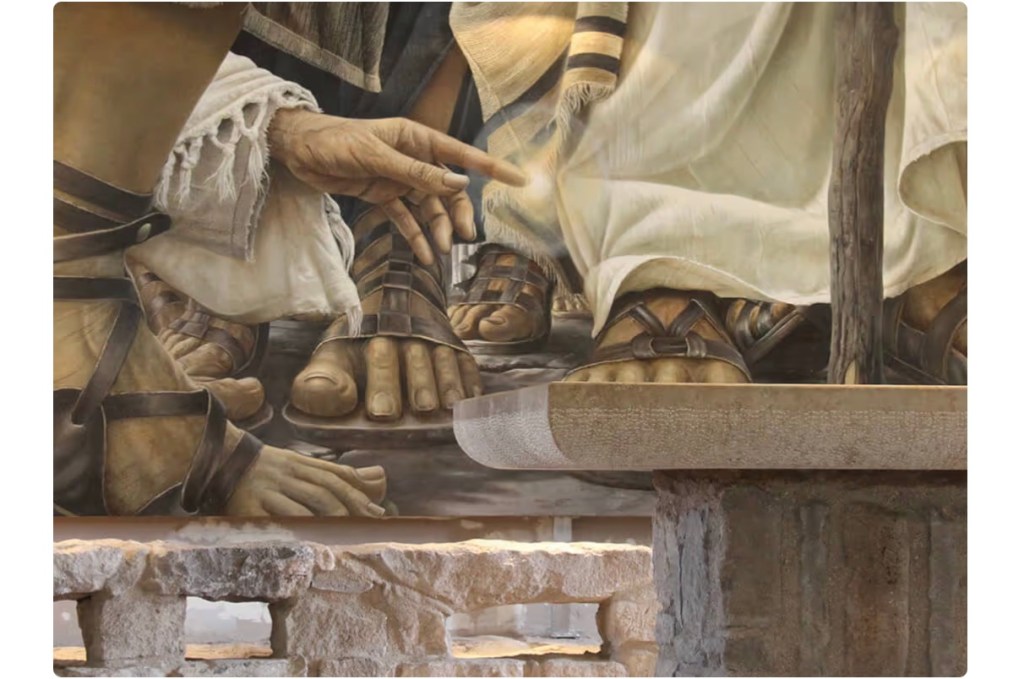
Painting: I have found more peace and rest in following the guidance of Jesus. Photo of the painting of Jesus I took in the chapel at The University of St. Mary of the Lake.

Nelson, Matt. Just Whatever: How To Help the Spiritually Indifferent Find Beliefs That Really Matter. El Cajon, CA: Catholic Answers, 2018.

Link for the Mass readings for Sunday, August 3, 2025

No or little faith?

“Where did this man get such wisdom and mighty deeds? Is he not the carpenter’s son?” (Mt 13:54-55).

Many people wonder what Jesus did from the age of twelve until he began his ministry around the age of thirty. Today’s reading gives us some insight into that question. Most likely, Jesus did nothing extraordinary, he was just as ordinary, if that, as any other first-century Palestinian Jew living in the small town of Nazareth, with a population of about 250 to 500 people.

Jesus most likely worked as a carpenter. This was rough, menial work, and as a day laborer, a position that was looked down upon. We can even see evidence of this in the Gospel accounts. Mark describes Jesus as the carpenter, the son of Mary, Matthew in today’s account portrays Jesus as the carpenter’s son, and Luke and John just refer to Jesus as Joseph’s son, leaving out any reference to carpenter altogether. Most scripture scholars believe Mark was written first, so we can see a progression in the biblical tradition moving away from identifying Jesus as a carpenter.

Jesus’ return to his hometown and his teaching was first met with wonder. The question arose, “Where did he get such wisdom and how did he work such mighty deeds?” But wonder soon turned to judgment. Who is he? Isn’t he just the carpenter of Nazareth, no better than any of us. In effect, “Who does he think he is?” Not only does this show that Jesus probably lived a very simple peasant life, but that Jesus’ social status was set in stone.

The people’s hearts and minds were closed to Jesus. THEY KNEW who he was and there was no way someone like him could do what they had heard, so they “took offense at him… And he did not work many mighty deeds there because of their lack of faith” (Mt 13:57-58).

How many times have we judged someone? Have we said to ourselves, “I know who he or she is.” We box them in, not as they are, but as WE see them, as we define or label them. We look at another individual not as a person with dignity, but as a two-dimensional caricature to satisfy our own prejudgments and lack of vision. We also do this to ourselves by limiting our potential when we say we can’t do this or that. Husbands and wives, having been married for years, can fall into the routine of everyday and not allow themselves to be surprised by one another, to wonder at what about each other they still don’t know!

Maybe we have had a similar experience as Jesus did in returning to his hometown, in that we have sought or are seeking to move beyond our particular social status, or follow a dream or career out of the norm of familial or community expectations. No matter our age, through no fault of our own, by pursuing this path some or many may feel threatened. Thus, not willing to accept our vision, those who are not willing to grow beyond what they have always known.

I read an account from the writer/producer Stirling Silliphant and how one day Bruce Lee challenged him to run five instead of his usual three miles. Into their fourth mile, Stirling said, “if I run any more I’m liable to have a heart attack and die.” [Bruce] said, “Then die.” He was so mad he finished the five miles. Afterward, Stirling approached Bruce and asked him why he said that.

Bruce replied, “Because you might as well be dead. Seriously, if you always put limits on what you can do, physical or anything else, it’ll spread over into the rest of your life. It’ll spread into your work, your morality, into your entire being. There are no limits. There are plateaus, but you must not stay there, you must go beyond them. If it kills you, it kills you. A man must constantly exceed his level” (p. 23).

Jesus rebukes limiting attitudes and perspectives. His Father has a plan for our lives and so he invites us to open our minds and hearts, to see the potential he sees in us. Jesus, the carpenter, invites us to embrace the infinite possibilities that will arise when we participate in his life and love. With God there are no limitations. The villagers of Jesus’ hometown are said to have had a lack of faith or unbelief, and because of that limitation, Jesus “did not work many mighty deeds there” (Mt. 13:58). When Jesus challenged his disciples, he said that they had “little faith” (Mt. 14:31). The disciples struggled to understand Jesus, but they were open.

We just need a little bit of faith to let Jesus in. If we are closed, if our hearts are hardened, Jesus will respect the boundary we place. He will not go against our free will. If we give him a little though, just as with the feeding of the five and four thousand, Jesus can do wonders in our lives.

The Holy Spirit seeks to free us from the shackles that bind us, the limitations imposed upon us from without, as well as those we impose upon ourselves from within. Let us cooperate with the urgings of the Holy Spirit, to be free with each breath and step we take into embracing the freedom of the love of God. With the leading of the Holy Spirit and experiencing the love of God, the limiting attitudes can begin give way to accept what God already sees, that we are his beloved daughters and sons with whom he is well pleased.
———————————————————————–
Photo: Picture does not do the view justice, but a moment of wonder as I was getting ready to drive home and chose to stop for a quick pic.

Stirling Silliphant story accessed from Bruce Lee: The Art of Expressing the Human Body, compiled and edited by John Little. North Clarendon, VT: Charles E. Tuttle, Co., 1998.

Parallel Gospel accounts: Mark 6:3, Matthew 13:55, Luke 4:22, and John 6:42

Link for the Mass readings for Friday, August 1, 2025

Not to wriggle free from but to surrender all to God.

Jesus said to the disciples: “The Kingdom of heaven is like a net thrown into the sea, which collects fish of every kind.” (Mt 13:47).

The invitation of God is universal and we are all lured by his invitation of love and intimacy. We long to belong, our very substance and essence as human beings is the reality that our ultimate fulfillment can only be reached in communion with the God who has created us. Yet, though drawn, we can resist being caught.

St Augustine (354-430), bishop of Hippo, came to a point in his life where he realized that the flame of his desire for wealth, fame, and pleasure was dimming. He clearly felt moved toward “one reality that cannot decay, from which all other realities are derived.” Though he was caught in God’s net and being pulled in, Augustine still sought to wriggle free, for: “Though drawn to the Path, who is my savior, I shied from its hard traveling” (Augustine 2008, 161).

How many of us echo Augustine’s dilemma? We have experienced God in our lives and feel the invitation to be drawn in, yet, we still seek to wriggle free. We are attracted to God but our attraction to other apparent goods still hold priority of place. At a baser level, we may believe that the minimalist approach is easier. God’s path is too hard.

Harder? Yes, but if we follow the will of God he will give us the strength to endure and persevere.

In reality it is more of an effort to work against God’s will, just read the Book of Jonah! May we instead surrender to the current of the Father’s Love and allow ourselves to be caught in the net of his Grace. At first, anxiety and fear will arise, just like being caught in a rip tide, because the pull may appear too strong, his love too pure. When we surrender to the will of God though, the anxiety will subside, the joy and consolation will arise, as we flow with ease and are empowered by the love of the Holy Spirit.

St. Ignatius of Loyola, whose feast day we celebrate today, resisted God for a time as well but then realized, during his long period of recuperation from a canon ball strike, a distinction between the invitations of the world and God’s. The intoxications of the world brought a momentary high which would then leave Ignatius wanting. “While reading the life of Christ our Lord or the lives of the saints, he would reflect and reason with himself: ‘What if I should do what St. Francis or St. Dominic did?'” (Gonzalez).

The thoughts of Jesus and the saints did not wane and after reading about them, left him with periods of ongoing consolation. The path that Ignatius then walked led him to sainthood and the Exercises he developed have helped countless, including myself, to experience healing and a deeper and more intimate relationship with Jesus. If you have read my encouragements to imagine yourself in the daily gospels before, you now know that I learned that practice from St. Ignatius. Give yourself some time getting caught in the net of God’s love today, resist the temptation to wriggle free, and offer the Lord all your liberty!

———————————————————————–

Photo: Ad Majorem Dei Gloriam – In the Ignatian tradition may we do all things for the greater glory of God! St. Ignatius, pray for us!!!

St Augustine. Confessions. Translated by Gary Wills. NY: Penguin Books, 2008.

Luis Gonzalez in The Liturgy of the Hours, vol III, 1975, 1566.

Link for the Mass readings for Thursday, July 31, 2025

“Let them grow together until the harvest.”

“’Master, did you not sow good seed in your field? Where have the weeds come from?’ He answered, ‘An enemy has done this.’ His slaves said to him, ‘Do you want us to go and pull them up?’ He replied, ‘No, if you pull up the weeds you might uproot the wheat along with them. Let them grow together until harvest” (Mt 13:27-30).

One of my favorite trees is the Maple. When JoAnn, the kids, and I moved to Florida over twenty years ago, the thought did not cross my mind that Maples grew in Southern Florida. A few years after we moved into our home, I was walking in our backyard and thought I saw a maple leaf. I squatted down for a closer look and found that not only was it a maple leaf but a sapling with three leaves! I carefully cleared some of the weeds and grass growing among and around it, but otherwise let it be because it was so fragile. As it grew I cleared more around it. Today it is a fully mature Swamp Maple!

A few years ago, I saw a new Maple sapling emerging, though this time, some poison ivy was growing around it. I sprayed poison ivy killer, thinking I avoided the tiny sapling. Unfortunately, I must have gotten some of the poison spray on the Maple leaves because it also shriveled up and died.

I can relate to Jesus’ parable from today’s Gospel. The master warned his servants to let the wheat and weeds grow together until they were more mature at the time of the harvest, so as not to pull up the wheat with the weeds. Weeds in this verse is translated from the original “Greek [as] zizanion [which] refers to a noxious weed that in its early stages closely resembles wheat and cannot be readily distinguished from it” (Harrington 2007, 204). This plant, darnel, as it grows along with the wheat entwines its roots with the roots of the wheat (Mitch and Sri 2010, 180). Both, in their immature state, were indistinguishable and in pulling up the weeds, there was a strong chance that the wheat would be pulled up as well.

Jesus is calling us to resist the temptation of judging one another. Even when there are those who commit heinous acts of evil, we may feel justified in our judgment and condemnation. Jesus says no. We may convict the person of their action and we are certainly to hold each other accountable, but judge and condemn, no. The Father is the ultimate arbiter and judge of someone’s salvation.

All of humanity has been created in the image and likeness of God, each of us are a unique gift to this world. We have been created good, yet all of us fall short of the glory and grace of God and because of our fallen nature we have lost our likeness to God, that likeness has dimmed. God seeks to restore our glory and our likeness which we call growing in holiness. As we do so, we are to assist others in doing the same.

God the Father will judge at the end of time between the wheat and the weeds. Let us leave the judgment to God, and let us instead be about learning and following the teachings of Jesus, repenting, and encouraging each other in the maturation process which can include, convicting others when needed, yes, but also encouraging and supporting each other to heal, be forgiven, and grow in holiness.

We need to resist falling into the temptation of condemnation and gossip and spreading poison in our misguided attempt to be of help. In dealing with one another, let us pray for patience, understanding, and seek forgiveness for our sins. Having experienced the love, mercy, and forgiveness of God, may we be willing to forgive each other. Life, even when going well, is hard. We need the encouragement and support of each other if we are to mature and actualize the fullness of who God calls us to be and strive, through God’s grace, to put his will into action. “Encourage each other while it is still today” (Hebrews 3:13).
—————————————

Photo: Some young Maples standing tall in the forefront that I came across on a Rosary walk at University of Saint Mary of the Lake.

Link for the Mass readings for Saturday, July 26, 2025

Harrington SJ, Daniel J. “The Gospel of Matthew”. In vol. 1, Sacra Pagina Series, edited by Daniel J. Harrington. Minnesota, Liturgical Press, 2007.

Mitch, Curtis and Sri, Edward. “The Gospel of Matthew”. In Catholic Commentator Series, edited by Peter S. Williamson and Mary Healy. Grand Rapids, Michigan, Baker Academic, 2010.

“Can you drink the cup that I am going to drink?” Matthew 20:22

“The mother of the sons of Zebedee approached Jesus with her sons and did him homage, wishing to ask him for something. He said to her, ‘What do you wish?’ She answered him, ‘Command that these two sons of mine sit, one at your right and the other at your left, in your Kingdom’” (Mt 20:21-22).

The context of this request from the mother of the sons of Zebedee, James and John, comes from reading a few verses before the quote above. Start reading at Matthew 20:17 and you will see that Jesus and his twelve apostles are heading toward Jerusalem. Jesus stops to share with them, for the third time, that he will be condemned and crucified.

The request of James and John, through his mother, in the eyes of the world would seem a reasonable request. To them, Jesus was marching toward Jerusalem to claim his throne as king. To sit on his right and left, was an acknowledgment of their willingness to follow him, and serve as support for and witnesses of his kingship. It was also a preemptive strike before any of the other apostles could make that claim. There is a problem with their understanding though.

Jesus’ third statement of his imminent suffering and death appears to be ignored by or it goes over the heads of James and John, again, as well as their mother. The other ten are indignant, not because of the apparent lack of acknowledging Jesus’ upcoming passion, but because they entered into a free for all for position of which of them would be the greatest! It is easy to imagine how chaotic this scene quickly escalated! Saint John Chrysostom offered this insight: “See how imperfect they all are: the two who tried to get ahead of the other ten, and the ten who were jealous of the two” (Chrysostom 1975, 1552)!

This event made an impact for it was recorded in Matthew, Mark, and Luke. Mark has James and John speaking for themselves, not their mother, as in Matthew. Luke does not even record the initial request of James and John and instead comes in at the point of the apostle’s dispute. What all record, including the Gospel of John, is how Jesus made it clear that he came to serve, not to be served. To follow Jesus meant, not that James and John would be given positions of honor and power, the sitting at his right or his left, but that they were to serve as he served, to love as he loved.

The right and left that James and John asked for, Jesus shared was not his to give. That assignment would come directly from the Father. He also said, “You do not know what you are asking” (Matthew 20:22). For if James and John did, they would have thought twice about asking him. The ones who would assume the right and left were the two thieves on either side of him as Jesus was lifted up on the cross.

As disciples of Jesus, we too are called to show our love, not a sentimental love, but a love willing to serve and sacrifice for one another. Most of us are not accustomed or naturally disposed to either. A good way to begin is to be truly present to another, done most effectively when we actively listen. We learn this best in times set aside to meditate and pray with God. As we are able to quiet our minds, slow our heartbeats, and listen to God, we can begin to do so with one another.

Listening happens when we look up, put the phone, paper, or magazine down, turn away from the computer and/or turn off the tv. Then as we take a few breaths, we can open our hearts and minds to listen, and hear. When we learn to listen to God and one another, we will hear where the needs are. When we allow our hearts to be moved with compassion, we will be more willing to truly love by sacrificing and serving one another.

—————————————

Painting: “St. James the Greater” by Guido Reni. James learned the art of service and became the first to drink Jesus’ cup. St. James, pray for us!

Chrysostom, St John. Homily. The Liturgy of the Hours: According to the Roman Rite. Vol. 3. NY: Catholic Book Publishing, 1975.

Parallel Gospel passages to review:
Mark 10:35-45; Matthew 20:20-28; Luke 22:24-27 and John 13:12-17

Link for the Mass readings for Friday, July 25, 2025

Let us follow the invitation of the Holy Spirit.

“… the shortest way to holiness is faithfulness to the inspirations of the Holy Spirit.”

Fr. Jacques Philippe in his book, In the School of the Holy Spirit, offered the above quote in italics from St. Faustina. All of us are called to be holy, to be set apart from the mundane and secular. This call does not make us better, it makes us more human. God invites us through the quiet whisperings of the Holy Spirit to experience something better for our lives, his love.

The question for each of us in this moment is, are we willing to listen to the quiet and gentle invitations of the Holy Spirit? If the answer is yes, then invite the Holy Spirit to lead you and help you to see and hear his guidance. We have experienced his promptings since our youth, but just may not have been aware he has been doing so. Being more intentional in asking to be led, taking some time to reflect to see when and where we actually have received and followed his guidance, will help us to be aware a little more today than yesterday.

May you give yourself a few moments to take some deep breaths and invite the Holy Spirit to lead you and then follow.

My usual postings on the daily Gospel readings will be absent and possibly not daily. I am away for the next twelve days as I continue my studies for the Certificate Program in the Ministry of the Spiritual Exercises of St. Ignatius of Loyola here at St. Mary of the Lake University in Mundelein, Illinois. I still wanted to send some reflections along, so we shall see what the Holy Spirit has planned. Please pray those of us who are leading and those engaged in 3, 5, 8, and 30 days of silent retreat. I will be praying for you!!!


Photo: Ending the evening with some silent one on one time with Jesus.

“Courage daughter! Your faith has saved you.”

“If only I can touch his cloak, I shall be cured.” Jesus turned around and saw her, and said, “Courage, daughter! Your faith has saved you.” And from that hour the woman was cured (Mt 9:21-22).

Just to touch his cloak may seem a small and insignificant act, but by doing so, this woman showed tremendous courage. Suffering from hemorrhaging for twelve years, broke from spending all her resources to be healed, she risked. She could have been severely punished, beaten, or stoned for this small act. Under the Levitical code, her condition deemed her unclean, in the same category as a leper, a pariah. Touching someone else in that condition would then make them unclean. Yet, in that small touch, that great act of courage, “power had gone forth from him” (Mk 5:30), and she was completely healed.

In the parallel account from Mark 5:21-43, he reveals more details than Matthew does in today’s reading. Not only did the woman exhibit the courage to touch Jesus, but she was then willing to admit that she had done so when Jesus questioned who had touched him. Many of the disciples looked at Jesus wondering how he could ask such a question because so many people had been around and touching him. She could have easily slinked away, but she didn’t. She admitted to touching him and would receive whatever the consequence for doing so.

So many around Jesus as his disciples pointed out, and yet why was she the only one healed? Pope Leo addressed this in his June 25, 2025 audience: “In his commentary on this point of the text, Saint Augustine says – in Jesus’ name – “The crowd jostles, faith touches” (Sermon 243, 2, 2). It is thus: every time we perform an act of faith addressed to Jesus, contact is established with Him, and immediately his grace comes out from Him. At times we are unaware of it, but in a secret and real way, grace reaches us and gradually transforms our life from within.”

Jesus recognized immediately that the power came out from him. He may indeed have known who received his grace and gave the woman the chance to be healed on a deeper level and to set aside her fears completely. When she did so, Jesus did not reprimand but affirmed her faith and courage. In this act of healing, Jesus restored her to the community from which she had been ostracized. Jesus restored her dignity.

Pope Francis in his general audience from August 31, 2016, stated: “Once again Jesus, with his merciful behavior, shows the church the path it must take to reach out to every person so that each one can be healed in body and spirit and recover his or her dignity as a child of God”. May we too establish contact with Jesus, and experiencing his grace, reach out, in-person and online, and encounter others offering the same dignity, love, mercy, and respect we have received.


Photo of painting from Magdala.org

Link for the Mass readings for Monday, July 7, 2025

“Let us build a Church founded on God’s love.”

“At that time the Lord appointed seventy-two others whom he sent ahead of him in pairs to every town and place he intended to visit” (Lk 10:1). Jesus did not stop with this action, he continued and continues to call people to himself and sends them on mission to proclaim the same words: “The kingdom of God is at hand for you” (Lk 10:9).

To be a disciple of Jesus is to be both about maintaining the Church he instituted and going out on mission. This is why at the end of each Mass the deacon or priest in the absence of a deacon will say, “Go and proclaim the Gospel of the Lord” or three other formulas of being sent to be missionaries in our communities. This is not a call for clergy and religious only but for all of the baptized.

Pope Leo XIV said emphasized this same sentiment well at the close of his homily on May 18: “With the light and the strength of the Holy Spirit, let us build a Church founded on God’s love, a sign of unity, a missionary Church that opens its arms to the world, proclaims the word, allows itself to be made “restless” by history, and becomes a leaven of harmony for humanity. Together, as one people, as brothers and sisters, let us walk towards God and love one another.”

There is much here in the Pope’s words to meditate upon and put into action. We are not just to go out and do missionary work, to evangelize and share the Gospel, we are to embody mission. We “are to be a leaven of harmony for humanity.” At the moment of our conception we existed as unique individuals already distinct from our parents. We are endowed with dignity and worth just by the fact that we exist. In embracing that gift and dignity of our lives, in allowing ourselves to slow down long enough to be loved by God, then we can begin to see each other as brothers and sisters and begin to reach out in love toward one another.

The “Church founded on God’s love” is the Church established by Jesus Christ. In Luke recording how Jesus “appointed seventy-two others”, we see the further establishment of the Church leadership that Jesus instituted. This hierarchy echoes the one established by God through Moses (See Exodus 24:1-11). When Moses ratifies the covenant, he has with him Aaron the high priest with Nadab and Abihu, along with the twelve young men offering sacrifices, each representing the twelve tribes of Israel, along with seventy elders. Jesus is following the same pattern in calling Peter as the leader of the twelve apostles, along with James and John, and the seventy-two. Jesus is calling to himself those who would first preach to Israel, the twelve, and the seventy-two, to preach to the Gentile nations, and eventually the whole world.

The deposit of faith that Jesus handed on to Peter and the twelve along with the seventy-two has continued to be shared with each successive generation up to and including our own. We are to continue in our own time to receive the message of Jesus and share it as well. Each and EVERYONE of us are a unique gift to the world that has never been nor will ever be again. Jesus has called us to himself with the purpose to send us out on mission.

I agree with Pope Leo that, “this is the hour for love! The heart of the Gospel is the love of God that makes us brothers and sisters.” This is “the hour for love”, for: “The kingdom of God is at hand” (Lk 10:9). Let us go forth as missionary people, as contemplatives in action, to promote peace and reconciliation, to glorify the Lord with our every thought, word, and deed.  Let us open our hearts and minds to God’s love, receive, rest, and abide in his love, so that we may go out to prepare the way for others to receive the love of Jesus as we have. This is the Church Jesus calls us to continue to build up.


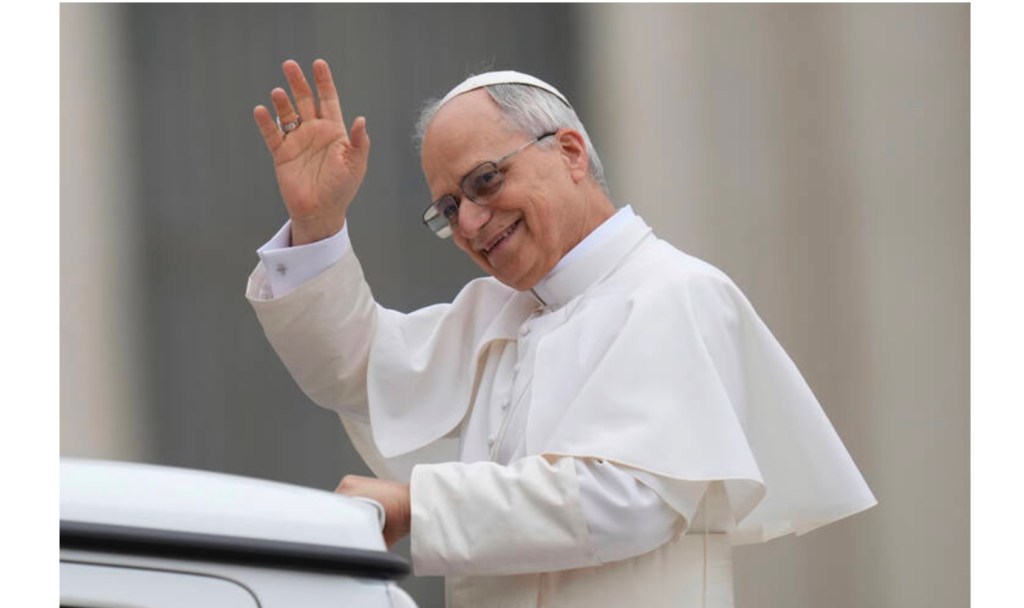
Photo: Pope Leo arriving at his first weekly general audience on May 21, 2025 (Credit: Gregoria Borgia, AP, accessed from America Media).

Homily of Pope Leo XIV from May 18, 2025

Link for the Mass readings for Sunday, July 6, 2025

As we allow ourselves to be loved by God, we are transformed and become new wine skins.

“Rather, they pour new wine into fresh wineskins, and both are preserved” (Mt 9:17).

Mark, Matthew, and Luke all record the reference of pouring new wine into fresh wineskins. What Matthew adds is, “and both are preserved.” Luke adds: “[And] no one who has been drinking old wine desires new, for he says, ‘The old is good.’”

The Gospel authors offer this teaching of Jesus in the context of the tensions between those who would reject Jesus and those who would follow him and his new way. The new wine represents the acceptance of the Gospel, the Good News of the kingdom of God in their midst. To receive this new wine though means to change one’s mind and heart. “The tension, and often incompatibility, between the old and the new is part of every religious tradition and attends every change within that tradition. Matthew and Luke wrestled with it and adapted it to their community situation. Contemporary Christians have no less a challenge” (The Gospel of Mark, Donahue, SJ, p. 109). Matthew shared with his community that Jesus is the new Temple, the old had been destroyed in 70 AD.

Following Jesus meant that both the old and new covenants would be preserved. Jesus did not come to abolish the law and prophets, but fulfilled and raised what went before him to a higher level.

We are invited to wrestle as well. The Church is called to change, to be transformed by the Living God. Many say the Church needs to change this and that, not realizing that we are the Church, the People of God, the Body of Christ. If the Church is to mature and grow each of us is to embrace transformation, being made anew through the guiding presence of the Holy Spirit. This invitation is a call to let go of those habits, lifestyles, behaviors, mindsets, attachments, and addictions that are weighing us down or worse holding us in bondage and slavery to our sin, and ultimately keeping us separated from God. Much of the material and finite things we hold onto prevents us from receiving the new life God wants to pour into us.

Jesus has come to set us free from our enslavement to sin by inviting us to try some new wine which consists of contemplating upon and living the message of his teachings and actions as recorded in the Gospels. We do not have to be afraid of the change and transformation Jesus is calling us to experience. As St Irenaeus, the second-century bishop of Lyons is attributed to have written: “The Glory of God is man fully alive!” Jesus is inviting us to live our lives and live them to the full!

To become new wineskins then, we are called to identify and let go of those selfish and sinful inclinations that keep us constricted, rigid, and curved in upon ourselves. We are to let go of our fears so that we can be healed from them. We also must let go of what appears to be good, but in truth is not the good that God offers. We let go when we give our lives to God and follow his will.

When we do so, we will experience the Father’s love and can then love as Jesus loves. Through this transformation, we are expanded and open to receive the new wine the Holy Spirit wants to pour into us. We are called to go beyond the foundation of our identities that we have found safety and comfort in. We are transformed to be people of integrity, free to follow God’s will in and out of season. Our identity gives us roots and our integrity received through trusting and following the guidance from the Holy Spirit gives us wings to fly.

Each time we come to God in stillness, we will experience opportunities to experience distractions. These distractions become invitations to purify that which we need to let go of, so that we may grow deeper in our relationship with God and one another. With each identification and willingness to let go, our false self begins to be burned away. We become new wineskins, capable of receiving God’s love, and expanding as we follow God’s will and receive the freedom to be who he calls us to be.


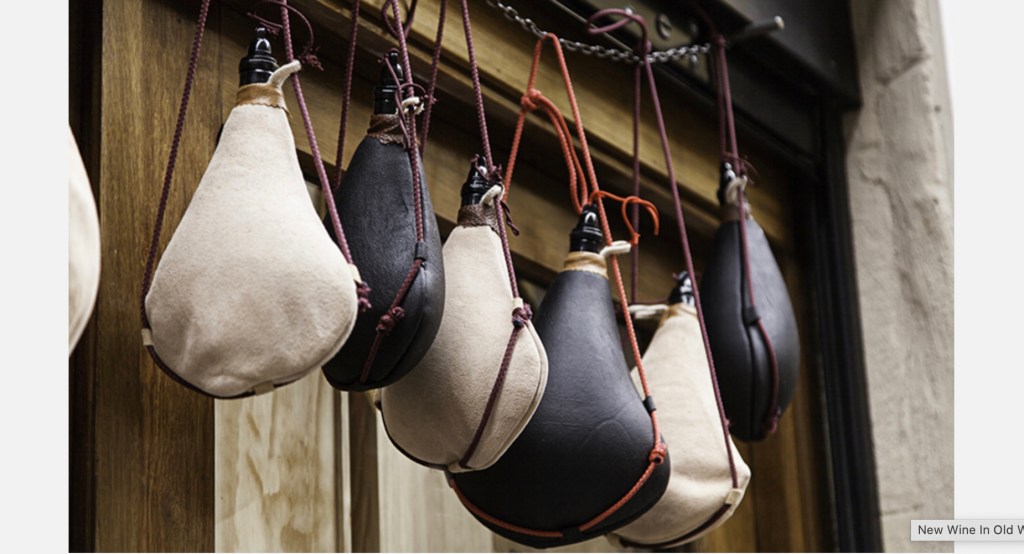
Photo: May each of us be full wineskins, filled with he love of the Holy Spirit to overflowing!

Donahue, John R. S.J., and Daniel J. Harrington, S.J. The Gospel of Mark. Vol. 2 of Sacra Pagina, edited by Daniel J. Harrington, S.J. Collegeville, MN: Liturgical Press, 2002.

Parallel Scriptural accounts: See Mark 2:22, Matthew 9:16-17 and Luke 5:37-39

Link for the Mass readings for Saturday, July 5, 2025

We don’t have to be perfect to be called by Jesus.

“Those who are well do not need a physician, but the sick do. Go and learn the meaning of the words, I desire mercy, not sacrifice. I did not come to call the righteous but sinners” (Mt 9:12-13).

How could Jesus have called Matthew, named Levi in Mark and Luke, to be part of his inner circle and then how could he eat with sinners? Matthew is a tax collector. Tax collectors were, at the least, believed to be collecting money over and above, skimming off the top, the allotted prescribed taxes and at worst, they were considered to be in collusion with the occupying power of Rome. Not only were they considered unethical and unclean, tax collectors were in league with the enemy! And Jesus is sitting down and eating with THEM!!!

In quoting Hosea 6:6, “I desire mercy, not sacrifice,” Jesus was drawing reference to the growing Pharisaic influence to aspire to and take on the ritual purity status of the priests sacrificing at the Temple. To be in favor with the religious leadership, to be accepted as part of the religious community, one had to follow certain prescriptions and practices, otherwise be recognized as unclean and while in that state, one did not belong to the community. Sharing table fellowship was a measure of that social construct, so if one was unclean, they were to eat alone.

Jesus would have none of that. Jesus sought to enter into relationship with anyone who was willing, even those who were considered unclean, on the outside, and/or the peripheries. He loved people then and loves us today for who we are and as we are, a beloved child of God. There is no THEM or OTHER for Jesus! He bestowed and bestows his mercy, love, and healing first, as the starting point of any relationship. Jesus calls us to a better and more fulfilling life now, so that it may carry over into eternity. He accepted and accepts people first, builds relationships first, and continues to walk with us to lead us to be better than we are when he meets us.

Jesus reveals to us our sins not with the intention to condemn or shame us, but so that we can see how our sins separate us from the love of God and each other. In revealing our sins, Jesus helps us to see better to make a clearer choice. We can choose God or our sins. We can’t have it both ways, we cannot serve two masters. Jesus also calls us to be perfect as his heavenly Father is perfect (cf. Mt 5:48). Apart from him that is not possible, but with him growing in the love and perfection of God is possible.

The bar of perfection is indeed high, higher than that of the Pharisees; the difference is that Jesus’ mercy, his willingness to enter into the chaos of another, is higher. Jesus meets us in our imperfections, sin, and weaknesses. He enters through our door of our fallen humanity, but, he wants us to exit out of his door so that we can participate in his divinity and be transformed by his love.

Jesus’ teachings are hard, and when we fall he does not kick us in the teeth and cast us aside. He lays down, right in the muck and mire with us. Face to face, he wipes the dirt and tears from our eyes, offers his hand, and helps us to continue on our journey to see and experience that which is good, true, and beautiful.

No matter what we are dealing or struggling with, know that Jesus loves each and every one of us more than we can ever mess up and he does not define us by our worst choices and acts. God forgives and heals as many times as we are willing to go to him, to repent, to turn away from our sins and turn to the love of God. Sometimes when we feel stuck, indecisive, and immobile, we just need to remember to accept Jesus’ invitation, arise as did Matthew in today’s Gospel, and walk with him. Step by step, empowered by the Holy Spirit, we will be transformed as we grow and mature, which is messy because life is messy.

We just need to be patient with Jesus, ourselves and each other. As we experience our healing moments in the midst of our chaos, may we also be understanding of and willing to enter into the chaos of others and allow God to forgive, heal, and love us and through us.


Painting: The Calling of St Matthew – Caravaggio, 1600

Parallel readings: Mt 9:9-13, Mk 2:13-17, Lk 5:27-32

Link for the Mass readings for Friday, July 4, 2025