
Jesus recognized that the scribe, who asked him about which commandment was the greatest, “answered with understanding,” and then he said to him, “You are not far from the Kingdom of God” (Mk 12:34). What is it that the scribe understood?
The scribe understood that God “is One and that there is no other”. God is the true source of our being, the foundation of our very existence. We have been created with an innate desire to be one with him. This is the longing we all feel in the depths of our soul, this is why nothing that is finite or material will ever fully satisfy us, and why we are always wanting more. This is as true for the mystic as well as for the atheist and everyone in between. We hunger and thirst for the living God. And even more wonderful of a truth is that God hungers and thirsts for communion with us!
God is “One and no other” also means that we are not God, we are his created beings. God is not just one being among many, not even the supreme being. This orientation is important and foundational. We can only see from our limited perspective. What we think or believe we might need, may in fact not be truly good or beneficial for us, the shimmer may be just an apparent good, a distraction, a temptation, that will lead us away from the authentic fulfillment and meaning of life that we seek. God will guide us away from any unhealthy want, he will lead us away from temptation when we are willing to seek his guidance over and above our own. God will give us what we truly need, he will lead us to that which is, in reality, true, good, and beautiful – relationship with himself, which when we come to put God first, will help us to properly order everyone and everything else in our lives.
Once we come to believe that God is God and we aren’t. We can experience that we are not just created beings. When we are baptized, we become his beloved daughters and sons. Accepting this filial relationship then we can take the next step: “to love him with all [our] heart, with all [our] soul, with all [our] mind, and with all [our] strength”. God hungers and thirsts for all of us. We are to give all of our lives to him. In our surrender to God and his will, we become capable of receiving his love and so are able to better love him in return. We all long to be loved and to love. Experiencing the love of God helps us to unconditionally love “our neighbor as our self” because through our surrender to his will we allow God to love others through us.
An interesting addition that Jesus adds to his presentation of the great commandment, is that in quoting Deuteronomy 6:4-5, he adds to the original. Along with love God with our whole heart, soul, and strength, he adds to love God with all our mind. This insert helps us to understand how we can live out this commandment. We are to pray, to lift up our hearts and our minds to God and depend upon him as Father. We do this best when we meditate on his living word daily. When we think about and return to his word often, we rest in his presence and in his presence, we experience healing, give of ourselves fully to him, and will be moved to love others.
As we surrender all of ourselves to God and love him in return, we will better love others (see Leviticus 19:18). To do so, we need to spend quality time with God in stillness, be present One on one, as well as come to an awareness of God’s nearness in our daily activities. We are to resist compartmentalizing God and instead seek his presence in every thought, word, action and through everyone we encounter.
Each of us, though prone to sin and wounded by our sin, are still not destroyed by sin. God loves us as we are, and when we are humble enough to be repentant: to be contrite, confess, and follow through on our penance, God forgives our sins, heals our wounds, and transforms us. No need to run away from him. Instead, let us run to him. Loving our neighbor as our self helps us to run to Jesus, for if we cannot love those we can see how can we love his Father, our Father, who we can’t? Going out of ourselves and giving to another helps us to build relationships because time spent with each other breaks down the walls of separation that keep us at a distance.
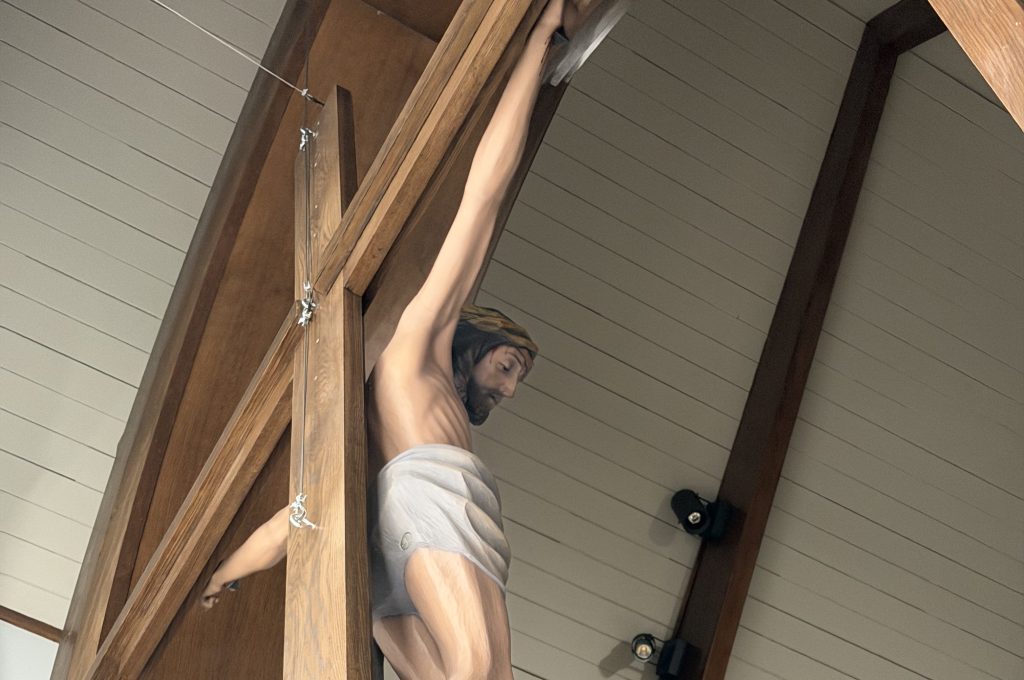
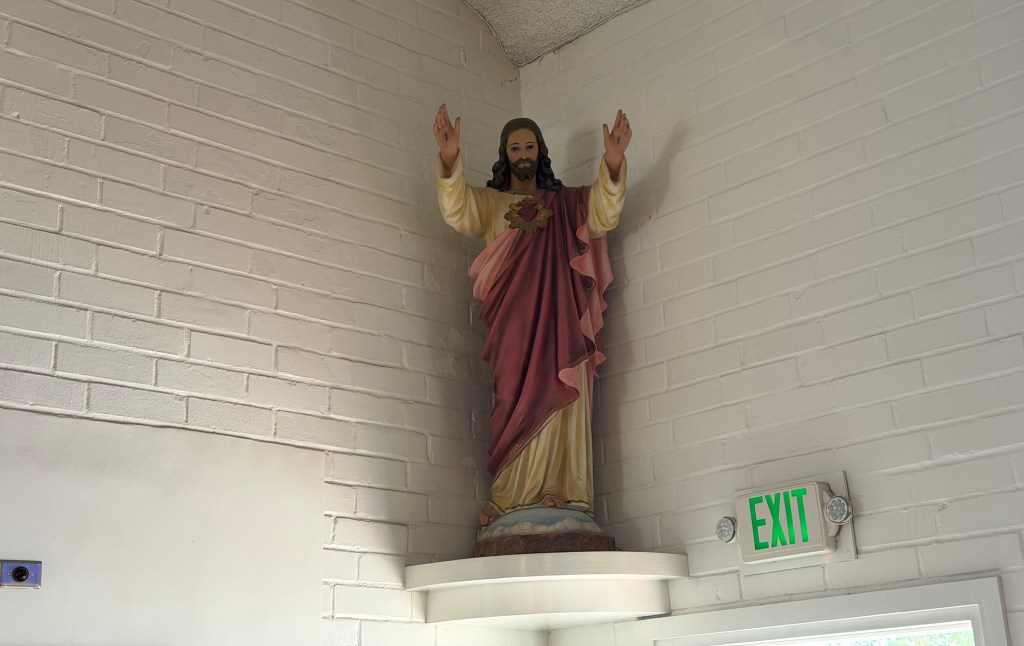
Jesus’ arms are wide open before us. May we surrender all our heart, soul, mind, and strength into his loving embrace, receive his love and love him in return, and be willing to love our neighbor and our selves in the same way. When we understand and put this commandment into practice, the other commandments will be something we will do naturally. As we enter into this practice, we too will hear Jesus say to us, “You are not far from the kingdom of God.”
—————————————————————————-
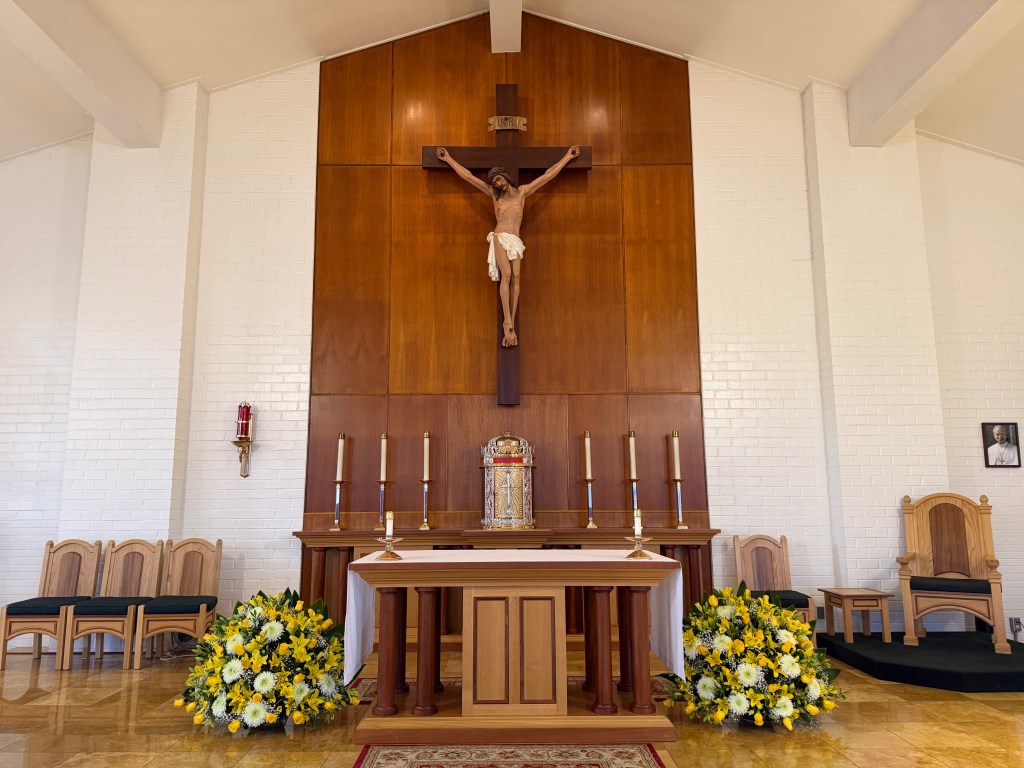
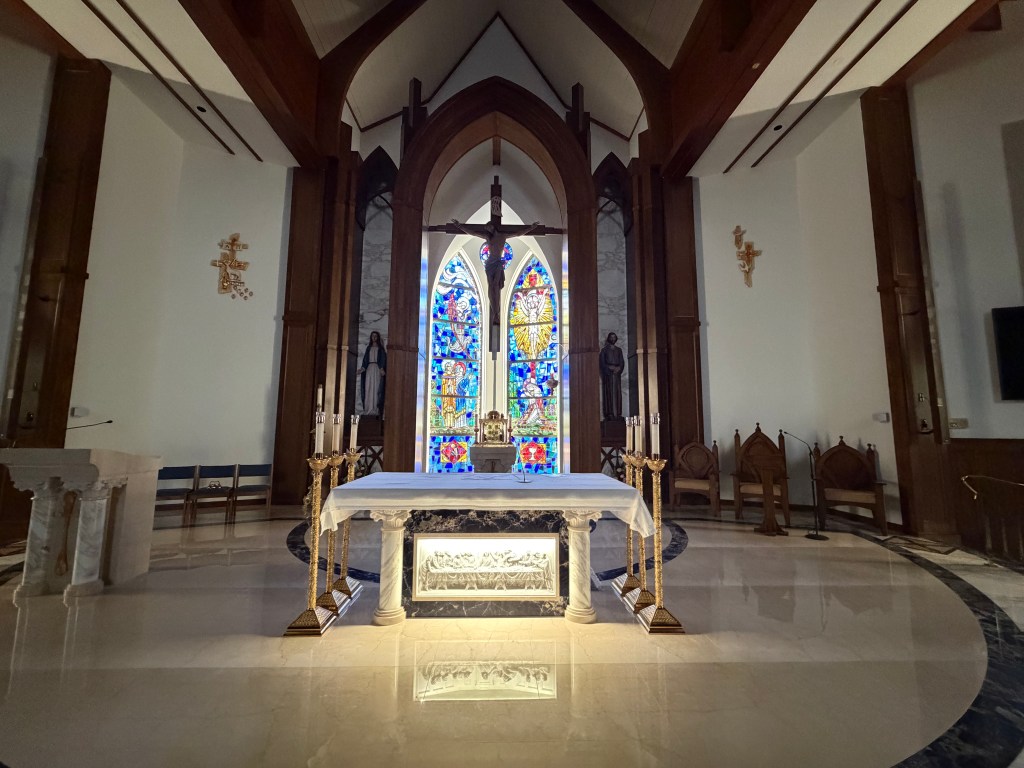
Photo: Some quiet time to meditate, pray, and contemplate God’s living word during Morning Prayer.

 Spiritual Stepping Stones