resurrection
Jesus is risen! Let us place our hope and trust in him and we will experience his peace and joy!
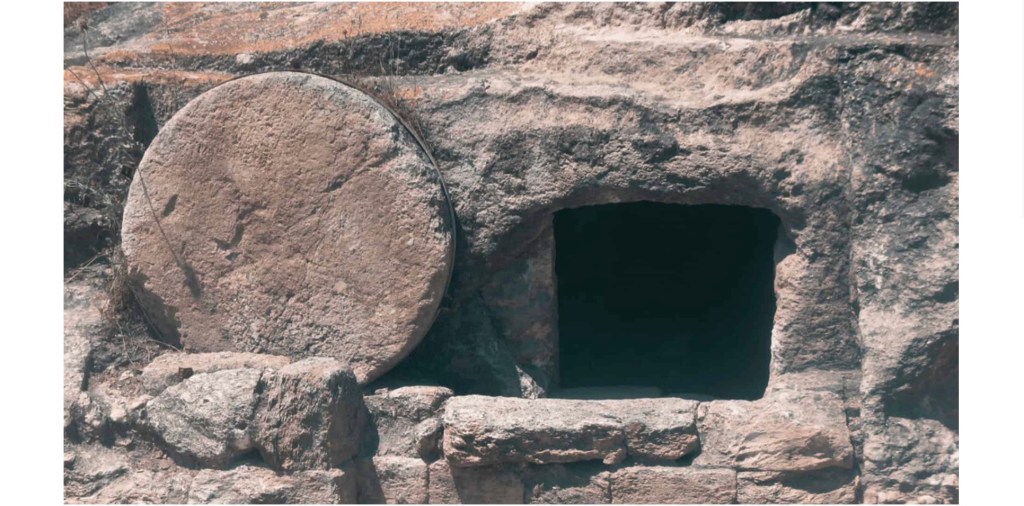
Mary of Magdala comes to the tomb during the wee hours of the morning while it is still dark and finds the stone rolled away. She runs to Peter and John to share with them the news, that: “They have taken the Lord from the tomb, and we don’t know where they put him” (Jn 20:2). Peter and John retrace the steps of Mary, running to find the tomb empty as well. All three are stunned because “they did not yet understand the Scripture that he had to rise from the dead” (Jn 20:9).
How can we blame them? Do we fully understand the reality and fact that Jesus has risen from the dead? There are conjectures tossed about today such as Jesus did not really die, but woke up three days later, aching all over from the excruciating effects of the crucifixion. Others say that the accounts of the resurrection were mass hallucinations, or that the Gospel accounts of Jesus rising from the dead are a mere myth. These propositions do not stand up to the fact that Jesus, fully God and fully man died, entered death, and conquered it. In so doing, he entered into a new life, a new reality. Jesus, in becoming the firstborn of the dead, was transfigured from our three-dimensional reality that we all know and experience, such that he now resonates at a higher pitch and dimensional reality. Jesus is the firstborn of a new creation!
All of human history changed in that tomb because of this new fact of the resurrection of Jesus. How this has happened is indeed a mystery, but in our seeking understanding, we will fall short and be frustrated if we only approach the mystery of God in the same way that we tackle a problem to be solved. The Apostles and disciples of Jesus struggled to find meaning and understanding about how Jesus crucified was now gone from the tomb. They came to understand the mystery of the Resurrection, the same way that they would come to believe in the mystery that Jesus is fully human and fully divine. This happened when they encountered Jesus again. The mystery of the Resurrection is not a problem to be solved, but a person to encounter, a relationship to embrace, as it was for the Apostles and is so for each of us today.
Faith seeking understanding is grounded in having an encounter with a person, Jesus the Christ, the Son of the Living God. Pope Francis writes: “The joy of the Gospel fills the hearts and lives of all who encounter Jesus. Those who accept his offer of salvation are set free from sin, sorrow, inner emptiness and loneliness” (Francis, 9).
Easter Sunday is the day where this joy first truly became possible, and this joy is needed now more than ever. For in each age there has been darkness in the world. Sin, suffering, violence, division, and death continue to be present in people’s experiences. Yet, because of this day, we celebrate Jesus’ victory over death. We celebrate the truth that the light has overcome the darkness, that suffering and death do not have the final answer, Jesus does. We can place our hope in Jesus so that no matter what challenges we are experiencing he will guide and accompany us.
We are an alleluia people, meaning that no matter what anguish or trial, we are a people endowed with hope in the One who conquered death. God has loved us into existence and continues to love us in such a way that the promise of eternity is real, where suffering and death are no more! Also, Jesus reminds us that he cares, that we are not alone now this side of heaven, and we will persevere and overcome sin, suffering, and even death when we surrender our minds and hearts to him. In that surrender, we will have access to his peace that surpasses all understanding.
Mary of Magdala shared the good news with Peter and John that the tomb was empty and the stone was rolled away. Jesus rolled back the stone, rolled back death, and he opened up heaven for us in the humanity he assumed, the death he conquered, and the resurrection we celebrate today! Alleluia! Alleluia!
May God bless each of you and fill you with his joy and peace! Happy Easter!!!
————————————————–
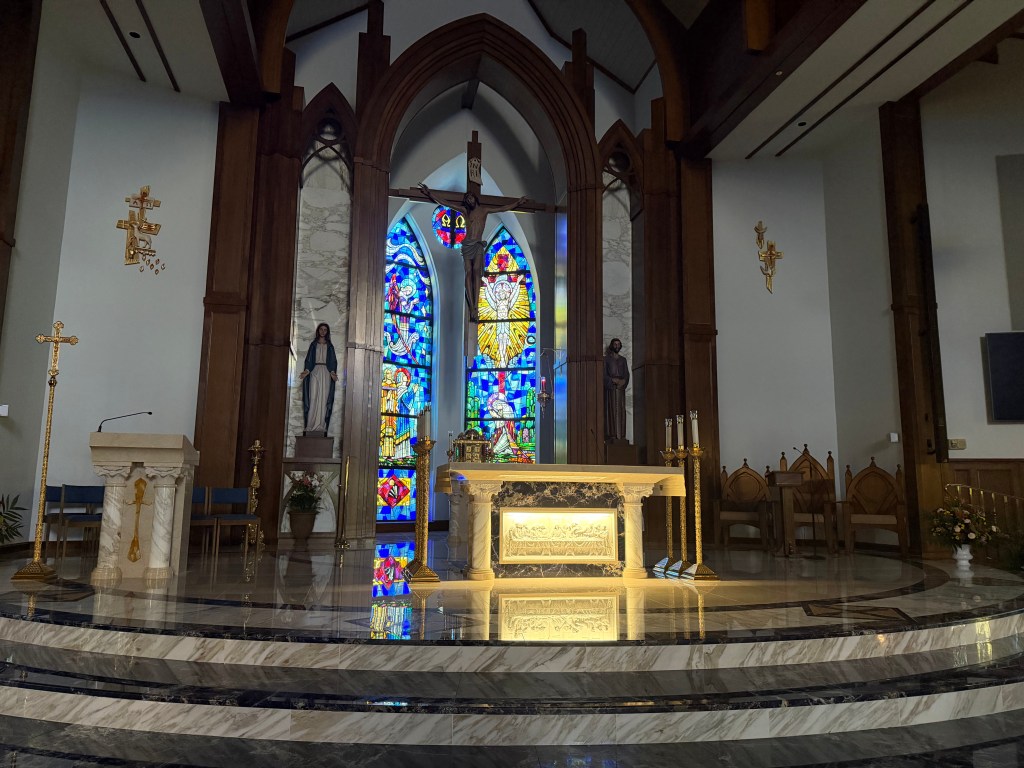
Photo: A quiet holy hour Saturday afternoon preparing to celebrate the Easter Vigil in which I was blessed to baptize 7 and confirm 17 joy filled disciples of Jesus!!!
Francis. Evangelii Gaudium, Joy of the Gospel, Libreria Editrice Vaticana. Frederick, MD: The Word Among Us Press, 2013.
Link for the Mass readings for Sunday, April 5, 2026
“For Jesus, it was more important to conquer death than to cure disease.”
Martha, Mary, Jesus’ disciples, and anyone else who experienced the sickness of Lazarus wondered why Jesus did not go to be with his friend as soon as he received word that he was dying. Jesus had healed and restored so many, why would he delay? Many of us who have experienced the death or in this moment may be accompanying a loved one in their final days and hours, may have asked or may be asking the same thing. Why is Jesus allowing this to happen? Why do so many have to suffer? Why the delay?
Jesus responded to the disciples’ inquiry by saying, “This illness is not to end in death, but is for the glory of God, that the Son of God may be glorified through it” (Jn 11:4). Not sure if Jesus’ response would have helped me if I was among the crowd. Many of us have experienced the death of our family and friends, as did Martha and Mary. What is Jesus up to?
Does Jesus care? Does this Gospel speak to us today? Yes. At the height of the Covid pandemic back in March of 2020, I remember being quarantined at home still on oxygen and watching Pope Francis come out on the steps of St. Peter at the Vatican in the dark and rain and said, Jesus, “more than anyone, cares about us.” Just as Jesus wept when he witnessed the anguish of Martha and Mary, the sisters of Lazarus, he also imagined the anguish of one of his closest friends sick and dying. So he wept and weeps with us in our present challenges, trials, and pain. Still he did not come until four days later. Why?
We may wonder in hearing or reading this account where Jesus is in the midst of our struggles at times, may wonder where he was in past challenges. There is good news here. Jesus had a plan for Lazarus and he has one for us. We need to have the same faith as Martha. Though she did not understand why Jesus had not come sooner, she trusted in him. Martha responded to Jesus when he asked he if she believed that he was the resurrection and the life and she responded: “I have come to believe that you are the Christ, the Son of God” (John 11:27). Just as Jesus was present to Martha, he is present and among us as well. But why the delay?
St. Peter Chrysologos offers a great response to that question, “for Christ, it was more important to conquer death than to cure disease. He showed his love for his friend not by healing him but by calling him back from the grave. Instead of a remedy for his illness, he offered him the glory of rising from the dead.” Jesus followed the lead of his Father to help those who were closest to him to understand that the reign of sin and death was over. Jesus came to usher in a new creation.
I believe Jesus conquered death and it has helped me with my deepest loss. Jesus did not cure my wife, JoAnn, from pancreatic cancer, and yet, it is my hope that he conquered her death, reached out to JoAnn, and led her home to the Father so that she may now be experiencing “the glory of rising from the dead.” But I am getting ahead of myself.
Jesus brought back Jairus’ daughter from the dead as well as the widow of Nain’s only son. The difference between each of them and Lazarus, was they were raised fairly soon after their death within even the same day or days. Lazarus had been dead for four days. Ancient Jews, unlike the ancient Egyptians, did not embalm the dead. By the fourth day, Lazarus’ body would have begun to decompose. In Jesus calling him back to life, and Lazarus rising, the effects of the decomposition were reversed and he walked out of the tomb on his own power, even while still wrapped in his burial cloths.
We need to resist just a complacent passing over of this incredible miracle that Jesus performed. This was beyond anything that anyone had ever experienced, and why, “many of the Jews who had come to Mary and seen what he had done began to believe in him” (John 11:45). Without diminishing the wonder of this event, it was only a forecast of the miracle of miracles to come and why the Church in her wisdom placed this account on the fifth Sunday of Lent. This is but a foreshadowing of the death and resurrection of Jesus.
Lazarus rose in a miraculous way but would die again. Jesus died, conquered death, and rose again never to die again. He was willing to do so for Martha, Mary, and Lazarus, so they could rise with him on the last day and have their souls be reunited with their bodies. The good news for us reading these words at this moment is that Jesus did the same for us today!
The key take away from the story of Lazarus is that no matter how wonderful the raising of Lazarus, a dead man four days in a tomb, was, it was just a foreshadowing of the truly incredible miracle of miracles we are about to celebrate in just a few weeks. The fact that Jesus rose from the dead himself was no mere resuscitation as with Lazarus. Jesus experienced the fullness of death and conquered it becoming the firstborn of the new creation. Jesus would later ascend into heaven and from the right hand of his Father, he would send us the Holy Spirit.
This is why we never need doubt that we are not alone ever, and especially in times of our deepest suffering. Jesus cares and accompanies us in each of our present situations as well as our unhealed traumas of the past. When we weep we can remember, “Jesus wept” also. Why? To teach us that it is ok to weep. Our tears remind us that we are human and that when we have lost a loved one, even if now we know death doesn’t have the final answer, there is a loss none the less.
We will live on, and just as if we experienced an amputation, our living without those that have died will never be the same. As we put our faith in the One who cares for us and loves us more than we can imagine, we will draw closer to him and to each other, we will see the glory of God at work in each of our lives, we will heal, and we will overcome and emerge stronger than before. Our healing happens when we too believe in Jesus the Christ the Son of God.
Our hope in this life is that we are invited to write our final chapter not here but in the new creation to come. “On the last day, Christ will call us forth from our graves as our friend, if we’ve lived in friendship with him. And he will command us as our Lord, the one who made the heavens and the earth, to come out of the tomb and to experience the resurrection of the dead, the new creation, and the life of the world to come” (Dr. Brant Pitre).
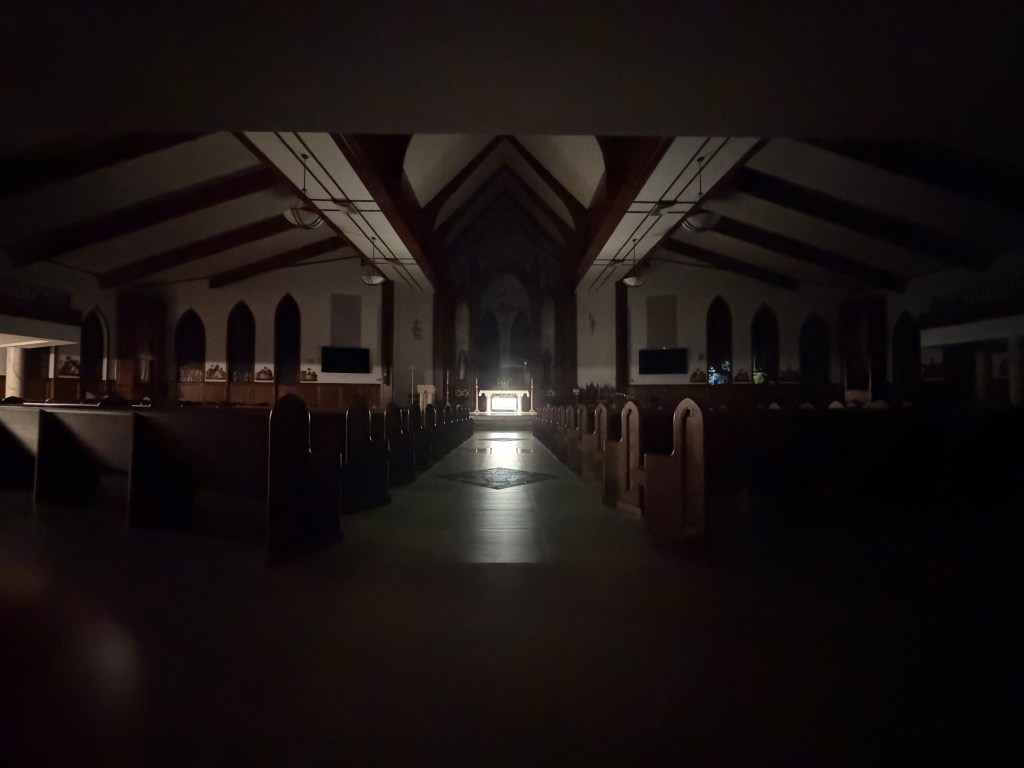
Photo: Each time we see the altar, we are reminded that Jesus died for us and conquered death so that death no longer has the final answer, Jesus the first born of the new creation does.
Pitre, Brant. Catholicproductions.com
Link for the Mass readings for Sunday, March 22, 2026
Do we die and that’s it?
The Sadducees present an absurd scenario for Jesus to respond to: a woman’s spouse died leaving her childless. She then successively married her husband’s six brothers who all subsequently died, also leaving her childless. The Sadducees then asked, “Now at the resurrection whose wife will that woman be? For all seven had been married to her.” (Lk 20:33)? The Sadducees sought to have Jesus weigh in on whether or not there was a resurrection of the dead.
The Sadducees did not believe in the resurrection from the dead because they only believed in a literal interpretation of the Torah, the law, or the teachings, which we as Christians today recognize as the first five books of the Old Testament. In the Torah, there is no overt reference to the resurrection. The Pharisees recognized the written Torah, but also acknowledged an oral tradition beyond the written text, and thus acknowledged the resurrection of the dead. A belief in the resurrection of the dead began to gather some support a few hundred years before the birth of Jesus.
Jesus deftly answered the question by keying in on the verse from Exodus, the second book of the Torah: “That the dead will rise even Moses made known in the passage about the bush, when he called ‘Lord’ the God of Abraham, the God of Isaac, and the God of Jacob; and he is not God of the dead, but of the living, for to him all are alive” (Lk 20:37-38).
Jesus pointed out that God was not a God of the dead but of the living. He also granted a glimpse into the heavenly realm: “The children of this age marry and remarry; but those who are deemed worthy to attain to the coming age and to the resurrection of the dead neither marry nor are given in marriage. They can no longer die, for they are like angels; and they are the children of God because they are the ones who will rise” (Lk 20:34-36).
Heaven is a different reality than we experience here on earth, a different dimension beyond the temporal time as we know it. We will no longer marry because we will be living eternally, there will be no death, so there will be no more need to procreate. We will be “like angels” in that we will be eternal beings. That said, we will not be nor do we become angels. Angels are finite, eternal, spiritual beings with no body. We are finite, eternal, human beings consisting of a soul and a body.
Our bodies are separated at our death from our soul, as Jesus pointed out with Abraham, Isaac, and Jacob in sharing that God is a God of the living, but will be reunited at the end of time when the new age that Jesus has ushered in with his death and resurrection comes to fulfillment. Until that time in heaven those who have gone before us are experiencing what we hope to experience. God face to face. A deeper and more intimate communion with the living God.
Many would scoff and say, “That’s it?” I am sure there is more, but if that was all, there would be more joy, more acceptance, more totality of being than we could ever imagine or embrace in just a second of that eternal gaze. As the psalmist wrote: “Better one day in your courts than a thousand elsewhere” (Psalm 84:11).
Definitively speaking, heaven is a mystery, and yet, the Mystery of God is not a problem to be solved but a reality and relationship to experience and develop. Looking to the things of heaven, in which we will eventually experience the fulfillment of our deepest longing, helps us to realize that what we experience here on earth is not all there is and as we allow ourselves to be open to the things of heaven, we can experience a foretaste even now.
We may be taken aback when Jesus shared that there is no longer marriage in heaven, but he is revealing the promise of deeper and more intimate relationships, even more intimate than the marital, sexual embrace. We will know one another more deeply because we will be free from that which puts up barriers between us, the wounds, insecurities, and attachments we engage in here.
In heaven, we will be free from any stain of sin, healed from emotional, psychological, and physical wounds. We can simply be. We can experience the freedom of resting in God’s loving gaze and embracing who we are and who God has created us to be for all eternity. We will also experience one another in the same way, with the same unconditional love. The greatest joy we have experienced in this life will be far surpassed by an eternal present and ever growing consolation from the infinite outpouring of God’s eternal love for us and our eternal and unconditional love shared with God and one another.
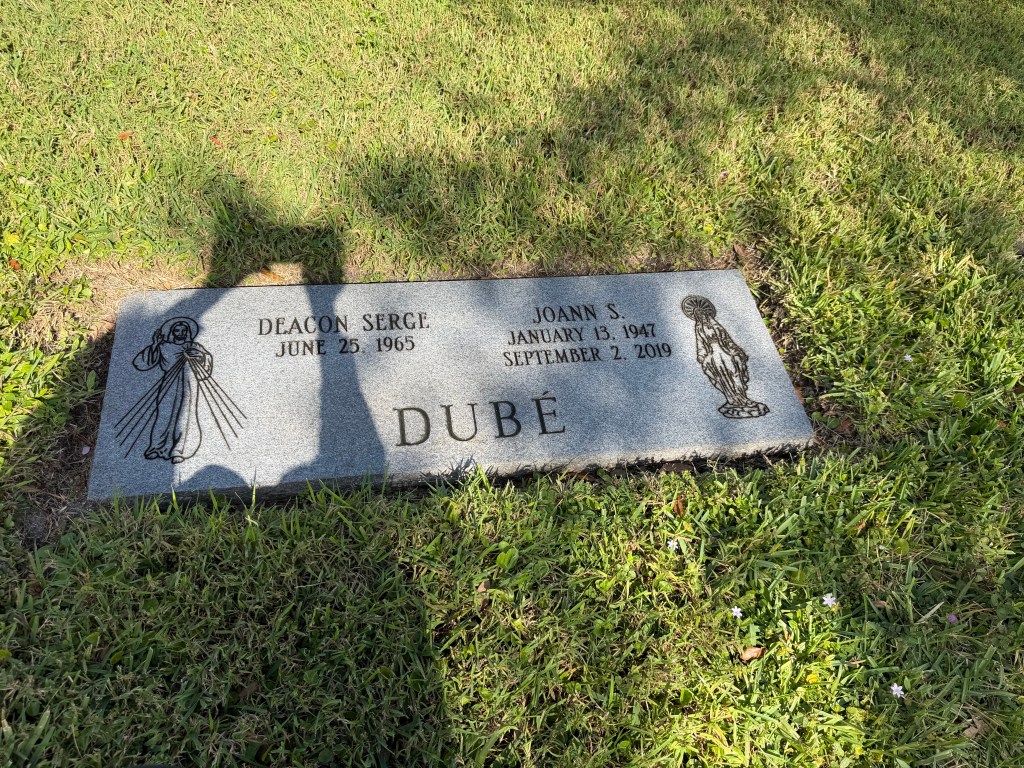
Photo: Visiting JoAnn Wednesday. She is where I will one day be. Not just in the ground 😉
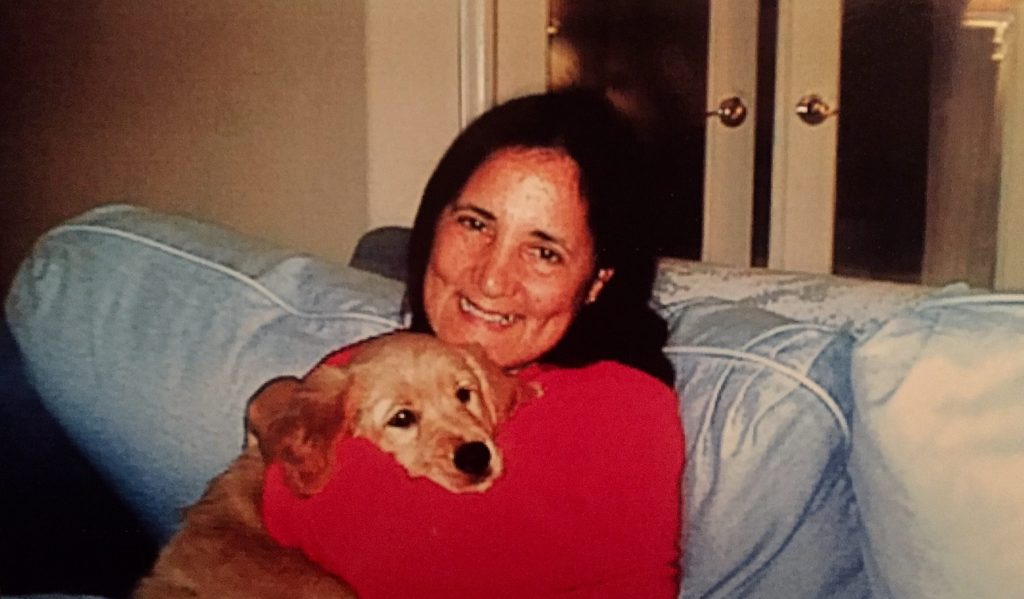
The will of God is that all of humanity will be saved through his Son, Jesus.
“For this is the will of my Father, that everyone who seeks the Son and believes in him may have eternal life, and I shall raise him on the last day” (Jn 6:40).
This is our hope and what we believe, that we who encounter Jesus, believe in, know him, and follow him shall have eternal life. God’s will, what he created all of us for, is to be in communion with him and one another in this life and the next. A word of assurance that I often lean on is from the book of Wisdom from our first reading today, “The souls of the just are in the hand of God, and no torment shall touch them. They seemed, in the view of the foolish, to be dead; and their passing away was thought an affliction and their going forth from us utter destruction. But they are in peace” (Wisdom 3:1-3).
The miracle of Jesus raising the daughter of the Roman official, Jairus, embodies these verses from Wisdom. As Jesus entered the home of the official many were “making a commotion” and Jesus dismissed them stating: “Go away! the girl is not dead but sleeping.” He was ridiculed by the crowd but paid them no heed. He went to the girl, took her hand, “and the little girl arose” (cf. Mt 9:18-26).
Jesus assured his followers as he assures us today that the will of his Father is that all will be saved. Experiences like the raising of Jairus’ daughter, the son of the widow from Nain, and Lazarus, were not only seeds of hope planting the promise of his resurrection to come but a foretaste of the raising of humanity on the last day. His disciples witnessed Jesus’ actions and words, and not only kept these experiences in their hearts but shared them.
Through the Gospels we are able to enter into and experience the encounters Jesus experienced with others again and again. We also experience Jesus each time we pray, participate in the sacraments, communal worship, and in our willingness to love one another through concrete actions of sacrifice and service. In each of these moments, we are conformed and shaped into who we have been created and called by God to be in this life and the next.
This All Souls Day we celebrate the gift that Jesus was victorious over sin and death, not only for himself but for all of us. Unlike those he raised from the dead and died again: “We know that Christ, raised from the dead, dies no more; death no longer has power over him” (Romans 6:9). The difference between All Saints yesterday, and the commemoration of all souls today, is that we pray for those who have died still in need of the purifying fire of God’s love. Just as “gold in the furnace” (Wisdom 3:6) is purified, so God purifies those in purgatory. Let us pray for them today that they may be freed from any stain of sin so to also join the communion of Saints!
“Merciful Father, hear our prayers and console us. As we renew our faith in your Son, whom you raised from the dead, strengthen our hope that all our departed brothers and sisters will share in his resurrection, who lives and reigns with you and the Holy Spirit, God, forever and ever” (Prayer for All Souls, from the Liturgy of the Hours).
Photo: For All Saints, we ask the saints to pray for us, for all souls, we pray for them that they may be saints. I pray for JoAnn and many each day. Who are you praying for?

Jesus continues to proclaim the Gospel today, and is inviting us to join him.
But he said to them, “To the other towns also I must proclaim the good news of the Kingdom of God, because for this purpose I have been sent” (Lk 4:43).
Jesus himself, the Son of God incarnate, fully divine and fully human, is the foretaste of heaven. His work of preaching, teaching, healing, and casting out demons, shows that the divine flow of the Father’s Love is infused into our fallen human condition. Jesus came to restore unity to that which had been divided and once he began his public ministry, he was ever on the go.
Through our Baptism, we have been conformed to and indelibly marked by Christ and for Christ. We are nourished by his Body and Blood in the Eucharist and we’re empowered through the laying on of hands by the bishop at our Confirmation. We have been divinized, grafted into the life of God through our participation in the life of Jesus the Christ. We too then are priests, prophets, and kings as we participate in his life. We also are, to preach and teach the same Gospel, to be his healing and comforting presence, to make Jesus present to those in our midst, and yes we too are called to cast out all demons, and to shine the light on negativity, dehumanization, and division in his name. As James teaches, we are to “submit [our]selves to God. Resist the devil, and he will flee” (James 4:7).
Jesus did not travel very far during his three and a half years of public ministry, yet his teachings have touched the corners of the world. That is because of those who have encountered him, said yes to his invitation, submitted to the will of his Father, and continued to spread his teachings and life in each generation. We too are called to experience “a resurrected new life”, just as the mother-in-law of Peter did. And what did she do once she was healed? Out of gratitude, she immediately rose and served him. She mirrored Jesus in her willingness to serve (cf. Gadenz, 107).
Moment by moment, in each circumstance, we are invited to surrender to the will of his Father, and follow the gentle guidance of the Holy Spirit. Each yes to the guidance of the Trinity is an embrace of the gift of the unique vocation we are called to put into practice. The time of fulfillment is now because Jesus is present in our midst, he is at hand. So let us repent and believe in the Gospel, (cf. Mk 1:15), and follow the lead of Jesus that we read about each day.
These are not just nice stories. They are invitations for transformation and participation. By reading, praying, and meditating with these scriptures, we deepen our relationship with Jesus and begin to experience the love of the Holy Spirit and we are given clearer sight about what to let go of that holds us back from a more intimate union with the Father. Each day is a new opportunity to learn from Jesus, follow his guidance, and be advocates of his love and healing in the unique expression he would have us share! Let us like, Peter’s mother-in-law, arise and serve.
Painting: The Exhortation to the Apostles by James Tissot
Gardens, Pablo T.. The Gospel of Luke. Grand Rapids, MI: Baker Academic, 2018.
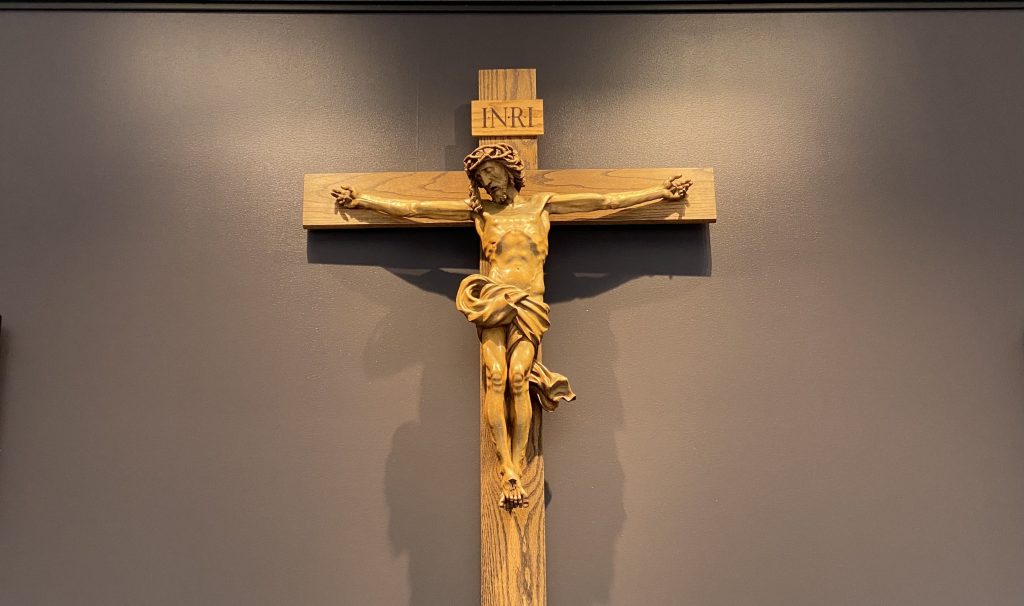
Jesus leads us through death into life.
Jesus said to them, “The Son of Man is to be handed over to men, and they will kill him, and he will be raised on the third day.” And they were overwhelmed with grief (Mt 17:22-23).
This is the second time in the Gospel of Matthew that Jesus shares with his disciples that he will die soon. They are overwhelmed with grief because their focus is on the first part of Jesus’ statement that he will be handed over to death. They do not understand or yet comprehend the second part about how he will be raised on the third day. How could they? There was no point of reference for them. Jesus did bring three people back to life during his ministry, but Jesus would not be merely resuscitated as they were and just die again. Jesus would resurrect and conquer death.
For us, we can read today’s Gospel about the impending death of Jesus and gloss over it a bit too easily. Because we celebrate Easter each year, we celebrate that Jesus has risen. Yet, do we really take in what this means? Does the fact of the Resurrection, the reality that Jesus has conquered death and become the firstborn of the new creation really have relevance in our lives?
The life, death, and Resurrection of Jesus matters! The missing piece for those for whom this statement doesn’t register any relevance may be that they do not want to think about death all that much. To be honest, none of us really want to come face to face with our own mortality, and most of us don’t until we or a loved one is forced to.
Beginning the summer after my freshman year of college, I began working the second shift in a nursing home as a CNA. It was the first time that I experienced death up close through the care of the residents I worked with. They were not merely patients but became family. What happened when I was present when some of them died was surprising. I was blessed with an experience of peace.
I learned from these moments of grace, revisited with my own wife, JoAnn’s death, and in this past year as a priest walking with about forty families from anointing to funeral masses, is to not take life for granted. Life is fragile and when we are able to contemplate and face the impending reality of our own deaths as well as those we love, we have an opportunity to live our lives more fully as well as appreciate a bit more those still with us! And when we experience this practice with the One who conquered death, life and our purpose takes on an even deeper meaning.
Jesus understands each of our struggles and tribulations, our sins and our failings, as well as our deepest hopes and dreams. Jesus also knows about our deepest fear of death, for he, as a human being, experienced it too in the Garden of Gethsemane. The gift of the crucifix, the sacramental object of Jesus on the Cross, is a reminder of the reality of death while at the same time that death does not have the final answer, Jesus, fully human and fully divine, does.
Photo: Crucifix outside the dining hall at University of St. Mary of the Lake.

Jesus the Christ, the Son of God, will make all things new.
Hospitality was a key virtue for people of the ancient Near East. Martha approached Jesus as he was teaching looking for support from her sister Mary in preparing the meal. Mary was sitting at Jesus’ feet with the male disciples gathered around him while Martha appeared do be doing all the work. Martha was hoping that Jesus would support her in her request. Jesus not only did not, but said that Mary had chosen the better part and that Martha was “anxious and worried about many things” (cf. Luke 10:38-42).
We don’t know how Martha reacted to Jesus. A subtle key in today’s Gospel account from John may shed light on their last encounter and Martha’s reaction. Martha’s boldness was on display again. As soon as she was aware that Jesus was coming near, she did not wait for him to arrive but “went to meet him” (Jn 11:20). Martha’s brother, Lazarus, had now been dead for four days and Jesus, who had the time to arrive before his death, was not present to help his friend, her brother, Lazarus in his time of need.
How many times have we been in Martha’s position? Feel that Jesus was not there when we needed him most? Why do bad things happen to good people? Part of the answer is that we live in a fallen world of sin and self-centeredness. God does not bring about suffering but he does allow it. God loves us so much that he is willing to give us the free will to reject him. The cost of our freedom to choose means that there are consequences to our choices which can be detrimental or beneficial. We are all interconnected so when we choose to act on our own apart from God’s guidance and the welfare of others, the damage that ensues affects not only those around us but everyone. On the other side of the coin, there is the presence of grace, forgiveness, and love when we choose to draw close to God, especially in challenging times.
When we choose God, we will find out that we are not alone in our suffering, especially, when we do as Martha did and go out to meet Jesus. She most likely did not holding back any of the full range of her hurt and pain. Martha’s words expressed her anguish, “Lord, if you had been here, my brother would not have died” (Jn 11:21). We can only see from our limited point of view, especially with our own experiences of grief. Yet God sees far beyond our finite perspectives and Jesus helps to not only bring about a greater good, though it may take time to come to understand and experience, he accompanies us in each agonizing breath of our suffering.
Jesus came too late to heal his friend, which Martha and Mary could not understand. What he came to do, was beyond their wildest imaginings. Jesus came to restore Lazarus to life, which would also be a foreshadowing of his own Resurrection. The difference being that Jesus would not merely be resuscitated as Lazarus was and die again.
Martha was not holding a grudge from their last exchange. She came directly to him. She knew he could have healed her brother if he had been there, but did not say so accusingly. Martha immediately followed instead with: “But even now I know that whatever you ask of God, God will give you” (John 11:22). Then even before Jesus called Lazarus back to life, Martha showed her faith. Jesus asked if Martha believed. Martha, as did Peter, made the affirmation of our faith: “Yes, Lord. I have come to believe that you are the Messiah, the Son of God” (John 11:27).
We have been blessed by the witnesses of Martha, Mary, and Lazarus. Each show their trust in Jesus in their own unique way and follow his guidance. Those of us who have suffered the loss of a loved one, or more, know something of the pain that Martha and Mary experienced. May we also all trust in Jesus, the Son of God, the “resurrection and the life” who conquered death and became the firstborn of the new creation. We need not fear our time of suffering or death, our own, or for our loved ones as long as we give our lives to him. When we call on Jesus he will give us the strength to endure and overcome, in this life and into the next.
Painting: The Raising of Lazarus – Caravaggio, Martha, Mary, and Lazarus help us to trust and have faith in Jesus as you did. Pray for us!

“My Lord and my God!”
Then Jesus said to Thomas, “Put your finger here and see my hands, and bring your hand and put it into my side, and do not be unbelieving, but believe.” Thomas answered and said to him, “My Lord and my God” (Jn 20:27-28)!
Thomas’ acclamation “My Lord and my God!” came from his seeing the risen Jesus and his wounds. Jesus rose from the dead, had conquered death, and yet he still bore the wounds of his Passion. This is a profound message to the Apostles, those Jesus sent to proclaim his Gospel, and for us who have been called to follow him today.
The Body of Christ continues to be wounded by the sin and division of our fallen nature that put Jesus on the Cross in the first place. Many people doubt and do not believe today in God because they question, “How can a loving God allow such suffering and pain, especially of the innocent?” A valid question as many examples may come to our minds, we can then follow with another Yet the question, “Why God? Where were you and do you care?”
God is present, God cares, though again we are limited in what we can see and understand. Also, death does not have the final answer. That is what Jesus showed Thomas in bringing him close to touch his wounded side. Jesus rose from the dead and conquered it, but the scarring of his wounds remained. Jesus calls us to draw close and to touch his wounds so we can embrace our own, those we can and cannot see. As we experience his healing, Jesus will send us, as he did Thomas and the other apostles, to touch his wounded Body again this time by entering into the pain and suffering of others where God can happen and healing can begin.
Though the temptation is strong to deny, rationalize, or flee from the conflict, challenges, hurt, and pain that we and others are experiencing, we must resist. If we don’t embrace our or another’s trials we will not come to the root cause of them. We touch the wounded Body of Christ, as Thomas did today, when we are willing to draw close, be present, and accompany those who bear his wounds, those who are vulnerable: the unborn, widows, orphans, those with chronic illness, the dying, refugees, immigrants, hungry, homeless, and those without access to clean water; those who suffer from addiction, poverty, depression, disease, oppression, prejudice, discrimination, dehumanization, racism, sexism, misogyny, unjust immigration policies, incarceration, those on death row, unemployment, underemployment, wage theft, human trafficking, domestic violence, slavery, violence, war, terrorism, and natural disasters. For what we do to the least among us, we do it to Jesus.
We can be easily overwhelmed with the suffering in our country, our world, or the personal challenges before us. Denial or indifference is not the answer. There is an act of balancing that Jesus calls us to participate in as we allow ourselves to be loved by and learn to love God, love others, and love our neighbors as ourselves. The answer is found when we are willing to encounter Jesus, grow in our relationship with him, and follow his lead.
We do not know where Thomas was when the Apostles first encountered Jesus after the Resurrection, but we do know he was not with Jesus. Apart from Jesus, we can do nothing, yet with Jesus, the one who conquered death, all things are possible! When we feel overwhelmed, helpless, or indecisive, we need to return to Jesus and acclaim with Thomas, “My Lord and my God!” and begin again with him.
Jesus is present in our midst, just as he was with Thomas and the other apostles. He invites us to be engaged in the unique way he calls us to serve today to make our corner of the world a little better. We can reach out when Jesus prompts us to enter into the chaos of another’s life, to hear their story, their experience, be present, and allow the Holy Spirit to happen in each encounter.
St. Thomas, pray for us!
Painting from Caravaggio: Incredulity of St Thomas, 1601-1602
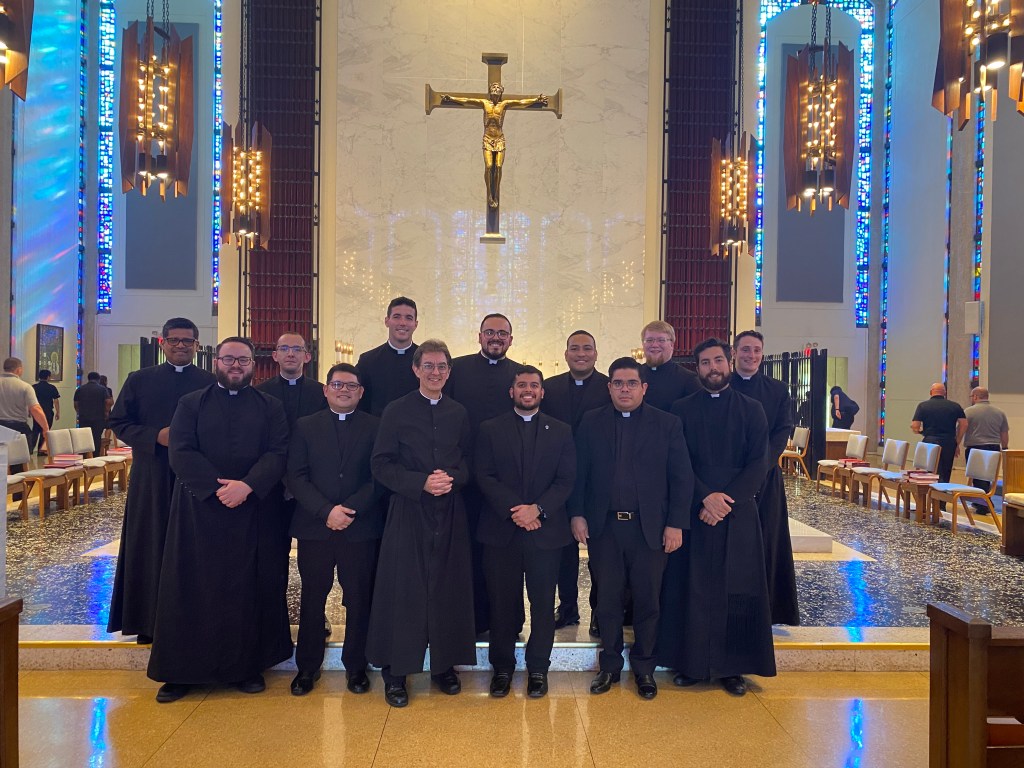
May we be instruments of joy!
“But I will see you again, and your hearts will rejoice, and no one will take your joy away from you” (Jn 16:22). Jesus continues to prepare his disciples for his horrific death by offering hope that he will see them again. That he will see them again is not a typo. We can read about the exchanges between Jesus and his risen disciples. Jesus appeared to Mary of Magdalene at the tomb, he appeared to Cleopas and his companion on the road to Emmaus, and he appeared to the ten and then the eleven with Thomas. Jesus sought out those he commissioned to proclaim his Gospel message after his resurrection, just as he had done during his ministry before his crucifixion.
When Jesus did appear to them again, at the moment of recognition, there was wonder and great joy! It is hard for us to even imagine these early resurrection accounts. The disciples witnessed his brutal death, lived in fear because of the very real possibility of their own persecution and similar death, and then, they encountered the risen Jesus. St Paul would also shortly thereafter encounter Jesus on a different road, the one to Damascus en route to continue his persecution of the followers of Jesus. All of their hearts rejoiced and it was this joy that they proclaimed with boldness. The Apostles, like Jesus, led with joy and love to embark on their evangelical missions. They lived a difficult and challenging life that for many ended in their own brutal deaths, yet their joy carried them through their suffering, death, and into eternity.
Life is hard, even in the best of circumstances. There is evil present in this world, not of God’s creation, because all that he has created is good. Through the enemy’s corruption of the good that God has created, bad things happen to good people, and good people do bad things. Suffering, disease, violence, natural disasters, division, corruption, hatred, and dehumanization abound. It can be easy to succumb to the overwhelming tide of negativity and assume a mindset of cynicism, detachment, denial, defensiveness, and/or indifference. Yet this is not the response Jesus modeled nor has infused his followers through the ages with.
Our response to the evil and darkness of this world is to be bearers of the joy of Jesus! We are to be as lights shining in the darkness, providing hope for those in despair, accompanying those in their struggles, and being willing to receive help when we ourselves are in need. We cannot do any of this alone and on our own but it can be done in participation with Jesus and each other. The Apostles, disciples, and saints, who have gone before us, have shown us that it is possible to be beacons of hope in very dark places.
Pope Francis reminds us about our mission in The Joy of the Gospel (276): “However dark things are, goodness always re-emerges and spreads. Each day in our world beauty is born anew, it rises transformed through the storms of history. Values always tend to reappear under new guises, and human beings have arisen time after time from situations that seemed doomed. Such is the power of the resurrection, and all who evangelize are instruments of that power.”
With each breath, we are invited to trust that Jesus is with us, closer than we are to ourselves, filling us with his love and joy. No one can take this joy away from us, except us, if we are unwilling to share it. Let us choose to allow the light and the joy of the Holy Spirit’s love to radiate through us, no matter how small or insignificant an act of kindness it may seem. When we do so, the darkness in our realm of influence will begin to fade away.
Photo: With my brothers in our final days of seminary. Please pray for us that we may continue to live, speak, and spread the joy of the Gospel!

