Reflections on the Gospel Reading for the Day


As Jesus purified the Temple, may he purify each of us.
Jesus entered the temple area and proceeded to drive out all those who were selling things, saying to them, “It is written, My house shall be a house of prayer, but you have made it a den of thieves” (Lk 19:45-46).
Luke’s account of Jesus casting out the money changers is the most succinct of all four Gospels. Luke uses the Greek term for “drive or cast out” – ekballō, eight other times. Each time he used it, Luke was making reference to exorcising demons and unclean spirits. The profanation of the body through possession of evil is equivalent to the desecration of the Temple precincts.
Jesus justified his actions of driving the sellers out of the Temple precincts by saying: “Destroy this temple, and in three days I will raise it up” (Jn 2:19). Jesus showed the dignity of our humanity, when he, as the Son of God, he entered our humanity. He entered into the chaos of our lives, our faults, and foibles, and our sins while remaining sinless himself. He showed that even though we have turned away from God, we were not destroyed and lost beyond hope. He reminds us that what God has created is good and that includes us. Even when we turn away, he continually and infinitely reaches out to us in love and calls us home.
One of the wonderful features of the upcoming holidays is that many families seek to come together and to return home. For some coming home has been longer than for others, for some there may be many miles of separation, and for others, coming home is no longer possible because they have changed their address from this life to the next. There are also those suffering today that are estranged from their families, those who are homeless, displaced, refugees and immigrants, or living in fear of deportation.
No matter who or where we are, Jesus is close. He became one with us to restore our communion with God and one another. He provides the living water that quenches the thirst of our deepest longings. Jesus, our Temple, our new covenant, the dwelling place of God, is alive and present to each one of us in every condition, situation, time, and the place we find ourselves. Through his resurrection, ascension, and our participation in his life, we can become precious stones, each a piece of his Temple.
Jesus meets us where we are and loves us as we are, yet he wants more for us. Jesus, please cast out, as you did in the temple precincts, all from our being that would defile, distract, or divide us, and purge anything that would keep us bound in sin. Send the Holy Spirit to reign in our hearts that we may embody and bear his love with all we meet so to be reconciled with God and one another. May we be inspired to work toward the unity of our human family so that all may have a place at the table.
Painting: By El Greco, 1600 – Christ Driving the Traders from the Temple
Link for the Mass readings for Friday, November 22, 2024

“Peace…” is “a gift of God: It requires our prayer.”
As Jesus drew near Jerusalem, he saw the city and wept over it, saying, “If this day you only knew what makes for peace– but now it is hidden from your eyes” (Lk 19:42).
What Jesus foretold in these words would arrive some thirty plus years after his death. Jewish and Roman conflicts increased until it spilled over in 66 AD. A Jewish rebellion amassed such force that the Roman occupying military was pushed out of Jerusalem. This triggered a predictable and overpowering retaliation from Rome which resulted in the horrific deaths of over a million Jewish people. Jerusalem fell in August of 70 AD, the Temple was destroyed, and not a stone upon another was left. The only remnant was some of the retaining walls. The western retaining wall, still present today, is known as the Wailing Wall, where people come each year to insert their petitions into the cracks between the stones.
Jesus knew that peace would not come from violence. We can glean from his teachings that real peace is not the absence of war or conflict, but a change of mind and heart. A metanoia or conversion of the mind and heart must take place. There must be peace within before there will be peace without or as Thomas Merton wrote, “If you are yourself at peace, then there is at least some peace in the world.”
In our first reading from the book of Revelation the author himself weeps because no one in heaven or earth is found worthy to open and study the scroll which has seven seals. The one who does arise, appears to be a lamb who was slain. As St. John the Baptist called, “Behold the Lamb of God.” Jesus is the Lamb of God who takes away the sins of the world. He is our hope in times of darkness, he is the one for whom we can place our trust and find our rest.
May we be able to weep as Jesus did over Jerusalem. May we, as Pope Francis has encouraged us, never lose our capacity to weep over the injustice committed to our brothers and sisters throughout our woretorn and weary world.
Many have wept over the deluge of division, dehumanization, and horrific violence, worked to bring about change, and have been a light in the darkness. Mohandas K. Gandhi marshaled a non-violent movement that defeated the colonizing grip of the English Empire. Dr. Martin Luther King, Jr. applied both the teachings of Jesus and Gandhi by shining a light that exposed the dark night of segregation, poverty, and our military presence in Vietnam. Vietnamese Buddhist monk, Thich Nhat Hahn, dedicated his life to advocating for world peace and stated that: “If in our daily life we can smile, if we can be peaceful and happy, not only we, but everyone will profit from it. This is the most basic kind of peace work.”
Through the bold witness and preaching of the Gospel through his words, writings, and presence, Pope St. John Paul II played a significant part in inspiring the fall of the oppressive regime of the USSR. He wrote early in his pontificate that: “Peace is our work: It calls for our courageous and united action. But it is inseparably and above all a gift of God: It requires our prayer.”
As we near the end of the liturgical calendar let us be people of prayer and allow the love of Jesus to transform our hearts and minds such that each of our thoughts, words, and actions may, in collaboration with people of all faith traditions and good will, reflect that peace that Jesus gives, that peace that surpasses all understanding (cf Philippians 4:6-7).
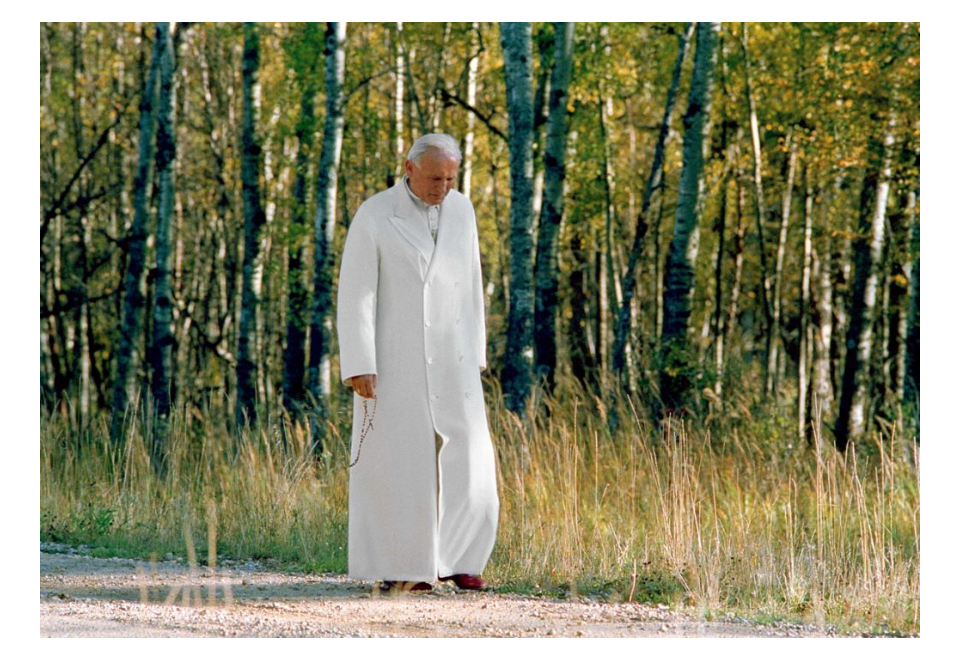
Photo: Of Pope St.John Paul II celebrating outdoor Mass in Slovenia. National Catholic Register – Gabriel Bouys
Link for the Mass readings for Thursday, November 21, 2024
We will fear less when we pray more.
In today’s Gospel, we have available to us the parallel to The Parable of the Talents from Matthew 25:14-30, which is The Parable of the Ten Gold Coins from Luke 19:11-28. There are a few differences. A key opening point is that in Matthew’s account, we do not know why or where the master goes after he entrusted three of his servants with talents; five, two, and one respectively. In Luke’s account the man is a noble and he “went off to a distant country to obtain the kingship for himself and then to return” (Lk 19:12). He called ten servants to invest a gold coin he gave to each of them. The theme that is similar in both accounts is that when the man returns, two of the servants invested well and brought about a greater return on their investment, and one hid what he was given out of fear of his lord.
Another added feature in Luke’s account was the fellow citizens of the nobleman that did not want him to be king and openly opposed him. The nobleman after attaining his kingship and returning successfully, dealt harshly, to say the least, with those who opposed him, having them slain. Those listening to Jesus tell the parable would understand this predicted outcome, as it was not uncommon in the ancient Near East for a ruler to slay those who opposed his rise to power.
The readings over this week continue in this vein of eschatological talk, references to the second coming of Jesus, and final judgment because we are in the final two weeks of the liturgical year. The readings present us with the reality that there will be a judgment by God, and what Jesus makes clear is that we are not the judge and jury, though many appropriate this role for themselves. We are only accountable for the talent or gold coin we have been entrusted with.
God has called us each uniquely by name and given us a gift that he wants us to put into action to help build up his kingdom. We need to resist burying this gift or hiding it away. Doubts, fears, and anxieties will arise in our hearts and minds. We may say to ourselves, “I don’t even know where to begin.” We can begin with prayer, we can pray with the one who calls us to participate in his work.
We are invited each day to begin with prayer. In the beginning, the length of time is not as important as consistently spending time with God intentionally. We show up, breathe, allow ourselves to be still, allow the restlessness of our mind to quiet, and we listen. This may take some time or days, but when we continue to return and trust that God has a purpose for us, we will hear his guidance, and then we are to follow his lead.
“Remember that you are never alone. Christ is with you on your journey every day of your lives!” – St. John Paul II
We are called by Jesus to be contemplatives in action. Mediocrity and fear are no longer to be our guides. With humility and patience, let us trust in the guidance of the Holy Spirit who will light our path to maturing and actualizing our unique call to serve God and one another.
Photo: Pope St. John Paul II Rosary walk – L’Osservatore Romano
Link for the Mass readings for Wednesday, November 20, 2024

Are we willing to see Jesus and see others as Jesus sees them?
Yet again, as in the Gospel from yesterday, the crowd gets in the way of someone seeking access to Jesus. The wall of people that has gathered around Jesus does not appear to be overtly keeping Zacchaeus from seeing Jesus. They may be so focused on seeing him themselves that they are not aware. Yet, there is also the strong possibility that the people were aware that this man was trying to get through. They knew Zacchaeus, and many judged him to be the sinner of sinners.
He was the chief tax collector of the area and he was most likely reviled by most in his community. He would have also likely considered to be unclean because he was breaking the commandment of not stealing, which he and the majority of the tax collectors did at the time. Each was the chief tax collector who was then also dealing with the Gentile occupiers. It is likely that each time Zacchaeus attempted to nudge by to get through a gap to get a better look, the individuals may have closed any gap each time such that he could not get through.
Zacchaeus was not thwarted. He ran ahead and climbed a sycamore tree. From his perch he was not only able to see Jesus, but Jesus saw him and said, “Zacchaeus, come down quickly, for today I must stay at your house” (Lk 19:5). Jesus did not see a tax collector or a sinner, he saw a seeker. One who was also willing to humble himself by climbing a tree, much like a child.
Jesus did not see the 99% nor the 1%. Jesus saw and sees people in need of compassion and mercy. He sees those lost that need to be found, those sick in need of healing, those alone who sought to belong. Jesus did not meet Zacchaeus with judgment but with love and compassion, and that made all the difference for this man’s conversion.
Jesus was willing to draw close to the one so many despised. By inviting himself to dine with Zacchaeus in his own home, Zacchaeus must have felt overwhelmed with emotion. Maybe for the first time in his life, he felt welcome instead of disdain. He repented without hesitation to the unconditional invitation and love he had received: “Behold, half of my possessions, Lord, I shall give to the poor, and if I have extorted anything from anyone I shall repay it four times over” (LK 19:8).
This expressive act of generosity arose from his encounter with Jesus. This exchange offers the invitation for us also to receive Jesus in the same way and the invitation to greet others more openly as well. One way to do so is to resist the temptation to “grumble”, to gossip, to pre-judge, and/or to dehumanize one another. Salvation came to Zacchaeus’ house in the person of his savior and in the act of his repentance.
Life is hard enough without adding more negativity. Jesus wants to dwell with us too. While at the same time, he challenges us to see beyond the exterior caricatures we project on to others, and instead invites us to seek to know the heart and character of the person. We can do so when we stop grumbling, are willing to approach others with an understanding heart and mind, and be willing to spend time to get to know one another.
Painting: Zacchaeus in the Sycamore Awaiting the Passage of Jesus by James Tissot.
Link for the Mass readings for Tuesday, November 19, 2024
Are we willing to see?
He shouted, “Jesus, Son of David, have pity on me!” The people walking in front rebuked him, telling him to be silent, but he kept calling out all the more, “Son of David, have pity on me” (Lk 18:38-39)!
The difference between the blind man who shouted to Jesus and the people walking in front of Jesus was that the man knew he was blind. Those preventing access to Jesus were not aware of their spiritual blindness. Luke does not say why the people were preventing access to Jesus, just as Jesus in his parable of the Good Samaritan did not say why the priest or the Levite did not help the man dying on the road to Jericho.
Why would the people prevent the man from having access to Jesus? Especially since he was asking for pity or mercy. One practical reason could be time. They were on the way to Jericho, their mind was set to get there, and stay on the schedule they would. Another could be that the man was a beggar. He was not seen to have dignity and worth, so they attempted to quiet him so he could go back to being invisible. The Jericho road was a dangerous road, maybe this was just a setup, a way to lure Jesus into an ambush.
Ultimately, we do not know why they attempted to prevent the man access. The more important question is how often do we prevent others from accessing Jesus for similar reasons? We do not have the time, they are other, we may not see their dignity and worth as human beings, and/or we are afraid, so we keep others at arm’s length. Could it be we are just indifferent to the suffering of others?
Jesus responded differently to the call of the beggar in today’s Gospel account. He stopped and had the blind man brought to him. He made the time, saw him as a fellow brother with dignity and worth, and he took the risk to reach out to someone in need, and healed him. As Pope Francis has said, “[Jesus] understands human sufferings, he has shown the face of God’s mercy, and he has bent down to heal body and soul. This is Jesus. This is his heart” (Francis 2014, opening page).
This is to be our response as well. Even if we do not understand the suffering of another, Jesus does. We are invited to stop, to be aware, to enter the chaos of another, and trust that Jesus will be present through us to provide mercy. Are we willing to resist indifference and fear and instead see each person we encounter, not as other, but as a fellow human being? We do this best by making the time and being present. Are we willing to ask Jesus to heal our blindness that we may be willing to see the dignity and worth of each person that we meet so that those we encounter see in us the face of God’s mercy? We will be more apt to do so the more we spend time being still, breathing, resting, receiving, and abiding in God’s love.
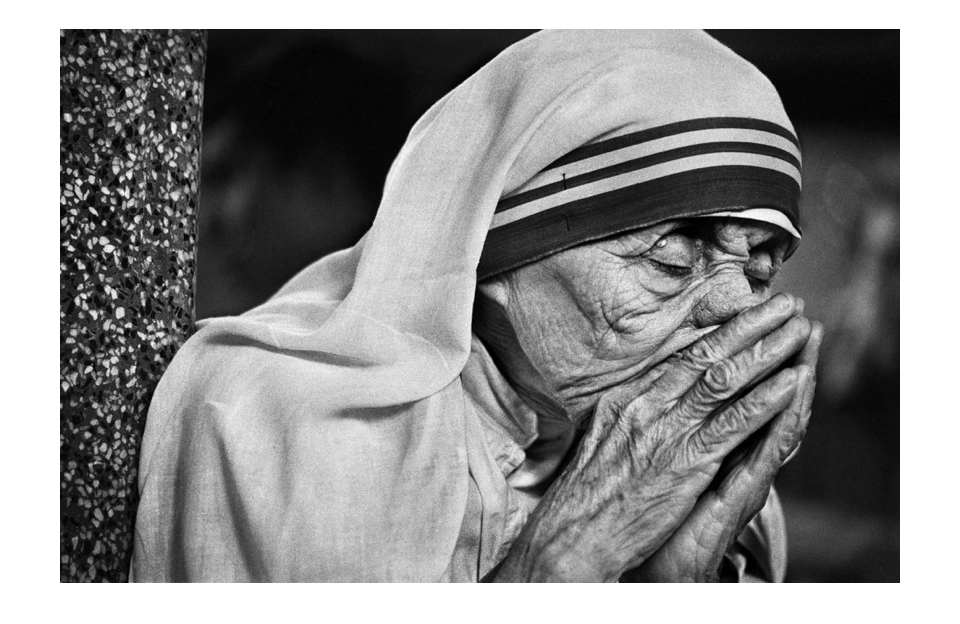
Photo: “The fruit of silence is prayer, the fruit of prayer is faith, the fruit of faith is love, the fruit of love is service, the fruit of service is peace” – St. Mother Teresa. When we put into practice the words of Mother who put into practice the way of Jesus, we will also have the eyes to see and serve Jesus in those around us.
Link for the Mass readings for Monday, November 18, 2024

Are we in the end times? Only the Father knows, so let’s get to know the Father!
Our readings this week are more focused on the eschatological or end times as we move into the final two weeks of Ordinary Time and the end of the liturgical year. These writings are also called apocalyptic because they unveil or reveal hope to a people in dark times of oppression. In much of today’s gospel from Mark, Jesus is referring to the destruction of the Jerusalem Temple and then he pivots to the end of all time.
Jesus did share how the temple would be destroyed, but that he, the living Temple, would rise up in three days (see John 2:19). The temple was destroyed in 70 AD by the Roman army. The acts of violence in those four years of siege were horrific and Jesus was helping those of his time to prepare for it. This destruction of the Temple was also symbolic of the end of the world at the end of time. That is what Jesus leaves off with at the end of today’s reading. Continuing on with the following parable that we did not read today helps to give the context that he has made this shift from the prediction of the destruction of the temple to the final judgment when “heaven and earth with pass away” (Mark 13:31).
Jesus is echoing the imagery of Daniel from the first reading as well as Old Testament prophets such as Jeremiah, which all refer to the fall of cities. These readings address the issue that God is present in the midst of our suffering and for those who persist and remain faithful, he will bring about a greater good. As he himself would live out so vividly. There would be no resurrection without the crucifixion. As to the final judgment: “But of that day or hour, no one knows, neither the angels in heaven, nor the Son, but only the Father” (Mk 13:32).
There have been those who have attempted to glean the time or the hour over the generations, and in every instance been proven to be false. We are still alive and the earth is still revolving around the sun. Seeking that day or hour is not for us to know nor to seek. As Jesus said, even he does not know the time or the hour.
What is important is relationship with God. This truth is what we have been created for. Relationship with God is what we are to seek before all else. We are not written in the book of life by some predestined oracle such that we are merely pawns on God’s chessboard. We are written in the book of life when we say yes to the invitation of building our relationship with Jesus so that we may come to experience and know his Father through the love of the Holy Spirt.
I have been asked multiple times if and told just as often that we are living in the end times. If the person appeared to be open, I would share with them Jesus’ words that only the Father knows the time or the hour. And this statement by Jesus is not a proof that he is indeed not divine because he does not know. It is just as the Catechism states: (see 473-474), he was not sent to reveal this information, he said just as much in Acts 1:7.
What is important to remember in times of trial and tribulation, no matter how challenging, is to anchor ourselves in the love of God. God will not abandon us or leave us orphans, God is our foundation and our refuge, he is our hope and fulfillment. God sent his Son to be one with us in our humanity so that he could experience the fullness of our humanity, experiencing our sinful condition, while not committing sin himself. As he grew and matured as a human being, he was limited in what he knew about his Father. He trusted, as we are to trust him with our lives. Jesus who was willing to follow his Father’s will all the way into the horrific suffering on the Cross did this, so he could not only experience death but through the love of the Holy Spirit conquer death, and we who follow him, will follow him into death and into new life. To be one with him in his divinity.
Viktor Frankl in his book Man’s Search for Meaning wrote:
“We who lived in the concentration camps can remember the men who walked through the huts comforting others, giving away their last piece of bread. They may have been few in numbers but they offer sufficient proof that everything can be taken from a man but one thing: The last of his freedoms – to choose one’s attitude in any given set of circumstances, to choose one’s own way.”
When we face our challenges, let us resist the temptation to curve in upon oneself, to hide in our shell, and/or to put our head in the sand. Instead, let us daily spend time with Jesus in: quiet, his word, spiritual reading, the sacraments, in being willing to see him in one another. Improving our relationship with Jesus is much more important than knowing the time or the hour of the end. The end of the world or the end of our lives on this side of heaven will come, and if we know Jesus, his Father, and the love between them, the Holy Spirit, we will be ready whenever either moment comes.
Jesus built the Church one person, one relationship at a time. He is inviting us to trust in him and to know his love, so that we may be filled with the fullness of his Father. This love we receive, this relationship that we develop, we are to offer and invite others to partake in. Let us choose to breathe, to rest, to receive, and to abide in the love of God no matter the circumstance we find our selves in, so to reflect the light and share the love of Jesus with others.
Photo: One of my first evening Rosary walks here in Vero Beach, back in mid July.
Link for the Mass readings for Sunday, November 17, 2024
Consistent time in quiet, stillness, and prayer helps our relationship with God to grow.
Jesus told his disciples a parable about the necessity for them to pray always without becoming weary (Lk 18:1).
In the parable that Jesus offered in today’s gospel account, he is not saying that persistence in prayer is changing God or somehow bending his will to our’s. We are not wearing him down like the woman did with the judge. God does not need us. God is completely and totally self-sufficient. We are the ones who need him. Our persistence, our daily habit of prayer, changes us, transforms us, helps us to develop our relationship by interacting with God more consistently. Things happening in our lives help us to see that we are fragile and vulnerable and in need of help. Our persistence in prayer will help us to experience that we are not alone in our challenges. When we are dealing with a crisis or very real trauma, our persistence and faithfulness in prayer will help us to experience the closeness of Jesus in our midst as he accompanies us through our suffering and grant us the strength not just to endure but to overcome.
In fact, the practice of stopping everything and praying for five minutes when a crisis arises, often helps us to resist slipping into a fight or flight mode and helps us to resist reacting automatically based on our emotions. Consciously choosing to breathe while praying helps us to act more prudently than impulsively. We may also come to see that what we thought was a crisis, may have been more of a problem to be solved rather than something catastrophic. Our instant reactions to perceived crises can often escalate an issue rather than de-escalate one.
In the greater scheme of things, God answers all prayers of petition or intercession by saying yes, no, or not yet. Most seem to fall in the not yet or not the way we originally intended category. Remaining patient and faithful can help us to move away from seeking to conform God to our will and instead allow him to expand our hearts and minds to his will. Through this expansion, we can come to see the situation from a broader perspective. Our persistence in prayer also helps us to move away from seeking instant gratification and instead trust more in God’s will and timing. Sometimes we are blessed for unanswered prayers because with time, hindsight, and some distance, we find our original request was more an apparent than an actual good.
Persistence in prayer is also a discipline that deepens the roots of our relationship with God. Ready access through our modern technology, higher internet speeds, one-click access, and overnight shipping, can offer plusses, but we have to be careful that this mindset does not shape our mental, psychological, and spiritual growth. Physical fitness, wisdom, or spiritual maturity does not happen in an instant. More importantly, development as human beings and our relationships take time, experience, discipline, prayer, and trust in God’s plan.
Patience, persistence in prayer, freeing ourselves from attachment, developing an authentic and intimate relationship with God and one another are all worth the effort. We need to take some time to breathe deeply, slow down our pace, discipline ourselves to resist even seeking small acts of instant gratification each day. No matter how busy we are, it is important to slow down. Even when we stop to pray and feel like nothing has happened and that doing so was a waste of time, God has happened. God has our back and we can trust in that.
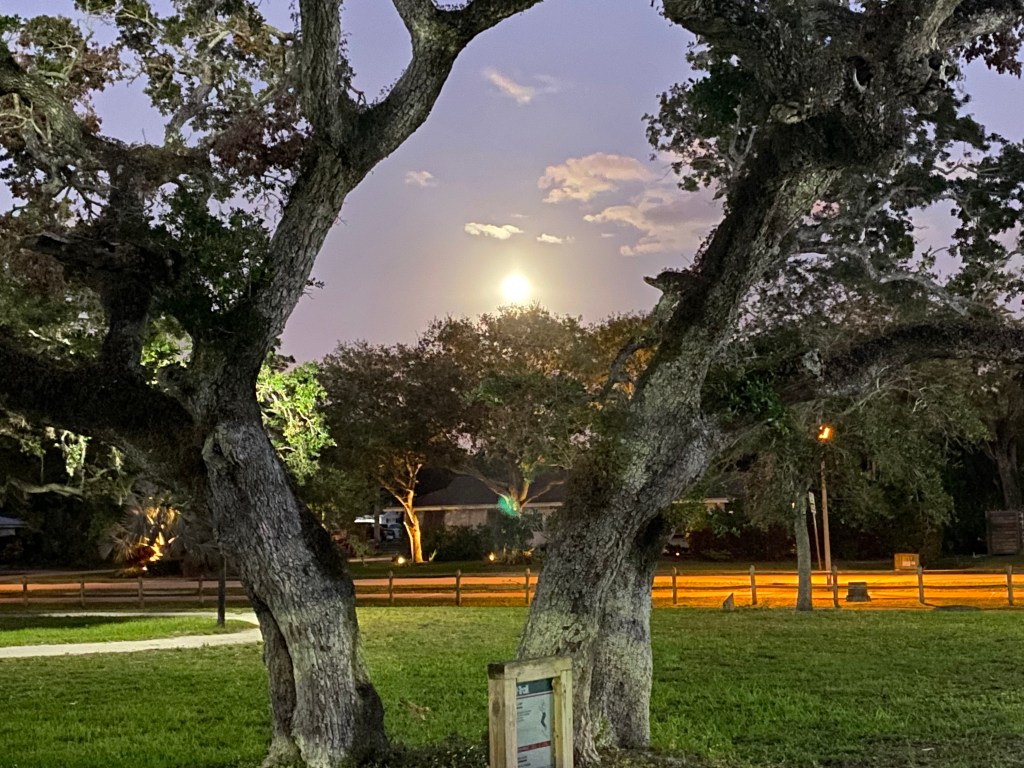
Photo: Rosary walk has been providing opportunities for some wonderful sights!
Link for the Mass readings for Saturday, November 16, 2024

Let us focus on God and the things of heaven in this moment.
In today’s Gospel account, Jesus continues to answer the Pharisees’ question about “when the kingdom of God would come” (Lk 17:20) but now he is directing his response to his disciples. Jesus reminds them about how during the time of Noah and during the time of Lot many were eating and drinking, marrying and being given in marriage, buying, selling, planting, building (cf. Lk 17:26-29). In effect, other than Noah and Lot, and those few listening to them, no one else had any clue about the impending calamity or wanted to know. They were so absorbed in their own pursuits and desires they did not heed the warnings of Noah and Lot.
Another focal point was on those who were attached to only material and finite things. When the final hour came, people on the rooftop or in the field were directed not to go back and get their possessions. Jesus pointed out succinctly, “Remember the wife of Lot” (Lk 17:32). Lot left Sodom with his wife, she did so physically, though she could not resist looking back, she was too tied to what she was leaving behind, and so she lost herself to her attachments.
Spending time speculating when the end will come is a pointless pursuit. What is more important is being aware of the kingdom of God in our midst, developing a relationship with God now. Matthew shared in his gospel account that Jesus stated only the Father knows the time or the hour as to when the end will come (cf. Mt 24:36). If we are only going to prepare at the final hour, we may be too late.
Asking, “When will the kingdom of God come?” also misses the point of what Jesus is teaching us. There is an intrinsic value in developing a relationship with God and one another, now. Growing and maturing as a disciple, now. Jesus shared in the first words of his public ministry, that the kingdom of God is at hand (cf. Mk 1:15). All we need to do is reach right out and grasp his extended hand of invitation and walk with him, now.
For many of the Pharisees, this meant letting go of their own power and prestige and participating instead in the living reality of God in their midst. So many of us are caught up in our day to day affairs of existing that we are barely living. We can also be distracted by false lures and attractions of security and gratification, wealth, power, pleasure, and honor, that we miss the love and wonder that Jesus wants to share with us. Jesus is inviting us to wake up, to breathe deep, to slow down, to trust him and his unconditional love for us, and to be aware that he walks among us. Jesus calls us, as Lot called his wife, to keep our focus on God and the things of heaven, while living in our time and place.
Lord Jesus, help us to recognize when we are caught up in distractions and diversions, when we are choosing to put our self first, where we are in need of healing from anxiety, fear, and chronic stress, and where we are attached and bound up by apparent goods, empty, and false pursuits. Guide us, such that we, in the words of Pope Francis, “understand what faith means when we open ourselves to the immense love of God that changes us inwardly and enables us to see our lives with new eyes” (Costello 2013, 12). Eyes that see the kingdom of God in our midst and the promise of our eternal home.
Photo: Looking up as I began my Rosary walk and what do I see? Yet again, the wonder of God’s beauty in his creation.
Costello, Gwen. Walking With Pope Francis: Thirty Days with the Encyclical The Light of Faith. New London, CT: Twenty Third Publications, 2013.
Link for the Mass readings for Friday, November 15, 2024


