Let us choose the better part, slow down to receive, and reflect the light of Jesus.

“Martha, Martha, you are anxious and worried about many things. There is need of only one thing. Mary has chosen the better part and it will not be taken from her” (Lk 10:41-42).

My wife, JoAnn, and I used to have more than a few spirited discussions on this Gospel passage each time that it arose because, at first reading, it appears that Jesus does not show any empathy or regard for Martha’s gift of hospitality nor for all the work that she is doing. All the men are sitting around listening to Jesus, and Mary… she is doing the same, and who is left to do all the work? Martha.

Blessed to serve as a permanent deacon for ten years, I saw my own, as well as other deacon’s wives, carry extra weight and burdens in support on the home front to allow their husbands the time to serve, many of us who also still held full time jobs. Not only deacon’s wives, this reality is also true for many wives who are full-time homemakers, run in-home businesses, or carry a job outside the home, as well as care for the children, overseeing the bills, the day to day grind, and so find themselves at times, feeling under-appreciated, undervalued, and not respected for all they do.

Husbands can do a better job of being present, more patient, respectful, and attentive to their wives and be more of an equal partner on the journey. For those married as well as single, the point Jesus is making, that he makes throughout the Gospels is to put God first, then family, work, and our unique vocation. The expression of that is going to be different for each station in life. There will be more time constraints for parents of infants. No matter how little time we may have, we must pray daily, we must be still and sit at the feet of Jesus. As we do so, we will find that the time we did not think we have, through the guidance of the Holy Spirit will be properly ordered.

This prelude acknowledges the reality of how much we juggle in every age. There is much to do and much to be done. Jesus was not disregarding Martha’s hospitality. Especially in the Gospel of Luke, there are many instances in which Jesus empowers women so far beyond the cultural reality of his time. We read this as we do any biblical account from our twenty-first-century mindset. Contextually, the men sitting at the teacher’s feet in a different room, the women cooking, and most times eating separately were commonplace for those in the ancient near east of the first century AD. Mary was the only person out of step with the times.

The interpretive key to understanding this account is what Jesus said. He pointed out that Martha was “anxious and worried about many things.” Mary could have been one of those worries, and not so much that Mary wasn’t helping in the kitchen, but because she was breaking the social norm of sitting with the men. When Martha calls Jesus to redirect Mary, she probably expects him to support her plea. Yet, Jesus acknowledges that: “There is need of only one thing. Mary has chosen the better part and it will not be taken from her” (Luke 10:42).

Mary, sitting and having her primary focus on Jesus was the posture of a disciple. Jesus was not only allowing her to do so, he was commending her for doing so. I can visualize Martha being taken aback at first, but then slowly feeling the muscles in her face relax as the lightbulb went on. We don’t know, but could she in that moment have experienced that peace, that peace that surpasses all understanding, and the anxiety and worry left her? Feeling the peace, instead fear in approaching Jesus as Mary had done, did Martha then take her apron off, throw it to the side, and sit down next to her sister and also become his disciple?

There is biblical evidence that beyond the Twelve, Martha, Mary, and Lazarus, were Jesus’ friends. When Jesus came four days after the death of Lazarus, as soon as Martha heard Jesus was outside, she, not Mary, came immediately out to Jesus, and in that exchange, it was Martha who made the claim that Jesus was the Messiah, the Son of God (cf Jn 11:27). Would she have had this insight, the same as Peter, if she was still holding a grudge from this encounter?

Our modern reaction and push back to this Martha and Mary account in Luke may not so much be a reflection on Jesus but how poorly men have treated women over the generations and how poorly women continue to be treated even today. No matter their ages, young, old, and everywhere in between, women are human beings created in the image and likeness of God. No one has the right to abuse, demean, disparage, devalue, or exploit any woman. Women are to be appreciated, heard, respected, cherished, and valued.

God has given each of us gifts to participate in his Father’s plan. May we resist the temptation to fear coming close to Jesus and taking time out to sit at his feet, to engage in mental maelstroms, to be “anxious and worried about many things.” Instead, when we experience the beginning tremors of any stress or strain, instead, be still and rest in Jesus’ presence as Mary, and hopefully Martha, did.

In this way, any anxiety will begin to dissipate as we experience feeling safe in his presence and experience Jesus’ love. Doing so will help us to better know Jesus, his voice, and his teaching, know and follow his will, love others as he loves us, and live our lives respecting, encouraging, and supporting one another with the gifts and guidance that God has given us.

One woman who may have learned the Martha and Mary account well was Lydia. Luke and Paul encounter her and some other women in the city of Philippi. When Paul preached, Lydia, “listened, and the Lord opened her heart to pay attention to what Paul was saying.” She then asked to be baptized with her household, and then invited them into her home (cf Acts 16:11-15). She listened and pondered God first, then acted.

When we choose the better part of sitting at Jesus’ feet before making a decision, we can experience less chaos and more of his peace and guidance. Instead of living in a perpetual state of chronic stress and anxiety, we can instead choose to breathe, rest, receive and abide in God’s love. Then from that place of stillness, like Mary and Lydia, and I believe Martha, instead of reacting, we can make a choice based on God’s guidance.


Photo: Mary, Jesus’ mother, was the premier disciple for she “pondered” the mysteries she experienced with Jesus “in her heart” (Luke 2:19) and “heard the word of God and observed it” (Luke 11:28). She also chose the better part and so like the moon that reflects the light of the sun, Mary reflects the light of her Son. Our Lady of the Rosary, pray for us!
Link for the Mass readings for Tuesday, October 7, 2025

Are we willing to do likewise, and show mercy as the Good Samaritan did?

It is interesting that the Pharisees, the Sadducees, the Herodians, and here in today’s Gospel account, a scholar of the law, instead of genuinely seeking to learn the truth from Jesus, they all “test” Jesus. They seek to prove him wrong, trip him up, or attempt to present him in a compromising light.

The scholar indeed knows the law well. He knows the foundation of the law which Jesus himself calls the greatest commandment in Mark and Matthew. In combining Deuteronomy 6:5 and Leviticus 19:18, the scholar answers his own question that one can “inherit eternal life” by loving “the Lord, your God, with all your heart, with all your being, with all your strength, and with all your mind, and your neighbor as yourself” (Luke 10:27).

Jesus commends his answer and acknowledges his understanding. Jesus then shares an important point to any law or teaching: “Do this and you will live” (Luke 10:28). It is not enough to know, we must put what we know into practice. Otherwise, there is no fruit. What we “know” will atrophy, it will whither away and die if we do nothing with what we have learned.

Not only does the scholar miss the point, he continues on his course to press Jesus further, seeking to “justify himself” by asking who is his neighbor. Jesus without missing a beat, sings the song of the Good Samaritan. In it Jesus presents who ought to be the heroes, the priest and the Levite, two law abiding Jews. Each know the law but each are unwilling to take the risk of breaking the law of ritual impurity by touching a dying man. Or they do not want to risk their own safety and refuse to fulfill the deepest root of the law, loving their neighbor as themselves. So they walk on. Jesus does not give the reason for their refusal to help.

The one who is willing to come close, the one who fulfills the letter of the law is not a scholar, a Pharisee, one of the high council, or even a common Jewish man or woman, but a Samaritan. Samaritans were considered enemies for different reasons. They were not pure-bloods. They were of the northern tribes of Israel and many of the Jews that survived the Assyrian occupation intermarried with the Gentiles. They also worshipped, not on Mount Zion, Jerusalem, but on Mount Gerizim. Sprinkling in some violent interactions and you have a recipe ripe for division and distrust.

Yet, it is this Samaritan who lives out the fullness of the law of God by loving his neighbor who is in need. He not only comes close to check on him, he provides aide, brings him to an inn where he can rest, heal, and all on his dime. Did the scholar go and do likewise? We do not know. Just as when the rich young man walked away sad after Jesus invited him to sell all he had and follow him, we don’t know if he ever came back. Are we willing to treat each other with mercy as did the Good Samaritan?

We can know the Catechism inside and out, know the Bible chapter and verse, we can attend daily Mass, but it does not mean that much if we do not allow what we have learned to shape and soften our hearts and our minds such that we come to know Jesus, his Father and the love shared between them, the Holy Spirit. Our faith is about experiencing God’s love and loving one another as he loves us.

To grow in our relationship and experience of God’s presence we need to slow down, slip away from the fast pace and the instant gratification mill. What we receive in our time of reading, studying, meditation, prayer, and worship, we need to ponder and sit with, put into practice, and share with one another as God leads. “God works in depth, in the slow time of trust” (Pope Leo XIV).

We are not perfect. We all fall short of the glory of God. The enemy seeks to distract, divert, trip, beat us down, and leave us for dead, just as we read about the man on the Jericho road. The good news is that in our times of desperation, when we find ourselves down and almost out, the Good Samaritan is Jesus. He is not only willing to come close, if we are willing to allow him, he will lift us up, restore us to health, save, redeem, and give us new life.

As Jesus does for us, let us go and do likewise for each other.


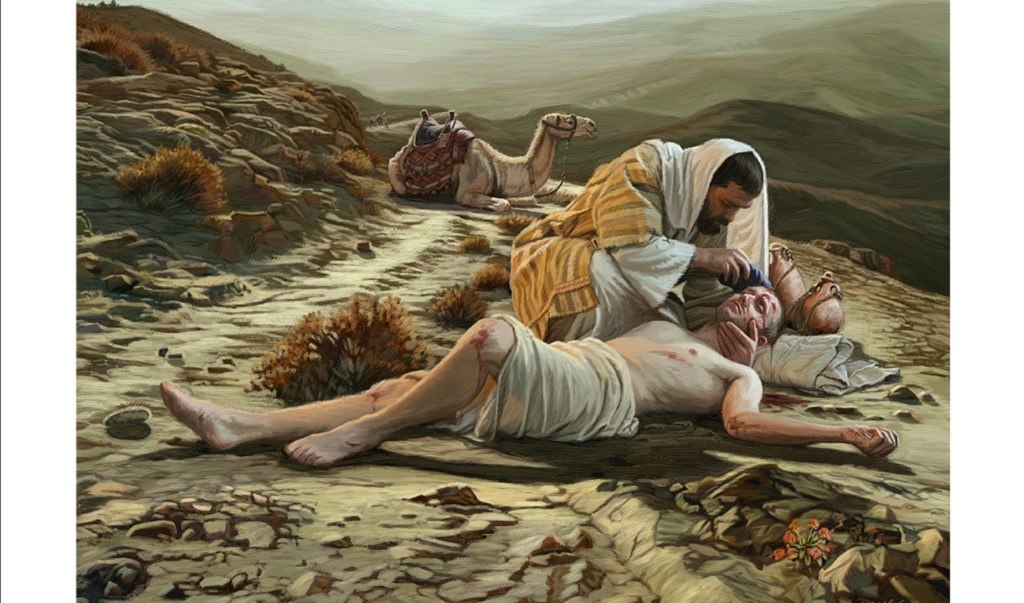
Painting: “The Good Samaritan” by Dan Burr

Link for the Mass readings for Monday, October 6, 2025

Are we willing to be a pencil in God’s hand?

So should it be with you. When you have done all you have been commanded, say, ‘We are unprofitable servants; we have done what we were obliged to do’” (Lk  17:10).

This ending verse from today’s Gospel account from Luke flies in the face of the ideals of fame and honor that many in our culture believe we ought to be striving for. After all, everyone wants their fifteen minutes of fame, don’t they?

The point Jesus is making with his disciples is one of perspective. We need to constantly remember that God is the Creator and we are his created beings, God is God and we are not. Our life is completely dependent on him and whether we like the analogy or the reality that we are servants, that is not only how we were created, but what will, in the end, bring us the most meaning and fulfillment in our lives is serving God without hesitation.

This is no dictatorial or tyrannical power play by God through his crown prince Jesus. Jesus himself consistently served his Father and would do so in the fullness of giving himself on the Cross. This is best summarized by Paul in his Letter to the Philippians, when he echoes one of the most ancient Christian hymns: “Though he was in the form of God, Jesus did not deem equality with God something to be grasped. Rather he emptied himself and took the form of a slave, being born in the likeness of men.”

Jesus, the divine Son of God, entered into our human condition because he was serving the will of his Father. We are to do the same. God is the director of his epic drama and each of us has a part to play. Our faith grows as we empty ourselves from our own grasping nature of seeking control, of being in charge, and seeking to be the director of our own life.

One of the reasons many of us have trouble with this type of imagery and language is because we consistently see so much abuse of power for selfish gain. This is not God’s goal. God does not need us, he is fully self-sufficient without our worship or service. It is we who need him and through the opening of our mind and heart to his direction, by acting on every word that comes from him, we do not become diminished, we actually expand and become more!

We truly become ourselves, we are fully alive, and we will experience more peace, when we resist living in the past or anticipating the worst case scenarios about the future. A wonderful image that St. Mother Teresa used often that I find helpful is being a pencil in God’s hand. When we have faith in and trust God, we can rest in his loving guidance and act as he directs. This is the beating heart of our faith, to place ourselves in a posture to hear the will of God, and act upon it in our willingness to serve him without hesitation. In doing so, we lose our life, and in so doing we find joy because we become fully alive.

—————————————————

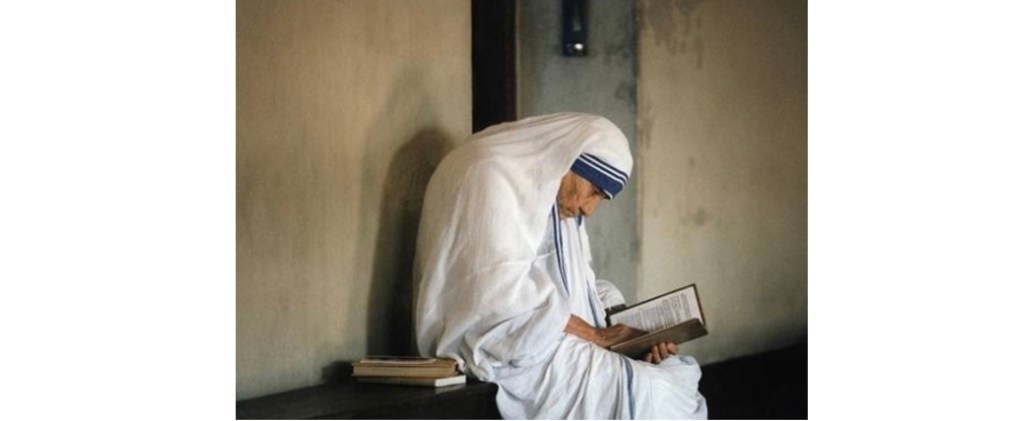
Photo: St. Mother Teresa could be a pencil in God’s hand because she gave herself to him in prayer and service daily.

Link for the Mass readings for Sunday, October 5, 2025

God cares more than we think.

In the Gospel, Jesus receives the seventy-two he had commissioned to heal and exorcize demons in his name. They returned rejoicing at the wonders that they experienced in their service and Jesus invited them to see that what was more amazing was not so much that “the spirits are subject to you, but rejoice because your names are written in heaven” (Luke 10:20).

What is amazing about what Jesus is sharing is that much more than what we do, even in doing God’s will, is who we are in relationship with God. That are names are written in heaven means, we know God. God cares about us personally and intimately. God knows each of us by name and knows us better than we know ourselves. Even though God does not need us, God yearns for relationship with us and has planted that very desire to be in relationship with him in the very depths of our minds, hearts, and souls. God also wants us to participate in his plan of salvation history and has a particular part for us to play.

When we give ourselves some time to take this in, to rest and stop, to breathe, really take some deep and slow breaths, and ponder not only how much God loves us, but actually give ourselves time to rest in and receive his love. Wow! You’ll never breathe or see the world in the same way again. When we receive something negative or harmful we are able to process and receive that in three seconds. To receive something good or to hear someone say we are loved, can take from 30 – 90 seconds to process.

We might hesitate or question whether God cares because we might believe that he allowed something to happen or not to happen, or because we are unwittingly welcoming the negative influence and lies of the enemy, such as: we may not care about having our name written in heaven; for what’s the point of having an eternal relationship with someone who doesn’t care enough to listen. Lies such as these keep God at a distance. But God hears all our prayers even while they are still thoughts in our mind.

He knows our deepest needs, hurts, and desires more than we do. To experience God’s love though, to know that he hears our prayers, we need to slow down and be still. God speaks in the silence of our hearts and we can hear his voice of love when we remain still long enough to hear, receive, and rest in his word.

Just taking a moment to be still, and to bring our questions to God is a good first step. For God is the best one to answer them. We just need to be prepared that he may answer our question with more questions. As long as we enter into the conversation, God will happen. It is not so much that we need to get up and do something, as much as instead, we need to sit and allow God to do something in us, and to remain still long enough to hear, receive, and rest in the gift of God’s love that he wants to share with us. Then, once have received what he has given and guided us to share, we do so.


Photo: “Be still, and know that I am God.” – Psalm 46:10

Link for the Mass readings for Saturday, October 4, 2025

May we not reject but welcome the light of Jesus.

“Whoever listens to you listens to me. Whoever rejects you rejects me. And whoever rejects me rejects the one who sent me” (Lk 10:16).

On the surface, today’s Gospel as well as the first reading and the psalm may sound like a Debbie Downer of a message, but it is actually the road map, the passage that will lead us from the darkness of slavery steeped in our own sin to the light of truth and freedom found in dedicating our life to Christ. Jesus is continuing to prepare the 72 that are about to go out to proclaim his message of repentance. This echoes Mark’s recording of Jesus’ mission statement: “This is the time of fulfillment. The kingdom of God is at hand. Repent, and believe in the gospel” (Mk 1:15).

A sin is any actively contemplated thought, word, or action that we knowingly know goes against the will of God and we freely choose to act upon it anyway. This is why many of us prefer the darkness to the light because we do not have to see and name our sins. We hold on to apparent goods or substitutes that we believe will make us happy and fulfill us, otherwise we would not hold on to them. Yet, they are empty promises. After experiencing the lack of satisfaction, once the emotion or passion of the moment or experience wanes, we either seek more to fill the void or hopefully, recognize the false lure and begin to seek something else to fill the void.

If we choose to seek more or seek within the material and world of finite creation apart from God, we continue along a slippery slope that may lead to our ensnarement or addiction. When we instead heed Jesus’ call and repent, allow the light and truth of Jesus into our darkness, trust that he truly wills our good, we can begin to see our sin, name it, repent from it, let it go, be forgiven, be healed, and fulfilled by receiving the true good, the love that God seeks to give and deepen our relationship with him for whom we have been created.

As servants of the Lord, we are invited to repent, to realign ourselves and our lives in such a way that we are saying yes to building a relationship with God. This is a daily, moment by moment, lifetime task of examining our conscience, asking God to reveal to us our sins, and willingness to embrace the humility to see and confess. This process is not just for ourselves.

Having experienced God’s love and forgiveness, we are called to bring the light of truth we have received to those we meet. This does not mean we are perfect. Through the awareness and confession of our sins, we are incrementally more open to receiving more of the love and light of Jesus within us than before, such that he can shine his light through us into another’s darkness and gently guide them to come out of the shadows.

We need to resist though the temptation to go forth and wag our finger of judgment. For then we are only a darker storm cloud approaching those needing a healing balm. This approach can either cause people to slip deeper into their own shell or come out fighting, seeking to dispel us from their midst. Jesus sends us out like the 72 to encounter one another with understanding, mercy, patience, and love. In the beginning, our light needs to be soft, like the morning dawn, so as not to blind those we seek to offer an invitation.

Jesus, this day and each day going forward, please dwell within us. Help us to be open to those you place near us that we may be present to them with your warmth, welcome, and joy. May we respect each person we encounter and be present, so that they may know that they are not alone, that they, in fact, do exist, that they matter, that they are loved as you love us. May we be like the light of the dawn to help awaken those in the darkness of their pain, suffering, and sin. May we be a lamp unto their feet and a light unto their path, that leads to an encounter and embrace with you; our Truth, our Way, and our Life. Amen.

———————————————————

Image: When we allow the light of Jesus to shine in our hearts and minds, he will lead us to freedom from that which and those who hold us captive.

Link of the Mass readings for Friday, October 3, 2025

Want to be great? Reject self sufficiency and depend on God like a little child.

“Whoever humbles himself like this child is the greatest in the Kingdom of heaven. And whoever receives one child such as this in my name receives me” (Mt 18:4-5).

Children during the time of Jesus were seen, if there were acknowledged at all, to have little worth. They were vulnerable, had little if any status in society. They were often nothings, nobodies, and completely dependent on their parents for survival. Jesus invites a child to come to him, identifying himself with the child, as a response to the disciples’ question as to who would be considered the greatest in the Kingdom of heaven.

Jesus taught his disciples, and us today that we need to be completely dependent on God our Father, just as a small child is totally dependent on his or her parents. What leads us to greatness in the Kingdom of heaven is our turning away from the temptation to curve in upon ourselves, resisting the urge to feed our ego, place ourselves first, and as St Thomas Aquinas taught, resisting the cultural lures and substitutes for God: power, pleasure, honor, and wealth.

We are also to reject the image of the Übermensch, the super man, popularized by Friedrich Nietzsche, the 19th century German philosopher. Nietzsche wrote that God was dead and promoted the idea that humanity needed to create a world that would create new values based on the power of their will alone. Supermen and women striving for complete autonomy and self-sufficiency. Jesus teaches the exact opposite. We need to place our complete dependency and trust in and on God and rely on him for everything.

Participating in the reign of God is not one of lordship over another. Instead we are to assume the humility to accompany, walk along with, and serve each other along our journey in this life. Jesus embodied this reality. He, as the Son of God, entered into our human condition. He did not grasp at his divinity but instead surrendered it to his humanity. While remaining fully divine, he became fully human when through the power of the Holy Spirit was conceived in the womb of Mary. In such vulnerability and weakness, he developed through his period of gestation, and was born into our world. As an infant and child, he was completely dependent on Mary, Joseph, and God his Father.

As Jesus continued to grow as a young child, he experienced the fullness of the human condition. He laughed, he cried, he got sick, he was tempted, he felt pain, he experienced heartache and joy. Throughout his life, and especially during his public ministry, he experienced human suffering up close and personal. He understood the suffering of his neighbor and experienced his own human and finite limitations. He loved and wept as we saw in his encounters with Lazarus, Martha, and Mary.

Jesus invites us to relate to God as our Father often in the Gospels, in the best sense of that intimacy of dependence. St Thérèse of Lisieux, whose memorial we celebrated yesterday got this. “Jesus has chosen to show me the only way which leads to the Divine Furnace of love; it is the way of childlike self-surrender, the way of a child who sleeps, afraid of nothing, in its father’s arms.”

Accepting Thérèse’s image is an acknowledgment that we are just as dependent on God and others, that we are not self-sufficient, that we are not capable of living radically independent lives, nor are we supposed to. God created us to be loved and to love, to be in community, to care for, empower, and support one another.

Our guardian angels, whose memorial we celebrate today, are at the ready awaiting our call. When we have the humility to ask for their help, we will realize that we are not alone. When we experience some supernatural support, from God, his angels and the saints, we might just be willing to seek help from and support each other. We can offer a shoulder to lean on, a smile, a hug, a voice that speaks for the voiceless, a soul open to pray with and for others, an ear to hear, and we can embody the courage to serve and stand up for the dignity of each other.

St Mother Teresa was willing to come close and pick up that first dying man in the street. She did not ask his religion, was not concerned if he was of a different race or nationality, was not afraid to risk illness or injury by attending to him. She knelt down and was present in his time of dire need. We are at our best when we follow Jesus, St. Thérèse, St Mother Teresa, the saints, and our guardian angels, and surrender to, and place our dependency and complete trust in God and support each other by doing little things with great love.


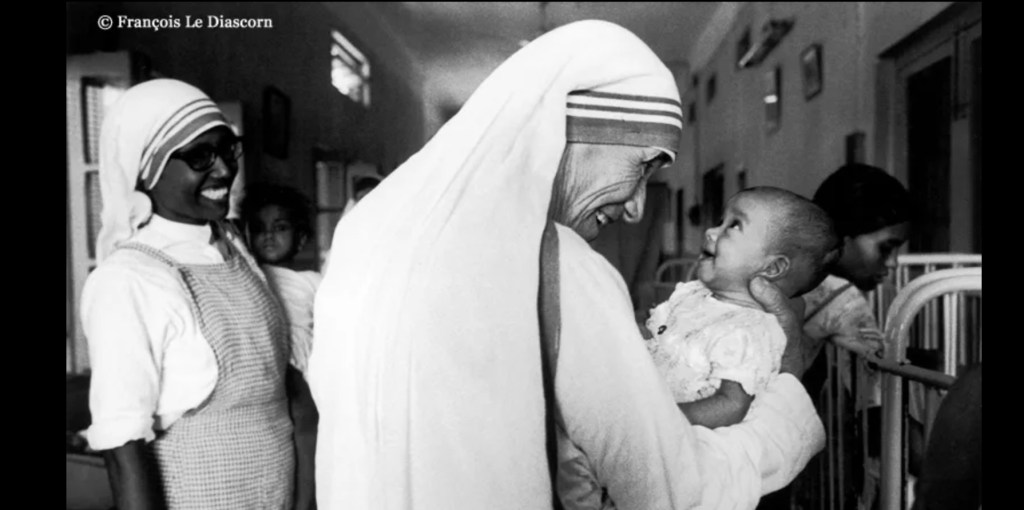
To be loved and to love in return is why we are here at this time. Photo credit François Le Diascorn

Mass readings for Thursday, October 2, 2025

We are fit for the kingdom of God when Jesus is first before all and everyone else.

And another said, “I will follow you, Lord, but first let me say farewell to my family at home.” Jesus answered him, “No one who sets a hand to the plow and looks to what was left behind is fit for the Kingdom of God” (9:61-62).

This is one of the three challenges that Jesus offers to potential followers of his in today’s account. As Jesus is continuing on to Jerusalem, to the ultimate gift he will give to humanity, himself on the cross, Jesus invites those who are still with him to embrace the radical call of the Gospel. God is to be first before anyone and everything else. Even the security of home and family are not to hold one back from following Jesus. His listener’s would don’t have missed the biblical allusion Jesus is countering. When Elijah called Elisha to follow him, Elijah allowed Elisha to say goodbye to his family and settle his estate, so to speak, before they left together (cf 1 Kings 19:19-21).

Jesus is showing in his request, not just the demands of being a follower of his but also why. Jesus is God and if that is true, those seeking to follow him are not to do so with any naïveté nor false presumptions. They are to be willing to give all without holding anything back in following him. Demanding? Yes. But Jesus is about to do the same thing that he asks in giving all he has, his very life on the cross.

These three invitations offered by Jesus are not responded to by those he invites. This is most likely on purpose because the invitation is not only for them but for all who hear this invitation or read it today. We are invited to participate in the life of Jesus and build up the Church. The important foundational point is that we understand what Jesus means by the Church. The original Greek term that we have in the earliest manuscripts was ekklēsia. This is more than just a gathering or an assembly of like minds. Ekklēsia means to be called out from.

Jesus reveals to us anything or anyone that we have placed before God, and he calls us to a new way of living. He calls us to participate more intimately in his life and the life of the Trinity. We will do so when we let go of our grasp of the false substitutes that really don’t bring true happiness and fulfillment. Pleasure, power, honor, and wealth when properly ordered can be goods in and of themselves, but placed first and foremost in our lives, they will not fulfill, provide stability, nor will they give us control over our lives that we seek.

Jesus is revealing in today’s message that home and family also cannot be first. By accepting the invitation of Jesus to place him first and follow him, then our lives in this world will be properly ordered. Nothing else will satisfy, nothing and no one. In fact, we put unrealistic expectations on each other when God is not first because no one can live up to our deepest desires of intimacy and communion. Nothing can fully satisfy us because all is finite and we will only seek more. Only God can satisfy our deepest longing.

Once we reorient our life, put God before all else, grow in our relationship with him, then the other matters and material realities of our lives will fall into place. Our relationships with one another will be more realistic and we will be more understanding when those we are in relationships make mistakes and let us down. We will be more loving and forgiving toward one another when God is the foundation of our lives. God will provide all that we need and he loves us more than we can imagine. When we are confident in God as our refuge and our strength, we can appreciate the material things of creation more and being free of the unrealistic expectations we place on family and friends, we can love each other more.


Photo: When we make daily time to spend with God, we experience so much more wonder even in the simplest of moments.

Link for the Mass readings for Wednesday, October 1, 2025

We can choose reaction and revenge or understanding and forgiveness.

“Lord, do you want us to call down fire from heaven to consume them?” Jesus turned and rebuked them, and they journeyed to another village (Lk 9:54-56).

James and John’s request of Jesus ought to be recognizable to many, if not all of us. How many times when feeling slighted or disrespected do we want to act in kind or offer some retribution to our perceived offender? Many times, we don’t even think, we just react overtly back or we engage in our own tumultuous internal maelstrom.

Jesus rebuked James and John’s request immediately and moved on. He did not allow the rejection of the Samaritans to deter his course for even one second. Jesus had his face firmly set. His time was approaching and to Jerusalem he was headed. Also, he knew there would be a time for the Samaritans to believe. That time was not yet.

Our starting point in putting this gospel into practice is to decide that Jesus has chosen the better course. Seeking revenge is not the way. Not looking left or right, but keeping our eyes fixed on the will of God is the way to proceed. If we can agree with that as our starting point, then we can seek to understand what Jesus can teach us when encountering others.

First, our approach to others extending unkind behavior toward us is to be one of understanding. We are all dealing with a lot, and much of what others are dealing with are unknown to us. If we approach another’s unkind or disrespectful action from a place of understanding instead of seeking revenge, we will have a better chance of not reacting in kind and also possibly being able to help another to get in touch and reveal something they are struggling with. St. Ignatius’ counsel to give the other person the benefit of the doubt is a solid practice.

Often a negative response may come from misunderstandings. In giving the person the benefit of the doubt to explain their understanding of what happened in a given situation, helps to de-escalate the situation instead of adding fuel to the fire . We are not mind-readers and we also are not the best of communicators so resisting jumping to rash conclusions is a better course of action.

Along with being understanding and giving someone the benefit of the doubt, is to receive other’s action with humility. Maybe, we have done something to cause hurt toward another, intentionally or unintentionally. By taking a moment to pause, we can assess if we have done something to instigate the action we are receiving. Taking responsibility for that which we have done and apologizing for it, we create a better bridge for reconciliation.

We are responsible for our thoughts, words, and actions. We cannot dictate or change the behaviors of others nor are we to be doormats for another’s abuse nor take on their stuff either. We are to approach conflicts and obstacles with patience, understanding, a willingness to bring clarity, to give the benefit of the doubt, and humility for acknowledging what we have done and what we have failed to do. If another is not willing to hear reason after multiple attempts or closed, we move on.

We pray for and respect the dignity of the person whether we agree or disagree with the outcome while holding them accountable at the same time. Jesus is very clear that we are to love, meaning that we are to will each other’s good. That means putting the prayer he taught us, the Our Father into practice: We need to be willing to forgive.

None of these steps are easy. Human relationships are difficult in the best of scenarios, but still well worth the effort. None of us are perfect. When we do our best to follow these principles as well as other practices not mentioned to work toward reconciliation and build relationships, our conflicts will become moments of grace. Conflicts will become opportunities that help us to grow closer together rather than further apart. Inviting Jesus into the conflict is the most important step, for he can help us to see others from his infinite perspective instead of our limited perspective.

—————————————————

Photo: Spending time in quiet and prayer, especially in reading the book of God’s creation, helps us to slow down so that when we return to our interactions with people again, we can begin more peacefully.

Link for the Mass readings for Tuesday, September 30, 2025

Jesus invites us to participate in his life and the communion of the angels and saints.

He promised that he would be there so that she would not have to die alone. The hospital called that her time was closer while the priest was visiting another ill parishioner. He finished up as fast as he could, and unfortunately ran into traffic, and too many lights turning red instead of staying green. And although he pushed the speed limit, when the priest arrived at the nursing station and asked for the name of the woman, the nurse informed him that he was too late, she had already passed.

He felt horrible because he promised her that she would not die alone. As he was mulling over the unfortunate timing, the nurse continued. “An interesting thing happened. An orderly came in with another patient, and I had no order for her to be in this room. This woman looked at your friend and asked if she could have her bed closer to hers, then reached out her hand. They held hands while the orderly and I left to check into the matter. When we returned, your friend was dead. The orderly then moved her bed out. The funny thing is that I have been checking since they left and found no record of this orderly or his patient being in the hospital.”

She did not die alone after all. Was this a visit from two angels?

Today we celebrate the feast of the archangels, Michael, Gabriel, and Rafael. Angels are eternal, spiritual beings. They are not human but can take on human form in their appearance. Also, when we die, we do not become angels. We are human beings, and as such we are human and spiritual.

One of the possible reasons that Satan, who is the archangel, Lucifer, and the other angels, now called demons, rebelled against God was because in our participation in the life of Christ, we become higher than the angels. That was too much for them to take and so choosing their pride over God, they rebelled.

Jesus, fully God and fully man, is infinite and eternal as Son, while at the same time finite as human. In Jesus coming close to be one with us in our humanity, we are offered the opportunity to participate with him in his divinity. Like the angels, God has given us the ability to reason and the freedom to choose. We can choose to grasp at divinity on our own terms through our pride, as Satan and his minions, or we can receive the gift of God’s love, participate in the life of his Son, and become like God. The Father and the Son and the Holy Spirit are divine by their very nature, whereas we are given the grace to participate in their divine nature.

We don’t lose ourselves and become absorbed by God, we remain distinct and experience the fullness of our humanity in our participation in the divinity of Jesus. In his resurrection and ascension, Jesus has assumed his glorified Body. He is the first born of the new creation and through our baptism we participate in his life and through him, the life of the Trinity. As we surrender our lives to God, take up our cross, die to ourselves, and follow Jesus, we grow in holiness. We join in the new creation Jesus has won for us. With each faithful step we draw closer to the heavenly Jerusalem, and we become more united to the Body of Christ.

The wonderful reality we can ponder today is that in God’s order of creation, with each breath we take, we can rest in the truth that we belong to an incredibly extended family of Father, Son, and Holy Spirit, Jesus, Mary, and Joseph, the angels, and the saints. We can rest in the reality that no matter what challenges we are going through, we all have a significant part to play in God’s plan, we are all interconnected, and we are not alone. We are loved, we are in communion with many in heaven and on earth who are not only cheering us on but loving us, willing our good, and guiding us on our journey.


Photo: Each unique ripple reflects the brilliance of the rays of the sun, making for a beautiful symphony. Much like each angel and saint in heaven and us here below.

Link for the Mass readings for Monday, September 29, 2025

Through Jesus we can experience a new and infinite horizon.

The term horizon is often defined as where the earth and sky meet. This is actually an apparent horizon or sensible horizon because we see an apparent plane based on our observation point. If we are able to broaden our viewpoint and look beyond the present location we are standing at on the earth, say from the space shuttle, we could then experience a rational or celestial horizon: where the great circle of the celestial sphere whose plane passes through the center of the earth is parallel to the celestial horizon of a given position. Journeying deeper into space we could discuss event horizons, the boundaries marking the limits of black holes.

Before delving any deeper and getting lost in space, let’s return to the earth and today’s Gospel where Jesus stated: “Pay attention to what I am telling you. The Son of Man is to be handed over to men” (Lk 9:44). What Jesus offers to us in this statement is the horizon of the cross, the place where heaven and earth meet, where the physical and the spiritual, where the finite and infinite meet.

Many of Jesus’ followers were and are still confounded by the cross. As Paul wrote to the Church at Corinth: “For Jews demand signs and Greeks look for wisdom, but we proclaim Christ crucified, a stumbling block to Jews and foolishness to Gentiles, but to those who are called, Jews and Greeks alike, Christ the power of God and the wisdom of God” (1 Cor 22-23).

Paul echoes what Jesus was talking about – his imminent fate and our ultimate horizon – death. None of us will be able to avoid the final result of our mortality. Jesus taught both through his words and in his death that to be truly free we need to be willing to lose our life to gain it. We have to face and walk through our deepest fears to grow. Our life is not lived until we give it away.

The more willing we are to face the reality of our own death, the less likely we are to take the time we have for granted, and the better we can live our lives here and now. During our final four months together, JoAnn and I experienced God’s grace because we faced the reality that her time was near, we embraced the gift of the time we had together, and through the prayers of so many, we experienced the infinite presence of the love of God in our midst.

There is so much we can experience and enjoy, but if we only limit ourselves to that which we can experience with our physical senses alone, if we deny our own mortality, we limit ourselves. What makes us fully human, alive, and fulfilled is an embrace of both the physical and the spiritual, of both reason and faith, seeking the horizon where the finite and infinite meet, where earth and heaven come together. This approach opens up endless possibilities.

This union happens most perfectly in Jesus Christ, who is fully human and fully divine. Jesus helps us to  experience the beauty of God’s creation and our relationships. This happens best when we are willing to enter with him into, instead of resist, the natural rhythm of life and death. We come to appreciate the truth of how fragile our lives really are and so can better appreciate the time we have been given.

Death is not a truth to run from but to embrace. And as we do, we will be less apt to take each other for granted and instead better love one another because we will not be on this side of heaven forever. We will also be able to slow down and rest more in the moments that God offers in which we can experience foretastes of heaven now. We will better prepare ourselves for that time when Jesus will lead us into our own death so that we may rise with him and experience a new and infinite horizon.


Photo: Lead me, Lord, along the path to eternal life.

Link for the Mass readings for Saturday, September 27, 2025