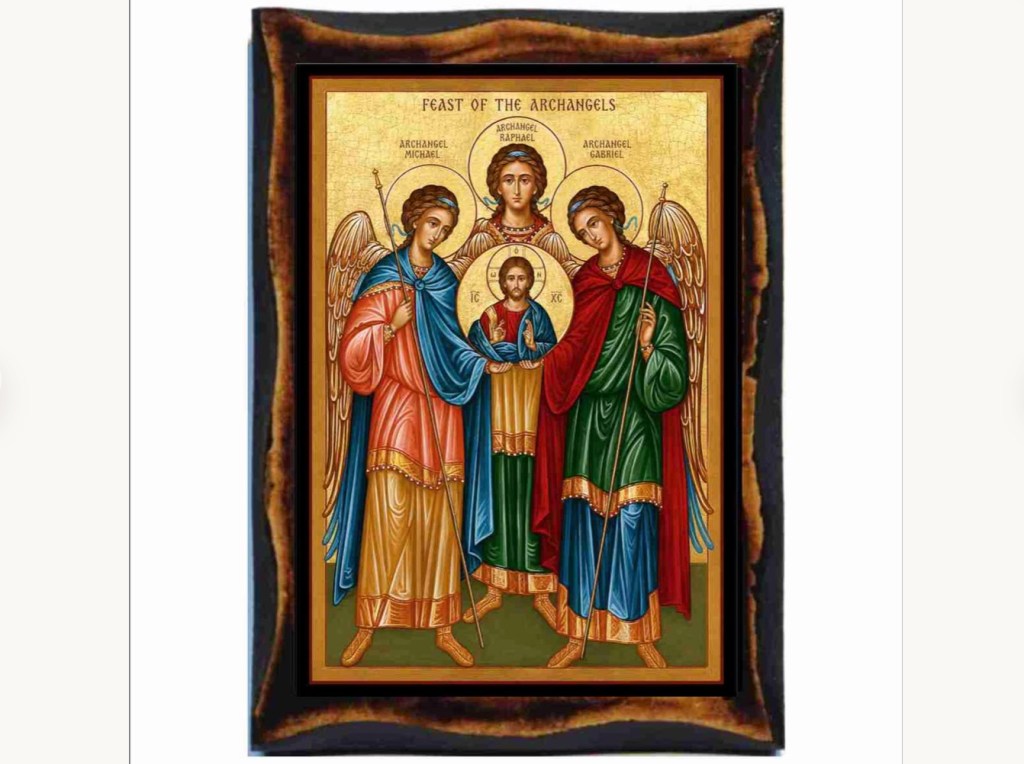
Jesus does not ration his gift of the Spirit.

The question that arises and is foremost regarding Christianity above all else is, “Who is Jesus?” How this is answered has a lot to do with what we believe. Biblical scholars debate whether today’s passage, John 3:31-36 is a continuation of John the Baptist talking with his disciples or these are an insertion by John the author. No matter who is the source of these points of concern, the goal is coming to understand and to believe that Jesus is the one who “comes from above” and the one who “comes from heaven is above all”; he “testifies to what he has seen and heard” and he is sent by God to speak “the words of God”; he is also generous in that he “does not ration the gift of the Spirit”; and the Son is loved by the Father and God “has given everything over to him”.
Each of these phrases are revealing the truth that Jesus is the Son of God who has come from above to reveal the truth about his Father and that he is able to do so because he has seen and has an infinite relationship with his Father. Jesus preaches the Gospel, the Good News, that God loves us, that he seeks and has always sought, to be in communion with us, his created beings. Jesus has come to reveal the love of the Father and that his love is unlimited.
The proclamation that Jesus is the Messiah, is not just revealed in the Gospel of John, but each of the three other Gospels, Matthew, Mark, and Luke, as well as the other epistles of the New Testament. Jesus, as the Son of God, is also the key to unlocking the Hebrew Scriptures, and we can see how the Torah, the Prophets, and the Writings all point to Jesus as well. Jesus shared this outline of salvation history with Cleopas and the other disciple on the road to Emmaus, such that their hearts were burning within them while Jesus opened the scriptures to them (cf. Lk 24:32).
John the Baptist got it and the Apostle John and the other apostles eventually got it. They came to understand that Jesus is the Son of the Living God and that he offers a model for us to follow, but more than that, Jesus empowers us with his very life. This was a key point of surrender for John the Baptist when he shared with his disciples, the truth that, he, they and we are all called to ascribe to if we are to grow in our faith: “He must increase; I must decrease” (Jn 3:30). May we spend some time in quiet reflection today by pondering the phrases offered to us regarding who Jesus is. Which one, two, or do all of them call to you?
“The one who comes from above is above all.”
“The one who comes from heaven is above all.”
“He testifies to what he has seen and heard.”
“For the one whom God sent speaks the words of God.”
“He does not ration his gift of the Spirit.”
“The Father loves the Son and has given everything over to him.”
When we have finished, what is our response? Do we disobey or discount that Jesus is who he says he is or do we “accept his testimony” and “certify that God is trustworthy”? If we “accept his testimony”, are we willing to decrease, such that he will increase his influence in our lives? Do we believe that Jesus is the Christ, the Son of the Living God?
Reading, meditating, praying with and listening to the Gospel readings, helps us to encounter, sit at the feet of, and be in the presence of Jesus who teaches us in our time as he did with each generation of believers from the time of the apostles to our present age. Are we willing to be still, listen, and come to him daily? If yes, then in the words of Pope Benedict XVI, we will meet the Risen Christ and “know him intimately by the power of the Holy Spirit…” and have “actually touched him” so that we “can witness to him” (Martin and Wright, 79).
Let us not follow the lead of the rich man who walked away sad from his encounter with Jesus. May we instead follow the lead of the Apostles, Mary Magdalene, the woman at the well, Cleopas and his companion, surrender our lives to him, and so be loved, forgiven, healed, transformed, that we may be witnesses of Jesus’ joy.

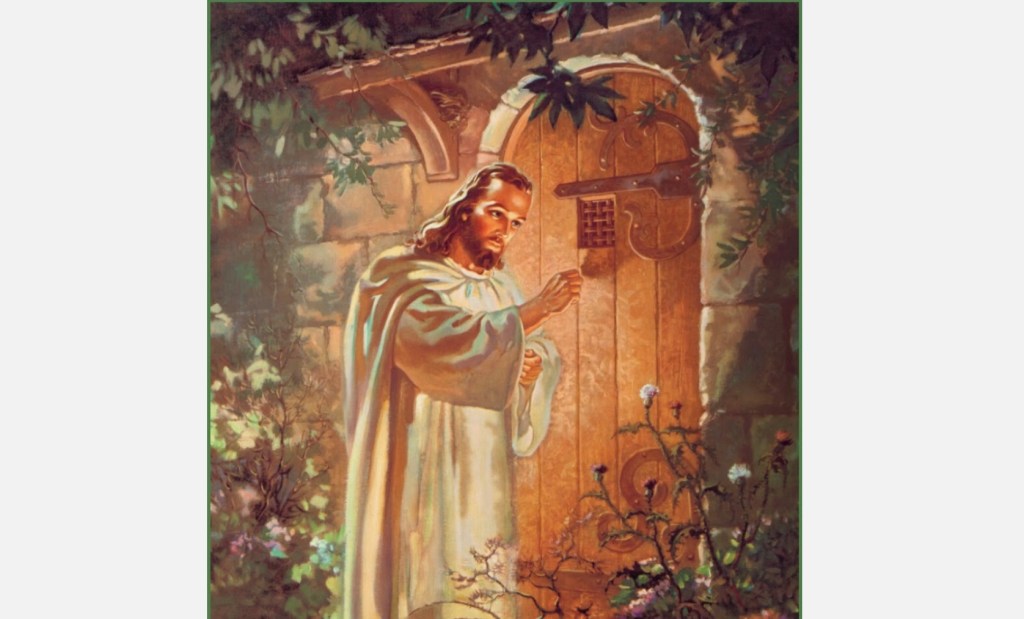
Photo: Jesus did not ration his love, he gave all of himself, holding nothing back, not even his life, so that we may know him and his Father intimately and so experience the outpouring of their love shared between them, the Holy Spirit.
Pope Benedict XVI, “Homily,” May 7, 2005 found in: Martin, Francis and Wright IV, William M. The Gospel of John. Grand Rapids, MI: Baker Academic, 2015.
Link for the Mass readings for Thursday, April 16, 2026

Our path to eternal life begins when we accept the invitation of, then receive and share God’s love.

Jesus continues his conversation with Nicodemus in today’s Gospel from John. In the opening verse, Jesus outlines why he came into the world: “God so loved the world that he gave his only-begotten Son, so that everyone who believes in him might not perish but might have eternal life” (Jn 3:16). God has created us out of love and shepherds us out of love. God loves what he has created, and in his order and timing, he sent his Son to enter humanity to become one with us, to heal us and invite us to come out of the shadows and dark recesses of turning in upon ourselves, from living in fear and sin and sometimes at best survival and to experience peace, forgiveness, healing, and wholeness.
Loving means to risk being rejected. Jesus entered humanity as we all did, in the utter vulnerability of the womb. His very life was at risk from the moment of his conception. Mary, a young woman,  betrothed to Joseph, in a time and culture in which a woman found to be with child and not from her husband, could be stoned to death. Mary could have made a different choice, Joseph could have made a different choice, but both chose to follow the will of God. They resisted the temptation to close in upon themselves and make an isolated decision based on their own needs, anxieties, and fears. While all of creation held its collective breath, Mary and Joseph trusted God, they chose the light, they chose to protect life.
“Whoever believes in him will not be condemned, but whoever does not believe has already been condemned, because he has not believed in the name of the only-begotten Son of God” (Jn 3:18). Jesus did not come to condemn, he came to redeem, to save, to love us into eternity. For love to be real, it must be truly free. Free to the full extent that it can be rejected. To love is to risk rejection. Otherwise, what is experienced by the other is coercion, conditional, manipulation, pressure, but not love.
The Son of God entered the womb of Mary risking rejection by her, Joseph, and/or their extended family. The only difference between Jesus in the womb and Jesus who ministered to those on the margins was that he was smaller and more vulnerable. Those who, like Mary and Joseph, believe will come to have eternal life, and those who do not have already been condemned, not by God but by themselves who reject or turn away from the invitation. For they choose to curve in upon themselves and remain in their sin, choose to remain separated from God, choose the darkness instead of embracing the light.
Those rejecting God have been invited to receive his love also, but for reasons they may or may not be aware of say no. They may not even be aware that by some of their choices that they are choosing something other than God. We who choose Jesus are to receive and be his presence of love among those we encounter, even those who shy away or reject him. We may be the only Bible someone ever reads.
We are to protect the the unborn as well as those who have been born. We are not just pro-birth, but we are also pro-life. That means that each of us has a charism of who we are called to reach out to, speak up for, and touch with the love of Jesus, to be present to those who God brings into our lives. We can think, speak, and act by respecting the dignity of each person we encounter, in-person and online, supporting a consistent ethic of life from the moment of conception until natural death and at every stage in between.
“God so loved the world that he gave his only-begotten Son, so that everyone who believes in him might not perish but might have eternal life” (Jn 3:16). We, even in our wounds, imperfections, and sin, are loved by Jesus. We can reject or accept his love. As Pope Francis wrote: “We are called to be holy by living our lives with love and by bearing witness in everything we do, wherever we find ourselves.” As we receive and experience the love of Jesus, may we seek to love every person we encounter as he has loved us. If there are those that we might not necessarily include in every person, may we be willing to allow Jesus to love them through us until we can.

Photo: Quiet time with Jesus is a good way to breathe, receive, rest, and abide in his love.
Link for article on Gaudete et Exultate (“Rejoice and Be Glad”)
Link for the Mass readings for Wednesday, April 15, 2026

The Son has come down from heaven, to show us the way to heaven.

Jesus continued to teach Nicodemus and with these words, “No one has gone up to heaven except the one who has come down from heaven, the Son of Man” (Jn 3:13), Jesus expressed the truth about who he is, the Son of the Living God. He called himself the Son of Man back in the first chapter when he described how angels will be ascending and descending on him, how in his very person, he opens up heaven for humanity (John 1:51). Jesus is the Son of God and the Son of man. From all eternity and for all eternity the Son is begotten not made. The Son has always existed with the Father and at the appropriate time, the Father sent his Son to be one with us in our humanity so that we can become one with him in his divinity.

We have been loved into existence, along with all of creation, by the outpouring of the love shared between God the Father and God the Son, who is God the Holy Spirit. The Son came to invite us back to restore our relationship with his Father, to show us where we have strayed, so that we may correct the course of our journey and return back to who we have been created to be. We have been created to be in communion, in an intimate relationship with God and one another.

Jesus, the Son of God became incarnate, took on flesh, and entered into our human condition that we would be deified, transformed into the very likeness of God by our participation in the life of Christ. This is why Jesus tells Nicodemus that we are to be born from above because through our baptism we are born again as daughters and sons of God our Father. The one who has come down from heaven has, as St Irenaeus wrote, “opened up heaven for us in the humanity he assumed.”

It is important to make time each day to savor the truth that we have been loved into existence. As we do so, we will realize that our lives are gifts from God and we have been created to receive God’s love and love others in return. During these present, uncertain times, we are given an opportunity to be more aware of what is important to us as well as Who and with Whom our true stability lies. It is in times like these that we are given a chance to appreciate and grow closer to God, our family and friends, as well as begin to be more aware of those who are in dire need around us.

The gift of all life is precious. May we resist taking this precious gift for granted, and love others today in our own special and unique way. Jesus has loved us from the beginning, more than we can ever imagine and more than we can ever mess up! Just as the sun shines on the good and bad alike, so God loves each one of us with a love that is beyond all our understanding. The flow of our lives as disciples is to receive and share the love of God.


Photo: With each sunrise, may the Son of God rise in our hearts!

Link for the Mass readings for Tuesday, April 14, 2025

“By means of baptism, we are born into communion with Jesus and the Father through the Holy Spirit”.

Nicodemus came to Jesus in the night. He was a Pharisee, showing that not all Pharisees refused to believe that Jesus was the Messiah. Most likely, Nicodemus was not there alone as he shared, “Rabbi, we know that you are a teacher who has come from God”. Although, Nicodemus did not reject Jesus outright, he did not understand the fullness of who he was either. His heart and mind was open to what Jesus was teaching and he recognized that Jesus was sent by God. His coming at night most likely showed he was also not yet willing to support Jesus publicly and also on the spiritual level conveyed his lack of understanding regarding the message of Jesus.
He was not alone. For throughout the gospels, it is rare that anyone gets Jesus’ teaching on the first presentation, or second or third, if they are willing to stay with him that long. Nor do they get his deeper meanings if they do have some comprehension. Jesus though recognizes the opening that Nicodemus offers and he approaches Nicodemus as he did with his disciples. Where they are willing and open to learn, Jesus met them where were are and sought to stretch and expand there understanding to move from the things of the finite and below to lift them to spiritual insight and the things from above.
Jesus offers the image of being “born from above” to Nicodemus to help him to exercise his spiritual sight and muscles. Nicodemus takes Jesus words on the literal level and asks how someone can be born again and go back into their mother’s womb. Jesus taught Nicodemus that we as human beings are in need of receiving a new life, a life “born of the Spirit.” When we are born from above we are born again a second time. Jesus is speaking of baptism. We are given our life the first time through our parents, being born from below, and through the water and the Spirit are born again and made new. We are baptized into the death of Jesus and born again in the newness of his resurrection.
“This second birth from heaven is baptism. which is an action of the Holy Spirit. Through the water rite, the believer is joined to Jesus’ death and resurrection (Rom 6:4-5) and receives the indwelling Holy Spirit. If the kingdom of God is Jesus himself, then to enter the kingdom is to be given a share in Jesus’ own life. By means of baptism, we are born into communion with Jesus and the Father through the Holy Spirit” (Martin and Wright, 71).
What Jesus has begun to convey to Nicodemus, he will continue. He has done the same with his Apostles, other disciples, as well as anyone with eyes to see and ears to hear. His teachings have continued because there are those who have stuck with even while struggling with his teachings, have been willing to be transformed by them through the Holy Spirit and so have passed Jesus teachings, such as, the life of being born from above through baptism and the other sacraments, on. This continued for generations and in each age up to us our present day.
Christianity is not like Gnosticism, some secret sect of knowledge that is shared with a select, elite few. Neither is Christianity a form of dualism or Manicheism such that our body and all that is material are bad and we need to shed the physical as soon as possible to attain the fullness of our potential through the absolute embrace of the spiritual only. Nor is Christianity Pelagianism, where we just need the proper discipline, will power, and persistence to follow the teachings of Jesus.
Jesus offers us a universal invitation for all to “be born from above”, which means to be baptized in his name, to follow him into his death, to die to our our false sense of self, to our sin, our pride, that attitude and disposition that strives to set apart, diminish, devalue, dehumanize, divide, and polarize, and to rise with him. In being “born from above”, we receive the offer to participate in his divinity through the purifying fire and love of the Holy Spirit and so, instead of rejecting our humanity, embrace the fullness of our humanity, as we are being perfected by our participation in the life of Jesus.
The grace of God builds on our nature, the goodness of the creation he has made and formed into existence through an outpouring of his love. We accomplish this the same way his mother Mary, the Apostles, Mary Magdalene, the disciples, and Nicodemus did. We answer the call to holiness and sanctity. We say, “Yes” to Jesus and give him all we are and recognize all that we have is a gift from God the Father.
Day by day we need to be willing to be lead by the hand of Jesus, the firstborn of the new creation, he will lead us to our healing and guide us to offer our hand to others. May we resist the temptation to put up barriers, to keep others at arm’s length. We are all, every one of us, invited to become saints through our participation in the life of Jesus.
I agree with Pope Francis who in his exhortation, Gaudete et Exsultate (“Rejoice and Be Glad”), wrote that we cannot “claim to say where God is not, because God is mysteriously present in the life of every person, in a way that he himself chooses, and we cannot exclude this by our presumed certainties. Even when someone’s life appears completely wrecked, even when we see it devastated by vices or addictions, God is present there. If we let ourselves be guided by the Spirit rather than our own preconceptions, we can and must try to find the Lord in every human life.”
God is present to us in each of our lives. For those of us who have been, may we embrace the gift of our baptism, so to better understand what Jesus was teaching Nicodemus, that we have been “born from above”. Through our dying and rising in Christ, we have better access and a share in the breath and life of the Holy Spirit. In this way, we are transformed and made new by the Holy Spirit when we believe and follow his guidance. We are invited to share and draw deeply from this spring of living water and lead others to the same source.
————————————————————————–
Photo: My baptism, July 18, 1965 and my journey to the priesthood begins.
Martin, Francis and William M. Wright IV. The Gospel of John. Grand Rapids, MI: Baker Academic, 2015.
Link for the Pope Francis article on “Rejoice and Be Glad”
Link for the Mass readings for Monday, April 13, 2026

May our Lord and our God grant us forgiveness and mercy.

The disciples locked themselves in a room fearing further persecution from the Jewish leadership. Jesus was crucified and as their followers, they believed that they would be next. The distinction needs to be made that Jesus and his disciples are Jewish. When John referenced the fact that the disciples were locked in the room because they were “afraid of the Jews”, John was referring to the Jewish leaders from Jerusalem that led to the crucifixion of Jesus. Jesus and his followers were Galilean Jews from the north.

The Apostles were not only afraid of the potential persecution, they were also most likely ashamed of having turned away from Jesus during his time of dire need, as well as mourning his death. While they gathered in the darkness and were locked away experiencing fear, shame, and grief, Jesus “came and stood in their midst”. As a light shining in their darkness, Jesus returned as he promised. Their reaction of amazement and fear of the possibility of Jesus’ impending judgment had no time to form in their minds. As quickly as Jesus arrived and stood in their midst, he said to them, “Peace be with you.”

Jesus forgave them for their betrayal. He did not rub their nose in their shame or say that he had told them so. Jesus came among them and immediately bestowed upon them his mercy. He then commissioned them to be his Apostles as he said: “Receive the Holy Spirit. Whose sins you forgive are forgiven them, and whose sins you retain are retained.” As Jesus is the Son of God, he has the power to forgive, and he is now sending his Apostles to be bearers of his forgiveness and mercy in his name. Just as the Father sent his Son and gave him authority to act in his name, Jesus was now giving the same authority to his brothers.

Thomas was not among the eleven and when they shared with him the good news of their encounter with the risen Lord. Thomas did not believe. Just like the apostles did not believe Mary Magdalene’s nor Cleopas and his companion’s account that they had encountered the risen Lord. The following week, Jesus returned again, and seeing the marks on Jesus’ hands and his side, Thomas too believed, saying, “My Lord and my God!” Jesus acknowledged Thomas’ affirmation but also built on it for those who would come after: “Have you come to believe because you have seen me? Blessed are those who have not seen and have believed.”

Today, we still have access to the gift of God’s mercy and forgiveness instituted by Jesus as is recorded in today’s Gospel of John. Jesus is just as present to us as he was to his disciples. He is present in his word when we receive it proclaimed in the Mass or read, meditate, and pray with his word on our own. Jesus is present in the Eucharist that we receive, where we behold again the Lamb of God who takes away the sin of the world. Jesus is present through our priests who hear our confession, and he is present in each one of us through our Baptism.

On this Divine Mercy Sunday, may we spend some quiet time with today’s Gospel and imagine ourselves in the locked room with the disciples. May we allow Jesus to appear to us in the midst of any sorrow, grief, fear, or doubts and challenges that we may be struggling with. May our minds and hearts be open to hear his words, “Peace be with you!” and allow the radiating light of his mercy, peace, and forgiveness to wash over and through our whole being. May we allow ourselves to be healed and transformed by the love and forgiveness of Jesus.

Jesus sends us out as he sent his apostles to practice mercy and forgiveness. We do so when we react less and breathe deeply more as well as become advocates for peace, healing, joy, and reconciliation. Is there someone who could benefit from the presence of Jesus through our being present with them, someone who may in the words of Pope Francis, the Pope of Mercy, who we lost just about a year ago, need “to hear God’s good news of forgiveness and love” (Francis, 25)? Allowing ourselves to be loved by Jesus we can then be filled to overflowing to share a smile, radiate his joy, and share God’s love and mercy as he did. Alleluia!

—————————————————————————————–

Copy of the painting of Divine Mercy image by Eugeniusz Kazimirowski that is hanging in my office. “Have mercy on us and on the whole world.”

McCann, Deborah. 30 Days of Reflections and Prayers: What Pope Francis Says About Mercy. New London, CT: Twenty-Third Publications, 2015.

Link for the Mass readings for Sunday, April 12, 2026

When we encounter Jesus for ourselves, we too will have some good news to share!

Today’s reading from the Gospel of Mark, 16:9-16, is commonly called, “The Longer Ending.” Most ancient manuscripts of Mark end at 16:8. Whether this Gospel ended there or the original ending was lost is not definitively known. Many biblical scholars also recognize in these verses a different writing style, so attribute this longer ending to a different author. This ending recounts that Mary Magdalene and two disciples, presumably the same on the road to Emmaus as recorded in Luke, met the risen Jesus. When both Mary and the this pair share their experiences with the eleven, they are not believed, and then, “later, as the eleven were at table, he [Jesus] appeared to them and rebuked them for their unbelief and hardness of heart”

How many times had Jesus rebuked the Pharisees for being hard of heart? Now he is saying the same to the eleven for not believing the accounts of Mary and the two disciples. We do not have a reason for their unbelief and maybe that is well and good because that gives us the opportunity to ponder for ourselves when has someone brought us a message from Jesus and we responded to them with hard hearts and were unbelieving? Are there certain people we would not believe no matter what good news they had to share with us? Have we brought the good news of our encounter with Jesus and it was met with coldness or even disdain?

Mary a woman and a woman that has had seven demons exorcized from her would not have been considered a credible witness in the ancient near East. And yet, Jesus chose her to appear to first and to bring the message of his resurrection to the Apostles. And that such an “unreliable” source, Mary’s witness, has been retained in all four gospels has something to also say – Mary encountered Jesus, believed, and shared what she saw and experienced and although initially not believe, her testimony was preserved.

Jesus does not belabor the point. His conviction helped them to see that as his followers their hearts needed to be open to him working through others, as he told John when someone was casting out demons in Jesus’ name, “whoever is not against us is for us” (cf. Mk 9:40). He was also preparing them for those who would believe their testimonies.

Christianity is not a secret sect, it is a universal call and proclamation to be shared with all. We are celebrating in this Easter Octave, as we continue to do so each year, the fullness of the Paschal Mystery. Not only did the Son of God became incarnate and live the fullness of a human existence, he suffered, died, conquered death, and rose again, for all of humanity and creation.

This was no mere resuscitation like Lazarus who would die again. Jesus conquered death and became the firstborn of the new creation and he invites us to participate in his reign. He invites us to share in his divinity. The resurrection is the Good News he wanted his eleven to proclaim when he said to them, “Go into the whole world and proclaim the gospel to every creature” (Mk 16:15).

Do we believe the apostolic claim that was first shared by Mary Magdalene, the Apostle to the Apostles, and has been passed on generation after generation? Will we, like those who have gone before us, receive, abide in, and share the love of God? Jesus is calling us to do so not for a select few in our pew, but for all in our realm of influence. We are to build relationships by bringing the light, joy, and love of Jesus to each individual that we meet, person to person. Let us also be open to God working through others and receive his message from them as well! Alleluia!!!Alleluia!!!

———————————————————————

Photo: Elizabeth Tabish, playing Mary Magdalene in the series The Chosen.

Link for the Mass readings for April 11, 2025

Jesus reveals us a better way so that we may learn from our mistakes and sin.

There are a handful of incidents in today’s Gospel reading from John that refer back to encounters Jesus had with his Apostles before his death and resurrection. Jesus waits on the shore as seven of his disciples; Peter, Thomas, Nathanael, James, John, and two others, return from a night of fishing. This is reminiscent of when Jesus first came to Andrew and Simon, James and John as they were casting and mending nets and he invited them to follow him.

The disciples are on their way back to shore with their nets empty, and Jesus suggests that they cast their net over the right side and they quickly find that they “were not able to pull it in because of the number of fish.” Peter had this experience in one of his first encounters with Jesus when he had been fishing all night and Jesus encouraged him to put out into the deep water, and they were able to fill two boats with fish.

After their great catch “of one hundred fifty-three large fish,” John told Peter that the Lord was the one who had instructed them. Peter again “jumped into the sea.” He couldn’t wait for the boats to come to shore, he dove into water and swam to shore. An echo of when Jesus approached his disciples one night walking on the stormy waters and Peter jumped out of the boat and walked on water until he took his eyes off Jesus and began to sink.

When Peter and the disciples came to shore “they saw a charcoal fire.” The most recent event with another charcoal fire was outside the gate where Jesus was led for his judgment. To keep warm Peter joined the servants and slaves huddled around a charcoal fire. It was at that charcoal fire that Peter denied Jesus three times. The final scene in today’s account was when Jesus offered cooked fish and bread to his disciples, this is reminiscent of Jesus feeding the five thousand with two loaves and a few fish and also an echo of the Last Supper and the road to Emmaus account we just read a few days ago in which Jesus was made known in the breaking of the bread.

Throughout our lives, we will have encounters with people and experience incidents that we have experienced. We may not have been as present as we have wanted to be when attempting to comfort someone, we may have been involved in some task and made a mistake, may have given in to temptation or fear that we regretted, just as Peter had denied Jesus three times at that first charcoal fire. Peter wept when he heard the cock crow. The sound brought back Jesus’ prediction, brought to light Peter’s own denial and cowardice. How many times must he have berated himself, as we have done when we have sinned, fallen short of our goals, or made mistakes?

Making mistakes and taking risks, are necessary for learning and growing in any endeavor in life. Jesus does not want us to beat ourselves up when we fall short or fail. What is required for maturation is an honest assessment of the situation, an acknowledgment of our mistakes and sins, and then a movement to correct and learn from them. Often we overcompensate in the beginning, but as we remain persistent we reach a healthy balance. Jesus does not seek to condemn or shame us when we make mistakes or sin. He shines his light that we might see to identify where we have missed the mark so we can identify and confess our sins, and improve going forward.

Jesus returns to his disciples after his Resurrection, meets them in very similar settings as he had before when he had first called them. All of his disciples failed him, yet Jesus did not condemn or shame them. Jesus helped to show them how far they had come since he first called them, while at the same time helped them to see how far they still had to go. Jesus was not only their teacher but the divine source of their own transformation. Apart from Jesus they and we can do nothing. In fishing all night on their own nothing happened, but as soon as they did what Jesus called them to do, they caught fish to bursting.

Jesus shows us a better way and empowers us with his love and encouragement. He reminds us we can’t nor ought we to go it alone. When we are with Jesus, grow in our relationship with and trust him as the disciples did, we will be more present to someone the next time we are in a position to provide comfort or understanding, have greater resolve when tempted, breathe more and resist reacting in kind during times of conflict, and be able to identify our sins and mistakes as well as learn from and be free from them.

Jesus has risen, appeared to his disciples to guide, encourage, and empower them to be who God has called them to be. Jesus offers us the same teaching, guidance, and power shared from the wellspring of his humanity and divinity so that we will be able to participate in his life. Our repentance and Jesus’ forgiveness go beyond helping us to become better people. Through the love of Jesus, our minds, hearts, and souls change, we are transfigured, and conformed to Jesus and his life of resurrection. This is good news to share not only in word but in deed. Alleluia!!!

————————————————-

Photo: Let us follow Jesus and leave our sin behind.

Link for the Mass readings for Friday, April 10, 2025

Jesus will open the Scriptures to us when we make the time to spend with him.

Just as we read yesterday, Jesus came among Cleopas and the other disciple on their road to Emmaus, Jesus does so again as the pair was recounting their encounter with the risen Jesus to the apostles. To assuage the fear brought on by his sudden appearance he said and to assure that he was no ghost, “Look at my hands and my feet, that it is I myself. Touch me and see, because a ghost does not have flesh and bones as you can see I have” (Lk 24:39). He then requested some fish and he ate and talked with his disciples as he had done in their times together before his death and resurrection.

We have heard about the resurrection of Jesus, maybe for years, but it is important not to get complacent with the amazing miracle that this is. Also, we need to resist the temptation to diminish in any way the significance of the transfiguration of Jesus. Jesus was and continues to be a hypostatic union, meaning Jesus is one divine person subsisting in two natures, the human and divine.

The humanity of Jesus through his resurrection was fully actualized and transcended the limitations of the three-dimensional realm that he had experienced in his humanity before. This is how he could disappear after making himself known in the breaking of the bread and how he just came through a locked door to interact with his disciples.

The relevance of the bodily resurrection of Jesus for us is that he, in dying and conquering death, is now the reality of who we will one day be. We will be perfected in Jesus to be as God has created us to be. The good news is that we do not have to wait to go to heaven for this process to begin! The path of becoming fulfilled and whole begins in this life, now, as we accept Jesus as our Lord, Savior, and Redeemer. Jesus in his encounter with his disciples from today’s reading from Luke continues the message he began at the beginning of his ministry, which is one of repentance and forgiveness.

When we were baptized we were born again as an integral part of the new creation given to us by the death and resurrection of Jesus. Through this grace, our humanity has been redeemed. Each day we are to live in humility, calling to mind our sins and repenting daily. God loves us as we are as his beloved daughters and sons, but he does not want us to stay where we are. Jesus will help us to identify that which stunts our growth and healing, that which leads us astray and diverts us from growing in closer relationship with him. Jesus suffered and died for each and every one of us, and he also seeks to live through us. Jesus is the foundation and source of our lives and he is our means to salvation. Jesus has come to show us that we are not in competition with God, but that his Father, our Father, seeks to be in communion and solidarity with us.

One of the best ways to grow in our relationship with God is to rest and renew in God’s word. We are blessed that the Church gives us daily readings at Mass that we can read, meditate, and pray with each day. We can also certainly work through one of the Gospels or any book of the Bible at our own pace. God has a word to communicate with each of us when we make the time to be still, breathe, read, and pray.

Jesus opened up the minds of Clopas, his companion, and the Apostles. Jesus will open our minds as well, help us to understand the Scriptures, and reveal himself to us when we are willing to slow down long enough and are committed to doing so daily. Even when we feel tired, let us resist scrolling through social media or surfing channels, which actually don’t help us renew, but instead continue to overstimulate our nervous system and can get us hyped up on dopamine.

May we instead rest and abide in God’s word which will help our minds to come to rest, renew, and discern better how to resist frittering away the precious time that God gives us each day. In reading the words of the Bible, in meditating and praying with them as well as just resting in God’s presence, we will slow down enough to remember who and whose we are. When we can rest in that truth, healing continues, and wholeness is possible.

——————————————————-

Photo: Where I end that majority of my evenings now. Breathing, reading, meditating and praying with the Bible.

Link for the Mass readings for Thursday, April 9, 2026

May we allow Jesus to open the Scriptures to us!

Despair was creeping in on the pair. The hope of Jesus being the Messiah, the promised one who came to redeem and deliver his people Israel had died a brutal and humiliating death. Even though Jesus sought to prepare his followers for this reality, they could not conceive, believe, or thought possible that the promised Messiah could die.
Cleopas and his companion are in mourning as they walk along the road to Emmaus. They have left Jerusalem and are commiserating among themselves about their dashed hopes. They were so sure that Jesus was who he said he was, now what were they to do? Even though they had heard about the empty tomb from the women, they did not believe, and they left Jerusalem. Jesus met them where they were and wove his way into the conversation and their journey.
When the time for them to part arrived, Jesus motioned to them that he was going to continue on. The pair of disciples urged him, “Stay with us, for it is nearly evening and the day is almost over” (Lk 24:29). Jesus did just that and he revealed himself to them “in the breaking of the bread”(Lk 24:35).
The account of the road to Emmaus has significant relevance for our own spiritual journeys. How many times have we had an inaccurate understanding of Jesus in such a way that we felt let down? Have we domesticated Jesus, or limited who he is, seeing only one aspect of his totality, attempted to shape or conform him into our image and likeness? Have we prayed for something and then that petition or intention was not fulfilled in the way we had hoped? Have we sought Jesus and felt that he wasn’t there for us in our time of struggle or during those times that we felt that we needed his guidance most?
Jesus is the Son of God and we are not. He meets us as we are, accepts us as we are, walks with us even when we are walking in the wrong direction, but he also calls us to repent and be transformed. He invites us to stretch out beyond our comfort zones, to let go of our safety nets and take off our training wheels. Jesus invites us to nothing less than being transfigured by entering into the participation of Trinitarian Love. This begins when we resist withdrawing into and curving in upon ourselves, and instead are willing to be loved and to be expanded outward beyond ourselves and so to love in return.
We would do well to spend some time each day reading, praying, meditating and contemplating the wonderful daily readings of the Acts of the Apostles and the Gospels. In doing so, our hearts and minds like that of Cleopas and his companion, may also be set aflame. Once this pair encountered the risen Jesus, they corrected their course immediately and returned to the community of Jerusalem, even though it was evening and not safe.
As we put into practice what we hear and receive, we too will begin to: see Jesus more active in the midst of our everyday activities, recognize him in our daily events and even in the interruptions, be more inspired to share the sacrificial love we have received from Jesus, and come to realize that Jesus is among us, closer to us than we are to ourselves. We just need to invite him to walk with us, even when we are heading the wrong way, we can turn around. When we invite Jesus into our lives God will happen and we will come to believe. Alleluia!!!
————————————————————-
Painting: “Road to Emmaus” by Robert Zünd
Link for the Mass readings for Wednesday, April 8, 2026

Mary recognized Jesus when he called her by name.

As we continue through the readings for Easter we will be given glimpses of encounters with the risen Jesus. This is good news for us, as the risen Jesus of the Gospels is the same Jesus who we have the opportunity to encounter each day in his word proclaimed, the Eucharist, and in our experience of one another.

Today’s Gospel account from John picks up where Sunday’s account left off. Peter and John have come to the tomb and left. Mary did not return with them after they observed the empty tomb. Mary stayed by the side of the tomb and wept. She then peered into the tomb and witnessed two angels. As she turned back she saw who she believed to be the gardener. Why a gardener? Because the tomb was in a garden. Maybe a hint of Jesus going back to the beginning and restoring what God had planned from the beginning, before the Fall.

Mary questioned the “gardener” as to the whereabouts of Jesus. She was still holding onto the loss and grief of his death and the reason why she most likely came to the tomb in the first place which was to anoint him. To find his body now gone, just added salt to the already wide open wound. When he did not immediately answer, Mary must have turned away, because: Jesus said to her, “Mary” (Jn 20:16)!

Just as a sheep recognizes the voice of its shepherd, upon hearing her name, Mary Magdalene recognized Jesus.

Peter and John left the empty tomb. We do not know why. Maybe they wanted to share with and confirm to the other disciples that Mary was correct about the empty tomb. Mary could have gone back also, but something moved her to stay. It could have been the sorrow that brought her to tears, it could have been her dedication and faithfulness to Jesus to find him, to anoint him as she had come to do that first early Easter morning, it could have been that she did not know what to do next, or there was a sense beyond her understanding that held her in place.

Shortly thereafter, Jesus came to her, she recognized him not at first, but when he called her by name. When she called him “Rabbouni”, Jesus asked her to, “Stop holding on to me”.

What was Mary holding on to? Though mistaking him for the gardener at first, she came to recognize that he had indeed come back to life. But in calling Jesus Rabbouni, teacher or master, Mary was going back to the relationship she had with him before. Jesus was transfigured, he was different than he was before, in Paul’s words, Jesus was now in “his glorified body” (cf. Philippians 3:20-21). Jesus had remained fully divine when he became human, and now having taken another major step to complete his Father’s work through his death and resurrection, he assumed the perfection of his humanity. His mission would not be complete until he returned back to the Father at his Ascension.

There was not only a newness to the appearance of the resurrected Jesus, but his relationship with his followers would also be transformed. He did not return to avenge those who betrayed him. Jesus charged Mary to go to his “brothers”. He no longer called them disciples but his brothers. Once Jesus returned to the Father at his Ascension, he unleashed the power of the divine communion of the love shared between him and his Father, who is the Holy Spirit which his new brothers and sisters received at Pentecost.

We are heirs to the same promise that Mary Magdalene, the Apostle to the Apostles, shared with the Twelve. Jesus has become the firstborn of the new creation and through our baptism in the name of the Father, and of the Son and of the Holy Spirit, we participate in his death and Resurrection as well. We too are his brothers and sisters, we too can be configured and transformed more and more into the Body of Christ, healed, perfected, and divinized, because Jesus shares with each of us the relationship he shares with his Father.

As long as we don’t turn away from Jesus, we have cause for joy and celebration this Easter Season because “the resurrection of Jesus has changed absolutely everything, including the relationship between him and his followers. The disciples such as Mary, can relate to him no longer as an earthly teacher but the risen Lord. Jesus’ order, “stop holding on to me”, is meant in a figurative sense: Mary can no longer hold onto her past notions of discipleship” (Martin and Wright, 337).

I remember while still in seminary praying in the chapel and asking Jesus why I couldn’t feel about him the way I felt about my wife, JoAnn. Jesus said, “You have to let her go.” He did not mean forget about her or our memories together, but to not hold on to her any longer. It took awhile, but in doing so, and no longer grasping, there have been brief moments when I have felt her close. Learning to let go of the attachment I had, even putting her before God while she was still alive, I continue to heal and like Mary better know his voice.


Painting: Like Mary then, we are called to, “Go and announce the Good News of the Resurrection” in our everyday lives! Alleluia!!!

Martin, Francis and William Wright IV. The Gospel of John. Grand Rapids, MI: Baker Academic, 2015.

Link for the Mass readings for Tuesday, April 7, 2026