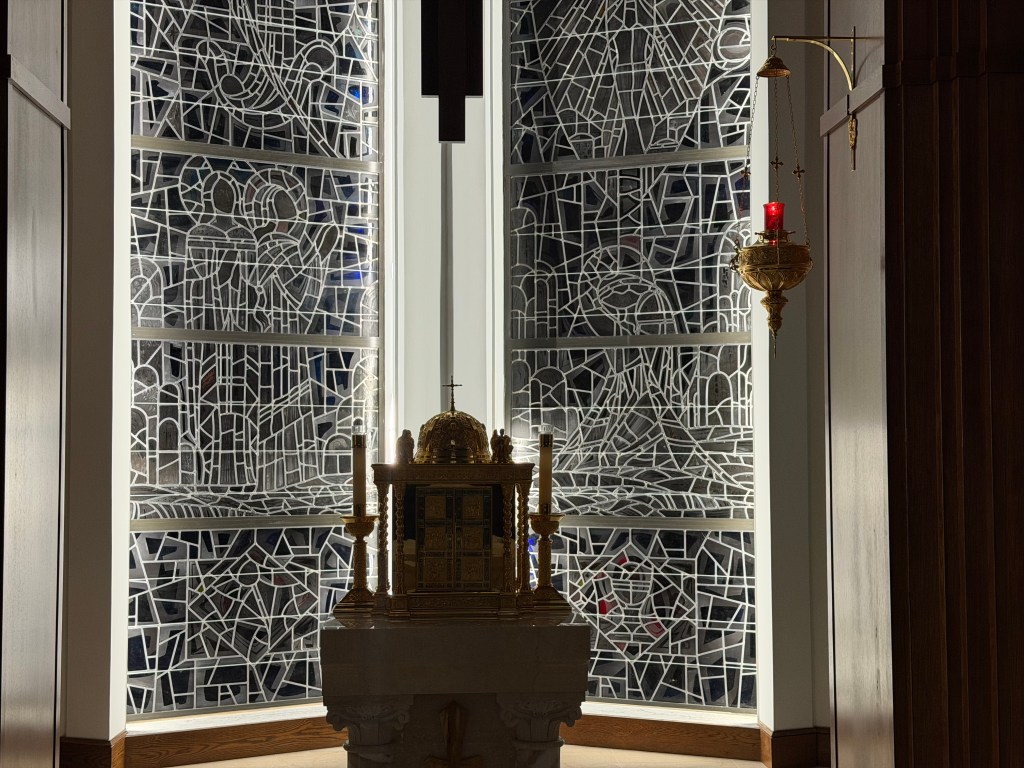
The Son of God came and continues to come close to forgive, heal, and transform us.

The man in today’s Gospel scene takes a tremendous risk by approaching Jesus. He is a leper and so considered unclean. The appropriate response when someone was coming into his general vicinity would have been to give as wide a berth as possible, if not remove themselves from view entirely, or to make themselves known to be unclean to any passerby.

This state of uncleanness was not a mere sense of hygiene. This was considered ritual impurity. So anyone touching or being touched by a leper would be considered ritually impure. For this reason, lepers were ostracized from family, friends, and the larger community socially as well as being forbidden access to public worship. This is a horrific state to find oneself in, for as human beings we are social beings who want to belong, to be a part of, and to be loved.

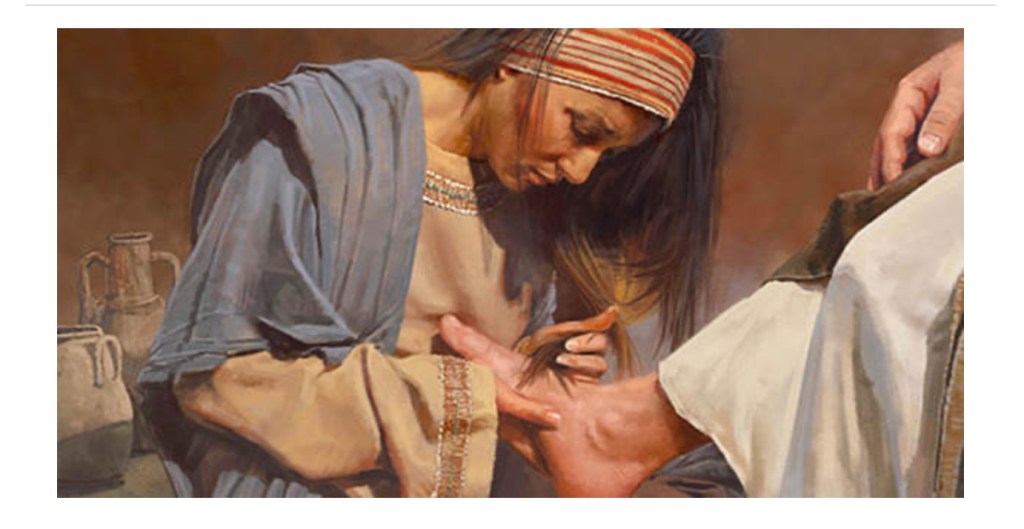
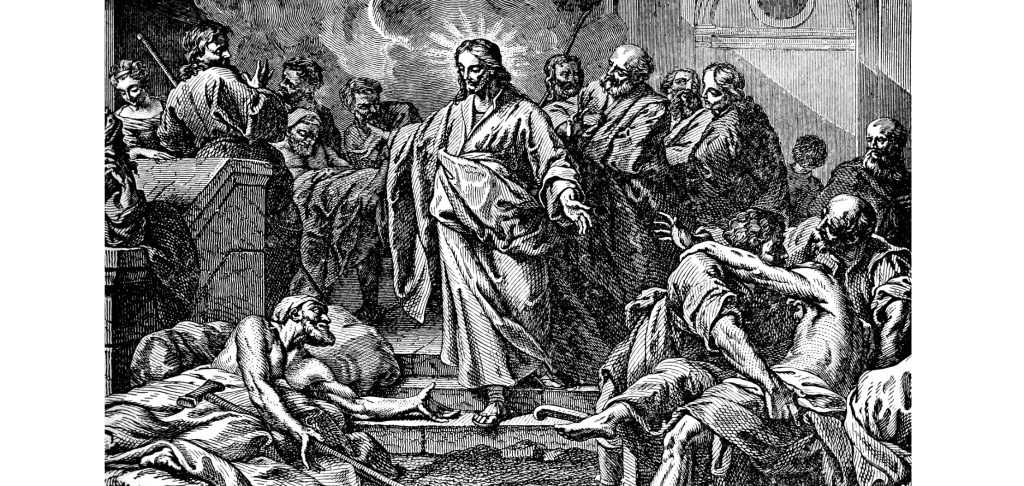
The leper cast aside all social norms and fell prostrate before Jesus and said, “Lord, if you wish, you can make me clean” (Lk 5:12). Jesus knew full well the social norms, and it is very telling that not only did Jesus heal the man, but he did so by placing his hand on him. He could have easily said, “I do will it. Be made clean” (Lk 5:13), without touching him and the man would have been healed. There are Gospel accounts of Jesus not only healing with his word but also with his word from afar.

Jesus says more in his willingness to touch the leper than he does even with his words of healing. He does not keep the man at a distance but instead places himself on the same level as the man. In Jesus’ touch he is not made unclean, but the man becomes clean. The tremendous stigma of this man having to be separated from something as simple, yet as significant, as a human embrace is removed. With that simple touch, Jesus comes close and in doing so, the man will no longer be kept at arm’s length but restored to his community and the opportunity for fellowship.

This is what the Son of God has come to do. He has come close to all of us. He has become human so we can see the face of God. We can experience the tenderness of his touch, his closeness, and being understood when no one else can or is willing to do so. Jesus has come close so that we know that we are not alone, that we are loved more than we can ever imagine, more than we can ever mess up, more than our worst mistakes, or even our gravest sins. Jesus has come close so we can experience how it feels to forgiven, healed, restored, so to belong, cared for and loved.

Having received this wonderful gift of his love, we are invited to also come close and be willing to love one another. In doing so, we can move a bit closer to actualizing the words of Pierre Teilhard de Chardin, SJ, “Someday after we have mastered the winds, the waves, the tides, and gravity, we shall harness for God the energies of love; and then for the second time in the history of the world, humanity will have discovered fire.”

——————————————————————————————————-

Photo: A few minutes before Mass this morning and preparing for Jesus to come close again in his glorified Body.

Link for the Mass readings for Friday, January 9, 2025

In loving our brothers and sisters, we are loving Christ who gave his life for us.

He said to them, “Today this Scripture passage is fulfilled in your hearing” (Lk 4:21).

Jesus spoke these words to his hometown congregation in Nazareth who had just heard him read the passage from the writings of the prophet Isaiah. Jesus proclaimed that he was the one to whom Isaiah was talking about. Luke chose to highlight this event as the starting point of Jesus’ public ministry, of bringing glad tidings to the poor, proclaiming liberty to the captives, recovering sight to the blind, letting the oppressed go free, and proclaiming a year acceptable to the Lord (Lk 4:18-19).

This message of universal healing, restoration, and reconciliation for all people would be an aspect of the mission of Jesus. He presented the message that he would be the vehicle to bring the love and redemptive work of his Father to all the nations, to invite all people to be aware of the reality present to them: that God his Father is inviting all into communion and relationship with him. The poor mentioned were not just in reference to those experiencing material poverty, but also to those finding themselves on the margins of society, the outcasts, those on the peripheries. The captives were not only those imprisoned for debts or crimes but those bound in the chains of their own sin and addiction. The blind were not only those who could not physically see but those who experienced the spiritual blindness of pride and arrogance. The oppressed were not just those under the iron fist of totalitarian and dictatorial regimes, but those pressed down through their own anxieties and fears.

In what ways are we in need of Jesus’ teaching, healing, and restorative power? What is keeping us on the peripheries, apart from communion and fellowship? What sins, disordered affections, and/or addictions, fears, anxieties, distractions, and/or diversions keep us bound? What is keeping us blind to the reality that God is in our midst and seeking a deeper relationship with us? Today we hear or read again Jesus’ words proclaimed in the Gospel. Jesus invites us to be healed and to align ourselves with his will and ministry of loving service.

It is a good practice to ponder the same words that Jesus spoke to the people of his own hometown. Are we willing to listen? Will we hold on to our biases and prejudices, to our tribe, nation, political party at the cost of losing our integrity, reason, and dignity? Or can the words of Jesus be a light for us to see our fallen nature? Resisting the temptation to turn away from but instead allowing the light of Jesus to shine into our darkness opens us to the gift of our uniqueness, the richness of our humanity, and that we are all interconnected.

The Psalmist stated that, “From fraud and violence he will redeem them” (Psalm 72:14) and John wrote, “whoever does not love a brother whom he has seen cannot love God whom he has not seen” (1 John 4:20). Pondering these words from today’s readings gives us an opportunity to begin again. Allowing ourselves to be loved by God who loves us more than we can imagine and has a plan for us beyond our wildest imagination offers so much hope. We receive this gift, when we give ourselves time to experience what we thankful for, admit our sins and turn to God with a contrite, sorrowful heart for what we have done and what we have failed to do.

As we do so, we are more able to experience the healing hands of Jesus on our bowed heads and receive the warmth of his forgiveness and love pouring through us as we are purged from our sin and pride. Then, in recognition of how much suffering and pain is present in our country and world, we can open our hearts and minds to the guidance of the Holy Spirit to participate with him in choosing love over hate, bringing the invitation of healing and reconciliation to others, and committing to bringing about “a year acceptable to the Lord” in this new year of 2026 (Lk 4:19).

————————————————————————

Photo: Prayerful walk after lunch on the grounds of USML.

Link for the Mass readings for Thursday, January 9, 2025

Jesus is the light that will lead us out of our darkness.

Yesterday, we celebrated the Epiphany, in which the three magi encountered Jesus. They left changed, no longer following a star to find a king, but bearing the light of Christ from their encounter. Next Sunday we will recall the Baptism of Jesus by John. Today the daily readings jump ahead to the beginning of Jesus’ ministry. John the Baptist has been arrested. He must decrease as Jesus increases.

Jesus inaugurates his ministry echoing the words of John’s ministry: “Repent, for the Kingdom of heaven is at hand” (Mt 4:17). John prepared the way for the Kingdom to come, Jesus himself, in his person, is the Kingdom of heaven. Heaven is not so much a place but a state of communion with God, and who better to embody the reality of heaven than the Son of God in our midst. He who remained fully divine, in communion with his Father, while becoming human and living among us.

Jesus proclaimed his promise of the Kingdom to his people who were suffering. He is the one who has been promised. Jesus is the fulfillment of their greatest hope. Matthew summarized the ministry of Jesus thus: “He went around all of Galilee, teaching in their synagogues, proclaiming the Gospel of the Kingdom, and curing every disease and illness among the people” (Mt 4:23).

Jesus provided hope and healing to those who were losing hope, struggling, and in pain. Jesus taught with authority, providing light that if they were willing to follow would lead them out of their darkness. He did so through not only being the Kingdom in their midst, not only being their light to guide their way, but also being the way, the truth, and the life embodied. He empowered and freed them from their slavery to the sin that kept them bound. He helped them to see that they could not be enslaved by anyone or anything. Jesus helped the people to see that what kept them bound was their separation from God.

Jesus did not only come to the people of Galilee two thousand years ago. His message is offered for everyone. Jesus proclaims his message again to us today, “Repent, for the Kingdom of heaven is at hand” (Mt 4:17). There is no better new year’s resolution to begin with than this! Jesus is still present to us, providing hope and healing, providing his presence of love and mercy, providing his teaching which shines a light in our darkness. We too can rise up a follow his light and be freed from our slavery to our own selfishness and sin. As we decrease and allow Jesus to increase, we too like the wise men will be changed. We too can share Christ as we live our lives differently this year.  A life that expresses love, understanding, patience, mercy, and forgiveness.


Photo: Chapel of the Immaculate Conception, University of St. Mary of the Lake, Mundelein, IL.

Link for the Mass readings for Monday, January 5, 2025

“Behold the Lamb of God. Behold him who takes away the sins of the world.”

John the Baptist saw Jesus coming toward him and said, “Behold, the Lamb of God, who takes away the sin of the world” (Jn 1:29).

The only one who can take away sins is God. The unblemished lamb is the animal that is sacrificed at the Passover meal, commemorating when the angel of death passed over the Hebrews whose doorposts were marked with the blood of the lamb. The next day they were freed from their slavery under pharaoh, and the Exodus event began culminating in their passing through the Red Sea to freedom.

The Son of God became human to become the Lamb of God. He experienced laughter, pain, suffering, love, tears, and all of our human condition even temptation, but he did not sin. The Son of God became human so that what he assumed in his human condition, he could redeem. As the Lamb of God, Jesus approached John for baptism, he took upon himself the sin of the world and submitted his divinity to his human condition and was willing to be baptized for repentance not because he sinned, but so that he entered into solidarity with us in our sin. He was then and is not afraid now to come close. This act also foreshadowed his crucifixion.

The Incarnation, the Son becoming fully human while remaining fully divine, was the premiere act of mercy, in that miracle, Jesus entered the chaos and woundedness of our lives. His willingness to die on the cross is the greatest expression of his love. The same love that he has, continued to and always will share with his Father, in holding nothing back, we can see him doing so visibly when we look upon a crucifix. He was born and died, he gave everything, including his life for each and every one of us.

We cannot redeem ourselves, heal by our own willing it, escape from our own sins alone, nor be restored to who we have been created to be. We need a savior. Jesus is a model to follow and teacher to guide us, while at the same time he so much more. He who is divine, became one with us in our humanity to lead us and free us from our slavery to sin. Each Christmas is a reminder of the gift of the incarnation, that we can be blessed by every day. As we receive his invitation to grow in our relationship with Jesus daily, he grants us the grace to access and share in the divine Love experienced between God the Father, God the Son, and God the Holy Spirit.

Jesus holds his hand out to each one of us today. May we receive his hand, and as our fingers touch his palm may we feel the wound there, touch, as did Thomas, the imprint of the nail that pierced his flesh, and realize he allowed this to happen so that we could have this very moment with him. Even in our wounds, anxiety, insecurities, confusion, fear, and sin, may we resist pulling away. May we feel the warmth of his hand grip ours. Let our gaze be drawn up to see his face, his smile, and so experience his forgiveness, healing, and his infinite love.

———————————————————-

Photo: Blessed at each Mass and second Advent as a priest, to hold up the Body of Christ and say, “Behold, the Lamb of God, behold him who takes away the sin of the world.” May we who behold him and receive his Body and Blood or spiritual communion, believe in him.

Link for the readings of the Mass for Saturday, January 3, 2026

When we know who Jesus truly is, we will know who we are.

“Who are you” (Jn 1:19)? John did not claim or pretend to be something that he was not. He was clear to those leaders that arrived from Jerusalem to assess and questions him. John was clear of his place in serving God, about the mission and testimony or witness that God gave him to proclaim. John was not the messiah, he was preparing the way of the Lord. John shared that “there is one among you whom you do not recognize, the one who is coming after me, whose sandal strap I am not worthy to untie” (Jn 1:26-27). He, like Mary, did not point to himself but to Jesus.

The question also arose about who Jesus was. It was not only a question during his lifetime, but this query was also addressed during the early development of the Church’s Christology and still arises today. The readings of the Christmas Season, that we are still celebrating liturgically, in fact, all four Gospels, address the question of who Jesus is. As presented yesterday, in naming Mary, Theotokos, the God bearer, the Church was defining that Jesus was one divine person subsisting in two natures. In fact, the entirety of the Bible from Genesis to Revelation answers this question!

Just as the Jewish authorities asked John and Jesus who they were, people have continued to ask who Jesus is. The majority of the heresies that arose in the Church surrounded this question and those that do not know the history of these false beliefs and teachings may believe in them today and not know that they do.

From the account of the Mystery of the Annunciation (Luke 1:26-38), we recognize that at Jesus’ conception in the womb of Mary, Jesus remained fully divine while becoming fully human. He did not become the Christ at his baptism as the heresy of Adoptionism would propose. Nor was Jesus the most powerful, created being as the priest Arius would suggest in the third century. We counter the heresy of Arianism every Sunday when we recite in the Nicene Creed: “God from God, Light from Light, true God from true God, begotten not made, consubstantial with the Father; through him, all things were made.”

Arianism taught that Jesus was a created being, the highest of beings made by God, but created none the less. The Church teaches that Jesus is begotten not made. He was, is, and always will be God, the Second Person of the Trinity. He is God the Son, consubstantial, homoousios, which means of one and the same substance with God the Father. The Father and the Son are one in substance, yet distinct in their operation. The Father begets, the Son is begotten.

Adoptionism and Arianism are but two of the various early heresies that arose, of which Arianism gained more of a following. Arianism still rears its head today in practice as it did then because of those who are not able to accept that the divine could become human. This goes back to our starting question that was asked about John. “Who are you?”

A good question to answer for us ourselves. We are human beings created in the image and likeness of God, even though our likeness has been dimmed by sin. We are physical beings with a rational soul, we are invited to embrace the reality that we are human and through our participation in the life of Jesus, beginning with our baptism, we are adopted daughters and sons of God. Do we reject our humanity, our created status, trying to determine our own destiny on our own terms, to put ourselves in the place of God, or are we like John the Baptist, and acknowledge the gift of who we are and the mission God invites us to participate in?

As we continue to celebrate this Christmas Season (Yes, it is still Christmas!) and the new year that has just begun, may we embrace that each and everyone of us is a unique person, never created before nor will we ever be created again. Each of us has a particular vocation and part to play in building up of the reign of God. As we repent and turn away from sin, live our lives in accord and journey with Jesus, and as we, like Mary, hear, ponder, and observe the word of God (cf. Luke 11:28), we will come to know him and our purpose.

As we grow in our relationship, collaborate, and discern with Jesus each of our thoughts, words, and deeds, the smallest to the biggest, we to will be able to witness like John the Baptist. By our testimony, we too will prepare the hearts and minds of those we meet to encounter the forgiveness, mercy, and love of Jesus that we have experienced. Let us pray in these first days of the new year for a heart, mind, and soul that is open to following the love of the Holy Spirit so that we can know who we are, whose we are, the mission that the Father has given us, and begin to live it each day. Baby steps!

——————————————————————————————-

Photo: Icon of Christ the Great High Priest by Marek Czarnecki 

Link for the Mass readings for Friday, January 2, 2026

Theotokos! – We are invited to ponder.

Mary offers us a wonderful gift through the words of Luke as we begin the new year together. “Mary kept all these things, reflecting on them in her heart” (Lk 2:19). Gabriel shares with Mary that she will conceive a child through the power of the Holy Spirit. Her relative Elizabeth, past childbearing years, is six months pregnant when Mary and Elizabeth meet. In their encounter, John leaps in the womb of Elizabeth. The shepherds convey the message they received from the angels that Mary’s baby is the long-awaited Messiah. Simeon and Anna offer prophetic confirmation that Jesus is the Messiah.

These are the events we have been hearing or reading about again during Advent and this Christmas Octave. May we, like Mary, also ponder them, not to just read or listen and move on. The Church at her best has followed the model of Mary’s reflection, pondering, and meditating upon what these words mean and has come to call this day the Solemnity of the Blessed Virgin Mary, the Mother of God. This title says more about Jesus than it does about Mary. This is the teaching that the Church Fathers confirmed during the council of Ephesus in 431 AD:

Mary is the Mother of God, in Greek – Theotokos – the God-bearer.

From the pondering of Paul we receive his words, “God sent forth his Son, born of a woman” (Galatians 4:4). Paul did not say, born of man and woman but of a woman. The second Person of the Trinity was sent by his Father through the overshadowing of the Holy Spirit and was conceived in the womb of Mary. Jesus is the Son of God in his divinity and the son of Mary in his humanity. He remained fully divine as the second Person of the Trinity and the Holy Trinity was not diminished in any way as he developed as a human being in the womb and was born of Mary. This truth and reality is the Mystery of the hypostatic union: Jesus is one divine person subsisting in two natures the human and divine.

Theological insights such as Mary being the Mother of God and the hypostatic union of Jesus, are easily missed or worse dismissed if we conform ourselves to the present age of instant gratification, instant access, surfing, swiping, absorbing sound bites from social media platforms and amassing information overload. These technological avenues along with the growing influence of AI can be one more distraction, diversion, and temptation that can lead to horrific outcomes or if we slow down, discern well and allow ourselves to think critically and prudently, we can experience some benefits.

If we still read books, do we do so with pencil and highlighter in hand, take notes and go back to those points underlined, highlighted, and/or annotated and ponder the insights we have received, and then put them into practice? Or do we just have a moment of pause and say hmm, interesting, and then move on to the next page, paragraph, and book, seeking more?

Let us begin the first day of the new year by taking a few deep breaths, allow ourselves to stop before getting back on the roller coaster of chaos and chronic stress, and allow ourselves to follow Mary’s guidance, and ponder. We can reflect on a word, a phrase, or a short statement that we write down and return to it often. The phrase could be as simple as a paraphrase from today’s reading: Mary pondered these things in her heart.

We can ponder a mystery of Scripture that touched us at some point in our lives and see what the deeper relevance to our lives God has invited us to experience when he moved our hearts and minds to carry this memory. We can go to today’s reading, read it again a few times and allow the Holy Spirit to overshadow us so that Jesus made be revealed present and comfortable awaiting our waking to his presence.

This reality can be deepened by meditating on one word such as: Theotokos, expressing the truth that Mary is the God-bearer, the Mother of God, and what that means to us. How can we be Theotokos? We can meditate on a picture like the one I posted with this reflection, one you may have on the wall or a precious moment on your phone or a dusty untouched photo album.

If we seek to live a life of joy, fulfillment, and meaning in 2026, we would do well to follow Mary. Following her lead would entail pondering more, slowing down, and reflecting on life, on what is important, what has value, where we are putting our time, energy, and effort, and recognizing where we do not follow God and where we do welcome God into our lives. We can reflect upon where we resist and where we follow his will.

Reflecting upon our lives helps us to move away from the automatic pilot of survival mode and experience more intention and agency. Otherwise, we may allow ourselves to float along through another year indecisively or stagnantly with indifference or cynicism, merely reacting to situations that arise, or just plodding along in survival mode or merely bored and listless. Being still can be scary because as we do so, our fears, our past hurts, and our loneliness can come to the surface.

If so, that is a gift. We are human and in experiencing our emotions, we can heal. When we experience them with Jesus whose celebration of his incarnation we have been experiencing, then there is a path lit by the light of his love that reveals a way where in the past we thought there was no way, no hope. In an intentional act of slowing down and even coming to a complete stop, the Holy Spirit can overshadow us in these very real emotions with his love, so we can begin to heal and transform beyond merely existing and set a healthier course of being more alive and grateful for the gift of our lives.

Hand in hand with Jesus and Mary, we can face and embrace our fears, and heal from our wounds. Surrendering and conforming our lives more to the life and love of Jesus, we will realize that we are not alone, and so can build more authentic and intimate relationships. We can act more decisively and with greater clarity, and experience more fully what we are here for, to bring a little more tenderness, mercy, understanding, forgiveness, and love to the many others around us who are also wounded.

May 2026 be a wonderful new year of healing, joy, and fulfillment, as we, like Mary, come to experience God’s presence in the silence of our hearts, his love that he seeks to embrace us with, so that we may become a people of faith, hope, and love in contemplation and action. Mary Mother of God, pray for us.

Here is a blessing to receive and ponder for us all for today and each day of this year. May “the LORD bless you and keep you! The LORD let his face shine upon you, and be gracious to you! The LORD look upon you kindly and give you peace!” (See Numbers 6:24-26)

————————————————————————————

Photo: My favorite icon of Jesus and Mary, St. Mary’s Chapel, St Vincent DePaul Regional Seminary, Boynton Beach, where I was blessed to spend many hours reading, pondering, mediating, praying, and healing.

Link for the Mass readings for January 1, 2026

May we, like Anna, speak about how our encounter with Jesus has changed our lives.

We have no evidence of what the encounter with the baby Jesus meant for Anna, Simeon, the Magi, or the shepherds. What most likely happened was that they all did as Anna did, she “spoke about the child to all who were awaiting the redemption of Jerusalem” (Luke 2:38). Since they followed God’s invitation to come and see the baby in their own unique ways, even though their part in God’s theodrama was no longer recorded in the Bible, their lives were most likely not ever the same again as they continued to share the good news they experienced.

The account continued for Joseph, Mary, and Jesus who, “returned to Galilee, to their own town of Nazareth. The child grew and became strong, filled with wisdom; and the favor of God was upon him” (Lk 2:39-40). No ticker-tape parade, no giving the key to the city, and no gala ball awaited the Holy Family when they returned to Nazareth. They went on to live very simple lives preparing for the appointed hour.

The Advent and Christmas accounts of these past few weeks have revealed a wonderful tapestry of men and women accepting God’s invitation. In their own small and unique ways they have collaborated with God who works through the everyday events of people’s lives, more often than not unseen. We would do well to ponder and follow their examples. St. Mother Teresa learned from her namesake, the Little Flower, St. Therese of Lisieux, to do just that, not get caught up seeking to do great things, but to do little things with great love.

As the Christmas Season continues, let us do the same as life has already or has begun to shift; families and friends have come and gone or are readying to go, vacation days are coming to an end. Let us resist the temptation to get lost again in the busyness of life. Let us appreciate the gift we have been given, to meditate, ponder, and think a bit more about the accounts of Jesus and the supporting cast around him. What do these stories mean for each of us? Life can be hard and can change in an instant because it is fragile. Let us not take our family and friends for granted. May we take a deep breath and renew our commitment to God and each other.

As the Holy Family begins their journey to Nazareth and their simple life, as we begin to return to our regular daily routines, may we be a little more aware and open to the quiet and gentle ways of how God is working in our lives. May we commit to supporting and caring for one another, be a little more aware and reach out to those in need, express our need for help and allow others to assist us. As we do so, we will start to recognize the simplicity of divinity operating within the midst of our human interactions. The Holy Spirit is inviting us to be transformed in this new year, to watch, pray, and cooperate, so that he may kindle in us the fire of his love so that it may spread to others and renew the face of the earth.


Photo: “Holding the Redemption of Israel.”

Link for the Mass readings for Tuesday, December 30, 2025

In seeing and trusting in Jesus, we can experience peace and healing.

“Lord, now let your servant go in peace; your word has been fulfilled: my own eyes have seen the salvation which you prepared in the sight of every people, a light to reveal you to the nations and the glory of your people Israel” (Lk 2:29-32).

As Simeon receives Jesus in his arms to be consecrated to the Lord, he recognizes through the gift of the Holy Spirit that this child, is the one he and Israel have been waiting for. Simeon is witnessing the prophecy of Micah being fulfilled right before his eyes: “The lord whom you seek will come suddenly to his temple” (Micah 3:1). Jesus is the Messiah, the Christ. He has come to fulfill the Law and the Prophets as well as be a light to the Gentiles and to all the Nations.

These verses, called the Canticle of Simeon, as well as in Latin the Nunc Dimittis – from the first words of the canticle – now let depart, be dismissed, as offered above by Simeon, “now let your servant go in peace” was recorded by Luke and is recited each night by those of us who pray the Divine Office or the Liturgy of the Hours. They are prayed during Compline or Night Prayer, the last prayers before going to sleep.

The gift of reading a Gospel passage again and again is that when we are open, God can speak to us in deeper ways or help us to see something we have not seen before. We too can celebrate the birth of Jesus who is our savior, our fulfillment and our light also. We can see as Simeon saw, the face of God revealed before him and so he can go in peace. A good way to go to the land of dreams each night!

We are all invited to meditate with this same passage. We can enter the scene and, like Simeon, receive this child in our arms from Mary and Joseph. We too are invited to see the salvation that is offeredus, the invitation given to us. May we not run from the light of his truth, but may we embrace it so that we can be transformed. Let us glory in the joy of knowing that Jesus came to share his forgiveness, love, mercy, and grace, with each and every one of us. He is the promise of healing that we all need to realize and actualize in our lives.

Jesus invites but does not impose. This Christmas can be just another few days in a cycle of days that pass with no change, or we can immerse ourselves in the readings of this Octave of Christmas so as to take seriously the fact that Jesus is who he said he is, the one the prophets foretold, who the Apostles claimed him to be, and who the Church still announces him to be today: Jesus is the Christ the Son of the Living God. Do we also believe this truth?

I invite you to return to the meditation we started above and to hold the baby Jesus, our savior, in your arms as Simeon did. As you hold him look into his face, see his smile, the glint in his eye, and allow that exchange to melt away any sin of pride, lust, greed, envy, sloth, gluttony, prejudice, and/or wrath. Experience the warmth of his love radiate up from the depths of your soul to be filled with his joy to overflowing.

May we allow his gentle smile to penetrate those areas where we have not wanted to let anyone else in. Those places of pain, trauma, shame, grief, fear, and/or anxiety. In sharing our poverty, our imperfection, and to be willing to take off our masks, we can be loved in places we never thought possible. Let the image of Jesus’ smile be the healing salve that we did not even know we were seeking. As we trust in him and experience his healing, each night we then can go in peace, and each day we can rise and go forth to share that same smile and so radiate the love of Christ with those we encounter.


Painting: Arent de Gelder – the Song of praise from Simeon, ca. 1700-1710

Link of the Mass readings for Monday, December 29, 2025

To heal, we need to trust.

“You will be hated by all because of my name, but whoever endures to the end will be saved” (Mt 10:22).

Why are we talking about being hated the day after Christmas? One reason could be that Jesus, this baby whose birth we just celebrated is “the light that shines in the darkness” (Jn 1:5). The very reality of Jesus’ divinity exposes darkness, he is the very embodiment of Love that exposes evil and hatred.

St. Stephen, whose feast we celebrate today, and whose death we read about in the first reading from Acts, experiences his words personally. For he is killed for the sole purpose of speaking the Gospel. While during his persecution he sees and communicates how even the heavens open for him. The reaction to those who hear his words are infuriation and they then throw him out of the city and “stone him” (cf. Acts 7:54-59).

Stephen radiated the light, love, and wisdom of Jesus and like Jesus he was put to death. His persecutors felt threatened by the light instead of welcoming it and walking out of the darkness that held them bound. Jesus exposes the truth of those dark places within our own hearts, minds, and the very depth of our being as well. What is our response? Will we also reject the light, not aware that it is an invitation to healing and to wholeness?

We may wince at the luminous brightness of Jesus’ light and resist the intimacy of the love he seeks to share. We may unconsciously do so, because we have so often faced so much of the opposite; hurt, pain, betrayal, and lack of understanding or acceptance. Because of our past experiences we don’t want to be hurt again and so we assume a defensive crouch as the best way to protect ourselves. Unfortunately, we are protecting ourselves from the very One who can heal us from our wounds.

Yet, to be fully alive, we need to embrace the light, not hide from it. When we are open to the healing touch of Jesus and receive the gift of his light in our lives, we begin to die to our false self and the lies that we have believed. Allowing ourselves to breathe and rest in God’s loving presence helps us to heal, indentify, and allow Jesus to transform our vices into virtues. Once we allow ourselves to be loved by Jesus, we begin to recognize that we are turned in upon ourselves, and then we can adjust our posture and begin to open ourselves to him. We also begin to recognize that we are not the center of the universe.

As we follow the model of John the Baptist, St. Stephen, and the other saints, we become less so that Jesus becomes more in our lives. We too will face at times the same rejection that Jesus faced. We will be labeled crazy, out of step, simple-minded, irrational, and worse. Yet we are to resist returning to a defensive posture, to refuse to react in kind, but instead, to be present, call upon and trust in the Holy Spirit to give us the words to speak, and allow God to happen. We are to remain open, accepting of the person where they are and as they are, and share the same transformative mercy, love, and forgiveness that Jesus has offered to us.

Change, maturation, and growth is not easy. As disciples, we are to be disciplined and persevere, while at the same time remember that our redemption does not come from our own doing or will power alone. Our healing, restoration, and transformation comes when we are able to share our poverty, our weakness, and wounds with the divine healer. We begin to heal when we trust Jesus, even if only a little at first. When we accept his invitation to walk with him, let him in to our places of darkness, we will receive the healing salve of his love, mercy, and forgiveness.

Transformation is not a one-time event. Christmas is not just a day, it is not just a season. Christmas is a time to remember that Jesus came as an infant, as a savior that in no way is threatening. If we have not been able to trust Jesus, maybe imagine taking him into our arms as a baby and begin there. Allowing him to come close and hold him, will help our hearts and minds to soften and feel safe.

In becoming human in the most vulnerable way as a fetus in the womb of Mary, as an infant in a violent world, Jesus lived and thrived because he trusted in Mary and Joseph and his Father. When we trust in God and begin to know him as a person, we will see his guidance not as a threat, but as a way when we might experience no way. We can begin to experience peace even when in times of conflict and even persecution. We can resist the temptation to react in kind and instead follow the lead of the Holy Spirit for each thought, word, and action we choose.

————————————————————————–

Photo: To learn to trust, we need to first learn to breathe and slow down. Christmas Eve in between Masses.

Link for the readings for Friday, December 26, 2025

“No. He will be called John.”

Zechariah had not spoken since the time he encountered the angel Gabriel. Gabriel shared with Zechariah that his wife Elizabeth, though barren and past childbearing age, would give birth to a son and his name would be called John. The time for the fulfillment of Gabriel’s prediction had now come to pass, Elizabeth gave birth, and with friends and relatives gathered around on the eighth day for his circumcision and naming. Elizabeth announced that her son will be named John. Those with her balked, “There is no one among your relatives who has this name” (Lk 1:61).

There may also be some hesitancy because John, or יוֹחָנָן, Yôḥanan in Hebrew, means one who is graced by God. Who did Elizabeth think she was naming her son by this sacred name? They then appealed to Zechariah. He supported his wife by writing on a tablet that “John is his name.” Zechariah confirmed Elizabeth’s words and: “Immediately his mouth was opened, his tongue freed, and he spoke blessing God” (Lk 1:63-64).

Filled with the Holy Spirit, Zechariah spoke what we call today the Benedictus or Canticle of Zechariah, the beginning lines of which read: “Blessed be the Lord, the God of Israel; for he has come to his people and set them free. He has raised up for us a mighty Savior, born of the house of his servant David” (Lk 1:68-69).

Zechariah did not proclaim that John was the Messiah. As Christians, we believe that Micah prophesied that John was to be the herald of the Messiah. He prepared the way for the coming of the Lord. The Benedictus, like the Magnificat, is a song of great promise. This is why the Church proclaims that they are to be prayed every day in the recitation of the Book of Christian Prayer or the Liturgy of the Hours. We are living in the time of its fulfillment.

The year 2025 A.D. does not stand for after the death of Jesus, it stands for anno domini, in the year of our Lord. We live in the in between times of Jesus’ first coming as we prepare for his next coming. We live in great joy because we can prepare to receive Jesus everyday. This is why St. Paul wrote to the Philippians, we are “to rejoice always.” No matter the external circumstances or internal angst, our Lord Jesus the Christ, the Son of the living God is at hand. Jesus has come to forgive, heal, accompany and deliver, give us guidance and strength. Jesus has come to save us!

In the midst of continuing violence, war, polarization, endless forms and acts of dehumanization, fear, and growing anxiety, we will celebrate again this Thursday. We will celebrate Christmas, the reality that the Son of God agreed to draw close to us. To become human, to die, and conquer death so that he can be with us and lead us into eternity. John helped to prepare the way to receive Jesus by calling people to repentance. May we seek his intercession as we prepare well in these final days of Advent so to better remember and celebrate again the reason for the season. Our Savior has come. Sin, suffering, and death no longer have the final answer. Jesus does.

May we heed the call of John and Jesus to repent so that we may be freed from our entanglements with sin, receive God’s forgiveness, and so better experience his grace and love. May we let go of anything that separates us from our relationship with God and resist the temptation to curve in upon ourselves which leads us to death. Let us turn away from our pride and the false promise of self sufficiency and instead depend upon and place our trust in Jesus who offers us eternal life. Each and every day, with the courage of John, let us prepare the way of the Lord and “give people knowledge of salvation” that Jesus is at hand so that God may “guide our feet into the way of peace.”


Photo: St. Elizabeth and John the Baptist by Krysten Brown, The Saints Project

Link for the Mass readings for Tuesday, December 23, 2025