With Jesus no one is last.

Has there ever been a time when you were picked last for the team, whether on the playground, P.E., or gym class? I remember being on both sides, being picked last, and picking others to join and having to pick someone last. I preferred being chosen last rather than having to be in the situation to choose a classmate last. In our Gospel reading today, Jesus comes upon a man who has experienced an even worse situation.

This man had been in need of healing for thirty-eight years. Apparently, there was a limited time to get into the waters of the pool at Bethesda to experience the healing properties that it afforded, for each time the water stirred, while the man moved to get closer to and enter the water, “someone else [got] down there before” him. This is worse than getting picked last, as he doesn’t in a sense even make the team!

But with Jesus, the last shall become first. Key ingredients are belief, faith, as we heard in yesterday’s account and also along with belief and faith, is there a willingness to be healed. Jesus asks the sick man, “Do you want to be well?” When the man in need of healing explains the limitations he has experienced in the past regarding getting to the pool, Jesus does not hesitate. Jesus commands him to rise, pick up his mat and walk. The man is no longer the one picked over, the one ignored, the one unseen. The sick man encounters Jesus and is healed by his word.

Jesus approaches us in the same way that he encountered the sick man by the pool of Bethesda in today’s Gospel. He meets us in our need, where we are, no matter our station in life. He does not leave us on the outside looking in, he does not leave us wondering if we are loved or if we belong. He comes close and if we are willing, to forgive, heal, and empower us to be about the mission given to us by his Father. Jesus gives meaning and purpose to our lives. Each and every one of us is a gift from God, a beloved daughter or son, and we have been graced with something to contribute, something unique to help make the kingdom of God a reality.

May we enter a place of silence and stillness, without and within. Breathe intentional and slow, settle into a rhytm with no or little distractions, breathe in deep and exhale a few times more, one deep breath for each person of the Trinity, and then close our eyes. How do we see ourselves in our present moment, what is happening, what are we experiencing? As we take a few more breathes, notice Jesus walking toward us.

Jesus is present, right here and right now, for each of us if we are willing to be still long enough to engage with him. There are no boundaries, no limitations, only those we impose on ourselves. We are no longer misunderstood, left out, or picked last. Jesus has come close to be with us in this moment, to embrace us, and help us to really know that we are loved, heard, and we belong in the kingdom of God.

————————————————————————-

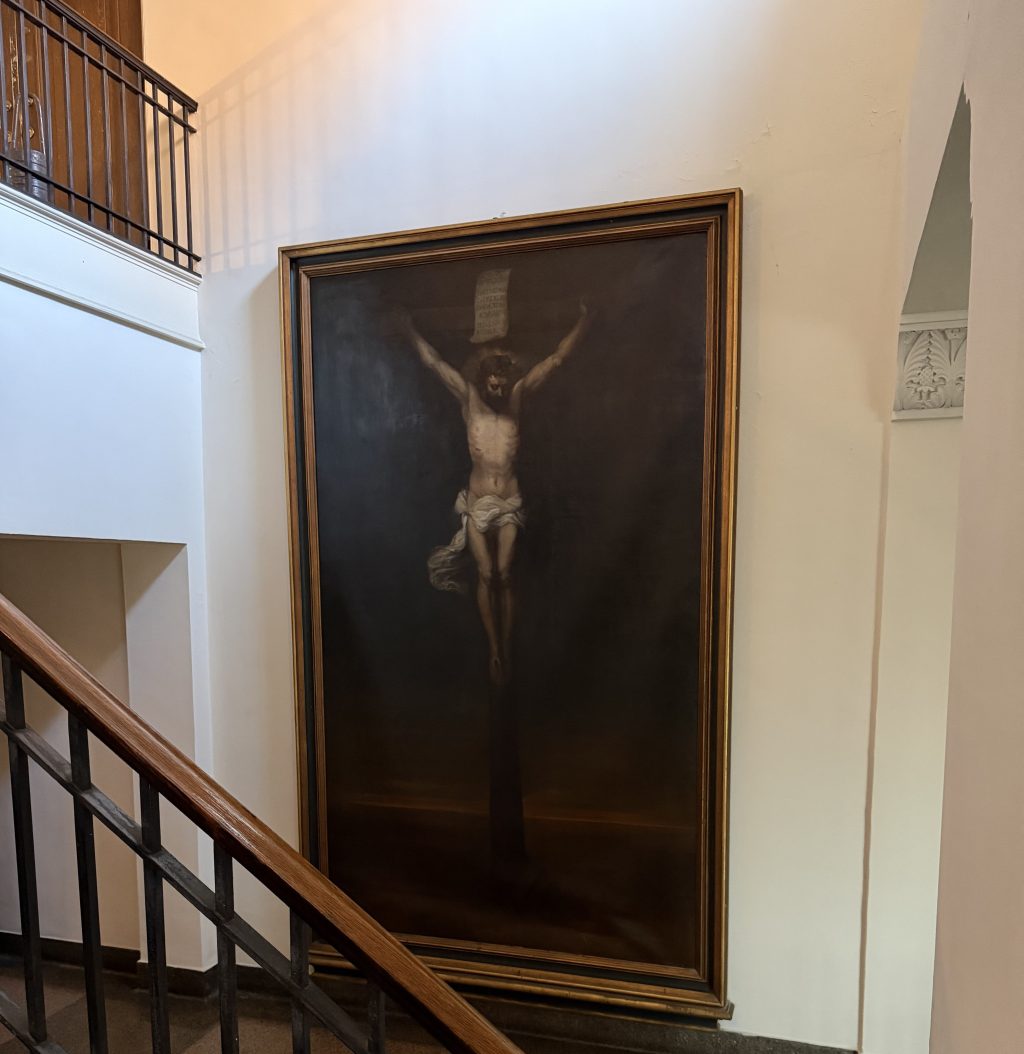
Painting:”Do you want to be well?” If yes, then continue to breathe, receive, rest, and abide in God’s love.

Link for the Mass readings for Tuesday, March 17, 2026

Jesus has come to heal and help to transform our minds and our hearts.

We hear often in the Gospels how those who believed in Jesus received healings, exorcisms, and were forgiven of their sins. We have also read accounts such as from the Gospel of Matthew that he “did not work many mighty deeds” in Nazareth “because of their lack of faith” (Mt 13:58).

In today’s Gospel account from John, Jesus speaks to a royal official whose son is close to death. Jesus said to him, “You may go; your son will live.” The man believed what Jesus said to him and left (Jn 4:50). On his way home to his son the man is met by the slaves from his household and they told him that his son would live and when they compared notes, they realized the healing occurred at the moment Jesus spoke and the man believed.

What do faith and belief have to do with Jesus being active in our lives? The way of the Gospel, the good news, is all about invitation and acceptance. Jesus enters our world, our reality, and he comes to each one of us intentionally, gently, and humbly. He came as a poor infant, completely dependent on Mary and Joseph for his very survival. He lived the majority of his life in the obscure village of Nazareth most likely working as a day laborer. When he began his public ministry he did so by inviting people to be a part of his life, to enter into a relationship with him and his Father. People are free to say, “no”, or to say, “yes”, to that invitation.

Faith is trusting that what Jesus says, is true, and that he is who he says he is. Belief is the act of our will that aligns with our faith, our trust in him. Jesus invited the man to believe that his son was healed and the man believed. He walked away with full confidence that his son would be healed. Belief is followed by an affirmative act of the will. I can believe my car will run, but unless I get in it and turn the key, I am not going anywhere.

This miracle was not just for the man and his son. As with each miracle, Jesus is teaching a lesson to those present. The preliminary statement to the people of Galilee is, “Unless you people see signs and wonders, you will not believe” (John 4:48). This was a challenge to the man and to those present. The father believed Jesus and went on his way. Did the people who were seeking signs believe as the father did? Because this father did, his son was healed.

Jesus is fully human and fully divine. He has come to show us the promise of the life his and our Father wants to give to us. Jesus, the first born of the new creation, is collaborating with his Father: “To set right a world that has gone wrong” (Barron, 92). Jesus comes into our lives each day to show us a new way, a better way. Are we willing to let go of our defense mechanisms, our comfort zones, stepping out of daily survival mode and instead walk the path of this new way with Jesus? Do we believe, as did this man seeking a healing for his son?

Just as the sun rises each day, Jesus comes to us to set our minds and our hearts on the right path, toward our forgiveness, healing, and freedom. Just as Jesus was present for this man and his son, he is present to each of us as our divine healer, teacher, and savior. We experience that truth the more we believe in and choose to seek his help and guidance with each thought, word, and deed and in every situation. May we trust in Jesus with everything, may we thank him for everything, and when we sin, let us seek his forgiveness and begin again.

——————————————————————————–

Painting: Jesus meets us where we are and as we are to provide healing for ourselves and those we intercede for.

Barron, Bishop Robert. Lenten Gospel Reflections. Word on Fire, 2020.

Link for the Mass readings for Monday, March 16, 2026

Are we willing to stay with Jesus as did the woman at the well and the man born blind?

As with last week, when the Samaritan women encounters Jesus, we again see this week an account of a transformation with the man born blind from birth. In both cases, neither are seeking Jesus or a healing, Jesus waits for the woman at the well and sees the man as he “passed by”. Both are open to encounter Jesus and are willing to be led by him. For the man born blind, Jesus, spat on the ground and made clay with the saliva, and smeared the clay on his eyes, and said to him, “Go wash in the Pool of Siloam” (Jn 9:6-7).

To us, this would appear to be a bizarre way to heal. Imagine going into the optometrist and as he is checking an eye ailment and he says wait a minute, I have just what you need. He takes out bowl of dirt, spits profusely and begins to make some mud. How long are you going to remain in the chair? 

In Jewish tradition, and found recorded in the Dead Sea Scrolls, the account was that God when forming Adam out of the earth, also spit into the earth. The moisture needed to kneed the dry earth. Those knowing this account would have understood what Jesus was doing here. He was acting as God did in the creation of the first man. He was forming a new man, to be part of a new creation (Pitre).  

Jesus also helps our modern sensibilities by asking the man to wash his face in the “Pool of Siloam”, he was healed and his sight was restored. He then returned to his neighbors and they noticed that not only was he no longer begging but that he could see. They then asked him how this came to be and the man shared about his encounter with this man who healed him. Because of this miracle, they then brought him before the Pharisees.

Because this healing happened on the Sabbath, they wanted to understand what had happened with this man and although the man did not name Jesus, because he did not know who he was, the Pharisees suspected if not outright knew. This was not the first healing on the Sabbath. Some were hoping to gather information to make a case against Jesus. Unfortunately for them, this man would only share that Jesus healed him, confirm that he was born blind, and wonderfully the man asked if they would like to be Jesus’ disciples!

When he was thrown out by the Pharisees. Now ostracized for being healed and telling the truth, he was alone. Jesus came to him again, and as the conversation deepened, as with the woman at the well, his faith as with her’s grew. He first believed Jesus to be just a man, then he presented him as a prophet, and came to believe that he was sent by God, he was the Son of Man, and finally proclaimed him as Lord!

Would that we could have the same healing of our spiritual blindness as the man did with his physical that opened him up to his spiritual healing, such that we could see the depth of our own hunger deep within for God and the needs of those around us. Are we able to see Jesus as this man born blind or do we see him as some of the Pharisees, in a distorted way based on our own places within ourselves that are wounded and/or hardened and callused?

Allowing Jesus to come close will help us to regain a greater appreciation for him and each other. We will recognize how fragile our lives really are when we let down our guard, and place our trust not in our own self-reliance, but in Jesus. In facing our fears, even of death, resisting to run away or deny the fear, but instead embrace our feasr with Jesus, we will come out on the other side freed from those feats and appreciating the gift of our humanity. 

In allowing ourselves to encounter Jesus, may we be willing to allow him to remind us of who and whose we are. We are beloved daughters and sons, baptized in the name of the Father, and the Son, and the Holy Spirit. We belong to our loving God and Father. This is the foundational truth of our identity. Nothing can shake that truth as long as we allow ourselves to savor and allow that reality to move from our minds, to our hearts, and acknowledge it in the very depth of our souls. This truth helps us to realize that death does not have the final answer and we need not fear even death. 

The man born blind was grateful for the gift of receiving his sight, so much so that he came to believe and worship the one who healed him. When we allow ourselves some time with Jesus, may we grow more deeply committed to living as his disciple, be freed from our fears, and experience the love of God in such a way that we know him and breathe, receive, rest, and abide in who we are. 


Photo: Jesus is the light of the world and whoever follows him will have the light of life.

Pitre, Brant. Mass Readings Explained Year A, Fourth Sunday of Lent, Year A

Link for the Mass readings for Sunday, March 15, 2026

Resist justifying or denying and instead confess our sins and we will experience God’s forgiveness, heal, and grow in his love.

It is much easier to find fault in others, and in some cases, the act of doing so has become entertainment in the private as well as the public sector. Gossip has a seductive allure and can be consuming. Judging others is also a way to justify and or project our own inappropriate behavior onto others. We may even place ourselves in a false sense of exalted pride. Have we ever, not just stated, but, thought or prayed something along the same lines as the Pharisee in today’s Gospel? “O God, I thank you that I am not like the rest of humanity — greedy, dishonest, adulterous — or even like this tax collector. I fast twice a week, and I pay tithes on my whole income…” (Lk 18:11-12).

To pray any part of this prayer stunts the growth in our spiritual life because we are focused on ourselves instead of emptying ourselves before God. A hyper sense of self reliance leads us away from the truth they we are dependent on God our Father for anything and everything and apart from him we can do nothing. Anytime we rationalize, cover over, deny, or completely ignore our sinful behavior we create and support habits of selfishness and feed our selfishness. Left unchecked, we can become enslaved to them. Lent is a time to pause and ponder, to be grateful for God’s love and his care, and also to give ourselves time to be aware of where we fall short of the glory of God. When we are willing to identify and confess our sins, we are forgiven and can begin to heal from sinful attitudes and actions that have become habitual vices.

In reading more lives of the saints, I have come to understand that their recognition and their confession of their sinfulness was not just pious platitudes, but true presentations that they were growing closer in their relationship with Jesus. The closer we grow in our relationship with Jesus the more we experience his light and love, which unveils more of our sins.

When we drive our car while it is dark we don’t give much thought to the cleanliness of our windshield because we can see fine. Yet as the headlights from an oncoming car illuminate our windshield we can see how dirty in actuality it is. This can be evident in our spiritual life as well. The more we remain in our own darkness of denial, self righteousness, resist slowing down to examine our conscience, we feel we are fine, all is right with the world. If we experience any problems, it is because of something or someone else, never us. The closer we grow in our relationship with Jesus though, the more his light shines in our darkness, and reveals to us our sin.

Jesus invites us to resist the prayer of the Pharisee who prays comparing himself to someone else, who refuses to acknowledge his own sinful actions and instead emphasizes that we are to follow the honest humility of the tax collector, who did “not even raise his eyes to heaven but beat his breast and prayed, ‘O God, be merciful to me a sinner’” (Lk 18:13). Now, Jesus is not saying this is the only way we pray. We have the opportunity to worship and praise the Lord joyfully, we can seek his help in praying for others through intercessory prayer or for ourselves in petitionary prayer, we can also sit in quiet meditation during adoration or out among God’s wonder of creation and experience deep consolation.

Each prayer has its time and place and each type of experience of prayer helps us to grow and deepen our relationship with Jesus and each other. The key to each of our prayers is our willingness to be the humble children we are and lift up of our hearts and minds to God who is always inviting us to spend time with him.

True humility happens when we are willing to see who we are from God’s loving gaze. If we are to set a standard to live up to and if we are to compare ourselves to anyone, let it be Jesus. A daily examination of conscience of allowing ourselves to rest in our Father’s loving gaze is a healthy practice and discipline. When we invite Jesus to shine his light of love into the darkness of our fear and anxiety, our loneliness and idols, we will see our sins. Jesus does not do so to shame and condemn us, but so that we can experience our sorrow and separation from God that sin causes.

As we experience our loneliness, pain, and wounds, and resist putting anyone or anything else before God to compensate for what we are feeling, we can feel his love and begin to realize that we are not alone, that we never have been alone. And that the only one who can fill our deepest longings is God. With this attitude, temptations and sins became opportunities for God’s grace, because we can now see clearer our life without Jesus and our life with him. Each time we choose Jesus over our temptations, we will experience him more, know him better, grow in our relationship with his Father, and experience the love shared between them, the Holy Spirit.

—————————————————————————————

Photo: Spending time with Jesus, helps us to slow down, then we can follow him as he leads us from the darkness our sins so that we may experience the light of his love.

Link for the Mass readings for Saturday, March 14, 2026

“Love is stronger than everything.”

Forgiveness is a wonderful gift of grace and mercy that our loving God and Father wants to bestow upon us. The reasons is that he seeks a deep and intimate relationship with us. If we asked many people if they would like to receive forgiveness most would say yes. The number would most likely be less if we were to ask them how many would be willing to forgive others. If we were asked to forgive someone seven times, that number would shrink significantly, and if we were invited to forgive someone seventy-seven times, is there any among us who would say yes, any among us willing to consider doing so?

Why is forgiveness so hard for most of us? I do say most because there are those who have healed, forgiven, and see the wonderful gift in forgiving. One reason could be that we have few role models. I would imagine those that are more forgiving have not only experienced positive role models but have received forgiveness themselves.

How often do we seek forgiveness from others when we have done something wrong, inappropriate, or made a mistake? Do we seek to explain first, make excuses, justify, or worse ignore our behavior altogether. When we resist being humble, confronting our offenses, and do not seek reconciliation, we do not experience the healing balm of forgiveness. We are then less likely to be willing to offer forgiveness and more likely to hold a grudge or to seek revenge.

Yet, even if we receive the gifts of mercy and forgiveness, as the servant did in today’s parable (Mt 18:21-35), we may still choose to be unforgiving toward others. We may resist forgiveness because we have already created patterns of distancing ourselves, making someone else as other, somehow justifying the hurt and pain we feel. We think that by holding a grudge, offering another the cold shoulder, and/or keeping them at a distance, that we are giving them just what they deserve.

Unfortunately, patterns of not seeking forgiveness and not being willing to forgive others, allow ourselves to bear grudges, to distance ourselves, or project negative feelings to cover up our own inadequacies, not only perpetuate a climate of isolation and divisiveness, but continues to multiply mistrust and further distance. When allowed to be left unchecked this leads to violence in too many forms that we witness all too often.

Even in a case when someone has truly wronged us in some way, Jesus is guiding us to forgive, to make an attempt to understand why someone might act in such a way, and to shift the momentum away from the perpetual cycle of hurt and to seek to bring about healing and reconciliation.

Jesus is clear that if we are not willing to forgive, we will not be forgiven. This is true because when we are unwilling to forgive, we cut ourselves off from the love of God. We choose to remain steeped in the hurt and pain inflicted upon us over the healing balm that God offers. The Sacrament of Reconciliation is a tremendous sacrament of healing, and a pattern of regular confession helps us to receive not only the healing and forgiveness of our loving God but also his guidance and strength to resist the temptations of the sins we have confessed. As we develop a regular practice of examining our conscience, experiencing contrition – true sorrow for our sins, confess, and are willing to complete our acts of penance, we are absolved and forgiven from our sins, and we will experience healing and freedom.

Forgiveness does not mean we condone another’s inappropriate actions. It means we choose to no longer participate in the cycle of hurt. Even when we feel forgiveness is impossible, are we willing? That is all Jesus requires. We forgive in the beginning when we are willing to ask Jesus to forgive through us until we can learn to forgive ourselves, like Doha Sabah Abdallah.

Doha lost her son during the bombing of her city in 2014. Doha shared her story with Pope Francis while he visited Iraq back in 2021. She said: “By imitating him [Jesus] in our sufferings, we testify that love is stronger than everything,”

Pope Francis shared how touched he was by Doha’s story of forgiveness. On his plane trip back home, Pope Francis said, “I forgive. This is a word we have lost. We know how to insult big time. We know how to condemn in a big way… But to forgive, to forgive one’s enemies. This is the pure Gospel. This hit me in Qaraqosh.”

Let us take up the mantle that Jesus holds out to us today and this Lent, to seek forgiveness, healing and reconciliation, and so receiving the forgiveness and love of God, may we then be more willing to forgive or to ask God to forgive through us until we can.

————————————————————————-

Photo: Need a model to learn how to forgive? Look to and ask Jesus and Mary to help.

Link for the Mass readings for Tuesday, March 10, 2026

Are we filled with fury or with peace with Jesus’ invitation of repentance for all?

The people in Jesus’ hometown synagogue in Nazareth are incensed, rise up to drive him out of town, “and led him to the brow of the hill on which their town had been built, to hurl him down headlong” (Lk 4:29). What got Jesus’ hometown crowd so twisted and contorted? Not only did he stand up earlier in this account of Luke and proclaim that he, the carpenter, was the fulfillment of the prophecy of Isaiah, but it was to the widow of Zarephath that Elijah came and Naaman the Syrian that Elisha healed.

All three of these points may be a big ho-hum to us, but they were a big deal to his kin. Being a carpenter, more likely a simple day laborer, was not high on the social status ladder even in a poor town like Nazareth. The gospel writers even show the sensitivity of this. In the Gospel of Mark, Jesus is mentioned in this scene as  “the carpenter” (6:3), in Matthew, “the carpenter’s son” (13:39), and in today’s Gospel of Luke, “Joseph’s son” (4:22). By the time we get to Luke’s account, Jesus is not even associated with the trade of carpenter, how could someone of such simple and humble means assert the mantle of a prophet, let alone the Messiah?

Jesus does not go quietly in the night as the people’s wonder at his words turn to doubt and consternation. Jesus instead gives two seemingly obscure examples of people who receive God’s blessings. There were many widows and lepers in Israel, but it was to the widow of Zarephath that Elijah came and from Elisha that Naaman the Syrian received healing. The significance of these two people was that they were Gentiles, they were other, they were not part of the chosen people. Jesus is aligning himself in the prophetic tradition of Isaiah with the universal promise of God’s salvation that would also go out to the Gentile world. Jesus is invoking a choice that will consistently ripple throughout the remainder of his public ministry. People will either embrace his universal ministry or they will oppose it.

A concrete reason why his people “were all filled with fury” at the message of a universal invitation from Jesus is that Gentiles had been oppressing the Jewish people for generations. Beginning with the slavery they experienced in Egypt, the conquering of the ten northern tribes of Israel by the Assyrians, the Babylonians decimation the remaining southern tribes, their exile, and destruction of the Temple. After their return, they suffered the occupying power of the Greeks, and now during the time of Jesus’ preaching, the Romans. The hope of most Jews was that the Messiah would come to evoke a military uprising and crush their Roman occupiers. They were not seeking the repentance of their oppressors. Instead, much like Jonah, they sought divine vengeance.

Jesus’ hometown crowd was none too happy with Jesus’ universal invitation. We might too quickly judge them, but if we resist domesticating Jesus and allow ourselves to hear his words echoed today from our podiums and ambos, might we feel some of the same angst that the people of Nazareth felt? Who might we not be willing to welcome into the universal invitation of salvation that Jesus is still inviting us to experience in our day?

Would we embrace his message or begin to cross our arms and seethe? Would we too want to rise up and reject Jesus outright? If we are humble this Lent, we can walk up to Jesus and ask him to heal us of our own prejudices and biases, breathe deeply and receive his love and invitation for us to love those who we have not wanted to. The we too can bring glad tidings to those in our families, parishes, and communities. The choice is ours. Will we oppose Jesus’ invitation of repentance and healing or welcome and promote his invitation?


Photo: Jesus has been sent “to proclaim liberty to captives and recovery of sight to the blind, to let the oppressed go free, and proclaim a year acceptable to the Lord” (Luke 4:18-19). May we join in his mission!

Link for the Mass readings for Monday, October, 9 2026

God our Father is always looking for us to come home so he can forgive us.

Those who edited the lectionary readings for the day chose to present the parable of the lost son and skip the parable of the lost sheep and the lost coin. This trilogy of parables is found in Luke chapter 15. Reading the three together allows us to get a better sense of what Jesus is revealing. There is great joy in finding what has been lost, there is great joy in being found! Maybe we can recall something or someone that had been lost and then found, or have experienced a time where we had been lost or separated, and/or a time when we have experienced a time of reconciliation from someone that we have been estranged from?

There were a few times in my marriage to JoAnn that I didn’t have the best judgment, messed up, and she understandably got upset. One memory that comes to mind was when I had been a permanent deacon for a few years and we were still adjusting to the demands of another responsibility that I took on in addition to still teaching full time along with all that went with that obligation. We were out for our anniversary and I was thinking out loud, my first mistake.

We were parishioners of St. Peter Catholic Church and our parish had a good number of deacons, and yet none of us helped out at our one Sunday, Spanish Mass. I mentioned that fact and also that I was thinking of helping out our Hispanic ministry. I didn’t need to speak another word. I saw the change in JoAnn’s face and as she expressed her frustration that she hardly saw me as it was without taking on another responsibility, my chest constricted such that I could barely breathe and I felt like someone just grabbed and started twisting my intestines.

Already operating under an unconscious fear that I would do something to mess up our marriage because of my own unhealed and unconscious insecurities, the next few days were a bit bumpy and internally I was experiencing an emotional maelstrom. We were able to work through not only the poor timing of sharing my thoughts, but the content of them. I would help out with our Spanish Masses once a month. The experience of our reconciliation and that JoAnn indeed loved me more than I messed up, felt like a new lease on life.

In my story as well as each of these parables, there is a great joy for that which or who has been lost and found. How many of us are not even aware of our separation from God or those unconscious mines that we can trip at any time? The son who had squandered every bit of the inheritance he asked of his father before his death, realized not so much that he had really messed up, as I had, but that he was in a dire situation, as I was. He made the right decision to come back home and I admitted the unthoughtful timing of my request. His father never stopped looking for his return, and so saw his son returning “while he was still a long way off” and “filled with compassion. He ran to his son, embraced him and kissed him” (Lk 15:20).

The father was not seeking his son to bow before him and prove his repentance, his loyalty, and allegiance. The father ran to his son without hesitation. No insignificant act. For an elder to run to a younger family member was unheard of and simply not done. He was breaking this social taboo, most likely to redirect the focus away from his returning son; the one who had betrayed his father, the son who would receive glares and snide remarks. The father rushed out with a reckless abandonment of compassion and love to embrace his son. The jaw-dropping, followed by echoes of gossip surely rose in chorus about the father’s present actions, not his son’s past actions.

God is watching and waiting, seeking opportunities to run to us with compassion and love to welcome us home as the father did in the parable of the prodigal son. God is also like the shepherd who does the absurd in his outpouring act of love, leaving the ninety-nine sheep to go and find the one stray. God seeks each and every one of us just like that shepherd. God is represented by the woman who rejoices over finding one seemingly insignificant coin, for God rejoices in our turning back to him because not one of us is insignificant to him. We are all precious to God, each in our own unique way, and he loves us more than we can ever imagine.

No matter the reason that we have strayed, no matter the temptations and distractions we have fallen for, and/or how far we have wandered away, God loves us more than we can ever mess up. Lent is a season to open our eyes and remember who and whose we are. We are God’s beloved daughters and sons, and that is our truest identity! No matter the separation our choices have caused all we need to do, is turn back to the Father and seek his forgiveness, healing and love. There is great joy in the healing of relationships and reconciliation! Lent is a time to be found, Lent is a time to come home, and Lent is a time to heal and reconcile.

——————————————————————–

Painting: “Return of the Prodigal Son” by Rembrandt

Link for the Mass readings for Saturday, March 7, 2026

Making time each day for a breath and a look up, we can reset with Jesus, experience his peace and rest.

Look at me, serve me, I want, are attitudes and dispositions that tempt us. Fame, honor, power, prestige may be another way of making the same point, which is that we often have a hyper-focus on self and self-promotion. Social media offers more of a platform to fuel this temptation. If we think this is something new with the advent of modern technology, we can look at today’s Gospel of Matthew to see that we have been operating from this posture for a very long time.

Jesus, for the third time, was attempting to prepare his disciples for his passion. He said: “Behold, we are going up to Jerusalem, and the Son of Man will be handed over to the chief priests and the scribes, and they will condemn him to death and hand him over to the Gentiles to be mocked and scourged and crucified, and he will be raised on the third day” (Mt 20:18-19).

The response of the mother of James and John (the two brothers make the request themselves in the Gospel of Mark) is actually not that surprising if we spend any time with people. She disregards what Jesus just mentioned about his imminent death and requests that when Jesus assumes his seat of power that her two sons will be number one and number two. The other disciples were quite indignant, and I can imagine what followed was not a pretty sight.

This is a good teachable moment. When we are preoccupied with what we want to say or are thinking about, we do not hear what someone right before us is sharing with us. The mother of James and John appeared not to hear what Jesus had just shared. She is believing that Jesus is the Messiah and that he is going to claim his throne, and wants to be sure that her boys, who have given their life to his cause will be taken cares of. She just missed the point that the throne of Jesus will be the cross. The apostles aren’t any better. They don’t correct her misperception of Jesus’ messiahship, they instead start jockeying for the position that she proposed James and John filled.

Jesus doesn’t condemn the mother’s request, he directs the brothers to the truth of the request and in so doing, brings the point back to where he had started. Jesus heard the mother, James and John, and the other apostles. His response answers the question, returns to the point he is making, and offers them a participation in his passion. To give them a place at his right and left “is for those for whom it has been prepared for by my Father” (Mt 20:23). This statement addresses them all by letting them know that the preeminent place in his kingdom, whoever is to be first, is the one who serves his brother and sister. This message is for all of us.

Jesus encourages us this Lent to take the focus off ourselves and get out of our heads. To let go of I, me, and mine. Even when we let go a little, we will feel more peace. Just a few intentional breaths help so much. We can also experience quieter moments when we get outside, look up, and see the expanse of the sky (Even in the cold of the north!). We’re no longer thinking about ourselves but touching the gift of our eternal nature and call to be one with God. Instead of feeling contraction, we can experience a restful release and sense of expansion.

When we allow ourselves to breathe, we can then let go of stress and the strain and the energy we expend following the distractions, diversions, and temptations that keep us on a treadmill pace. A few breaths can also help us to stop and choose to spend a few moments with Jesus. He will then, as he did today with the apostles, redirect any ways in which our mindset is not aligned with his Father’s will. We can then place God’s priorities for our life first, properly order our own, and/or let go of any that are not of his will.

When we are able to breathe, receive, and abide in God’s love, we experience real rest, discern and make decisions from his guidance, and begin to experience more change and transformation, healing and renewal. We will begin to bear the fruit of the spirit: “love, joy, peace, patience, kindness, generosity, faithfulness, gentleness, self-control” (Galatians 5:22-23). When we let go of the desire to be first or best, to sit at the right or left of Jesus, we will rest in being who we are, God’s beloved daughters and sons. Identifying as such, we will experience more of God’s love, let go of the need to be served, experience more balance, be moved to serve and share the love we have received.

——————————————————————————

Photo: Looking up and outward, and breathing deep, experiencing the love of God. May you also do and experience the same!

Link for the Mass readings for March 4, 2024

“A bright cloud cast a shadow over them…”

Our life can be an experience both of sadness and joy, desolation and consolation, doubt and hope. We can experience an ebb and flow where we suffer from trials and also celebrate triumphs. The key to living a life of faith is to seek God in either experiences. Jesus today provides an opportunity for Peter, James, and John, the inner circle of the Twelve, to experience an expression of his divinity for he was transfigured before them; his face shone like the sun and his clothes became white as light. (Mt 17:2). Jesus revealed his divine nature to his disciples in a powerful display to prepare them for the Passion that he was about to endure. The experience is also a foreshadowing of his Resurrection.

Jesus, in this living word proclaimed or read today, invites us to experience the Transfiguration, the Passion, and the Resurrection in our own lives. We can miss a transfigured moment when we assume a posture of pride, not acknowledging God’s leading by believing we achieved or arrived at our present station in life on our merits alone. We can experience moments of transfiguration when we acknowledge that God breaks into our lives at that moment when we need him most and recognize the assistance he has given us, and/or when he has revealed to us the path and direction we were to take. The natural response is to offer prayers of thanksgiving, recognizing that we don’t go it alone, that God and those he sends to help us are a tremendous support.

Jesus is also present in our desolations. Many of us run from our suffering, we are afraid of the Cross. But it is through the Cross that we come to experience the Resurrection. We may not be aware, but when we run away from our suffering, we are running away from Jesus who awaits us with arms wide open to embrace us; to comfort us, heal us, and transform us. To experience the embrace of Jesus, we need to be willing to face our suffering.

Jesus cares from the deep place of understanding in experiencing his own tremendous suffering. He in the Garden of Gethsemane sought another way than the Cross, he asked for the cup of his death to be taken away, but he chose his Father and his will. He obeyed and set his face firm and accepted the upcoming suffering and death. In doing so, he then was also to experience his Resurrection and Ascension. Jesus now in his glorified body can be there for all of us, to lead us through our sorrows and trials.

The older I get, the crucifix becomes more of a consolation. This icon of Jesus, his body broken, emptied out for us on the cross, represents how he entered the full range of our human condition. He assumed our sin, our anxiety, fear, and selfishness, and transformed the worst of our fallen nature through his love such that we are offered the opportunity to be forgiven and redeemed. The crucifix is not a sign of despair, but of hope and transfiguration, for it reminds us that no matter what we go through, what trial that we may be in the midst of at this very moment, Jesus understands and is present with us.

Looking and meditating upon Jesus on the Cross has provided me moments of transfiguration, granting me the courage that I did not have to face various conflicts, challenges, and trials, which has only increased in my first year and half as a priest. And in facing each challenge for myself as well as those I pray for, Jesus has been by my side. As he looks down from the cross he loves us despite our sins, our weaknesses, and failures and is willing to lead and accompany us through the ups and downs of life, so that we too may be renewed and transformed.

The transfiguration was for Peter, James, and John a preparation for the glory of Jesus’ crucifixion. Their experience strengthened them as they witnessed the horror of their teacher and friend’s death and the struggles they would face in their the ministry. May we spend some time mediating and praying with the words of today’s gospel, experience again the glory that Peter, James, and John did, and savor that gift. May we breathe in deep the radiant light of the Father shining through the clouds and experience the love of the Trinity so that we too may face with Jesus, what rises before us. All is grace, as long as we bring all we experience to Jesus, and follow his guidance.

________________________________________

Photo: “This is my beloved Son, with whom I am well pleased; listen to him.”

Link for the Mass readings for Sunday, March 1, 2026


Our words matter, and often they begin with our thoughts.

Jesus calls us to be holy, each and every one of us. Our life is to be lived with the end goal being heaven, to be in union with our loving God and Father for all eternity, and to assist others to do the same. Jesus provides for us a concrete example of the heights to which we are called to reach: “You have heard that it was said to your ancestors, You shall not kill; and whoever kills will be liable to judgment. But I say to you, whoever is angry with his brother will be liable to judgment, and whoever says to his brother, Raqa, will be answerable to the Sanhedrin, and whoever says, ‘You fool,’ will be liable to fiery Gehenna” (5:21-22). Jesus is building on the Torah, the Law or the Teachings, by helping us to realize that we cannot only kill with weapons but also inflict dehumanizing and debilitating damage with our words.

To resist this temptation of inflicting mortal wounds, we need to start participating in a deeper examination of interior life which gets to the roots of our own thoughts, words, and actions. If we are not able to discipline our thoughts, what will follow is undisciplined words, and then undisciplined actions. This slippery slope can lead to entertaining and embracing the deadly sin of wrath. Wrath is unbridled anger that leads someone away from the capacity to think or behave in a rational manner, such that this individual would no longer acknowledge the dignity of the person they would inflict their wrath upon.

Jesus never settled for a minimalist approach to our faith. He consistently provides teaching, examples, and most importably the grace for us to see that we can be free of the temptation of wrath if we recognize the danger and destruction of unleashing words as weapons. Jesus the examples of calling someone, Raqa, meaning something along the lines of an air-head or an idiot, and calling someone a fool. These words directed at another have no other cause than to demean, degrade, belittle, and harm. This language, and worse, has no business coming out of the mouths of a disciple of Christ. If we are serious about being one of his followers, we need to make a decision regarding how we think, speak, and act.

I remember a moment in sixth or seventh grade letting loose a derogatory word or two toward a classmate. Even though they were tossed out in jest, I felt a sinking feeling in my gut. God convicted my heart in that graced moment and I felt contrition, actual sorrow for the negativity and poison I had unleashed. I remember making a commitment to myself not to speak that way toward another person again.

Our words have the power to wound or to heal. If we are serious about following Jesus, fasting from gossip and from words that belittle, divide, diminish, or dehumanize is a good practice to engage in this Lent. Jesus wants us to remove any and all obstacles that would prevent us from growing in his unconditional love for him and one another. Instead of hurtful, we can share words that empower, uplift, and comfort or at least listen more and speak less. Even when we disagree with another’s point of view, we can do so by still respecting the person and fostering dialogue.

We are to love, to will the good of each other, and pray for each other in all circumstances. In this way, our words will be kinder as we resist entertaining negative or dehumanizing thoughts. Our faces are good barometers. Even when we have defensive musings resulting from another’s disparaging tone, words, or actions, we need to resist entertaining them. When we are aware of and feel our own facial gestures, we can identify our mental reactions, and begin to breathe, pray to the Holy Spirit for understanding, pray for the person, and if necessary hold each other accountable with boundaries and respect. Just this shift in attitude can make a big difference.

—————————————————————

Photo: May God bless you with a peaceful mind and heart this day that you can share with others. If you need to clear your head from some anxiety or frustration, a nice walk may help!

Link for the Mass readings for Friday, March 27, 2026