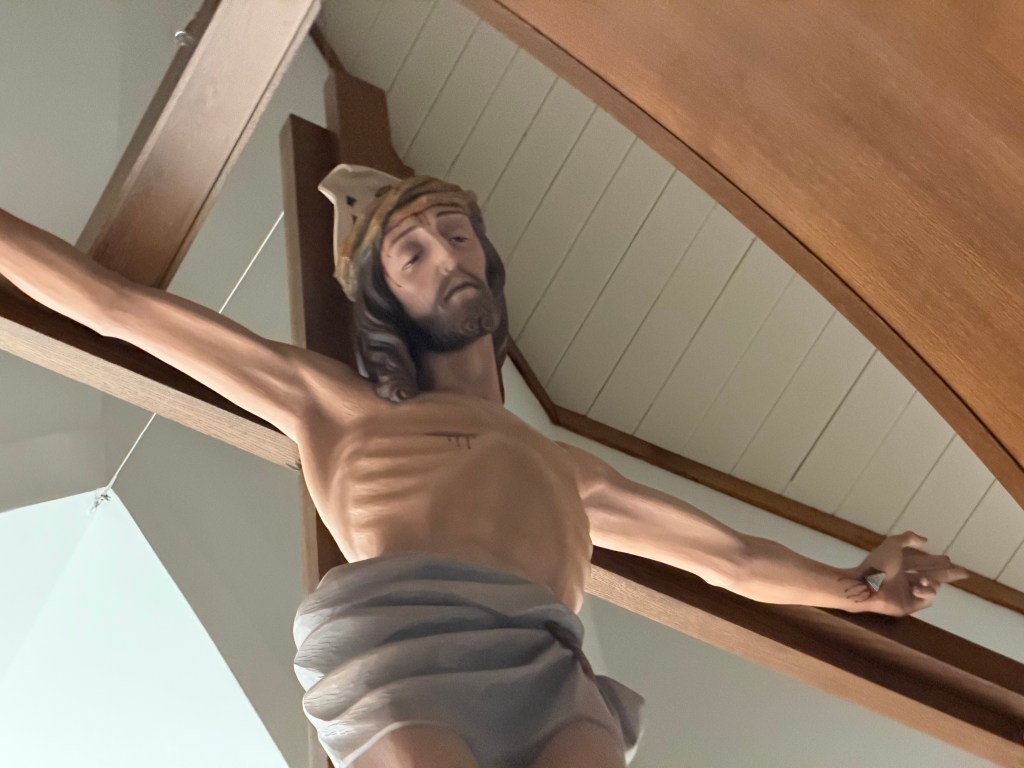
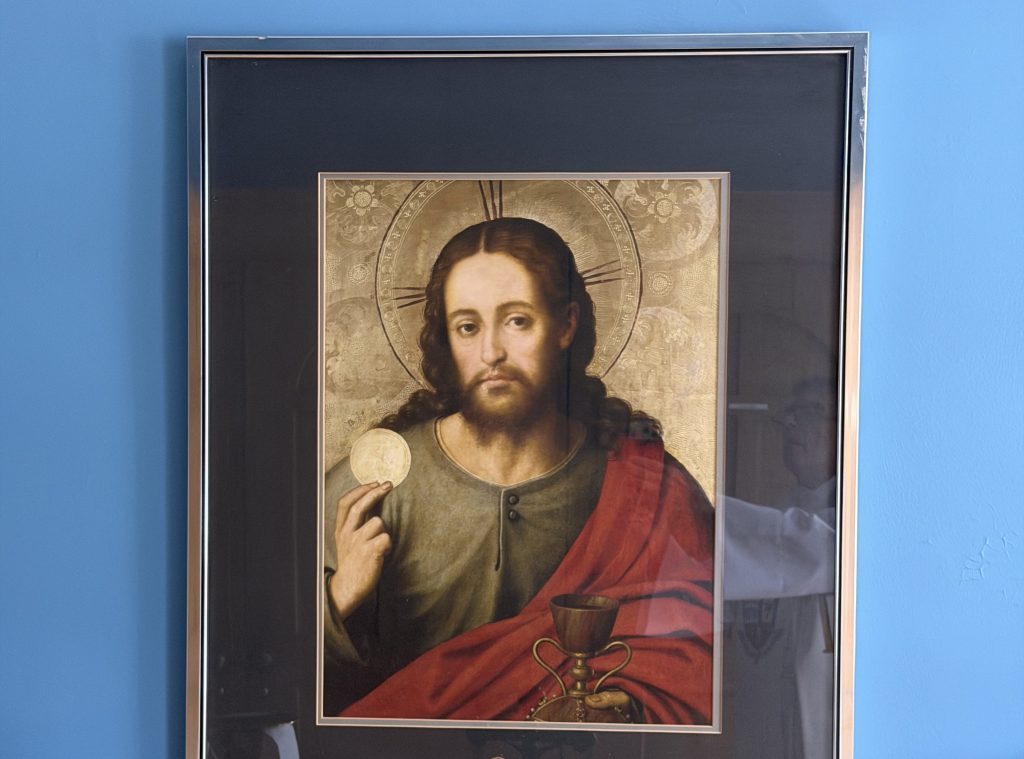
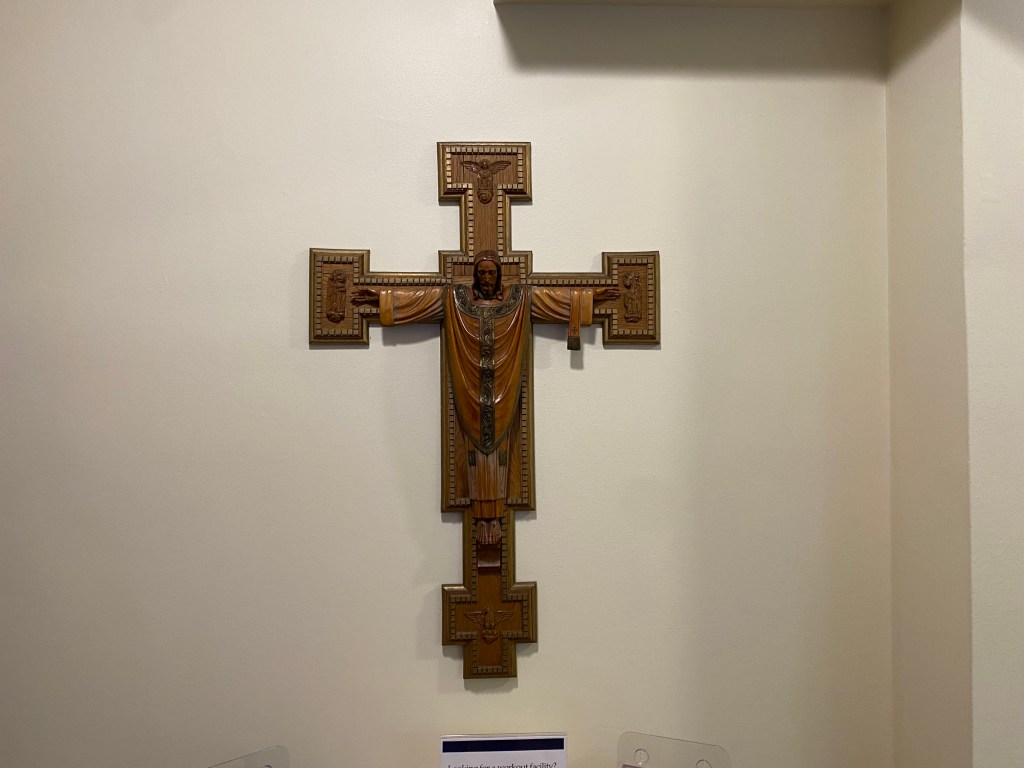
The love of Jesus can help us in our times of conflict.

The question raised by “the chief priests and the elders of the people” regarding what authority Jesus was teaching was not an uncommon question. Rabbis and teachers often began their presentations by sharing with their listeners who was their teacher. It would be comparable today to say what university we received our degree from.

There is also a bit of edginess in their question as well because Jesus has not only consistently been challenging their authority but he had also just purged the temple by driving out the sellers and money changers (see Mt. 21:12-17).

Although Jesus’ authority came directly from God, Jesus did not fall for their trap, wanting him to say just that. Then they could accuse him of blasphemy or force him to say his authority did not come from God and show him to be a fraud. Jesus did not give them the satisfaction. Instead of answering their question, Jesus asked one of his own. “Where was John’s baptism from? Was it of heavenly or of human origin” (Mt: 21:24)?

The answer given by these priests and elders showed further their unwillingness to accept who Jesus was. They were the shepherds of the people of Israel, yet they would not speak the truth. They were like reeds swaying in the wind (see Mt. 11:7). Unlike John the Baptist who stood on the truth and spoke truth to power, these chief priests and elders offered an answer that was calculated and weighed out by taking a quick opinion poll among themselves. Their answer was a lukewarm, “We do not know.” 

In answering this way, their authority as leaders was diminished. For if they were the religious guardians and guides, why could they not answer the simple question regarding the origin of John’s baptism? Jesus was not deflecting the question. He was prefacing his response. For if they recognized that John’s baptism originated from God, then why would they refuse to believe Jesus? They knew the answer, they were not willing to give it.

How about us? Are we like reeds swaying in the wind? Do we weigh our answers solely on a perceived response or do we speak the truth as the Holy Spirit leads us? We want to be liked, respected, to belong and to fit in, to be affirmed and accepted, which is healthy and natural, but at what cost? Sometimes we feel uncomfortable speaking what we believe because we fear another’s reactions. This is even more challenging these days because a simple response can affect a harsh reaction.

To live out our baptismal call as prophets, there will be times that we need to resist the perceived and real pressures we feel, resist our own insecurities, lean into conflicts, trust in God, seek his guidance, and speak the words the Holy Spirit gives.

As we do so, we need to remember to speak from a place of understanding and love. It is better to engage in a dialogue, not just mutually imposed monologues. A good reminder is to follow the lead of Jesus and ask more questions rather than offer ultimatums and pronouncements. Our goal in any encounter is not to impress or prove we are right and the other wrong, but to express what we believe and allow others to do the same. We can grow from one another when we are willing to listen and dialogue even when we disagree.

Sometimes God invites us to be silent and sometimes to speak boldly with passion. The key is to prayerfully pause, then choose to speak or to be silent. It is possible to move away from the extremes of talking past or shouting over one another and avoiding talking altogether. This happens when we listen first, breathe, pray, pause, and respect each other.

Jesus, please forgive us for giving into automatic reactions, not speaking as you have led, and disrespecting others. Help us in each encounter to breathe, to have ears to hear your guidance, to be understanding and respectful. Give us the courage and words to speak with charity and help us to know when to be silent and to listen. Above all, help us to love.

———————————-

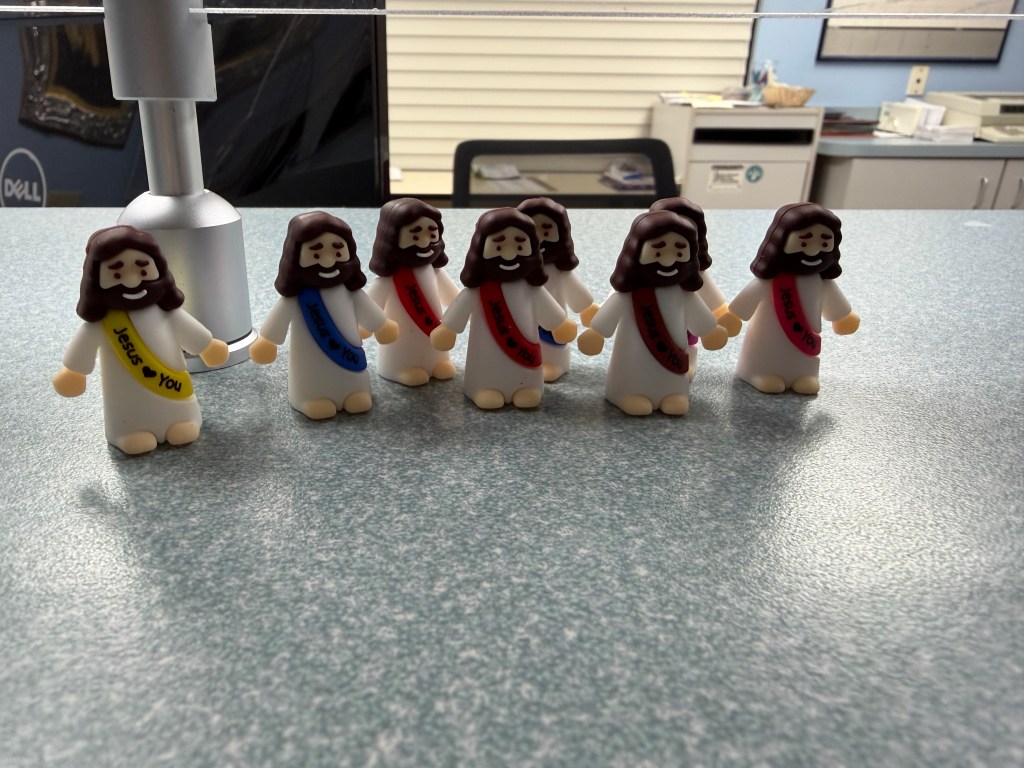
Photo: Quiet times alone with God help us to experience peace that we can carry with us in times of conflict and disagreement.

Link for the Mass readings for Monday, December 15, 2025

“He will baptize you with the Holy Spirit and fire.”

I am baptizing you with water, for repentance, but the one who is coming after me is mightier than I. I am not worthy to carry his sandals. He will baptize you with the Holy Spirit and fire (Mt 3:11).

John is offering a baptism of repentance. The people are coming to him, some traveling up to twenty miles through the desert. They were not coming to the Temple, the formal place of worship, but to the wilderness. John, the son of a priest, and so a priest, represents an answer to the hunger of the people that is no longer being fulfilled by much of the religious leadership of his time. He is the embodiment of the prophet who has returned – Elijah, who himself also dressed in “a hairy garment tied with a leather belt” (2 Kings 1:8). He speaks for God and the people are willing to listen and follow him because of his authenticity. And in his time he was most likely more popular than Jesus was in his. Jesus himself said that there was no one born on the earth greater than John (Matthew 11:11).

Yet, John the Baptist is clear that he is not the long-awaited Messiah. He is just the precursor as was promised. “John’s appearing in the desert dressed like Elijah would have signaled to the Jews that he was playing the part of the long-awaited Elijah, preparing for the Lord’s coming” (Mitch and Sri, 63). John as with the prophets like Elijah who had gone before him was preaching the need for repentance. He is preparing the hearts and minds of the people, inviting them to repent, to turn away from their sins and self-centered ways so that they will be prepared to recognize the Lord when he comes.

The baptism of Jesus was and is different than John’s. It is a baptism not just of repentance, but also of “the Holy Spirit and fire.” The baptism of Jesus will be wholly transformative. Fire consumes and transforms that which it touches and the Holy Spirit is often symbolized by fire. Within the Jewish tradition and found in the Old Testament, fire is associated with purification. The purifying and transformative fire of the Holy Spirit is love.

Love is an expanding, unitive force. It is a direct counter to the self-focused, curving in upon oneself and divisiveness of the fallen nature of our humanity. Love is an act of the will and draws us out to be engaged with the betterment of others. When we experience the love of God we are changed and transformed. This is not a one time be all encounter, but one that is to be experienced and shared consistently. The more we share the love of God the more we receive, and the more love we receive, the more we are transformed.

John the Baptist reminds those coming to him and us who read the Gospel of Matthew today that none of us are worthy of God’s love. That does not mean that we are bad. We just fall, short on our own, of the glory of God. We do not deserve nor can we grasp God for ourselves. No matter our will power and diligence, we must be willing to receive the Holy Spirit on his terms, not ours. We simply accept the invitation to receive the love of God, allow him to heal and expand us beyond our limitations, and share what we have received with others.


Photo: A quiet moment with the setting sun between the 4:00 and 5:30 Vigil Mass.

Link for the Mass readings for Sunday, December 7, 2025.

“When everything is said and done, we are infinitely loved.”

Jesus sent out these twelve (Mt 10:5).

Jesus sent out his Apostles to minister in his name and share the Gospel as he did, declaring that the “Kingdom of heaven is at hand.” Our faith tradition is one of evangelizing, sharing the Good News. That means that first and foremost we need to be people of joy. We may share the most wonderful words about our faith, but if they are not backed up by a life of radiating joy, then our words will have little if any impact.

This does not mean that we are happy and buoyant every second of the day, it does not mean that we will not experience hardship, sorrow, and loss. What it does mean is that we are not defined by our suffering, the trials we face, nor our wide range of our emotions. God also calls us to face tough realities when it might be easier to remain in our comfort zone. In the midst of each of these and other challenges, we can experience hope because God is with us. He seeks to comfort us in our weeping, provide for our needs, guide us in the right way we are to walk, and give us the strength to do so with each step we take.

What defines us is God’s love. We will experience great joy when we slow down long enough to allow God to love us. We will then know that we are not alone in our trials. Jesus experienced the fullness of our human condition, from his conception, birth in a cave, having lived a life of hardship and poverty that led all the way into the depths of betrayal, injustice, and God forsakenness on the cross. He did not just suffer on the cross but he also experienced death. Yet, through the indelible, binding force of the Holy Spirit, the love shared between Son and Father, Jesus was drawn back to life and conquered death not only for himself but for us all.

This is the good news we are to share. Jesus conquered death for each of us. How we live our lives each day and interact with others may be the only Bible that someone else will ever read. May we share the joy of our relationship with Jesus, may we share the joy of the lives we have been given, for: “Joy adapts and changes, but it always endures, even as a flicker of light born of our personal certainty that, when everything is said and done, we are infinitely loved.” – Pope Francis from his apostolic exhortation, Joy of the Gospel, line 6.


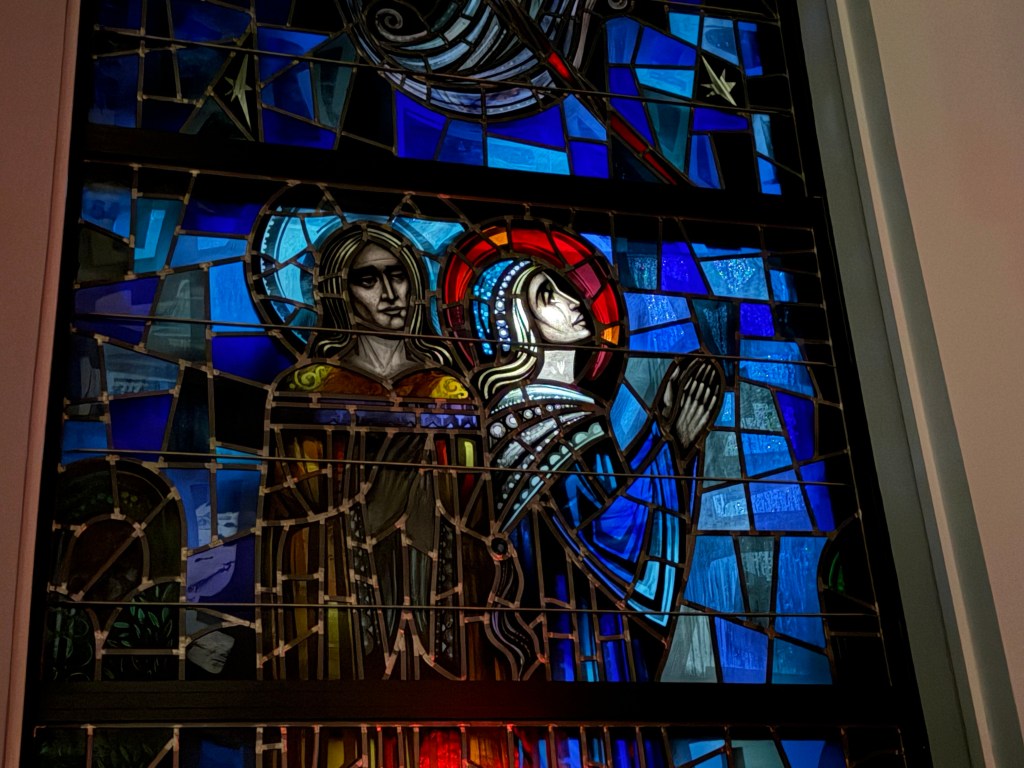
Photo: Mary Magdalene, apostle to the apostles at the foot of the cross. She experienced the joy of being infinitely loved. May she intercede for us that we may as well!

Link for the Mass readings for Saturday, December 6, 2025

Out of the gloom of our fallen nature, Jesus’ light will help us to see.

St. Augustine taught that the New Testament is hidden in the Old Testament and the Old is revealed in the New. We see this presented in the first reading as well as in the Gospel. We read how “the deaf shall hear” and “out of the gloom and darkness, the eyes of the blind will see” (Isaiah 29:18). Then we read how Jesus healed the blind men who call out to him believing that he is indeed the Son of David, the messiah, the anointed one (Matthew 9:27-31).

Jesus acknowledged that their faith was a catalyst in healing them but he also pointed out covertly that they were still in need of spiritual healing. Yes, they could now physically see, but they, like the apostles and others who hoped for the messiah, were looking for their idea of a messiah that is like David, a political and military leader that will lead a revolution to overthrow the occupying power of Rome.

Jesus told them clearly not to tell anyone what had happened, because he was not about to promote a cult of personality, nor have them portray him in a false way. Yet, share they did. They shared their encounter with Jesus with great joy.

Though we may have eyes to see and ears to hear, we too can be spiritually blind to who Jesus truly is. Jesus came into the world just over two thousand years ago as, God’s Son and visible reality of God who is love. Jesus calls us to be conformed to this same love. If we see ourselves and each other with the eyes of our fallen nature, from the perspective of our past wounds, and our present day reactions, we are going to miss the mark.

The saints are those who followed Jesus in each generation from the apostles to our own. They were willing to be transformed by the fire of his love. They encountered Jesus, had faith in him, believed, and put into practice what they learned. Just as something like scales fell from the eyes of St. Paul so that he could see anew, we too can see with the eyes of faith.

Let us pray together:

Jesus, this Advent, help me to choose to walk out from the gloom and darkness of anxiety, fear, and insecurity, and place my trust in your revealing light that I may walk with confidence on your path of love. Free me from any sins, distractions, and diversions such that I may experience the closeness you know with your Father. Please help me to place my trust in you, and please heal my blindness so that I can see more clearly, reject the lies that lead me astray, and see the path that leads to the way, the truth, and the life.

——————————–

Photo: Walking back after holy hour Wednesday night, sight of the super moon.

Link for the Mass readings for Friday, December 5, 2025

When we come to sit at the feet of Jesus we experience healing and are nourished.

“Jesus walked by the Sea of Galilee, went up on the mountain, and sat down there. Great crowds came to him, having with them the lame, the blind, the deformed, the mute, and many others. They placed them at his feet, and he cured them” (Mt 15:29-30).

There is a key yet subtle point before Jesus began to heal that might be missed. Before great crowds came to him, Jesus “went up on the mountain, and sat down there.” This is no insignificant sentence. The posture of sitting on the mountain would have been recognized right away by the people of Jesus’ time. This was the posture of the teacher and sitting on the mountain a reference to Moses. Prior to the healing in this setting, as he did throughout the Gospels, Jesus most likely taught about the reign of God. In fact time and again, Jesus’ “works of healing took place in this context of his preaching of the kingdom of God” (Lohfink 2014, 58).

A great multitude of people came to Jesus to hear his message and also they came with a full range of needs. Jesus made himself available, exorcised, restored, and healed those who were brought to him. He encountered them as they were in their present condition of need. There is no record in this Gospel account that Jesus asked for any identification, that he discussed their belief system before healing them, nor did he ask if they were Jewish or Gentile, and nowhere in this account did Jesus deny anyone who came to him. The response of those to being healed and restored was that “they glorified the God of Israel“. This is because, “where God is master, there is salvation and healing” (Lohfink 2014, 62).

These recorded accounts of mass healings, are but a foretaste of the heavenly realm of eternal communion with the Father. Jesus is the kingdom of heaven at hand, for as St Irenaeus wrote, “Jesus opened up heaven for us in the humanity he assumed.” Jesus though was not done. The whole process took some time, which is probably an understatement, and as people were getting ready to leave, Jesus showed compassion yet again. He sought the assistance of the disciples because he did not want to send the people away hungry.

The disciples of course are taken aback because of the reality of the undertaking Jesus proposed. Jesus asked what they had and they shared just some bread and fish. Jesus took “the seven loaves and the fish, gave thanks, broke the loaves, and gave them to the disciples, who in turn gave them to the crowds. They all ate and were satisfied. They picked up the fragments left over–seven baskets full” (Mt 15:36-37).

This Advent let us surrender our will to God. May we pray with and meditate upon the Gospels such that they become relevant in our lives, so that we can serve God as Jesus did. Not stopping to ask for identification, religion, race, gender, creed, or political affiliation, but to see each person as God sees them as his children, human beings with dignity and value. In reading, meditating, and praying with the Gospels, we too come to sit at the feet of Jesus. We too can express our need, be nourished, and satisfied. We can then share what we have received.

Let us also not be dismayed by how little we have, but let us give what we do to Jesus in solidarity for his purpose, as did the disciples, so to experience with those we serve, the multiplication and abundance of the love, and grace we have received from our loving God and Father. For when God is our master, “there is salvation and healing.”

—————————————————————————

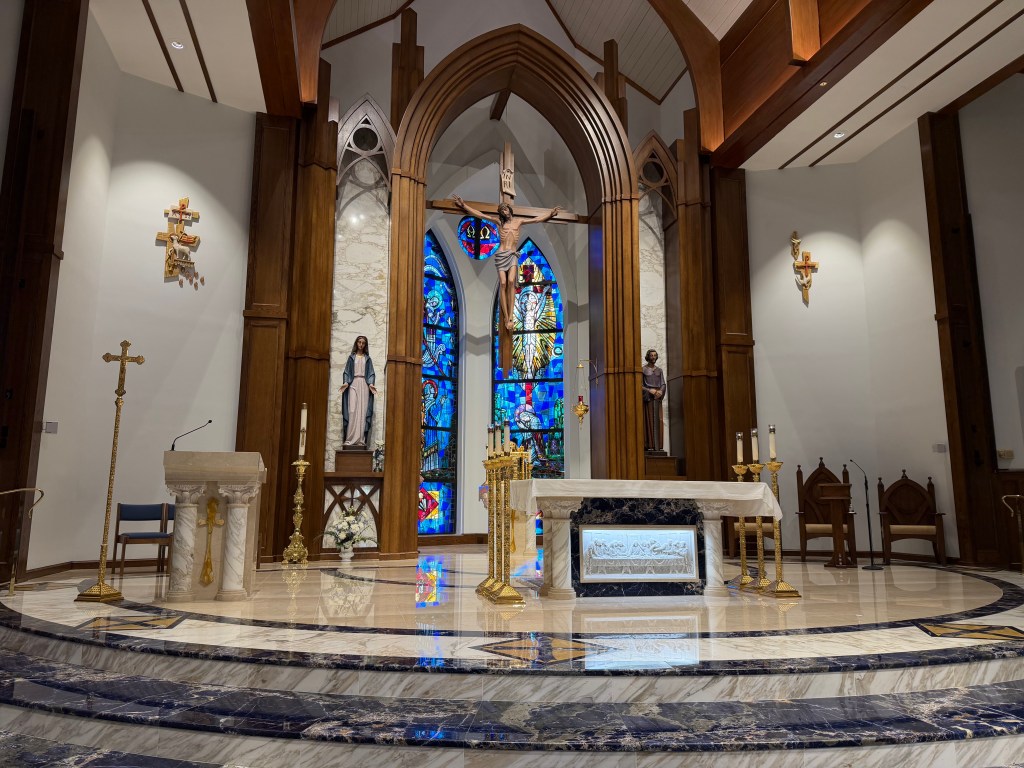
Photo: Where I come to sit at Jesus’ feet during my holy hour each evening since returning to our renovated church a few weeks ago.

Lohfink, Gerhard. No Irrelevant Jesus: On Jesus and the Church Today. Collegeville, MN: Liturgical Press, 2014.

Link for the Mass readings for Wednesday, December 3, 2025

“In no one in Israel have I found such faith?” How about with us?

Amen, I say to you, in no one in Israel have I found such faith. I say to you, many will come from the east and the west, and will recline with Abraham, Isaac, and Jacob at the banquet in the Kingdom of heaven” (Mt 8:10-11).

Nowhere else in the Gospel of Matthew is Jesus recorded as being amazed. Jesus was amazed with this man’s faith. Could he also have been amazed with his humility and his willingness to seek help for his slave? This Roman centurion, an occupying presence in Israel, clearly embodied the teachings of Jesus! We echo this centurion’s own words at each Mass just before we receive the glorified Body of Christ in the Eucharist: “Lord, I am not worthy that you should enter under my roof, but only say the word and my soul shall be healed.”

I would imagine that those around Jesus and the centurion were amazed as well. Here comes this commander of an occupying army of their land and he asks Jesus for this favor. Then if this is not unthinkable enough, he asks Jesus to heal a slave, and with his word from afar. Jesus recognizes the faith of this man and said, “You may go; as you have believed, let it be done for you” (Mt 8:13). The slave was healed. Jesus, in this generous gift of healing, showed that he came, yes, to the Jews, but also to the Gentiles and the slaves as well.

God chose the people of Israel not for themselves alone, but that they would be a light to all peoples. As Isaiah said, all nations shall stream toward mount Zion and “from Zion shall go forth instruction, and the word of the LORD from Jerusalem” (see Isaiah 2:1-5). Jesus echoes Isaiah’s prophetic words as is recorded in today’s Gospel: “Amen, I say to you, in no one in Israel have I found such faith. I say to you, many will come from the east and the west, and will recline with Abraham, Isaac, and Jacob at the banquet in the Kingdom of heaven” (Mt 8:11). The centurion’s act of faith is the beginning movement, like a drop of water that is the beginning of a majestic waterfall.

The first point we can learn from the centurion is that he was aware that his slave was in need. A slave held no dignity, value, or worth, and yet, he was not invisible to the centurion. Nor was the centurion indifferent to his suffering and pain. Are we aware of those in our midst who are in need? Let us resist the temptation to walk around, over, or by others and be willing to come close as Jesus did time and again.

Second, like the centurion, let us embrace humility and acknowledge our own sinfulness, and when we do that, we are better able to see the needs of others. None of us are perfect. No one person is above any other and all of us fall short of the glory of God. We all have gifts as well as shortcomings. We need each other because we complement one another and we are stronger together than apart.

Third, we cannot stand on our own. The centurion recognized his limitations. He acknowledged that he needed help. He needed Jesus. As do we. We cannot accomplish our salvation on our own merit or will power. We need a savior. Apart from Jesus, who we prepare to encounter this Advent season, we can do nothing, but with Jesus all things are possible.

Jesus is the Truth and the Fulfillment that we seek. He has sent out a universal invitation of communion, to Israel first and then to those from east and west, north and south, Jew and Gentile, slave and free, male and female. The Roman centurion modeled our response to Jesus’ presence when he recognized and acknowledged his own unworthiness before Jesus. He was also aware of and sought healing for his slave. The centurion had faith and hope that Jesus could and would provide healing with just his word.

May we follow his example this Advent as we take time to examine our conscience, have the humility to confess our sins, to acknowledge that we need help from Jesus and others. May we be willing to seek forgiveness and be willing to forgive. May we be willing to resist the temptation of fearing that we are unable and unworthy, close ourselves off, and be indifferent to the plight our own needs and needs of others, but instead, seek Jesus for help for ourselves and others.

Jesus was amazed with the faith of the centurion, is he amazed with our’s? We have so much to offer one another when we are willing to work together instead of apart from or against one another. May we who have received the forgiveness, healing, and grace of Jesus and felt the embrace of his love, reach out to provide hope to those of our family and friends, as well as those Jesus is calling us to draw closer to, those we may have kept at arm’s length.

——————————————————————-

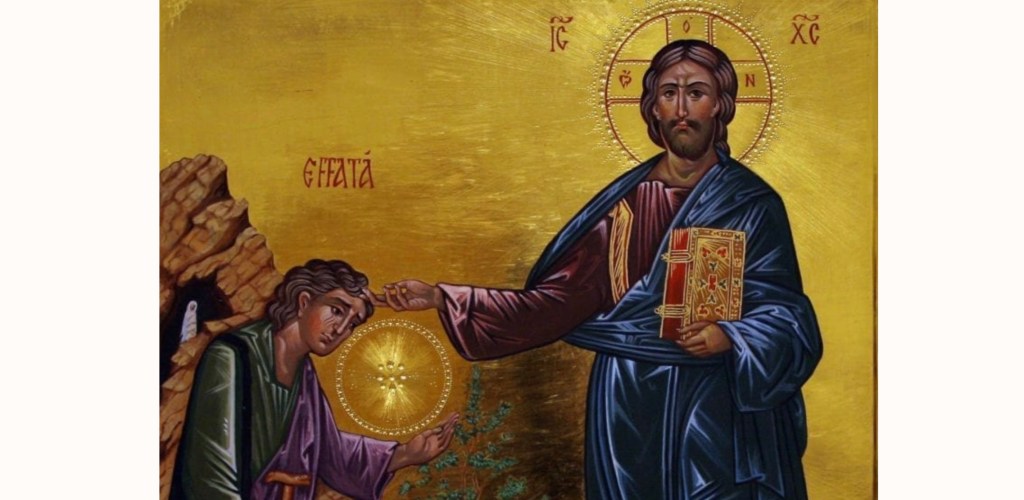
Painting: A quiet moment in between Masses Sunday, God coming close. “Lord, I am not worthy that you should enter under my roof, but only say the word and my soul shall be healed.”

Link for the Mass readings for Monday, December 1, 2025

May we too seek Jesus and come when he calls!

Yet again, as in the Gospel from yesterday, the crowd gets in the way of someone seeking access to Jesus. The wall of people that has gathered around Jesus does not appear to be overtly keeping Zacchaeus from seeing Jesus. They may be so focused on seeing him themselves that they are not aware. Yet, there is also the strong possibility that the people were aware that this man was trying to get through. They knew Zacchaeus, and many judged him to be the sinner of sinners.

He was the chief tax collector of the area and he was most likely reviled by most in his community. He would have also likely have been considered unclean because he was breaking the commandment of not stealing, which he and the majority of the tax collectors did at the time. As the chief tax collector he was also dealing with the Gentile occupiers. It is likely that each time Zacchaeus attempted to nudge by to get through a gap to get a better look, the individuals may have closed the way such that he could not get through.

Zacchaeus would not be thwarted. He ran ahead of the crowd and climbed a sycamore tree. From his perch he was not only able to see Jesus, but Jesus saw him and said, “Zacchaeus, come down quickly, for today I must stay at your house” (Lk 19:5). Jesus did not see a tax collector or a sinner, he saw a seeker. Someone who was willing to humble himself by climbing a tree, much like a child.

Jesus did not see the 99% nor the 1%. Jesus saw and sees people in need of compassion and mercy. He sees those lost that need to be found, those sick in need of healing, those alone who sought to belong. Jesus did not meet Zacchaeus with judgment but with love and compassion, and that made all the difference for this man’s conversion.

Jesus was willing to draw close to the one so many despised. By inviting himself to dine with Zacchaeus in his own home, Zacchaeus must have felt overwhelmed with emotion. Maybe for the first time in his life, he felt welcome instead of disdain. He repented without hesitation to the unconditional invitation and love he had received: “Behold, half of my possessions, Lord, I shall give to the poor, and if I have extorted anything from anyone I shall repay it four times over” (Lk 19:8). Unlike the other rich man who left sad (Lk 18:18-23) because he was not willing to relinquish his riches, Zacchaeus was filled with joy because he could.

This expressive act of generosity arose from his encounter with Jesus. This exchange offers the invitation for us also to receive Jesus in the same way and the invitation to greet others more openly as well. One way to do so is to resist the temptation to “grumble”, to gossip, to pre-judge, and/or to dehumanize one another. Salvation came to Zacchaeus’ house in the person of his savior and in the act of his repentance.

Life is hard enough without adding more barriers or negativity. Jesus wants to dwell with us too. While at the same time, he challenges us to see beyond the exterior caricatures we project on to others, and instead invites us to seek to know the heart and character of the person. We can do so when we stop grumbling, are willing to approach others with an understanding heart and mind, and be willing to spend time to get to know one another.


Painting: Zacchaeus in the Sycamore Awaiting the Passage of Jesus by James Tissot.

Link for the Mass readings for Tuesday, November 18, 2025

We have been created to love and to serve as Jesus loves and serves.

“When you have done all you have been commanded, say, ‘We are unprofitable servants; we have done what we were obliged to do'” (Lk 17:10).

This closing line from our Gospel reading today can be a hard verse to digest at first glance, especially with our track record of slavery in the U.S. We need to remember and recognize that this was a teaching that Jesus shared in a different time period, in a different culture, and in a place far removed from any clear modern context. The master/slave relationship is also a theme that Luke returns to often.

Another important point to touch upon when reading the Gospels is that when Jesus made the statement that, “we are unprofitable servants; we have done what we are obliged to do”, we are not to read this verse in isolation from the full context of Scripture. Jesus also shared a parable about a master and servants in which when the master returns, he waits on them (Luke 12:35-40). Jesus himself modeled this same service at the last supper when he washed his disciples’ feet (cf. Jn 13:1-17). This was the lowest of menial tasks. St Paul wrote to the Galatians informing them that in the Body of Christ there is no Jew or Gentile, slave or free, male nor female (cf. Galatians 3:28). The ultimate point is that God is God and we are not. We all have a part to play in participating in and promoting the kingdom of God by following his lead.

As a disciple of Jesus, we are not to seek adulation and glory. We are to serve God and one another without hesitation. We serve God because he is the director and we are the directed. He is the master and we are the servant. In aligning ourselves in this way, we also experience the intrinsic joy of following his will. As we follow Jesus’ lead and guidance, we grow in our relationship with him, his Father, and experience more of the love of the Holy Spirit. As the apostles followed Jesus, there came a point where he said to them that he no longer called them servants but his friends (see John 15:15). That is to be our hope as well.

No task is too menial or beneath us, nor do we need to be concerned about doing big and grandiose things. We just need to be obedient and act as God leads. Instead of reacting, losing our temper, fuming in anger, or twisting ourselves in anxious knots, we each can choose to smile, to hold a door, to respect and appreciate one another, to be patient and present to one another. When conflicts arise, breathe and ask the Holy Spirit to guide us before we react. We serve best when we listen with understanding, give others the benefit of the doubt, forgive, and allow ourselves to love and serve as God directs us.

Pope Leo shared during a recent gathering of bishops on September 11, 2025 that: “Service is neither an external characteristic, nor a way of exercising a role. On the contrary, those whom Jesus calls as disciples and proclaimers of the Gospel, in particular the Twelve, are required to have inner freedom, poverty of spirit and readiness to serve, which are born of love, to embody the same choice made by Jesus, who made himself poor in order to enrich us (cf. 2 Corinthians 8:9). He manifested the style of God, who does not reveal himself to us in power, but in the love of a Father who calls us to communion with him.” We may not be bishops, but we are disciples. We begin in simple ways and with each act of kindness, our hearts expand, we are moved to serve, to love and to grow in communion with God and one another. As St. Mother Teresa said, we are to be a pencil in God’s hand. In our willingness to be moved by God to serve, we as well as those in our realm of influence that we serve, will be better for the effort.

———————————————————

Photo credit: In giving ourselves prayerful pauses we can experience God’s love and so are recharged to love and serve some more.

Link of Pope Leo’s address to the bishops

Link for the Mass readings for Tuesday, November 12, 2025

Forgiveness helps us to walk the path that leads to our healing.

“If your brother sins, rebuke him; and if he repents, forgive him. And if he wrongs you seven times in one day and returns to you seven times saying, ‘I am sorry,’ you should forgive him” (Lk 17:3-4).

Forgiveness is one of the foundational principles of our faith tradition as Christians. If we question or struggle with the degree of forgiveness we engage in, we are in good company with Peter. Thinking he was being generous, Peter asked Jesus how many times should he forgive, seven times? Jesus responded, “I say to you, not seven times but seventy-seven times” (cf. Mt 18:21-22).

Luke records the exchange of the disciples asking Jesus to teach them to pray. He taught them the Our Father or Lord’s Prayer. While reciting this prayer often each day or multiple times each day, we say, “Give us this day our daily bread, and forgive us our trespasses as we forgive those who trespass against us” or “forgive us our debts as we forgive our debtors” (Mt 6:11-12).

One of the barometers of being a faithful disciple of Jesus is that we are people who practice the sacred art of forgiveness. To forgive does not mean in any way that we condone or justify the offense or even necessarily forget about it. We are to hold people accountable, as Jesus said, we are to “rebuke them” in the hope that they will repent and come to a greater appreciation and respect of our dignity and the dignity of others. When they do repent, we are to then forgive them.

Holding on to grudges, seeking revenge, being unwilling to forgive, can be incapacitating, debilitating, and can lead to a premature as well as eternal death. What can be of help is if we can choose to be more mindful of our thoughts and actions. At the moment we experience discomfort from what someone says or does, instead of giving in to the temptation to react or to let our mind run with the offense, it is very helpful to take some deep breaths, relax our shoulders, and/or loosen our grip. As the negative thoughts attempt to rise again, don’t fight or feed the thoughts, just return to being aware of our breath and ask Jesus to help us be more understanding and forgiving. This will also help our body to discharge the stress and experience God’s peace.

We may struggle with being forgiving because we may not have sought or received much forgiveness ourselves. Advent is coming. It is a season to prepare to celebrate the coming of Jesus into our lives. This season provides a wonderful opportunity to prepare and participate in the Sacrament of Reconciliation. Forgiveness is a healing gift of God’s grace. Once we have felt the healing balm of forgiveness, we might be more willing to forgive others.

A good practice to engage in is to go to a place of quiet and ask God to help you to forgive someone or a few people. Even if your prayer begins, “God, I cannot forgive, I hurt too much, but help me to let go, please help me to forgive, (insert name).” Return each day until you can bring yourself to say, “I forgive, (insert name).” Visualize yourself saying that you forgive the person face to face and imagine a healing between each of you. If the opportunity presents itself you may want to say that you forgive the person directly, send an email, or write a letter – even if you do not press send or mail it.

With the intent to forgive and asking for the help of Jesus, who has forgiven us, even if in the beginning we are unwilling, with time, reconciliation is possible. Depending on the hurt that has been inflicted, you may not reach out to the other person as it may be healthier to stay apart. Forgiveness will help you to heal and not allow the person who has hurt you to continue to do so. Forgiveness is an act of love, for to love is to will the good of the other. In our willingness to forgive, there is freedom. Let us remember: “Forgive and you will be forgiven”.

——————————————————————–

Photo: Our willingness to love will help us to walk the path of forgiveness.

Link for the Mass readings for Monday, November 10. 2025

We are invited, and then invited to invite others.

One of those at table with Jesus said to him, “Blessed is the one who will dine in the Kingdom of God.” He replied to him, “A man gave a great dinner to which he invited many. When the time for the dinner came, he dispatched his servant to say to those invited, ‘Come, everything is now ready'” (Lk 14:15-17)

Judaism was far from unified during Jesus’ time. The Sadducees, Pharisees and scribes, Samaritans, Zealots, and Essenes all felt they were the authentic expression of Israel. Jesus not only addressed this division by sitting down to break bread with as diverse a population as possible but he also shared parables around the same idea of the invitation to share in the celebration of a feast, as we read today.

Jesus is the man who was inviting people to a great dinner, his servant, is the one who is sent, an apostle, to invite others to share in this great banquet. Those invited in the first wave were those of the Israelites that were rejecting Jesus’ invitation, the second invitation were for those of the people of Israel that were within, but at the same time on the outside:  the poor, cripple, blind, and the lame. The final invitation went out to those outside of Israel, meaning the Gentiles. Thus, Jesus’ invitation of salvation and participation in the eternal banquet to come is to all of humanity, first to the Chosen People, and then to the Gentiles. Only those who rejected the offer would not be admitted.

Each encounter that we are blessed to partake in is an invitation to experience relationship. We have the opportunity to engage in person, face to face, or through the myriad of social media outlets. We can choose to demean, degrade, dehumanize, gossip, and defame or we can embrace the opportunity to treat each other with dignity, respect, kindness, and understanding, and yes, even when we disagree.

We all have wounds. Each of us have suffered or are suffering, and we have or are experiencing anxieties, overwhelm, and/or insecurities in some form or fashion. We all seek to belong, to be a part of, and to be accepted. We need God and each other. When we acknowledge these, and turn to God with them, we begin to heal and can also be more understanding. Yet, as Fr. Greg Boyle, SJ, wrote, “If you’re a stranger to your own wound, then you’re going to be tempted to despise the wounded.”

When we are willing to see our own wounds, and offer them in our poverty to Jesus, he will help. When others are not respectful, we can be less reactive, breathe, and resist reacting in kind. When someone serves up harsh words, we can resist the defensive retort and instead ask if there is any way we can help. To will each other’s good does not mean that we condone the inappropriate act or word, it means we genuinely seek their good and their healing. When we can be advocates of healing, we can then be God’s servants of invitation.  Jesus invites us to the feast of community and sharing, to prepare us for the eternal feast. Are we willing to attend and are we willing to invite others?

———————————————————————–

Photo: As we heal and experience the light of Jesus, we can receive his light and reflect it to others!

Link for the Mass for Tuesday, November 4, 2025