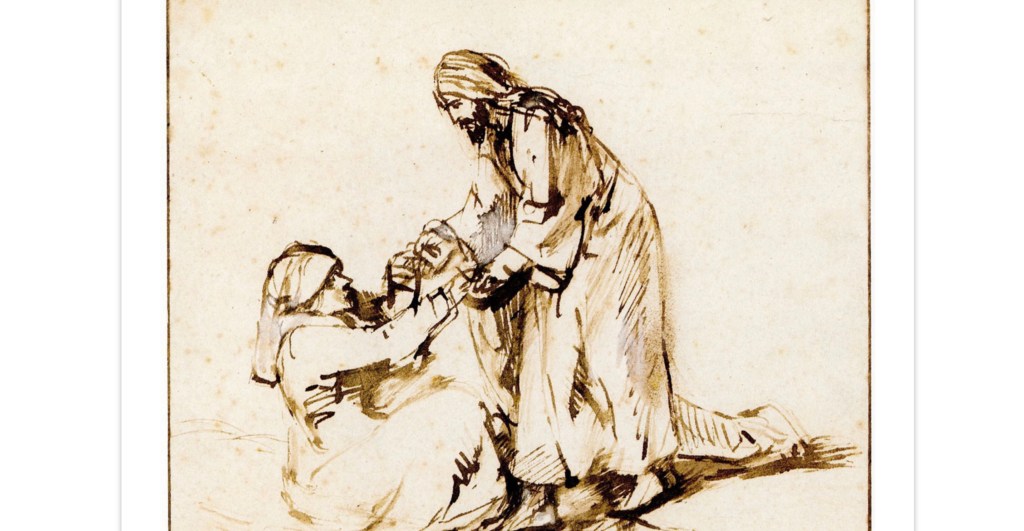
“A bright cloud cast a shadow over them…”

Our life can be an experience both of sadness and joy, desolation and consolation, doubt and hope. We can experience an ebb and flow where we suffer from trials and also celebrate triumphs. The key to living a life of faith is to seek God in either experiences. Jesus today provides an opportunity for Peter, James, and John, the inner circle of the Twelve, to experience an expression of his divinity for he was transfigured before them; his face shone like the sun and his clothes became white as light. (Mt 17:2). Jesus revealed his divine nature to his disciples in a powerful display to prepare them for the Passion that he was about to endure. The experience is also a foreshadowing of his Resurrection.

Jesus, in this living word proclaimed or read today, invites us to experience the Transfiguration, the Passion, and the Resurrection in our own lives. We can miss a transfigured moment when we assume a posture of pride, not acknowledging God’s leading by believing we achieved or arrived at our present station in life on our merits alone. We can experience moments of transfiguration when we acknowledge that God breaks into our lives at that moment when we need him most and recognize the assistance he has given us, and/or when he has revealed to us the path and direction we were to take. The natural response is to offer prayers of thanksgiving, recognizing that we don’t go it alone, that God and those he sends to help us are a tremendous support.

Jesus is also present in our desolations. Many of us run from our suffering, we are afraid of the Cross. But it is through the Cross that we come to experience the Resurrection. We may not be aware, but when we run away from our suffering, we are running away from Jesus who awaits us with arms wide open to embrace us; to comfort us, heal us, and transform us. To experience the embrace of Jesus, we need to be willing to face our suffering.

Jesus cares from the deep place of understanding in experiencing his own tremendous suffering. He in the Garden of Gethsemane sought another way than the Cross, he asked for the cup of his death to be taken away, but he chose his Father and his will. He obeyed and set his face firm and accepted the upcoming suffering and death. In doing so, he then was also to experience his Resurrection and Ascension. Jesus now in his glorified body can be there for all of us, to lead us through our sorrows and trials.

The older I get, the crucifix becomes more of a consolation. This icon of Jesus, his body broken, emptied out for us on the cross, represents how he entered the full range of our human condition. He assumed our sin, our anxiety, fear, and selfishness, and transformed the worst of our fallen nature through his love such that we are offered the opportunity to be forgiven and redeemed. The crucifix is not a sign of despair, but of hope and transfiguration, for it reminds us that no matter what we go through, what trial that we may be in the midst of at this very moment, Jesus understands and is present with us.

Looking and meditating upon Jesus on the Cross has provided me moments of transfiguration, granting me the courage that I did not have to face various conflicts, challenges, and trials, which has only increased in my first year and half as a priest. And in facing each challenge for myself as well as those I pray for, Jesus has been by my side. As he looks down from the cross he loves us despite our sins, our weaknesses, and failures and is willing to lead and accompany us through the ups and downs of life, so that we too may be renewed and transformed.

The transfiguration was for Peter, James, and John a preparation for the glory of Jesus’ crucifixion. Their experience strengthened them as they witnessed the horror of their teacher and friend’s death and the struggles they would face in their the ministry. May we spend some time mediating and praying with the words of today’s gospel, experience again the glory that Peter, James, and John did, and savor that gift. May we breathe in deep the radiant light of the Father shining through the clouds and experience the love of the Trinity so that we too may face with Jesus, what rises before us. All is grace, as long as we bring all we experience to Jesus, and follow his guidance.

________________________________________

Photo: “This is my beloved Son, with whom I am well pleased; listen to him.”

Link for the Mass readings for Sunday, March 1, 2026


“Love your enemies, and pray for those who persecute you.” Really? Yeap.

“You have heard that it was said, You shall love your neighbor and hate your enemy. But I say to you, love your enemies, and pray for those who persecute you, that you may be children of your heavenly Father” (Mt 5:43-45). With these words, Jesus continues to raise the bar of discipleship and outlines what the pursuit of love truly is.

The command to love our enemies and pray for those who persecute us is challenging today, but we may be a bit removed from the original power of those words. The inference that Jesus was making to his listener’s was that their enemies and those who were persecuting them, were the soldiers of the Roman imperial that were occupying Israel. Though we can still relate, and also be shocked by it and think that this command is impossible. And that is just the point. Apart from Jesus and our relationship and the transformation of our hearts and minds through our discipleship with Jesus, there is no way we are going to love our enemies and pray for those who persecute us.

One reason is that for us our definition of love is limited to the romantic, emotional, sensual, or mere sentimental. It can also be reduced to the mere sublime of loving ketchup or mustard on a hot dog, loving our cat or dog, or even at best getting closer to what Jesus is talking about when we love the members of our families or close friends. But all of these perspectives of love would not make sense in the context of Jesus’ command.

The bond of friendship and family goes beyond mere attraction and is built through shared interests and experiences. Through sharing our lives with others, working through conflicts, trust is built, and relationships will hopefully grow and deepen. Jesus, though, is calling us to mature in our growth of loving even beyond friendship or familial ties. If we love those who willingly love us in return, greet only our brothers and sisters (if we actually get along with them, blessed that I get along with my sister ;)), only those in our clique, group, tribe, or political party, what is the recompense or satisfaction in that? Agape, in Greek, loving without conditions, with little or no chance of mutual exchange, is what Jesus is calling us to strive for.

Many of us could not conceive of loving our enemy or someone who is persecuting us, because we have, minimally only experienced doing no overt harm to others and at best, loved our friends and family. But do we risk going outside of our group, our like-minded safety net? Life is hard enough and it is often safer, we believe, not to take the risk. We continue to operate from a concept of love as an emotion or feeling, because it feels good. We want to be happy and feel good. We avoid suffering at all costs.

Jesus challenged “his disciples to love and pray for the very people who occupy their land, tax them heavily, and treat them with violence and injustice” (Mitch and Sri, 100). How could they love the Roman occupiers? How can we love, those that we feel in some form or fashion in a similar way? St. Thomas Aquinas can be of help. He defined the love that Jesus describes as willing the good of the other as other. We make an act of the will, a free choice to accept the person as they are, to see them, not from our limited finite perspective but as God sees them, as a person with dignity. Can we pray for, seek kinder thoughts and to be more understanding, be more patient, and resist reacting in kind? Can we resist judging and labeling others?

On our own, we may not even conceive of the possibility, loving our enemies, but we can be assured that if Jesus has asked us to strive for this height and depth of love, he will provide the means. We love others unconditionally by allowing Jesus to love us. To breathe, receive, receive, and abide in his love, we experience his love. As we do so daily, we experience more of and are transformed by his love, and begin to allow God to love others through us.

We strive to reach the summit of loving our enemy only with the help of the Holy Spirit. Jesus called his disciples and he calls us to “imitate God by being perfect in love… to reflect the Father’s perfect, committed, selfless, merciful love in their own lives… to go beyond external conformity to the requirements of the law and imitate the perfect love of the heavenly Father, who is love himself” (Mitch and Sri, 101).

Even when we fall short, how much better would our families, communities, countries and world be if we sought this goal? To counter divisiveness, fear, and hatred, we need to refuse to react and instead choose to engage in an act of the will to love one another as Jesus loves us. “Jesus summons us to a heavenly way of life; the saints show that it is possible to live this way on earth.” If the saints can love their enemies and pray for those who persecute them, then by following their example, and allowing ourselves to abide in God’s love as they did, then so can we.


Photo: Jesus lived his command of loving his enemies and praying for those who persecuted them most radically when while dying on the cross he asked his Father to “forgive them for they know not what they do.”

Curtis Mitch and Edward Sri. The Gospel of Matthew. Grand Rapids, MI: Baker Academic, 2010

Link for the Mass readings for Saturday, February 28, 2026

Our words matter, and often they begin with our thoughts.

Jesus calls us to be holy, each and every one of us. Our life is to be lived with the end goal being heaven, to be in union with our loving God and Father for all eternity, and to assist others to do the same. Jesus provides for us a concrete example of the heights to which we are called to reach: “You have heard that it was said to your ancestors, You shall not kill; and whoever kills will be liable to judgment. But I say to you, whoever is angry with his brother will be liable to judgment, and whoever says to his brother, Raqa, will be answerable to the Sanhedrin, and whoever says, ‘You fool,’ will be liable to fiery Gehenna” (5:21-22). Jesus is building on the Torah, the Law or the Teachings, by helping us to realize that we cannot only kill with weapons but also inflict dehumanizing and debilitating damage with our words.

To resist this temptation of inflicting mortal wounds, we need to start participating in a deeper examination of interior life which gets to the roots of our own thoughts, words, and actions. If we are not able to discipline our thoughts, what will follow is undisciplined words, and then undisciplined actions. This slippery slope can lead to entertaining and embracing the deadly sin of wrath. Wrath is unbridled anger that leads someone away from the capacity to think or behave in a rational manner, such that this individual would no longer acknowledge the dignity of the person they would inflict their wrath upon.

Jesus never settled for a minimalist approach to our faith. He consistently provides teaching, examples, and most importably the grace for us to see that we can be free of the temptation of wrath if we recognize the danger and destruction of unleashing words as weapons. Jesus the examples of calling someone, Raqa, meaning something along the lines of an air-head or an idiot, and calling someone a fool. These words directed at another have no other cause than to demean, degrade, belittle, and harm. This language, and worse, has no business coming out of the mouths of a disciple of Christ. If we are serious about being one of his followers, we need to make a decision regarding how we think, speak, and act.

I remember a moment in sixth or seventh grade letting loose a derogatory word or two toward a classmate. Even though they were tossed out in jest, I felt a sinking feeling in my gut. God convicted my heart in that graced moment and I felt contrition, actual sorrow for the negativity and poison I had unleashed. I remember making a commitment to myself not to speak that way toward another person again.

Our words have the power to wound or to heal. If we are serious about following Jesus, fasting from gossip and from words that belittle, divide, diminish, or dehumanize is a good practice to engage in this Lent. Jesus wants us to remove any and all obstacles that would prevent us from growing in his unconditional love for him and one another. Instead of hurtful, we can share words that empower, uplift, and comfort or at least listen more and speak less. Even when we disagree with another’s point of view, we can do so by still respecting the person and fostering dialogue.

We are to love, to will the good of each other, and pray for each other in all circumstances. In this way, our words will be kinder as we resist entertaining negative or dehumanizing thoughts. Our faces are good barometers. Even when we have defensive musings resulting from another’s disparaging tone, words, or actions, we need to resist entertaining them. When we are aware of and feel our own facial gestures, we can identify our mental reactions, and begin to breathe, pray to the Holy Spirit for understanding, pray for the person, and if necessary hold each other accountable with boundaries and respect. Just this shift in attitude can make a big difference.

—————————————————————

Photo: May God bless you with a peaceful mind and heart this day that you can share with others. If you need to clear your head from some anxiety or frustration, a nice walk may help!

Link for the Mass readings for Friday, March 27, 2026

As the sun offers us warmth, God seeks to bless us.

Jesus said to his disciples: “Ask and it will be given to you; seek and you will find; knock and the door will be opened to you” (Mt 7:7). If taken in a purely secular, non-religious, or non-biblical sense, and out of context, this teaching of Jesus from his Sermon on the Mount may not seem possible. Someone might think can I really ask for anything and God will give it to me? Too many people have thought just that had their faith has weakened or left behind because they asked something of God and from their perspective, they did not receive what they asked for.

To understand this verse we need to understand a few key points. One is that God is God and we are not. That means that we do not have the full scope and sequence of God’s infinite viewpoint. We can only see from our limited and often times wounded perspective. Our God, who is Good, will only give us that which is good for us. What we are asking for may appear to be good, but may not, in fact, be truly good, and/or in our best interest beyond the moment. If someone wants to say, well, I ought to be able to decide that!

That means they have missed the first point, God is God and we are not. God not only seeks to give us what is good, he knows what will truly make us happy and fulfilled even when we don’t. God sees the very depths of the truth of our deepest desires, we often do not and often times are seeking things in the attempt to receive what we think we want, when in fact, the very seeking of the apparent good(s) we are seeking are keeping us from he very thing that will fulfill us.

Another point that I have learned from Bishop Robert Barron is that “Your life is not about you.” We are created by God for a reason and a specific purpose. Our life is about fulfilling our role in God’s theodrama. The context of this verse is best understood by reading in conjunction with when Jesus stated, “Seek first the kingdom of God and his righteousness” (Matthew 6:33). As we seek first his kingdom and our place and part to play our collaborative role with him, we can be assured he will answer us, we will find our place, and the door of the kingdom will be opened for us.

We are not the director in the great play of life, God is, but we do have a unique and significant part to play. That is good news! Meaning, joy, and fulfillment are experienced when we understand that God does not need us but desires us to share in his work of salvation history. This a wonderful truth we would do well to ponder. The other side of the coin for those of us who may not be seeking finite pursuits, but God’s will… this may seem a bit intimidating. We can be confident though that what God requires of us, he will give us the means and support necessary to fulfill the work he invites us to partake in. The last line of today’s gospel, expressing the Golden Rule, is no throw away line. The words express why God calls us and it echoes Jesus’ greatest commandment to love God with all our heart, soul, and strength and to love our neighbors as ourselves.

C.S. Lewis can also help us to understand our posture of prayer: “I pray because I can’t help myself. I pray because I’m helpless. I pray because the need flows out of me all the time, waking and sleeping. It doesn’t change God. It changes me.” When we pray with the intent to bend God’s will toward ours we will find frustration each time. We pray because we are answering God’s invitation to spend time with him. We pray not because God is dependent on us to do so, but because we are dependent on him for everything.

We are transformed by God’s love and his grace builds upon our nature when we begin our prayer with the truth that God is God and we are not and that our life is not about us. We will know God better, not as a philosophical idea, but instead as a person. In knowing God better, we grow in our love for him and want to follow his will and serve him. When we know, love, and serve God, we will change. Such change may sometimes not appear to be in our best interest. We like stability and safety, which is good. Where we want to place our safety and security though is not in the things of this world, but in God and the things of heaven.

When we approach prayer seeking not our’s but our Father’s will, we can be confident that we will grow in our relationship with him and that what we ask of God will be given to us, what we seek we will find, and when we knock, the door will be open. “The Father wants to give all who will ask, seek, and knock the blessings that will enable his will to be realized on earth as it is in heaven” (Mitch and Sri, 117). We are invited to be agents to share in the promise of this wonderful gift of participating in the emergence of a new heaven and a new earth.

—————————————————————–

Photo: Receiving the light of Jesus during prayer before morning Mass.

Link for the Mass readings for Thursday, February 26, 2026

Greater than Solomon and Jonah.

There is something greater here! Something greater than the wisdom of Solomon and something greater than the preaching of Jonah. Someone greater than the kings and the prophets who went before. Jesus.

We are called to live our faith out in Jesus daily. This is not a part-time vocation. We all have a unique gift in the dignity we have been conceived and born with. We have a unique way to express and live out our dignity as well. We have been created in the image of God, but through sin, we have lost our likeness to him. We are tempted, misdirected, distracted, and diverted from experiencing God’s love for us and plan for our lives and this can lead us away from God. The further away from God we are the more our likeness to him diminishes. Jesus calls us back to spend time with his and our Father so that we can be forgiven, healed. As we do so and grow in our relationship with him, our likeness is restored more and more.

As Jesus taught, often in his parables, the kingdom of Heaven on earth starts small, like a mustard seed, like yeast, and develops slowly when nurtured. Lent is a good time to slow down, step back, take a retreat even while in the midst of our everyday activities. We just need to insert some intentional and dedicated time to spend with God alone each day. In doing so, we will better come to know him, his word, and guidance.

One of the reasons we may feel a bit restless is that we are engaged in activities in our lives that miss the mark of who we were created for. We are missing the relationship with God that he is inviting us to participate in because we are allowing ourselves to be distracted and too busy to see where we have been led astray. The sign of Jonah that Jesus offers us is repentance. The whole of Nineveh repented even though Jonah was hoping that they would not. He hoped they would be punished by God! Jesus seeks our repentance, our willingness to turn back to see the open arms of our God and Father wide open ready to receive us, to lead us back to the truth of who we are as his beloved daughter or son.

If you are feeling a bit restless, on edge, or out of sync, I invite you to make some time to be still and breathe, this can be while in the shower, when you have some breakfast, a morning walk, or taking a sip of coffee or tea. During this time ask God for some guidance. We can ask him to help us see those areas that we need to repent from and let go of, those thoughts, words, and actions that keep us distracted, redirected, and off-kilter as to who God is calling us to be. We can then confess to him and receive his forgiveness and reconciliation.

God invites us to create times of silence to sit with our wounds and traumas. Many times we do not want to be still or quiet because there may be unresolved issues, hurts, and/or pain that we would rather not face. We may believe the lie that if we allow ourselves to feel what is deep down there, that we will be completely undone. God is present and waiting, inviting us to come to experience acceptance and love as we are, to feel safe, and honest. From this place of vulnerability, we begin with simple steps of trusting in Jesus and his healing.

Jesus said in today’s Gospel that, “There is something greater here.” Christianity is not a secret sect. We are called to share the joy, the forgiveness, healing, and reconciliation we experience from God with others, even with, as Jonah found out, our enemies. We are to look for opportunities to offer a smile, an encouraging word, to reach out to someone we have been meaning to connect with for a while, in person or far away, and/or someone that we may sense just needs a listening ear. We can also can ask for God’s patience so that we may react less and become more understanding and present. There may be places we are hurting and this is true for so many others.

Lent can be a joyful time when we enter into the season with the intent to deepen our walk with the One who is wiser than Solomon and preached repentance and reconciliation. With our hearts and minds turned back and open to God, Lent will not so much be a drudgery to endure, but a joyful embrace of the opportunity for experiencing a change of mind more open to dialogue, forgiveness, healing, sharing joy, reconciliation, and contributing to building up the kingdom of God one healing at a time! Hurt people can hurt people, and hurt people can also experience the healing of Jesus and become people who are healing and willing to help heal people.

———————————————————-

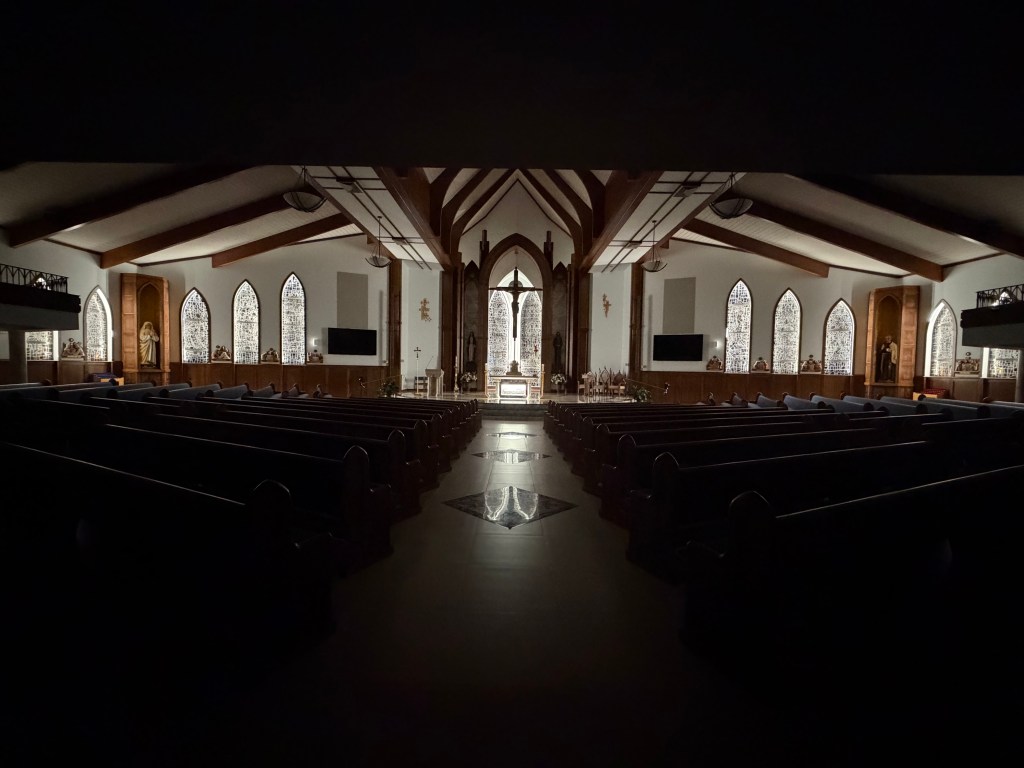
Photo: Who is greater than the One who is willing to give his life for us and seeks our healing and redemption? Quiet time of prayer in the Cathedral of St. Ignatius of Loyola after Bishop Manuel DeJesus Rodriguez’s ordination.

link for the Mass readings for Wednesday, March 25, 2026

Jesus taught John, the Our Father. John taught it, and it has been learned and prayed in every generation since.

Jesus begins his teaching on prayer by stating that prayer is not babbling. We are to resist just saying empty words that have no meaning or worse just praying in words that we think God wants us to hear. Prayer is to come from our hearts. We are to share honestly what we truly think and feel in the moment that we turn our hearts and minds up to God.

Prayer, first and foremost, is a response to the Holy Spirit moving within us, urging us to pray, “for we do not know how to pray as we ought” (cf. Romans 8:26). It is helpful to trust that invitation and allow ourselves to be in his presence in the chaos as well as in the joys in our lives. If we are upset with God, it is important to get in touch with that feeling and share that emotion with him. As we do so and get it out, it is just as important to be still and remain for a time, and listen for God’s response. To vent and walk away or tune God out is not helpful or giving him the opportunity to provide healing.

Even if we do walk away from him, our Father will not walk away from us. He will be there ready and willing to accompany us when we are ready to return, share again, and are willing to be still and listen. A good example of this type of open and honest prayer from the heart will be found in reading the psalms. They cover the full range of our human emotions as well as expressions of prayers of blessing, petition, intercession, thanksgiving, and praise. We will even come across one like Psalm 88, which may not appeal to us at the moment, as it is such a psalm of despair, yet someone, somewhere, might be feeling that prayer. If we read it and find as we do so that we don’t relate to it, we can pray it for others who may be experiencing those emotions.

In our Gospel today, we read Matthew’s familiar version of the Lord’s Prayer or the Our Father. It presents two ways to pray. First, it is a rote prayer that we memorize word for word. The blessing of a rote prayer is that we can pray it in communion with others, as we all know the same words. Another important gift of rote prayers is that we can pray them when we are physically in pain or emotionally distraught when we feel we can’t pray.

Jesus taught his disciples this prayer and it has been prayed daily since then up to and including this moment. That is an amazing reality, that we can pray today the same prayer that Jesus taught his disciples (Different language, yes, but the same prayer.). It is a prayer we can lean on to give us strength through the storms of our lives. Praying the Our Father gives us the words to speak when we have none to begin with, and by loosening our tongues, we can come to a place where we can speak more freely with God, who as Jesus shares is our Father, and experience the peace of his presence.

The Lord’s Prayer is also a model of prayer such that each word or phrase can be a starting point to enter into a deeper and loving dialogue. There are seven petitions throughout and as with the ten commandments have a similar pattern in that the first three petitions are directed toward our relationship with God. The next four have to do with our relationship with others. As an example, we begin with the words, “Our Father.” This is a reminder that God is the Father of us all and the beginning of all prayer. His sun shines on the good and the bad alike. Our prayer begins by putting our self in his presence and recognizing that we are all interconnected.

God, our Father, is with us even when we experience fear, sorrow, feel forgotten, misunderstood, or alone. We just need to remember to turn to him. Our every desire to pray is already a prayer because we are responding to his invitation to spend time exclusively with him. In turning to him, we experience that he is always present and he hasn’t forsaken us. He provides our daily bread and forgives us as we forgive others. God also rejoices with us, for the joy of God is the human being fully alive!

Carve out some time today to pray the Our Father s-l-o-w-l-y. Take some slow and deliberate breaths, five seconds in and five out. Allow whatever is going on in your life to enter into the recitation and remember that the best dialogue allows each party involved to spend some time listening to the other. As St Mother Teresa taught, “God speaks in the silence of our hearts.”

By pausing, being still, and not rushing these words, and then listening silently at the end of the verbal prayer, we can enter into that time of quiet to be still and listen. Doing so we will experience his love for us, better know our Father, his will, and begin to experience his peace and rest. Learning to listen to God who we can’t see might also help us to listen to each other who we can see.

—————————————————————

Photo: Jesus taught John the apostle the Our Father. It worked out pretty well for him, may we follow his lead!

Link for the Mass readings for Tuesday, February 24, 2026

5:1 + 5 Finger Gospel = Loving Jesus and our neighbors as ourselves.

Our readings today help us with one of the pillars of Lent. Almsgiving. We can give alms monetarily as well as through our thoughts, words, and actions. How we treat each other matters. How we speak to each other or about each other matters. Even how we think about each other matters. Not only do our actions come from our thoughts but we also project them out to others whether we are aware or not that we are doing so. When we are able to be more intentional regarding how we think, we can be more aware of our actions. We really do not have to immediately react in situations independently or with others. We can first take a few deep breaths, think, and seek some guidance from the Holy Spirit before we entertain a thought, speak what is moving from our mind to our lips or leading to an action. We can discern how what we are about to do will affect ourselves and others around us.

One way to go a little deeper and more discernment about what we think and say into practice is to follow the psychologist, Dr. John Gottman’s 5:1 principle. When you think a negative thought about someone and before you share that thought, think and write down five affirming thoughts about that person. Many times we will find that by the time that we get to the fifth affirmation we will have forgotten the negative quip that sought the light of day.

Jesus is very clear in today’s Gospel from Matthew, “Amen, I say to you, whatever you did for one of these least brothers of mine, you did for me” (Mt 25:45). All of us are interconnected. What we do to one another affects everyone. Jesus is very clear that what we do or do not do to each other we do to Jesus. It would be very helpful for us then to get to know Jesus. One way is to continue to read the daily Gospel offered to us each day or read them at our own pace. The Gospels reveal to us Jesus’ words, teachings, life, ministry, and actions. A daily, prayerful and meditative reading helps us to not just know about him but to know Jesus.

In meditating on today’s gospel account, Jesus helps us also to know that we will come to know him better in serving one another. For as we do or do not do, we will come to know or not know Jesus better. When we throw a stone into the middle of a pond, the ripples of the water circle out to touch the bank and go even beyond what we see. When we think a thought, offer or withhold an action, speak or not speak, this same ripple effect happens.

When we give into cynicism, apathy, or disinterest regarding the needs of another, we are cutting ourselves off from Jesus. These ripples of inaction have a negative effect that ripples out. When we are moved by the Holy Spirit to reach out to help someone in need, to be more understanding, kind, and willing to move beyond our insecurities, prejudices, and biases; when we do listen, risk, and move out toward another in love by willing another’s good, and put Jesus’ teachings into practice, we begin the healing of our relationship with God, ourselves, and each other. We will then love our neighbor as ourselves as we received from Leviticus 19:18 in the first reading. We can certainly experience a few more of these ripples!

St. Mother Teresa loved her neighbors radically well by putting into practice what she called her Five Finger Gospel, which is a summary of Matthew today’s gospel. She taught each person in her order and anyone she had the opportunity to pass it on to that each finger on her hand represented the words: “You – did – it – to – me.” When we entertain a thought today, are about to form a word, and are about to follow through on an action, may we first take a breath, ask Jesus to guide us, and then look at the five fingers of our hand before following through. Would we continue to think the thought, say the word, or follow through on the action if Jesus was in front of us? Because he is. For what we do to each other, we do it to Jesus.

———————————————————————————–

“I alone cannot change the world, but I can cast a stone across the waters to create many ripples.” We can too!(Photo credit: Getty images)

Dr. John Gottman’s 5:1 principle I learned from Dr. Arthur Brooks’s discussion with Bishop Robert Barron through the Word on Fire Institute. To watch Dr. Brooks talk on loving our enemies and to consider becoming a member of the Institute: wordonfire.institute/bishop-barron-presents-nov-2019/

Link for St Mother Teresa sharing her five finger gospel starts about 30 seconds in:

Link for the Mass readings for Monday, February 23, 2026

“I have not come to call the righteous to repentance but sinners.”

Think about how good we feel after coming to be on the other side of healing from a bad cold or the flu, recovering from a twisted ankle, a broken collar bone, or other health conditions. If you have ever experienced an asthma attack or had the breath knocked out of you, it is such a relief to able to breathe fully again. We experience a feeling of wholeness that was missing during the midst of our suffering where we may have pondered a time or two whether or not we would ever get better.

The same can be said for estranged relationships. There is a distance of separation that can be agonizing, an inner gut-wrenching experience that gnaws away at us. We wonder if there can ever be a coming back together. When there is reconciliation, forgiveness, and mending of the brokenness, we can experience relief, lightness, and joy that we never imagined possible while in the midst of the conflict, the silence, and the separation.

Sin damages our relationship with God and one another. Unchecked and unbridled sin can rupture those relationships. The Pharisees and the scribes questioned why Jesus was eating with tax collectors and sinners, and Jesus replied: “Those who are healthy do not need a physician, but the sick do. I have not come to call the righteous to repentance but sinners” (Lk 5:32).

Jesus is a light in the darkness. For Levi and his friends, who were ambling in the darkness, Jesus shone gently and warmly. They realized there was a sage path to walk and they did. A great celebration of fellowship ensued in Levi’s home because these men and women, who had been outcasts, who were separated from the greater community were forgiven, welcomed, and embraced. They were loved by Jesus as they were. They did not have to change first for Jesus to call Levi and gather with them.

They were welcomed into the kingdom and reign of God. Their ticket to reconciliation and healing was accepting the invitation of Jesus, to receive and experience his love and welcome. Levi and the other sinners did not run from the light of Jesus, but were willing to recognize their need for healing, were willing to repent, to turn away from their prior ways of life, and so were reborn!

They were divinized because of their willingness to participate in the life of Jesus. Levi chose not to just be a repentant sinner, but continued to follow Jesus. He gave his whole life to him and allowed himself to be transformed. He chose to leave the path of darkness and to follow the Way. He continued to follow Jesus such that it was no longer he who lived, as Paul had experienced, but Christ who lived in him (cf. Galatians 2:20)!

Jesus invites us, as he invited Levi, to come and follow him. We are given the same invitation and opportunity for healing, discipleship, and transformation. Will we resist rationalizing and justifying our sinful thoughts, actions, and habits, welcome the light of Jesus that reveals our venial and mortal sins, and admit that we are in need of healing, repent, be forgiven, and be released from all the energy we have expended in protecting and hiding from ourselves and our God who loves us more than we can ever mess up?

We say yes, by quietly spending time, especially each evening, and recalling our day. When we are willing, Jesus reveals to us those ways in which we have not lived according to his will. Jesus does not reveal our sins to condemn or shame us, he does so to convict us in the hope that we will identify, renounce, and confess them. Then he will forgive us. Even when uncovering deeply rooted and mortal sins, through the intimate encounter with Jesus in the Sacrament of Reconciliation, we will be forgiven and freed.

Jesus loves us as we are. Yet holding on to our sin, keeps us at a distance from experiencing the greater breadth and depth of his love. We only need to be willing to be contrite, to embrace sorrow for the harm we have inflicted with our personal sins, and go to the Divine Physician in our time of prayer and/or Reconciliation. Once absolved, the heavy weight is lifted and we are healed and go forward into the light to engage in penance, atone for our sins, and are better able to forgive others as we have been forgiven, and to love as we have been loved!

——————————————————————–

Photo: Jesus is the light that reveals the path to lead us out of darkness.

Link for the Mass readings for Saturday, February 21, 2026

A fast from the busy can help us to decompress and reset.

In the Gospel of Matthew, we read today about the account of Jesus comparing himself to a bridegroom: “The days will come when the bridegroom is taken away from them, and then they will fast” (Mt 9:15). In a sense, the bridegroom has been taken from us, in another sense, he is closer to us now than he was when he was with his disciples and walked the earth. The fullness of his reign though will not be consummated until Jesus comes again, but while we wait, when we are willing to set aside other distractions and be still, we can hear and experience of the beating of his Sacred Heart.

We need food for our survival, but we don’t need as much as we think we do! Fasting from food is not the only focus of our Lenten fast. The discipline of fasting provides an opportunity to keep our passions in check. By resisting the impulse of instant gratification, we are able to better discern between apparent goods and the actual Good in our lives. When we are able to navigate through the maze of distractions, diversions, temptations, and allurements on a physical level, we can begin to go deeper into the spiritual reality to begin to expose some of the demons that we feed, such as “distrust, apathy, and resignation”.

Pope Francis mentioned that these three demons “deaden and paralyze the soul of a believing people.” He continued by stating that: “Lent is the ideal time to unmask these and other temptations, to allow our hearts to beat once more in tune with the vibrant heart of Jesus.”

When we are willing to discipline our impulsiveness, to slow down, to take time to recollect even with a few deep breaths, we can begin to see more clearly God’s will for our lives. We can then be more open to God’s invitation to grow in relationship with him and each other. We can better assume the posture of John the Apostle by resting our head on the chest of Jesus (cf John 13:25), such that our hearts will beat in the same rhythm as his Sacred Heart.

This is the gift of contemplation drives us to service. This is the same rhythm that beat in the prophet Isaiah who reminds us in today’s first reading what true fasting is all about:  “releasing those bound unjustly, untying the thongs of the yoke; Setting free the oppressed, breaking every yoke; Sharing your bread with the hungry, sheltering the oppressed and the homeless; Clothing the naked when you see them, and not turning your back on your own” (Isaiah 58:6-7).

————————————————————————

Photo: Stillness, quiet moments, while experiencing the wonder of God’s creation helps us to experience, can help us to slow down and allow our heart to beat with he rhythm of Jesus’ sacred heart.

Link for Pope Francis homily:

Pope Francis offers a “worksheet” for Lent: Check it out!

Link for the Mass readings for Friday, February 20, 2026

May we guard ourselves against the leaven of the Pharisees and Herod.

Jesus convicted the Pharisees for demanding a sign and for their continued hardness of heart, their unwillingness to see and hear the work and presence of God right before them. He also saw the unsettling yeast of the Pharisees present in his own disciples. In today’s reading, Jesus seized on the opportunity of being together in the boat, Jesus seized on this teachable moment. He wanted to help the disciples of his inner circle to resist the same path of corruption when he enjoined them: “Watch out, guard against the leaven of the Pharisees and the leaven of Herod” (Mk 8:15).

As has been their pattern, the disciples missed the point as they focused on the literal reality that they only had one loaf of bread among them. Jesus was not, as they thought, taking them to task for not thinking ahead to bring enough bread. He had twice now multiplied minimal amounts of bread to feed thousands. One loaf with them would not have been an issue. He was more concerned about them falling into the danger of pride, seeking honor, power, and fame which had lead many of the Pharisees and Herod astray. To be his followers, striving to place themselves first would be not only the undoing of each of them but also undermine the authenticity of the Gospel message they were to proclaim and affect those they would be charged to care for.

Unfortunately, too many have not heeded the lesson that Jesus offered in today’s Gospel to his disciples regarding being aware of the corrupting leaven of many of the Pharisees and Herod. Just as the effects of original sin has wounded humanity, so it has also affected those in the Church. Throughout the ages, clergy and laity alike have succumbed to the temptations of placing our needs before and focusing on ourselves instead of God and who he calls us to serve. The curving in upon ourselves and the hardening of our hearts, close us off to the love of God and the reality of the truth that we can be in relationship with him, this truth that Jesus came to bring.

Yet throughout the worst corruptions and abuses, the Church remains. God continues to work through many who are faithful, like Mary his mother, and say “yes” to his invitation and follow his will in simple ways, living lives of quiet prayer, worship, and giving of themselves in acts of service daily. It is unfortunate that there are those who leave because they see hypocrisy, injustice, abuse, and corruption. For it is those with eyes to see and ears to hear that need to stay and be faithful witnesses to the call of the one true Bread from Heaven.

We must remain persistent and lean on Jesus to give us the strength and clarity on how best to seek healing for ourselves and proceed to help to heal his wounded Body. We also need to be aware of the sinful leaven that would seek to undo each of us. It is easy to point fingers. We will be on stable footing when we seek forgiveness, healing, transformation, and guidance from Jesus and choose to place God primary before any self-serving pursuits. Doing so will help us to live simple and holy lives of loving God, our neighbors, and ourselves.

——————————————————

Photo: Daily prayer and meditation, pondering the word of God, participating in the sacraments, and opening our hearts and minds to God’s guidance will help us to resist the spiritual leaven of hypocrisy, sin, and the hardening of our hearts.

Link for the Mass readings for Tuesday, February 17, 2026