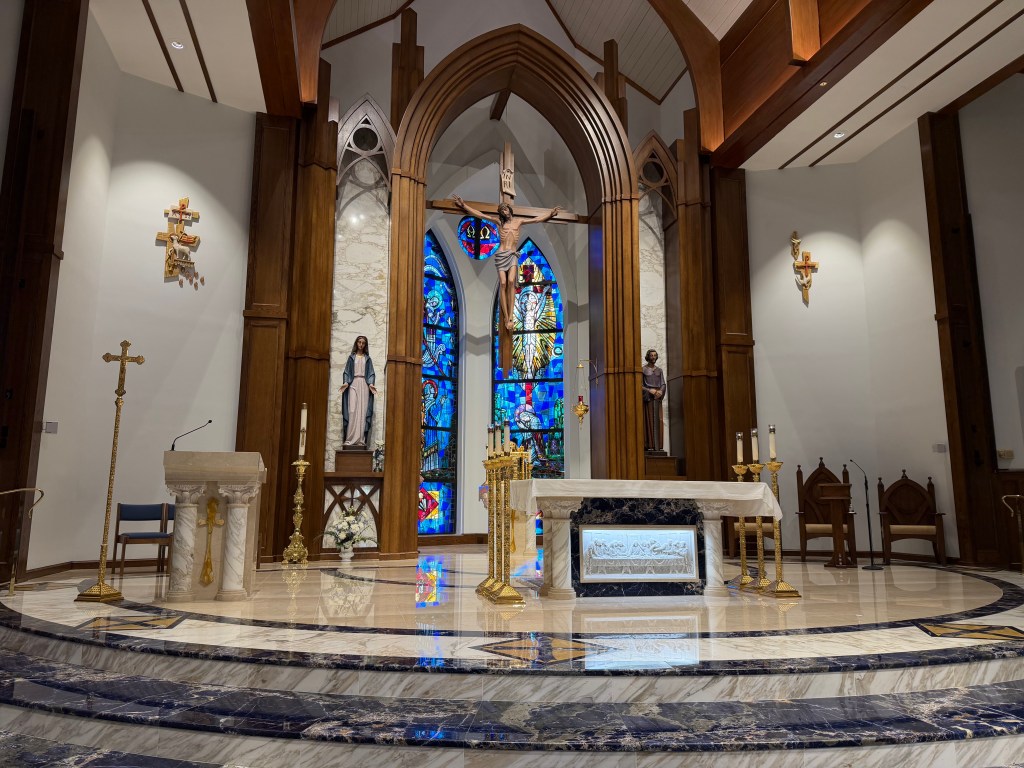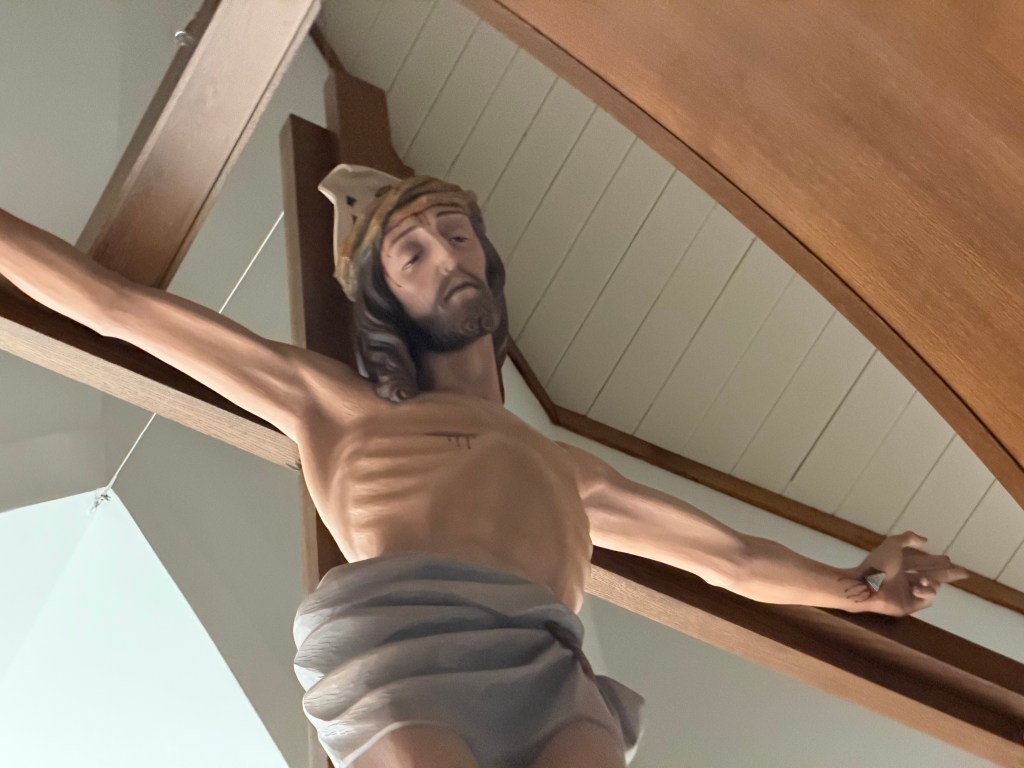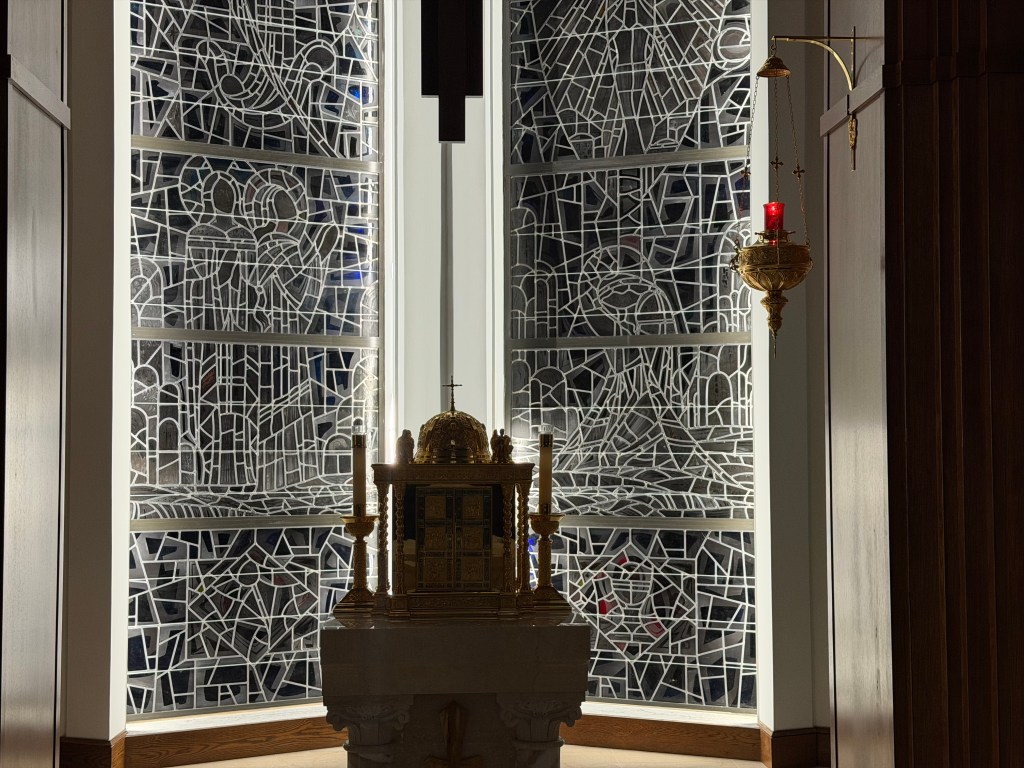
Jesus offers us his light to shine in and through us to be shared.

“Is a lamp brought in to be placed under a bushel basket or under a bed, and not to be placed on a lampstand? (Mark 4:21).

God blesses us by giving his Son to us. He has done great things for us and he is the source of our joy! We do not earn nor is there anything that we can do to gain God’s grace. Our God and Father loves us unconditionally and always without hesitation and calls us to deeper and more intimate communion. But we can lose this gift of invitation to relationship, either by refusing what has been offered, or once accepting and receiving, not doing anything with the gift. If we are people of faith in name only, but not followed by action, we are concealing the light we have been given.

Prayer is the lifting of our hearts and minds to God, to spend time with him and in truly doing so, our lives as with any relationship, is changed. If we are not moving forward in the spiritual life, we are moving backwards. If we do not exercise our faith and allow that to happen over longer periods, we will receive signs of spiritual atrophy. To not even acknowledge the presence of God in our lives, the free gift of his invitation to be in a relationship with him, we will experience limitations and frustrations.

For whether we believe in God or not, we hunger to be in communion with him and one another, so we will be looking for other apparent avenues of happiness that will fall short of fulfilling us. If we do accept that there is a God, yet don’t participate in worship, fellowship, service, meditation and prayer, we are little but not much better off. I can believe that my truck will get me to where I want to go, but if I do not put the key in the ignition, turn on the engine, and shift it into drive, and press the gas peddle, I will remain stationary.

We are called daily to spend time reading, meditating and praying with the words of the Bible, putting into practice what we receive, and serving God as he leads. These spiritual non-negotiables happen more consistently when we schedule them first before any other activities, while being true to our station in life. A parent with an infant will have different demands than a monk or nun. What we do or do not do, does not earn God’s love. God loves us no matter what. The difference is that when we are consistently engaged in spending time with God, following his will, and putting into practice what he is guiding us to do, we experience his love and peace more because we experience him more.

We will then be more like Mary and the saints who reflected the light of Jesus. Privatizing our faith as well as getting into another’s face stifles the light of Jesus. We are called to follow the lead of the Holy Spirit, to be present, caring, understanding, supportive, convicting, and empowering, as we accompany one another in our realm of influence. The relationships we build are those that God brings into our lives.

Jesus has given his life for us, he continues to be present to and through us to others. May we be open to being conformed today and each day by his love. We are better able to do so by resisting and renouncing the temptations, diversions, and distractions that seek to lead us away from God. God sent Jesus to enter the chaos of our lives. May we allow him in to shine his light in our lives so we can identify and purge anything not of him, so that then we may begin to radiate the presence of Christ’s light in simple and concrete ways that allow God to happen through us in each encounter.


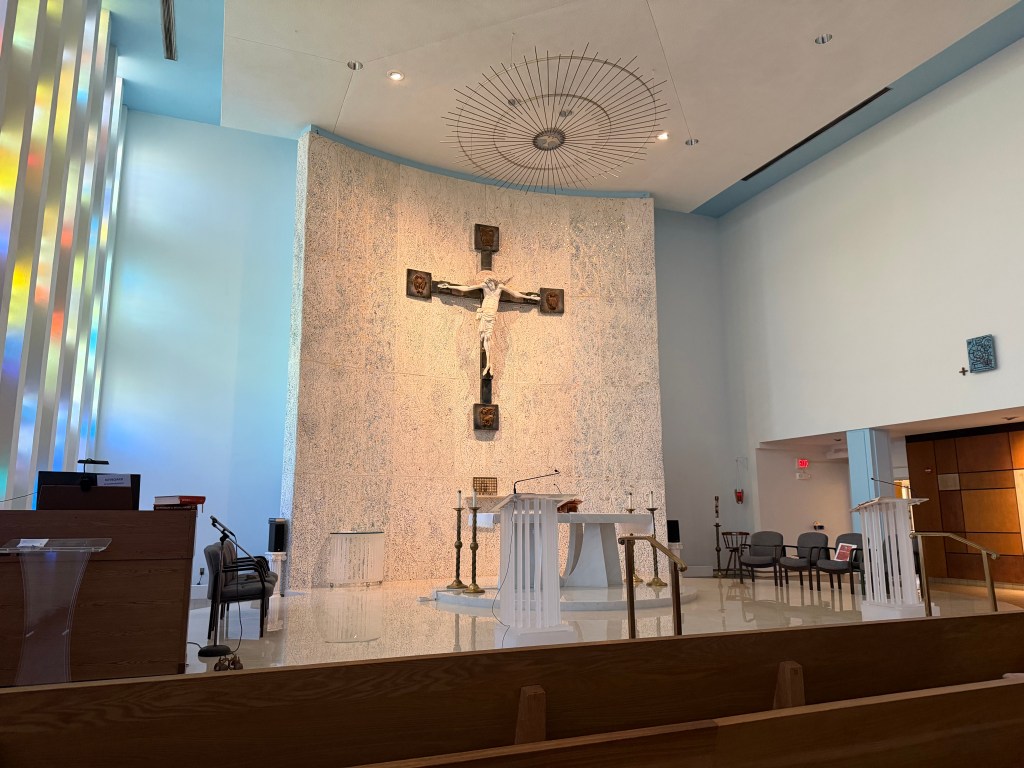
Photo: More of Jesus’ light will shine through us the more we are still enough to receive it.

Link for the Mass readings for Thursday, January 29, 2026

“Whoever does the will of God is my brother and sister and mother.”

Even a surface reading of the Gospels will offer a glimmer of Jesus making things new. We can read and imagine the scene today. Many are gathered around him. The crowd is large, we might recall a similar scene when the four friends came to get to Jesus and were also denied passage because of the enormity of the crowd packed tightly together. Those gathered were focused intently on Jesus as he taught. His family, presumably the relatives that only a few verses earlier came to seize him because some of them thought he was out of his mind (cf. Mk 3:21), had arrived, were standing outside. They send word to Jesus, thinking they would get the VIP treatment. The message passed among the people was: “Your mother and your brothers [and your sisters] are outside asking for you” (Mk 3:32).

Most would have expected him to immediately get up and welcome his family. Jesus seized on the opportunity for a teachable moment. He looked, not beyond and past the crowd that encircled him to his family, did not wave to them to come closer, but rested his gaze upon those who were nearest to him and said: “Here are my mother and my brothers. [For] whoever does the will of God is my brother and sister and mother” (Mk 3:35).

The true measure of the family in the kingdom of God is not bloodline but faith in and following the will of God. Those who have experienced or still experience the gift of a close, tight-knit, extended family can come close to the dramatic moment of silence that must have followed after this statement. For anyone living in the ancient Near East, familial, clan, and tribal relations were paramount to survival. To say that family bonds were strong is an understatement. Yet, Jesus challenged this societal norm by raising the bar even higher and expanded the bond of family beyond blood or marriage ties.

The relatives of Jesus were not present in this inner circle, they were on the outside. Imagine who might have been sitting in that circle; sinners, the unclean, tax collectors, and possibly even Gentiles – non-Jews, and Jesus said that they were his brother and sister and mother! If his relatives thought he had lost his mind before, I cannot imagine what kind of mental conniption they entered into after these words.

Jesus was not devaluing or delegitimizing family, he was restoring the family to its proper place and extending it out beyond what anyone of his time could have conceived of. As Bishop Robert Barron writes, “when we give the family a disproportionate importance, in short, it becomes dysfunctional” (Barron 2011, 17). We as the baptized are united in a deeper way into the Mystical Body of Christ, which is an even more powerful call to unity here than the blood-line of family, clan, or tribe.

The end goal is that as we draw closer in our encounter and relationship with Jesus, we also draw closer together. As we are conformed more and more to the life of Christ we begin to bear his fruit of love, joy, peace, patience, kindness, goodness, gentleness, and self-control (cf. Galatians 5:22).

In sharing the fruit of the spirit, in giving this gift away to one another, our relationships will grow and our bonds will become stronger. Our love grows as we give it away, person to person, out beyond our comfort zones, to the peripheries, where there are those who feel set apart, and/or are on the outside looking in. We are even to share with our enemies. Not possible? True, if we enclose ourselves within our own bubble and focus on protecting our egos. Possible, when we deepen our relationship with Jesus and allow him to love through us.

Too many today are choosing to encase themselves in their own protective bubble wrap. Instead of embracing diversity, we are going backward, we are regressing. By choosing to close ourselves off from other viewpoints, talking over each other and at each other, if we are talking at all, and embracing fear instead of love, we are distancing ourselves from God and each other.

Our strength as a people, as a nation, and as a world increases when we embrace the human dignity of each person, and the rich diversity bestowed upon us through the unconditional love of God. May we embrace the teaching of Jesus who in his emphasis on following God’s will “was insisting that the in-gathering of the tribes into God’s family is of paramount importance” (Barron 2011, 17).

In today’s Gospel account from Mark 3:31-35, Jesus did not define those gathered around him by race, ethnicity, gender, or any other label. He defined them then, as he still defines his family today, as those who are willing to follow the will of God his Father. Mary his mother being the primary model. Imagine what she must have wondered, when she heard Jesus’ words? Mary, “is called to undergo a certain detachment in her earthly relationship to Jesus so that her faith can be stretched to encompass her far greater role in the new family that Jesus is establishing” (Healy, 80).

Jesus, please help us to open our hearts and minds and be stretched, as did Mary, to follow his will even when we may not understand what he is asking of us. Help us to receive the Love of the Holy Spirit, savor, and share that love with others. Help us to sit at your feet, not only to learn from you but also to be empowered and transformed by you, so you may be first in every thought, word, and deed.

———————————————————————

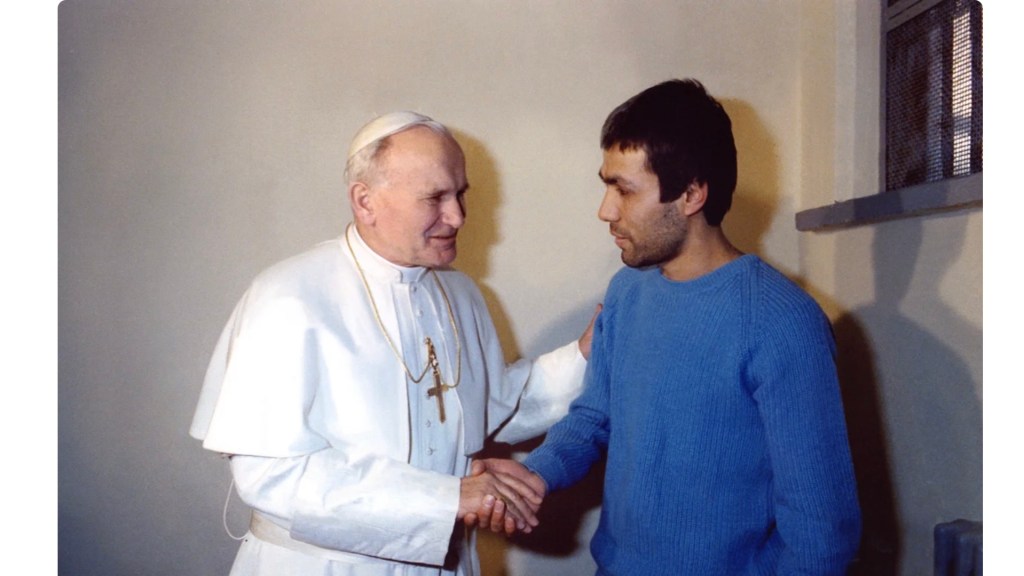
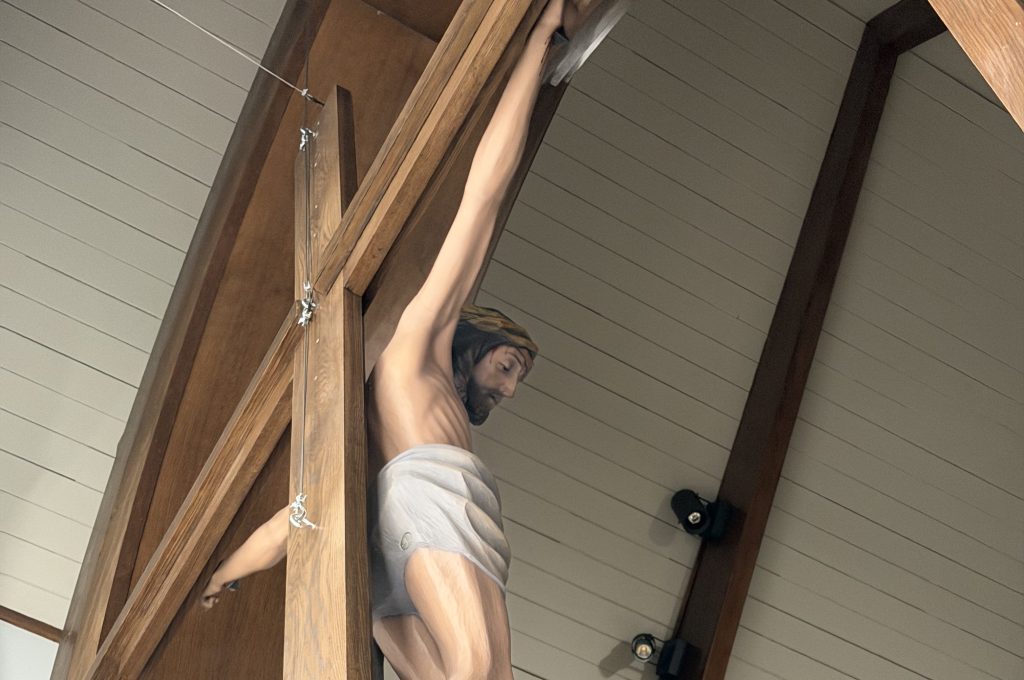
Photo: Who better than Mary follows the will of Jesus and the will of our Father? She who followed Jesus all the way to the cross and beyond.

Barron, Robert. Catholicism: A Journey to the Heart of Faith. NY: Image, 2011.

Healy, Mary. The Gospel of Mark. Grand Rapids, MI: Baker Academic, 2008.

Link for the Mass readings for Tuesday, January 28, 2025

Jesus challenges us to follow him, will we follow?

Jesus has been on a whirlwind tour since beginning his public ministry. Daily he has been healing the sick, casting out demons, teaching with authority, and the number of people continue to gather and press in around him. The authorities have also taken notice are most of the scribes and Pharisees are not pleased with this new upstart rabbi, claiming to preach not from the authority of any rabbi he may have studied with, but on his own. Not only that he is making covert claims and practices that place him on equal ground with God. Not only has the leadership of Jerusalem taken notice, his family from Nazareth have as well.

Jesus has also just called the twelve, representatives of the new Israel. He has returned to the house of Peter and Andrew for a respite. As has been happening, people flock to the home because of their unique needs. The numbers press in with such demand that they made it impossible for Jesus and his disciples “even to eat” (Mark 3:20).

When his relatives heard of this they set out to seize him, for they said, “He is out of his mind” (Mark 3:21). What exactly causes his family to think that he is out of his mind? Is it that Jesus has called Apostles, is it that people are following him in such great numbers to come to be healed, is it that they hear of the growing threat from leadership? Now seeing for themselves the numbers gathering, they don’t get it.

There are many speculations about the “hidden years” of Jesus referring to the fact that there is no mention of Jesus in the gospels from the moment he is twelve years old when Joseph and Mary lose him, until he is about thirty and beginning his public ministry. There are wild speculations about what happened in those unrecorded years, but accounts such as this one support the idea that nothing special happened during that time. Jesus led an ordinary and very simple life and that is why nothing is written.

This could be the reason why his relatives are thinking that he is “out of his mind.” How can this simple carpenter all of a sudden be getting all of this attention? Who does he think he is? Does he think he is better than us?

It also reveals, as we have been seeing with the scribes and Pharisees, and possibly now with Jesus’ relatives, that when we get stuck in our routines, grind ourselves into a rut, and find our definition and security there, we feel safe only in our comfort zones, and that stunts our growth and maturation.

Jesus is a challenge. One of the biggest challenges that he offers is to step out of our comfort zones. We can dig in our heals or trust him and take a risk. Many of Jesus’ relatives as well as the scribes and Pharisees, unfortunately dug in their heels. They were not only unwilling to see who Jesus was, they were not willing to answer his call to follow him as the apostles did.

Jesus, as he shared when he offered the image of the new wine skins, challenges us as well, to be open to the leading of the Holy Spirit. He challenges us not to settle, and he offers to reveal to us the reality that many of us are existing in a chronic state of fight or flight and in perpetual reactive mode. We have not been created to merely survive. God created us to thrive and embrace the gift of our human existence with consolation and joy.

Jesus is inviting us in this moment to breathe, slow and deep. He is inviting us to stretch a bit and to take a risk, to take a step or two out of our comfort zones. Where might that lead? Will we follow Jesus’ call to come and follow him or dig in our heals as well? When we follow Jesus, it will get bumpy, we will be challenged, but following Jesus will lead to our freedom.


Photo: Sitting at the feet of the master USML, Mundeleine, IL.

Link for the Mass readings for Saturday, January 24, 2025

Let us seek Jesus not for what he can do for us, but to grow in relationship with him.

After the most recent clash with those Pharisees bent now on killing Jesus, he “withdrew toward the sea”, the Sea of Galilee. After his entanglements with the Pharisees, he may have sought refuge or a quieter setting away from the crowds. As with other times, going off to a private place to pray. He also acknowledged the seriousness of the leader’s threat and was aware of their plot to kill him. Since his hour was not yet, he was being more careful to stay out of the limelight.

Yet, the people followed. Mark details in his account that many from all over the region came to Jesus to be healed. Among the crowd, unclean spirits threw those they possessed down before Jesus. This did not slow the gathering of people who pressed in on Jesus, just to touch him. The mass of people grew to a point that it was getting out of control so Jesus, “told his disciples to have a boat ready for him because of the crowd, so that they would not crush him” (Mk 3:9).

People wanted to be healed, to be cured, to be exorcised, and brought others to experience the same. Yet they were missing the deeper point of who Jesus is. He was not just a miracle worker, not just someone that brought about physical healing. Healing accounts were heard and known about in the ancient world.  The unclean spirits got it, they recognized Jesus before the people did, “for, whenever unclean spirits saw him they would fall down before him and shout, ‘You are the Son of God'” (Mk 3:11).

They were bound by the authority of Jesus to be renounced. They had to obey him and in calling out who he was they were attempting to control him with no effect. Throughout the Gospel of Mark, we will read about how the crowds, disciples, and even the apostles, all struggle to understand who Jesus is. The people closed in on Jesus seeking to be healed, but missed the deeper hunger within their souls that St Augustine, the fourth-century bishop of Hippo, so eloquently described on the first page of his autobiography: “[Y]ou have made us for yourself, and our hearts are restless until they can find peace in you” (Augustine 1963, 17). Jesus is the Son of God, not just a miracle worker, teacher, or healer, but God Incarnate.

The only way we will be fully satisfied, inspired, fully alive, and be at peace within our own skin, is by developing an ongoing, deepening relationship, and communion with our Father. God is infinite and cannot be exhausted. We as finite beings are left wanting even when we have the best of family, friends, and material things. We always hunger and want for more, because in the depths of our very being, whether we recognize it or not, we want God. The many who came to Jesus for healing, were not aware of the deeper hunger and healing they sought.

The deeper healing that Jesus offers is to restore us to the fullness of who his Father created us to be. To do that, we must be willing to embrace the truth, the way, and the life that he offers us. Which means that we will need to let go of anything that does not align with his will for our lives. At the first, we may be taken aback, even with an attachment to Jesus. We are not to seek what Jesus can give or do for us, that is what the crowds were doing. We are to seek relationship with him. We need not be afraid. Jesus works slowly. His light shines gently.

Jesus satisfies our deepest hunger as he invites us to be drawn into his grace-filled embrace so as to be forgiven, healed, renewed, shaped, and conformed to his heart, mind, and will. When we come to this place of encounter, reconciliation, and intimate relationship, we will know our mission and in serving through that mission we come to know who and whose we truly are. In that place, is our greatest joy and it only gets better the more we receive and share his love!

————————————————————————

Photo: “God speaks in the silence of the heart.” – St. Mother Teresa

St Augustine. The Confessions of St Augustine. Translated by Rex Warner. New York: New American Library, 1963.

Link for the Mass readings for Thursday, January 22, 2025

It is lawful to do good rather than evil, to save life rather than destroy it.

In today’s Gospel scene, Jesus enters the synagogue and sees a man with a withered hand. The eyes of the Pharisees are on him to see if, yet again, Jesus will heal on the Sabbath. Jesus is clear in his mind what he is going to do. Before doing so, he calls the man up and asks the Pharisees, “Is it lawful to do good on the sabbath rather than to do evil, to save life rather than to destroy it” (Mk 3:4)?

Jesus here is giving them a no-brainer of a question. Of course, one is to do good rather than evil on the Sabbath, to save life rather than destroy it! Yet, the Pharisees remain silent!!! Jesus expresses anger and grief. Jesus is meeting the Pharisees on the ground of Scripture that they are using against him and giving them an opportunity to soften their hearts. 1 Maccabees 2:41 records the account of the Maccabeans deciding to take up arms on the Sabbath to defend themselves against attack. With this in mind, Jesus may be appealing to those Pharisees that were challenging him to choose to see the healing of this man as a greater good. Unfortunately, “their hardness of heart” shows they were not appreciative of the scriptural assistance.

At the peak of this fifth conflict in Mark, before we continue, may we stop and imagine ourselves present in the synagogue. Witness Jesus looking at the Pharisees and the Pharisees looking back at him. Have you ever been present when tensions were very high and there was dead silence? Imagine what was going through the mind of the guy standing in between them with the withered hand?!!!

The anger rising in Jesus may have had to do with the unwillingness of the Pharisees to show any compassion at all for this man. That they would hold so tightly to their self-righteous stance and refuse to even have a discussion about the matter. Not even to say in effect, “Yes, Jesus of course, it is lawful to do good, to save a life but what you are doing is unorthodox.” No. They refuse to dialogue. Their faces are set like flint, they dig in their heels. Even though Jesus is inviting them to take just a step to consider another alternative, they instead harden their hearts. In their silence, they are choosing evil over good, choosing to destroy life rather than save it. Pride has reared its grotesque head.

Jesus breaks the silence as he says to the man, “Stretch out your hand.”

The man is healed, but instead of rejoicing, and sharing the good news as Andrew did with his brother Simon, the Pharisees leave immediately to find the Herodians and begin to plot to not only undo Jesus but “to put him to death.” Think about the massive irony! They who would refuse to see a man healed on the Sabbath, did not hesitate to plan someone’s death on the Sabbath.

We have witnessed in today’s Gospel the poison of pride. We have witnessed the mercy of God presented and rejected. As is stated in the Catechism of the Catholic Church: “There are no limits to the mercy of God, but anyone who deliberately refuses to accept his mercy by repenting, rejects the forgiveness of his sins and the salvation offered by the Holy Spirit” (1864). That is what Jesus is angry about. Not only do the Pharisees resist any move in the slightest direction toward compassion, or their own repentance, they further separate themselves from the love of God. They start with a principle of defending the law, and walk out seething with a premeditated intent to kill Jesus, and on the Sabbath!

With each choice of putting self over another, pride grows. Its appetite is insatiable. Pride is known as the mother of all sins because of its disordered focus on self at the expense of all others and all else. The deadliest component of which is in direct opposition to God and separation from the very life force of our existence. Choosing to be prideful, we foster attitudes of vanity, arrogance, and a disordered self-reliance. We can think the center of universe revolves around us, and that is not only untrue, it is unhealthy.

If there are places where we see any tendrils of pride, amen! Slash them, repent, and ask Jesus to give us the antidotes to pride, humility and obedience to God. Choosing these virtues frees us from the isolating grip of pride so we may experience the healing communion of Jesus. May we reject evil and choose the good, reject pride and choose love, reject death and choose life, resist the temptation to withdraw or scowl and instead offer a smile, a hand of welcome, and/or a listening ear.

———————————————————————-

Photo: Jesus, thank you for your light and love that reveals our sin, so we can repent, confess, heal, and be forgiven and free and who you created us to be.

Catholic Church. “Article 8: Sin,” in the Catechism of the Catholic Church, 2nd ed. Vatican: Libreria Editrice Vaticana, 2012.

Link for the Mass readings for Wednesday, January 21, 2025

Jesus invites us to follow him, to repent, and to be healed.

Jesus gives face to the living word of God come down from heaven to transform his people as he continues to teach with authority and offer healing. In today’s account of Mark, Jesus calls his fifth disciple, Levi. The key difference with this call of Levi and the four fisherman is Levi’s occupational hazard.

Tax collectors were disliked, even despised by many in ancient Palestine because they were considered unclean, and categorized along with lepers and sinners. They were cast in this net because the tax collector had a responsibility to pay a fixed amount to the occupying power of Rome. This in itself was bad enough because their own countrymen were colluding with the enemy. What made matters worse was that too many kept as a commission anything collected over and above that fixed amount. The majority of the population, barely getting by, paying a temple tax, and the Roman tax, then finding out their local tax collector was taking more than their fair share, did not make for feelings of endearment.

Jesus surprises all who had come to hear him teach when he not only invites Levi, also known as Matthew, to follow him but then they have dinner together. We are witnessing yet again another healing miracle. Jesus provides an opportunity of bridging divides by inviting someone to his inner circle, to turn away from one way of life to begin anew, to: “Repent and believe in the gospel” (cf. Mk 1:15). The Pharisees question his choice of table fellowship, not to Jesus directly but by seeking an answer from his disciples. The location of both the Pharisees and disciples is not clear. Are they a part of this gathering of the meal or both at a distance, observing?

They could not have been at too great a distance though because Jesus could hear their concerns and responded to them: “Those who are well do not need a physician, but the sick do. I did not come to call the righteous but sinners” (Mk 2:17). The Pharisees, and possibly some of his disciples, were not a part of the intimacy of this communion because of their own unwillingness to accept those that Jesus invited to share a meal, to accept that they too were sinners also in need of healing.

All have sinned and fallen short of the glory of God. Jesus forgives and offers mercy to all who are willing to be aware of his invitation to fellowship. In our humility to recognize our sins and repent, we receive healing and transformation, and are like Levi and his friends offered the opportunity to grow in relationship and participate in communion with the one who is ushering in the kingdom of God. This is a foreshadowing of the last supper and the celebration of the Mass.

We too are invited as sinners to join the banquet, to be in fellowship with Jesus. As Levi was called, we are given an opportunity to begin again, to leave behind anything that separates us from God and one another and follow Jesus, who came that we might be forgiven and healed.

As with many Gospel passages, today’s offers a wonderful opportunity to place ourselves in the scene. Mark presents Jesus teaching the people though he again does not tell us anything about what he shared. Knowing what follows, we might think about and ask ourselves, “What might Jesus have taught before going to Levi at the custom’s post?” Could he have been talking, as in his parallel account of Matthew (Levi), about how Amos preached that God desires mercy and not sacrifice (Mt 9:12)?

Let us read this passage slowly a few times (Mark 2:13-17) and meditate upon these words of God that are “living and effective.” Then as Jesus moves to the custom post, follow him, and the others in our imagination. What is our honest reaction to Jesus calling the tax collector, Levi? Are there sins that others commit that we find easy to forgive, others that we find hard to forgive? As the scene shifts to the breaking of the bread at this dinner, do we dive in with this motley crew, stay at a distance, or walk away?

God’s words are living. May we not only read them, but also meditate upon and pray with them so that we may be transformed by them. May we also encounter Jesus in this passage, be willing to listen to him speak to us in the silence of our hearts, and become one of or deepen our commitment as his disciples. This is a wonderful spiritual practice that can bring us much joy, forgiveness, healing, and deeper communion with the Divine Physician and healer of our souls. No RSVP needed, just come, open up your Bible, and join the feast!

————————————————————————-

Painting: Jesus’ “mission is not to vindicate those who keep the law, and condemn the rest; rather, it is to offer the healing of which all people are in need” (Healy, 61).

Healy, Mary. The Gospel of Mark. Grand Rapids, MI: Baker Academic, 2008.

Link for the Mass readings for Saturday, January 16, 2025

Giving ourselves the time to pray, to breathe, and be still, helps us to be loved so to love.

There is a danger when we read a comment from Scripture such as when Jesus, “cured many who were sick with various diseases, and he drove out many demons” (Mk 1:34). The danger is that we may not believe we are capable of healing as Jesus did, so we don’t do anything active with our faith. We also might think that Jesus is divine, so of course, there is no way we can measure up to what he has done. An even less helpful line of thought would be to disbelieve that the healings of Jesus happened at all, they were all made up, and that they never really happened.

Another challenge can be pride. We may want to heal like Jesus, for the purpose of our own aggrandizement, so people look at us, not God. That was the sin of Simon the magician, who saw the Apostles healing, just as Jesus had, and offered payment for the power to accomplish the same (cf. Acts 8:9-25). Along the same line is wanting to do something grandiose, something beyond our own unique gift and charism, again so the focus is placed on us.

A more helpful perspective is ponder about the truth that Jesus had a specific mission to accomplish, and yes he is divine, but, as I have shared often and the Church maintains, Jesus is also fully human. He had a specific mission from his Father, he gave a specific mission to his Apostles, and his Father has a specific mission for each and every one of us as well. Jesus himself proclaimed: “Amen, amen, I say to you, whoever believes in me will do the works that I do, and will do greater ones than these, because I am going to the Father” (Jn 14:12). Not only works as Jesus did, but even greater ones! Jesus knows the plan God has for our life, the part we are to play, and he will share it with us and empower us with that which we need to accomplish it.

We all have the capacity to provide God’s healing presence to others. God works through us when we embrace the love of the Holy Spirit and are conformed by it such that we come to know how God wants us to love and be present. There is some way for all of us to contribute. Throughout the Bible there are accounts of how God invites others to service, each in very small and humble ways – Jesus himself began his days on this earth wrapped in swaddling clothes, in a feeding trough, as vulnerable and humble a beginning as there can be. He then lived the next thirty years in obscurity until his public ministry began.

We need to resist the temptation to limit and define Jesus, but instead embrace the gift of a “sitting theology” in which we allow ourselves to look at Jesus, take him in, for he is “infinite Love incarnate” (Barron). Then to place ourselves before Jesus and allow him to expand us so that we can receive his revelation and guidance and come to know the mission God has planned for us. We also need to be willing to allow his Spirit to work through us.

Then as we go about our lives each day, we become contemplatives in action. We take time away to pray as Jesus did, listen for his guidance, and be open to the experiences that arise. Facing opportunities and interruptions in which we can be present to another with a smile, an active listening ear, and a helping hand, leads to more joy. In each small act, we say yes to God’s invitation, are present and accompany others by our willingness to love as he has loved us. Small acts of presence and willing each other’s good, leads to healing.

—————————————————————————–

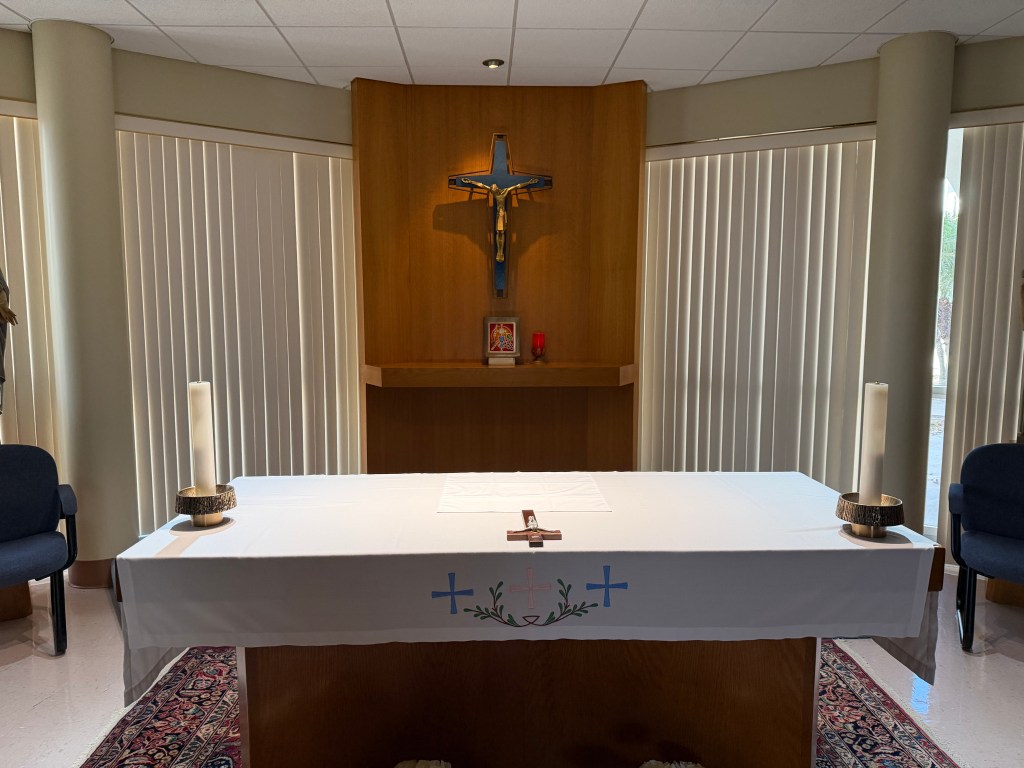
Photo: Jesus often went off to a deserted place to pray, who better to teach us how to do the same. Some quiet time with Jesus to end the day back at USML.

The thought of a sitting theology comes from Bishop Robert Barron Lesson 5 lecture that he gave on Hans Urs von Balthasar from his Word on Fire Institute. To learn more about the WOFI and what it offers, type the following link into your web browser: https://wordonfire.institute

Link to the Mass readings for Wednesday, January 14, 2025

When we know who Jesus truly is, we will know who we are.

“Who are you” (Jn 1:19)? John did not claim or pretend to be something that he was not. He was clear to those leaders that arrived from Jerusalem to assess and questions him. John was clear of his place in serving God, about the mission and testimony or witness that God gave him to proclaim. John was not the messiah, he was preparing the way of the Lord. John shared that “there is one among you whom you do not recognize, the one who is coming after me, whose sandal strap I am not worthy to untie” (Jn 1:26-27). He, like Mary, did not point to himself but to Jesus.

The question also arose about who Jesus was. It was not only a question during his lifetime, but this query was also addressed during the early development of the Church’s Christology and still arises today. The readings of the Christmas Season, that we are still celebrating liturgically, in fact, all four Gospels, address the question of who Jesus is. As presented yesterday, in naming Mary, Theotokos, the God bearer, the Church was defining that Jesus was one divine person subsisting in two natures. In fact, the entirety of the Bible from Genesis to Revelation answers this question!

Just as the Jewish authorities asked John and Jesus who they were, people have continued to ask who Jesus is. The majority of the heresies that arose in the Church surrounded this question and those that do not know the history of these false beliefs and teachings may believe in them today and not know that they do.

From the account of the Mystery of the Annunciation (Luke 1:26-38), we recognize that at Jesus’ conception in the womb of Mary, Jesus remained fully divine while becoming fully human. He did not become the Christ at his baptism as the heresy of Adoptionism would propose. Nor was Jesus the most powerful, created being as the priest Arius would suggest in the third century. We counter the heresy of Arianism every Sunday when we recite in the Nicene Creed: “God from God, Light from Light, true God from true God, begotten not made, consubstantial with the Father; through him, all things were made.”

Arianism taught that Jesus was a created being, the highest of beings made by God, but created none the less. The Church teaches that Jesus is begotten not made. He was, is, and always will be God, the Second Person of the Trinity. He is God the Son, consubstantial, homoousios, which means of one and the same substance with God the Father. The Father and the Son are one in substance, yet distinct in their operation. The Father begets, the Son is begotten.

Adoptionism and Arianism are but two of the various early heresies that arose, of which Arianism gained more of a following. Arianism still rears its head today in practice as it did then because of those who are not able to accept that the divine could become human. This goes back to our starting question that was asked about John. “Who are you?”

A good question to answer for us ourselves. We are human beings created in the image and likeness of God, even though our likeness has been dimmed by sin. We are physical beings with a rational soul, we are invited to embrace the reality that we are human and through our participation in the life of Jesus, beginning with our baptism, we are adopted daughters and sons of God. Do we reject our humanity, our created status, trying to determine our own destiny on our own terms, to put ourselves in the place of God, or are we like John the Baptist, and acknowledge the gift of who we are and the mission God invites us to participate in?

As we continue to celebrate this Christmas Season (Yes, it is still Christmas!) and the new year that has just begun, may we embrace that each and everyone of us is a unique person, never created before nor will we ever be created again. Each of us has a particular vocation and part to play in building up of the reign of God. As we repent and turn away from sin, live our lives in accord and journey with Jesus, and as we, like Mary, hear, ponder, and observe the word of God (cf. Luke 11:28), we will come to know him and our purpose.

As we grow in our relationship, collaborate, and discern with Jesus each of our thoughts, words, and deeds, the smallest to the biggest, we to will be able to witness like John the Baptist. By our testimony, we too will prepare the hearts and minds of those we meet to encounter the forgiveness, mercy, and love of Jesus that we have experienced. Let us pray in these first days of the new year for a heart, mind, and soul that is open to following the love of the Holy Spirit so that we can know who we are, whose we are, the mission that the Father has given us, and begin to live it each day. Baby steps!

——————————————————————————————-

Photo: Icon of Christ the Great High Priest by Marek Czarnecki 

Link for the Mass readings for Friday, January 2, 2026

When we take the time to be still, we will see and believe.

Jesus Christ is born for us. Jesus Christ dies for us. Jesus Christ conquers death and rises again for us. Because of our place in time, December 27, 2025 AD – Anno Domini, In the year of our Lord, we are capable of experiencing his life, suffering, death, Resurrection, and Ascension into Heaven. The important question we need to answer is, “Does this new fact, this new reality in human history, make a real difference in our lives?”

Christmas did not end two days ago. We are still in the Octave of Christmas. The Church celebrates two octaves in the Church liturgical calendars, Christmas and Easter. These eight days are celebrated to impress on us the solemnity of the event of remembrance. From the vigil celebration of Christmas Eve on December 24 to January 1, the Solemnity of Mary the Mother of God, we celebrate the significant event of the Incarnation, the Son of God, the second Person of the Trinity, becoming one with us in human history.

“And the Word became flesh and made his dwelling among us” (John 1:14). The Masses celebrated within the Octave of Christmas, as well as the readings of Evening Prayer in the Liturgy of the Hours, reflect the celebration of Christmas Day each day for the eight days. It is like having a week-long birthday party. More importantly, we are invited to meditate and ponder this wonderful gift, that God has come close to dwell among us.

If we are solely focused on gifts, the returning of gifts, and celebrations apart from the celebration of Jesus’ birth; if we are removed from the liturgical cycle and rhythm of the Church, it is easy to fall into the daily harried pace again and post-Christmas blues may creep in because it can feel like everything is done but the returning of gifts and getting a good after Christmas deal. Christmas music has been alive and well on many radio channels for weeks, but at some point on Christmas Day and often the following day, they stop. They stop at the time when they ought to begin!

The material and finite, no matter how wonderful, even our closest relationships, will never satisfy our deepest hunger and thirst. If you are experiencing any post-Christmas blues, today is a great opportunity to let go of the material for a bit and enter into the gift of silence, and to spend some time meditating and contemplating on who will satisfy our deepest longing. The greatest gift that we have been given, we began to celebrate again two days ago.

The Son of God changed human history through his conception and birth and we are invited to participate in God’s great theodrama of human transformation. Today’s Gospel reading is a fast forward from this birth we are celebrating and the gift that keeps on giving, the reality of the purpose of the incarnation.

Jesus was born to die. He obeyed and trusted his Father at every stage of his life, even in the garden and on the cross. He died and experienced our greatest fear: death. That Mary, Peter, and John, “saw the burial cloths there, and the cloth that had covered his head, not with the burial cloths but rolled up in a separate place” was not just a random detail. Grave robbers would not have taken his body without the cloths of the corpse. When Lazarus was called out of his tomb, he shuffled out still tied in his burial cloths and his head still covered. Lazarus was resuscitated but would die again. “Something radically different has happened to Jesus” (Martin and Wright, 333).

The Holy Spirt overshadowed Mary at Jesus’ conception, helped Jesus conquer death and rise again, and through the Holy Spirit again, Jesus is made present through the priest at each celebration of the Mass. Mary Magdalene was the first to experience the empty tomb and shared this good news with the apostles. Peter and John ran to see. John arrived first. John remained outside, possibly out of respect, to allow Peter to go first. Peter saw the empty tomb except for the burial clothes. When John entered, “he saw and believed” (Jn 20:8).

Are we willing to take the time to ponder as John did? To pause and to be still. To allow God to speak to us in the silence of our hearts? John, Mary, and Peter’s lives were changed and transformed because they encountered Jesus, and no matter the challenge, gave their lives to him. We are invited to do the same. We were created to be in relationship with Jesus and our hearts will be restless until we allow ourselves to slow down, embrace the gift of silence, be led by the Holy Spirit, and so that in his presence in the Eucharist, we too may experience him, see, and believe.

————————————————————–

Painting: St. John stained glass window from Holy Cross CC, Vero Beach, FL

Link for the Mass readings for Saturday, December 27, 2025

“My spirit rejoices in God my savior”.

“My soul proclaims the greatness of the Lord; my spirit rejoices in God my savior, for he has looked upon his lowly servant. From this day all generations will call me blessed: The Almighty has done great things for me, and holy is his Name.” (Lk 1:46-49).

These verses from Luke are the beginning of the Canticle of Mary or the Magnificat. These words are recited or chanted daily each evening for those who pray Vespers or Evening Prayer in the Liturgy of the Hours. We are still able to read and recite these words, again and again, generation after generation because Mary and Elizabeth were moved by the Holy Spirit and acted upon his leading. They did not remain silent, they did not hold back their words for fear of being rejected. Mary went in haste to come to be with Elizabeth, she did not hesitate and think things over. She was clear and she went.

Mary’s words of greeting were heard by John and he leaped in the womb of Elizabeth who then, moved by the Holy Spirit, confirmed the encounter of the Annunciation when she said: “Most blessed are you among women, and blessed is the fruit of your womb” (Lk 1:42). Mary then responded glorifying the Lord for what God had done for her, for us, for the whole created order.

Present in this hymn of praise, thanksgiving, and hope, are words that we can make our own. We too can proclaim “the greatness of the Lord”. We can do so by thanking God for what he has done in our lives, as St Irenaeus did so when he recognized this and wrote that God sent his Son to open up heaven for us in the humanity he assumed.

Mary embodies for us Jesus’ clarification that “blessed are those who hear the word of God and observe it” (Luke 11:28). Mary has done just that all her life. She has and continues to point all generations to her Son, directing not only the attendants at the wedding feast of Cana but all of us to “do whatever he tells you” (cf. Jn 2:5).

May we rejoice with Mary today by reading and praying with Mary’s Magnificat, (Lk 1:46-56), as we prepare to remember and celebrate the birth of her Son, only a few days away. Let us open our ears to hear and do whatever Jesus tells us, such as: “You shall love the Lord your God with all your heart, with all your soul, with all your mind, and with all your strength. The second is this: You shall love your neighbor as yourself” (Mk 12:30-31).

Loving our neighbors also includes anyone that really gets under our skin. We need to learn again how to have civil and respectful dialogue. We can disagree but still respect one another without belittling or dehumanizing. We can also love another, while choosing to keep at a distance if we have been belittled or demeaned. We can listen to one another’s points of view, without shouting at or over one another, and maybe we can learn from each another again. Wouldn’t the gift of respecting the dignity of another be nice to wrap, place a nice bow on, put under the tree, and open this Christmas?

———————————————————————-

Photo: Mary reflected the light of Jesus to others even at the moment of his conception in her womb.

Link for the Mass readings for, Monday, December 22, 2025