Jesus is our light, love, and salvation.

The scribes who had come from Jerusalem said of Jesus, “He is possessed by Beelzebul,” and “By the prince of demons he drives out demons” (Mark 3:22).

The scribes, coming in from Jerusalem, most likely to investigate the happenings of this Jesus they have been hearing about, experience for themselves Jesus exorcising demons. They do not nor seem to want to understand how he is able to cast them out and thus healing those possessed. They judge that he does this feat, not by the power of God, but instead, by the power of Beelzebul, the prince of demons. Could their purpose be to delegitimize, or literally demonize, Jesus in such a way that those beginning to follow him will begin to doubt or outright turn away from him? If Jesus is who he says he is, then the scribes are actually the ones serving Satan in aligning with him to sow discord and disunity.

Jesus provides an invitation to build bridges of reconciliation and healing to restore the unity that has been lost by those choosing to sin, to put self first over God. He also meets those on the peripheries, those who have been kept at arm’s length, healing those conditions which have been used to justify their separation. Yet Jesus does not impose, he proposes. Even so, Jesus demands a choice.

Jesus shows over and over again by word and deed not only how he is creating a bridge of connection between the human and the divine, he is in actuality the bridge, the kingdom of God in our midst, and yet, he is not going to drag anyone over against their will. Jesus calls all who encounter him to make a choice, there is no middle ground, we are either for him or against him.

We have witnessed in the Gospel accounts how some of the scribes, Pharisees, and even some of his own relatives reject Jesus. He is able to perform only a few miracles in his own hometown. Those who say no to the invitation cut themselves off, separate themselves from the very source of their life, the very core and sustaining force of their being. Those who say, “yes’ and repent, like those that receive his healing, will be transformed, and are freed from their enslavement to sin.

When they continue to say, “yes”, day by day, decision by decision, they align themselves with the very source and communion they have been created for, God the Father. This is no one revelatory moment but a daily commitment of saying, “yes” to Jesus. Even when we mess up or fall for temptation, let us refuse to stay down but arise, repent, and begin again and again. We must always and everywhere reject the lie that echoes in our minds that we cannot be forgiven. Jesus loves us more than we can ever mess up, he loves us more than our worst choices or mistakes, more than our most grievous sins, and he will forgive us time and again, as long as we are contrite, seek his help to sin no more, and are willing to perform the penance to atone for our sins.

If this is true, then what does Jesus mean when he says, “whoever blasphemes against the Holy Spirit will never have forgiveness, but is guilty of an ever lasting sin” (Mk 3:29)? Jesus refers here to our free will to accept or reject the free gift of his grace. We can observe this played out in the choices of Peter and Judas. Peter repented, was forgiven, and transformed. Judas withdrew within himself, cut himself off from Jesus, did not believe that Jesus would forgive him, and took his own life. Jesus would have forgiven Judas as he had Peter, but Judas kept himself at a distance. He refused to accept the love of the Holy Spirit. He cut himself off from the very source of his life and salvation.

We have a choice to make each day. We can let ourselves be defined by our sins and our worst mistakes, believe the father of lies who promotes division and isolation, tempts and seeks to condemn us, separate us from Jesus and one another, with the intent to kill us. We can walk the path of darkness which consists of living defensively, keep others at a distance, demean, belittle, and degrade others, as well as live in the shadows of indifference and cynicism.

Or we can surrender our will to Jesus, accept his guidance and conviction so that we can see our sins and repent from our pride, prejudice, greed, lust, envy, gluttony, sloth, and wrath. We can believe that Jesus is who he said he is, seek his forgiveness, healing, and love, and join in the mission of sharing his gospel.

As we do so, we will take steps forward and steps back, and we stumble and we will fall, but through each experience, the hand of Jesus is still there to help us back up. When we are willing, we will be forgiven again and again, and begin again and again. We are not alone. Mary the Mother of God and all the saints said, “yes” to Jesus’ invitation. They understand what we are going through. They are also cheering us on, guiding us, empowering us, so that one day we too will be where they are, seeing God the Father face to face. Until that time, while we are still here this side of heaven, let us breathe, receive, rest, and abide in God’s love so to radiate his Son’s light and love, in our own unique way.

———————————————————-

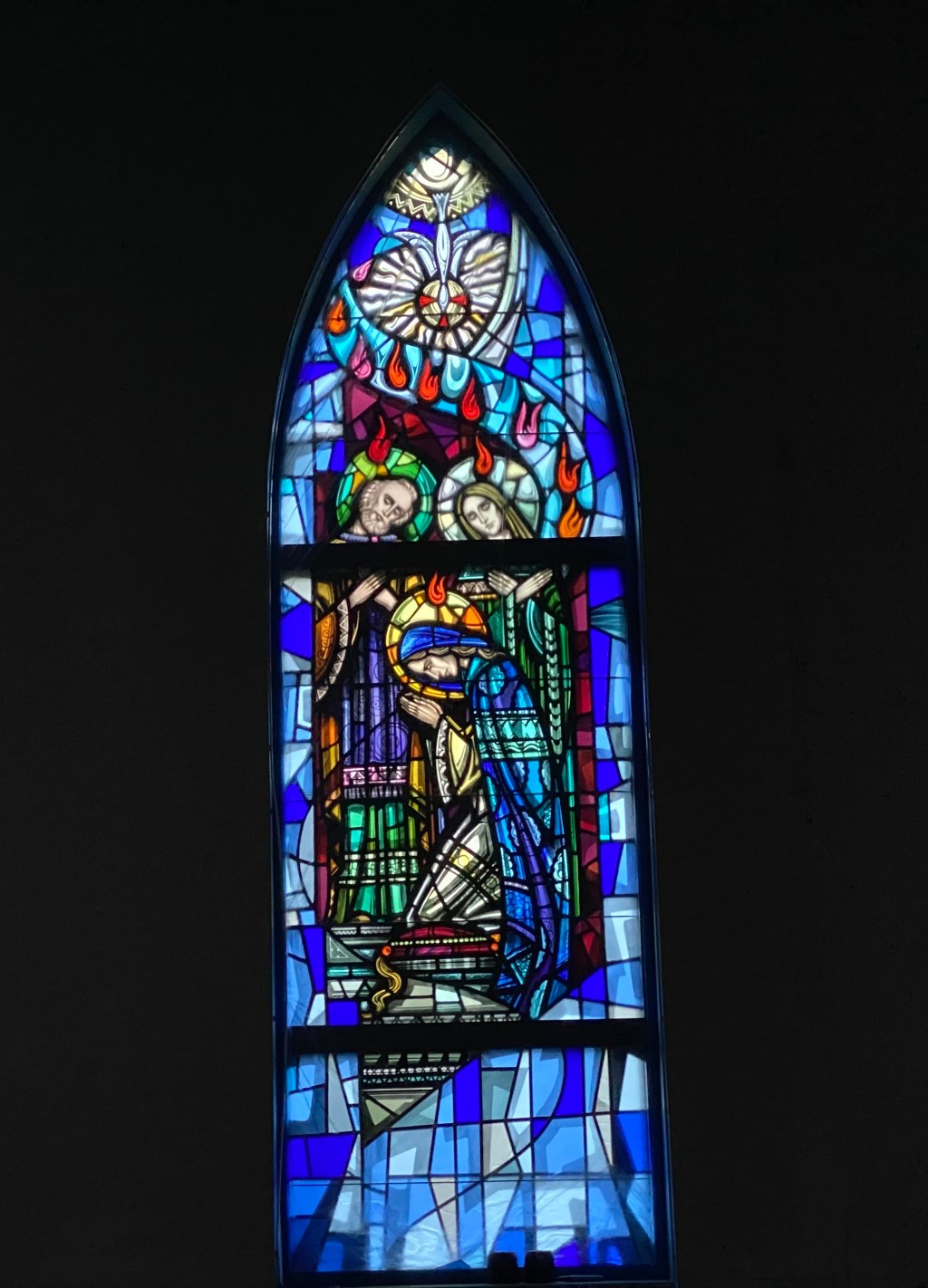
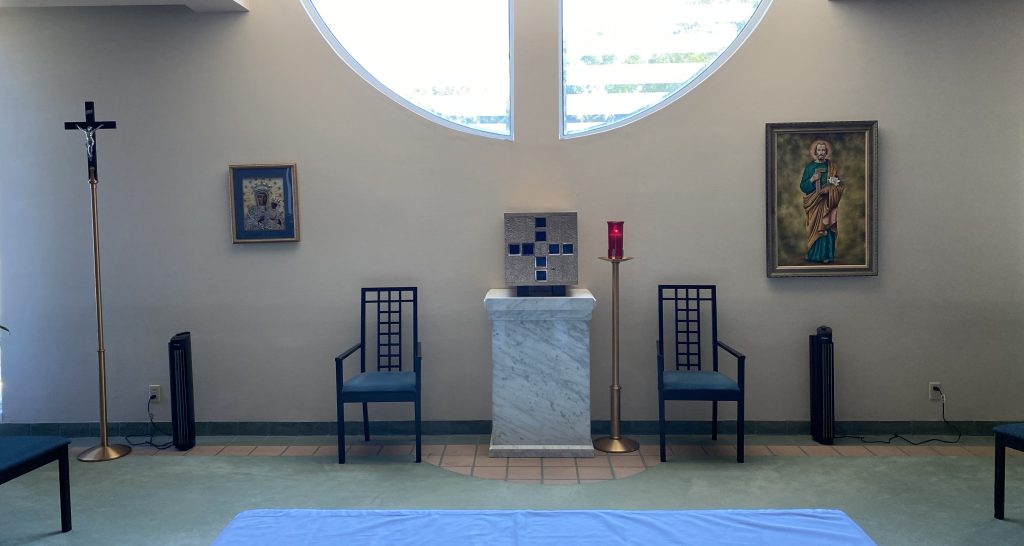
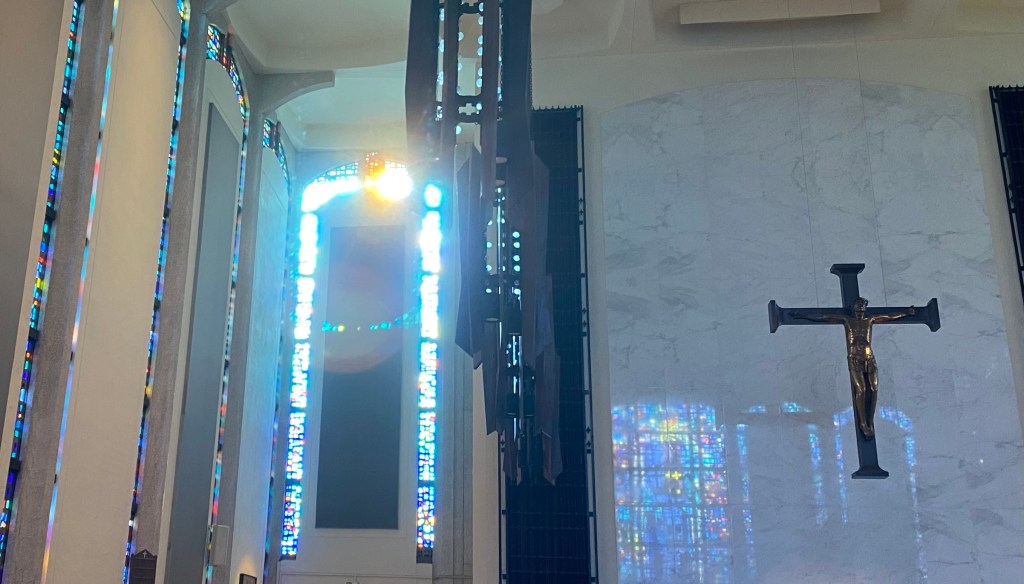
Photo: A quiet moment to breathe and receive the love of Jesus.

Link for the Mass readings for Monday, January 27, 2025

Will we follow Jesus as Levi did?

In both the first reading from Hebrews and verse from Psalm 19 we read about the power of God’s word. “The word of God is living and effective” (Hebrews 4:12) and the words of the “Lord, are spirit and life” (Psalm 19). Jesus gives face to the living word of God come down from heaven to transform his people as he continues to teach with authority and offer healing. In today’s account of Mark, Jesus calls his fifth disciple, Levi. The key difference with this call of Levi and the four fisherman is Levi’s occupational hazard.

Tax collectors were disliked, even despised by many in ancient Palestine because they were considered unclean, and categorized as with lepers and sinners. They were cast in this net because the tax collector had a responsibility to pay a fixed amount to the occupying power of Rome. This in itself was bad enough because their own countrymen were colluding with the enemy. What made matters worse was that too many kept as a commission anything he collected over and above that fixed amount. The majority of the population, already just getting by, paying a temple tax, and the Roman tax, then finding out their local tax collector was taking more than their fair share, did not make for feelings of endearment.

Jesus surprises all who had come to hear him teach when he not only invites Levi, also known as Matthew, to follow him but then they have dinner together. We are witnessing yet again another healing miracle. Jesus provides an opportunity of bridging divides by inviting someone to his inner circle, to turn away from one way of life to begin anew, to: “Repent and believe in the gospel” (cf. Mk 1:15). The Pharisees question his choice of table fellowship companions. It is not clear if the Pharisees are eating with them or are on the outside looking in. The other curious point is that the Pharisees are conversing with Jesus’ disciples. So both groups are together witnessing the communal exchange, from a distance. They choose not to engage in the fullness of the fellowship.

They could not have been at too great a distance though because Jesus could hear their concerns and responded to them: “Those who are well do not need a physician, but the sick do. I did not come to call the righteous but sinners” (Mk 2:17). The Pharisees, and possibly some of his disciples, were not a part of the intimacy of this communion because of their own unwillingness to accept those that Jesus invited to share a meal, to accept that they too were sinners also in need of healing.

All have sinned and fallen short of the glory of God. Jesus forgives and offers mercy to all who are willing to be aware of his invitation to fellowship. In surrendering our finite freedom over to his divine freedom, we receive healing and transformation, then are offered an opportunity to develop an intimate relationship and participate in communion with the one who is ushering in the kingdom of God. This is a foreshadowing of the last supper and the celebration of the Mass.

We too are invited as sinners to join the banquet, to be in fellowship with Jesus. As Levi received, we are given an opportunity to begin again, to leave behind anything that separates us from God and one another and follow Jesus, who came that we might be forgiven and healed.

As with many Gospel passages, today’s offers a wonderful opportunity to place ourselves in the scene. Mark presents Jesus teaching the people though he again does not tell us anything about what he shared. Knowing what follows, we might think about and ask ourselves, “What might Jesus have taught before going to Levi at the custom’s post?” Could he have been talking, as Matthew adds in his parallel account, about how Amos preached that God desires mercy and not sacrifice (Mt 9:12)?

Let us read this passage slowly a few times (Mark 2:13-17) and meditate upon these words of God that are “living and effective.” Then as Jesus moves to the custom post, follow him, and the others in your imagination. What is our honest reaction to Jesus calling the tax collector, Levi? Are there sins that others commit that we find easy to forgive, others that we find hard to forgive? As the scene shifts to the breaking of the bread, do we dive in with this motley crew, stay at a distance, or walk away?

The words of the “Lord, are spirit and life.” May we not only read them, but also meditate upon and pray with them so that we may be transformed by them. May we also encounter Jesus in this passage and be willing to listen to Jesus speak to us in the silence of our hearts. This is a wonderful spiritual practice that can bring us much joy, forgiveness, healing, and deeper communion with the Divine Physician and healer of our souls. No RSVP needed, just come, open up your Bible, and join the feast!

————————————————————————-

Painting: Caravaggio’s “The Call of St. Matthew”

Link for the Mass reading for Saturday, January 18, 2025

Some guidance from Jesus, St. John, and St. André Bessette, for the new year.

The beloved disciple John shares with us today a wonderful compass to guide us into the new year. From his first letter he writes that God’s “commandment is this: we should believe in the name of his Son, Jesus Christ, and love one another just as he commanded us” (I John 3:23).

Before we can believe in God’s Son, we need to trust him. For many if not all of us at some point in our lives who have experienced being hurt, betrayed, or wounded in any way, trust can be hard. 

That is why the Son of God was willing to be sent by his Father. He wanted to become one with us so that he could not only experience all the pain and suffering of our humanity but that he could take that upon himself, even death, so he could conquer them and heal, restore, and show us the way back to the Father, through our suffering and pain and into healing.

We can trust Jesus. Jesus not only has our best interest in mind, but he knows the plan of his Father for our lives and he can lead us to experience his love and our vocation as we trust him by taking one step at a time. He gives us enough light to see two steps ahead and when we take those steps, he will give us enough light to see the next two.

We can trust Jesus, but each thought or invitation we hear in our mind is not necessarily from Jesus. Some may appear good and true, but are only apparently so. For as John continues: “Beloved, do not trust every spirit but test the spirits to see whether they belong to God” (I John 4:1).

The devil and his demons tempt, entice, divert, and distract us, with the ultimate goal to lead us away from the love of God, the source of our true fulfillment. They seek to plant seeds of so doubt, so we believe that God does not have our best interest in mind. And once those seeds of doubt begin to sprout he seeks to isolate us from our Father by fertilizing those doubts with distrust in our minds and hearts. And when we sin, the devil condemns and shames us, and leads us to believe that we cannot be forgiven and that no one will accept us for what we have done or for who we are.

God never tempts us, he invites us and challenges us to move beyond our sins and our fears. He gently coaxes us to come out of the darkness of our self-centered, protective cocoon, and into the gentle light of his love. He does so patiently, sometimes with a firmness of a good parent, but gently. We hear his voice mostly in the quiet and stillness of our heart. When we do make a mistake, he does not condemn us, he convicts us to learn, to renounce our mistake. When we sin and turn back to him, he forgives and embraces us. We then begin again strengthened by his grace and greater clarity. 

God loves us more than we can ever imagine no matter what we have or have not done, he loves us more than we can ever mess up, and he loves us even in the act of our sin. He has shown this love most profoundly in sending his Son so we can see his face and experience his love, forgiveness, and mercy. We can experience that he loves us as we are right now, right where we are in our weakness and imperfection. 

The key to walk free from the “fowler’s snare” (see Psalm 91:3-4) is to heed the words that Jesus began his public ministry with: “Repent, for the Kingdom of heaven is at hand” (Matthew 4:17). God does not seek to punish us. Neither does he want us to stay in our sin and separation from him. God’s love calls us to more. Feeling guilty and shame is a false humility that keeps us separated from God because our focus remains on ourselves.

God imparts within us a sense of guilt, so that we experience our separation from him. Being in touch with this experience, helps us to choose true humility which leads us to trust in the love of God and believe in his mercy. When we sincerely and contritely confess our sins, do penance, and with his help seek to sin no more, Jesus will forgive, free, save, and restore us to our right relationship with God. 

When we are willing to allow the gentle light of Jesus to shine in our darkness, Jesus helps us to see what our life is like without God and with God. He helps us to be able to see the difference between the apparent goods and the true good so that we can make a clearer decision. Will we choose darkness, separation, and death or light, reconciliation, and life?

St. André Bessette, whose feast day it is today, could have fallen for the devil’s tactics. He who was sickly since he was an infant, lived in poverty as a child, and who then lost his parents when he was only twelve, and struggled with illness for all of his ninety-one years, could have been bitter towards God. André chose instead to trust in God and how he could make this statement: “Do not seek to have your trials removed. Ask rather for the grace to bear them well.”

Living a devout life of faith as a youth, his pastor encouraged him to apply to religious life and he sought at twenty-five to enter the Congregation of the Holy Cross. His poor health continued to plague him and at the end of his novitiate year, he was not asked to continue. André continued to trust in his Lord and his long standing ally St. Joseph. His novice master and bishop saw the light of Christ in this young man and petitioned that he be given an extension and he was eventually admitted into the order and served as a brother. His birth name was Alfred. Upon his profession he took the name of André who was the pastor who had mentored and recommended the pursuit of his vocation.

André was assigned the position of porter, the door keeper, because of his lack of education and frail health. A role that many would not look on with any esteem, André welcomed with open arms. Seeing in this position the opportunity to greet Jesus at the door with each knock and person he met. Looking back at his life he would say, “When I entered the Congregation, they showed me the door. And I stayed there for forty years.”

During his time of service, through the intercession of St. Joseph and his unwavering trust in Jesus despite much opposition and his continued frail health, thousands experienced being heard, loved, and healed. Through St. André, they experienced a foretaste of heaven.

St. André is a model for us on how we can in this new year “believe in the name of his Son, Jesus Christ, and love one another just as he commanded us…”, trust only in the Spirit of God without hesitation, and when we do fall, “Repent, for the Kingdom of heaven is at hand.”

God loves us so much and wants to share his life with us so that we can share in his relationship. Are we willing to resist the lies of the enemy, trust in the love of God, seek his guidance in all circumstances, discern and let go of anything that is not of God? When we do so, we will heal, be forgiven, and be set free to love and love in return. This journey begins and continues by trusting in God the Father’s Son whom he sent.  


Photo: St. André Bessette, pray for us!

Link for the Mass readings for Monday, January 6, 2024

Mary’s Son will forgive us and fill us with joy!

“Mary set out and traveled to the hill country in haste” (Lk 1:39). Why? Because she was filled with joy. She had just experienced an incredible encounter with the angel Gabriel telling her that she was to bear the “holy, Son of God” (Lk 1:35). She also learned that her relative Elizabeth, who had been barren, was six months pregnant. Who better to understand and appreciate what she had gone through than Elizabeth? When we hear good news we want to share it with someone, especially when we believe another will fully appreciate our experience.

Is there a time when you felt overjoyed about something that you felt like you were going to burst and you couldn’t wait to share your experience? A memory may have already started forming in your mind, a smile and glow may already be radiating from your eyes as you re-experience that moment.

One such graced encounter I had was when I was in my early twenties and dealing with a heavy personal issue. I was living in Sharon, Connecticut at the time and had an opportunity to go to the Shrine of Divine Mercy in Stockbridge, Massachusetts to participate in a penance service. I walked up hesitantly to a kind-looking, elderly, polish Marian priest. His name alludes me now, but not his face. He radiated invitation and mercy. After a few stammering words, I let loose and shared what I had been dealing with. When he offered absolution, I felt the burden physically lift, I felt almost like levitating. Then a surge of joy welled up in me that lasted for days.

There is a great gift in sharing a burden with a trusted friend or family member, being heard and supported, and/or receiving absolution from a priest. We need to resist the temptation of turning within ourselves, trusting in the lie that we can handle our conflicts, challenges, and trials all on our own. There is a pearl of great price, God’s healing grace, that is available to us when we share our experiences. In this way, we come to realize concretely that we do not have to go through our pain and suffering alone!

Many of us are struggling with a lot, and sometimes we are not at our best, nor do we make our best decisions. We react instead of act, we get caught in the momentum of behavior that we know is not acceptable, and we continue to slide. The key is not to beat ourselves up and walk around feeling guilty. There are enough people who would be happy to sign up to do that. Instead, we will be better off to choose to practice a healthy sense of guilt, examine our conscience, be mindful, and admit when we have done something inappropriate, sinful, or wrong.

The key to reconciliation is to embrace in humility and  admit our sin, be contrite – sorry for what we have done, not upset, defensive or rationalize away our behavior, and to follow the counsel of James and “confess your sins to one another, and pray for one another so that you may be healed” (James 5:16). Having experienced the joy of forgiveness, while still experiencing the grace of our reconciliation, may we be like Mary who is full of grace, and go in haste to share with others the wonderful gift we have received!


Photo: Our Lady of Guadalupe, pray for us!

Link for the Mass readings for Thursday, December 12, 2024

When we receive and put into practice Jesus’ teachings we reflect his light and love to others.

Jesus said to his disciples: “Not everyone who says to me, ‘Lord, Lord,’ will enter the Kingdom of heaven, but only the one who does the will of my Father in heaven” (Mt 7:21).

I have written quite often, quoting and paraphrasing one of my favorite quotes from St. Irenaeus, that Jesus came to be one with us in our humanity so that we can become one with him in his divinity. In his becoming one with us in our humanity he invites everyone, no one is excluded, to participate in his divinity. Yet if everyone is invited, how can Jesus say that not everyone will enter the Kingdom of heaven?

The answer to that question is in the line that follows. The one who will enter heaven is, “the one who does the will of my Father in heaven.” If this verse does not help, then it might be helpful to understand a little about heaven, as best as we can, as the mere mortal, finite beings that we are.

Heaven is not so much a place but a state of being in relation to God, in which we are privileged to share communion and a deeper intimacy with God for all eternity. We will still not know everything about God because God is infinite and we will still be finite even in heaven. God is without limit, we are limited. We will never exhaust our relationship, never get bored with God.

Maybe a more three dimensional, an earthly example may be of help. If we were invited to play a sport, an instrument, or to act in a play, with the end goal being that we would play in the upcoming game, concert, or performance, we might feel pretty excited about the offer. We tell the coach, conductor, or director “That’s great news!” Yet, in the days that follow, we do not attend any of the practices, we do not practice the skills required to play the position, instrument, or role and we don’t return any of the follow-up invitations by phone, email, or text. The day of the big game, concert, or performance comes, we gather our self together and head on over to the arena or hall. We arrive to see the coach, conductor, or director but are denied entrance. We might say, “I don’t understand, you invited us to play!” The reply is, “Not everyone who says to me coach, coach (conductor, conductor, or director, director) is ready and prepared.”

Jesus invites us to play a part in God’s theodrama, everyone. Some say yes and some say no. Some say yes, and then don’t do anything, some say yes and do some things, some say yes and dive in. Most of us take a few steps forward and a step or two back. Just like preparing to play in a big game or perform in a big concert, or play, we need to be committed, disciplined, and persistent. Unlike a missed opportunity to participate in a game or performance, that we can correct and make another attempt down the road, we don’t want to miss the opportunity to spend eternity with Jesus in heaven.

The above analogy does not imply in any way that we earn our way into heaven, or we can do so on our own effort and will power. The bottom line is that Jesus gave his life for all of us and through his grace, we have been saved. Our salvation is a gift freely given. Yet, we have to be willing to receive and open the gift. Our time here on earth is the time we are given to: open the gift we have received, work out our salvation, not just hear but to also put into practice Jesus’ teachings, and be about building our relationship with him. As we do so, we will be transformed by and conformed to Jesus, so that we can come to know his Father as he does, and then we can reflect the light and love we have received to others.

If we want to know God’s will, we need to come to know God. Advent is a time of preparation, a time of getting to know God who is already with us and inviting us to let him into our lives. Jesus helps us to recognize and see what our lives are with and without God. He helps us to see and recognize when we are off track. Then we can better decide who we choose to follow.

When we are aware and humble enough to acknowledge that we are walking away instead of toward God, we just need to reorient ourselves, and turn back to him. God never tires of forgiving us. Let us not ever tire of asking for forgiveness. Each time we seek and receive forgiveness, our minds and hearts are expanded and we will experience more of his love. The forgiveness and love that we receive, we are then to also share.

——————————————————————————

Photo: We each reflect the light of Jesus in our own unique way.

Link for the Mass reading for Thursday, December 5, 2024

To be forgiven and to forgive is a powerful healing remedy.

“If your brother sins, rebuke him; and if he repents, forgive him. And if he wrongs you seven times in one day and returns to you seven times saying, ‘I am sorry,’ you should forgive him” (Lk 17:3-4).

Forgiveness is one of the foundational principles of our faith tradition as Christians. If we question or struggle with the degree of forgiveness we engage in, we are in good company with Peter. Thinking he was being generous, Peter asked Jesus how many times should he forgive, seven times? Jesus responded, “I say to you, not seven times but seventy-seven times” (cf. Mt 18:21-22).

Luke records the exchange of the disciples asking Jesus to teach them to pray. He taught them the Our Father or Lord’s Prayer. While reciting this prayer often each day or multiple times each day, we say, “Give us this day our daily bread, and forgive us our trespasses as we forgive those who trespass against us” or “forgive us our debts as we forgive our debtors” (Mt 6:11-12).

One of the barometers of being a faithful disciple of Jesus is that we are people who practice the sacred art of forgiveness. To forgive does not mean in any way that we condone or justify the offense or even necessarily forget about it. We are to hold people accountable, as Jesus said, we are to “rebuke them” in the hope that they will repent and come to a greater appreciation and respect of our dignity and the dignity of others.

Holding on to grudges, seeking revenge, being unwilling to forgive, can be incapacitating, debilitating, and can lead to a premature as well as eternal death. What can be of help is if we can choose to be more mindful of our thoughts and actions. At the moment we experience discomfort from what someone says or does, instead of giving in to the temptation to react or to let our mind run with the offense, it is very helpful to take some deep breaths and relax our shoulders. As the negative thoughts attempt to rise again, don’t fight or feed the thoughts, just return to being aware of our breath and ask Jesus to help us be more understanding and forgiving. This will also help our body to discharge the stress and experience God’s peace.

We may struggle with being forgiving because we may not have sought or received much forgiveness ourselves. Advent is coming. It is a season to prepare to celebrate the coming of Jesus into our lives. This season provides a wonderful opportunity to prepare and participate in the Sacrament of Reconciliation. Forgiveness is a healing gift of God’s grace. Once we have felt the healing balm of forgiveness, we might be more willing to forgive others.

A good practice to engage in is to go to a place of quiet and ask God to help you to forgive someone or a few people. Even if your prayer begins, “God, I cannot forgive, I hurt too much, but help me to let go, please help me to forgive, (insert name).” Return each day until you can bring yourself to say, “I forgive, (insert name).” Visualize yourself saying that you forgive the person face to face and imagine a healing between each of you. If the opportunity presents itself you may want to say that you forgive the person directly, send an email, or write a letter – even if you do not press send or mail it.

With the intent to forgive and asking for the help of Jesus, who has forgiven us, even if in the beginning we are unwilling, with time, reconciliation is possible. Depending on the hurt that has been inflicted, you may not reach out to the other person as it may be healthier to stay apart. Forgiveness will help you to heal and not allow the person who has hurt you to continue to do so. In our willingness to forgive, there is freedom. Let us remember: “Forgive and you will be forgiven”.

——————————————————————–

Photo: An oak that had been toppled by Milton, reset in place and anchored in to heal. Much like us when we are willing to forgive.

Link for the Mass readings for Monday, November 11, 2024

Jesus never tires of forgiving and loving us.

Luke records Jesus being critiqued for eating with tax collectors and sinners. Jesus responds to the criticism from the Pharisees and the scribes by sharing three parables, two of which we read today, and the third, the Prodigal Son, which is often reserved for reading on Sunday during this liturgical cycle of readings.

The two parables we are given today display the love that God the Father has for his children. Though we may not find being compared to a sheep or a coin endearing, the imagery of the shepherd going to find the one lost sheep and the woman searching all over her house for the one lost coin is a message well worth meditating upon.

Someone hearing this parable might say, “Why bother looking for the one sheep when you have ninety-nine other sheep or why bother looking for one insignificant coin when you have nine other ones?” But if we reflect upon this parable for a bit we might recall a time or feel right now that we may be lost or insignificant. What Jesus is telling us is that we matter. That God loves us more than we can ever imagine, and he is constantly seeking us out. God is the creator of the vast expanse of the cosmos while at the same time he cares for each and every one of us. He cares for you as if you were the only person in the world.

We do not need to look for God so much as we need to just stop, be still, and notice he is already waiting for us. If we feel a bit worn, misunderstood, lost, lonely or underappreciated, rest assured. God cares. God is present, yes, even in the midst of any conflicts, challenges, trials and/or tribulations that we may be going through. Even if we have separated ourselves from him through our sin, Jesus loves us more than we can ever mess up and he is the shepherd that watches over us and seeks us out even when we walk away from him. Return to him and allow yourself to experience the healing balm of his forgiveness.

As we return, we can let go, breathe, and allow ourselves to experience the loving embrace of Jesus and allow ourselves to be loved, to be filled up, and so have more to share with someone we encounter who may also need to know that they matter, they have dignity, are not alone, and that they too are loved.


Photo: One of my favorite pencil drawings by Kathryn J. Brown, 1982

Link for the Mass readings for Thursday, November 7, 2024

The Holy Spirit is ready, willing, and able to help us, unless we say no.

“Everyone who speaks a word against the Son of Man will be forgiven, but the one who blasphemes against the Holy Spirit will not be forgiven” (Luke 12:10).
This verse is often referred to as the “unforgivable sin” and it can be difficult to understand. Also, if you have been reading this blog regularly you may have read more than once my writing that God forgives us more than we can ever mess up, so, how is it that we can’t we be forgiven for blaspheming the Holy Spirit?
When I was a junior or senior in high school, one of my teachers commented that if we thought Stephen King wrote amazing tales, then we might find reading the book of Revelation from the Bible interesting. This was not a Catholic but a public school. As a reader of Stephen King and at that time I think he had only written seven to eight novels, that phrase stayed with me, and a few weeks later, I purchased a King James Bible from our local bookstore, Waldens, which I am not sure exists anymore (Waldens not King James). I don’t remember if I read it at all, I must have thumbed through it a time or two, but then placed in on my shelf, next to my a copy of The Stand.
A month or two passed and I remember being at a party and not having much fun, so I left. When I arrived home I had the urge to open my newly purchased Bible and when I did my eyes found not the words from the author of Revelation but Luke. He shared: “Do not be afraid. You are worth more than many sparrows” (Lk 12:7). After reading the section leading up to this verse, I felt God saying to me that I would not ever win the lottery, but like the sparrows, he would take care of me. He would provide me with the opportunity and the ability to work. He has continued to be true to his word through all the ups and downs of my fifty-nine years so far. God not only provided work, but has continued to provide something even more, an awareness of his presence in my life. These beginning stepping stones have led to others that would ultimately pave the way to me typing these words to you today. Because of each successive yes to the invitation and guidance of the Holy Spirit, and confessing those times that I did not, I placed myself in a better position each time to recognize and hear the word of God.
Now, that experience could have taken a different turn. I could have resisted the initial curiosity that welled up within me from my teacher’s discussion and instead of going out to purchase a Bible, I could have stayed home that day and opened up my copy of The Stand and given it a second read. Thus denying that invitation of the Holy Spirit, I would not have had a Bible when I went to that party. I could have followed through on the first urging to purchase a Bible but then resisted the second urge to leave the party. Choosing to ignore either or both promptings would have led to a higher probability of my not hearing God’s voice that night. Say each step did happen up to and including hearing God’s voice but then I denied that I heard God, instead attributing the experience to some bad pepperoni pizza from the party. Each one is an example of how I could have closed myself off to God’s invitations.
God invites us to share in his life in a myriad of ways. With each invitation, no matter how small, we can say yes, or we can dismiss these “encounters” as mere “coincidences.” With each denial, we further limit ourselves to the possibility of acknowledging an encounter with God. We can even begin to doubt and/or come to a place of denying that he even exists. We could then develop “a mentality which obstinately sets the mind against the Spirit of God, and as long as that obstinate mindset perdures, God’s forgiveness cannot be accorded to such a person” (Fitzmeyer 1985, 964).
God loves us more than we can ever mess up, so much so, that he gives us the freedom to reject him. He does not impose his will upon us. John the Baptist and Jesus got this, and this is why their emphasis on repentance was so preeminent in their preaching. If we turn to God with humility and contrition, true sorrow for our sins, God will forgive us and we will receive his healing touch.
The danger of a consistent and obstinate disposition against God is that like a muscle that is not used, it will atrophy, and so will our ability to see God working in our lives. We will become less and less able to notice his gentle stirrings and invitations. We will become spiritually blind and our hearts will become hardened. Now that does not mean God stops communicating. He continues to reach out to us in an infinite number of ways, but we are less and less able to receive the forgiveness he so thirsts to give us when we close off ourselves to even the mere possibility of him doing so.
Jesus, in becoming one with us in our humanity so that we can become one with him in his divinity, opened up the opportunity for us to experience the Holy Spirit, who is the Love that is shared between himself and God. Opening up the Bible, as I did so many years ago, opens us up to the living Word of God. The more we say yes to his guidance and leading, the more we will experience him, the more we will begin to recognize his voice, the more we will participate in his forgiveness and love, and the more we will be nourished and strengthened. I do not believe in coincidences, but God-incidences!

Photo: Blessed to be back at St. Vincent de Paul Regional Seminary for the Friends of Seminary Gala. Some quiet time of prayer after the Mass in the chapel, where I have been blessed to have been touched and guided by the Holy Spirit many times, and again this night!
Fitzmeyer, Joseph A. The Gospel According to Luke X-XXIV in the Anchor Bible. NY: Double Day, 1985
Link for the Mass readings for Saturday, October 19, 2024

May we confess and not allow the sun to set on our sins.

In each of our readings for this Sunday, even the psalm, there is conflict. The reconciliation for this conflict is to accept and understand that God is God, and we are not. We are to place all our trust in him, follow his precepts and teachings and we will be in a much better place. Better because we will come to realize that the interpretive key to experience healing for ourselves and guidance through our conflicts, is to accept the invitation of our loving God and Father to be in relationship with him.

We have been created by an outpouring of God’s love, to receive his love, and to love God, our neighbors, and ourselves as he loves us. When we anchor ourselves in this truth, in putting God first, trusting in him and seeking to deepen our relationship with him, our lives will be more properly ordered and we will realize that not only are we not alone when we experience conflicts but we will have a firm foundation in God for guidance. When we have recognized that we have turned away from God through our sin, may we have the humility to seek forgiveness.

In our first reading then when Joshua complains to Moses because he hears about how Eldad and Medad are prophesying apart from the seventy who had come to receive the spirit God sought to bestow on them, Moses pointed out to Joshua that God can bestow the spirit on whomever he wills and, “Would that the LORD might bestow his spirit on them all” (Numbers 11:29)!

This same theme arises in the Gospel when John also complained to Jesus that someone, not one of the apostles, was driving out demons in Jesus’ name. Jesus tells him not to prevent him from doing so, “For whoever is not against us is for us” (Mark 9:40).

Both Moses and Jesus recognize and acknowledge that the power of God is at work among his people, and that this not to be prevented or inhibited in any way. That people are receiving the spirit of God and acting upon God’s guidance is what we are all to do! To give the spirit and love and for all to receive is what God wants for all of us!!! The love we have received is not for us alone, but for us to share.

James points this out clearly in his letter and reveals the danger of wealth when we cling to it and refuse to share. Wealth given by God is a gift and a gift given not for us alone. We are to be good stewards of what we have received and provide freely for those in need. We are not to grasp for wealth on our own terms apart from God’s guidance nor exploit or use others for our own gain.

One of most egregious of sins is withholding wages from workers that are due their pay; the cries of which “have reached the ears of the Lord of hosts” (James 1:4). Withholding wages of day laborers during the time of James could have devastating effects. It could mean the laborer or his family would not eat, he could not make a payment of debt and could be imprisoned, as well as other complications that posed a risk for those living day to day with no social net or means of support.

In the Gospel, Jesus shows vividly and graphically the seriousness of sin. Without mincing words, Jesus showed clearly that sin was not to be taken lightly and doing so has catastrophic effects not only in this life but for all eternity. This was especially true for those who lead others into sin. “Whoever causes one of these little ones who believe in me to sin, it would be better for him if a great millstone were put around his neck and he were thrown into the sea” (Mark 9:42).

This great millstone or donkey stone was massive. Some biblical scholars state that this stone could have weighed up to a thousand pounds. The donkey was hooked up to the stone, which was in the form of a massive wheel and then led by the donkey in a circle to pulverize wheat and other grains that was placed in a stone trough so to make flour. It is not hard to then imagine what would happen to someone who had this stone attached to his neck and thrown into the sea!

Jesus continued with more imagery by saying that it would be better to cut off a hand or a foot, and to pluck out an eye if any of these members would lead to sin. Jesus used such graphic language to show how destructive sin is in our lives, for each of us as individuals, as well as for families and communities. Sin has horrific consequences because it damages or ruptures our relationship with God and each other. The ultimate devastation would be an eternal life of separation from God.

Better to die a horrific death, than to die in a state of unrepentant mortal sin. Better to die maimed than clinging to a sin that would separate us from God for all eternity. Jesus is not wishing horrific deaths, physical dismemberments, or eternal damnation on anyone. He came not to condemn but to save humanity. His first public statement as he began his public ministry recorded back in Mark 1:15 is: “This is the time of fulfillment. The kingdom of heaven is at hand. Repent and believe in the Gospel.”

Jesus came to wake us up, to lead us away from our selfishness, our self-centeredness, and sin, to heal us from our fears and deepest wounds, and to guide us home to the very source of our being, the infinite spring of our sustenance and nourishment, the core of our deepest desire, which is to remember who and whose we are. To call us to repent, to turn back to God, and believe in the gospel, the good news, that we are God’s beloved daughters and sons. And yet, through a free act of our will, we can reject the love of our Father and choose to separate ourselves from the love that God wants to bestow upon us in this life and for all eternity.

We can also choose to make the psalmist’s words our own: “Cleanse me of my hidden faults” (Psalm 19:12). When we hide in the darkness and cling to our sin, we are listening to the father of lies who seeks division and our death. God will forgive us from anything. God never tires of forgiving us. We tire of asking. Let us come confidently into the light, into the confessional, and ask Jesus to reveal to us our sins. When we have the humility to be contrite, confess, and atone for our sins, we will know and experience Jesus’ mercy, forgiveness and love, and be reconciled to our God and one another now, in this life, and for all eternity.


Photo: Rosary walk, Riomar Beach, Vero Beach, FL.

Link for the Mass readings for Sunday, September 29, 2024

Humility, contrition, and confession are the pillars for forgiveness, love, and peace.

Logistically, to our modern minds, the setting of this verse may appear confusing. How could this “sinful” woman be standing behind Jesus such that her tears would fall on his feet? When we think of someone sitting and eating, we imagine them doing so by sitting in a chair. Thus, the feet would be toward the front of the person.

During the time period Jesus lived, the customary practice when eating was not to sit at all but to recline. Thus, the woman was standing behind the feet of Jesus as he reclined, and her tears fell on his feet. She then knelt down, dried his feet with her hair, and then anointed Jesus’ feet with the ointment she brought for him.

She did not rationalize, deny, ignore, or come grudgingly nor wait for Jesus to call her out, she came not asking for healing but with true contrition for her sins. Being in the presence of Jesus, when we are open to his love and experience his compassion, we are pierced to the heart with our own sorrow for the hurt we have caused others through our sinful actions.

Those quick to point the finger at other’s sins, like Simon who judged this woman, are less apt to be aware of the depth of their own sin and thus “the one to whom little is forgiven, loves little” (Lk 7:47). We are not forgiven less because God is not willing to forgive but because God will not go against our free will. If we are unaware or unwilling to bring our sins forward in a contrite manner, we are cutting ourselves off from the healing forgiveness God wants so much to share with us. But if we, like the woman in today’s Gospel account, are willing to bear our soul with humility and sorrow we will not only be forgiven but experience a deeper outpouring of God’s love. The one who confesses truthfully, fully, and contritely is forgiven more and thus will love more.

We are offered the same gift of grace and forgiveness as she received. What if instead of hiding from, being in denial of, rationalizing, or justifying our sins, we acknowledged them and sought the healing forgiveness of Jesus as she did? In opening our hearts and minds to the forgiving and purifying love of the Holy Spirit there is pain, as there is in any healing, but there is also freedom. When we trust Jesus as she did with our deepest and darkest sins, we too can be forgiven, healed, and freed of the shackles that bind us and experience his love.

Don’t believe the lies of the enemy. God loves us more than our worst mistakes and sins. When we trust him, are contrite, confess, and willing to atone for our sins, the truth will set us free, and we will experience God’s love more fully and his peace more deeply.


Photo: Good to be still, quiet, breathe, and examine our lives from time to time.

Link for the Mass readings for Thursday, September 19, 2024