hope
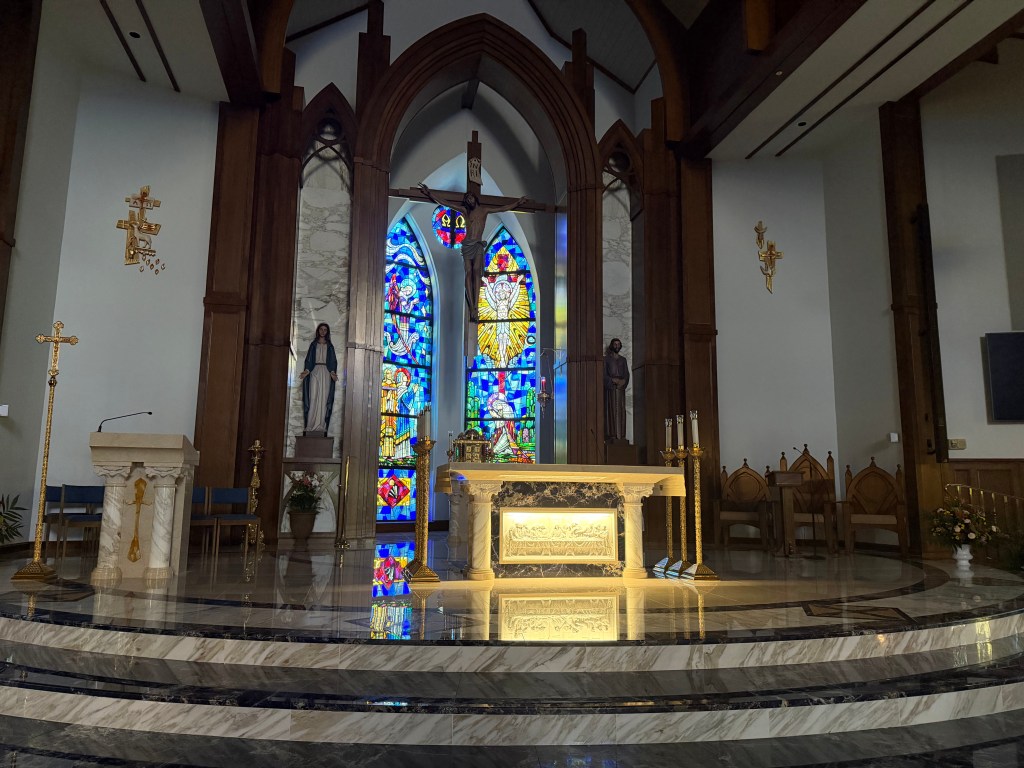

Surrendering to Jesus, we will experience more of his presence, light, and love.
John the Baptist sent his disciples to Jesus to ask him whether or not he was the Messiah. Jesus answered their inquiry with the concrete expressions of what was happening. “Go and tell John what you hear and see: the blind regain their sight, the lame walk, lepers are cleansed, the deaf hear, the dead are raised, and the poor have the good news proclaimed to them. And blessed is the one who takes no offense at me” (Mt 11:4-5).
The ministry of Jesus was and continues to be today one of personal contact. Christianity is not merely a philosophical idea or even a particular theology. It is a faith tradition of an encounter with the Messiah, the Christ, the Son of the living God. We are walking through Advent to remember again that a light has shone in the darkness, and the darkness did not overcome it (cf. Jn 1:5).
Sometimes we can be weighed down by the darkness, the negativity, horror, and destruction we see all around us. The world certainly appears to be in a real mess at times. One of the most common critiques, and a valid one at that, is if there is a loving God, why does he allow such horrible things to happen, especially to the innocent?
The Scriptures are clear, all that God has created is good. Evil is a deprivation of the good. It is an absence or distortion of the good that God has made, like a cavity in a tooth. The healings and miracles of Jesus we read about, as he himself describes in today’s Gospel, are the beginning overture of the restoration of that which was lost. God comes to us in our everyday lives and circumstances with the intent to save us, to make things right again for everyone. “God, in Christ, has come to set right a world gone wrong” (Grunow, 175).
No matter what darkness we may be experiencing or witnessing this Advent, let us look for the light of Jesus shining in the midst of it. I can’t offer you a sufficient answer as to why God allows some bad things to happen or why he heals some and not others.
Some six years later, the words of the head of hospice still ring in my ears. “Except for the cancer, JoAnn was in perfect health.” I have no answer as to why she contracted cancer. I don’t ask why any more nor do I cling to the past. I remember and continue to hold JoAnn close to my heart but it has been in letting her go that I have experienced a closeness to where she is now. Especially, in some precious moments in the Mass and at prayer.
This Advent as we look for a light in the darkness, may we also be that light in the darkness for others. As we receive, rest, and abide in the love of Jesus, may we allow him to shine through us, to allow his love to be present in each encounter. We are just passing through this world and need to remember this is not all there is, but there is a life of fulfillment to come. What we see now is just but a hazy image of what is to come in the fullness of the height, depth, and breadth of God’s plan. John knew he was not the messiah, he was the forerunner, the messenger, and he became less so that Jesus could become more.
Jesus began his public ministry after John’s arrest and his healing of the blind, lame, and deaf, the lepers and the three he brought back from the dead, are but a foreshadowing of heaven he opened for us in the humanity he assumed. We live in the in-between time of the first coming of Jesus at his birth and his second coming. May we remain open to receive Jesus daily by rejecting doubt, despair, and fear, and choosing hope, faith, and love. As we encounter Jesus close at hand, may we offer our hand to one another.
—————————-
Photo: Blessed with this view walking back to the rectory after morning Mass.
Grunow, Stephen. Introduction to the Gospel of Mark in The Word on Fire Bible: The Gospels. Park Ridge, Illinois: Word on Fire, 2020.

“Be vigilant at all times and pray.”
“Be vigilant at all times and pray that you have the strength to escape the tribulations that are imminent and to stand before the Son of Man” (21:36).
These are the last words we will hear or read from this liturgical year from the Mass. The season of Advent and the new liturgical year begins tonight at the vigil Mass. They are not only good words to end the year with but that they would also be good words to read at the beginning of each day.
“Be vigilant at all times” are certainly words to abide by. This is not a call to be paranoid or to live in fear. This is a call to be aware, to watch, and pray. What we see, hear, and think is then important to bring to God in prayer. Being vigilant is also a reminder that we need to resist the temptation of speeding through life with blinders on and not taking time to listen to that quiet voice of God that is available to guide us day in and day out. The more we hear the subtle, quiet leading of the Holy Spirit and ignore it, the less we grow in our awareness of his presence in our lives or the presence of those who need his mercy, grace, and love.
Worse yet, the less we take the time to hear and know God’s word, the more we will be distracted, tempted, and persuaded by the myriad of other voices that are not from God, which can lead us astray. That is why prayer is so important, so we can develop an ear for our loving God and Father’s guiding voice heard when we are still. Once we begin to recognize his voice spoken in the silence of our hearts, we will begin to hear him speak in our daily activities.
Being vigilant also requires us to surrender our self-serving ego, for if we want what we want when and how we want, if we just keep up at a fever pitch pace, if we are feeding ourselves with apparent goods, we can open ourselves up to some unsatisfying and pretty horrible scenarios.
There are those who seek to do us harm from self interest and lack of awareness to forms that are unconscionable. Pretending that they aren’t there doesn’t work and being paralyzed with fear makes us more vulnerable. We need to be aware of, and establish clear boundaries for ourselves and communicate them with others. Each time we listen and follow through on the leading of the Holy Spirit, our conscience is better formed, we increase our confidence in who we are and who God is guiding us to be. We can also sidestep scenarios that can lead us down some dark paths.
Being vigilant and turning to God daily and often does not mean that we will be free of challenges. We live in a fallen world. There is imperfect actors within the Church as well. But in each and every case, we are to maintain hope in the one who we will be preparing for this Advent, the return of Jesus. He is the Light that shines in the darkness and will not be overcome by it (cf. John 1:5).
Though others may let us down or seek us ill, Jesus is the one we can trust. Jesus is the one who will accompany and strengthen us as we face any temptations, trials, and tribulations. As St Augustine said in one of his homilies, “while we are still in the midst of this evil, let us sing alleluia to the good God who delivers us from evil.” For, in the end, Jesus the Christ will be the one to lead us home to the Father’s embrace for all eternity. Watch and pray today and all days! It is the most important thing we can do each day.
Painting: Head view of Rembrandt’s Christ with Arms Folded.
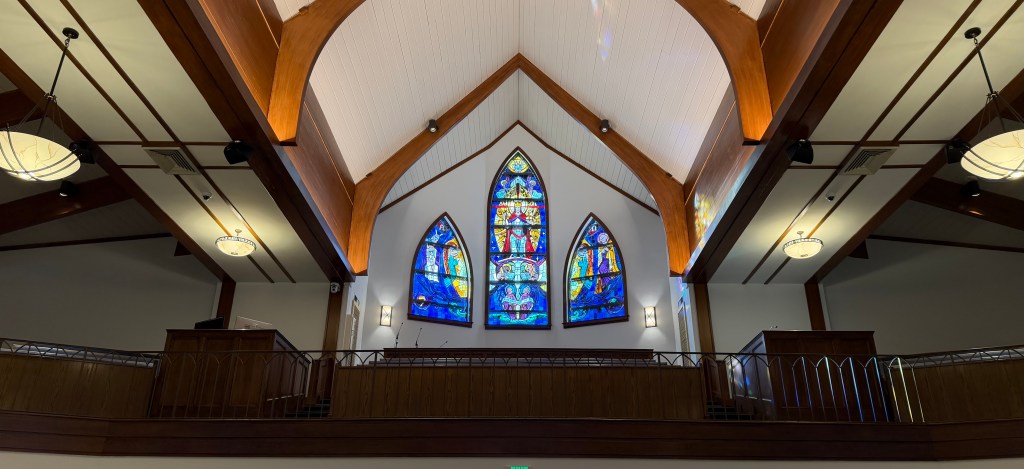
No matter what is on the horizon, Jesus will guide us through.
While some people were speaking about how the temple was adorned with costly stones and votive offerings, Jesus said, “All that you see here– the days will come when there will not be left a stone upon another stone that will not be thrown down” (Lk 21:5-6).
As we read yesterday, Jesus observed the widow donating her two coins. Today Jesus observes those who are commenting about the wonders of Herod’s temple. Jesus responds by sharing, as did Jeremiah, that the temple will fall, and not a stone upon another stone will be left. The reality of this statement would come to pass in 70 AD when the Romans destroyed the temple and crushed the Jewish rebellion during the Jewish War from 66-70 AD. The only significant remnant of the temple still to this day is the outer retaining wall, also known as the Wailing Wall.
The people of the ancient Near East certainly witnessed and passed on tales of the rise and fall of mighty kingdoms beginning with Egypt’s impressive reign from about 3,000 to 721 BC, followed by Assyria who then gave way to Babylon. The Babylonian army would destroy Solomon’s temple as predicted by the prophet Jeremiah. The Persians would then overtake the Babylonians and push west only to be repelled by the unification of the Greek city-states under the Macedonian Philip and then his son Alexander the Great who would continue south and east all the way to India. The massive Greek empire would then give way to Rome. Rome would then fall in 476 AD.
As each empire fell, and especially during the fall of Rome, there was a great concern that the end of the world drew nigh. Throughout the ages up until the present day, nation has continued to “rise against nation, and kingdom against kingdom…” and the world has experienced “powerful earthquakes, famines, and plagues from place to place” (Lk 21:10-11). Each made their historical impressions on those who lived through them. There has also been a plethora of end of the world predictions from the ancients up to the more well known modern prognosticators such as Jeane Dixon, Pat Robertson, a handful of predictors around 2000, and more recent but also slipping into the rearview mirror of doomsday prophesies, Harold Camping. He caught a lot of attention with his prediction of the end of the world that was to have happened on October 21, 2011.
As of this typing, we are still here. The Gospels of Mark and Matthew record Jesus addressing the same concern of those questioning him: “But of that day or that hour no one knows, not even the angels in heaven, nor the Son, but only the Father” (see Mark 13:32 and Matthew 24:36, RSV translation). In Luke’s presentation from today’s Gospel, he moves further away from Mark and Matthew’s eschatological or end of times talk and spoke more toward the destruction of the temple.
We have a few more days of Luke and Ordinary Time to go before the end of the liturgical year. Kingdoms have and will continue to rise and fall (hopefully not in these next few days). Abuse of power continues to lead to many who are displaced from war, terrorism, violence. Many reach out to provide compassion and support but there is never enough help. Many are enamored by our technological ingenuity and advancements, as were those who were admiring the adornment of Herod’s temple. Are we in the final days? Only the Father knows.
Yet, we are not to be anxious about tomorrow as Pope Francis encouraged those in his homily when he spoke at Tokyo Stadium in Japan a few years ago. We are to seek first the kingdom of God and “to re-evaluate our daily decisions and not to become trapped or isolated in the pursuit of success at any cost… [that] leave us profoundly unhappy and enslaved, and hinder the authentic development of a truly harmonious and humane society”.
When we place our hope and trust in Jesus, the Son who knows the Father, he will guide us through any challenge and strengthen us against any storm. Let us risk feeding the temptations of anxiety and worry. Instead may each thought, word, and action pass through the filter of a deep slow breath and seek the guidance of the Holy Spirit. As we do so, we will know Jesus, his voice, and the will of the Father better. We will be able to abide and rest in God who is our refuge and strength no matter what comes.
Photo: Jesus Christ, our King, fights for us.

May we allow ourselves to be ablaze with the transforming love of God.
Jesus said to his disciples: “I have come to set the earth on fire, and how I wish it were already blazing” (Lk 12:49)!
What has been burned does not remain the same. What fire touches, it transforms. Jesus wants us to be consumed so as to be transformed by the fire of the Holy Spirit. Encountering Jesus affects a change in us. When we are open to allow the Holy Spirit to breathe on the embers in the depths of our souls they are fanned like tinder and ignite. We continue to fuel the fire by getting in touch with what God has called us to do in our place and in our time.
We are not to be a Christian in name alone but in thought, word, and deed. Pope Francis, in his exhortation The Joy of the Gospel, wrote: “THE JOY OF THE GOSPEL fills the hearts and lives of all who encounter Jesus. Those who accept this offer of salvation are set free from sin, sorrow, inner emptiness, and loneliness” (Francis 2013, 9). Joy is a gift, a holy flame, that is given to us by the Holy Spirit, it wells up within, and rises up and out to be shared with others. It is different than pleasure which has its source in the stimulation of the senses being aroused but fades once the external stimulus has ended.
Happiness is also external and fleeting. It lasts longer than pleasure in that the memory of the experience will linger but it too will fade away. Joy wells up from within, as it is imparted to us by God and can be present even when the external experiences are stressful or chaotic. I experienced this when I was still teaching 5th and 6th Grade Religion and acting as the dean of students at Rosarian Academy. At the same time, I was also immersed in family and parish life, as well as my studies and formation activities for the permanent diaconate.
One particular morning I woke up exhausted. When the alarm went off my first response was to skip my morning prayer and hit the snooze button to get an extra twenty minutes before rising. Instead, I literally crawled to my small chapel area, lit the candles, and opened my breviary. When I read the words in Psalm 42: “Hope in God; I will praise him still, my savior and my God”, something ignited within. I felt an energy well up within me that I cannot to this day describe. I felt an inexpressible joy. Not only did the experience carry me into the day but lasted throughout the whole week.
God is the foundation of our lives and our Father seeks to transform us with the fire of his love. Even when we are at our lowest, with only the smoldering embers of our faith, we need to resist the temptation to feed indifference, desolation, and/or despair. When we turn to and trust in Jesus, he offers a way when there seems no way. Begin with a breath, be thankful for what we do have, even if it isn’t much. We can be thankful for God’s love and presence even when we don’t feel it. Keep showing up to pray, even if sometimes we have to crawl to get there, and the Holy Spirit will fan the embers within our soul to set us ablaze.
May we, “know the love of Christ that surpasses knowledge, so that [we] may be filled with all the fullness of God” (Ephesians 3:19). To know the love of Jesus is more than knowing about him. We don’t read and study the Bible as we study a history text. We meditate, ponder, and pray with Sacred Scripture daily, to encounter a Person, Jesus Christ the Son of the living God. In doing so, the Holy Spirit will also enkindle in us the fire of his love and moments of consolation that we can experience regardless of our external or internal struggles.
Nothing else in this world can satisfy us as much as experiencing and being transformed by the love of our Father! When we seek God first, the attachments to finite things will begin to loosen. When we trust Jesus and align our will with his, we will come to know him and experience his love and that can be enough. We will no longer seek substitutes to place before God and can begin to let go of anything that is not of his will. When the fire the Holy Spirit burns only that which is pure will remain.
Photo: “Holiness is standing in the fire of self knowledge and letting it burn.” – Fr. Wayne Sattler
Pope Francis. Evangelii Gaudium: The Joy of the Gospel. Frederick, MD: The Word Among Us Press, 2013.
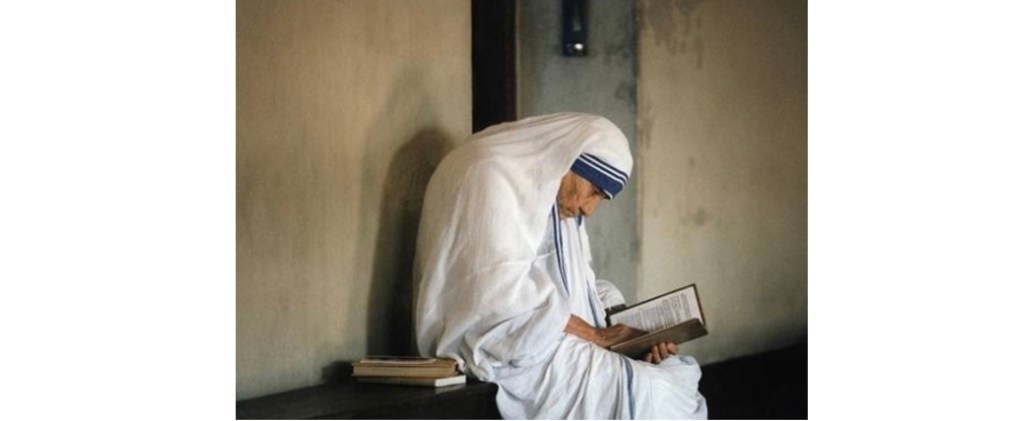
Are we willing to be a pencil in God’s hand?
So should it be with you. When you have done all you have been commanded, say, ‘We are unprofitable servants; we have done what we were obliged to do’” (Lk 17:10).
This ending verse from today’s Gospel account from Luke flies in the face of the ideals of fame and honor that many in our culture believe we ought to be striving for. After all, everyone wants their fifteen minutes of fame, don’t they?
The point Jesus is making with his disciples is one of perspective. We need to constantly remember that God is the Creator and we are his created beings, God is God and we are not. Our life is completely dependent on him and whether we like the analogy or the reality that we are servants, that is not only how we were created, but what will, in the end, bring us the most meaning and fulfillment in our lives is serving God without hesitation.
This is no dictatorial or tyrannical power play by God through his crown prince Jesus. Jesus himself consistently served his Father and would do so in the fullness of giving himself on the Cross. This is best summarized by Paul in his Letter to the Philippians, when he echoes one of the most ancient Christian hymns: “Though he was in the form of God, Jesus did not deem equality with God something to be grasped. Rather he emptied himself and took the form of a slave, being born in the likeness of men.”
Jesus, the divine Son of God, entered into our human condition because he was serving the will of his Father. We are to do the same. God is the director of his epic drama and each of us has a part to play. Our faith grows as we empty ourselves from our own grasping nature of seeking control, of being in charge, and seeking to be the director of our own life.
One of the reasons many of us have trouble with this type of imagery and language is because we consistently see so much abuse of power for selfish gain. This is not God’s goal. God does not need us, he is fully self-sufficient without our worship or service. It is we who need him and through the opening of our mind and heart to his direction, by acting on every word that comes from him, we do not become diminished, we actually expand and become more!
We truly become ourselves, we are fully alive, and we will experience more peace, when we resist living in the past or anticipating the worst case scenarios about the future. A wonderful image that St. Mother Teresa used often that I find helpful is being a pencil in God’s hand. When we have faith in and trust God, we can rest in his loving guidance and act as he directs. This is the beating heart of our faith, to place ourselves in a posture to hear the will of God, and act upon it in our willingness to serve him without hesitation. In doing so, we lose our life, and in so doing we find joy because we become fully alive.
—————————————————
Photo: St. Mother Teresa could be a pencil in God’s hand because she gave herself to him in prayer and service daily.

We will experience more peace, even in the face of death, when we follow Jesus and put his teachings into practice.
Jesus said to his disciples: “Do not store up for yourselves treasures on earth, where moth and decay destroy, and thieves break in and steal. But store up treasures in heaven, where neither moth nor decay destroys, nor thieves break in and steal. For where your treasure is, there also will your heart be” (Mt 6:19-21). Jesus helped his disciples then and is helping us today to be aware of the reality of our world. All that exists is finite and material. Each thing, each being, has a beginning and an end. We need to resist the temptation to be attached to anything, even to our family and friends, because in this life and this side of heaven, nothing and no one lasts forever.
Adopting an attitude of non-attachment to material things can be freeing as long as we do not embrace the opposite extreme of placing no value in created things, thinking that we can destroy and abuse the environment, exploit each other, because neither will not last. We can also be tempted to see all things not spiritual as corrupt and bad, even our material reality as human beings, such that our soul is imprisoned until we die. This extreme will not bring us happiness, joy, or fulfillment either.
Living a life directed by Jesus’ teachings will help us to embrace a more balanced life of recognizing that much of what is material and finite is good, as well as very good, and yet each has a time and a season. We have the opportunity and invitation to be participants in God’s eternal plan of salvation, and we can embrace and enjoy the wonders and gifts of his creation when we don’t hold onto the things of this world too tightly.
We need to resist grasping for and clutching anything material and finite. We will then be freer to embrace and follow the steady movement of the Holy Spirit, which is ever fresh and new. The Holy Spirit invites us to deepen and grow in our relationship with our loving God and Father and one another. Refusing to fill the deepest core of our being with the things of this world will help us to be less distracted and more open to God working in our lives.
When we embrace the reality that our time here on this earth is limited, we will be less apt to take it for granted, and instead realize how precious life is, show greater appreciation, be more present, understanding, kinder, supportive, and patient with one another. We will be freer to let the petty things go and embrace the love that Jesus offers us, so we that will have more love to share with one another through thick and thin.
I don’t mind repeating what helped me and JoAnn in her final months was the gift of knowing that her time was short. We appreciated each moment we had together. What also helped was that even before the news, we had already begun the journey years before of deepening our relationship with Jesus and so each year grew closer to each other. A lot of the material things of this world became less important.
Dealing with death is never easy. Trusting that Jesus opened up heaven for us in the humanity he assumed and that he conquered death in his resurrection, helps. Instead of denying or keeping death at a distance, we will be better off by facing the reality of death. Doing so helps us to define who and what is truly important in this life and helps us to “store up treasures in heaven where neither moth nor decay destroys, nor thieves break in and steal” (Mt 6:20).
———————————————————————–
Photo: Together with less than three months left. Appreciate every moment!

Jesus came to lead us “out of darkness into his wonderful light.”
Simeon, a righteous and devout man of Israel, had received a revelation from the Holy Spirit that before his death he would behold the Messiah, “the Christ of the Lord” (Lk 2:26). We do not know how long Simeon was waiting, we do not know how old he was when Mary and Joseph brought Jesus to the temple. How many people had crossed his path, how many times must he have turned his head wondering when a family brought a male child to be presented to the Lord, “Is this the one?”
Today we recall the time when the One indeed did come, the presentation of Jesus in the temple, the day in which Simeon’s waiting, his growing anticipation, comes to fulfillment. “Lord, now you let your servant go in peace; your word has been fulfilled: my own eyes have seen the salvation which you have prepared in the sight of every people: a light to reveal you to the nations and the glory of your people Israel” (cf. Lk 2:29-32). He can now go to his eternal rest in peace.
In Mary and Joseph presenting Jesus in the Temple, this is more than a pious act. In the presence of this infant, the glory of God had returned to the Temple, just as Malachi foretold in our first reading: “And suddenly there will come to the temple the LORD whom you seek” (Malachi 3:1). What Simeon said and experienced as he held up this baby, is still true for us today. Jesus the Christ has come to us, to lead us “out of darkness into his wonderful light” (1 Peter 2:9), for, Jesus is the Temple, the embodiment of the Living God, where heaven and earth meet, where the divine and human have been wedded.
May we spend some time in prayer today imagining ourselves holding the infant Jesus in our arms, as did Simeon, looking into his eyes, and allowing his smile and his giggle to fill us with his unconditional love and joy. As we adjust and cradle him in the crook of our arm and reach a hand to him, may we allow him to grasp our finger. In that simple touch, may we experience a warmth that radiates through our entire being melting all anxiety, doubt, and/or fear away.
May this warmth, light, and love of Jesus gently reveal to us anything that separates us from God. As we identify what Jesus invites us to let go of, may we do so, and experience his forgiveness, reconciliation, and freedom. From this moment of experiencing Jesus in our time and place, may we give our life to him all the more so that he may be first in our lives before anyone and anything else. Then we will better be able to radiate his light, love, mercy, and forgiveness to lead others “out of darkness into his wonderful light.”
Painting: Simeon holding Jesus by Andrey Shishkin, 2012
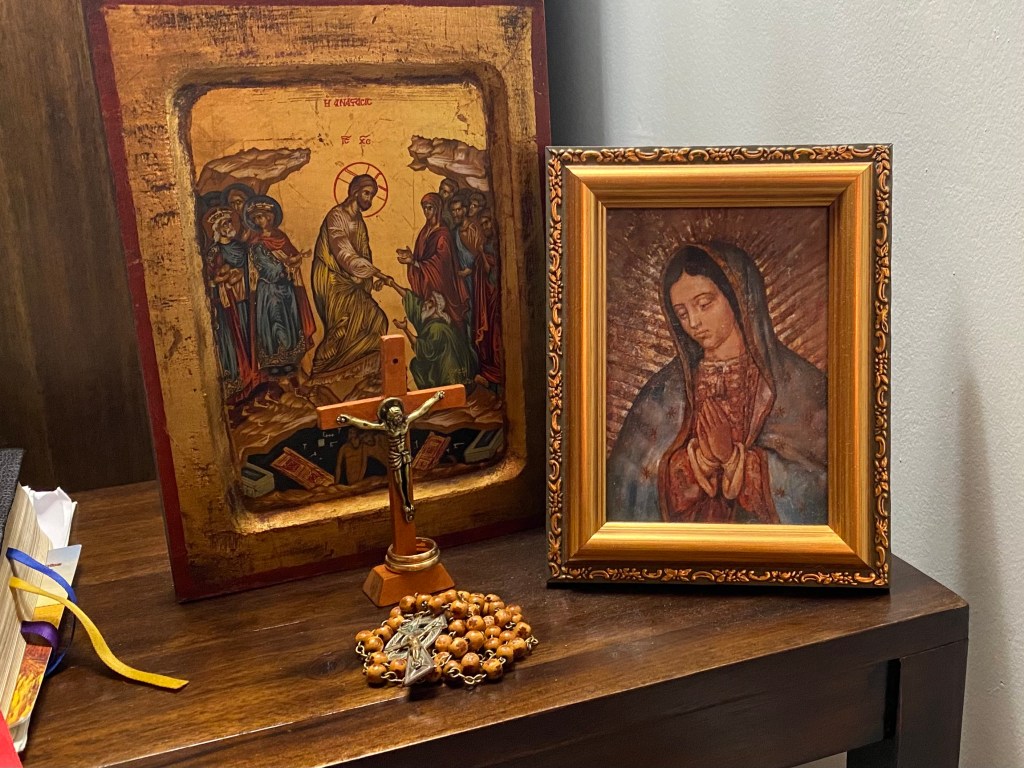
Mary’s Son will forgive us and fill us with joy!
“Mary set out and traveled to the hill country in haste” (Lk 1:39). Why? Because she was filled with joy. She had just experienced an incredible encounter with the angel Gabriel telling her that she was to bear the “holy, Son of God” (Lk 1:35). She also learned that her relative Elizabeth, who had been barren, was six months pregnant. Who better to understand and appreciate what she had gone through than Elizabeth? When we hear good news we want to share it with someone, especially when we believe another will fully appreciate our experience.
Is there a time when you felt overjoyed about something that you felt like you were going to burst and you couldn’t wait to share your experience? A memory may have already started forming in your mind, a smile and glow may already be radiating from your eyes as you re-experience that moment.
One such graced encounter I had was when I was in my early twenties and dealing with a heavy personal issue. I was living in Sharon, Connecticut at the time and had an opportunity to go to the Shrine of Divine Mercy in Stockbridge, Massachusetts to participate in a penance service. I walked up hesitantly to a kind-looking, elderly, polish Marian priest. His name alludes me now, but not his face. He radiated invitation and mercy. After a few stammering words, I let loose and shared what I had been dealing with. When he offered absolution, I felt the burden physically lift, I felt almost like levitating. Then a surge of joy welled up in me that lasted for days.
There is a great gift in sharing a burden with a trusted friend or family member, being heard and supported, and/or receiving absolution from a priest. We need to resist the temptation of turning within ourselves, trusting in the lie that we can handle our conflicts, challenges, and trials all on our own. There is a pearl of great price, God’s healing grace, that is available to us when we share our experiences. In this way, we come to realize concretely that we do not have to go through our pain and suffering alone!
Many of us are struggling with a lot, and sometimes we are not at our best, nor do we make our best decisions. We react instead of act, we get caught in the momentum of behavior that we know is not acceptable, and we continue to slide. The key is not to beat ourselves up and walk around feeling guilty. There are enough people who would be happy to sign up to do that. Instead, we will be better off to choose to practice a healthy sense of guilt, examine our conscience, be mindful, and admit when we have done something inappropriate, sinful, or wrong.
The key to reconciliation is to embrace in humility and admit our sin, be contrite – sorry for what we have done, not upset, defensive or rationalize away our behavior, and to follow the counsel of James and “confess your sins to one another, and pray for one another so that you may be healed” (James 5:16). Having experienced the joy of forgiveness, while still experiencing the grace of our reconciliation, may we be like Mary who is full of grace, and go in haste to share with others the wonderful gift we have received!
Photo: Our Lady of Guadalupe, pray for us!

 Spiritual Stepping Stones