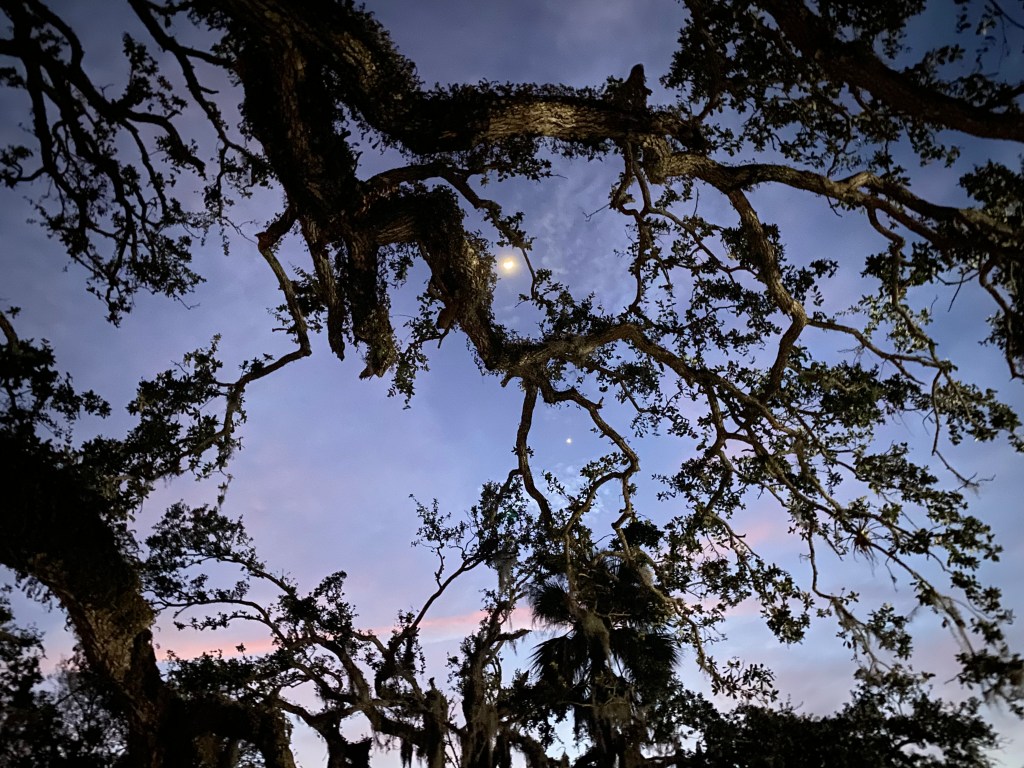
“Put out into the deep!”

In the first reading, Isaiah speaks, “Woe is me, I am doomed! For I am a man of unclean lips, living among a people of unclean lips, yet my eyes have seen the King, the LORD of hosts” (Isaiah 6:5)! And then in the Gospel after the miraculous catch of fish, Simon says to Jesus, “Depart from me, Lord, for I am a sinful man” (Luke 5:8). Isaiah in his vision and Simon through the super abundant catch of fish both recognize that they are in the presence of God and in that presence they also wisely recognize and confess their sinfulness.

Both men clearly fall short of the glory of God and God meets them both, not with condemnation, but with an invitation. Isaiah is met by the seraphim who places an ember on his lips to purify his mouth and Jesus says to Simon, “Do not be afraid; from now on you will be catching men” (Luke 5:10). God did not ask either of them nor does he ask us if we are worthy. He asked Isaiah and Peter, are you willing to follow me? And both were willing to do so and be sent.

When we enter the sanctuary where Jesus is present in the consecrated hosts in the tabernacle, do we allow ourselves to experience the awe that we are entering a sacred space, a place set apart that is holy for God? We bless ourselves with holy water when we first enter the church, to remind ourselves that in Baptism we have died with Christ and have risen with him to become part of the new creation. We also remember our baptismal vows to reject the things of Satan and to say, “yes” to the will of God. We then genuflect, kneel on our right knee, again making the sign of the cross, invoking the Trinity of God as we acknowledge the presence of the Body of Christ in the tabernacle. For where the Son is present, so is the Father and the Holy Spirit.

As we come to our seats, allowing ourselves to be still and silent in the presence of God, we call to mind our sins as did Isaiah and Simon and seek God’s forgiveness that will be offered for our venial sins during the penitential rite during the beginning of the Mass. As Isaiah received the ember from the heavenly altar in his vision to purify his lips, so we receive the Eucharist, the Body and Blood of Christ, that has been represented on the altar during the Eucharistic rite. We are purified and transformed. Our hearts and minds are made new through the love of Christ and the power of the Holy Spirit that has transformed bread and wine into the Body and Blood of Christ.

Simon, like Isaiah, was willing to experience the light of God coming through Jesus’ miracle. He did not roll and jump overboard, instead he remained in Jesus’ presence, and confessed his sinfulness. Simon, after fishing all night, was asked to do probably the last thing he wanted to do. Have some itinerant preacher enter his boat and command him “to put out a short distance from shore” so he could teach for a while. If that wasn’t enough, then Jesus, this carpenter, said to Simon, a seasoned fisherman, to “put out into the deep water and lower your nets”. In both cases, Simon, though reluctant, and not seeing any sense in the command, was willing to obey.

Because Isaiah and Simon were willing to trust, God happened. Their lives were transformed, and they were sent on mission. Most of us will not experience such a vision as Isaiah experienced but Jesus will come to us in the same way that he came to Simon. He meets us in the midst of our everyday lives.

So often we think or feel that it is our initiative that draws us closer to God, when in fact, the initiative is God’s. Our very desire to pray, to seek out God is already an awareness, a recognition of his invitation to draw close. God speaks to us in the silence of our hearts, through quiet invitations, and experiences. Each time we are aware, and each time, as did Simon, even when we hesitate, we still say “yes” to his invitation, we grow in our relationship with God.

Jesus comes to us as we are and loves as we are, even in our sin, but he doesn’t want us to stay there. When we are willing to become aware of our sin and faults and allow more of the light of Jesus to shine into the darkness of our lives, as we put out into the deep, as we go where the Holy Spirit leads us, beyond the horizon of our comfort zones and understanding, we will be forgiven, and blessed by the grace and wonder of God’s glory present in our lives. Apart from Jesus we can do nothing, but with him and following his guidance all things are possible. This is what Simon experienced in the miracle of the abundance of the fish filling his nets. What he could not accomplish on his own experience, skill, and strength, he did by following the invitation of Jesus and he became more acutely aware of the divinity of Jesus in his midst.

The deeper and more intimate our relationship grows with Jesus, the more our own sin is revealed to us. This is a gift to welcome, because in our awareness and confession of our sins we are freed from that which keeps us at a distance and prevents the growth of our relationship with the God who loves us more than we can ever imagine. When we face and confess our sin and weakness, and resist settling for mediocrity, we will grow in holiness, humility, and receive more of the light, love, and grace of Jesus such that we can grow beyond our fears, grow deeper in our relationship with him, so to better allow ourselves to be agents of his grace and mercy in the lives of those he brings into our realm of influence.

——————————————————–

Painting: Some quiet time with Jesus, listening to his invitation to, “Go into the deep.”

Link for the Mass readings for Sunday, February 9, 2025

Come away and rest for a while.

After hearing the accounts of the missionary trip, Jesus invited his apostles to step away from the crowds “to a deserted place [to] rest awhile” (Mk 6:31). Jesus is showing the apostles the importance of balance. There are times to serve and times to recharge, to reconnect, and spend some quiet and reflective time with him. Jesus is our model, our guide and teacher, but he is at the same time more than that. Jesus is the source and sustenance of who we are as a living craving, hunger, and desire to be one with God and each another. As the deer longs to refresh itself from the waters of a running stream, we long to be nourished by the living water, Jesus, and this is true for the atheist as well as the mystic alike, for each and every one of us, whether we are aware of this reality or not.

Our thirst for communion can be stifled because it is so easy to be caught up in our day to day schedule, life’s demands, and falling into survival mode. Even when all is good and we are serving well, as we see with the apostles return, there is a need for rest.  There is so much that needs to be done, and at the same time, there are so many distractions and diversions that vie for our energy and attention.

In today’s Gospel, the intent of Jesus is to escape with his apostles for some rest and renewal, to decompress with them, and hear about their experiences of ministry. They get in a boat to do just that, yet the crowd that they thought they had left behind has arrived on the other side before they did! This is a sign that the preaching, exorcisms, and healing work the apostles participated in was already bearing fruit. Just as people were flocking to Jesus, so word was getting out about his disciples! “When Jesus disembarked and saw the vast crowd, his heart was moved with pity for them, for they were like sheep without a shepherd; and he began to teach them many things” (Mk 6:34).

So much for being able to “rest away for awhile”! Or maybe the boat ride across was that moment of rest. The moment to take a breath and reconnect with Jesus. As Jesus and the apostles were coming closer to shore, they could have diverted their course to avoid them. Instead, Jesus, was moved with pity or compassion and moved to teach them. A key for a more balanced life is to spend time daily with Jesus to know his will and follow his lead.

I have just experienced just such a moment as I needed to step back a bit for a few days. Many wonderful things are happening here at Holy Cross, but my body was feeling a bit taxed, so I took the time to reset, to rest awhile with Jesus and Mary. I also recommitted to setting key non-negotiable times to set aside for prayer. As St. Francis de Sales taught: “Every one of us needs half an hour of prayer a day, except when we are busy — then we need an hour.” I notice the difference when I do not give myself that hour each day.

When we intentionally put God first and make the time each day to spend with him, often there is a serendipitous alignment that we experience in our day, that we did not think possible at the outset. This often happens when we consciously make time for stillness, for meditation and prayer, even and especially, during the moment when we may feel we just don’t have the time.

As you ease into Saturday, my invitation is to give yourself a fifteen minute retreat. Read these words from Jesus slowly and reflectively: “Come away by yourselves to a deserted place and rest awhile” (Mark 6:31). Find a quiet place where you feel comfortable, take a few deep, slow breaths, close your eyes, then step into and sit in the boat with Jesus and his disciples.

Breathe some more, feel the breeze of the Sea of Galilee, feel the warmth of the sun on your face, and experience the rhythm of the boat on the water. Does Jesus remain silent and rest with you? Does he begin to teach, and if so, what does he share? Do any questions arise and if so what do you ask, and what is his answer? Allow yourself to be still, just you and Jesus for the time you have set aside. When the boat comes to shore, go forth into the day renewed and blessed by Jesus with a heart and mind able to be moved with compassion to follow God’s will in how best to serve him today and into the coming week.

—————————————————————-

Photo: Spending some time to breathe, pray, and be still with Jesus and Mary!

Link for the Mass readings for Saturday, February 8, 2025

Will we allow the Word of God, Jesus, to transform our hearts and minds?

The king was deeply distressed, but because of his oaths and the guests he did not wish to break his word to her (Mk 6:26).

The king referenced in today’s Gospel is the tetrarch, Herod Antipas, one of the sons of Herod the Great. He reveals the weakness of his character when he calls for the beheading of John the Baptist, much as a foreshadowing of Pilate before the crowd asking for Jesus’ death. Both condemned innocent men to die. They  each decided to take John and Jesus’ life. Herod chose to protect his foolish oath to Salome, instead of standing up and defending the dignity of the life of John the Baptist. Pilate caved into the pressure of the crowds who claimed he was no spokesman for Caesar. In both cases, innocent men were brutally murdered without any regard for their lives.

For the first part of his gospel, Mark has shown the opposite. He has shown what true leadership is as he has presented Jesus who instead of disregarding and degrading human beings has empowered them through his teaching a better way to be whole and in union with the God who has created his listeners. He has freed the possessed, healed those who had been on the outside bound by illness and/or sin. Instead of the evil disposition of Herodias, we recently saw the courage of the woman with the hemorrhage.

And while Mark provides us with this interlude and flashback of the death of John the Baptist, the apostles are on the march proclaiming the gospel, healing, and exorcising demons in Jesus’ name. They are putting into practice what they had learned. They are allowing their hearts and minds to be changed by the Word of God. Herod did not allow the same seeds of God’s word to find any root in his heart. Instead of hearing the words of John, repenting from his sin, and allowing his heart and mind to be transformed, the little inspiration that he received withered and died in the heat of his ego and passions.

Time and again, Jesus showed the moral courage to stand up for and empower those who were considered other, lesser, unclean, and social outcasts. He, like John, showed true courage by speaking the truth that God gave him to reveal. As John was willing to lose his head for being God’s spokesman and preparing the way for his Son, Jesus was willing to suffer, to be nailed to the Cross, to die and conquer death, that each one of us might have life, and have it to the full.

We have a choice to make each day and each moment. We can choose to follow the enemy or to follow Jesus. Herod and Pilate made their choices and the apostles made theirs. May we choose to follow Jesus and allow his words to find rich soil, that we may allow our hearts and mind to be transformed as apostles, and so also grow in virtue so that we too will have the moral courage to stand against the pressures of a culture of death and stand up for the dignity of each person at every stage of development from the womb to the tomb, and implore that our leaders do the same.


Photo: Nothing helps us to allow our hearts and minds to be transformed by God’s love than by making the time to be still, pray, and meditate on his word and listen.

Link for the Mass readings for Friday, February 7, 2025

Called, loved, and sent.

The rejection of Jesus by those in his hometown did not slow down his mission. We can imagine that Jesus knew what he was going to do already, but en route wanted to stop by to see if any from his “native land” would like to participate in his public outreach. Apparently, no one, or only a very few, those who were healed by him, did. Jesus, as he does throughout the Gospel of Mark moves on without missing a beat, much like Mary going in haste to bring the good news to Elizabeth. Jesus went ahead and, “summoned the Twelve and began to send them out two by two and gave them authority over unclean spirits” (Mk 6:7).

Could the rejection of the people of Nazareth then also have been a preparation for the sending of the Twelve? They had experienced his exorcisms, teaching with authority and healing with miracles, and also saw the reaction of the crowds. Before he gives them some final instructions, maybe the most important of all was to be faithful to the message of repentance that they were sent to preach. They were to bring the light of Christ to those for him they were sent to reveal those sins they needed to turn away from those sins, attachments, and idols and instead turn to God and invite them to give their whole hearts and minds to them.

Jesus summons us and sends us out as well. We too have been accompanying Jesus and his disciples through each chapter. The word of God is living and alive and Jesus still reaches out and calls us as he called the Twelve.

At the end of each Mass, we are sent, just as the Apostles, to proclaim the Good News! All of us as the Body of Christ, believers in Jesus the Christ, those of us baptized into his death, are to live as his disciples and bear witness to how Jesus has transformed our lives. This is best done by repenting ourselves and placing God at the center of our lives. Jesus gives us each a unique call of evangelization with a particular charism and gift that the Holy Spirit imparts within us at our Confirmation.

Jesus is the one who calls, sends, and empowers us for mission. We are sanctified, made holy, and set apart when we say yes to his invitation, participate in his sacramental life, and follow the will of his Father. Jesus not only teaches with authority, but he also calls and sends us with that same authority. We are to rely on the divine providence of our Father. He prepares us and provides that which we need to accomplish the task he has given, and he will also send the Holy Spirit and others to provide help, aid, guidance, and support. We see this over and over again in the lives of the Apostles and each generation of saints thereafter.

At first sight, we may not agree with God’s choosing. Me, really? Those he sends to walk with us, are you sure! Yet, we only need to recall what he accomplished with the Apostles, remembering the imperfections of each apostle and their simple beginnings. Just as mustard seeds, that grew to mighty bushes, what wonders they accomplished in Jesus’ name. God does not see as we do, for we are often misled by appearances “or lofty stature” but God sees into the depths of the heart (cf 1 Samuel 16:7).

Ultimately it is not about us after all. It is about our willingness to be open to and led by God and to work arm in arm with those he has invited to walk with us. That makes all the difference. We are not to go forward alone. We are called to be in community as the Body of Christ. Jesus sent his disciples out two by two in the beginning, so that they could provide mutual support, guidance, encouragement, prayer, and accountability. We each begin best each day by making time to be still, to breathe, receive, rest, abide in God’s love, and listen to his word and guidance. Then we begin, step by faithful step, walking with our brothers and sisters to follow the light that Jesus shines before us.

—————————————————————————

Photo: Blessed to have begun my seminary journey with these my brothers in Christ!

Link for the Mass for Thursday, February 6, 2025

Seeing Jesus as he is will help us to experience the love of his Father!

Today’s Gospel reading is a sad account. For the first time since beginning his public ministry, Jesus has returned to his hometown of Nazareth. He entered the synagogue on the Sabbath and preached and taught in his “native place”. Unfortunately, this was not a roaring success of the hometown boy returning home to make good. Initially, it seems that the immediate reaction was the same where he had been preaching before. People were “astonished”.  This astonishment though was not received in the same way as his other audiences. The outsiders he preached to were amazed at the authority and power of his teaching. The hometown crowd looked at Jesus more with contempt.

This is a window into this small town of not more than 500 at the highest estimates. It is also a window into what really happened when Jesus returned home after being lost when he was twelve. What happened in those missing years from twelve until the beginning of his public ministry around thirty was most likely insignificant at best. As Mark mentioned, Jesus was merely a carpenter and the son of Mary. This identification is only used by Mark. Was this because of the roots of Jesus’ conception happening while still during Mary’s betrothal period to Joseph? Or, speaking of Jospeh, could this reference be to the fact that Joseph had already died, although, Jews more often than not during this time, referred to sons by addressing the name of their fathers, such as Jesus the son of Joseph, not by their mothers.

Most of the people here did not accept that he spoke with authority, healed, exorcised demons, or tamed violent winds and waves at seas as the lead stories coming into town had said. Jesus’ words were not received, and so he was not able to bring those who knew him for the greater majority of his life into deeper communion with his Father. The whole reason that he came was to bring light to a world suffering in darkness, and those closest to him refused the invitation such that: “he was not able to perform any mighty deed there, apart from curing a few sick people by laying his hands on them. He was amazed at their lack of faith” (Mk 6:6).

For the first five chapters that we have been going through each day with Mark as our guide, many were amazed at the power of Jesus’ preaching, presence, and miraculous works. Jesus was amazed that those who probably he was closest to more than anyone else, refused to believe. They had heard about and now witnessed themselves, the power of his preaching, but they could not see past the simple carpenter.

Is our world today becoming more and more like Jesus’ “native place”? Do we take Jesus for granted, if we pay him any attention to him at all? Where miracles are dismissed as hoaxes or coincidences at best? At one point, CS Lewis, I believe, wrote that Jesus is either a liar, a lunatic, or the Lord. He cannot be anything else upon a close reading of the Scriptures. Today, some circles would add that he is just made up.

We seek to know in the depths of our hearts, all of us, atheists and believers alike, as well as everyone in between. We seek to know the truth. Authentic faith seeks understanding. A questioning and searching mind are the ingredients for a living, relevant, and vibrant faith and life.

Yet, we can limit ourselves for many reasons and experiences that we have gone through in life. We can, like the Nazoreans, limit the truth of Jesus by accepting a caricature of him. As St. Thomas Aquinas taught: “To one who has faith, no explanation is necessary; to one without faith, no explanation is possible.” There are reasonable ascents we can make to the reality and truth that Jesus is the Son of God, but our reason can only go so far. God’s grace builds on nature. God has given us an intellect and will to seek and to know, but we also are not only limited to our ability to reason. God also reaches the deepest core of our being when we are willing to trust him a little and open our hearts and minds to his revelation.

May we resist setting limits, settling for a minimalist or cynical approach, and the hardening of our hearts, and instead open ourselves up to the limitless possibilities God opens up before us! There is so much to experience when we just slow down and are still to experience the wonder of everyday, miraculous moments happening all around us. The Holy Spirit touches our hearts in our encounters with one another when we resist keeping each other at a distance, in a box neatly defined, and/or lead with our fears instead of love. God wants to share with us the gift of his Son and the Holy Spirit. Are we willing to open our hearts and minds to him, even a little, and allow the love of God to happen today?

———————————————————————–

Photo: The wonder of looking up! Stopping for a moment a few nights ago on my Rosary walk!

Link for the Mass readings for Wednesday, February 5, 2025

“Do not be afraid, just have faith.”

“Jesus, aware at once that power had gone out from him, turned around in the crowd and asked, ‘Who has touched my clothes'” (Mk 5:30)? The woman could have slipped away, she could have stood still and said nothing, no one knew. His disciples were bewildered that Jesus asked such a question with so many pressing about him. But the woman approached with “fear and trembling” and told him the truth. Jesus did not admonish her for breaking a social taboo but publicly acknowledged her faith and so empowered her with a deeper healing than the merely physical that she sought.

All the while as this scene transpired, Jairus must have been in agony. He knew how close his daughter was to death, and every second counted. Jesus took that limited, precious time and engaged with this woman. Just as they were about to resume their journey, and he began to breathe again, the terrible news came that his daughter had passed away.

What might have flashed through his mind at that moment? The time Jesus took to talk with the woman, could that have made the difference? He was a synagogue official and would have known the taboos she crossed to reach out and touch Jesus in public, he knew that in doing so she would make Jesus unclean, she was a woman considered the lowest of low. She was frail and pallid from her condition, at death’s door herself, yet she had mustered such courage and faith to touch him. She took such a risk. While these or any other thoughts were passing through his mind, Jesus assured him, “Do not be afraid, just have faith” (Mk 5:36).

Jairus had just witnessed such faith with the woman healed from the hemorrhage, probably someone until this very moment for whom he might have shown disdain for. Maybe just maybe, if he could muster the same faith as her. Jesus could bring his daughter back to life just as Jesus had brought this woman, who was death’s door back to life and wholeness. A light shone in the darkness of his despair and the darkness did not overcome it. He would not be let down. Jesus indeed healed his daughter. He took her hand as he had done with Peter’s mother-in-law, and commanding her to rise and walk, she came back to life.

How many of us have ourselves or have ever known someone who has experienced such great needs as did Jairus, whose twelve-year old daughter died, or the woman who had been suffering for twelve years with hemorrhages, with no healing from doctors all this time? In both of these cases Jesus brought about miraculous healings. How many of us have experienced the opposite? No healing that we prayed for. We wondered where Jesus was or why he didn’t bother to help? The truth is Jesus is present, though he may or may not have brought about the outcome we may have sought.

February 2 marked five years and five months since JoAnn died. She was not healed from the pancreatic cancer that ate away at her body, as was the woman with the hemorrhage. Nor did Jesus come to raise JoAnn from the dead, as he did for Jaurus’ daughter, while I laid by her side and held her hand awaiting the funeral home to pick up her body. Does that mean Jesus does not heal anymore or that there is no relevance in the readings of the Gospel of Mark for us today?

No. Quite the opposite. Entering into the daily rhythm of reading, praying with, and meditating upon these accounts helps us to know him not as a historical figure but to encounter him as our Lord and Savior, brother and friend, who is present with us in this and each moment. As we enter into each passage, slowly and prayerfully, we are invited to enter into his memory, receive his direction and guidance. Over these five and a half years, I have healed, become aware of further areas in need of healing, attachments to let go of, and Jesus has helped me each step of the way. No step has been easy, but Jesus has given me the guidance and strength to make each one possible.

Read again prayerfully today’s account. May we pray for the courage and faith to approach Jesus and place all our trust in him for each situation as this woman did. When we struggle, when the ground feels a bit shaky underneath, let us take to heart and believe in the words that Jesus spoke to Jairus, “Do not be afraid, just have faith (Mk 5:36). When we place our trust and faith in Jesus, who is truly with us through it all, the good, the bad, and the ugly, we will experience his love, direction, and strength with each step we take along the way.


Photo: JoAnn received an even greater healing and I believe now that Jesus did come that day. He took JoAnn by the hand, and she like Jairus’ daughter arose to be with him for all eternity. 

Link for the Mass readings for Tuesday, February 4, 2025

Jesus is stronger than any evil and will free us from anything that binds us.

Jesus and his disciples have entered the Gentile territory of the Gerasenes. As soon as they get out of the boat a man possessed by an unclean spirit rushes up to him. He himself was in a worse state than the storm that Jesus had stilled. He called himself Legion as he was possessed by many demons. He had been living in the tombs, away from society, family, and friends, some of whom had made multiple attempts to restrain him, cure him, bring him back to his right mind, but to no avail. The encounter with Jesus ultimately brought about the result of this man “sitting there clothed and in his right mind” (Mk 5:15). Jesus was able to liberate this man from his desperate state. If you have not done so, I recommend reading the full account (Mk 5:1-20).

Many scoff at the healing power and miracles of Jesus, and they certainly would also discount demonic possession. Though rare, there are still cases today. A strict approach of scientism that only accepts the empirical, only that which can be measured by the five senses, discounts not only the divinity of Jesus and the reality of God but any talk of a spiritual realm. This is unfortunate because this is a limited approach to understanding the fullness of creation. We ourselves are both physical and spiritual. A healthy embrace and experience of both will help us to better appreciate and understand the world around us.

Too many today are in the same need of experiencing the liberating power of Jesus as the Gerasene. Just as chaotic and tumultuous, especially among too many of our youth, are those who are consumed and imprisoned by the vice grip of addiction. Family members and friends reach out desperately to help, to provide aid, and find themselves in the same situation as those who sought to care for this man who had been living in the tombs. Somehow this man caught “sight of Jesus from a distance, he ran up and prostrated himself before him” (Mk 5:6). There must have been some ember at the core of who he was that could still move and bring himself to Jesus.

Far too many are suffering, bound, and shackled by a wide range of addictions, obsessions, disordered affections, and oppressions that plague far too many today, as well as the rare cases of possessions. Evil seeks to distort, disfigure, divide, dehumanize, and separate all of us from the goodness and wholeness that God intends. This growing epidemic damages individuals, families, and friends and could benefit from a unified approach of the best that science, psychology, counseling, prayer, the sacraments, spiritual direction, and when needed, exorcisms can offer.

Jesus can reach into even the deepest darkness of our internal entanglements and help to reveal any disordered affections. Yet we must choose, as did the Gerasene demoniac, to surrender to Jesus. May we resist the temptation to flee from him, and instead run into his open arms. Resting in the grip of his loving embrace, we will come to know that we are not alone in our suffering, that our deepest anguish, sin, and wounds can be healed.

Jesus is stronger than any evil that seeks to bind and separate any of us. He shared this in his parable of “tying up the strong man” (Mark 3:27) which is on vivid display as he casts out Legion from the Gerasene man. Let us continue to place our trust in the name of and the power of Jesus and intercede for all those who are suffering from any form of disordered affections, addictions, and/or afflictions emotionally, psychologically, or spiritually. May Jesus lead all of us to experience deliverance and freedom from any affliction no matter how small or large, so that we may experience the right ordering of our minds, hearts, and souls to God’s will, and like the Gerasene man, not only experience the fullness of his healing but also go to share the good news of our experiences to help to bring the invitation of healing to others.

—————————————————————————————–

Photo: Not even the strongest of chains can bind us when we seek the healing power of Jesus to free us.

Link for the Mass readings for Monday, February 3, 2025

Jesus came to lead us “out of darkness into his wonderful light.”

Simeon, a righteous and devout man of Israel, had received a revelation from the Holy Spirit that before his death he would behold the Messiah, “the Christ of the Lord” (Lk 2:26). We do not know how long Simeon was waiting, we do not know how old he was when Mary and Joseph brought Jesus to the temple. How many people had crossed his path, how many times must he have turned his head wondering when a family brought a male child to be presented to the Lord, “Is this the one?”

Today we recall the time when the One indeed did come, the presentation of Jesus in the temple, the day in which Simeon’s waiting, his growing anticipation, comes to fulfillment. “Lord, now you let your servant go in peace; your word has been fulfilled: my own eyes have seen the salvation which you have prepared in the sight of every people: a light to reveal you to the nations and the glory of your people Israel” (cf. Lk 2:29-32). He can now go to his eternal rest in peace.

In Mary and Joseph presenting Jesus in the Temple, this is more than a pious act. In the presence of this infant, the glory of God had returned to the Temple, just as Malachi foretold in our first reading: “And suddenly there will come to the temple the LORD whom you seek” (Malachi 3:1). What Simeon said and experienced as he held up this baby, is still true for us today. Jesus the Christ has come to us, to lead us “out of darkness into his wonderful light” (1 Peter 2:9), for, Jesus is the Temple, the embodiment of the Living God, where heaven and earth meet, where the divine and human have been wedded.

May we spend some time in prayer today imagining ourselves holding the infant Jesus in our arms, as did Simeon, looking into his eyes, and allowing his smile and his giggle to fill us with his unconditional love and joy. As we adjust and cradle him in the crook of our arm and reach a hand to him, may we allow him to grasp our finger. In that simple touch, may we experience a warmth that radiates through our entire being melting all anxiety, doubt, and/or fear away.

May this warmth, light, and love of Jesus gently reveal to us anything that separates us from God. As we identify what Jesus invites us to let go of, may we do so, and experience his forgiveness, reconciliation, and freedom. From this moment of experiencing Jesus in our time and place, may we give our life to him all the more so that he may be first in our lives before anyone and anything else. Then we will better be able to radiate his light, love, mercy, and forgiveness to lead others “out of darkness into his wonderful light.”


Painting: Simeon holding Jesus by Andrey Shishkin, 2012

Link for the Mass readings for Sunday, February 2, 2025

“Quiet! Be still.”

On display in Mark’s recounting of the calming of the storm at sea is the humanity of Jesus. He had finally succumbed to the exhaustion from being pulled and touched, challenged and accused, the constant interaction through his service of teaching, healing, forgiving, and exorcising, such that he not only fell asleep on the boat but was in such a deep state that he was as if dead, even during the height of the storm.

What is also on display is his deep and abiding faith in his Father. For those aboard with Jesus were seasoned fishermen and had experienced sudden storms arise before. This must have been some storm to raise such panic. And yet, Jesus is sound asleep. He only arises because of his disciples insistence: “Teacher, do you not care that we are perishing” (Mark 4:38)? They unconsciously echo their ancestors in the desert with Moses when they moaned that it would have been better if the Lord had killed them in Egypt instead of their perceived starvation in the wilderness (see Exodus 16:1-3). Even though God had freed them from their slavery, they did not trust he would provide for them in the desert.

Despite the grumbling of the disciples and the fatigue of Jesus, he also reveals a glimpse of his divinity. Jesus arises. He does not invoke God’s aid but commands: “Quiet! Be Still” (Mk 4:39)! Just as Mark recorded that Jesus exorcised demons earlier in his Gospel, Jesus hear rebukes the wind and the waves and all is calm and peaceful.  This does not escape the disciples who are filled with awe.

The disciples have grasped his uniqueness, have accepted him as their rabbi, their teacher, but they are still grappling with the reality that Jesus is at the same time the Son of God. They will continue to experience his miracles, exorcisms, and teachings, but their faith is still small like a mustard seed. Though germinating, the stalks will not break through to maturity until after his resurrection and ascension. It is then that their faith will begin to bear fruit as they participate in the fullness of the ministry that Jesus is about to begin to train them for.

Similar to the disciples, storms arise in our lives, sometimes just as unannounced and as quickly as the squall from today’s Gospel. A health issue, an injury, an economic shift, a conflict, the effects of a mistake in judgment, or a sinful choice, all can arise at a moment’s notice. The most recent and devastating plane crash in DC shows how fragile our lives are and how quick life can change.

We, like the disciples, can sometimes only hold on so as not to be tossed into the sea, or bail out water so we don’t sink. Sooner or later, we need to turn to Jesus to seek his aid. A helpful point to keep in mind that I have learned from one of our past retreat directors, Fr. RB, was: “Sometimes the Lord calms the storm, and sometimes the Lord lets the storm rage on and calms his child.”

No matter the severity of the storm, let us place our trust in Jesus. Let us hold firm to the truth that Jesus remains present, accompanies, and cares for us and what we are going through. In every challenge he remains our anchor. We are never alone. Whether we brought the storms upon ourselves or they arose from another source, Jesus does not leave us to fend for ourselves.

When we remember to call on his name, he will either calm the storm or bring us a sense of peace as he guides us through, and empowers us to ride it out to the other side. With each storm that has arisen over the years, I have felt less fear and insecurity and more peace as I trust in Jesus. My faith has grown because time and again when I have turned to Jesus he has been there. The outcome has not always been the one I sought, but that he has been with me through each storm, I have no doubt.

As we experience Jesus and his love, we come to understand Jesus’ teachings as well as our lives better. The maturity of our faith begins to bear fruit when we are willing to allow Jesus to work through us so to be there for others in their storms. We can be a conduit of calm assurance for those who need Jesus even and especially when they do not know him or are focusing on the anxiety and fear of the storm instead of him. May God grant us the presence of heart and mind to be his peace and stillness for those who invite us into their boats as we ride out their storms with them.


Photo: Thankful all is calm and peaceful this night.

Fr RB Williams home page and link to his homily – http://www.rbwords.com/wttw/date/2018-01-27

Link for the Mass readings for Saturday, February 1, 2025

Just as seeds sown grow into wonderful trees, so does God’s kingdom grow through us.

Two parables are presented by Jesus today in the Gospel of Mark. Both are presenting what the kingdom of God is like. The first presents a man who sows seeds, and the second is a mustard seed that is planted. In both cases, the seeds germinate, sprout, and go through the process of growth, and becoming mature plants. The kingdom of God is like these plants in that God works through the smallest of and many times, unnoticed beginnings. Also, God’s timing is not our timing. In our rapid-paced world of instant access, we would do well to slow down.

God not only begins small, and on his own timetable, but he is often working beyond the realm of our awareness. This is evident in the first parable offered by Jesus: “This is how it is with the Kingdom of God; it is as if a man were to scatter seed on the land and would sleep and rise night and day and the seed would sprout and grow, he knows not how” (Mk 4:26-27). This is not to say that God has set everything in motion and is indifferent or despondent to his creation. Quite the opposite. God has a plan and has been and continues to be intimately engaged in guiding his creation and in each of our lives as well. He revealed this truth to Jeremiah: “Before I formed you in the womb I knew you, before you were born I dedicated you” (Jeremiah 1:5). God is present to us, invites us to be in relationship, and seeks our relationship to grow, whether we know it or not. As we get to know him, he quietly invites us to participate in his plan.

The beauty is that even though God has no need for us, he invites us to know him and to participate in the spreading of his kingdom. Just think of someone who you have, for the longest time, wanted to meet. If the opportunity arose to spend time with that person, how excited would you be? How much more then if they also did not want to just meet you but to grow in a relationship with you! We have the opportunity to do so with the Creator of all that exists, and not just today, or tomorrow, but for all of eternity.

God has created us to know, love, and to serve him. He invites us to be in communion with him, and to participate in his work of salvation history in simple and subtle ways. Are we aware of his invitation, are we willing to watch and pray? Are we willing to place ourselves in a posture so better to receive his word as well as his silence? Just as an acorn that is sown matures and grows over time into the mightiest of oak trees, so may our relationship with our Loving God and Father also grow and mature that we become one with him in this life and into the next for eternity.


Photo: Some of the oaks here on our campus of Holy Cross Catholic Church before the storm.

Link for the Mass readings for Friday, January 31, 2025