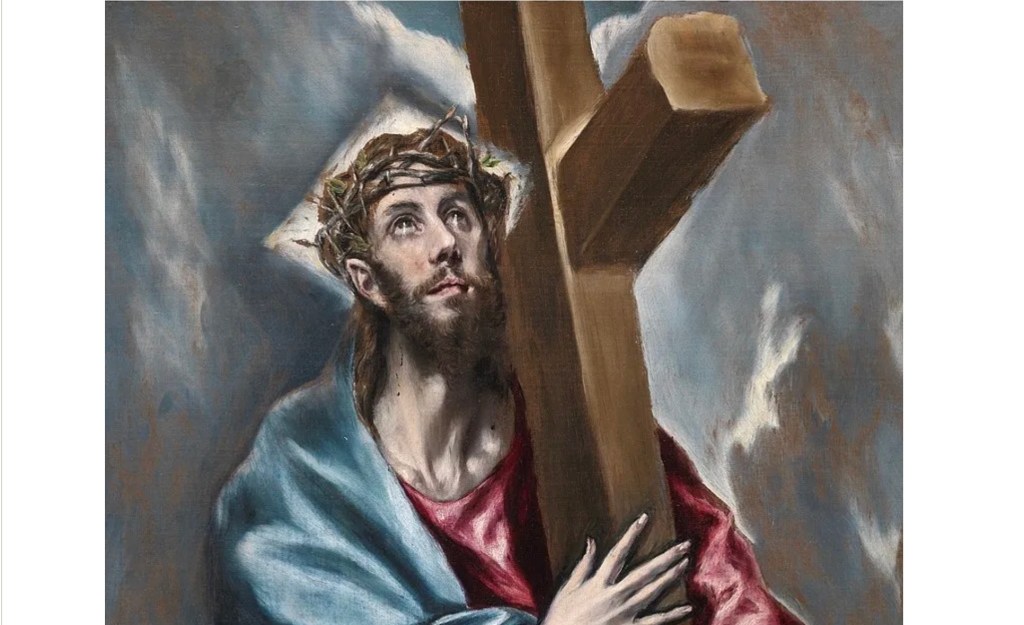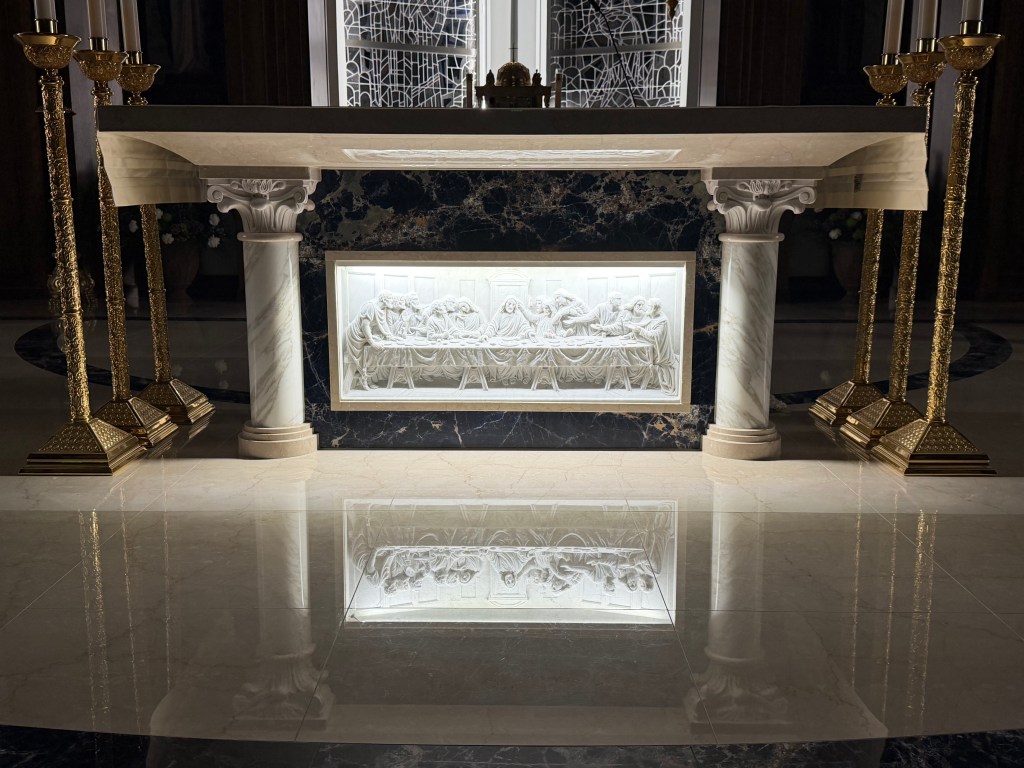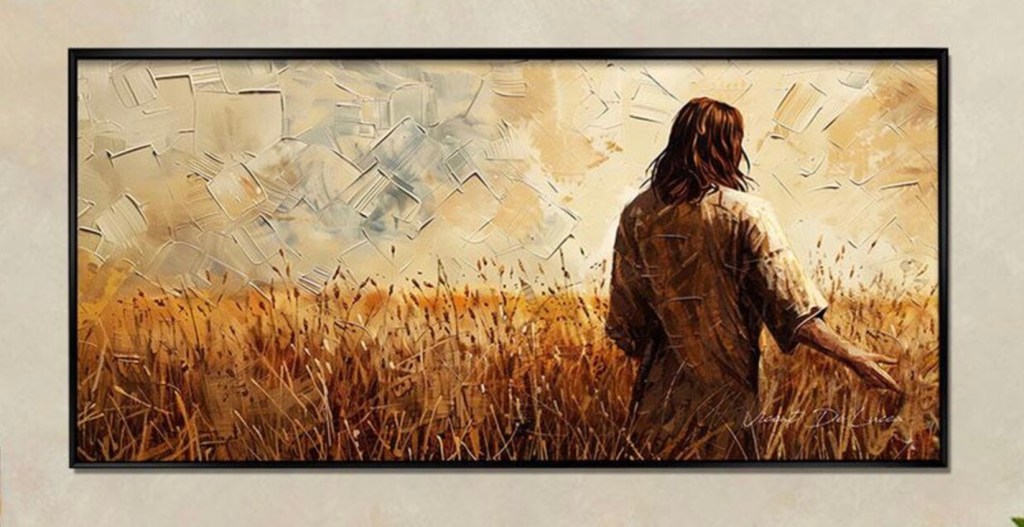
In knowing God, we will discern how to repay to God what is God’s and to Caesar what is Caesar’s.

Two groups usually at odds have come together in their mutual disdain for Jesus. The Herodians – supporters of the Galilean tetrarch, Herod Antipas, have acquiesced and allied themselves with the Roman occupation so that their “party” can remain in leadership, and the Pharisees, who are opposed to Roman occupation, seek nothing to do with, nor seek to support in any way Caesar’s self-imposed status as a god. Mark indicates that representatives of each group are sent to Jesus to “ensnare him in his speech.” The intent is to trap him and so gain evidence to bring charges against him.

They come up with an elaborate plan that seems foolproof. A representative from these groups asks Jesus, “Is it lawful to pay the census tax to Caesar or not? Should we pay or should we not pay” (Mk 12:14)? If Jesus assents to pay, then the Pharisees can bring charges against him for idolatry. If Jesus refuses to pay, the Herodians can then bring charges against him for disobeying Caesar’s tax. Jesus asks for a denarius, a Roman coin, and asks what image is on the coin, the response is Caesar. So Jesus said to them, “Repay to Caesar what belongs to Caesar and to God what belongs to God.” They were utterly amazed at him (Mk 12:17).

Jesus bested them at their own game in thinking outside of the limitations that were imposed on him by his questioners. Our faith is built on Jesus’ response. Not in the modern distinction of church and state, but more often than not we are to follow Jesus’ model and guidance of how we are to live in the world but not be of it. In most cases, we are to embrace not an either/or response, but a both/and response. Ultimately, the final determiner is God.

One example of such a false dichotomy often displayed is that faith and reason are opposed and cannot co-exist. One could approach Jesus today, as did the representative for the Herodians and the Pharisees, and ask, “Rabbi, should we follow faith or reason?” We are more authentic in actualizing and pursuing the greater breadth, depth, and width of understanding who we are as human beings and our place in the cosmos when we embrace both faith and reason. Our science and intellect are spurred on by our sense of wonder and awe in that we seek to understand our world around us. 

Faith seeks understanding! Using our ability to reason, to hypothesize, and ask,  “Why?” has lead humanity to some wonderful discoveries. Reason and science though can only take us so far.

God’s grace does not diminish but builds upon nature. The gift of faith helps us to go beyond the ability to solve problems in the sensory or physical realm alone and to experience the ground of Mystery by entering into a relationship with God and the spiritual realities of his creation that transcend our physical world and capacity to measure it. God has created all things visible and invisible.

Just a few of the many examples of practicing Catholics from our past who have shown this both/and approach are Copernicus (1473-1543), who developed the theory of heliocentrism, meaning that the earth is not the center of the universe but instead revolves around the sun; Nicolas Steno (1638-1686), who excelled in the study of anatomy, geology and is considered the founder of the study of fossils; Laura Bassi (1711-1778), first female professor of physics; Gregor Mendel (1822-1844), who was an Augustinian friar and is considered to be the father of genetics; and Fr. Georges Lemaitre (1894-1966), who is considered the father of the Big Bang Theory.

The Catholic Church is not opposed to science but discourages the concept of a hyper-scientism: that something is real or exists only if be measured by the senses or experimentation alone. This limits the gift of wonder. “Faith and reason are like two wings on which the human spirit rises to the contemplation of truth; and God has placed in the human heart a desire to know the truth—in a word, to know himself—so that, by knowing and loving God, men and women may also come to the fullness of truth about themselves” (Pope John Paul II, Opening line). We need to continue to embrace the gift of wonder and rise to meet its invitation by soaring aloft with both wings of faith and reason.

Pope Leo echoes these sentiments of a healthy, discerning both and approach: “Our first task is neither to demonize nor idolize technological tools, but to utilize them on the basis of a fundamental principle, namely that truth is a common good and not the property of those with power or influence” (paragraph 137).

Even in the new digital age and with growing advancements in AI, we can embrace that which can be helpful with moderation and prudence, while at the same time continue to protect the dignity of humanity and the value of the truth. We will do this best when we prioritize God as the foundational relationship and starting point for discernment in our lives. As we love God with all our heart, mind, soul, and strength, we will know better how to repay to God what is God’s, as well as how to repay to Caesar what is Caesar’s.


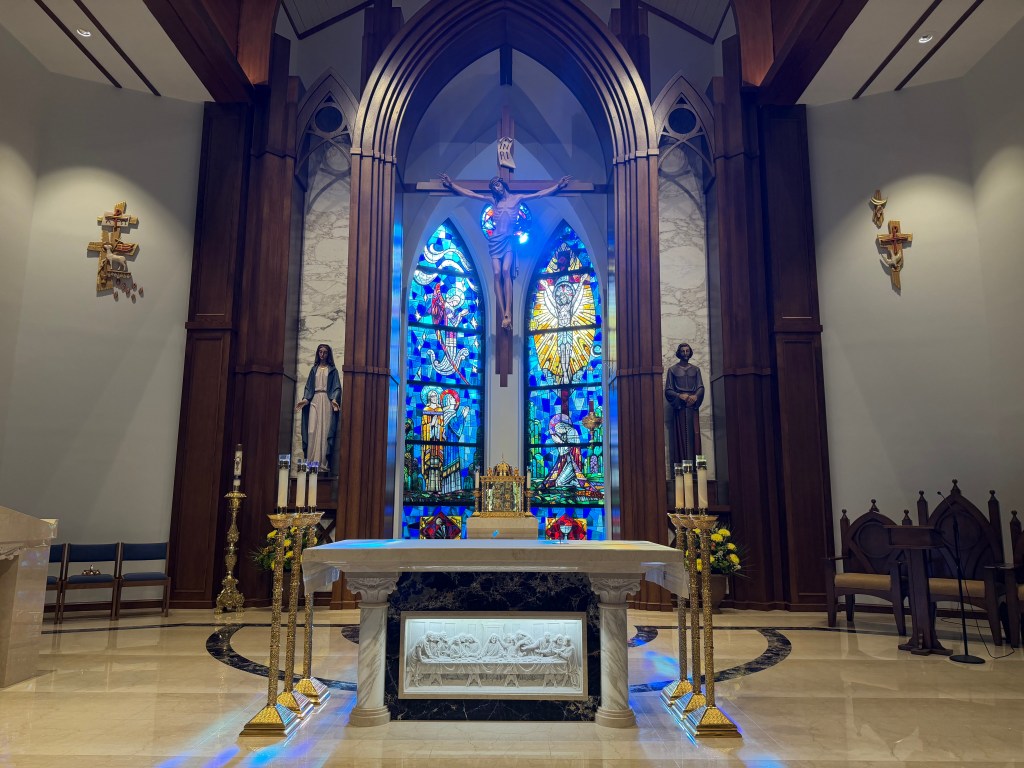
Photo: We know God better when we spend time in silence, in adoration, in prayer, meditation, and contemplation.

The following link lists an article by Shaun Mcafee regarding 11 Catholic scientists through the ages: https://epicpew.com/11-amazing-catholic-scientists-you-should-know/

Link for Fides et Ratio by Pope John Paul II

Link for Magnifica Humanitatis  by Pope Leo XIV

Link for the Mass readings for Tuesday, June 2, 2026

Will we serve ourselves or the owner of the vineyard?

“At the proper time he sent a servant to the tenants to obtain from them some of the produce of the vineyard” (Mark 12:1-12).

Unfortunately, not only did the tenants not offer the produce due to the true owner of the vineyard, but they also beat his servant and sent him back empty handed. This pattern repeated. The owner sent more servants. They were beaten and some killed, and then the owner sent his son, thinking that they would respect him. They killed him as well, thinking that then the inheritance would be theirs. Jesus ended the parable with an account of the swift retribution of the tenant farmers by the owner and the redistribution of the vineyard to others. The chief priests, the scribes, and the elders realized that the parable was directed at them.

The leaders were not happy about being compared to the wicked, tenant farmers. This only deepened their resolve to arrest and persecute him. Instead of digging in their heals, had they saw instead that the parable was an opportunity to see their own sinful behavior of not being faithful stewards, they could have repented and reconciled themselves to the will of God.

We who read Parable of the Tenants may be quick to judge the whole lot: the stewards, chief priests, scribes, and elders. If we do so, we do at our own peril. What does this parable say to us? How have we been good stewards of that which God has given, including our own lives? A common mantra is that this is my body and I can do whatever I want with it. Though this may be a popular cry of individualism and self-autonomy, it is not biblical.

All that we have is a gift from God, including our life and our very being. Each of us is a unique wonder, while at the same time we are not our own to do with as we please. We are God’s beloved children, daughters and sons created in his image and likeness. Our likeness has been dimmed by sin and so feeds our knee jerk and sometimes visceral reaction against the notion that we are not our own to do with as we please. This mentality is fueled by a radical individualism that seeks to be in control. We believe that we know better, that we know what will make us happy and what will fulfill us. So we give in to our pleasures, passions, and wants. 

Discipline, temperance, and self-control are shunned. This selfish posture often comes from our unhealed wounds, the whispers of the father of lies, as well as living under the influences of a fallen world. Where God is not first, someone or something will be. This is what gives rise to a cult of personality. These pedestals are often built on the weak legs of the precarious wood of our finite and fallen nature. This is why so many leaders, religious, political and familial, have time and again all fallen off and let us down. They were placed where they never ought to have been placed.

This will continue to be the pattern, just as we saw in Jesus’ parable, which will lead to our own undoing, unless we are willing to let go of our attachment to the things of this world, including our own self-aggrandizement and narcissism. “I, me, mine”, is a debilitating cry. 

The tenants in today’s parable looked for what they could get and take from what was never theirs. This grasping for immediate gratification undid the very core of their humanity and led not only to the desecration of the dignity of those the owner of the vineyard sent but lead to their own demise. In idolizing the things of the world instead of the things of heaven, they became undone. 

Will we feed on the same radical individualism, or embrace our role as good steward, acknowledging, all that we have, even our very lives, are a gift from God, the owner of the vineyard. Recognizing that God is God and we are not, and trusting in his will for our lives will truly make us happy, fulfill, and help us to embrace who we are: co-redeemers with God. God has given each of us gifts to better his kingdom. May we serve well and seek to bear fruit that will last.

When we fall short, let us acknowledge that God has sent his Son to us. He has come to lead us to all that is Good, all that is True, and all that is Beautiful. He is also the only one we can count on. We need to place our trust in Jesus first, so when others fall, we do not fall with them and/or despair, because none of us are perfect. Each of us have our strengths as well as our weaknesses. As we grow in humility, we will grow in freedom and restore our likeness with God. As Jesus redeems us, we will experience our freedom and healing. As we heal, we can serve to help others who have fallen to experience a true freedom that will last.


Photo: Blessed to serve God and my parish family here at Holy Cross!

Link for the Mass readings for Monday, June 1, 2026

Let us not constrict but open our hearts to allow Jesus to love us even where we feel unlovable.

Today we celebrate Trinity Sunday. The Trinity is the foundation of not only our faith but the reality of all that exists. The Catechism (CCC 234) puts it this way: “The mystery of the Most Holy Trinity is the central mystery of Christian faith and life. It is the mystery of God in himself. It is therefore the source of all the other mysteries of faith, the light that enlightens them. It is the most fundamental and essential teaching in the ‘hierarchy of the truths of faith’.”

The Trinity is the “central mystery” of both our faith and our lives, the “mystery of God himself.” This is true because God has been, is, and always will be. God exists as a communion of three Persons, God the Father, God the Son, and God the Holy Spirit. Three Persons in one God, but not three beings.

Anything we say about God though is going to be woefully inadequate of the truth about who God is. As the saying goes, all analogies limp regarding our description of God. We have a better chance of saying what God is not. To say that God is not a being is a good place to start because God is not in the same genus as us, nor in any genus. God is not even a supreme being, the being of all beings. God transcends all space and time. God is completely self-sufficient, God does not need anything, does not rely on anything, and thus he does not need anything or anyone, including us. This is good news, because that means that God is not in competition with nor does he demand anything from us for his own benefit.

God is infinite act of existence, or in the Latin of St Thomas Aquinas, ispum esse subsistens, the sheer act of “to be”. This means that God has no limitations. To say that God is three Persons is harder for us to comprehend because we often in our modern context use the words person and being as synonyms. To use the word person in speaking of God means that we are speaking relationally.

We describe God as Father because he begets God the Son, God the Son is the one begotten. The Son is not generated or created, because the Son has always existed with the Father. This is true because they are not finite beings separate from one another. They are infinite, though distinct in their relation to one another. God the Holy Spirit is then the Love shared between God the Father and God the Son. God’s immanence, God within himself, then is an infinite communion because of the infinite giving and receiving between each of the three. Each person gives and receives infinitely, perfectly giving all and holding nothing back.

We will never be able to fully comprehend God nor this infinite dance of giving and receiving, because the Holy Trinity transcends our finite reality. God is mystery not a problem to be solved. God cannot be proven, again because he is not in the genus of being, so no possible way we can in the material, three-dimensional reality we live in prove God. God transcends our reality. Yet we can encounter him and develop a relationship with him because he draws close to us, he reveals himself to us, he seeks us his created beings out. We are blessed in that he has drawn close to us in the Person of his Son. “God so loved the world that he gave his only Son, so that everyone who believes in him might not perish but might have eternal life” (Jn 3:16).

Jesus, in his incarnation, is the enfleshed Son of God. Jesus is fully divine and fully human, and he reveals God the Father to us. Through becoming one with us in our humanity, we can share in the love that he experiences as Son with his Father when we are willing to let him in to love us, even in places where we feel unlovable.

The best way to understand, to know, and to build our relationship with God, is not to force God to fit into our finite reality, mindset, or limited view, but to be open to, “the Spirit of truth, he will guide [us] to all truth” (Jn 16:13). The Holy Spirit will guide us to all truth when we resist turning in upon ourselves and away from him, but instead be willing to resist constricting our hearts and be expanded by his love. Then we will be more open to opportunities to be loved and to love in our everyday moments. For where the willing of the good of each other is, God is, and Love is present.

Jesus was not sent into the world by his Father to condemn the world, he was sent to save, not just a select few, but all of humanity, such that all might have eternal life. The richness of the diversity of humanity is not a curse, but a gift. This Holy Trinity Sunday, may the Love of God move us beyond our defensive and divisive postures such that we resist closing our hearts and minds but instead become more willing to open them to build bridges of encounter and relationship.


Photo: A good Rosary walk back in my old evening walking grounds was for the soul.

Link for the Mass readings for Sunday, May 31, 2026

Jesus is the Lord of the temple, the Lord of our lives.

Jesus had not only created a scene when he, literally, turned over the tables in the temple, but had been doing so since the beginning of his public ministry. Jesus had been figuratively turning the tables on the religious leadership. The conflicts between Jesus and those in charge were not subsiding but only growing, especially now that Jesus was present at the Jewish spiritual center of the temple, the very seat of God. The chief priests, the scribes, and the elders, are becoming more concerned about the teachings and actions of this itinerant preacher and believe him to be a false prophet. They approach him when he returns to the temple and ask, “By what authority are you doing these things? Or who gave you this authority to do them?” (Mark 11:28)?

Jesus, who is the Lord of the temple, “the lord of the house” (Mk 13:35), recognizes that the “servants in charge” (Mk 13:34) of the house, are not seeking the truth in this question. “The question is full of hidden irony: the stewards of the temple, whose authority is only delegated, are demanding that the Lord of the temple answer to them for his actions” (Healy, 234). Jesus deftly turns the table on them. In doing so, they reveal that they do not believe that John or Jesus are operating under the authority of God, but they fear the reaction of the people gathering around their discussion. This is the time of the Passover, and many pilgrims have come to Jerusalem to celebrate. The area is teeming with people. The last thing that the Jewish authorities want is another scene as Jesus had staged from his turning over the tables the day before. They do not want to have the Roman centurions getting involved.

The chief priests, scribes, and elders refuse to answer Jesus’ question. Jesus follows like fashion then and does not answer their original question. This episode and exchange, as with the other conflicts with Jesus leaves his challengers frustrated and angrier. They believe Jesus to be a false prophet, yet they are not willing to call him out publicly. Indecisiveness further fuels their already growing resentment. Jesus though is at rest because he knows that he is following the will of his Father and has nothing to prove.

How do we do with conflict? Are we as surefooted and confident in the love of our Father as Jesus? If not, there can be many reasons. Foundationally, we need to ask ourselves: “Are we following the will of the Father in all that we think, say, and do?” The peace that surpasses all understanding that Jesus experiences and promises comes from the assurance that our loving God and Father is with us, has our back, and supports us. We also experience rest when our conscience is clear. The challenge is to be clear in our discernment that we know the difference between God’s and our own will, as well as when our decisions are in accord with or opposed to God’s. When not, then we repent and turn back to him.

We may receive clarity, although many times we are indecisive. The answer to knowing God’s will is knowing God. We encounter and develop a better relationship with our Father as we would with any other person. Though until we develop a deeper prayer life, that is easier said than done. As many of the saints attest, the closer they grew in relationship, the more distant he appeared. This is true because Jesus invites us to go deeper, so we come to the point that we resist relying on our emotions, inspirations, and consolations, as well as our capacity to make sense of what we are asked. Jesus leads us on an eternal path that has no end, cannot be exhausted, and we are to follow without hesitation. Jesus speaks to us in the silence of our hearts. Why do we listen? Because Jesus is our Lord, the Son of God our Father.


Photo: The more time we give to Jesus in silence, the more he becomes the Lord of our lives!

Healy, Mary. The Gospel of Mark. Grand Rapids, MI: Baker Academic, 2008.

Link for the Mass readings for Friday, May 30, 2026

Not hangry but a holy zeal for God’s house.

Upon a first reading of today’s Gospel from Mark it appears that Jesus woke up on the wrong side of the bed. He and the disciples were heading to Jerusalem, he was hungry, so spying a fig tree in leaf, he walked up to it and when he saw that there were no figs growing, he unleashed the words, “May no one ever eat of your fruit again”(Mk 11:14)!

In the next scene, we find Jesus returning to the Temple. He witnessed the money changers in the outer court, and he began to drive out those selling and buying there. He overturned the tables of the money changers and the seats of those who were selling doves (Mk 11:15). Good thing for the doves that Jesus only went for the seats!

There was a series of commercials which ran a while back in which a character was very hungry and acting out of sorts until they were able to eat the candy bar being promoted. Once they did so, the character transformed back into themselves. Is this what is going on with Jesus? Is he just hangry? Has his blood-glucose level taken a nosedive? Or is there something deeper going on?

Remembering that Jesus fasted for forty days in the Judean desert, I would speculate that there is something else going on. What is more likely is that Jesus is asserting his prophetic role. As with other prophets recorded in the Old Testament, like Jeremiah, who gathered the elders of the people, then smashed a potter’s flask, then shared that this is what God would do to them for being unfaithful (cf. Jeremiah 19), Jesus is most likely going with a similar hyperbolic display to make a dramatic point.

The fig tree is often a sign for Israel and is recorded as such in both Hosea and Jeremiah. When Jesus comes to the fig tree, his reaction is an expression of the unfaithfulness of Israel not so much at the fig tree. The chosen people are to be faithful to God in and out of season. When the disciples and Jesus passed by the fig tree the next morning, Peter exclaimed that the fig tree Jesus had cursed had withered to the roots. Jesus, not missing a step, mentions to his disciples that they are to: “Have faith in God” (Mk 11:22). By doing so, they will not whither and fade as those not being faithful to the covenant.

Jesus assumes his role as a prophet again when he is casting out the money changers in the temple precincts. It is no minor detail that the tables with caged doves were spared. If Jesus was going off in some kind of unabandoned rage, he would not have thought twice about turning over the tables on them as well. Jesus is making a spectacle that people would take notice. “Is it not written: My house shall be called a house of prayer for all peoples? But you have made it a den of thieves” (Mk 11:17).

Jesus is cleansing and restoring the Temple to its proper place as a house of prayer, but he is also showing that the temple tax that has been paid and the sacrifices that have been offered will no longer be needed. “Jesus’ actions signal the arrival of ‘that day’ prophesied by Zechariah, when the Lord would gather all the nations to worship him in Jerusalem, and ‘there shall no longer be any merchant in the house of the LORD of hosts’ (Zech 14:21)” (Healy, 227).

Jesus is foreshadowing how he will replace the brick and mortar and he himself will become the New Temple. Jesus will be scourged and crucified, he will be the sacrifice offered and the price paid for our sins. The altar will be the new table where his sacrifice will be memorialized and re-presented.

Jesus’ message at the fig tree and the cleansing of the Temple are just as important for us today. As his followers, we are to bear fruit in and out of season, this means that we are to live out his teachings in all areas of our lives, individually and in communion with one another. Jesus has given us all a gift to offer, something that no one else can or ever will quite do in the way we can. This is how we are to bear fruit. Jesus in cleansing the Temple, shows that he is the new Temple. We too are to be a part of this Temple. We are to resist the corrosive and corruptive temptations that assail us. 

May we not be transformed by the fallen tendencies of the culture, but instead transformed by the love of God and remain steadfast and true to our calling. Let us be faithful to God’s will as members of the living Temple. We are precious stones, to be polished and refined, that we might radiate the light of Christ to those in our midst.


Painting: Raymond Balze, “Jesus Chasing Merchants from the Temple”

Healy, Mary. The Gospel of Mark. Grand Rapids, MI: Baker Academic, 2008.

Link for the Mass readings for Friday, May 29, 2026

Jesus has come to help us to see.

Jesus said to him in reply, “What do you want me to do for you?” The blind man replied to him, “Master, I want to see” (Mark 10:51).

Bartimaeus offers his answer for all of us. “Master, I want see.” We may have physical sight, but we may suffer from spiritual blindness. We may see that the finite, the material, wealth, power, and fame, are promises or the answer to our security and happiness, but ultimately they do not. Pleasurable pursuits, even when good, offer happiness for a time but will in the end leave us wanting for more. Health and a lack of suffering are even more inviting. Although, we live in a finite and fallen world. Our health will be challenged at times and we will suffer.

Instead of looking without for our hope, help, and satisfaction, let us look within. Let us ask Jesus to reveal to us the false attachments and allure of the flash that has blinded us. If we ask Jesus to help us to see, he will heal our sight so that we are willing and able to see the source of our suffering and pain, where we are in need of healing, what finite things and who we may be allowing to lead us astray.

With new clarity, we will see and identify the dysfunctions we have grown accustomed to and the comfort zones we have surrounded ourselves with. Although comfortable because what we know, our growth is being stifled and our hearts constricted. Jesus will lead us to freedom. He has come close and reaches out and offers a hand with an invitation to lead us out of the chaos of our lives that we may not even be able to see.

Much like when I was 30 and first found out that I had need glasses all of my life because I have astigmatism. When I put on my new glasses, I was amazed at how clear things were, not knowing I had been compensating so much all my life. Living with spiritual blinders on is very similar. Jesus has come to lead us to experience healing and transformation. Each step will be a challenge, but the strength of Jesus’ hand will keep us steady and his light will guide us on the way to wholeness and freedom.


Photo: Blessed to return to SVDP Regional Seminary where Jesus brought wonderful people into my life to help me to begin to heal and see more clearly.

Link for the Mass readings for Thursday, May 28, 2026

May we still be willing to be amazed and afraid, in awe and wonder, of Jesus!

Some people will deny the divinity of Jesus on account of the differences between the synoptic Gospels, Matthew, Mark and Luke, which all follow a similar outline and similar accounting of the life of Jesus, and the Gospel of John, which is very different in regard to how much of the divinity of Jesus is expressed in its theological presentation. Those who would deny the divinity of Jesus following this proposal, state that the author of John is adding to Jesus that which was not there and that in the synoptic Gospels there are no accounts of the divinity of Jesus.
The assumption that there is no accounting of the divinity of Jesus in the synoptic Gospels does not present a true assessment of these texts. This view is not supported with a careful reading. The very first line of the Gospel of Mark states: “The beginning of the gospel of Jesus Christ [the Son of God]” (Mk 1:1). This verse may often be read as merely an introductory device, and even if we drop the words the Son of God, bracketed because there are some manuscripts that do not include them, Mark was saying something very clear and very subversive when he used the word gospel. The Greek rendering of the word gospel is, euangelion, which we interpret as good news. This is still pretty much, “Ho, hum,” unless we understand the context of how euangelion was used during the time of Jesus.
This word was used by the Roman emperor who would send his emissaries to proclaim the good news throughout the empire announcing his birthday, or an imperial victory. No one else dared to use these words in a public forum as Mark is doing with the very first line of his Gospel. This was the prerogative of the emperor. Mark was covertly stating in the opening words of his Gospel that Caesar is not Lord. Jesus is.
Jesus only fourteen verses later would claim: “This is the time of fulfillment. The kingdom of God is at hand. Repent, and believe in the gospel” (Mk 1:15). The kingdom of God is at hand in the presence of Jesus. This is the euangelion that we believe. The gospel, the good news, is that the Son of God has become one with us in the flesh, to dwell among us.
In today’s opening verse from Mark, we have read or heard; The disciples were on the way, going up to Jerusalem, and Jesus went ahead of them. They were amazed, and those who followed were afraid (Mk 10:32). Again, this verse may be read over quickly as a literary device so we can get to the good stuff, yet again, Mark is saying a lot. We may miss the context, but the readers and hearers during his time would not have. They would have recognized that “amazed and afraid” were words used in their sacred texts to describe the reactions to God, his messengers the angels, and/or the work of God.
The Good News, proclaimed to us through the tome of salvation history, hidden in the Old and revealed in the New Testament, is that Jesus is the Christ, the Son of the living God. He is our Lord, he is our Savior and Redeemer. He became a human being, he became one with us in all things except sin, and dwelt among us. Jesus did so that we might become divinized, become God through our participation in his life. May we too, like the disciples, be amazed and afraid, in awe of the magnitude of this reality. How many times have we heard this Good News, yet have just gone about our business, as if nothing significant was said?
Let us resist the temptation to do that here. We can become so busy, so caught up in just getting through all that we have to do, that we forget what is really important and who is really important. We can take for granted those that are near to us, not out of any malice or lack of care, but just because life happens and we get caught up in doing and completing that which needs, or we think, needs to be done. May we spend some time slowing down and appreciating our life in communion with God and one another. May we fully appreciate the gift that Jesus has offered us, which is a relationship with him and his Father so that we may experience the love of the Holy Spirit. In so embracing and developing the gift of our relationship with God, we can better experience the dignity of our humanity, and hopefully begin to recognize again the same dignity that is present in each and every one of us.

Photo: Jesus was willing to give his life for us, to free us from the disfunction we know and lead us to experience the love of the Father!
Link for the Mass readings for Wednesday, May 27, 2026

With God all things are possible.

In today’s readings, we resume where we left off before Ash Wednesday interjected into the eight week of Ordinary Time. We return to the Gospel of Mark. Jesus had been teaching about the entrance into the kingdom of God as the rich man walked away sad by stating, “Children how hard it is to enter the kingdom of God! It is easier for a camel to pass through the eye of a needle, than one who is rich to enter the kingdom of God” (Mk 10:24-25). The disciples were stymied, primarily because present Jewish belief held that those who had amassed wealth and riches did so because they were blessed by God. If someone who had followed the commandments of God, appeared to be blessed by God, would he or she not be a part of God’s kingdom, if not then, what was one to do?

Jesus responded to the disciples astonishment, by stating that “For human beings it is impossible.” Jesus said this because there is nothing that we can do to earn or buy our way into heaven. It is not through perseverance, dogged determination, or will power that we are saved. Our security also is not to be placed in the things of this world, our happiness and fulfillment is not to be placed in the apparent goods and glitter of the finite things that offer comfort and pleasure. For if we place our hope in the things of this world, in our own belief that we can control our own destiny, we will be building our foundation on sand. Self-sufficiency also be a dangerous slope. When we believe we can only rely on ourselves, then we carry the weight of the world on our shoulders which will be too heavy to carry.

For human beings, it is impossible, but not for God. All things are possible for God” (Mk 10:27).

There is only one way to enter the kingdom of God. Say yes to the invitation of Jesus. The rich man refused the invitation to come and follow Jesus. He chose his possessions over the kingdom. The disciples of Jesus chose differently. Peter summed this up when he spoke up for those, who like him, did what the rich man did not: “We have given up everything and followed you” (Mk 10:28). Jesus affirmed Peter and the other disciple’s acceptance of the invitation to come and follow him, as well as to assure those who would willingly sacrifice and voluntarily give up, house, family, or land, to follow him. He insisted that they would receive back “a hundred times more in this present age… and eternal life to come” (Mk 10:30).

Jesus is not a preaching a kind of prosperity gospel or free reigning capitalism, nor is he a proponent of socialism or communism. Each of these are human socio-political, economic constructs. Jesus instead is painting a picture of the reign of God as a new family. One that exists, not of the world’s making, but of God’s design. A kingdom not of this world, though still present in it, and the good news is that all are invited to be a part. The apostles were on the way. They had indeed given up the material and familial to follow Jesus, but they, who argued among themselves regarding who was to be the greatest in God’s kingdom, still had their mental attachments and preconceived notions to let go of.

Those who are a part of the kingdom of God are not connected through bloodline, tribe, political party, or nation, wealth, honor, pleasure, or power, but are united through a transformation of their hearts and minds. The followers of Jesus become brothers and sisters. They care for one another, provide hospitality, charity, support, access, means, and encouragement. Together, they meet the challenges and persecutions that come from those who oppose the kingdom.

Jesus offers us the same invitation that he offered the rich man and his disciples; to follow him by letting go of that which distracts, diverts, and binds us from giving our life more fully over to him and building up his kingdom. It is helpful to assess our lives. Where are our pursuits disordered from God’s will, how are our minds and spirits distorted, and where does pride and self reliance hold primacy over God? Where can we let go, be less attached, and surrender to and trust in God’s will for our lives? The solid and true foundation we will build is in developing our relationship with Jesus and his Father. Upon this foundation let us stand and allow the love of the Holy Spirit to burn. What is not of God will burn away, what remains is of God.


Photo: Choosing to keep our eyes on Jesus, he will guide us through any storm, external or internal!

Link for the Mass readings for Tuesday, May 26, 2026

Happy 30th Anniversary!!!

A parishioner came up to me after the morning Mass and shared with me that JoAnn told her yesterday to tell me: “I am proud of you and I love you.” She was not able to get to me yesterday, and shared the message with me after Mass this morning. Which is more appropriate as today JoAnn and I would have celebrated our 30th anniversary. Two random events? Coincidence? No. To me God-incidence!

Albert Einstein said, “There are only two ways to live your life. One is as though nothing is a miracle. The other is as though everything is a miracle.” I choose the “everything is a miracle” approach, as well as the St. Thérèse of Lisieux principle, “All is grace.” All is indeed grace filled when we turn to Jesus with our sorrow, anxiety, insecurities, and uncertainties. God truly will bring about a greater good, may not appear to be so in the moment, but over time, yes.

I still miss JoAnn and not sharing our daily lives together, but in this last year I had felt her closer since she died. I am blessed by the twenty-three years we shared together and a better priest because of the ups and downs, challenges and celebrations, and above all the love we shared. Our relationship helped us both to begin the path of healing and moving beyond the safety of the disfunction we knew, to trust in the freedom with God we didn’t know but were growing into.

Healing continues, we are all a work in progress. As we learn to breathe, be still, receive and abide in God’s love, we heal a little more, are transformed a little more, we become a little more human, and remember who we are as God’s beloved daughter or son. Happy Anniversary to my heart and my love.


Picture on my desk and on my phone. Blessed to see JoAnn’s smile everyday which seems to be getting bigger and more radiant.

Mary, Mother of the Church, our mother, pray for us now, and at the hour of our death!

Today’s memorial, Mary the Mother of the Church, began with the decree released on February 11, 2018, by Cardinal Robert Sarah while he was still the head of the Congregation of Divine Worship. Pope Francis called for the Church to celebrate this memorial on the Monday after Pentecost. Not only is Mary the Mother of Jesus, but since we as the People of God participate in the life of Jesus as members of the Body of Christ, she is our mother too.

The New Testament records time and again how Mary reveals by word and action that she is the model of discipleship.

Mary answered Gabriel’s request to conceive and bear Jesus, with her response, “Behold, I am the handmaid of the Lord. May it be done to me according to your word” (Lk 1:38). Mary then went with haste to share the good news with Elizabeth and to assist her in her pregnancy of John the Baptist. Mary, after the birth of Jesus, is visited by the shepherds and upon hearing their news from the angelic host, she “kept all these things, reflecting on them in her heart” (Lk 2:19). Mary and Joseph cared for, protected, and guided Jesus in the Jewish faith as he matured and grew into a young man.

Mary was also present at the beginning of his ministry when she said to the servants at the wedding at Cana, “Do whatever he tells you” (Jn 2:5). Mary was also present at the crucifixion, as recorded in today’s reading from the Gospel of John: When Jesus saw his mother and the disciple there whom he loved, he said to his mother, “Woman, behold, your son.” Then he said to the disciple, “Behold, your mother.” And from that hour the disciple took her into his home (Jn 19:26-27). Mary was pierced with sorrow when the centurion’s lance was thrust through the side of Jesus, her son, as blood and water flowed. Mary was then present as the Church was birthed at Pentecost during the coming of the Holy Spirit (cf. Acts 1:14).

Mary is the mother of Jesus, the Mother of the Church, and so she is also our mother. We do not worship Mary but seek her intercession and guidance as we might our own earthly mothers. We also look to her as a model for living as disciples of Jesus. We too are to ponder the wonders and mysteries of God working in our lives. As with Mary, who stood at the foot of the cross, may we too not run from suffering but embrace it so that we also can then receive her son, Jesus, whose arms are wide open to receive us in the midst of our pain, so that he may bestow upon us his consolation, comfort, and healing.

Mary too could have run, could have turned away from the excruciating agony of watching her son die such a humiliating and horrific death. Did the words of Simeon prepare her, “and you yourself a sword shall pierce” (Luke 2:35)? Mary not only saw and experienced the piercing of the lance right into his heart, but she experienced the persecutions and criticisms of religious leadership as well as their own home town folk turning on Jesus. Mary did not run, she remained steadfast by her son’s side.

Mary, who it appeared that Jesus was denouncing when he said, “Who is my mother?” lived out Jesus’ directive better than anyone: “My mother and my brothers are those who hear the word of God and act on it” (Luke 8:21). Mary did just that! May she lead us to do the same. As we are faced with challenges, may we ponder with Mary the options that God is offering us, when facing anxiety and fear, may we allow Mary to embrace and encourage us, and when we experience grief and sorrow, may Mary help us to remember, Jesus conquered death and has the final answer. May we do whatever Jesus tells us to do to make his Church relevant and vibrant in our time.

———————————————————-

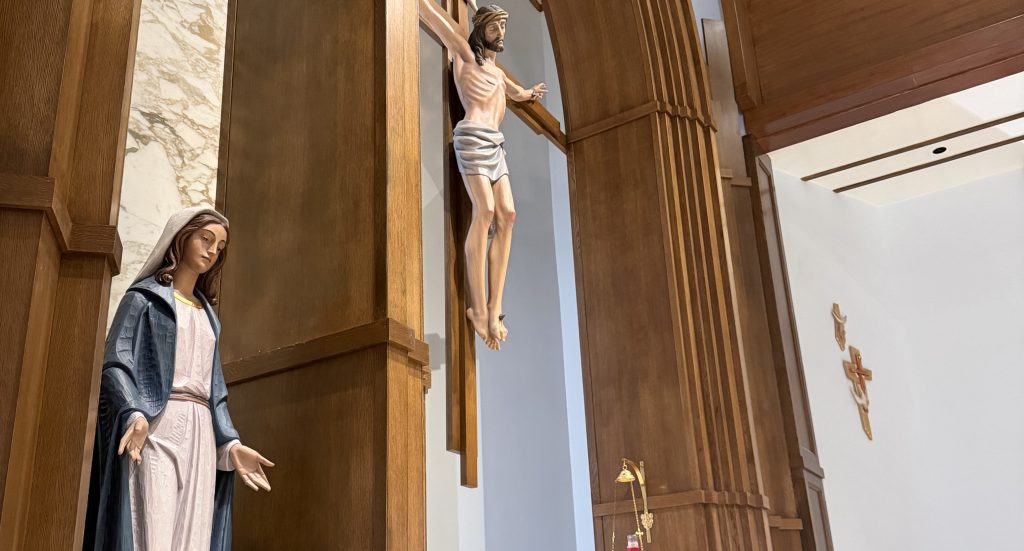
Photo: May we, as did John, receive Jesus’ invitation to receive Mary as our mother and take her into our home.

Link for the Mass readings for Monday, May 25, 2026