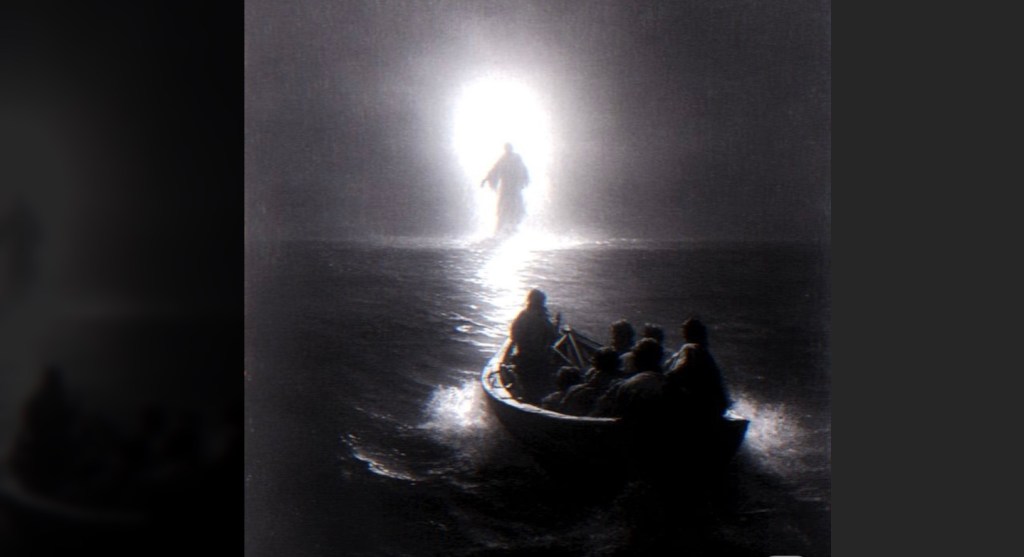
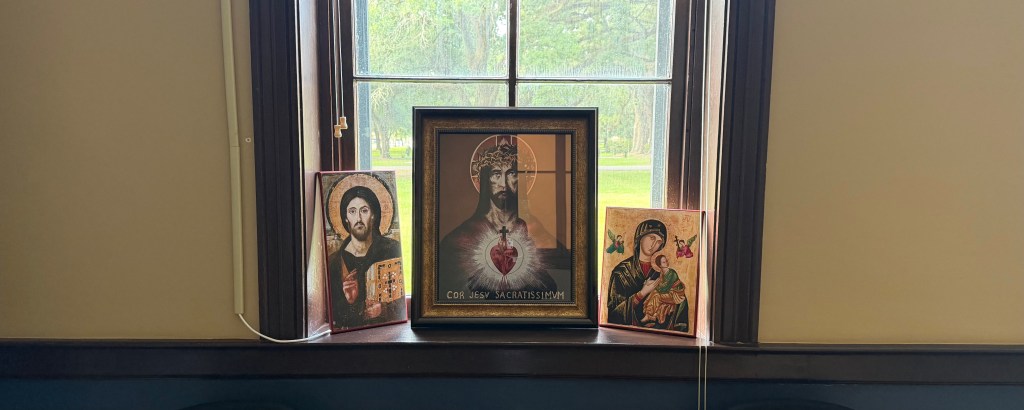
When the storms come, Jesus is present to calm the storm or to help us ride it out.

As Jesus got into a boat, his disciples followed him. Suddenly a violent storm came up on the sea, so that the boat was being swamped by waves; but he was asleep (Mt 8:23-24).

Noah’s ark, as well as the boat in today’s Gospel pericope, has often been a symbol for the Church. The storms may rage without, but those who remain in the boat will be secure. The image of Jesus sleeping can also be a sign of the storms within the boat, within the Church – where it may appear that Jesus is absent or that he doesn’t care about our problems.

We are human beings, made in the image and likeness of God, we are good, but we are also fallible and wounded. We are wounded by the very gift of the free will we have been given. God loves us so much he is willing to risk that we will choose to place other people, places, and things before him. We may often pursue the promises of wealth, fame, honor, and pleasure as substitutes instead of our true and abiding happiness which can only come from God. God does not cause our suffering. He will allow us to reap the consequences of our choices as well as allow the enemy to tempt us where we are at our weakest.

He is not being cruel, he is allowing us to see what our lives are like without him and what our lives are like when we place him first and as a priority. Also, when we are willing to identify those weaknesses, and then when we come to realize that we can’t overcome them on our own and reach out for God’s help, we grow closer in relationship with him. Also, those areas of weakness are shored up by God’s love and strength. Temptations when they arise and we turn to God become now invitations to experience God’s grace.

Hopefully, we will learn from our mistakes and grow to realize that we need to remember that God is to be first in all we think, say, and do. Even in our darkest moments, even in the darkest moments of the Church, we need to remember that God has not abandoned us. When we are experiencing the storms in our lives that come from without caused by others or the enemy, or the storms from within caused by our own sinful choices, or the anxieties, worries, and fears that we feed, Jesus may appear to be distant, he may seem not to care, and may seem to not even exist. Yet, just as Jesus was calmly sleeping in the boat with the disciples, he was present with them and he is present with us. Once the disciples turned to Jesus and implored his help, Jesus calmed the stormy sea.

Our focus on Jesus through the good times and the bad is the key. Our faith in Jesus grows as our trust and relationship in him grow. We just need to remember to turn to him in all our circumstances in life, to be thankful when all is going well and to seek his assistance when we need his help. This is what St Paul meant by praying unceasingly. Turning to God consistently is to be a regular practice in our daily lives and then when we are in need, we will know he is there.

This is to be true regarding our own mental storms of anxiety, whether we are dealing with conflict in a relationship, with some crisis physically, economically, or spiritually, or even while experiencing challenges that go far beyond just ourselves. Just ten minutes of news will show a wide array of examples of issues way beyond our control.

We need not even fear death because Jesus has conquered death. Jesus chided his disciples, who feared the worst, as they were tossed about in the boat on the raging sea, for having little faith. He knew they could have stilled the wind as he had done or that God would have helped them to ride the storm out. They just needed to place their focus on God instead of their fear.

In all of these areas and more, even when Jesus may appear to be asleep, or absent, even when he doesn’t answer our questions of, “Why?”, we just need to realize that he is present in our midst. He hears every prayer and he cares. When we trust him, even while the waves of our trials and tribulation toss us about, we will be able to experience his peace, that peace that surpasses all understanding. As we deepen our relationship and continue to experience his peace we can then be a healing balm for those around us who struggle and help those close to us to realize they have a choice and someone to turn to who will help.

———————————————-

Photo: When we turn to Jesus in every situation and will realize that we have never been alone.

Link for the Mass readings for Tuesday, June 30, 2026

Peter and Paul acknowledged Jesus as the Christ the Son of the living God, do we?

Jesus said to his Apostles, “But who do you say that I am” (Mt 16:15)?

Have we answered the same question that Jesus posed to his apostles for ourselves? Too often we move from this to that, one situation to another, putting out fires and moving from one crisis to another, distracted and diverted, or we are just seeking to make it through another day. Have you ever felt like you are walking in a fog, you began the day with a list and then half the day has gone by and you wondered what happened to the time?

To be a Christian is not a call to stop living our lives, but it is an invitation to live our lives in, with, and for Jesus. We have been described as a People of the Book, along with Jews and Muslims. This is true, yet, more so for us as Christians, we are a people of encounter; we encounter the Living Word, the Son of God, Jesus the Christ.

Peter and Paul encountered Jesus in their lives and were changed forever. We can encounter the same Jesus when we slow down enough to pray and meditate with the Word proclaimed in the Liturgy of the Mass or read in personal prayer. We will find our lives drifting less if we have something, someone we are anchored to.

As a very simple example: except for the first Office of the day, in praying the Liturgy of the Hours, the opening prayer is, “God come to my assistance, Lord make haste to help me.” To embrace the depth of these words and resist the temptation to mindlessly state them, to not take in the request that I am asking, will help us to begin the day with more intention. Also, how many times do we make the Sign of the Cross without being attentive to the profound act we have just engaged ourselves in?

Through invoking a prayer of asking for God’s assistance and making the sacramental gesture of the Sign of the Cross, we are acknowledging that the Creator of all that exists is a part of our lives. While at the same time, as St. Augustine taught, closer to us than we are to ourselves. We may lean on both prayers when tempted, stressed, or anxious. Each one is an affirmation of a commitment to resist giving in to a mindset of minimalism and self-centeredness. All things are possible when we intentionally choose to align ourselves with Jesus, participate in the communion of the Holy Trinity, and welcome the invitation to love others as God loves us.

Peter and Paul both answered the question that Jesus posed. Peter said, “You are the Christ, the Son of the living God” (Mt 16:16), and Paul “proclaimed Jesus in the synagogues, that he is the Son of God” (Acts 9:20)! They were willing to give their lives intentionally and totally to Jesus and his mission. They allowed themselves to be steadily conformed to the life of Jesus, holding nothing back even in their willingness to be martyred in Rome.

I invite you to read today’s Gospel account from Matthew a few times. Imagine being present in the scene, and then as Jesus approaches and asks, “Who do you say that I am?” Take a moment to think, pray, and then answer. How we answer this question makes a difference. The next question to entertain is, are we willing to follow Jesus with each thought, word, and deed each moment of the day?

Saints Peter and Paul, pray for us!


Icon of St. Peter and St. Paul recently given to me by one of my OCIA students.

Link for the Mass readings for Monday, June 29, 2026

God first, helps us to experience his love and healing that we can share.

Uncertainty, upheaval, and unrest in our country and world appear to be the water we are all swimming in right now. Our readings give us some guideposts for hope and light to help us to see through the haze to what and who truly matters.

In our first reading from the Second Book of Kings, we are introduced to the Shunammite woman and the prophet Elisha. Upon their first meeting, the Shunammite woman invites Elisha to have dinner with her. There is no evidence that they knew each other at that point. She recognized his need after traveling and offered him hospitality. Their time together must have been positive because Elisha continued to visit with this woman and her husband each time he came through the area. Their friendship grew to such a point that she was even willing to have a room built for him to stay. What began with a simple gesture of empathy and hospitality would be blessed with new life.

There is an echo here of the Genesis account where three men come to visit Abraham and Sarah (Genesis 18:1-15). Abraham immediately invites the men to stay with them and appeals to Sarah to make bread and he would go and he would fetch a calf. Their welcome and hospitality are met with the praise that when they return the following year, Sarah would be with child.

We may not have the opportunity to invite a three Persons of the Trinity or a prophet to dine or live with us in our homes, but we can start with some smaller acts of interaction. When our kids, no longer kids anymore but adults, returned home from California to visit on holidays, my wife, JoAnn, would take them to Publix to stock up on food for their stay. They were constantly amazed at how many of the workers there knew their mom.

The reason was that JoAnn took small moments during each visit to interact with them. Initially, she would say hello and ask how they were doing, then slowly on subsequent visits got to know a little more about their families and their lives. Instead of rushing through the store and taking the presence of the workers for granted, JoAnn saw real people with real lives and built real relationships through small gestures of empathy.

In our Gospel reading, Matthew records Jesus saying to his apostles: “Whoever loves father or mother more than me is not worthy of me, and whoever loves son or daughter more than me is not worthy of me” (Mt 10:37). This may seem the exact opposite of the hospitality that we just encountered! These words would have been abhorrent to the people of his time. Family ties meant everything. Jesus is sounding more like a gang leader than a messiah. They need to be loyal to him first and foremost even before their own parents or children.

Jesus was making two key points. First, he is restating the Ten Commandments in that our most important relationship, even more than our family, is to be with God. You are to love the Lord your God with all your heart, all your soul, your mind, and your strength. We are to put God first before all things and all people, even family. Second, and even more startling, Jesus is equating himself with God which is the only way this statement makes any sense. Jesus is no mere rabbi, teacher, or prophet. Jesus is the Son of God incarnate. As we deepen our relationship with Jesus and follow him first before all, we will not only grow closer to God, our relationships, our activities, our very thoughts, words, and actions will be more properly ordered.

To enter the diaconate program, the wife of the applicant must sign that she is in agreement with the process and that goes right up until the day of ordination. If she is not on board, she can pull the plug at any time. Initially, JoAnn was not fully behind the idea. With the challenges to my time already high because of the demands of my teaching schedule, formation would add more challenges. I was taking a risk even presenting the idea to JoAnn. Yet, I believed Jesus was calling me forward. We both trusted that this was God’s will and we followed through with formation, to ordination, and beyond.

There were indeed challenges and tensions because of this decision and we learned to lean on Jesus through each ebb and flow. God first in our lives, meant changes and sacrifices made for each other, and fortunately, we didn’t grow apart but together. And growing not only closer to God and each other but we grew closer in our relationships at our parish of St Peter and Cardinal Newman HS where I taught then as well.

Not to be left in the lectionary gathering dust, in our second reading, St Paul helps us to understand that our relationships even transcend death. For those of us who have been “baptized into Christ Jesus were baptized into his death” (Romans 6:3). Jesus has conquered death and he has risen and will die no more. This he promises for us as well. Those who have died with Christ shall rise with him. Death does not have the final say, Jesus does.

In three months, it will be seven years since JoAnn died. We shared twenty-three wonderful years together. She taught me how to be less selfish, less contemptuous and judgmental, she taught me how to come out of myself and how to love. In the first few months after her passing, I was having trouble recalling memories of our time together and began to fear that I would forget her. Over those first months and first two years, I realized that the sorrow and grief of loss was strong and I had been holding on too tightly to who I lost.

The past five years has been a time of healing and letting go of my grip. I have started not only to experience some spontaneous memories like her laugh while doing the dishes one night, her presence when I made time for walks, and activity we did almost nightly, but even more wonderful, feeling brief moments of her being close in unexpected moments, especially during Mass. 

JoAnn had often tried to think of a business idea that we could all do as a family. Our youngest daughter, Christy, came up with a creative business idea a few years back and shared it with me. I was still living in our home then, and after our discussion went out to mow. As I was thinking about Christy’s idea, and after a few circles around the lawn, I felt this deep feeling of joy and warmth in my chest, and tears welled up in my eyes. I knew it was JoAnn’s joy that Christy was adopting JoAnn’s entrepreneurial spirit. 

So yes, we are continuing to experience times of uncertainty, upheaval, and unrest. What has helped me is to not focus on what is beyond my control but what is in my sphere of influence. What has helped me tremendously has been setting non-negotiable practices to spend with God throughout the day. I am just as busy now if not more than I have ever been, but find myself less defined by my external circumstances. I feel much less anxious and stressed, even when the external wave of activity and demands become overwhelming.

What was true during the time of our biblical readings is still true for us today. God must be first in our lives, he calls us to be in a relationship with him and each other, and the more we attend to both, the better we will weather the storms, even death, and the more joyful we will be even as we go through trials together. 

We can’t change the country and the world, but we can change ourselves. We can reach out to others in our realm of influence. Wherever and whenever we interact, we can make an extra effort to be understanding, kind, respectful, and hospitable. We can resist taking each other for granted and be more present and listen to one another and our stories. We can choose to resist reacting to and instead see each other as God sees us. 

Then as we begin to change, and those around us change that can begin to ripple out to begin to bring healing and reconciliation to the many who need to experience it. Life is short, even in the best of circumstances. God loves us more than we can ever imagine with a love that even transcends death. When we experience God’s love, we will seek him more. Let us make a deeper commitment today to love God first so to better love ourselves and one another as God loves us. 


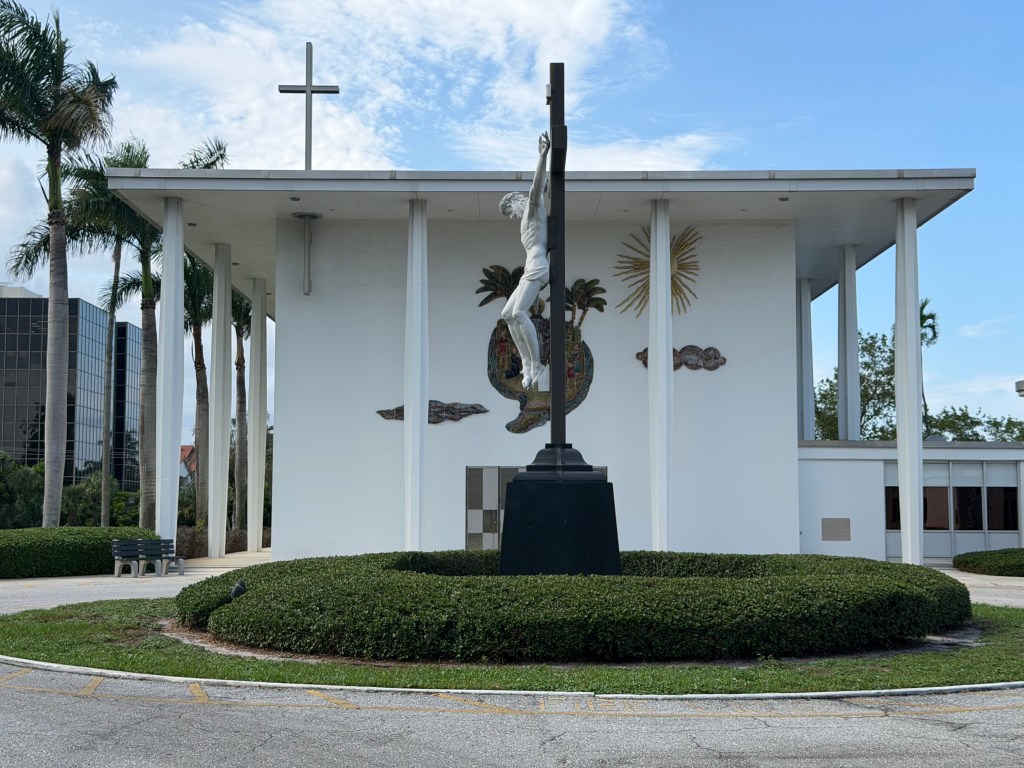
Photo: Taking up our cross as Jesus did will help us to keep our eyes fixed on him, who is our light through the darkness.

Mass readings for Sunday, June 28, 2026

“I will come and cure”.

The centurion said in reply, “Lord, I am not worthy to have you enter under my roof; only say the word and my servant will be healed” (Mt 8:8).

After Jesus finishes his Sermon on the Mount, he comes down from the mountain. In the opening of chapter eight, we see two hearts open to God, a leper and a centurion. The centurion may or may not have been a Roman but he certainly was a Gentile. He, a member of an occupying army, was aware of the animosity many Jews felt toward him. Yet he, like the leper, approached Jesus.

Unlike the leper, the centurion came for another. He did not seek to come because of his family members or his soldiers was suffering, he came for his servant. He, like the leper, showed boldness and faith. He might have even a few days before thought this Jewish man was beneath him, and yet, he approached Jesus because he believed that he could heal his servant. It is also curious that the centurion who is used to giving orders does not order Jesus to heal his servant, he doesn’t even ask him to heal his servant. He just states the fact that his servant is suffering, which shows even more trust that Jesus will do something about it, but Jesus’ terms not the centurion’s own terms.

“I will come and cure him.” Jesus’ response is a little lost in the translation. “Jesus acknowledges the boldness of the centurion’s request in his response, which is better translated as an exclamatory question: ‘Shall I come and cure him?’ With the emphatic ‘I,’ it is as if Jesus is saying, ‘Shall I, a Jew, come to your home?'” (Mitch and Sri, 126). The centurion acknowledges then his unworthiness to have Jesus enter his home. He who has been used to ordering others has the humility to say that he is not even worthy to have Jesus come, he can just speak and he believed that his servant would be healed.

Jesus saw in the leper, not revulsion, and in the centurion, not an enemy, but first and foremost, human beings in need, two persons with boldness, belief, and deep faith. Jesus also healed the mother-in-law of Peter, who did not ask to be healed. He saw her need, her illness, and again was willing to come close to touch her. Many who were possessed also came and Jesus reached out to them with a simple touch of his hand or authority in his words. The kingdom of his Father is open to all who have faith and believe.

We, like the leper, are wounded and in need of the healing words and touch of Jesus in our lives. Jesus draws close to us as well and is only waiting for us to ask to be healed and transformed by his love and mercy. We, like the centurion, can approach Jesus on behalf of others in need of healing. We can even assume the posture of Peter’s mother-in-law and be open with our hearts and minds to receive Jesus’ healing invitation.

Jesus has come to remind us of the truth of who we are – daughters and sons of our Father, and our inheritance is to receive the love of the Holy Spirit. From a new posture of abiding in God’s love we will better resist the temptation to judge anyone as unworthy to receive the same grace, love, and mercy we have received. We are all unworthy of God’s love which he offers as a gift. God loves us not by anything we do but because we are his children. This is why we state the words of the centurion just before we receive Jesus in the gift of his true presence in the Eucharist. As we acknowledge our unworthiness, Jesus comes close to us in such an intimate way, to be consumed, so that we will be healed.


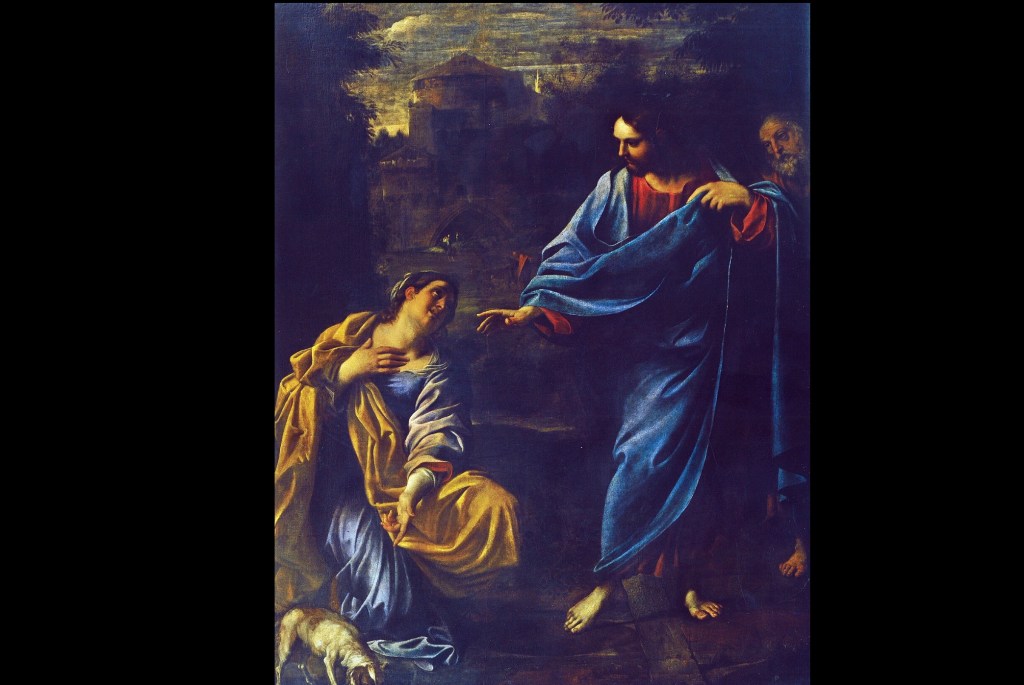
Drawing: Rembrandt’s The Healing of the Mother-in-Law of Saint Peter

Link for the Mass readings for Saturday, June 27, 2026

The words of Jesus, the Word of God, are a gift when we receive and put them into practice.

“Everyone who listens to these words of mine and acts on them will be like a wise man who built his house on rock” (Mt 7:24).

Jesus speaks to us: in the Gospels, in the silence of our hearts, through our conscience, through the words of others, in our daily activities, and through creation which has been loved into existence through collaboration with his Father and the Holy Spirit.

We can be unaware of the words he speaks, we can hear his words but not listen, hear his words but ignore, listen but not act upon them, or we can do with his words as Jesus encourages us to do. We can listen to his words and put them into action. We can experience the gentle nudge of the Holy Spirit and follow his lead. When we follow the urgings of Jesus and the Holy Spirit, no matter how small of a nudge it is, that step in alignment with the Father’s will makes all the difference. Each time we follow through on Jesus’ teachings and the Holy Spirit’s guidance we experience more of the love of God our Father.

Jesus became one with us so that we can share in the love of his Father. Not one with us, so that we can know about him. Not one with us, so that we can say that we prophesy, cast out demons, do mighty works, cite Bible chapter and verse to show our knowledge or justify our behavior in his name. One with us so that we can share in the very life of God the Father as the Son and the Spirit does. 

Jesus meets us on our level and when we are willing to follow his lead, he will lead us up to the heights of participating in his divine life. Jesus has been teaching us to do just that in his Sermon on the Mount which we have been reflecting upon these past few weeks. If you are just coming in today or need a refresher, this gathering of teachings began in chapter five of Matthew and takes us up to today with chapter seven. Jesus presented us with the Beatitudes, that we are called to be salt and light, he built on the law and the prophets by giving us the six antitheses (“You have heard it said, but I say to you…” statements), he taught us to pray the Our Father, that we are to depend and place our trust in God and not the things of this world, we are to refrain from judging others, we are not to cast our pearls before swine, we are to do to others as we would have them do to us, we are to seek to enter through the narrow gate, and to be aware of false prophets.

The teachings of Jesus in chapters five, six, and seven of Matthew, his Sermon on the Mount, when we put them into practice will help us to build the foundation of our spiritual houses on solid rock, Jesus. The same rock that Peter built his foundation on, Jesus the Christ the Son of the Living God. May we go back through chapters five, six, and seven of Matthew and see which teaching Jesus is leading us to ponder, meditate upon, practice with, and place our next foundational stone of discipleship down.

If that is a bit much, we can start with St. Irenaeus who learned from St. Polycarp, who learned from the beloved Apostle John who learned from Jesus. St. Irenaeus taught that Jesus became one with us so that we can become one with him. Jesus entered our humanity so that we can participate in his divinity. Jesus invites us to be in relationship with him, to know him, so that we can know his Father and experience the love of the Holy Spirit that he wants to share with us. The goal is that we can be one in relationship with God as Jesus and the Father is one.

Jesus loves us as we are, and for who we are, right now at this very moment. Jesus loves us more than we can ever imagine. Jesus loves us so much, he invites us to repent and turn away from anyone and anything that may be leading us away from God. He invites us to turn back and walk in the direction of our Father’s arms that are wide open to embrace us. When we experience God’s loving embrace, may we rest there, savor, and abide in his love. Filled up with his love to overflowing, we have a wonderful gift to share.


Photo: The road leading to Mass, a daily practice that has helped me to heal and grow closer to the Father, the Son, and the Holy Spirit.

Link for the Mass readings for Thursday, June 2025

As we walk with Jesus through the narrow gate, we heal and remember who we are.

“Enter through the narrow gate; for the gate is wide and the road broad that leads to destruction, and those who enter through it are many. How narrow the gate and constricted the road that leads to life. And those who find it are true” (Mt 7:13-14).

Jesus meets us where we are in our present state of life. He accepts us as we are at this very moment. At the same time, Jesus does not want us to just settle and to merely get by, surviving day by day. Instead, he encourages and guides us to be fully actualized. He calls us to perfection, to holiness, to be saints! He sees in us, as he did in his disciples and apostles, the promise that God has placed in our souls and knows the heights to which his Father calls us to ascend. We each have a unique gift or gifts to offer to the world, each and every one of us.

One way of interpreting entering the narrow gate is that we need to say no to everything. When, in fact, Jesus invites us to a no to anything or anyone that leads us away from fulfilling our promise and who we are as God’s beloved daughter or son. He invites us to say a firm no to those apparent goods that we find initially inviting but soon realize that they are empty promises, can burden us, weigh us down, and worse lead us to attachment, addiction, and enslavement.

To pass through the narrow gate, is a yes to that which is truly good, will bring us happiness, fulfillment, and authentic freedom. Each yes to God is a moment of growth and grace. It is also a death to supporting our false ego, turning the focus away from turning in upon ourselves, constricting, and instead receiving God’s love and his expanding our hearts and minds draws us to will the good of and accompany others.

Jesus will help us in seeking and discerning his will. Spending time in silence and prayer can often reveal the sources of our worry, anxiety, or fear; pride, judgment, or prejudice; sinful actions, harmful habits, and/or addictions. We need not deny or run from them. Instead, acknowledge whatever arises with Jesus, and then allow him to provide healing and transformation. Jesus offers us a clearer vision so that we can choose with more freedom. This will not be a one-time, done now for all activity, but a daily, disciplined commitment and practice of discernment and examination of our conscience.

We need to continually welcome the Holy Spirit and he will give us the courage to discern between apparent and authentic goods. A good meditation is to imagine placing our hand in Jesus’ hand as if we were a small child and allow him to lead us through the narrow gate. As we go through all that is not of him, all the excess that we carry, will fall away, and in passing through we come face to face with who we always have been, a beloved daughter or son of our loving God and Father. What has fallen away, let us resist picking up again.

———————————————————————-

Photo: As we grow closer to Jesus, as we heal, as we are restored and redeemed, we return to and experience our original innocence.

Link for the Mass readings for Tuesday, June 23 2026

Jesus will help us to remove the log from our own eyes so we can help others to remove their splinter.

For many of us, judging one another is almost as automatic as breathing. As we encounter someone we have instant internal judgments. We judge looks, clothes, actions, inactions, homes, cars, and material items. We judge our family, spouses, friends, colleagues, classmates, leaders, enemies, celebrities, as well as those we consider different as well as those we determine to keep at arm’s length. Much of what gets our attention is what Jesus is addressing in today’s Gospel, negative judgments.

Jesus said to his disciples: “How can you say to your brother, ‘Let me remove that splinter from your eye,’ while the wooden beam is in your eye? You hypocrite, remove the wooden beam from your eye first; then you will see clearly to remove the splinter from your brother’s eye” (Mt 7:4-5).

There are positive judgments that bring about effective change for the good. In a court case, our hope is that the judge is learned in the law and guides the lawyers and jury in ways of sound judgment such that justice with mercy is served. For us to do likewise in our everyday interactions with one another, Jesus shares that we need to remove the wooden beam from our eye first before we are able to remove the splinter in another’s.

Jesus presents this hyperbolic image, a common rhetorical device for rabbis, of someone attempting to remove a splinter in someone else’s eye all the while the wooden beam protruding out of his or her own eye. This beam prevents the person from even being able to get close enough to actually be of any help! That is the point. Often in our rash judgements, we distance ourselves from our brother and sister, we not only judge them but condemn them. We don’t see the heart and mind of the person, we do not know what people are struggling with at any moment, and yet we allow ourselves to play judge and jury and so create further distance and so worse, separation.

Jesus is inviting us to remove the beam. We do so when we are willing to change our hearts and minds such that we are no longer callused and hardened by negative and condemning judgments toward others based on our own unbridled biases and prejudices. Softening happens when we take the risk and trust Jesus with those places in ourselves where we are believing the lies of the enemy, when we are judging and allowing ourselves to be poisoned by shame and self criticism. When we allow Jesus in to love us, we can then confess because we feel accepted and affirmed for who we are despite what we have allowed ourselves to do and not do.

Jesus is willing to lovingly enter our chaos, to embrace any and all of us who will receive the invitation of his healing embrace. Jesus walks with us, convicts us, and shines his light to reveal to us our where we are addicted, giving in to disordered affections and enslaved by sin. When we repent, allow ourselves to be loved at our worst, we experience God’s forgiveness, mercy, and grace.

We are then healed from our own limitations, weaknesses, self-centered perceptions, insecurities, denial and suppression of our anxieties and wounds that so often fueled our biases and prejudices. As we experience God’s forgiveness and love, we begin to heal, and that wooden beam shrinks. We are able to see others as God sees them, as human beings endowed with dignity because we have been created in the image and likeness of God. We come close as our hearts open wider to compassion and empathy.

Repentance, forgiveness, and growing in love helps us to collaborate and participate in Jesus’ work of redemption. Having removed the log from our own eyes, we can better assist others in removing their splinters. Admitting to our own shortcomings, weaknesses, and failures, and opening ourselves to healing, learning, and growing from those experiences, we are then in a better position to meet others in their own moments of chaos, to journey side by side, help others to repent, heal, and to be transformed by the love of God we have received.

Jesus helps us to remove our beams of judgment so that we can be more understanding, merciful, and forgiving. We will be blessed in doing so, for Jesus also taught us that as we judge, so will God judge us. As we repent and are forgiven, so may we forgive and show mercy. In receiving forgiveness and forgiving, in repenting from sin and judgmentalism, our souls will find rest and from that place of peace, we are better able to come close to help others as Jesus has done for us.


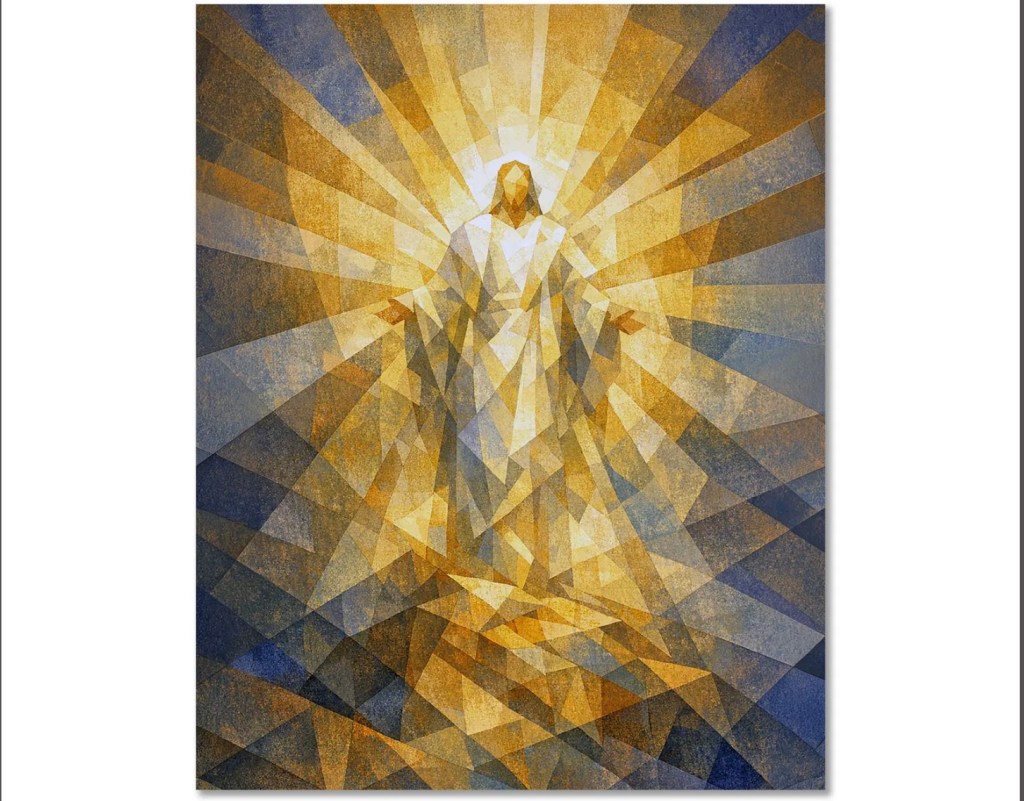
Photo: Allowing the light of Christ to shine within our hearts helps the logs in our eyes to dissolve.

Link for the Mass readings for Monday, June 22, 2026

Be not afraid, God loves and cares for us more than we know.

“And do not be afraid of those who kill the body but cannot kill the soul; rather be afraid of the one who can destroy both soul and body in Gehenna” (Mt 10:28).

Jesus is offering his words to his apostles before he is going to send them out on mission. He knows the persecutions they will face, because he has and will face worse, especially with his own crucifixion. And yet, even in the face of these attitudes of rejection, false accusations, ridicule, Jesus is encouraging them to not be afraid of even those “who kill the body“. Most of us hearing this today would understand this line of thought. The next line though could be a bit of a head scratcher though.

“Be afraid of the one who can destroy both soul and body in Gehenna.” Those words I am sure gave the disciples pause and more so us today. Jesus is speaking about the “one”, his Father, and we are to be afraid of him? Yes, but not from the perspective that God is a vengeful egomaniac, dictatorial, tyrant. The fear Jesus is talking about is one of reality and awe. God is beyond the reality of the finite, and encounters with him throughout Sacred Scripture have been referenced to being one of “awe and wonder”. Because of the blinding, radiance of divinity, the infinite nature, and other worldliness of a transcendent God.

Jesus is following in the tradition of the Law and the prophets, like the prophet of Isaiah who said, “Do not call conspiracy what this people calls conspiracy, nor fear what they fear, nor feel dread. But conspire with the LORD of hosts; he shall be your fear, he shall be your dread” (Isaiah 8:12-13). Isaiah and Jesus are encouraging us not to fear the things of this world no matter how horrific and terrifying this fallen world can be. This is because no matter the hardness and suffering of this life, it is only temporary, even death does not have the final say.

A holy fear, “is a rational awe, a rational fear of offending God, a fear of sinning against the righteous and holy God, such that you would be separated from him, that you would break covenant with him, that you would break your relationship with him. That’s the fear of the Lord that the Old Testament says is actually the beginning of wisdom.” Dr. Brant Pitre continues this important perspective, “the fear grows out of love… the fear of offending God because he is so good, because he is so holy, because he’s a loving father and also because sinning against him means being separated from him forever in hell.”

Jesus is helping us to make a clear choice that will have eternal consequences. We can save our lives for the immediate situation, compromise or deny our faith, or we can have the courage to live our faith with each breath, thought, word and action. Denying God can start us on a path that will lead to a second death. Accepting and proclaiming God will start us on the path that will lead to eternal life.

Jesus wants to make sure that his listeners and we still hearing and reading his words today get the important nuance. Even though God does not need us, he loves us into existence and thirsts and hungers for our love, and seeks to sustain us with his love. He does not seek to love us for his sake but for ours! He knows what our deepest hopes and desires are because he created us. God’s greatest joy is not that we merely exist, God’s greatest joy is that we will be fully alive.

“Are not two sparrows sold for a small coin? Yet not one of them falls to the ground without your Father’s knowledge. Even all the hairs of your head are counted. So do not be afraid; you are worth more than many sparrows” (Mt 10:29-31).

Each one of us is “worth more than many sparrows” because we are his beloved daughters and sons created in his image, to be loved and to love in return. What may seem insignificant to his hearers, two small sparrows, Jesus is saying has great significance to God. What has greater significance still is our humanity, he knows us so intimately, each hair on our head is counted, each thought is heard. God weeps with us in our sorrow and rejoices in our joys.

It was in the parallel verses to today’s Gospel from Matthew found in Luke 12:2-9, that I first remember God speaking to me in my late teens. I had returned home from a high school party. I remember feeling bored and not fitting in. I was at a place of wondering what direction my life would lead as graduation loomed on the horizon. I opened my Bible for the first time for some guidance and read the verses in Luke above.

As I read, “Be not afraid,” I paused. God continued on in the quiet of my heart by telling me that I would not win the lottery, but that he would provide work. In essence, if I trusted in him, he would take care of me. God has remained true to his word over these past forty plus years. Life hasn’t been perfect, and there have been some rough moments, especially over the past seven, but through it all, God has not only consistently provided a means for me to make a living, but more importantly, I have felt his comfort, his guidance, and above all his quiet, rock-solid presence, especially during times when I did not feel that I had the strength to go on.

No matter what you may be struggling with, what may be troubling you, or even feeling the pressures of witnessing your faith, as you are reading these words, don’t give in to the mind storm, because we are never alone. As the emotions swirl, breathe. Breathe slow from your stomach, in and out, and then experience the emotions, assess where they are in your body and then breathe there. As our breath slows, our body feels safe and knows how to heal, and we can identify the thoughts behind each of the emotions.

As we begin to intentionally feel and become aware of our thoughts, we can ask Jesus to reveal the truth of those thoughts. As we breathe, we can choose to receive and abide in his love. When Jesus says that even all "the hairs of your head are counted", he is assuring us that God knows each and every one of us that intimately, that closely. He knows us better than we know ourselves and ultimately, that he is with us for the long haul, in this life and into eternity. In bringing our concerns, worries, and fears to Jesus, he receives them and offers us his love, mercy, healing, and strength. 

In our faithfulness to trust and bring our fears to God, we are heard. The pressures then to conform to this world aren’t so tantalizing. Having been seen, heard, forgiven, and loved, we are no longer afraid. We can witness, even when pressured, the love we have received. Through the light and love of Jesus, we see more clearly. We can choose to sin and turn away from God for temporary pleasure, saving face or even our lives, but in doing so, lose our soul. In acknowledging Jesus before others, without counting the cost, even our lives, we will experience that death doesn’t have the final answer, Jesus does, and so gain our life for eternity. With each thought, word, and action, the choice is ours.


Photo: St. Micheal the Archangel, defend us in battle, be our protection against the wickedness and snares of the devil…

Dr. Brant Pitre reflection, Catholic Productions, 12th Week of Ordinary Time, Year A

Link for the Mass readings for Sunday, June 21, 2026

“No one can serve two masters.”

In today’s Gospel from Matthew, Jesus draws a direct correlation between our level of worry and our faith. Having faith is a common theme throughout Jesus’ teaching. How many times have we read or heard, “O you of little faith” (Mt 6:30). Faith is defined in the Catechism of the Catholic Church as, “man’s response to God, who reveals himself and gives himself to man, at the same time bringing man a superabundant light as he searches for the ultimate meaning of his life” (CCC, 26.) Jesus came to reveal his Father to us, to show us that he cares for, loves, and wants to provide for us.

When we are feeling anxious or worried, we are most likely not placing our trust or putting God first in our lives. We may be dwelling on the past, rehashing something we did or did not do, what someone did or did not do, fixating on whether or not we made the right decision. We could also be anxious about the future. Our minds plague us often with the worst-case scenarios of what might be or what could happen. We also may react to another’s actions or words, not fully understanding the context or source of the hurt or struggle they may be going through that caused those words or actions. We react and then the worry wheel begins to roll again. When we seek security first in anything other than God, remain hyper-focused and absorbed in ourselves, we will stay stuck in our emotions and reactions and then we continue to remain stuck in the vicious cycle. We become tossed about like a tumble weed and our insides often experience a perpetual churning.

When we focus on what we do not have instead of being grateful for what we do, we will also experience unrest. We exercise little faith or trust in God when we allow ourselves to be hyper preoccupied with anyone or anything apart from and other than God. Jesus is helping us to see that, “No one can serve two masters” (Mt 6:24). Either we place ourselves, someone, or something first, or we place God first. There really is no middle ground. Jesus’ command to put God first in our lives and to trust in him above all and everyone else: “If any one comes to me without hating his father and mother, wife and children, brothers and sisters, and even his own life, he cannot be my disciple” (Luke 14:26), embodies the reality of his radical pronouncement. We cannot be his disciple if we are not willing to put God first, because to be a disciple of Jesus is to be willing to do whatever he tells us.

When we come to experience the love of God, we can then trust him and let go of the false promises, the apparent and disordered goods that we have sought in place of God. Our life apart from God first is met with the feeling of that separation. Anxiety, worry, and fear then has a place to roam because we are unmoored from his love. These emotions can then become debilitating and paralyzing and can lead toward a downward spiral, a curving in upon ourselves, that leads to an unsettled mental state. From this posture we can become impatient, reactive, and more fearful.

Too many of us buy into the enemy’s lies that lead to isolating ourselves, keeping ourselves busy, distracted, and perpetually tired. Even when we seek to find some rest and to wind-down and renew, we reach for activities that do not bring us the rest we seek but instead continue to keep us in a perpetual state of unrest. Mindless channel surfing, lost hours on social media, or binging on YouTube clips, will not bring rest to our souls. These practices do the opposite; they keep us in a constant state of busy and overstimulation fueled by dopamine hits that contribute to a growing cycle of chronic stress.

One of the reasons we may be drawn to these technological avenues is to escape the anxieties and stresses we experience. They distract and divert us for the moment, we can enjoy instant gratification, and we may feel satisfied – for the moment. It comes at the cost though of further separating us from God and each other. Until we face our restlessness with the one who can forgive and heal us, we will continue to be unhinged, unanchored, and floating from this to that distraction. At our core, we are deeply hungering to be loved and to love. “The desire for God is written in the human heart, because man is created by God and for God; God never ceases to draw man to himself. Only in God will he find the truth and happiness he never stops searching for” (CCC, 27).

Jesus’ life, words, and actions provide a clearer way, a path that will lead us from the mist of diversion that continues to draw us deeper into the brambles of unbridled anxieties, attachments, and temptations. The way out of this inner downward spiral is to, “seek first the Kingdom of God and his righteousness, and all these things will be given you besides” (Mt 6:33). God truly knows what we seek and need in the depths of our souls. At the foundation, is deepening our relationship with him. When we spend time consistently reading, praying and meditating with the Bible, walking in creation, seeking the things of heaven instead of this world and feeling, experiencing, and bringing our anxieties, fears, and sources of stress to God, we will feel safe and experience moments of peace and renewal. We can come to a place of rest where we can breathe again, be loved as we are, and begin to heal.

Intentionally setting aside key anchor times to be with God each day is one way to put God first in our lives. As we offer vocal prayers to our loving God and Father, share with him our needs and thanksgiving, our anxieties and hopes, we will find rest in knowing that God hears our prayers and will guide us. As we spend time reading, meditating and praying with God’s word, we are nourished, transformed, and recognize we are not alone in our struggles as we thought we were. And as we become more consistent with vocal and meditative ways of praying, we can then engage in the deeper gift of contemplative prayer in which we can just be silent with God and rest in his presence. We can be like the beloved apostle, who rested his head on the chest of Jesus and listened to the beating of his Sacred Heart.

We cannot serve two masters. When we put God first in this moment and with each breathe, thought, word, and action throughout this day, our hearts will be less troubled, we will be less afraid, and we will trust in Jesus, know better his Father, and experience more often the love of the Holy Spirit.

———————————————————-

Photo: “For it is not my desire to act towards you as a man-pleaser, but as pleasing God, even as also you please Him.” – St. Ignatius of Antioch at the beginning of the second chapter of his Letter to the Romans.

Link for the Mass readings for Saturday, June 20, 2026

“Where your treasure is, your heart will be.”

Jesus said to his disciples: “Do not store up for yourselves treasures on earth, where moth and decay destroy, and thieves break in and steal. But store up treasures in heaven, where neither moth nor decay destroys, nor thieves break in and steal. For where your treasure is, there also will your heart be” (Mt 6:19-21). Jesus helped his disciples then and is helping us today to be aware of the reality of our world. All that exists is finite and material. Each thing, each being, has a beginning and an end. We need to resist the temptation to be attached to anything, even to our family and friends, because in this life and this side of heaven, nothing and no one lasts forever.

Adopting an attitude of non-attachment to material things can be freeing as long as we do not embrace the opposite extreme of placing no value in created things, thinking that we can destroy and abuse the environment, exploit or objectify each other for our own ends. We can also be tempted to see all things that are not spiritual as corrupt and bad, even our material reality as human beings. The idea that our soul is imprisoned until we die. This extreme will not bring us happiness, joy, or fulfillment either.

Living a life directed by Jesus’ teachings will help us to embrace a more balanced life of recognizing that much of what is material and finite is good, as well as very good, and yet each has a time and a season. We have the opportunity and invitation to be participants in God’s eternal plan of salvation, and we can embrace and enjoy the wonders and gifts of his creation when we don’t hold onto the things of this world too tightly and allow our relationships and activities to be properly ordered by God’s will.

We need to resist grasping for and clutching anything material and finite. We will then be freer to embrace and follow the steady movement of the Holy Spirit, which is ever fresh and new. The Holy Spirit invites us to deepen and grow in our relationship with our loving God and Father and one another. Refusing to fill the deepest core of our being with the things of this world will help us to be less distracted and diverted from placing God as primary.

When we embrace the reality that our time here on this earth is limited, we will be less apt to take each other and each moment for granted. We will realize how precious life is, show greater appreciation for, as well as be more present, understanding, kinder, supportive, and patient with one another. We will be freer to let the petty things go and embrace the love that Jesus offers us, so that we will have more love to share with one another through thick and thin.

An imminent death helps this reality to become front and center. Knowing that JoAnn only had months to live – at best, was a gift. We embraced a greater appreciation for each moment we had together. What was even more foundational was that even before her diagnosis, we had already begun a journey together of deepening our relationship with Jesus. He helped us through the bumpy beginning years of adjusting and adapting our lives, through learning balance in the busy years, the financial challenges, life with kids and then teenagers, empty nesting, diaconate formation, and everything in between. Each year was a gift of growing closer to God and each other. A lot of the material things of this world became less important and time together became more important.

Dealing with death is never easy. Trusting that Jesus opened up heaven for us in the humanity he assumed and that he conquered death in his resurrection, helps when that reality moves from the head to the heart. Instead of denying or keeping death at a distance until faced with our own or another, we will be better off by engaging the reality of death more intentionally. Doing so is not a dive into morbidity but an invitation to define who and what is truly important in this life. Pondering death with God helps to live life more fully with the time we have left. Storing “up treasures in heaven where neither moth nor decay destroys, nor thieves break in and steal” (Mt 6:20), helps us to be free of holding too tightly to the things here below and to come to a greater appreciation of what is truly important.

———————————————————————–

Photo: Not clinging to JoAnn as she was dying, nor after she had died has helped me to experience her love in a deeper way that has never died. Happened to check and this picture was taken exactly 7 years ago today! Little did we know we had 93 days left together this side of heaven.

Link for the Mass readings for Friday, June 19, 2026