Jesus invites us to participate in his life and the communion of the angels and saints.

He promised that he would be there so that she would not have to die alone. The hospital called that her time was closer while the priest was visiting another ill parishioner. He finished up as fast as he could, and unfortunately ran into traffic, and too many lights turning red instead of staying green. And although he pushed the speed limit, when the priest arrived at the nursing station and asked for the name of the woman, the nurse informed him that he was too late, she had already passed.

He felt horrible because he promised her that she would not die alone. As he was mulling over the unfortunate timing, the nurse continued. “An interesting thing happened. An orderly came in with another patient, and I had no order for her to be in this room. This woman looked at your friend and asked if she could have her bed closer to hers, then reached out her hand. They held hands while the orderly and I left to check into the matter. When we returned, your friend was dead. The orderly then moved her bed out. The funny thing is that I have been checking since they left and found no record of this orderly or his patient being in the hospital.”

She did not die alone after all. Was this a visit from two angels?

Today we celebrate the feast of the archangels, Michael, Gabriel, and Rafael. Angels are eternal, spiritual beings. They are not human but can take on human form in their appearance. Also, when we die, we do not become angels. We are human beings, and as such we are human and spiritual.

One of the possible reasons that Satan, who is the archangel, Lucifer, and the other angels, now called demons, rebelled against God was because in our participation in the life of Christ, we become higher than the angels. That was too much for them to take and so choosing their pride over God, they rebelled.

Jesus, fully God and fully man, is infinite and eternal as Son, while at the same time finite as human. In Jesus coming close to be one with us in our humanity, we are offered the opportunity to participate with him in his divinity. Like the angels, God has given us the ability to reason and the freedom to choose. We can choose to grasp at divinity on our own terms through our pride, as Satan and his minions, or we can receive the gift of God’s love, participate in the life of his Son, and become like God. The Father and the Son and the Holy Spirit are divine by their very nature, whereas we are given the grace to participate in their divine nature.

We don’t lose ourselves and become absorbed by God, we remain distinct and experience the fullness of our humanity in our participation in the divinity of Jesus. In his resurrection and ascension, Jesus has assumed his glorified Body. He is the first born of the new creation and through our baptism we participate in his life and through him, the life of the Trinity. As we surrender our lives to God, take up our cross, die to ourselves, and follow Jesus, we grow in holiness. We join in the new creation Jesus has won for us. With each faithful step we draw closer to the heavenly Jerusalem, and we become more united to the Body of Christ.

The wonderful reality we can ponder today is that in God’s order of creation, with each breath we take, we can rest in the truth that we belong to an incredibly extended family of Father, Son, and Holy Spirit, Jesus, Mary, and Joseph, the angels, and the saints. We can rest in the reality that no matter what challenges we are going through, we all have a significant part to play in God’s plan, we are all interconnected, and we are not alone. We are loved, we are in communion with many in heaven and on earth who are not only cheering us on but loving us, willing our good, and guiding us on our journey.


Photo: Each unique ripple reflects the brilliance of the rays of the sun, making for a beautiful symphony. Much like each angel and saint in heaven and us here below.

Link for the Mass readings for Monday, September 29, 2025
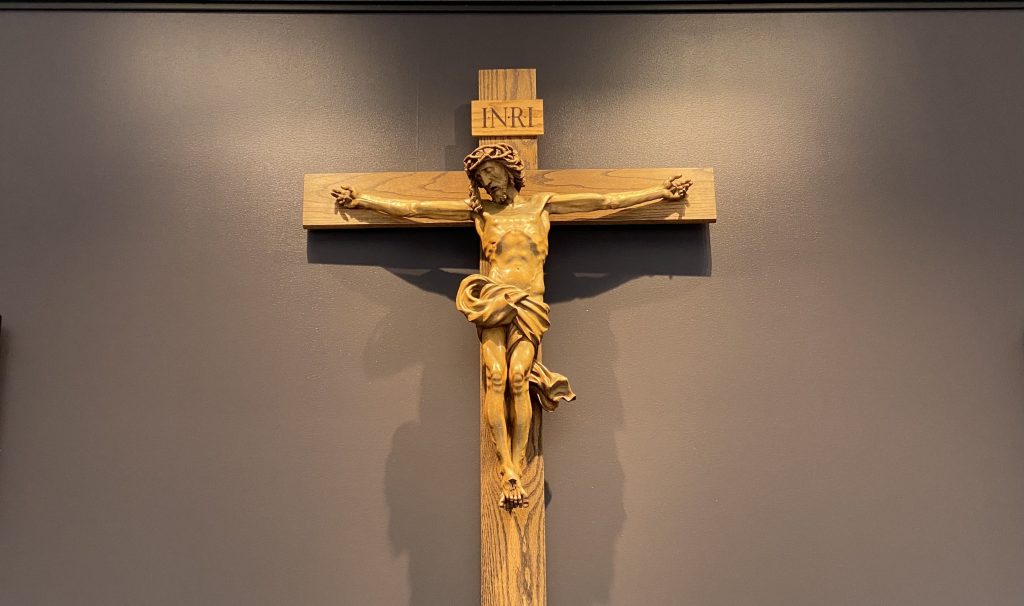
Jesus leads us through death into life.

Jesus said to them, “The Son of Man is to be handed over to men, and they will kill him, and he will be raised on the third day.” And they were overwhelmed with grief (Mt 17:22-23).

This is the second time in the Gospel of Matthew that Jesus shares with his disciples that he will die soon. They are overwhelmed with grief because their focus is on the first part of Jesus’ statement that he will be handed over to death. They do not understand or yet comprehend the second part about how he will be raised on the third day. How could they? There was no point of reference for them. Jesus did bring three people back to life during his ministry, but Jesus would not be merely resuscitated as they were and just die again. Jesus would resurrect and conquer death.

For us, we can read today’s Gospel about the impending death of Jesus and gloss over it a bit too easily. Because we celebrate Easter each year, we celebrate that Jesus has risen. Yet, do we really take in what this means? Does the fact of the Resurrection, the reality that Jesus has conquered death and become the firstborn of the new creation really have relevance in our lives?

The life, death, and Resurrection of Jesus matters! The missing piece for those for whom this statement doesn’t register any relevance may be that they do not want to think about death all that much. To be honest, none of us really want to come face to face with our own mortality, and most of us don’t until we or a loved one is forced to.

Beginning the summer after my freshman year of college, I began working the second shift in a nursing home as a CNA. It was the first time that I experienced death up close through the care of the residents I worked with. They were not merely patients but became family. What happened when I was present when some of them died was surprising. I was blessed with an experience of peace.

I learned from these moments of grace, revisited with my own wife, JoAnn’s death, and in this past year as a priest walking with about forty families from anointing to funeral masses, is to not take life for granted. Life is fragile and when we are able to contemplate and face the impending reality of our own deaths as well as those we love, we have an opportunity to live our lives more fully as well as appreciate a bit more those still with us! And when we experience this practice with the One who conquered death, life and our purpose takes on an even deeper meaning.

Jesus understands each of our struggles and tribulations, our sins and our failings, as well as our deepest hopes and dreams. Jesus also knows about our deepest fear of death, for he, as a human being, experienced it too in the Garden of Gethsemane. The gift of the crucifix, the sacramental object of Jesus on the Cross, is a reminder of the reality of death while at the same time that death does not have the final answer, Jesus, fully human and fully divine, does.


Photo: Crucifix outside the dining hall at University of St. Mary of the Lake.

Link for the Mass readings for Monday, August 11, 2025

Life is a fragile and precious gift to be respected and celebrated.

Mary “traveled to the hill country in haste” (Lk 1:39) and as she drew close and called out to announce her arrival: Elizabeth heard Mary’s greeting, [and] the infant leaped in her womb, and Elizabeth, filled with the Holy Spirit, cried out in a loud voice and said, “Most blessed are you among women, and blessed is the fruit of your womb” (Lk 1:41-42). This is an encounter of joy. Elizabeth’s response is a confirmation to Mary’s, “Yes”, to the angel Gabriel, that she has indeed conceived in her womb the Son of God who was taking on flesh and becoming one of us, a human being, as she traveled to the hill country. Elizabeth’s son recognized him, and in leaping with joy, helped to get the celebration started!

The encounter and interaction between Mary and Elizabeth, Jesus and John, at the Visitation is a model for us of discipleship. Touched by the Holy Spirit we are to go out to share the Good News that God our Father loved us so much that he sent his Son to be one with us. He was willing to enter into our humanity. Some of the earliest heresies in the Church, which are still perpetuated today, were birthed because of an unwillingness to accept this gift, that God entered into and embraced our humanity, that God would become human was and is still for too many, inconceivable.

Yes, we have been wounded by sin, but we have not been destroyed and completely undone. The coming of the Son of God as one of us is an opportunity to be healed, to be born again from above, and this can happen through the same love of the Holy Spirit that inspired John to leap in Elizabeth’s womb and for her to rejoice.

May we resist the mind noise from within, and without from other people who tell us overtly and/or covertly that we are worthless or nothing. Not true! Through our very being, we are created in the image and likeness of God, we have been created by love, to receive and to share love. We are a living craving hunger and desire to be in communion with God and one another. This is true for the atheist and the believer alike. We are called to will the good of the other as other as they are, unconditionally. If we have fallen short, a little or a lot, in the way we have been treating ourselves and/or others lately, today is a new day to take Jesus’ hand and begin anew. Let us celebrate with Jesus, Mary, Elizabeth and John.

We are celebrating that Jesus was born for us, he lived that we might not only be shown a better way, but know that he is the Way. Jesus became vulnerable for us, a key ingredient in unconditional love: to be willing to risk being authentic to who God called him to be, even to being willing to be rejected, even if that meant that all might walk away from him. May we be willing to be vulnerable, to risk, to share with others who we are, free of masks and pretense. May we be present to, and also walk and accompany one another. Being there for our family and friends is important, and if we take our Christianity seriously, we must come to acknowledge, in concrete ways, person to person, that we are all brothers and sisters, that in Christ we are all related.

Just as the sun shines on the good and the bad alike, Jesus died for each and every human being, all of us. After his resurrection and ascension into heaven, he sent the Holy Spirit, the love shared between the Father and the Son, to empower us to live as he did, in communion with his Father, so to better actualize our communion with one another.

An invitation for the transformation of all humanity and creation happened at the Galilean hill side when two simple women said yes to God and embraced with joy. They came to embrace not only each other, but their vocation. May we join them in saying, “Yes”, to God, follow his will with joy as Mary and Elizabeth did and with them, celebrate the gift of life, because as each of these mothers would experience all too soon, life can be taken quicker than they could or we can ever imagine.

We do not know the time or the hour, so let us like Mary go in haste to tell those we care about that we love them. Let us make that call, send that card, email, or text, and/or invite that person for a walk, to sit down and visit. Especially amidst the expansion of divisive and polarizing darkness, may we be a light to all we encounter. Empowered by the love and joy of Jesus, may we encourage, empower, and lift one another up so as to treat each other with dignity, respect, kindness, and understanding. The easiest way to start is when you catch the eye of another, smile. In that simple gesture, we say to the other person that we care enough to make the time to acknowledge their dignity, their worth, and to let them know that they exist and have meaning.

On this feast day of the Visitation, may Mary and Elizabeth intercede on our behalf that we may honor all life from the moment of conception, through each stage until natural death. We start simply by appreciating and respecting the dignity of each other a bit more today than we did yesterday. “All we have to decide is what to do with the time that is given to us” (Gandalf said to Frodo in The Fellowship of the Ring, JRR Tolkien). Let our choice be to build a culture of life.

——————————————————————–

“The value of the person from the moment of conception is celebrated in the meeting between the Virgin Mary and Elizabeth, and between the two children whom they are carrying in the womb” (St. John Paul II, Evangelium Vitae, 45, in Gadenz, Pablo T. The Gospel of Luke. Grand Rapids, MI: Baker Academic, 2018). Photo credit: OSV News photo/Giancarlo Giuliani, CPP

Link for the Mass readings for Saturday, May 31, 2025

Accepting Jesus’ invitation to slow down can help us to grow in our relationship with him and experience more peace.

Our days are so full of activities, conflicts, health issues, technological stimulation, 24/7 news cycles, social media interaction, challenges, polarization, as well as good and healthy activities, pursuits, interaction, and engagements which can all contribute to our emotional, physical, psychological, and spiritual weariness. If we do not have the proper foundation and orientation, we can feel stretched, hollow, and/or fatigued at best. One day can seem to blend into another, and another, and another. The image of being on a hamster wheel or an unending treadmill can fall afresh in our mind’s eye when we actually do take a minute to breathe. Anxiety, worry, stress, fear, prescriptions, and addictions all appear to be on the rise and swirling out of control.

Is there an answer to this hyper pace or are we doomed to just keep going until the wheels fall off? The opening verse in today’s reading provides an antidote when we are feeling any or all of the above.

Jesus said to his disciples: “Do not let your hearts be troubled. You have faith in God; have faith also in me” (Jn 14:1).

Jesus was speaking specifically to his disciples after he had talked to him about leaving them. He was going back to the Father through the way of the cross. No matter the challenges that we face, even death, our own or a loved ones, we are invited to place our trust in God through his Son, Jesus. By putting God first does not mean that the externals to our life will immediately take an abrupt turn for the better. What establishing a foundational relationship with Jesus does mean is that we will have support and divine assistance. We are not alone in our struggles. The disciples found this out when in the midst of a sudden sea squall. Their boat was taking on water as the waves grew higher such that they were terrified and so, called to a sleeping Jesus. Jesus awoke and with a word, he calmed the sea (cf. Mk 4:35-41).

Jesus may or may not calm the sea of our trials and tribulations, but what he will do is be present with us through our storms in life and we can trust in him that he will guide us through. As we grow more confident in our trust in Jesus, we will be assured that no matter who or what comes at us, he will be there to assist us. We will experience a peace that surpasses all understanding and calm within ourselves. The ultimate assurance that Jesus provides is that when we surrender our life to him, we belong to him, we are not alone or orphaned. He gave his life for us, to redeem and save us so that we can be assured of our home for eternity. “I will come back again and take you to myself, so that where I am you also may be” (John 14:3).

Jesus promised he will come back for us at the hour of our death. He is preparing a place for us in the heavenly kingdom. We do not have to just wait for him to come back though. By growing in our relationship with him now, we enter into and participate in the loving relationship Jesus shares with his Father and experience the love of the Holy Spirit.

If we are struggling at any level and are seeking to build our trust and faith in Jesus, it is important to proceed patiently. God works slowly and this goes against our seeking of instant gratification. God is building a foundation in us which is meant to last not only in this life but in the next. When we make time to sit at the feet of  Jesus, slow down and breathe, ask for his help, seek his discernment about where we can make changes in our life, he will lead us. We just need to trust him and be willing to follow his lead.

This time does not need to be lengthy, three to five minutes a day to start can do wonders. On the surface level, by stopping for five minutes to pray and breathe more deeply and consciously, we get off the wheel, we step out of survival and reaction mode, so that we can then make more intentional and insightful decisions, and we can come to see that we truly have options, but more importantly, we begin to develop a relationship and intimacy with Jesus so to begin to recognize his voice in our stillness and in our activity. When we show up, God will happen.

The Liturgy of the Hours, and the daily readings of the Mass, meditating, praying, and contemplating the word of God have been foundational for me and my transformation, healing, and growth. Over my two years at the seminary, I was also introduced to practicing a holy hour of prayer, often before the Blessed Sacrament daily. Each of these practices have become foundational and non-negotiable anchors in my day. Setting the time aside with my busy daily schedule has been a challenge over my first year of priesthood, but doing so has helped me to better prioritize my time and seek the guidance of Jesus to guide me.

Having set times to stop to meditate and pray throughout the day has been helpful, especially on those days when my schedule is full to overflowing. Author Wanda E. Brunstetter, wrote, “If you are too busy to pray, you are busier than God wants you to be.” There is a lot of truth in her statement. I have had busy days, weeks and months, where I have wondered if taking the time to pray and meditate was really the most sensible choice. Time and again doing so has made an incredible difference and has now been helping me better reevaluate what I schedule into each day. 

The Rosary is another great way to get into God’s word by meditating on the mysteries of the life of Jesus and Mary. If you are not able to pray the whole Rosary in one sitting, start with one decade a day. Read for a few minutes from the Bible once in the morning and then return to meditate on the same verse or verses that touch or challenge you throughout the day. You can also read the daily Mass readings and place your self in the scene and allow the account to open up before you as if were actually there.

Each of these practices offer us a few of the many ways to stop the madness, to slow down, simplify, and connect with the power, the love, and the grace that Jesus yearns to share with us such that no matter the external or internal upheaval, we may experience his peace, that peace that surpasses all understanding (cf. Philippians 4:7).

—————————————————–

Photo: Jesus is “the way, the truth, and the life” (John 14:6) . Let us trust him, take his hand, and follow his lead.

Link for the Mass readings for Friday, May 16, 2025

“I am the way, the truth, and the life.”

In our growing global and increasingly interacting world, a sense of pluralism, the recognition and affirmation of diversity and peaceful coexistence has become more and more of an ideal. In and of itself, the embracing of diversity is good. Especially when we have and continue to experience and see such atrocities committed in the name of “tribalism”. What can be a dark side of pluralism though, is that for the sake of getting along we are not true to who we are, we limit our public discourse so as not to offend.

Identity is also not to be held up as the sole model either. Identity has a dark side as well in that we can easily slip into a defensive posture when we feel our identity is threatened. This is why we are told that if you want to have a conflict free conversation you may want to avoid speaking about such topics as politics and religion. The reason is that in these areas we identify ourselves with our personal beliefs and if someone critiques or criticizes our beliefs we feel personally threatened, and more often than not, we slip into a defensive posture and reactive mode. Dialogue quickly devolves into talking at and over each other.

These thoughts lead me to the opening verses in today’s Gospel from John: Jesus said to Thomas, “I am the way and the truth and the life. No one comes to the Father except through me. If you know me, then you will also know my Father. From now on you do know him and have seen him” (Jn 14:6-7). This may not appear to be a pluralistically sensitive comment if wanting to keep calm at the dinner table. Though it is a statement of truth.

Another statement from Jesus that could raise the hackles of those who are not Christian is, “No one comes to the Father except through me.” This may appear, at face value, to be an arrogant statement. Unless, Jesus is who he says he is, the Son of God, the Second Person of the Trinity. If Jesus is God, then of course to get to God you will be going through Jesus. Jesus does not say that you have to be a Christian to get to God. Jesus himself was not a Christian.

Regarding interfaith dialogue the Catholic Church has come far regarding some dehumanizing stances from the past to embrace a truer interpretation of Jesus’ statement. The Vatican II document, Nostra Aetate, meaning In Our Time, the first lines of the document, states that the Catholic Church “rejects nothing of what is true and holy… She has a high regard for the manner of life and conduct, the precepts and doctrines which, although differing in many ways from her own teaching, nevertheless reflect a ray of that truth which enlightens all…”

The place to enter dialogue is not to avoid sharing about the truth of our beliefs, but to be able to reclaim the ability to share clearly what we believe and be willing to allow someone else to do the same. We have lost the ability to have a good argument or debate that is founded on the respect and dignity of the person first, an openness and understanding for different and diverse opinions and beliefs, grounded in the ultimate goal of learning and growing from one another.

We can reclaim the gift of dialogue if we are willing to let go of the need to talk at others, to be right, and entrench ourselves in our positions, and instead seek to be more grounded in integrity instead of identity. To grow as a person of integrity means developing the ability to think critically and with a more nuanced outlook, resisting absolutes and black and white thinking. Another line from Nostra Aetate states: “Let Christians, while witnessing to their own faith and way of life, acknowledge, preserve and encourage the spiritual and moral truths found among non-Christians, also their social life and culture.”

Being a person of integrity means standing up for the dignity of another person no matter who they are because they are a human being, created in the image and likeness of God. This is what the parable of the Good Samaritan was all about. Being a person of integrity means martialing the courage to hold someone accountable and refuse to look the other way just because they are of the same gender, political party, religion, or tribe. Being a person of integrity means saying what we believe and allowing another to do the same, respecting our differences, agreeing to disagree, and finding common ground where we can. In this way we are more open to growing and broadening our understanding of the people and wonder of the world around us.

Being a person of integrity is not easy. To follow Jesus, who is the way, the truth, and the life, demands courage to speak truth to our peers, to power, to speak truth in and out of season, in the midst of our fear of conflict, of offending, and of being wrong. Jesus invites us to have the humility to recognize when we have not respected others and are willing to be held accountable. To strive for being people of truth and integrity is worth the effort, otherwise we succumb to a slow death of cowardice that eats away at our soul. When we are true to who we are and who God calls us to be, we can experience the soaring heights of the freedom and joy we were created for!

Jesus, help us today in our discernment to be true to who your and our Father calls us to be and help us to be more willing to allow the Holy Spirit to fill us with his courage, joy, and love so to strive to be people who are willing to be aware, to care, to enter into dialogue, to serve, and to be people of integrity.

———————————————————————

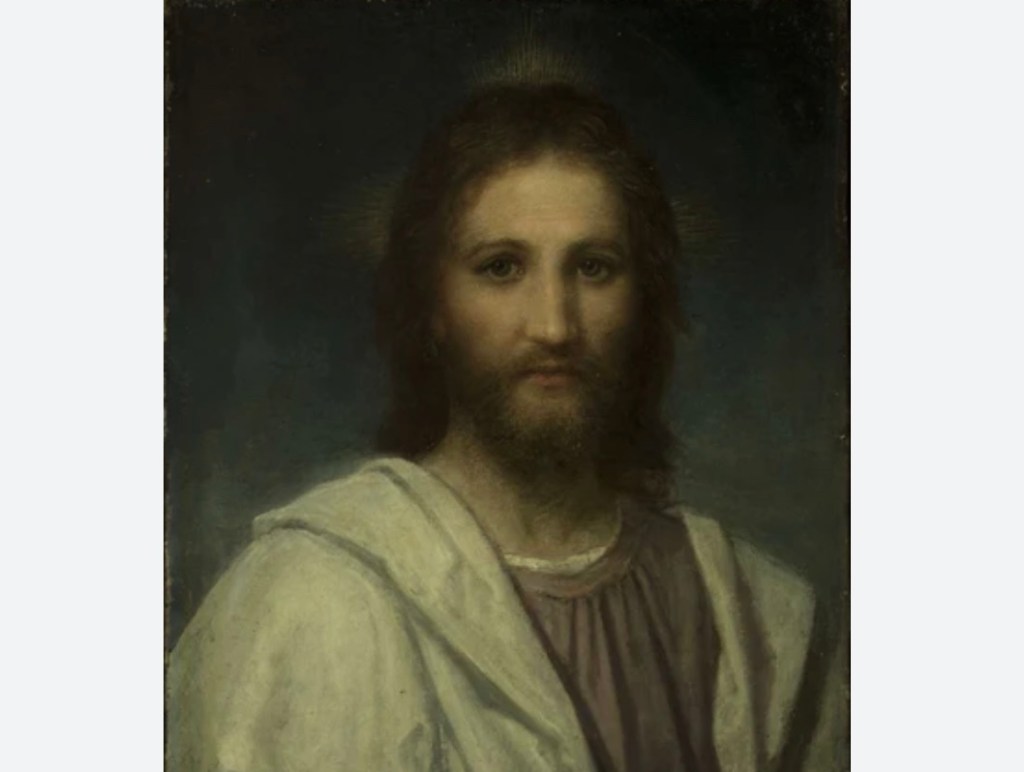
Photo: “Head of Christ” by Heinrich Hoffman

Nostra Aetate, Declaration on the Relation of the Church to non-Christian Religions, October 28, 1965. Tr. in Vatican Council II: Vol. I: The Conciliar and Post Conciliar Documents, Costello Publishing, 2004.

Link for the Mass readings for Saturday, May 3, 2025

Ponder death this Holy Saturday, so that we may better appreciate life.

“So they laid Jesus there because of the Jewish preparation day; for the tomb was close by” (John 19:42).

“They” is a reference to Joseph of Arimathea and Nicodemus. Joseph appealed to Pontius Pilate seeking to receive his body for burial. The common Roman practice would be to leave the dead bodies of those who died on their crosses to be picked at and eaten by animals. This display further emphasized that if one decided to go against the Roman leadership, this would also happen to them. Joseph and Nicodemus were able to give him a proper resting place in an unused tomb near the place where he died. Up to this point, these disciples in secret now have come forward publicly to show their alliance with Jesus.

The place of Jesus’ burial, though at first glance was opportune because it was close to Golgotha, has deeper significance as does all of Scripture. For Jesus was buried in a tomb in a garden (see John 19:41). The image of Jesus being buried in a garden echoes the idea of Adam being cast out of the garden he was first created in. The image of Jesus as the new Adam, being buried in a new tomb, is not the end of the story but only the beginning.

This moment of Holy Saturday was the in between time of the death of Jesus until his resurrection. Death appeared to have the final word but as we know, Jesus experienced death, just as he was laid in the tomb, but he conquered death and rise again. The reality of this fact we will celebrate beginning tomorrow night as we celebrate the Easter Vigil and then Easter Sunday when Jesus indeed did conquer death and become the first born of the new creation!

May we give ourselves some time this Holy Saturday to be simple, to be still, to ponder the mystery of this moment in Jesus’ life as he experienced death and slept in that state of death, alone in a tomb. May this pondering of Jesus’ death help us to also reflect upon our own death. Doing so is not a morbid practice, but instead helps us to appreciate the gift of life that God has given us. Pondering our mortality helps us to acknowledge that our time is limited and that we are only passing through this life.

All of us will die. That is the truth. Facing and pondering that truth will help us to decide more intentionally how we want to live our lives, now and in the life to come. Instead of being governed by reactive thoughts, words, and actions, we can come to a place of peace and stillness, breathing, resting, receiving, and abiding in God’s love. From that place of experiencing and resting in God’s love, we can open our hearts and minds to the guidance of the Holy Spirit.

Through following the lead of the Holy Spirit, we are granted a path that will lead us to heal, be forgiven, and be restored to the original glory, to be transformed into the image and likeness of God that was intended from the beginning of creation. Jesus has opened up to us the possibility of returning to the new garden by undoing the sin of Adam that cast us out in the first place. Jesus’ obedience to and love of the Father we are invited to participate and share in. Are we willing to take his hand and follow him to where he will lead? This question as well as a few of the other points above are good to ponder this Holy Saturday.


Photo: Even in the darkness of Holy Saturday, even in our darkest moments, the light of Jesus is present.

Link to the Mass readings for Good Friday to ponder on Holy Saturday

Will we choose death or life?

“[Y]ou will die in your sin” (John 8:21).

Jesus continued his discussion with the Pharisees but they still remained on different planes of understanding. Jesus coming from above and the Pharisees remaining below. Jesus came to meet us in our humanity to free us from what binds us to the physical realm alone. For God created man in his image and likeness and although we retain our image, we lost our likeness when Adam and Eve disobeyed God’s command: “And the LORD God commanded the man, saying, ‘You may freely eat of every tree of the garden; but of the tree of good and evil, you shall not eat, for in the day you eat of it you shall die'” (Genesis 2:16-17).

In establishing this first covenant with Adam, God sought to invite him to not only participate in a relationship with his very own creation, he sought to have man perfected through obedience and participation in God’s life. When Adam and Eve disobeyed God, through their sin, suffering and death entered the world and was made worse in their lack of willingness to repent. The separation from the source of any living, mortal being leads to death. Separation from God means death.

God did not give up. He continued to seek to re-establish a relationship and covenants with his children, seeking to do so through Noah, Abraham, Moses, and David, until the appointed time when he sent his Son to help to shine the light on our fallen world. He brought the light to reveal the truth of the way back to the Father, the way to restore the glory and likeness to the Father that all of humanity was created to participate in.

Some of the Pharisees still did not understand that Jesus was telling them about being the Son of God that the Father has sent. He continued to reveal his intimate knowledge of the Father so that they could see, believe, and come to know the Father as he does. Jesus also gave them a clear choice that those who continued to reject him were choosing darkness and sin over the light and life of Christ and so will die in their sin. Those who believe in Jesus will become one with him in his divinity. They will not only continue to share in the image of the Father, but they will also be restored to experience their likeness of him.

This is the holiness we are all called to participate in. We are called to repent and renounce the attachments to the things of this world. Jesus shows us our deepest hunger, which is to grow in our relationship with him and his Father. Jesus’ consistent obedience, doing nothing on his own, saying only what the Father taught him, and always doing what was pleasing to his Father was a constant untying of the knots of Adam’s disobedience and a constant growing in intimacy that we are invited to participate in.

Jesus’ sharing of this intimacy with his Father started to shine through the darkness. The beautiful ending line of today’s gospel account is that while at the beginning some of the Pharisees were still struggling to understand him, they now began “to believe in him” (John 8:30). The question for us to ponder is, do we see and believe?


Photo: Making time to be still, to breathe, to think, helps us to better hear God speaking in the silence of our hearts.

Link for the Mass readings for Tuesday, April 8, 2025

Just as the Father gives life, so does his Son.

The words of today’s Gospel from John is an answer to Jesus’ healing of the man at the pool of Bethesda we read yesterday. The issue at hand for those who are incensed by Jesus’ healing is that he has done so on the Sabbath. Jesus does not help his case with his critics though. For he says he healed on the Sabbath because he was directed to do so by his Father: “For just as the Father raises the dead and gives life, so also does the Son give life to whomever he wishes” (Jn 5:21). Jesus does not make concessions with those who oppose his actions of healing. He clearly states the truth about who he is, the Lord of the Sabbath. Those that did not believe Jesus was who he said he was, believed that he was a blasphemer of the highest order and the reason why they plot to kill him.

So too in our own age, there are many ways to express our understanding and belief about who Jesus was in his time and is today. If you haven’t thought about Jesus beyond his name in a while, about who he really is and why he is relevant to our lives, then allow St. Athanasius, the bishop of Alexandria, who lived from 297 to 373 AD, to offer a point to ponder today. Athanasius held firmly to and taught with conviction that Jesus is, “the Son of God [who] became man so that we might become God” (Catechism of the Catholic Church, 480). This statement is an acknowledgment that we cannot be saved on our own merits, through our own will power, and discipline alone. We become the fullness, we actualize who we are created to be, through our participation in the divinity of Jesus the Christ.

The reality that Jesus, fully human, is at the same time the second Person of the Holy Trinity, became one with us in our humanity so that we can become one with him in his divinity is something worth meditating upon and praying about. There is much writing and discussion about how many people are leaving the Church, while at the same time so many are still hungry, starving, for a deeper, more intimate relationship with God. This is true for those who leave as well as those who remain whether either could or would articulate it in that way. Could it be that we have forgotten the foundation not only of our faith, but that we are followers of Jesus Christ?

By returning periodically to the words of St. Athanasius, meditating upon and praying with them, we just might remember who and whose we are. In this way, we will not have to face what lies before us this day alone. Jesus who healed the crippled man at the pool of Bethesda, is reaching out his hand to us today as well. He is inviting us to take his hand and allow him to lead us to experience his healing touch and divinity which we crave to experience.

————————————————————————–

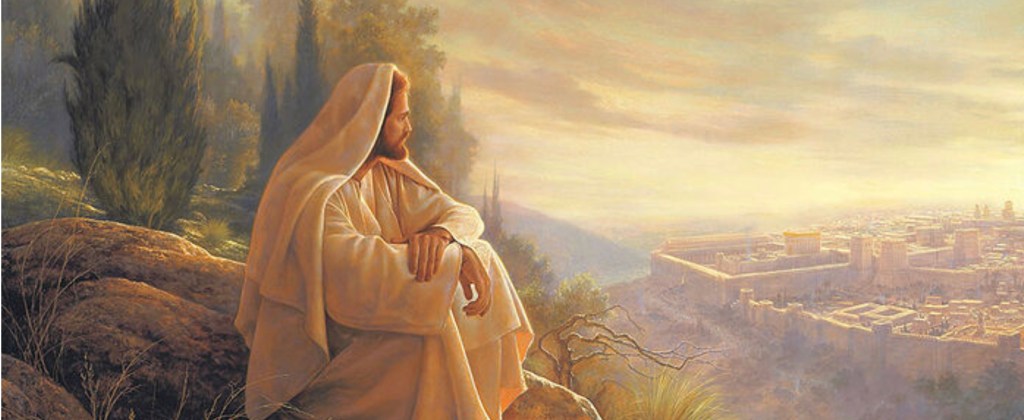
Painting by Greg Olsen

Mass readings for Wednesday, April 2, 2025

Mary and Joseph, a yes to God and a yes to life.

Joseph heard the news that Mary, his betrothed, was with child. He clearly knew the child was not biologically his. Scripture does not account for the thoughts or emotions of Joseph, but whatever inner turmoil he did have, he came to a decision that would not expose Mary to shame. He was not going to make a public spectacle of Mary, but instead decided to divorce her quietly. Before he made his final decision though, Joseph made an excellent choice regarding the discernment of serious matters. He slept on the idea before acting.

During Joseph’s sleep, the angel of the Lord delivered a message. “Joseph, son of David, do not be afraid to take Mary your wife into your home. For it is through the Holy Spirit that this child has been conceived in her. She will bear a son and you are to name him Jesus, because he will save his people from their sins” (Mt 1:20-21). When Joseph awoke, he did as the angel of the Lord had commanded him and took his wife into his home (Mt 1:24).

From their encounter with God’s messengers, both Mary and Joseph trusted in God’s will, and “that has made all the difference” to quote Robert Frost’s poem, “The Road Not Taken.” Because of Mary and Joseph’s “yes” to God and to family, the Son of God became man and opened up heaven for us in the humanity he assumed.

God often works in the same way when dealing with us. What may appear to be absurd, unimaginable, or downright impossible, is indeed possible when we align our will with God’s will. This is the week of Joy in Advent.

The source of joy does not come from external experiences but from an encounter with and acceptance of God’s invitation. Joy is an experience of communion with the love of God. This has been given to us in greater measure because Jesus became one with us, and so upon his ascension into heaven, we too can experience the loving communion he experiences with his Father. We also experience the love of the Holy Spirit in our encounter with family and friends, this exchange of giving and receiving of ourselves in conversation, shared experiences, and in resolving challenges and conflicts together.

Mary and Joseph both received incredible news, that neither of them fully comprehended. They could have easily responded in a different way. Instead, they trusted in God, they chose family, and because they did, we can rejoice not just during this week but as we heard from the past Sunday from Paul, we are to rejoice always!

Mary and Joseph followed God’s lead and were willing to allow their unborn child, Jesus, to come to full term. Because they were willing to risk public ridicule and worse, Jesus entered into our human condition. There may be a difficult situation we are dealing with, we may feel we are on our own, and that there is no way out, and/or no help on the horizon. God will make a way and reveal it to us through his Son. We may not understand either, but like Mary and Joseph, let us trust in God, one another, and experience that we are not alone.

Jesus, Mary, and Joseph, please intercede on our behalf this Advent Season such that we may better be able to resist the temptation of taking each of our family members for granted, but instead choose to be appreciative and thankful for one another. Help us to react less and breathe deeply more. Help us to be more understanding, patient, and willing to forgive, such that even though we have experienced past hurts, conflicts, disagreements, and different points of view, we may ultimately experience time and again the joy of being there for one another, through thick and thin.


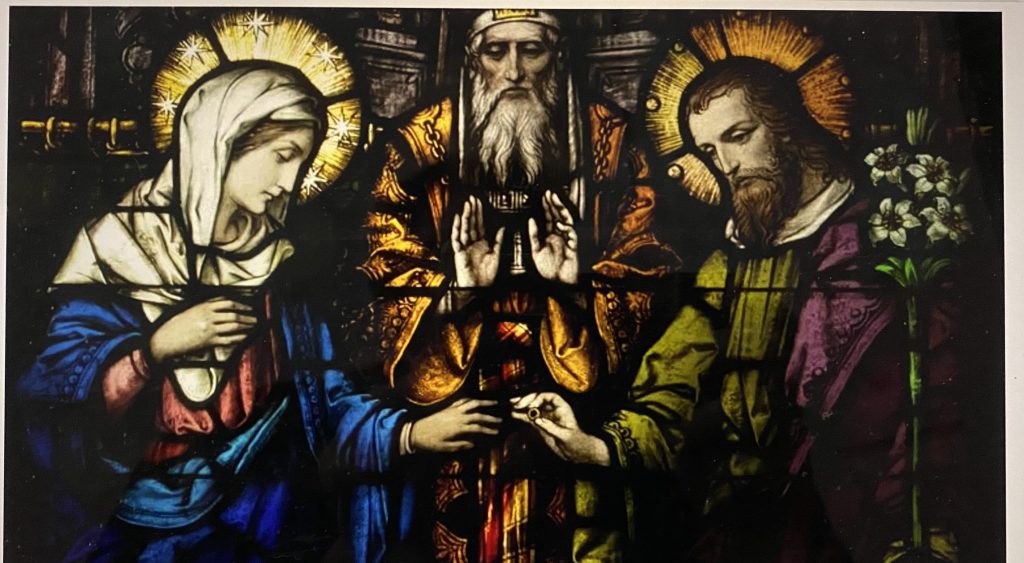
Photo: Stained glass window of the betrothal of Joseph and Mary, from the Church of the Immaculate Conception in Connellsville, PA by Nancy Bauer.

Link for the Mass readings for Wednesday, December 18, 2024

When we remember we will die, we will live better now.

“Heaven and earth will pass away, but my words will not pass away” (Lk 21:33).

All that exists and that we know will pass away eventually because all things are finite, they are limited and material. The readings of this week repeat the same theme that we are not to place our hope and trust ultimately in the things of this world. The longer we live, the more we will experience loss, even the death of those closest to us. I remember my maternal grandfather share with me when he was around ninety years old that most of the people he grew up with were no longer alive.

All that which is physical and finite will pass away, but the words of Jesus will not pass away. Jesus’ words are life. He is God, the second Person of the Holy Trinity. He is the Logos, the Word, the very reality of God. Hearing his word is not enough though. Once we hear his word, we are to then mediate and ponder his words, put his words into action and practice them in our lives. In doing so, Jesus becomes one with us in our humanity and we, one with him in his divinity. In God’s time, we will begin to bear fruit. We will become like the fig trees when their buds burst open.

Momento Mori is the Latin phrase that means, remember you will die. Accepting the reality of death and contemplating on our own deaths is not a morbid exercise when we enter this pondering with the end goal in mind that we will be one day be with God for all eternity. Also, those who contemplate their deaths more regularly live their lives more fully now. When we keep the our awareness of death available to us, we take our life and the lives of others for granted less because we come to see the fragile nature of our human condition. We also come to realize that we do not know the time or hour when others or we ourselves will die.

Contemplating our death from time to time, also helps us to determine who and what is important to us. Dr. Leo Buscaglia, a professor at USC, while he was still alive had assigned his students an invitation to imagine that they had one week to live. They were to come up with a list of what they would want to do for that week and with whom they would want to spend it with. After they turned in their assignments, Dr. Buscaglia then returned the papers and said, “Why not live this way now? Why do you have to wait until you are dying to start living your life more fully?”

Jesus invites us to resist the temptation to avoid uncomfortable situations as well as to resist clinging to wonderful experiences once they are gone. This healthy indifference helps us to experience the present gift of the moment where we will experience God and hear his guidance more clearly. Jesus helps us to live in this way because he lives in the eternal present. We are going to die someday, putting off until another day may be too late, so let us start living now.

Jesus, please help us to remember that we are going to die so that we may better appreciate and experience each moment. Help us to discern the path you would have us to walk, guide us through the challenges and trials that will arise, and to bloom where we have been planted. Help us to recognize that we will have less regrets when we listen to, meditate upon, and put the words of Jesus into practice, so that we may live now and experience your peace, joy, and love.


Photo: Sometimes knowing the time we have left can be a blessing. Enjoying our final two months together with JoAnn, July 4th weekend, 2019. Swan boat ride on Echo Lake in, LA.

Link for the Mass readings for Friday, November 29, 2024