Greater than Solomon and Jonah.

There is something greater here! Something greater than the wisdom of Solomon and something greater than the preaching of Jonah. Someone greater than the kings and the prophets who went before. Jesus.

We are called to live our faith out in Jesus daily. This is not a part-time vocation. We all have a unique gift in the dignity we have been conceived and born with. We have a unique way to express and live out our dignity as well. We have been created in the image of God, but through sin, we have lost our likeness to him. We are tempted, misdirected, distracted, and diverted from experiencing God’s love for us and plan for our lives and this can lead us away from God. The further away from God we are the more our likeness to him diminishes. Jesus calls us back to spend time with his and our Father so that we can be forgiven, healed. As we do so and grow in our relationship with him, our likeness is restored more and more.

As Jesus taught, often in his parables, the kingdom of Heaven on earth starts small, like a mustard seed, like yeast, and develops slowly when nurtured. Lent is a good time to slow down, step back, take a retreat even while in the midst of our everyday activities. We just need to insert some intentional and dedicated time to spend with God alone each day. In doing so, we will better come to know him, his word, and guidance.

One of the reasons we may feel a bit restless is that we are engaged in activities in our lives that miss the mark of who we were created for. We are missing the relationship with God that he is inviting us to participate in because we are allowing ourselves to be distracted and too busy to see where we have been led astray. The sign of Jonah that Jesus offers us is repentance. The whole of Nineveh repented even though Jonah was hoping that they would not. He hoped they would be punished by God! Jesus seeks our repentance, our willingness to turn back to see the open arms of our God and Father wide open ready to receive us, to lead us back to the truth of who we are as his beloved daughter or son.

If you are feeling a bit restless, on edge, or out of sync, I invite you to make some time to be still and breathe, this can be while in the shower, when you have some breakfast, a morning walk, or taking a sip of coffee or tea. During this time ask God for some guidance. We can ask him to help us see those areas that we need to repent from and let go of, those thoughts, words, and actions that keep us distracted, redirected, and off-kilter as to who God is calling us to be. We can then confess to him and receive his forgiveness and reconciliation.

God invites us to create times of silence to sit with our wounds and traumas. Many times we do not want to be still or quiet because there may be unresolved issues, hurts, and/or pain that we would rather not face. We may believe the lie that if we allow ourselves to feel what is deep down there, that we will be completely undone. God is present and waiting, inviting us to come to experience acceptance and love as we are, to feel safe, and honest. From this place of vulnerability, we begin with simple steps of trusting in Jesus and his healing.

Jesus said in today’s Gospel that, “There is something greater here.” Christianity is not a secret sect. We are called to share the joy, the forgiveness, healing, and reconciliation we experience from God with others, even with, as Jonah found out, our enemies. We are to look for opportunities to offer a smile, an encouraging word, to reach out to someone we have been meaning to connect with for a while, in person or far away, and/or someone that we may sense just needs a listening ear. We can also can ask for God’s patience so that we may react less and become more understanding and present. There may be places we are hurting and this is true for so many others.

Lent can be a joyful time when we enter into the season with the intent to deepen our walk with the One who is wiser than Solomon and preached repentance and reconciliation. With our hearts and minds turned back and open to God, Lent will not so much be a drudgery to endure, but a joyful embrace of the opportunity for experiencing a change of mind more open to dialogue, forgiveness, healing, sharing joy, reconciliation, and contributing to building up the kingdom of God one healing at a time! Hurt people can hurt people, and hurt people can also experience the healing of Jesus and become people who are healing and willing to help heal people.

———————————————————-

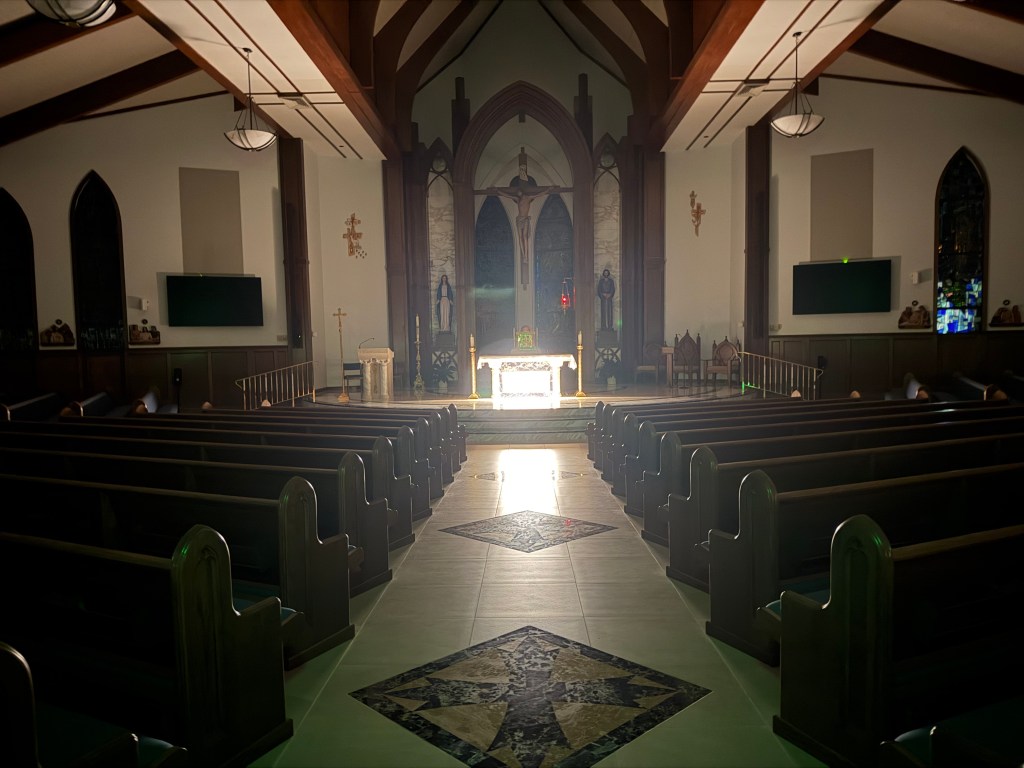
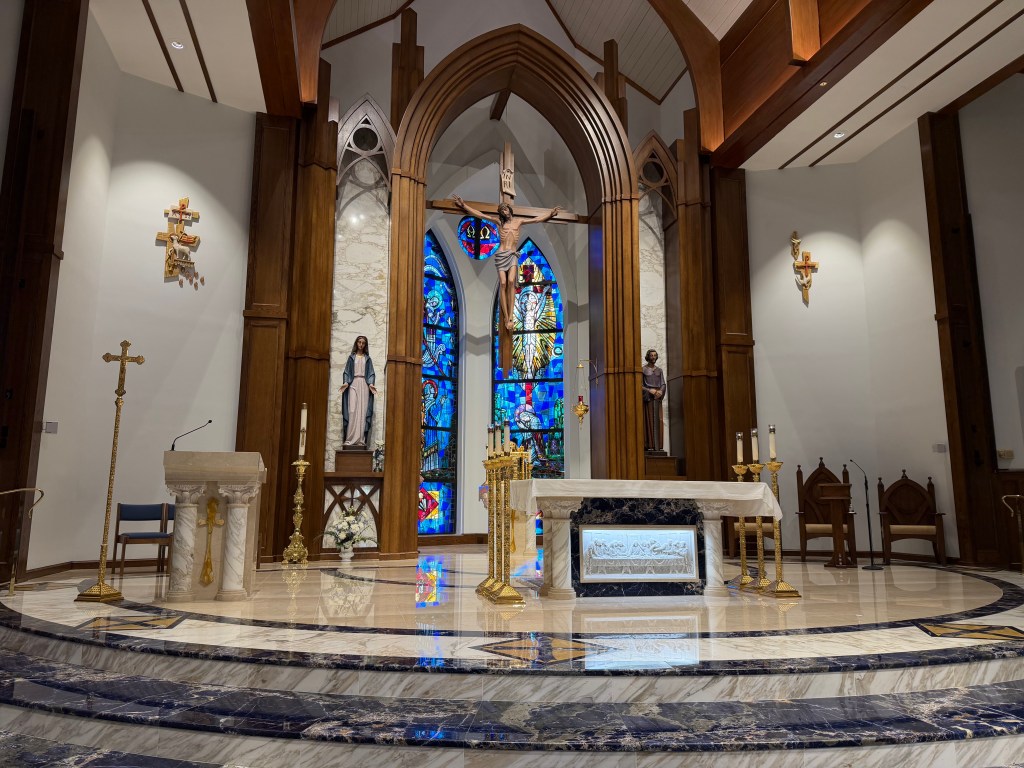
Photo: Who is greater than the One who is willing to give his life for us and seeks our healing and redemption? Quiet time of prayer in the Cathedral of St. Ignatius of Loyola after Bishop Manuel DeJesus Rodriguez’s ordination.
link for the Mass readings for Wednesday, March 25, 2026

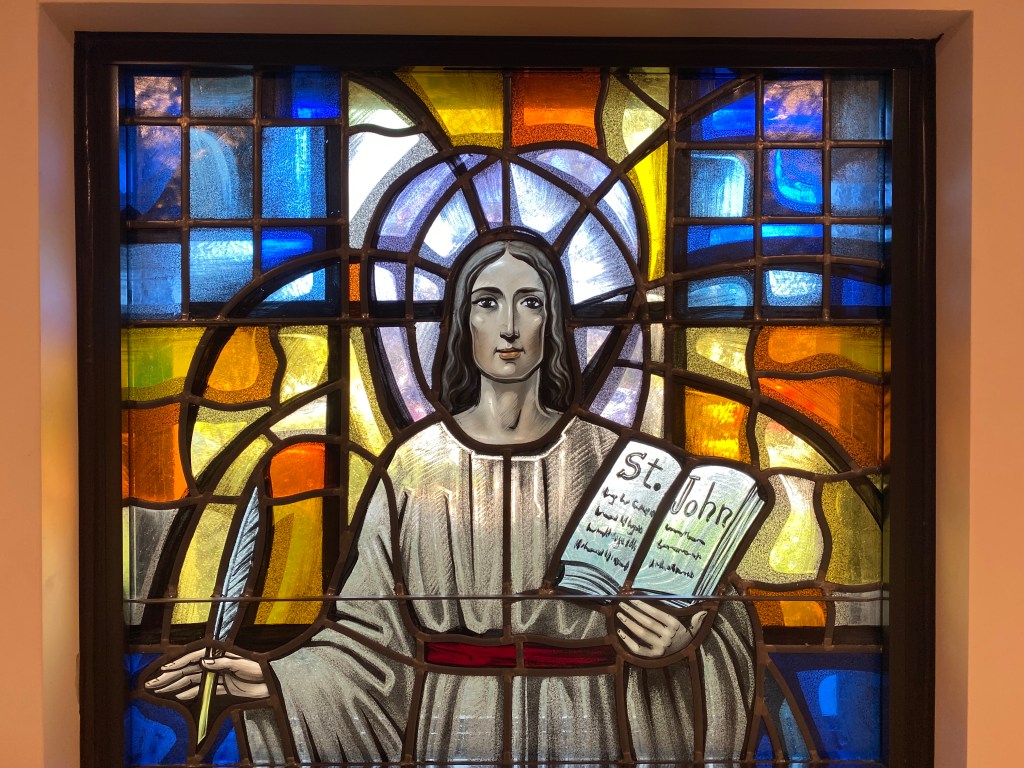
Jesus taught John, the Our Father. John taught it, and it has been learned and prayed in every generation since.

Jesus begins his teaching on prayer by stating that prayer is not babbling. We are to resist just saying empty words that have no meaning or worse just praying in words that we think God wants us to hear. Prayer is to come from our hearts. We are to share honestly what we truly think and feel in the moment that we turn our hearts and minds up to God.

Prayer, first and foremost, is a response to the Holy Spirit moving within us, urging us to pray, “for we do not know how to pray as we ought” (cf. Romans 8:26). It is helpful to trust that invitation and allow ourselves to be in his presence in the chaos as well as in the joys in our lives. If we are upset with God, it is important to get in touch with that feeling and share that emotion with him. As we do so and get it out, it is just as important to be still and remain for a time, and listen for God’s response. To vent and walk away or tune God out is not helpful or giving him the opportunity to provide healing.

Even if we do walk away from him, our Father will not walk away from us. He will be there ready and willing to accompany us when we are ready to return, share again, and are willing to be still and listen. A good example of this type of open and honest prayer from the heart will be found in reading the psalms. They cover the full range of our human emotions as well as expressions of prayers of blessing, petition, intercession, thanksgiving, and praise. We will even come across one like Psalm 88, which may not appeal to us at the moment, as it is such a psalm of despair, yet someone, somewhere, might be feeling that prayer. If we read it and find as we do so that we don’t relate to it, we can pray it for others who may be experiencing those emotions.

In our Gospel today, we read Matthew’s familiar version of the Lord’s Prayer or the Our Father. It presents two ways to pray. First, it is a rote prayer that we memorize word for word. The blessing of a rote prayer is that we can pray it in communion with others, as we all know the same words. Another important gift of rote prayers is that we can pray them when we are physically in pain or emotionally distraught when we feel we can’t pray.

Jesus taught his disciples this prayer and it has been prayed daily since then up to and including this moment. That is an amazing reality, that we can pray today the same prayer that Jesus taught his disciples (Different language, yes, but the same prayer.). It is a prayer we can lean on to give us strength through the storms of our lives. Praying the Our Father gives us the words to speak when we have none to begin with, and by loosening our tongues, we can come to a place where we can speak more freely with God, who as Jesus shares is our Father, and experience the peace of his presence.

The Lord’s Prayer is also a model of prayer such that each word or phrase can be a starting point to enter into a deeper and loving dialogue. There are seven petitions throughout and as with the ten commandments have a similar pattern in that the first three petitions are directed toward our relationship with God. The next four have to do with our relationship with others. As an example, we begin with the words, “Our Father.” This is a reminder that God is the Father of us all and the beginning of all prayer. His sun shines on the good and the bad alike. Our prayer begins by putting our self in his presence and recognizing that we are all interconnected.

God, our Father, is with us even when we experience fear, sorrow, feel forgotten, misunderstood, or alone. We just need to remember to turn to him. Our every desire to pray is already a prayer because we are responding to his invitation to spend time exclusively with him. In turning to him, we experience that he is always present and he hasn’t forsaken us. He provides our daily bread and forgives us as we forgive others. God also rejoices with us, for the joy of God is the human being fully alive!

Carve out some time today to pray the Our Father s-l-o-w-l-y. Take some slow and deliberate breaths, five seconds in and five out. Allow whatever is going on in your life to enter into the recitation and remember that the best dialogue allows each party involved to spend some time listening to the other. As St Mother Teresa taught, “God speaks in the silence of our hearts.”

By pausing, being still, and not rushing these words, and then listening silently at the end of the verbal prayer, we can enter into that time of quiet to be still and listen. Doing so we will experience his love for us, better know our Father, his will, and begin to experience his peace and rest. Learning to listen to God who we can’t see might also help us to listen to each other who we can see.

—————————————————————

Photo: Jesus taught John the apostle the Our Father. It worked out pretty well for him, may we follow his lead!

Link for the Mass readings for Tuesday, February 24, 2026

5:1 + 5 Finger Gospel = Loving Jesus and our neighbors as ourselves.

Our readings today help us with one of the pillars of Lent. Almsgiving. We can give alms monetarily as well as through our thoughts, words, and actions. How we treat each other matters. How we speak to each other or about each other matters. Even how we think about each other matters. Not only do our actions come from our thoughts but we also project them out to others whether we are aware or not that we are doing so. When we are able to be more intentional regarding how we think, we can be more aware of our actions. We really do not have to immediately react in situations independently or with others. We can first take a few deep breaths, think, and seek some guidance from the Holy Spirit before we entertain a thought, speak what is moving from our mind to our lips or leading to an action. We can discern how what we are about to do will affect ourselves and others around us.

One way to go a little deeper and more discernment about what we think and say into practice is to follow the psychologist, Dr. John Gottman’s 5:1 principle. When you think a negative thought about someone and before you share that thought, think and write down five affirming thoughts about that person. Many times we will find that by the time that we get to the fifth affirmation we will have forgotten the negative quip that sought the light of day.

Jesus is very clear in today’s Gospel from Matthew, “Amen, I say to you, whatever you did for one of these least brothers of mine, you did for me” (Mt 25:45). All of us are interconnected. What we do to one another affects everyone. Jesus is very clear that what we do or do not do to each other we do to Jesus. It would be very helpful for us then to get to know Jesus. One way is to continue to read the daily Gospel offered to us each day or read them at our own pace. The Gospels reveal to us Jesus’ words, teachings, life, ministry, and actions. A daily, prayerful and meditative reading helps us to not just know about him but to know Jesus.

In meditating on today’s gospel account, Jesus helps us also to know that we will come to know him better in serving one another. For as we do or do not do, we will come to know or not know Jesus better. When we throw a stone into the middle of a pond, the ripples of the water circle out to touch the bank and go even beyond what we see. When we think a thought, offer or withhold an action, speak or not speak, this same ripple effect happens.

When we give into cynicism, apathy, or disinterest regarding the needs of another, we are cutting ourselves off from Jesus. These ripples of inaction have a negative effect that ripples out. When we are moved by the Holy Spirit to reach out to help someone in need, to be more understanding, kind, and willing to move beyond our insecurities, prejudices, and biases; when we do listen, risk, and move out toward another in love by willing another’s good, and put Jesus’ teachings into practice, we begin the healing of our relationship with God, ourselves, and each other. We will then love our neighbor as ourselves as we received from Leviticus 19:18 in the first reading. We can certainly experience a few more of these ripples!

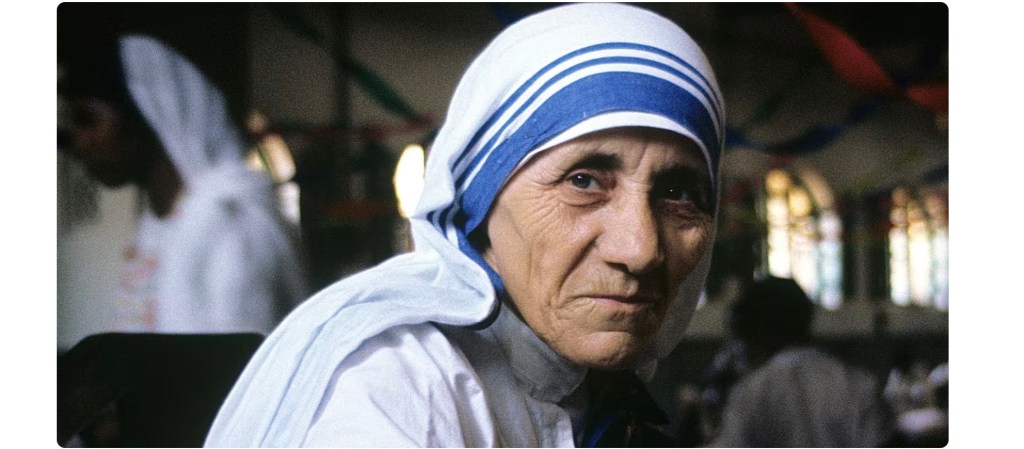
St. Mother Teresa loved her neighbors radically well by putting into practice what she called her Five Finger Gospel, which is a summary of Matthew today’s gospel. She taught each person in her order and anyone she had the opportunity to pass it on to that each finger on her hand represented the words: “You – did – it – to – me.” When we entertain a thought today, are about to form a word, and are about to follow through on an action, may we first take a breath, ask Jesus to guide us, and then look at the five fingers of our hand before following through. Would we continue to think the thought, say the word, or follow through on the action if Jesus was in front of us? Because he is. For what we do to each other, we do it to Jesus.

———————————————————————————–

“I alone cannot change the world, but I can cast a stone across the waters to create many ripples.” We can too!(Photo credit: Getty images)

Dr. John Gottman’s 5:1 principle I learned from Dr. Arthur Brooks’s discussion with Bishop Robert Barron through the Word on Fire Institute. To watch Dr. Brooks talk on loving our enemies and to consider becoming a member of the Institute: wordonfire.institute/bishop-barron-presents-nov-2019/

Link for St Mother Teresa sharing her five finger gospel starts about 30 seconds in:

Link for the Mass readings for Monday, February 23, 2026

“I have not come to call the righteous to repentance but sinners.”

Think about how good we feel after coming to be on the other side of healing from a bad cold or the flu, recovering from a twisted ankle, a broken collar bone, or other health conditions. If you have ever experienced an asthma attack or had the breath knocked out of you, it is such a relief to able to breathe fully again. We experience a feeling of wholeness that was missing during the midst of our suffering where we may have pondered a time or two whether or not we would ever get better.

The same can be said for estranged relationships. There is a distance of separation that can be agonizing, an inner gut-wrenching experience that gnaws away at us. We wonder if there can ever be a coming back together. When there is reconciliation, forgiveness, and mending of the brokenness, we can experience relief, lightness, and joy that we never imagined possible while in the midst of the conflict, the silence, and the separation.

Sin damages our relationship with God and one another. Unchecked and unbridled sin can rupture those relationships. The Pharisees and the scribes questioned why Jesus was eating with tax collectors and sinners, and Jesus replied: “Those who are healthy do not need a physician, but the sick do. I have not come to call the righteous to repentance but sinners” (Lk 5:32).

Jesus is a light in the darkness. For Levi and his friends, who were ambling in the darkness, Jesus shone gently and warmly. They realized there was a sage path to walk and they did. A great celebration of fellowship ensued in Levi’s home because these men and women, who had been outcasts, who were separated from the greater community were forgiven, welcomed, and embraced. They were loved by Jesus as they were. They did not have to change first for Jesus to call Levi and gather with them.

They were welcomed into the kingdom and reign of God. Their ticket to reconciliation and healing was accepting the invitation of Jesus, to receive and experience his love and welcome. Levi and the other sinners did not run from the light of Jesus, but were willing to recognize their need for healing, were willing to repent, to turn away from their prior ways of life, and so were reborn!

They were divinized because of their willingness to participate in the life of Jesus. Levi chose not to just be a repentant sinner, but continued to follow Jesus. He gave his whole life to him and allowed himself to be transformed. He chose to leave the path of darkness and to follow the Way. He continued to follow Jesus such that it was no longer he who lived, as Paul had experienced, but Christ who lived in him (cf. Galatians 2:20)!

Jesus invites us, as he invited Levi, to come and follow him. We are given the same invitation and opportunity for healing, discipleship, and transformation. Will we resist rationalizing and justifying our sinful thoughts, actions, and habits, welcome the light of Jesus that reveals our venial and mortal sins, and admit that we are in need of healing, repent, be forgiven, and be released from all the energy we have expended in protecting and hiding from ourselves and our God who loves us more than we can ever mess up?

We say yes, by quietly spending time, especially each evening, and recalling our day. When we are willing, Jesus reveals to us those ways in which we have not lived according to his will. Jesus does not reveal our sins to condemn or shame us, he does so to convict us in the hope that we will identify, renounce, and confess them. Then he will forgive us. Even when uncovering deeply rooted and mortal sins, through the intimate encounter with Jesus in the Sacrament of Reconciliation, we will be forgiven and freed.

Jesus loves us as we are. Yet holding on to our sin, keeps us at a distance from experiencing the greater breadth and depth of his love. We only need to be willing to be contrite, to embrace sorrow for the harm we have inflicted with our personal sins, and go to the Divine Physician in our time of prayer and/or Reconciliation. Once absolved, the heavy weight is lifted and we are healed and go forward into the light to engage in penance, atone for our sins, and are better able to forgive others as we have been forgiven, and to love as we have been loved!

——————————————————————–

Photo: Jesus is the light that reveals the path to lead us out of darkness.

Link for the Mass readings for Saturday, February 21, 2026

A fast from the busy can help us to decompress and reset.

In the Gospel of Matthew, we read today about the account of Jesus comparing himself to a bridegroom: “The days will come when the bridegroom is taken away from them, and then they will fast” (Mt 9:15). In a sense, the bridegroom has been taken from us, in another sense, he is closer to us now than he was when he was with his disciples and walked the earth. The fullness of his reign though will not be consummated until Jesus comes again, but while we wait, when we are willing to set aside other distractions and be still, we can hear and experience of the beating of his Sacred Heart.

We need food for our survival, but we don’t need as much as we think we do! Fasting from food is not the only focus of our Lenten fast. The discipline of fasting provides an opportunity to keep our passions in check. By resisting the impulse of instant gratification, we are able to better discern between apparent goods and the actual Good in our lives. When we are able to navigate through the maze of distractions, diversions, temptations, and allurements on a physical level, we can begin to go deeper into the spiritual reality to begin to expose some of the demons that we feed, such as “distrust, apathy, and resignation”.

Pope Francis mentioned that these three demons “deaden and paralyze the soul of a believing people.” He continued by stating that: “Lent is the ideal time to unmask these and other temptations, to allow our hearts to beat once more in tune with the vibrant heart of Jesus.”

When we are willing to discipline our impulsiveness, to slow down, to take time to recollect even with a few deep breaths, we can begin to see more clearly God’s will for our lives. We can then be more open to God’s invitation to grow in relationship with him and each other. We can better assume the posture of John the Apostle by resting our head on the chest of Jesus (cf John 13:25), such that our hearts will beat in the same rhythm as his Sacred Heart.

This is the gift of contemplation drives us to service. This is the same rhythm that beat in the prophet Isaiah who reminds us in today’s first reading what true fasting is all about:  “releasing those bound unjustly, untying the thongs of the yoke; Setting free the oppressed, breaking every yoke; Sharing your bread with the hungry, sheltering the oppressed and the homeless; Clothing the naked when you see them, and not turning your back on your own” (Isaiah 58:6-7).

————————————————————————

Photo: Stillness, quiet moments, while experiencing the wonder of God’s creation helps us to experience, can help us to slow down and allow our heart to beat with he rhythm of Jesus’ sacred heart.

Link for Pope Francis homily:

Pope Francis offers a “worksheet” for Lent: Check it out!

Link for the Mass readings for Friday, February 20, 2026

May we guard ourselves against the leaven of the Pharisees and Herod.

Jesus convicted the Pharisees for demanding a sign and for their continued hardness of heart, their unwillingness to see and hear the work and presence of God right before them. He also saw the unsettling yeast of the Pharisees present in his own disciples. In today’s reading, Jesus seized on the opportunity of being together in the boat, Jesus seized on this teachable moment. He wanted to help the disciples of his inner circle to resist the same path of corruption when he enjoined them: “Watch out, guard against the leaven of the Pharisees and the leaven of Herod” (Mk 8:15).

As has been their pattern, the disciples missed the point as they focused on the literal reality that they only had one loaf of bread among them. Jesus was not, as they thought, taking them to task for not thinking ahead to bring enough bread. He had twice now multiplied minimal amounts of bread to feed thousands. One loaf with them would not have been an issue. He was more concerned about them falling into the danger of pride, seeking honor, power, and fame which had lead many of the Pharisees and Herod astray. To be his followers, striving to place themselves first would be not only the undoing of each of them but also undermine the authenticity of the Gospel message they were to proclaim and affect those they would be charged to care for.

Unfortunately, too many have not heeded the lesson that Jesus offered in today’s Gospel to his disciples regarding being aware of the corrupting leaven of many of the Pharisees and Herod. Just as the effects of original sin has wounded humanity, so it has also affected those in the Church. Throughout the ages, clergy and laity alike have succumbed to the temptations of placing our needs before and focusing on ourselves instead of God and who he calls us to serve. The curving in upon ourselves and the hardening of our hearts, close us off to the love of God and the reality of the truth that we can be in relationship with him, this truth that Jesus came to bring.

Yet throughout the worst corruptions and abuses, the Church remains. God continues to work through many who are faithful, like Mary his mother, and say “yes” to his invitation and follow his will in simple ways, living lives of quiet prayer, worship, and giving of themselves in acts of service daily. It is unfortunate that there are those who leave because they see hypocrisy, injustice, abuse, and corruption. For it is those with eyes to see and ears to hear that need to stay and be faithful witnesses to the call of the one true Bread from Heaven.

We must remain persistent and lean on Jesus to give us the strength and clarity on how best to seek healing for ourselves and proceed to help to heal his wounded Body. We also need to be aware of the sinful leaven that would seek to undo each of us. It is easy to point fingers. We will be on stable footing when we seek forgiveness, healing, transformation, and guidance from Jesus and choose to place God primary before any self-serving pursuits. Doing so will help us to live simple and holy lives of loving God, our neighbors, and ourselves.

——————————————————

Photo: Daily prayer and meditation, pondering the word of God, participating in the sacraments, and opening our hearts and minds to God’s guidance will help us to resist the spiritual leaven of hypocrisy, sin, and the hardening of our hearts.

Link for the Mass readings for Tuesday, February 17, 2026

Do we seek a sign or believe and trust in Jesus?

“Give me a sign!”

Often, when we ask for a sign, we have a preconceived notion of what we are seeking and we want God’s stamp of approval on it. The impetus is coming from us, seeking to bend the will of God to our will. More often times than not this approach will end in frustration. The Pharisees in today’s account are asking for a sign. Jesus has already been preaching with authority, healing, casting out unclean spirits and demons, encountering the unclean and restoring them to the community and right worship, and this is not enough?

The Pharisees hardness of heart echo their ancestors in the desert who constantly complained and were rebellious toward Moses and God. They refused to be grateful that God had freed them from their bondage in Egypt and was caring and providing for them every step of the way on their journey. They refused to see God working in their midst. The Pharisees refused to see in Jesus, the Son of God working miracles in their midst.

We can understand how: He sighed from the depth of his spirit and said, “Why does this generation seek a sign? Amen, I say to you, no sign will be given to this generation” (Mk 8:12). The majority of the Pharisee’s minds were set, they were “motivated not by a sincere desire for truth but by a refusal to relate to God on his own terms. To insist on irrefutable evidence is really a demand for control” (Healy, 153).  Jesus knew there was nothing he could say or do to prove to them that the kingdom of God was at hand in their very midst.

If they had not the eyes to see nor the ears to hear, there was no argument, point, or sign that would have changed their minds. Jesus sighed from the depths of his spirit because their hearts were hardened such that they closed themselves off from the gift of the grace he sought to share. There was nothing left to say, so he then got into the boat to go to the other shore. He was determined to now put his energy into preparing his disciples, to ready them for his death and their mission.

Do we believe, do we really believe, that Jesus is “the way, the truth, and the life” (Jn 14:6)? Do we seek to bend God’s will to our own or are we willing to change, be transformed, and seek to align our will with his? The woman with the hemorrhage for twelve years, Jairus whose daughter died, the Syrophoenician woman whose daughter was possessed, the friends with the man with the withered hand, and the leper, did not ask for a sign, they asked for healing. They trusted, believed, and risked getting closer to Jesus seeking to encounter him despite the barriers in place to prevent them. In each of these cases, Jesus recognized their faith and each received the healing they sought.

In our discernment, we need to be aware of our intent. There is a subtle distinction, but it is important. Are we seeking proof, a sign, on our terms, or do we have faith in Jesus? Do we believe him, trust him, and seek to know God’s will, as Mary did when she asked, “How can this be” (Lk 1:34)? Are we demanding proof, a three-point plan from God before we follow his lead, or do we trust his invitation and believe that he will reveal what we need to do each step of the way? Often times, if we knew the end result and full ramifications of his original request, our doubt would crush our spirit before we even started.

Let us not seek a sign but instead a relationship. Making time to be still, to pray, to open and lift up our hearts and minds to God and spend time with him each day in the living words of the Bible, the Mass, examining our conscience, going to confession regularly, will help us to better know him and his will. May we trust as Mary did when she said, “May it be done to me according to your word” (Lk 1:38), and as did her Son, “not my will but your will be done” (Luke 22:42). Let us take the hands of Jesus and Mary in ours. They who know God the Father can help us to know him as well and help us to discern and accomplish what he calls us to do just for today and that is enough.

————————————————————————————–

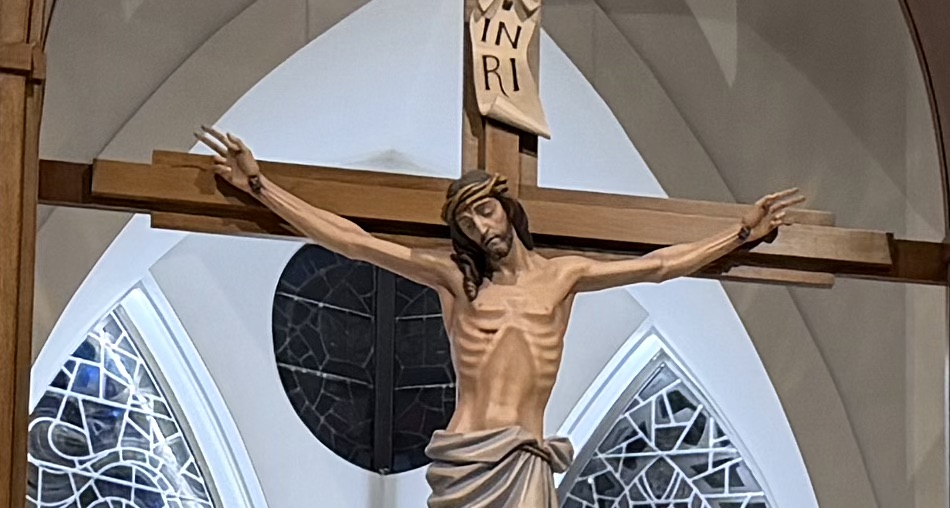
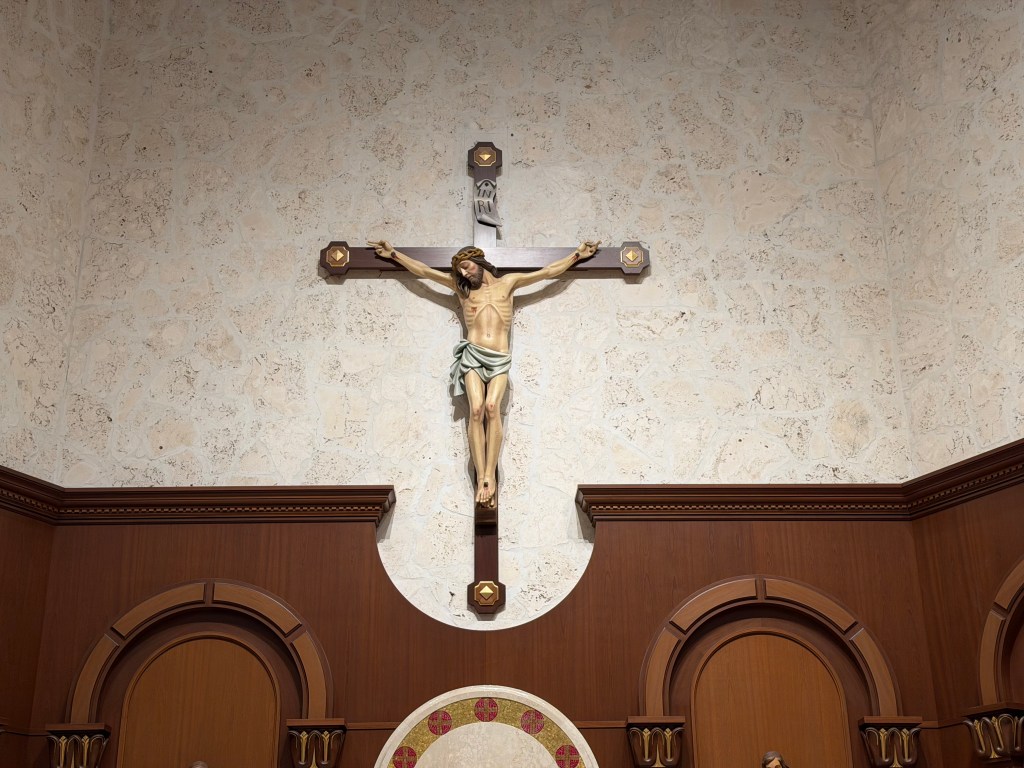
Photo: If we want the best sign of Jesus’ love for us, the crucifix is it.

Healy, Mary. The Gospel of Mark. Grand Rapids, MI: Baker Academic, 2008.

Link for the Mass readings for Monday, February 16, 2026

“You have heard what I said… But I say to you…”

“Do not think that I have come to abolish the law or the prophets. I have come not to abolish but to fulfill” (Mt 5:17). Jesus then went on to teach what he meant by that statement by following up with his six antitheses. Four of which are covered in today’s reading.

Upon first reading, Jesus may appear to be opposing, this is why these statements are labeled antitheses, the teachings passed down generation after generation from Moses. Jesus is doing no such thing. He is digging deeper to expose the root of each condition. As he himself said, he has not come to abolish the law and the prophets, the Hebrew sacred scrolls, he has come to fulfill them and give them deeper context and meaning.

When Jesus recounts Moses’ prohibition against killing, he follows up by stating that we are not to give in to the temptation of anger or lashing out with derogatory words. By being more intentional with our words and less reactive, we have a better chance of making more sound and rational statements. When we are more conscious of our thoughts and think them through before letting them lose, we are more apt to respect the dignity of the person we are speaking with as well as ourselves. We are also less likely to unleash our anger or lash out with harsh words. Doing both, will help us not to escalate to physical violence. Something we are very much in need of in our time.

Jesus then addressed the prohibition against committing adultery. Not only are we not to have sexual relations with someone else’s spouse, but we are also to resist the temptation of thinking about anyone in any lustful way. Again, Jesus is lifting up the dignity of the person. People are not to be objectified and lessened to mere carnal objects of satisfaction through our actions or our thoughts.

Now in both cases above, Jesus is not saying the we are robots. We will get angry, we will experience attractions, neither which are bad nor what Jesus is asking us to resist. With each emotion, we are to experience them. They are not to have free reign and to be disordered. Instead as we experience each, we bring them to Jesus with a prayerful pause or period so to properly order them to the will of his Father. Anger properly channeled can lead to healthy fraternal correction and attraction can lead to a chaste and blessed friendship.

Such a friendship can then blossom into marriage. Jesus, upholds the dignity and sacredness of marriage, recognizing that this is to be a covenantal relationship. There were some prescriptions for dismissing a wife in ancient Israel considered to be valid just because the wife had cooked a bad meal. Jesus recognized that the reality of a bill of divorce, especially for the women in his time, placed them in a very precarious position economically as well as socially. Not to mention the toll that the rupture of the relationship could cause. Women, without any means to support themselves, would seek to remarry or sought prostitution. Often their families would not take them in to care for them.

This is why Jesus stated that “whoever divorces his wife – unless the marriage is unlawful – causes her to commit adultery and whoever marries a divorced woman commits adultery” (Matthew 5:32). A bill of divorce in this time is not equivalent to the civil divorce of our time. The couple was still considered married. Moses made an allowance for a bill of divorce, because of the hardness of men’s hearts and to protect women from abuse. In the most egregious of cases, men would kill their wives to marry another.

Jesus is holding up the dignity and sacredness of marriage which is a sacrificial gift of love between husband and wife, with the openness to bring forth life into the world. The Church continues to follow Jesus’ teaching today, considering marriage, even in the event of a civil divorce as valid until proved differently. Thus a declaration of nullity granted is not considered Catholic divorce, nor if one is issued does the ruling consider the children of the marriage illegitimate. God brings about a greater good, even from marriages that he did not bring together. The good in this circumstance can be the children.

One more antithesis presented in today’s account was the value of giving our word. What we say reveals something about our character. We are to resist saying what is expedient in the moment, as well as swearing false oaths to justify false claims. Instead, Jesus commands us to be honest and truthful in each situation such that our “‘Yes’ mean ‘Yes,’ and [our] ‘No’ mean ‘No'” (Mt 5:37). If we are telling the truth, there is no need to make an oath. We speak the truth and stand on the truth.

In each of the four antitheses that we read about today, resisting not only murder but also anger and unleashing dehumanizing words, not only committing adultery but also remaining chaste in mind and heart, being faithful in marriage which is a unbreakable covenant, and being true to our word, Jesus calls his disciples to a higher standard. This is just as true for us today.

The light of Jesus reveals to us the darkness of our survival and fight or flight instincts. By slowing down, stepping out of the constant noise and business, we can resist the disordered affections and baser temptations of our fallen nature. This begins in our thoughts. For if we choose to be more aware of and intentional in engaging with our interior lives, our thoughts and emotions, begin to breathe into and experience them instead of deny or not pay attention to them, we will become less reactive and impulsive. We then stand a much better chance of thinking and speaking about and acting better toward one another.

Unfortunately, the effects when we don’t can be devastating, dehumanizing, and isolating. We can see results of not following God’s laws and its destabilizing effects all too often in our culture and society. Lowering the bar of these foundational principles is not the answer. We need not separate ourselves from the commands of Jesus, but yolk ourselves to him, and then we can heal and move closer to putting into practice his teachings. The sprouts of our words and actions spring forth from the seeds of our thoughts, for good or for ill.

Practicing the teachings of Jesus begins by acknowledging the value and relevance of them. We need to resolve with a deeper commitment and firmer intent to be more careful in what we feed our thoughts, words, and actions with, while at the same time understanding that on our own we will fall short. God is God and we are not. We need the support of the Holy Spirit as well as the support and accountability of others. Aligned with Jesus, trusted family and friends, we too can fulfill the law and the prophets, by fulfilling the way of love Jesus calls us to aspire to, and will become more human in the process.


Photo: Jesus can make the antithesis statements, “You have heard that it was said” relating to the Hebrew Scriptures, and then, “But I say to you…”, expanding the teaching of the law and the prophets by his own authority because he is the Son of God come to save us.

Link for the Mass readings for Sunday, February 15, 2026


“What do you have, what can you offer?”

As Christians we are called to be disciples of Jesus, to learn about his life, his teachings, and follow him and his direction. This is not to be an academic exercise. Through reading, meditating, and praying with the Gospels as well as the whole of the Bible; participating in Sunday Mass and holy days of obligation, and if able, more often or even daily, receive Jesus in the Eucharist, we encounter and come to know Jesus.

Just as Jesus called each of the Twelve, we have been called, and as they modeled their lives around and were transformed by the love of Jesus, they and we are called to be apostles. Ones who are sent, as we are at then end of each Mass to proclaim and share that Jesus is who he said he is, and how he has affected our lives. Often when we are reminded of this message though, we may feel inadequate. We may question what it is that we can even possibly offer in an effort to help build the kingdom of God. We may feel we have nothing to share, nothing to give, nothing to say, or that what the Lord asks of us, we do not know how to even begin.

The Twelve expressed doubts and we see this on display. Jesus shows concern for the thousands who had just listened to him for three days and are readying to depart. He has satiated their spiritual hunger, they remained with him for three days listening! He now also is concerned about their physical hunger and that some may collapse or grow faint on their way home. The disciples were bewildered with Jesus’ request. How could they possibly feed the vast crowd of four thousand. Then Jesus asked,  “How many loaves do you have” (Mk 8:5)? With the minuscule amount, of seven loaves and a few fish, Jesus fed the multitude. “They ate and were satisfied” (Mark 8:8), with seven baskets of bread fragments left over.

Jesus asks us, “What do you have, what can you offer?” We may not have been asked or thought about this question before. We may not know initially how to answer. It is worth pondering. Where are there and who might have needs? Each day is a new opportunity to begin again and seek Jesus’ guidance. We can pray and meditate with this account from Mark. We can also look at a statue of Jesus we may have, a picture, a crucifix, or an icon. Then take some deep breaths, meditate on our present life condition, and assess where there is a need in our own life as well as those of others. Once we receive an answer or a nudge, then we can give what we have to Jesus.

Resist looking for the big response or grand plan. Ask yourself what you can offer no matter how small. What you give to Jesus, he will multiply and bring about amazing results. “Jesus takes what little his disciples have to offer, blesses it, and gives it back to them; in the very process the paltry amount mysteriously becomes more than enough to satisfy the needs of all” (Healy, 152). Jesus provides, Jesus works through us. We don’t need to be concerned whether or not we are capable or worthy. The question we need to answer is, “Are we willing?” If “yes”, then, with Jesus, all things are possible.


Photo: Some quiet time listening to Jesus, in the sanctuary of St. Gerard Majella Catholic Church, Los Angeles, CA.

Healy, Mary. The Gospel of Mark. Grand Rapids, MI: Baker Academic, 2008.

Link for the Mass readings for Saturday, February 14, 2026

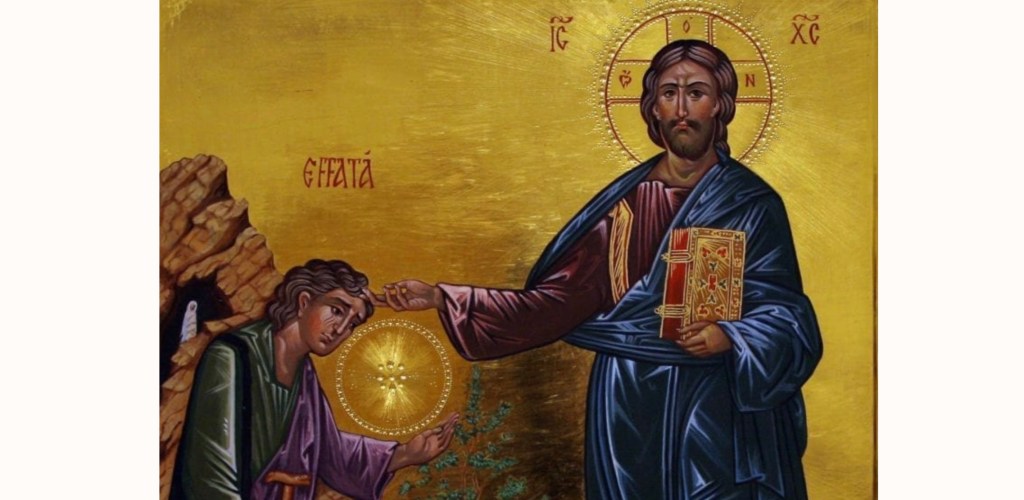
When we can hear God, we can experience healing at a deeper level.

Those who witnessed Jesus healing the man who was deaf with a speech impediment grasped something more than just the healing when they stated: “He has done all things well. He makes the deaf hear and the mute speak” (Mk 7:37). With these words, they were acknowledging the deliverance of Israel by the Lord, promised by the prophet Isaiah, when he mentioned how, “the eyes of the blind will be opened, the ears of the deaf will be cleared” (Isaiah 35:5).

The beauty of this healing may be missed by us in the modern age because of the graphic nature of the details used by Mark. Jesus places his fingers in the man’s ears, spits into his own hands, and then touches the man’s tongue. Jesus is mixing his own saliva with this man in need of healing. We don’t even share drinks from the same bottle anymore as we used to do when we were kids! Still in the shadow of Covid and a new flu strain, this imagery can seem incomprehensible!

Yet, what Jesus is showing is the intimacy of communion that he offers us. He gave the very essence of his own being, his own saliva and mingled it with this man’s saliva. This physical teaching is an image or icon, of how the Son of God, in no way diminishing the fullness of his divinity, entered into the very real corporality of our humanity. He became one with us so that we can become one with him. This was true then and it is still true for us today, less the saliva!

This is also especially true because as with Jesus healing of the Syrophoenician woman’s daughter yesterday, this man too is not a Jew but a Gentile. In each of the healings, the good news is that the good news is still being proclaimed to the Jewish people but also Jesus is moving beyond, and all people are given access to God through Jesus. The eyes and ears of all will be opened to the glory of God’s message and invitation to relationship.

We all suffer at some point from physical, emotional, psychological, and/or spiritual trials. What is worse is when we close ourselves of from or have not learned to hear God’s word, and become deaf and mute. Jesus, even if he does not provide a healing or an immediate solution, is present. We are invited to resist avoiding or denying our suffering, pain, and/or challenges and instead embrace them with Jesus. In doing so, we align our suffering with his on the Cross. When we choose to offer up our pain and suffering on behalf of another, we participate in redemptive suffering. Others can experience relief and healing from our sacrifice in participation with Jesus.

This act of the will sometimes brings healing for ourselves, comfort, and even when the suffering continues, gives meaning. We do not endure what we are going through in vain. Better to face, head-on, that which challenges us open to the guidance of Jesus. Along with the advances in medicine, science, and psychology, engaging both our faith and reason, our discernment will be more balanced. Just masking struggles without dealing with the root cause(s) can prolong and possibly worsen the condition.

Jesus seeks to heal us at the core root of our wounds as well by saying to us: “Ephphatha!” so that we too can hear and speak his word, experience a closer walk with Jesus, and be more present to and love one another. Jesus wants to heal others through us. With ears open to the voice of God, we will become more aware of those in need. One of the best gifts of healing we can offer is to be present, listen to and hear those speaking with us. We know the peace and joy that we experience when he have been heard and loved. As we have received, so let us give!

——————————————————————————————-

Picture: Icon of Jesus healing the man deaf and mute – Artist unknown.

Link for the Mass readings for Friday, February 13, 2026