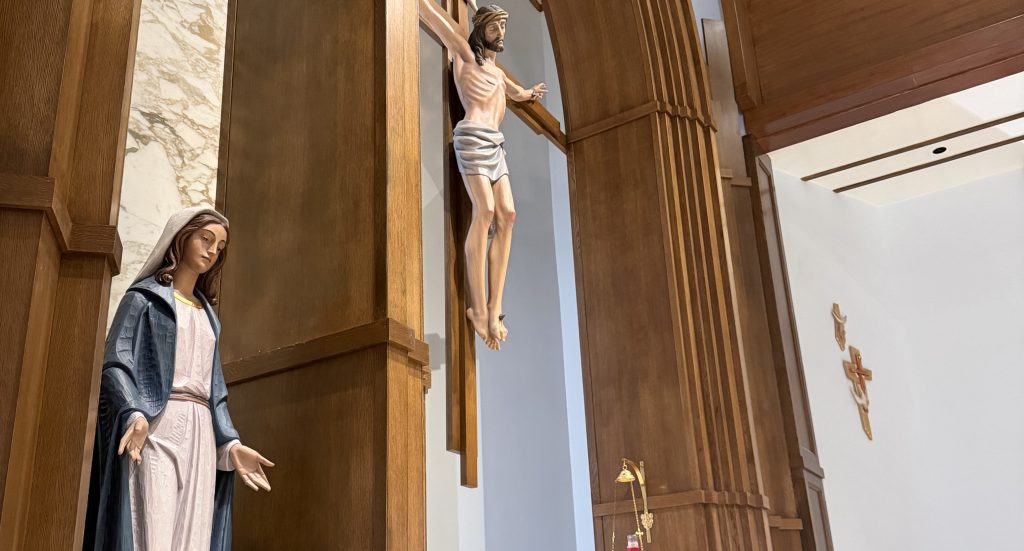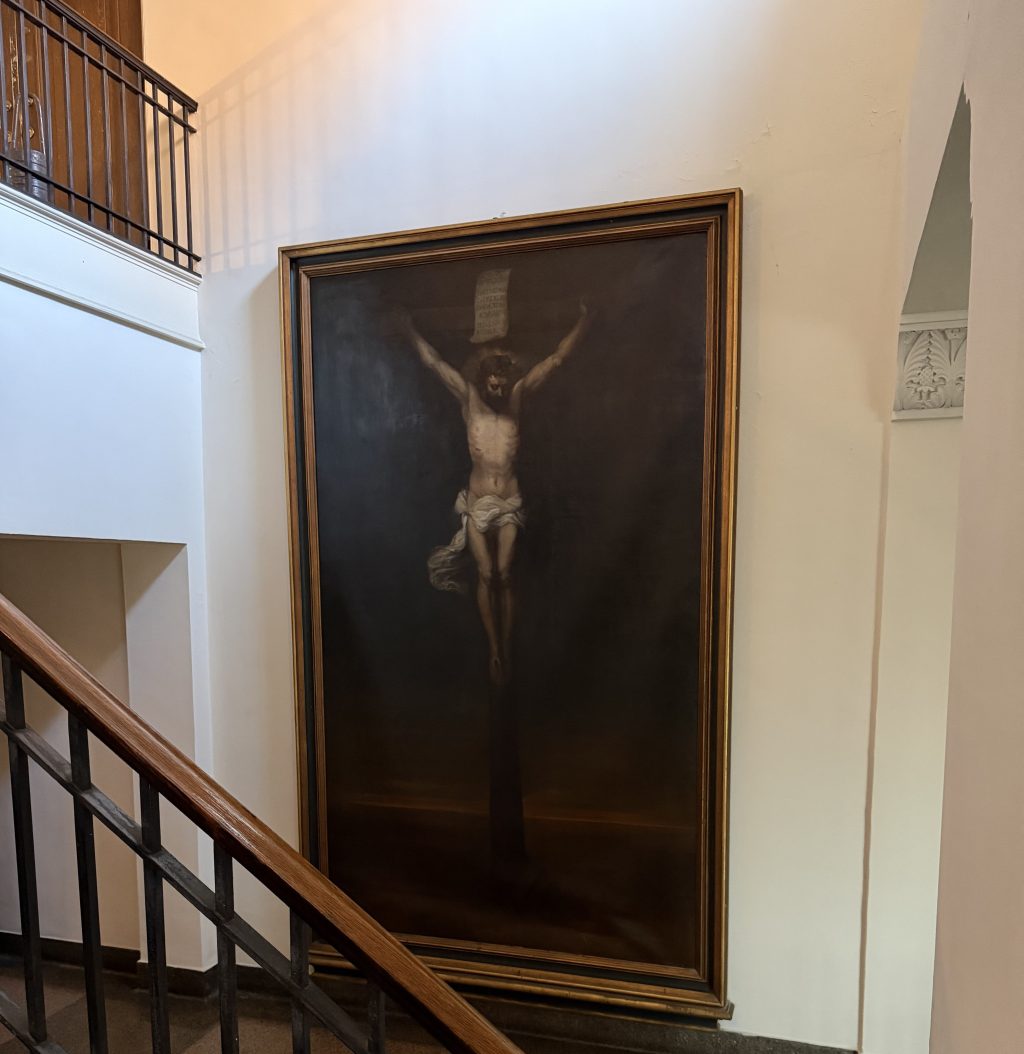
Keeping our eyes on Jesus will help us to walk through any storm!

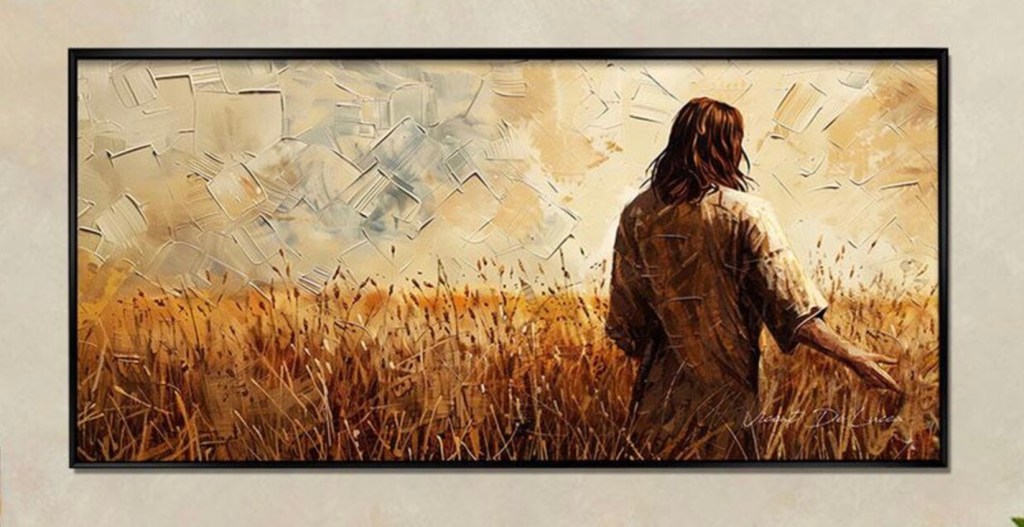
“It is a ghost,” they said, and they cried out in fear. At once Jesus spoke to them, “Take courage, it is I; do not be afraid.” Peter said to him in reply, “Lord, if it is you, command me to come to you on the water.” He said, “Come.” Peter got out of the boat and began to walk on the water toward Jesus. (Mt 14:26-29).

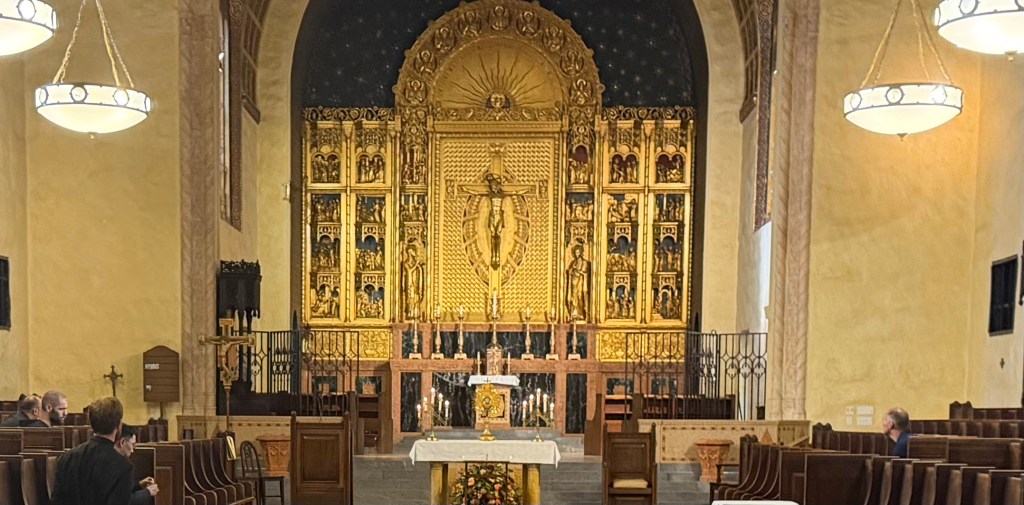
This is one of my favorite Gospel accounts. I never tire of reading, praying and meditating with it. My spiritual director about a year ago gave me this reading to pray with during my holy hour. I stayed with the opening lines – “he went up on the mountain by himself to pray. When it was evening he was there alone” (Matthew 14:23) – for about a month. I would go back to read the verse again at the beginning a few times and then just sit for the remaining hour in silence on the mountain top with Jesus. The time was a blessing as are those quiet hours with Jesus in whatever way he leads.

When you get past the initial verses, many times, many people focus on the fact that Peter quickly started to sink, but for that brief moment, a la, Wile E Coyote, … he “began to walk on the water toward Jesus.” Peter was walking on the water and I do believe this, as with the other miracles of the Bible happened. Often times, while I was still at the seminary, there was a great pond by the library. I often thought of seeing if I could walk across on those evening Rosary walks. Didn’t ever make the attempt. Oh me, of little faith!

The gift of this reading as well as with each of the readings of the Bible, are living and alive such that they can have an incredible impact on our lives when we read, meditate, and pray with them. Life is a struggle. Challenges, fears, trials, and conflicts pound at us like turbulent waves kicked up by strong winds. We may be tempted to be paralyzed by indecisiveness and begin to sink because of the weight of the pounding. Yet, when we trust in and keep our eyes on Jesus, who is present in the midst of our storms, we will overcome.

In many a top ten list of fears, I would guarantee that speaking in public consistently makes the top three. This is an area I have struggled with for much of my life. One incident happened about thirteen years ago as I had the opportunity to share my first reflection during my acolyte year of formation for the permanent diaconate. I must have prepared for three to five hours, writing and rewriting well into the wee hours of the morning the night before, most likely not getting to sleep until about “the fourth watch”.

Just before the morning liturgy, our director of formation informed me that there had been a last-minute change of plans and we were going to have different readings than what I had prepared for. He offered to give the reflection in my place, as well as gave me the option to continue and incorporate what I had planned into the new readings.

I chose to remain on course and offer the prepared reflection. As we processed in, I immediately regretted my choice. The winds and waves of anxiety started to batter me and continued their assault as I came up to read the Gospel. As I came to the end of the reading, a quiet peace settled over me. I then began to preach extemporaneously, ignoring my notes. There was an unexplainable feeling of peace and joy that welled up within me, and like Peter, for that brief moment, it was as if, I too was walking on water. Halfway through the reflection though, my mind directed me back to my prepared notes, and I lost the connection that I had just experienced. I sputtered a bit to the end but finished free of any major catastrophe.

After the service ended, I remained in my seat quietly for a second to catch my breath. My classmates Dennis, Hank, and Pete, who all knew how nervous I was going into this, swarmed around me like I had just touched home plate after a walk-off home run. I can still feel their group, bear hug.

JoAnn had appendicitis during her first-grade year of school. She missed a lot of her reading lessons but worse became very self-conscious from that time forward about reading aloud. During our husband/wife retreats each year, wives were given the opportunity to proclaim the reading during the Liturgy of the Hours and Mass. JoAnn did not feel comfortable nor did she want to do so but accepted the invitation. We prepared, she practiced ahead of time, and then she prayed to the Holy Spirit just as she approached the ambo. JoAnn felt faint and nervous but as she began to read, she felt a deep sense of peace fill her whole body. She was no longer fighting back nerves but tears of joy experiencing God’s presence.

There will be times when Jesus invites us to come out of our boat and step onto the water, he will call us to move out of our comfort zones. There are challenges much more intense than reading in public. No matter what waves arise though, may we trust Jesus and step out as Peter did. This will be a risk, and yes, there will be times that we will sink, just as Peter had done. But even when we sink, remember to do as Peter did, immediately call out to Jesus and he will immediately reach out and pull us up! Jesus was there for Peter, he has been there for JoAnn and me, and he will be there for you.

“Times of testing and adversity can show us where we are in our spiritual development and where we need to improve if we are to grow in Christian maturity” (Mitch and Sri). Whether we fail or succeed is not the end goal. It is that we trust in Jesus and grow in our faith and relationship with him. Doing so, we will then adjust and learn from our mistakes, and also learn to bring the distractions, diversions, anxieties, and fears that we may experience to Jesus as we keep our eyes on Jesus!

There may be something that you have been feeling led or encouraged to attempt, to start, to do, yet mental winds and waves have been rocking the stability of your boat. You may be in the midst of the storm as were the apostles. “Be not afraid! Come.” Step out of your boat, take the risk, keep your eyes on Jesus, and walk on the water!
———————————————————————–

Photo: Wonderful memories walking around this lake each night while at St. Vincent de Paul Regional Seminary, even without walking on the water.

Mitch, Curtis and Edward Sri. The Gospel of Matthew. Grand Rapids, MI: Baker Academic, 2010.

Link for the Mass readings for Monday, August 3, 2026

May our hearts be moved with the compassion of Jesus’ heart.

When he disembarked and saw the vast crowd, his heart was moved with pity for them, and he cured their sick. (Mt 14:14).

The feast of the feeding of the five thousand was quite different from the birthday feast of Herod Antipas (Mt 14:1-12) that we read yesterday. Herod’s focus was on himself, not the welfare of the guests attending his banquet. Herod’s pride was on full display, and it culminated in his ordering the head of John the Baptist to be served up on a platter.

Jesus focused instead on those who gathered around him; “his heart was moved with pity for them”. Jesus “peered out across the vast human see of hunger and heartache that pressed in around him. However fatigued, Jesus made himself available to the sick and suffering” (Mitch and Sri, 189). Jesus was aware of their need, their hunger, not only for something to eat but a deeper spiritual hunger. He made himself available to them. Jesus taught, healed, and when that time ended instead of sending them off to fend for themselves, in the multiplication of the bread and fish, he met their most basic need for nourishment.

There is a stark contrast between the attitude of Herod and Jesus (cf. Mt 14:13-21). We can certainly see these two scenes playing out clearly in our country and the world today. The question for us is do we close ourselves off, embrace an indifference to those who are in need, and let others fend for themselves, or do we make an effort to be aware of the needs of those around us and attempt to be of help.

Mother Teresa said: “People are hungry for God. People are hungry for love. Are we aware of that? … Do we have eyes to see? Quite often we look but don’t see. We are all just passing through this world. We need to open our eyes and see” (Mother Teresa, 56).

We do not have to feed five thousand. The effort of putting our love into action for one person is a good way to begin. People often yearn for more than material need. They hunger to be seen, heard, and loved. Jesus, please grant us the eyes to see and to be more aware. Please help us to have compassionate hearts, and set our souls on fire with the Holy Spirit to put into practice acts of love. May we recognize with St. Mother Teresa that: “We are collaborators with Christ, fertile branches on the vine” (56).

———————————————————————–

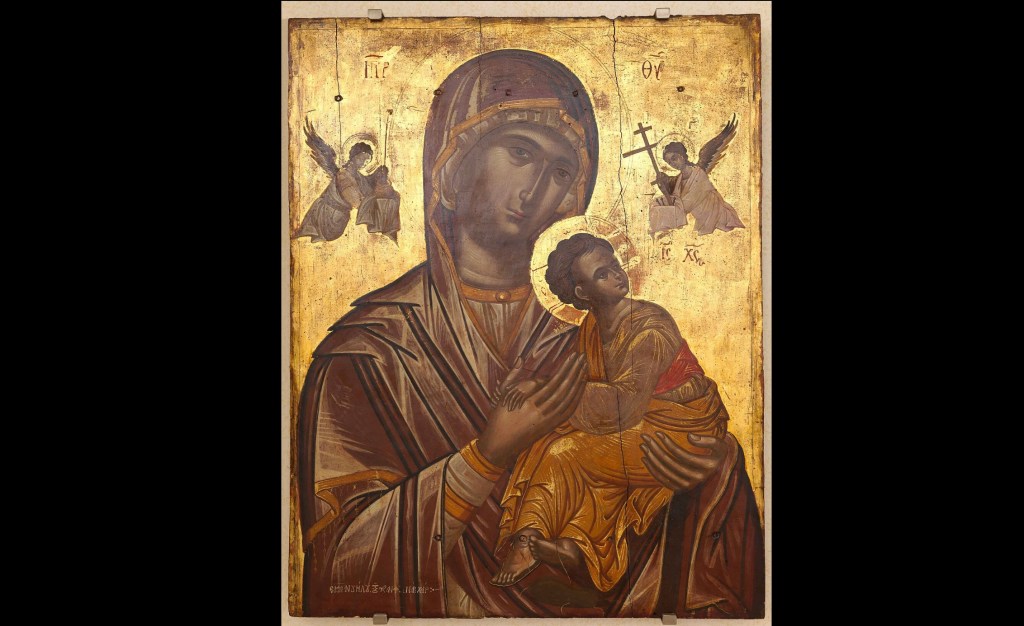
Photo: When we bring all we experience to Jesus and Mary, we will have a better chance to be moved with compassion.

Mitch, Curtis and Edward Sri. The Gospel of Matthew. Grand Rapids, MI: Baker Academic, 2010

Mother Teresa. No Greater Love. Edited by Becky Benenate, Joseph Durepos. Novato, CA: New World Library, 2001

Link for the Mass readings for Sunday, August 2, 2026

Who will we serve? Makes a difference.

Herod the tetrarch heard of the reputation of Jesus and said to his servants, “This man is John the Baptist. He has been raised from the dead; that is why mighty powers are at work in him.” (Mt 14:1-2).

After the death of Herod the Great (4 BC), one of his sons, Herod Antipas, was given a portion, a fourth, of his father’s kingdom by the Roman Emperor Augustus. Thus, Herod Antipas was the tetrarch of Galilee and Perea from 4 BC to 39 AD. Herod, like, Pontius Pilate, would hold power as long as he was a faithful servant to Rome.

News of the ministry of Jesus got back to Herod and he believed Jesus to be John the Baptist raised from the dead. What followed in today’s Gospel were some reasons why Herod arrested and unjustly beheaded John the Baptist. John was killed for speaking truth to power, as happened often in the long line of prophets before him. Jesus continued John’s ministry of calling for repentance, encouraging those who would listen to turn away from sin and turn back to the will of God. John suffered capital punishment at the hands of Herod Antipas and Jesus at the hands of Pontius Pilate. The Apostles and martyrs of the early Church followed John and Jesus, lived and proclaimed the truth publicly and courageously.

How are we living today? Are we faithful to the Gospel values that Jesus and the Apostles taught and were willing to die for? Do we serve Herod Antipas and Pontius Pilate or Jesus the Christ? Do we assume a defensive posture or open ourselves to love? Most of us are somewhere in between. The hope is that we are moving closer to knowing, loving, and serving God, being people of prayer and practice, allowing God to love us so we can heal, getting in touch with the particular charism and gift that God has given us, and loving one another as he has loved us.

It is important to stop and reflect on questions such as these, to examine our thoughts, words, and actions and determine who it is that we are truly serving. It is not easy living the teachings of Jesus. We will fall short but we must remember that God loves us more than we can ever mess up and it is through his love and power that we will fulfill his will. We just need to remember that we are his children and as his children we need to ask for his help. When we let go of holding onto our self reliance and instead surrender to God our Father, we strengthen the relationship we have been created for.

When we are also humble enough to allow the Holy Spirit to reveal to us our mistakes, failures, and sins, we will experience his forgiveness and mercy, we will become more open to truly knowing his will and how best to serve him and each other. Embraced by and participating in the Trinitarian Communion of love, let us recommit ourselves today to living as Jesus’ disciples, so we will grow in courage, follow his way, experience healing, so to better think, speak, and live his truth by promoting forgiveness, justice, love, mercy, and reconciliation in and out of season.
———————————————————————–

St. Mother Teresa knew who she served – “I belong entirely to the heart of Jesus.” Photo credit: 1979 CNS/KNA and accessed from NCRonline.

Link for the Mass readings for Saturday, August 1, 2026

May we open ourselves to the wonder of God, creation, ourselves, and each other.

“Where did this man get such wisdom and mighty deeds? Is he not the carpenter’s son?” (Mt 13:54-55).

Jesus most likely worked as a carpenter. This was rough, menial work, and as a day laborer, a position that was looked down upon. We can even see evidence of this in the Gospel accounts. Mark describes Jesus as the carpenter, the son of Mary, Matthew in today’s account portrays Jesus as the carpenter’s son, and Luke and John just refer to Jesus as Joseph’s son, leaving out any reference to carpenter altogether. Most scripture scholars believe Mark was written first and if following that understanding, we can see a progression in the biblical tradition moving away from identifying Jesus as a carpenter.

Many people wonder what Jesus did from the age of twelve until he began his ministry around the age of thirty. Today’s reading can offer some insight into that question. Most likely, Jesus did nothing extraordinary, he was just as ordinary, if that, as any other first-century Palestinian Jew living in the small town of Nazareth, with a population of about 250 to 500 people.

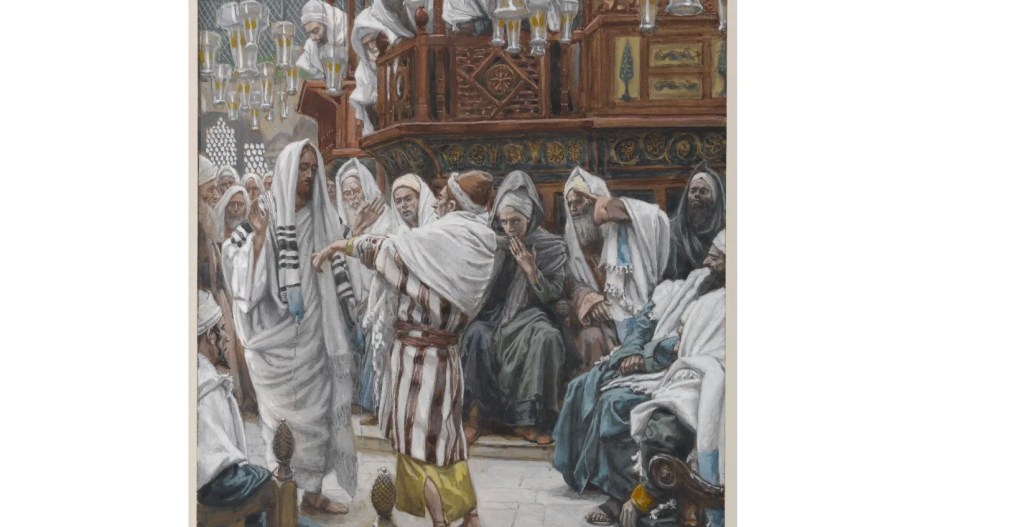
Jesus’ return to his hometown and his teaching was first met with astonishment. The question then arose, “Where did he get such wisdom and how did he work such mighty deeds?” That the response to change moved to judgment so quickly could lead one to think that “the astonishment is not an expression of admiration but of suspicion and anger” (Curtis and Sri, 185). Who is he? Isn’t he just the carpenter of Nazareth, no better than any of us? In effect, “Who does he think he is?” Not only does this show that Jesus probably lived a very simple peasant life, but that Jesus’ social status was not very high.

The people’s hearts and minds of his hometown were closed to Jesus. THEY KNEW who he was and there was no way someone like him could do what they had heard, so they “took offense at him… And he did not work many mighty deeds there because of their lack of faith” (Mt 13:57-58).

How many times have we judged someone? Have we said to ourselves, “I know who he or she is.” We box them in, not as they are, but as WE see them, as we define or label them. We look at another individual not as a person with dignity, but as a two-dimensional caricature to satisfy our own prejudgments and lack of vision. We also do this to ourselves by limiting our potential when we say we can’t do this or that. Husbands and wives, having been married for years, can fall into the routine of everyday and not allow themselves to be surprised by one another, to wonder at what about each other they still don’t know!

Maybe we have had a similar experience as Jesus did in returning to his hometown, in that we have sought or are seeking to move beyond our particular social status, or follow a dream or career out of the norm of familial or community expectations. No matter our age, through no fault of our own, by pursuing this path some or many may feel threatened. Thus, not willing to accept our vision, those who are not willing to grow beyond what they have always known may meet us with misunderstanding, wariness, or even disdain.

I read an account from the writer/producer Stirling Silliphant regarding how one day Bruce Lee challenged him to run five instead of his usual three miles. Into their fourth mile, Stirling said, “if I run any more I’m liable to have a heart attack and die.” [Bruce] said, “Then die.” And then he ran off. Stirling was enraged at Bruce’s statement, that he finished the five miles. Afterward, Stirling approached Bruce and asked him why he said that.

Bruce replied, “Because you might as well be dead. Seriously, if you always put limits on what you can do, physical or anything else, it’ll spread over into the rest of your life. It’ll spread into your work, your morality, into your entire being. There are no limits. There are plateaus, but you must not stay there, you must go beyond them. If it kills you, it kills you. A man must constantly exceed his level” (p. 23).

Jesus consistently rebukes limiting attitudes and perspectives. His Father has a plan for our lives and so he invites us to open our minds and hearts, to see the potential he sees in us. Jesus, the carpenter, invites us to embrace the infinite possibilities that will arise when we participate in his life and love. With God there are no limitations. The villagers of Jesus’ hometown are said to have had a lack of faith or unbelief, and because of that limitation, Jesus “did not work many mighty deeds there” (Mt. 13:58). When Jesus challenged his disciples, he said that they had “little faith” (Mt. 14:31).

The disciples struggled to understand Jesus, but they were open to learning from Jesus. We just need a little faith to let Jesus in. If we are closed, if our hearts are hardened, Jesus will respect the boundary we have set. He will not go against our free will. If we give him just a little faith though, just as he was given and few loaves and fishes he fed thousands, Jesus will do wonders in our lives.

The Holy Spirit seeks to free us from the shackles that bind us, the limitations imposed upon us from without, as well as those we impose upon ourselves from within. Let us cooperate with the urgings of the Holy Spirit, to be free with each breath and step we take into embracing the freedom of the love of God. When willing to follow the lead of the Holy Spirit, receive and abide in the love of God, healing will begin, trust will arise, limiting attitudes can then give way to see ourselves and each other as beloved daughters and sons of our Father.
———————————————————————–
Photo: At the end of each day, God gives us the invitation to pause, breathe, ponder the gift of his creation, and call to mind what and who we are grateful for.

Mitch, Curtis and Edward Sri. The Gospel of Matthew. Grand Rapids, MI: Baker Academic, 2010.

Stirling Silliphant story accessed from Bruce Lee: The Art of Expressing the Human Body, compiled and edited by John Little. North Clarendon, VT: Charles E. Tuttle, Co., 1998.

Parallel Gospel accounts: Mark 6:3, Matthew 13:55, Luke 4:22, and John 6:42

Link for the Mass readings for Friday, July 31, 2026

“God is love.” Even when there is suffering and pain.

Hospitality was a key virtue for people of the ancient Near East. Martha approached Jesus as he was teaching looking for support from her sister Mary in preparing the meal. Mary was sitting at Jesus’ feet with the male disciples gathered around him while Martha appeared do be doing all the work. Martha was hoping that Jesus would support her in her request. Jesus not only did not, but said that Mary had chosen the better part and that Martha was “anxious and worried about many things” (cf. Luke 10:38-42).

We don’t know how Martha reacted to Jesus. A subtle key in today’s Gospel account from John may shed light on their last encounter and Martha’s reaction. Martha’s boldness was on display again. As soon as she was aware that Jesus was coming near, she did not wait for him to arrive but “went to meet him” (Jn 11:20). Martha’s brother, Lazarus, had now been dead for four days and Jesus, who had the time to arrive before his death, was not present to help his friend, her brother, Lazarus, in his time of need.

How many times have we been in Martha’s position? Felt that Jesus was not there when we needed him most? Why do bad things happen to good people? Part of the answer is that we live in a fallen world of sin and self-centeredness. God does not bring about suffering but he does allow it. God loves us so much that he is willing to give us the free will to reject him. The cost of our freedom to choose means that there are consequences for our choices which can be detrimental or beneficial. We are all interconnected so when we choose to act on our own apart from God’s guidance and the welfare of others, the damage that ensues affects not only those around us but everyone. On the other side of the coin, there is the presence of grace, forgiveness, and love when we choose to draw close to God, especially in challenging times.

When we choose God, we will find out that we are not alone in our suffering, especially, when we do as Martha did and go out to meet Jesus. She most likely did not holding back any of the full range of her hurt and pain. Martha’s words expressed her anguish, “Lord, if you had been here, my brother would not have died” (Jn 11:21). We can only see from our limited point of view, especially with our own experiences of grief. Yet God sees far beyond our finite perspectives and Jesus helps to not only bring about a greater good, though it may take time to come to understand and experience, he accompanies us in each agonizing breath of our suffering.

Jesus came too late to heal his friend, which Martha and Mary could not understand. What he came to do, was beyond their wildest imaginings. Jesus came to restore Lazarus to life, which would also be a foreshadowing of his own Resurrection. The difference being that Jesus would not merely be resuscitated as Lazarus was and die again. Jesus would conquer death!

Martha was not holding a grudge from their last exchange. She came directly to him. She knew he could have healed her brother if he had been there, but did not say so accusingly. Martha immediately followed instead with: “But even now I know that whatever you ask of God, God will give you” (John 11:22). Then even before Jesus called Lazarus back to life, Martha showed her faith. Jesus asked if Martha believed. Martha, as did Peter, made the affirmation of our faith: “Yes, Lord. I have come to believe that you are the Messiah, the Son of God” (John 11:27).

We have been blessed by the witnesses of Martha, Mary, and Lazarus. Each show their trust in Jesus in their own unique way and follow his guidance. Those of us who have suffered the loss of a loved one, or more, know something of the pain that Martha and Mary experienced. May we also all trust in Jesus, the Son of God, the “resurrection and the life” who conquered death and became the firstborn of the new creation. We need not fear our time of suffering or death, our own, or for our loved ones as long as we give our lives to him. When we call on Jesus he will give us the strength to endure and overcome, the challenges we face still in this life and he will lead us by his love and grace into the next.


Painting: The Raising of Lazarus – Caravaggio. Martha, Mary, and Lazarus help us to trust and have faith in Jesus as you did. Pray for us!

Link for the Mass readings for Wednesday, July 29, 2026

We are freed from evil, sin, and death when we allow ourselves to be loved by God.

“Explain to us the parable of the weeds in the field.” He said in reply, “He who sows good seed is the Son of Man, the field is the world, the good seed the children of the Kingdom. The weeds are the children of the Evil One, and the enemy who sows them is the Devil.” (Mt 13:36-39).

In this parable of the wheat and the weeds, Jesus is addressing the ancient question of why God allows evil and how are we to deal with it. Why do bad things happen to good people? As a starting point, we need to recognize that God is God, and we are not; meaning that we are not capable of reading the mind of God. Any answer to explain how and why God allows suffering will be insufficient. A second reality is that the Devil exists, though he is a created being. An angelic being, yes, but not equal in any way to God.

God is not a being. We can approach but will still fall short by identifying God as Infinite Act of Existence, he is, or as God told Moses, “I am who am” (Exodus 3:14). God, uncreated and has always been, is and always will be, did not create evil, he only created good. “God looked at everything he had made, and found it very good” (Genesis 1:31). The Devil, Satan, the one who opposes, was created good also, as a high archangel, Lucifer, yet he chose to turn away from the will of God, and those angels who followed him are demons. God is greater than the Devil and his demons, and the good he sows is greater than the evil they sow.

Evil is not so much a created thing, but a deprivation, or distortion of the good. God does not create evil, but he does allow it, and even though we cannot understand the reasons why God allows or permits evil or suffering, it is not a sufficient reason to say that God does not exist. This is especially true if we are seeking to grasp spiritual realities and truths from purely physical and rational means alone. We are indeed rational beings, who seek to know and to understand that which is good, but we are so much more. As human beings, we are physical AND spiritual, so need not limit ourselves to the merely sensate and empirical realm alone.

To better be guided by God, to hear his voice in the silence of our soul, to be fulfilled, our hearts and minds need to be open to the will of the Holy Spirit working in our lives. We are called to be people of prayer. As we mature spiritually and deepen our relationship with God, we will come to experience God as did Job: “I know that you can do all things, and that no purpose of yours can be hindered. I have dealt with great things that I do not understand; things too wonderful to me, which I cannot know” (Job 42: 2-3). In essence, Job acknowledged and accepted that God was in control, and he was not, and though he could not grasp everything, he trusted in the will of God for his ultimate good.

How do we deal with evil then? We need to surrender our pride and control over to God and acknowledge that he is in charge and knows what is best for us. We need to choose to put God first above ourselves and everything and everyone else. Our fundamental option, our telos, our end goal, is to embrace the reality that we are striving to be in a relationship with God. From the moment of our conception, we are a living, craving, hunger, and desire to be one with God and each another. This is true for the atheist and the mystic alike, whether we believe it or not. As we embrace this reality, put God first, breathe and allow ourselves to be loved by him, no matter what arises, we will begin to experience his presence in not only our everyday lives but begin to feel his presence with us in the midst of our suffering. We will come to know that he is stronger than any pain or evil, his grace is greater than any of our sins, and he will guide us through and give us what we need to endure.

Our loving God and Father has given us the means to understand suffering and evil especially in sending his Son to enter into our humanity, to suffer with us, even suffering his own unjust death on the cross. Our deepest prayer is when we willingly offer up our suffering and enter into the Mystery of the Passion of Jesus. Jesus, the pure and innocent one, beaten and crucified, understands our pain and agony, our cry for the horrors of injustice, and he understands the presence of evil. Jesus himself, asked not to be crucified, though he relinquished in saying, “Not my will but yours be done” (Lk 22:42).

In that acknowledgment, Jesus faced the utter evil, horror, betrayal, and injustice of humanity: his crucifixion. In taking upon himself the sin of the world on the Cross, he even experienced separation from his and our Father. Through his complete surrender into God forsakenness, into his death, and descent into hell, Jesus made the Resurrection possible. He conquered suffering, evil, and death forever, he brought about a greater good, through the evil of the crucifixion. No matter what trials we face, our Father has the last word over sin, suffering, and even our death.

We may not receive a sufficient answer or justification to suffering but we can experience the challenges we face with our hope intact by trusting that God hears our prayers and is present in our trials and tribulations. We receive help best when honest in our prayer, even when we are angry, afraid, doubtful, or frustrated, it is important to bring all to Jesus. We will not find Jesus when we deny or run from our challenges. We will find him with his arms wide open and waiting for us when we are willing to ask and accept his help, and then enter into, as well as face our suffering and pain.

We are not alone in our suffering. When we resist running from our pain, denying, or trying to distract or divert ourselves, and bring what we are going through to Jesus, he will provide a way and accompany us through every twist and turn. He understands what we are going through because he experienced the worst of human sin; he was betrayed, beaten, crucified, and died. We experience hope because Jesus has already won the battle and he sends us the Holy Spirit to give us the strength to endure.

No darkness can or will overcome the love of the Holy Spirit. Aligned with God we will be victorious even in the face of the greatest evil that confronts us. Let us trust in Jesus and each other, face whatever storm that arises with confidence and courage as did Jesus when he set his face toward Jerusalem.
———————————————————————–

Photo: Loved and empowered by the Holy Spirit we shall overcome even the grave.

Link for the Mass readings for Tuesday, July 28, 2026

Experiencing God’s love, we are invited to share in small ways.

“The Kingdom of heaven is like a mustard seed that a person took and sowed in a field. It is the smallest of all the seeds, yet when full-grown it is the largest of plants.” (Mt 13:31-32).

God can do so much with so little. This is so because even the smallest detail is important to God. Just think of the immensity, not only of our solar system and galaxy but the whole cosmos. Despite the grandiosity and massive expanse of all creation, not even a sparrow can fall to the ground without the notice of God. Even all the hairs of our head he has counted (cf Mt 10:29-30). Our life, who we are, and who we are becoming matters to God.

This closeness Jeremiah reveals in the first reading, “as close as the loincloth clings to a man’s loins, so had I made the house of Israel and the whole house of Judah cling to me, says the Lord” (Jeremiah 13:11). The idea of a loincloth may be an outdated reference, maybe a pair of skinny jeans or spandex sweats might better make the point.

Jesus has been presenting parables regarding small beginnings such as, seed sown in a field, a mustard seed, and yeast which all allude to how God begins small and often hidden to fulfill his plan of salvation. What God begins, he will bring to fruition. The gathering in of the nations is an Old Testament theme that Ezekiel especially highlights when he shares that God will break off and plant a tender cedar shoot and from this small shoot it will become a, “majestic cedar. Every small bird will nest under it, all kinds of winged birds will dwell in the shade of its branches” (Ezekiel 17:22-23). God has a plan for the unity of all of humanity and creation and Jesus is inviting us to be a part of the collaborative effort.

God builds up his kingdom one person at a time and sows his seeds of divine grace which is a movement of the outpouring of his divine love. He watches over us, his children, and shares his life with us. We can accept or reject this love which falls afresh upon us like the morning dew upon the grass. When we accept, remain still, and abide in the reality that God loves us we, will be saturated by his love. When we say yes to the outpouring of God’s love and abide there, resting in the truth that we are beloved daughters and sons is no mere cliché. As we experience and savor this nourishing gift of God’s love, our identity is secured and nothing and no one can shake that truth.

Abiding and saturated in God’s love, we will come to realize that we receive an unending supply of God’s love to offer others. As we give love, we receive more in return. Our smallest thoughts, words, or deeds, and facial gestures make significant differences to those on the receiving end of God’s love flowing through us. We have an opportunity today to think, speak, and act as bearers of our loving God and Father. We can share a smile, a word of encouragement, a wave, and/or a hug, send a text, and/or just follow through on the the myriad stirrings from the Holy Spirit and offer a simple act of love. No matter how small a sharing, it will mean more than we will ever know or can even imagine to the one who receives.


Photo: Recipient of a small act of love from a surprise dinner visit a few months ago.

Link for the Mass readings for Monday, July 27, 2026

The kingdom of heaven is like a merchant who “finds of pearl of great price.”

“When he finds a pearl of great price, he goes and sells all that he has and buys it “ (Mt 13:46).

The merchant did not just find any pearl, which in ancient times, was often considered a great treasure. He found a pearl of great price. This would have been a pearl beyond all pearls that he had ever seen. How many material treasures do we seek to satisfy us? Jesus equates heaven as being like the finding of this great pearl. It is beyond anything we have experienced before. What are we willing to let go of, to sell, to turn away from, to attain this treasure?

The cost of discipleship is high, indeed costing us all that we have. Jesus wants to be part of all of our lives; not just attendance at church on Sunday, not just during our time of prayer, not just when all is going well. We are to invite Jesus into our work and recreation, our struggles and joys, in our interactions with others and in our solitary pursuits.

The merchant in Jesus’ account recognized the great value before him and was willing to give all that he had to attain that pearl. Jesus is inviting us to invest in him by allowing him access to every moment of our experiences so that we may enter into a deeper and more intimate relationship and communion with him and his Father. When we do so, we will also experience the treasure of great price which is the love shared between them, who is the Holy Spirit.

We experience this communion most concretely in this life when we develop authentic relationships with one another. Many of the issues we face will improve when we are willing to engage with one another, instead of unearthing the worst, seek the best, and will each other’s good. Barriers will begin to crumble when we let go of what we perceive divides us and embrace the mutuality of our shared humanity. Relationships are not perfect because we are not perfect. When we resist the temptation to react, are willing to give the benefit of the doubt, see their point of view, listen, and seek to understand, even when we don’t agree, respect and love one another, doors will begin to open.

Jesus is about forging relationships. He reached out beyond family and synagogue to the peripheries. In doing so, he was following the will of God. This “is no grim, grey, agonizing thing; it is a lovely thing. Beyond the discipline, beyond the sacrifice, beyond the self-denial, beyond the cross, there lies the supreme loveliness which is nowhere else” (Barclay, 87). Jesus offers us this “supreme loveliness” and ultimate treasure which is a relationship, infinite intimacy, and communion with the One who made us for himself.

———————————————————————–

Photo: There are views and moments with God that are priceless.

Barclay, William. “The Gospel of Matthew, vol. 2.” In The Daily Study Bible Series, Revised Edition, 87. Philadelphia: Westminster Press, 1975

Link for the Mass readings for Sunday, July 26, 2026

James learned, and may we learn, to love, serve and sacrifice for one another.

“The mother of the sons of Zebedee approached Jesus with her sons and did him homage, wishing to ask him for something. He said to her, ‘What do you wish?’ She answered him, ‘Command that these two sons of mine sit, one at your right and the other at your left, in your Kingdom’” (Mt 20:21-22).

The context of this request from the mother of the sons of Zebedee, James and John, comes from reading a few verses before the quote above. Start reading at Matthew 20:17 and you will see that Jesus and his twelve apostles are heading toward Jerusalem. Jesus stops to share with them, for the third time, that he will be condemned and crucified.

The request of James and John, through their mother, in the eyes of the world would seem a reasonable request. To them, Jesus was marching toward Jerusalem to claim his throne as king. To sit on his right and left, was an acknowledgment of their willingness to follow him, and serve as support for and witnesses of his kingship. It was also a preemptive strike before any of the other apostles could make that claim. There is a problem with their understanding though.

Jesus’ third statement of his imminent suffering and death appears to be ignored by or it goes over the heads of James and John, again, as well as their mother. The other ten are indignant, not because of the apparent lack of acknowledging Jesus’ upcoming passion, but because they entered into a free for all for position of which of them would be the greatest!

Any reading this who have or raised children, or experienced grandchildren, remembered growing up with siblings, will understand. It is easy to imagine how chaotic this scene quickly escalated! Saint John Chrysostom offered this insight: “See how imperfect they all are: the two who tried to get ahead of the other ten, and the ten who were jealous of the two” (Chrysostom 1975, 1552)!

This event made an impact for it was recorded in Matthew, Mark, and Luke. Mark has James and John speaking for themselves, not their mother, as in Matthew. Luke does not even record the initial request of James and John and instead comes in at the point of the apostle’s dispute. What all record, including the Gospel of John, is how Jesus made it clear that he came to serve, not to be served. To follow Jesus meant, not that James and John would be given positions of honor and power, the sitting at his right or his left, but that they were to serve as he served, to love as he loved.

The right and left that James and John asked for was not Jesus’ to give. That assignment would come directly from the Father. Jesus also said, “You do not know what you are asking” (Matthew 20:22). For if James and John did, they would have thought twice about asking or dissuading their mother from asking. For the ones who would assume the right and left were the two thieves crucified on either side of Jesus while he hung upon the cross.

As disciples of Jesus, we too are called to serve in love, not a sentimental love, but a love willing to sacrifice for one another. Most of us are not accustomed or naturally disposed in this way. A good way to begin is to be truly present which can be done effectively when we actively listen. We learn this best in times set aside to meditate and pray with God. As we are able to quiet our minds, slow our heartbeats, and listen to God, we can begin to do so a little better with one another.

Listening happens when we look up, put the phone, paper, or magazine down, turn away from the computer and/or turn off the tv. Then as we take a few breaths, we can open our hearts and minds to listen, and hear. We love in the moment, even as conflict arises, when we resist the knee jerk reaction. We instead, breathe, listen, and pray before speaking. When we learn to listen to God and one another, we will hear where the needs are, be more understanding, and help to provide bridges of reconciliation. When our hearts are moved not with competition but compassion, we will learn to love by sacrificing and serving one another.

—————————————

Painting: “St. James the Greater” by Guido Reni. James learned the art of service and became the first to drink Jesus’ cup. St. James, pray for us!

Chrysostom, St John. Homily. The Liturgy of the Hours: According to the Roman Rite. Vol. 3. NY: Catholic Book Publishing, 1975.

Parallel Gospel passages to review:
Mark 10:35-45; Matthew 20:20-28; Luke 22:24-27 and John 13:12-17

Link for the Mass readings for Saturday, July 25, 2026

Spending time with God in quiet meditation and prayer can help us to grow in our faith and life.

“Some seed fell among thorns, and the thorns grew up and choked it” (Mt 13:7).

God wants all of us to be in relationship with him. His love for us in unconditional. He is willing to risk that we will say, “No” to his invitation of relationship rather than force us to love him, which is not love at all. God also wants the best for us, he knows the deepest desires of our hearts beyond our even knowing for he sees the fullness of time, while we only see from our finite and limited perspective and experience just a small part of the greater reality around us.

Jesus came to share the seed of his Father’s word through the teachings, healings, and exorcisms that he offered. We are recipients of each through the deposit of faith passed on generation after generation. One area that prevents us from allowing his seeds to germinate and bear fruit in our lives is when we allow the diversions, distractions, anxieties, insecurities, and worries to fill our mind such that they choke out the good that Jesus seeks to have develop within us.

On a physiological level, what we pay attention to fires neurons in our brains that form neural pathways. When we think about and then act upon them they become stronger. Each time we are attentive a new pathway is formed. After time, this is how our habits form and why when after we do something consistently and are disciplined, the act is easier to do. It is also why a habit is hard to change in the beginning because we need to rewire those pathways. This is true for vices as well as virtues.

To prevent the growth of our spiritual life from being choked out we need to practice each day stillness and focusing on God’s word. As we consistently sit in the same place each day, spend some time breathing and then focusing on reading a passage of scripture, meditating, praying, and pondering what God may be sharing with us. For that time we do so with intention, we are to focus on Jesus alone. As thoughts and diversions to the contrary arise, we just bring ourselves back to Jesus and God’s word. If the thoughts persist, we can then bring them to Jesus and talk to him about the situation to seek his guidance.

In time, with consistent, daily practice, we will begin to feel safe, we will experience God’s love and presence, his insights and guidance, healing will begin, rewiring of our neural pathways will also improve such that it becomes easier to pray than not. The thorns lose their sting, the distractions, temptations, and diversions find a better resolution, worry, anxiety, and fears are transformed, and we begin to recognize God’s voice and experienced being consoled and loved by his presence.

Turning around unhealthy, vices, disordered affections, and sinful habits is not easy. When we decide to make time to spend time with God each day, while together we are attentive only to him for that time and return to him as soon as we notice we are distracted, or bring the distraction to him to seek guidance, the weeds will whither, the thorns will be uprooted, his seed will sprout and flourish. Even when we feel like nothing is happening, God is happening, and we are growing, healing, and maturing.


Photo: From the smallest of seeds, with the proper nurturing and support, can grow the tallest of trees.

Link for the Mass readings for Friday, July 24, 2026