“No one can serve two masters.”

In today’s Gospel from Matthew, Jesus draws a direct correlation between our level of worry and our faith. Having faith is a common theme throughout Jesus’ teaching. How many times have we read or heard, “O you of little faith” (Mt 6:30). Faith is defined in the Catechism of the Catholic Church as, “man’s response to God, who reveals himself and gives himself to man, at the same time bringing man a superabundant light as he searches for the ultimate meaning of his life” (CCC, 26.) Jesus came to reveal his Father to us, to show us that he cares for, loves, and wants to provide for us.

When we are feeling anxious or worried, we are most likely not placing our trust or putting God first in our lives. We may be dwelling on the past, rehashing something we did or did not do, what someone did or did not do, fixating on whether or not we made the right decision. We could also be anxious about the future. Our minds plague us often with the worst-case scenarios of what might be or what could happen. We also may react to another’s actions or words, not fully understanding the context or source of the hurt or struggle they may be going through that caused those words or actions. We react and then the worry wheel begins to roll again. When we seek security first in anything other than God, remain hyper-focused and absorbed in ourselves, we will stay stuck in our emotions and reactions and then we continue to remain stuck in the vicious cycle. We become tossed about like a tumble weed and our insides often experience a perpetual churning.

When we focus on what we do not have instead of being grateful for what we do, we will also experience unrest. We exercise little faith or trust in God when we allow ourselves to be hyper preoccupied with anyone or anything apart from and other than God. Jesus is helping us to see that, “No one can serve two masters” (Mt 6:24). Either we place ourselves, someone, or something first, or we place God first. There really is no middle ground. Jesus’ command to put God first in our lives and to trust in him above all and everyone else: “If any one comes to me without hating his father and mother, wife and children, brothers and sisters, and even his own life, he cannot be my disciple” (Luke 14:26), embodies the reality of his radical pronouncement. We cannot be his disciple if we are not willing to put God first, because to be a disciple of Jesus is to be willing to do whatever he tells us.

When we come to experience the love of God, we can then trust him and let go of the false promises, the apparent and disordered goods that we have sought in place of God. Our life apart from God first is met with the feeling of that separation. Anxiety, worry, and fear then has a place to roam because we are unmoored from his love. These emotions can then become debilitating and paralyzing and can lead toward a downward spiral, a curving in upon ourselves, that leads to an unsettled mental state. From this posture we can become impatient, reactive, and more fearful.

Too many of us buy into the enemy’s lies that lead to isolating ourselves, keeping ourselves busy, distracted, and perpetually tired. Even when we seek to find some rest and to wind-down and renew, we reach for activities that do not bring us the rest we seek but instead continue to keep us in a perpetual state of unrest. Mindless channel surfing, lost hours on social media, or binging on YouTube clips, will not bring rest to our souls. These practices do the opposite; they keep us in a constant state of busy and overstimulation fueled by dopamine hits that contribute to a growing cycle of chronic stress.

One of the reasons we may be drawn to these technological avenues is to escape the anxieties and stresses we experience. They distract and divert us for the moment, we can enjoy instant gratification, and we may feel satisfied – for the moment. It comes at the cost though of further separating us from God and each other. Until we face our restlessness with the one who can forgive and heal us, we will continue to be unhinged, unanchored, and floating from this to that distraction. At our core, we are deeply hungering to be loved and to love. “The desire for God is written in the human heart, because man is created by God and for God; God never ceases to draw man to himself. Only in God will he find the truth and happiness he never stops searching for” (CCC, 27).

Jesus’ life, words, and actions provide a clearer way, a path that will lead us from the mist of diversion that continues to draw us deeper into the brambles of unbridled anxieties, attachments, and temptations. The way out of this inner downward spiral is to, “seek first the Kingdom of God and his righteousness, and all these things will be given you besides” (Mt 6:33). God truly knows what we seek and need in the depths of our souls. At the foundation, is deepening our relationship with him. When we spend time consistently reading, praying and meditating with the Bible, walking in creation, seeking the things of heaven instead of this world and feeling, experiencing, and bringing our anxieties, fears, and sources of stress to God, we will feel safe and experience moments of peace and renewal. We can come to a place of rest where we can breathe again, be loved as we are, and begin to heal.

Intentionally setting aside key anchor times to be with God each day is one way to put God first in our lives. As we offer vocal prayers to our loving God and Father, share with him our needs and thanksgiving, our anxieties and hopes, we will find rest in knowing that God hears our prayers and will guide us. As we spend time reading, meditating and praying with God’s word, we are nourished, transformed, and recognize we are not alone in our struggles as we thought we were. And as we become more consistent with vocal and meditative ways of praying, we can then engage in the deeper gift of contemplative prayer in which we can just be silent with God and rest in his presence. We can be like the beloved apostle, who rested his head on the chest of Jesus and listened to the beating of his Sacred Heart.

We cannot serve two masters. When we put God first in this moment and with each breathe, thought, word, and action throughout this day, our hearts will be less troubled, we will be less afraid, and we will trust in Jesus, know better his Father, and experience more often the love of the Holy Spirit.

———————————————————-

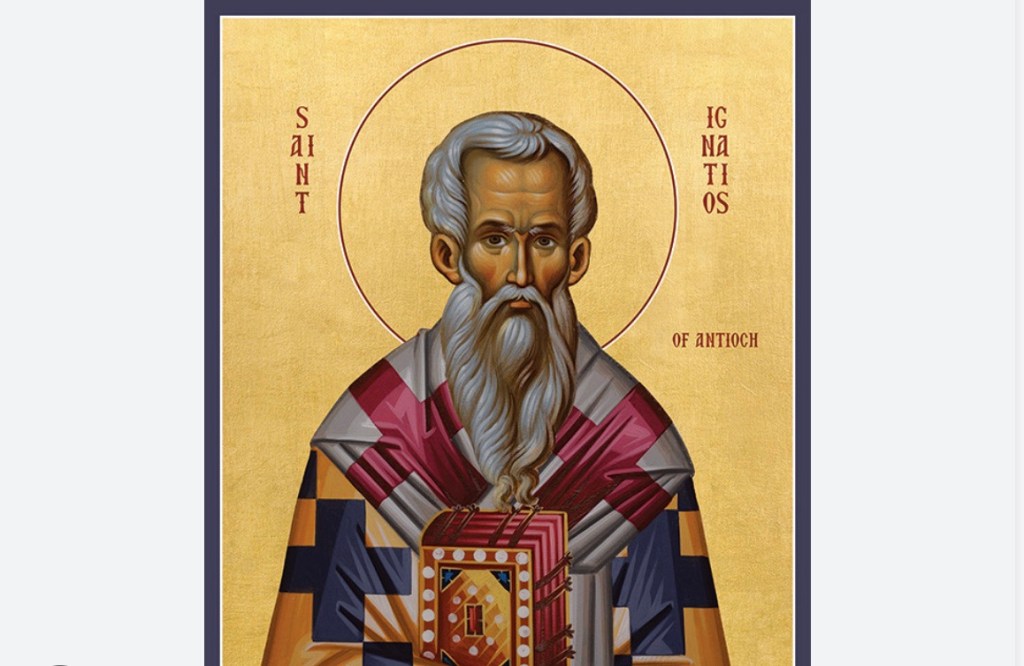
Photo: “For it is not my desire to act towards you as a man-pleaser, but as pleasing God, even as also you please Him.” – St. Ignatius of Antioch at the beginning of the second chapter of his Letter to the Romans.

Link for the Mass readings for Saturday, June 20, 2026

“Where your treasure is, your heart will be.”

Jesus said to his disciples: “Do not store up for yourselves treasures on earth, where moth and decay destroy, and thieves break in and steal. But store up treasures in heaven, where neither moth nor decay destroys, nor thieves break in and steal. For where your treasure is, there also will your heart be” (Mt 6:19-21). Jesus helped his disciples then and is helping us today to be aware of the reality of our world. All that exists is finite and material. Each thing, each being, has a beginning and an end. We need to resist the temptation to be attached to anything, even to our family and friends, because in this life and this side of heaven, nothing and no one lasts forever.

Adopting an attitude of non-attachment to material things can be freeing as long as we do not embrace the opposite extreme of placing no value in created things, thinking that we can destroy and abuse the environment, exploit or objectify each other for our own ends. We can also be tempted to see all things that are not spiritual as corrupt and bad, even our material reality as human beings. The idea that our soul is imprisoned until we die. This extreme will not bring us happiness, joy, or fulfillment either.

Living a life directed by Jesus’ teachings will help us to embrace a more balanced life of recognizing that much of what is material and finite is good, as well as very good, and yet each has a time and a season. We have the opportunity and invitation to be participants in God’s eternal plan of salvation, and we can embrace and enjoy the wonders and gifts of his creation when we don’t hold onto the things of this world too tightly and allow our relationships and activities to be properly ordered by God’s will.

We need to resist grasping for and clutching anything material and finite. We will then be freer to embrace and follow the steady movement of the Holy Spirit, which is ever fresh and new. The Holy Spirit invites us to deepen and grow in our relationship with our loving God and Father and one another. Refusing to fill the deepest core of our being with the things of this world will help us to be less distracted and diverted from placing God as primary.

When we embrace the reality that our time here on this earth is limited, we will be less apt to take each other and each moment for granted. We will realize how precious life is, show greater appreciation for, as well as be more present, understanding, kinder, supportive, and patient with one another. We will be freer to let the petty things go and embrace the love that Jesus offers us, so that we will have more love to share with one another through thick and thin.

An imminent death helps this reality to become front and center. Knowing that JoAnn only had months to live – at best, was a gift. We embraced a greater appreciation for each moment we had together. What was even more foundational was that even before her diagnosis, we had already begun a journey together of deepening our relationship with Jesus. He helped us through the bumpy beginning years of adjusting and adapting our lives, through learning balance in the busy years, the financial challenges, life with kids and then teenagers, empty nesting, diaconate formation, and everything in between. Each year was a gift of growing closer to God and each other. A lot of the material things of this world became less important and time together became more important.

Dealing with death is never easy. Trusting that Jesus opened up heaven for us in the humanity he assumed and that he conquered death in his resurrection, helps when that reality moves from the head to the heart. Instead of denying or keeping death at a distance until faced with our own or another, we will be better off by engaging the reality of death more intentionally. Doing so is not a dive into morbidity but an invitation to define who and what is truly important in this life. Pondering death with God helps to live life more fully with the time we have left. Storing “up treasures in heaven where neither moth nor decay destroys, nor thieves break in and steal” (Mt 6:20), helps us to be free of holding too tightly to the things here below and to come to a greater appreciation of what is truly important.

———————————————————————–

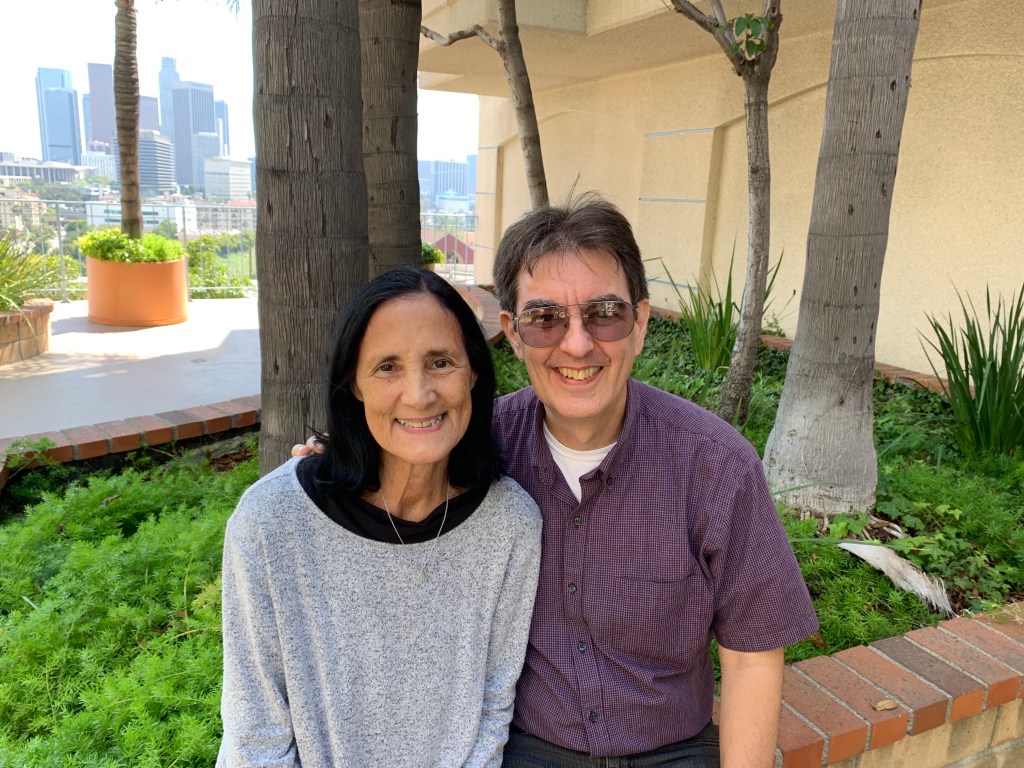
Photo: Not clinging to JoAnn as she was dying, nor after she had died has helped me to experience her love in a deeper way that has never died. Happened to check and this picture was taken exactly 7 years ago today! Little did we know we had 93 days left together this side of heaven.

Link for the Mass readings for Friday, June 19, 2026

When we breathe intentionally and “focus on the indwelling presence of Jesus”, he will guide us in our prayer and life.

Prayer is not so much about bending God’s will to our will, but it is about being willing to be transformed and conformed to God’s will. Surrendering ourselves to God in prayer helps us to realize that life is not all about us and we can begin the shift away from placing our sole focus on ourselves as the center of the universe. The world actually does not revolve around us. Accepting these truths is freeing. As we shift the focus away from ourselves alone and accept the invitation to grow in our relationship with the One who is the creator and sustainer of all that exists, we experience the peace and rest in our souls that we all seek.

Jesus guides his disciples on this point when he teaches them how to pray. Jesus said to his disciples: “In praying, do not babble like the pagans, who think that they will be heard because of their many words. Do not be like them. Your Father knows what you need before you ask him” (Mt 6:7-8). The babbling Jesus is referring about is how some of the pagan cultures of the time believed that if they performed the proper incantations, said the proper words, they could bend the gods to their will.

A great example of this is to read the account of Elijah in 1 Kings 20-40. Elijah while on Mount Carmel faced off against 450 of the prophets of Baal. He challenged them to call down fire from Baal to consume the sacrifice they laid out. They spent hours chanting and calling out to their god, dancing and even slashing at their flesh and there was no response. Elijah was heard with a simple petition and God responded by sending his fire to consume the entire sacrifice.

Jesus is teaching us not just that God is all powerful but that he is personal. Our Father knows what we need before we even ask. He really knows what is the deepest yearnings of our hearts even when we often don’t because we are distracted, diverted, and anxious about many things. Our minds and hearts are tempted and misled by so much noise and glitter. We are invited to slow down, breathe slowly and rest with the Lord and sit at his feet. Then we can get in touch with what we are truly experiencing and share with God what we honestly feel, whether that be deep pain, sorrow, or grief, contrition for sin, imploring for guidance, or expressing thanksgiving for his love and presence. Formulaic expressions and the mere volume of words mean very little compared to a few words said with clear intent, focus, and in a mindful and heart filled way.

Jesus helps us to understand that the form prayer takes or the actual words used do not so much matter as understanding why we pray. We pray to deepen and develop our relationship with the Trinitarian communion of God the Father, God the Son, and God the Holy Spirit. The very desire to pray is a prayer in itself because we are hearing the invitation of God to be one with him. The first step is to acknowledge this invitation and then to turn our hearts and minds to God. Fr. Thomas Dubay, in his book, Fire Within, paraphrases St. Teresa of Avila, the 16th-century doctor of the Church, in saying that “one vocal prayer, even so little as one petition of the Our Father, if well said, is better than many recited thoughtlessly or hurriedly” (Dubay 1989, 76).

Reciting the Our Father, or Lord’s Prayer, that Jesus shared with his disciples in today’s Gospel of Matthew, can be a struggle, because the biggest challenge to a life of prayer is taming, what some Buddhists call, the “monkey mind”. Our thoughts can be actively engaged, random, distracting, and even anxiety inducing within one minute. To overcome the challenge of an unsettled mind we can return to St. Teresa again. When we begin to pray, St. Teresa of Avila suggests that we begin “with self-examination and the sign of the Cross” (Dubay 1989, 77).

In making the Sign of the Cross, we can then breathe deeply and slowly, one inhalation and exhalation for each person of the Trinity. Then continue to breathe and rest in the loving group hug of the Father, and the Son, and the Holy Spirit. Breathing, receiving, resting, and abiding in God’s love is a great way to recollect, to prepare our hearts and minds to enter into a time of prayer. When we pray, we often come from whatever physical or mental activity and then start to pray, even something as easy as the Lord’s Prayer. We may then wonder why there is so much mental noise. Recollecting before we pray, allows us to experience a time of transition from the busy to the quiet.

Making friends with silence, we can bring to awareness some issues, struggles, temptations, and sins that we have been dealing with. We can settle into, instead of run away from or deny them and seek God’s help for guidance, healing, and reconciliation. In making the sign of the Cross, and taking one slow deep inhalation and exhalation for each Person of the Trinity, we bring our self, as we are, into the presence of the Trinity and invite him to dwell within us. We receive and experience the love, acceptance, and mercy of God and recognize that we are loved as we are and that we are not alone because we belong to and are a part of this infinite community of love. In this simple gesture, we are also uniting our body, mind, and soul with the One who will lead us in our prayer.

The next step is to imagine that Jesus is with us to guide us in our prayer. “Imagine that this Lord Himself is at your side and see how lovingly and how humbly he is teaching you” (Dubay 1989, 77). By mindfully engaging with our breath and our body, we slow down and allow ourselves to become still.

Finally, we can imagine Jesus teaching us the Our Father as if for the first time, as he did his disciples. Going slowly, one word, one verse at a time, allow Jesus to not only share his words, but pause and add our own. By doing so, we begin to discipline the focus of our mind, move from the beginning of a rote prayer, move into a dialogue with God, and receive the blessing of his mercy and love. “Focusing on the indwelling presence, says Teresa, is for wandering minds ‘one of the best ways of concentrating the mind’ in prayer” (Dubay 1989, 77).

—————————————————————–

Photo: On our way, we can already begin to breathe and quiet our minds to ready ourselves for our time of prayer.

Dubay, S.M., Thomas. Fire Within: St. Teresa of Avila, St. John of the Cross, and the Gospel on Prayer. San Francisco: Ignatius, 1989.

Link for the Mass readings for Thursday, June 18, 2026

Giving alms, praying, and fasting helps us to experience the love of God and to heal.

The teachings of the Beatitudes as well as the six antitheses are powerful lessons that can transform our lives when we put them into action. As we continue to walk through the next presentation of Jesus’ Sermon on the Mount today, Jesus presents common practices of living a devout life of faith. While at the same time as we learned before, Jesus raised the standard practice of these three pillars to a higher level. The key point he is making though has again to do with our end goal. Jesus continued to show his disciples how to be “perfect just as [our] heavenly Father is perfect” (Mt 5:48). The perfection to be attained is oneness with God. Jesus’ disciple’s then were and we continue to be today called to become holy, to be saints, for the purpose of deepening our bond and relationship with God and each other.

Our being perfected in Jesus is a process whereby we become less and Jesus becomes more. What decreases is our focus on self, especially the ego-self, our sense of self-centeredness. We do so by seeking to heal from those disordered affections that we have chosen instead of seeking the love our Father offers us and will fulfill us. Jesus offered three ways or pillars of healing in which when practiced help us to draw closer into communion with God and one another. We are to give alms, pray, and fast. We may remember that these practices are the three pillars of Lent that we put extra emphasis on during that penitential season.

When we give alms, pray, and fast, our intent must be properly ordered. If we give alms with the intention to “win the praise of others” (Mt 6:2), pray in a public display “so that others may see” us (Mt 6:5), and in our fasting “look gloomy” and “neglect [our] appearance, so [we] may appear to others to be fasting” (Mt 6:16), then the focal point remains on us. We think to ourselves, how holy and pious I am. In fact, if we act in this way, how hypocritical we are because, in each of these actions, we are not seeking to improve our relationship with God, build up his kingdom, or experience healing. Instead we build up our pride and ego by seeking affirmation, adulation, and disordered affections for ourselves.

Jesus calls us to give alms and serve out of love for others. To do so, we must first allow ourselves to be loved by God. We then see what our life feels like when we are loved by God. Being affirmed by him, we no longer seek to grasp for love, but now have something to share. We seek Jesus in prayer not to conform his will to ours, but to surrender to his will and allow the purifying fire of the Holy Spirit to purge us from the dross of our accumulated sin, selfishness, and attachments. In our time of prayer and examination of conscience, Jesus will reveal to us those apparent goods and disordered affections that lead us astray. From these areas we can fast, turn back to God, and in doing so, we will receive that which we long for in the depths of our souls, Our Fathers love and find rest for our souls.

Let us go back, read, meditate and pray with today’s readings, and ask Jesus to reveal to us one way that we are putting ourselves before God, one habitual vice that keeps us bound, and/or something that we are attached to that we can fast from. What is one way we can reach out and give ourselves to someone else? Prayer, fasting, and almsgiving are not only for Lent. Following Jesus’ guidance in each of these three practices will help us to begin to heal because we will begin to remember who we are, God’s beloved daughter and son. When we allow ourselves to breathe, rest, receive, and abide in God’s love we experience something greater than ourselves. No longer isolated, we belong to the Body of Christ. As such we become the hands and feet of Jesus and can offer the healing we have received.

—————————————————–

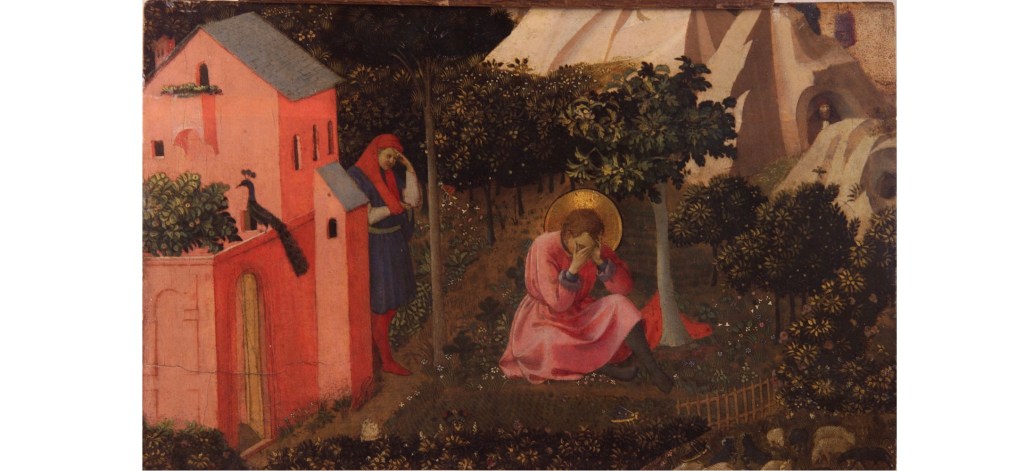
“Do you wish your prayer to fly toward God? Make for it two wings: fasting and almsgiving.” St. Augustine Painting by Fra. Angelico, “The Conversion of St. Augustine”.

Link for the Mass readings for Wednesday, June 16, 2026

“Love your enemies and pray for those who persecute you”.

The sixth antithesis may be the most challenging of them all. “You have heard that it was said, You shall love your neighbor and hate your enemy. But I say to you, love your enemies and pray for those who persecute you, that you may be children of your heavenly Father” (Mt 5:43-45). The parable of the Good Samaritan provides a nice parallel to this verse. It can be found in Luke 10:25-37. For in that parable, Jesus shows our enemy and our neighbor to be one and the same.

A good examination of conscience would be to read the above verse, ponder who would come up for us as an enemy, and then read the Parable of the Good Samaritan. Whenever the word Samaritan comes up, we drop the word Samaritan and insert the person or persons who came up for us. When we have finished this exercise, then, may we pray for the person or persons defined by us as our enemy, for if we only love those who love us, “do not the tax collectors do the same?” If we are to be disciples of Jesus, if we are to be children of our heavenly Father, we are not only to love those who love us, but we are to also love our enemies. We are to love those for whom there is little chance of being loved in return.

Jesus offers us the way to be able to accomplish this seemingly impossible feat: “So be perfect, just as your heavenly Father is perfect” (Mt 5:48). We are able to love our enemy as ourselves by being perfect. This is not much help unless we understand that the English word used here is translated from the Greek word telios, which means complete, whole, to reach one’s goal or purpose in life. As a Christian, our end goal, our purpose, our fundamental option, is to be in full communion with God our Father, who is Love. God the Father is not just loving, not just a lover, but Love. “God is love” (1 John 4:8).

God is love and so, “makes his sun rise on the bad and the good, and causes rain to fall on the just and the unjust” (Mt 5:45). We strive in our life to attain the end goal of being perfected by Jesus the Christ, when we, through an act of our will, allow ourselves to become transformed into becoming agents of his love. The most challenging of enemies is facing the enemy within. To love as God loves, we are to follow the words and actions of Jesus and the prophets.

Each day we are given a choice. We can choose to feed our fears, seek revenge, dig in our heels, embrace our egos, react in kind to negativity, and/or remain indifferent to the suffering around us and in our world. We can refuse to love our enemies, withdraw our love, and so reap what we sow and contribute to the condition of separation, polarization, violence, and dehumanization that plagues our communities, nation, and world.

Or, we can choose instead to resist giving in to all of the above and instead allow ourselves to be perfected by Jesus, brought into alignment with his Father’s will, and collaborate with the love of the Holy Spirit so to be agents and models of love, mercy, forgiveness, and justice in our realm of influence. By loving our enemies, we will help to diffuse the power of hate.

We can only be perfected and transformed by the love of Jesus when we spend time with him by participating in the sacraments, reading, meditating, and praying with Sacred Scripture and Tradition. We are called to receive his teachings, to resist hearing and letting them go in one ear and out the other, and instead read them again a second, third, and fourth time to allow the light of the Holy Spirit to convict us. Assessing honestly where we fall short and seeking the help of Jesus will help us to receive more of the love of God and the strength to put these seemingly impossible commands into practice in our lives with the real people we engage with every day.

—————————————————————-

Photo: Who better than Mary, John, and Mary Magdalene to model for us Jesus’ teachings!

Link for the Mass readings for Tuesday, June 2026

Revenge, retribution, or eye for an eye? Neither. “Offer no resistance to evil” – Love, forgive, and show mercy.

Today we receive the fifth antithesis, in which, Jesus said to his disciples: “You have heard that it was said, An eye for an eye and a tooth for a tooth. But I say to you, offer no resistance to one who is evil” (Mk 5:38-39). The Mosaic law, an eye for an eye, that Jesus first addressed was originally an attempt to curb the emotive response of revenge. If someone had killed a clan or tribal member, there would have been those who would choose to retaliate by inflicting as much carnage as possible to the people responsible, even up to and including the death of the whole clan or tribe, even the women and children. The rationale behind this was that there would then be no one to come back for revenge. The idea of seeking instead an eye for an eye was to temper the retribution to a more measured and proportionate response.

Jesus though is saying that “an eye for an eye” does not go far enough, and raises the challenge of being his disciple to a higher level, being that even the thought of revenge is not to be considered. Jesus is not just seeking to lessen the cycle of violence, he is giving us the means to end it. Forgiveness is the cornerstone of the teachings of Jesus. Instead of seeking revenge, Jesus is commanding that we seek to forgive those who have harmed us. We who pray the Our Father or the Lord’s prayer, are to take to heart and be mindful of the words we pray each and multiple times each day: “forgive us our trespasses as we forgive those who trespass against us.

The urge for revenge is powerful and primal. Revenge is wired into our survival instinct to protect ourselves. Jesus invites us to grow beyond our mere instinctual responses and survival instincts. He is calling us to mature beyond the bestial and to be a people who do not merely survive, but thrive. Jesus is seeking to infuse us with his divine life so that we will be transformed. This is true not only for ourselves but for those who would seek to do us harm. Instead of striking back with revenge, we are to be flexible and adept enough to instead appeal to their conscience. We are to take all that others throw at us, and meet them with the courage to stand, receive their worst, and disarm them with the blinding light of the love and forgiveness of Jesus.

This is no easy task, especially when we experience ongoing injustice and needless loss of life. To put into practice such teachings as the turning of the other cheek, we need to start small. We need to resist the immediate thoughts of revenge that arise for the smallest of offenses. When someone makes a snide remark, and/or offers demeaning or dehumanizing comments directed at us or others, we resist retaliation. We hold them accountable by not adding more fuel to the fire. Our hope is to receive the offense and mirror back to them what they have done such that their conscience may be convicted. By loving them instead of striking back in kind, we may win back a brother or sister.

To be a disciple of Jesus means we need to be contemplatives in action in the face of cruelty, division, and dehumanization. We need to ground ourselves in the word of God as we return to these challenging teachings of the Beatitudes and antitheses often, believe in them, meditate and pray upon them, keep them at the forefront of our minds and, with the courage and guidance of the Holy Spirit, put them into practice. Doing so will then help us to be centered and intentional when conflict arises. Instead of responding with a knee-jerk reaction, we can breathe and seek the Holy Spirit’s guidance and then choose how best to respond.

Some would say this is naive and impossible. It is true that we will not be able to resist thoughts, words, and acts of revenge and walk the path of forgiveness on our willpower alone. We need to surrender our ego and pride to Jesus, who as the Son of God became one with us in our humanity, experiencing our humanity at its worst, so that we can become one with him in his divinity and become human at our best. As we receive his love, forgiveness, and mercy, we will be transformed. We will be even more transformed when we love, forgive, and extend mercy to others.

———————————————————–

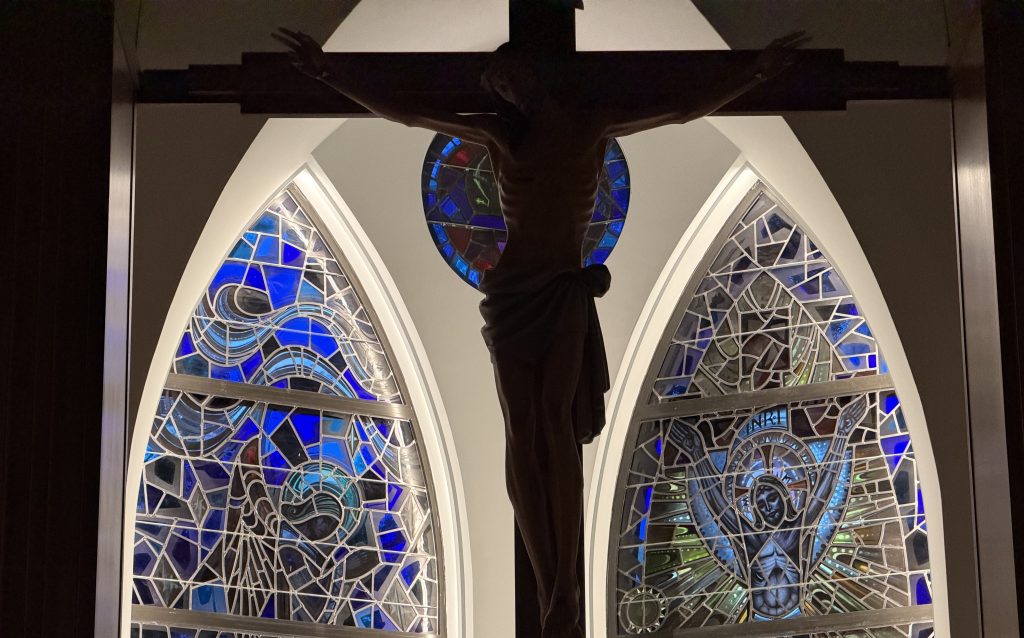
Photo: Jesus has taken our sins, our worst, and our inhumanity upon himself on the Cross to forgive us and show us that there is a way through our darkness into his light.

Link for the Mass readings for Monday, June 15, 2026

Telling the truth is a much more peaceful way to live.

In today’s Gospel, we read about the fourth antithesis where, Jesus said to his disciples: “You have heard that it was said to your ancestors, Do not take a false oath, but make good to the Lord all that you vow. But I say to you, do not swear at all (Mt 5:33-34). The taking of an oath in Jesus’ time became an acceptable practice to confirm that someone was telling the truth. Taking an oath by invoking God made the testimony or presentation of one’s statement more believable because he was willing to receive God’s judgment upon himself if he was lying.

People expanded this oath taking as Jesus pointed out by replacing God’s name with taking an oath by heaven, earth, Jerusalem, or one’s head. The thought being that one would escape God’s judgement if they were not being fully honest. Jesus points out that this would not be the case. For heaven is God’s throne, the earth is his footstool, Jerusalem is the city of the great King, and it was even God who made the color of one’s hair.

As with his other antitheses, Jesus called his disciples to go deeper, to be better. The word of the disciple ought to stand on its own weight such that they need not take an oath at all. Jesus spoke the truth always and his disciples are called to do the same. If his disciple tells the truth, there is no need to take an oath. The “Yes” or “No” of a disciple is sufficient. “Anything more is from the evil one” (Matthew5:37).

We can see remnants of this practice today, when we hear someone say, “I swear on my mother’s grave that I did not…, I swear on our friendship that I did not…, or I swear to God as my witness that I did not…”

Jesus is teaching us as well that we are to resist the temptation to swear an oath at all. We are to just tell the truth in all circumstances. We are to be people of integrity and stand on what we say as the truth. We are living in a time period in our country where the ability to tell the truth is being called into question, where lies and the bending of the truth are becoming common place. This is one of the reasons why so many people have such a low opinion of secular and even religious leadership. But it is also present in our day-to-day interactions with one another.

In a 2014 episode of his television show, Dr. Phil, he gave a list of reasons researchers gave for why people lie: People lie to take what is not rightfully theirs, to escape accountability, to create a fantasy/false self-esteem to escape their mundane life, to avoid punishment, to inflict pain, to feel better in the moment, steal admiration, and to gain advantage to exploit others.

This is by no means an exhaustive list, but it is a very good place to start. Lying destroys the very foundation of our relationships which is trust. Once trust has been broken, it is very hard to come back from and rebuild. Lying also supports our false self. Even if we do not get caught in a lie, we know, and our conscience convicts us of that fact. There is an ache in our soul because we are not being true to who we really are.

Covering up lies expends a lot of energy because we have to constantly remember what we said. Left unchecked, one lie leads to another, and we then string together a web of lies. We also begin to feel sick inside, because we have not been created to be deceitful and dishonest. We have been created good, to be people of honesty and integrity. The worst damage is that when we live a life of lies, have been lied to, not only our trust in each other falters, but so does our trust in God. Anxiety and stress increases because we feel a growing isolation and separation from God and each other. 

Examining our conscience is a good daily practice, and being humble enough to admit where we have lied is the next best step. In the beginning, to undo a habit of lying may feel hard because we have allowed a habitual pathway to form. We experience a knee-jerk or automatic response. Yet with intentionality and prayer we can rework our mental wiring. By asking God to help us to imagine how we could have handled the original situation in a more honest way, we can reach out to the person and apologize, move toward reconciliation, and be better prepared to tell the truth the next time, live a life of honesty, which is a healthier and more peaceful way to live.

Being patient with ourselves and seeking the Sacrament of Reconciliation for habitual patterns, grants us an opportunity to express our contrition and seek not only forgiveness, but Jesus’ grace to help and strengthen us to tell the truth. When we call on Jesus’ name, make a prayerful pause, Jesus will help us to harness the courage to resist the temptation to lie and to instead tell the truth. In time, with the help and love of the Holy Spirit, our vices of deceit will be transformed into new virtues of honesty. Let us live by Jesus’ command to make our, “‘Yes’ mean ‘Yes,’ and [our] ‘No’ mean ‘No.’ Anything more is from the evil one” (Mt 5:37).

——————————————————————–

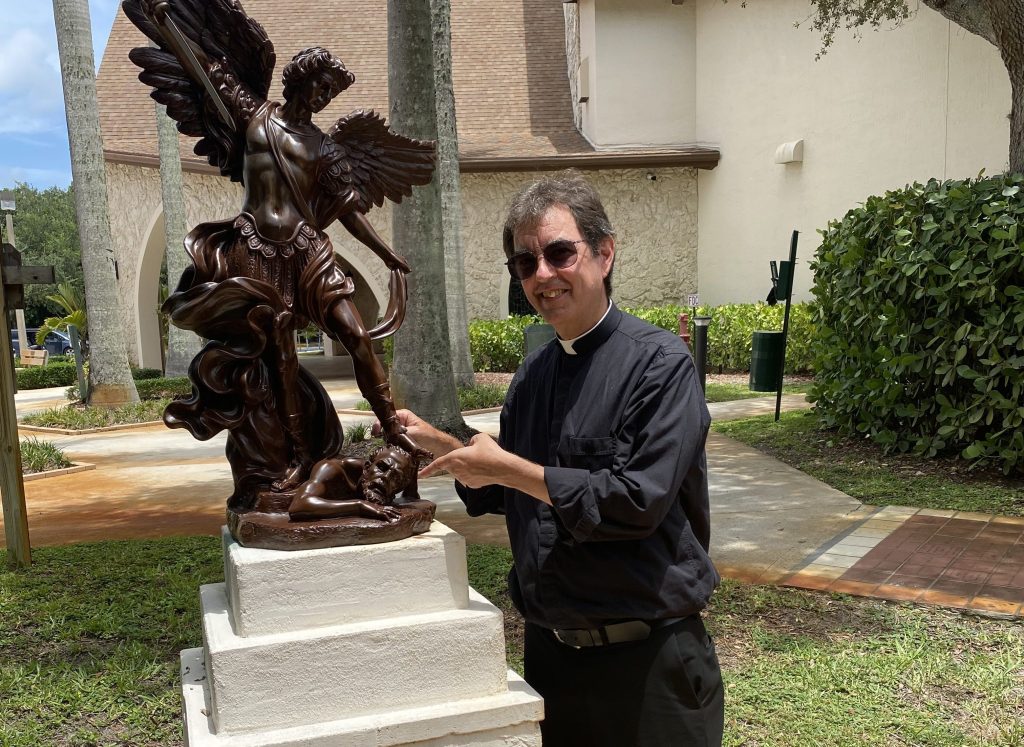
Photo: The father of lies has already lost, let us not give him any entry.

Link for the clip from the Dr. Phil Show showing the list for why we lie

Link for the Mass readings for Saturday, June 13, 2026

When we allow our heartbeat to align with the Sacred Heart we will experience his rest and peace.

“It was because the LORD loved you and because of his fidelity to the oath he had sworn your fathers, that he brought you out with his strong hand from the place of slavery, from the hand of pharaoh, King of Egypt” (Deuteronomy 7:8).

God hears the cry of the poor. He sends Moses to free his chosen people. Not because they are the best and brightest, the strongest or having the most potential. He is doing so because of his promise to Abraham, Isaac, and Jacob, the patriarchs. He is doing so because he loves his children, those enslaved, but also all of humanity and creation. The chosen people are chosen not so they can keep God all to themselves but so that they can reveal him to all peoples.

All that has been created has come to be out of the outpouring of God’s love. We and everything that is, exists because God willed and loved us into reality, to be loved and to love him and each other in return. 

God still comes close today, he still hears the cry of the poor. The poor are each of us in the depths of our souls crying out to our loving God and Father, just as St. Augustine in his introduction to his Confessions identified: “You have made us for yourself, O Lord, and our hearts are restless, until they rest in you.” We all thirst and starve for his love and communion. The pharaohs today are not just those who overtly oppress others, though there are still those who do, but more subtle are the fallen aspects of each one of our egos that enslave our authentic and true selves. 

God has sent another Moses to free us: “In this way the love of God was revealed to us: God sent his only Son into the world so that we might have life through him” (I John 4:9).

Jesus comes close, he shines the light of love into our darkness, our sins, our traumas, our fears. He gently invites us to come into the light of his love, to be embraced, forgiven, and restored as the beloved children that we already are, but to often forget.

Each day and during moments of the day, it is helpful for us to remember that we are the beloved daughter or son of the creator of all that exists. He made and formed each of us as an expression of his love. There has never nor will there ever be again someone like you. You are loved as you are right now as you are and you need do nothing to prove that. All we need to do is receive the love God offers to us. 

Listen quietly for the beating of the Sacred Heart of Jesus and allow your heart to align in rhythm with his heart, such that Heart speaks to heart. Receiving the love of the Father through Jesus is the key to our freedom. No self-help program or three-point strategic plan needed (counseling does have its place and time). Just a simple, “Yes” to your loving God and Father, as Mary said, “May it be done to me according to your word.” As Jesus said, “Not my will but yours.” A simple slowing down and returning throughout the day and each day to an opening of your heart to the Sacred Heart of Jesus. 

Aligning ourselves to the pace and rhythm of the Sacred Heart of Jesus helps us to experience his rest, which is deeper than physical. The rest that Jesus promises is the rest that our soul has always longed for. It is in that simple rest that we can experience the safety and stability of his love, a release from stress, strain, and pain, and deep, slow breathing that leads to peace, that peace that surpasses all understanding. Rest yes, but not for just ourselves. We are to “bring the peace of the risen Lord to our world, with the freedom born of the knowledge that we have been loved, chosen and sent by the Father” (Pope Leo XIV).


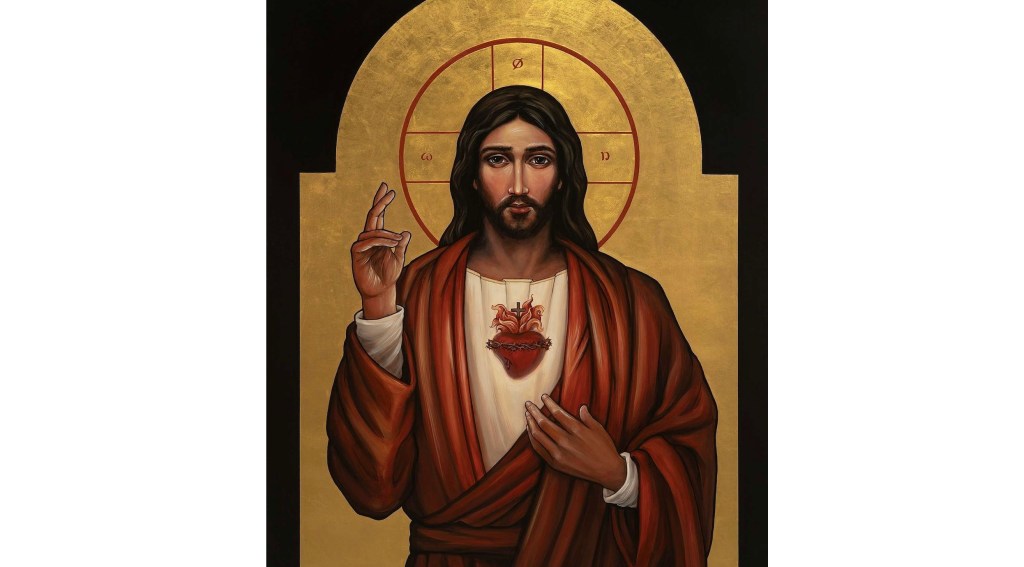
Painting: The Sacred Heart of Jesus accessed from Trinity Catholic College

Pope Leo XIV Solemnity of the Sacred Heart Homily, June 27, 2025

Link for the Mass readings for Friday, June 12, 2026

Our hearts, thoughts, words, and deeds can dehumanize and depersonalize or provide healing and give life.

As was presented yesterday, Jesus made it clear that he did not come to abolish the law or the prophets, but he came to fulfill them. In his Sermon on the Mount as recorded by Matthew, Jesus offered practical ways in which we can find fulfillment and happiness by properly ordering our lives by following his way. In today’s account, he introduces the first of six antitheses. With these apparent contrasting statements, beginning with, “You have heard that it was said” followed by, “But I say to you”, Jesus provided for his disciples the way to avoid the trap that some of the religious leaders of his time fell into: “I tell you, unless your righteousness surpasses that of the scribes and Pharisees, you will not enter into the Kingdom of heaven” (Mt 5:20).

The scribes and Pharisees that Jesus pointed out were those who believed that they were following the letter of the law and/or commanding that others do so, but their hearts were not changed. They may have been adhering to the external provisions, but there was no transformation, their hearts were hardened, they were focused more on their own access to honor and power. They were also imposing strict adherence to the law without providing the support or means for others to achieve what the law imposed. The law became more important than the dignity or value of the person. Jesus recognized the law but also realized that it was in place to help to provide guidance and discipline so one could better resist the temptations of our fallen nature. The law was to be a foundation to be built upon, not the end goal in and of itself.

This and the five antithesis to follow, outlines how: “Jesus calls his disciples to a higher standard than that of the scribes and Pharisees and he brings out the true meaning of the law. External conformity to the law is not enough. The law must be interiorized so that it penetrates one’s heart and leads one to live according to God’s ultimate intentions” (Mitch and Sri, 96).

Just as children need clear boundaries and structures in place to provide a clear path toward healthy development, this is also true for those of us growing and maturing spiritually. We need to learn to crawl, to build strength and balance before we can take those first wobbly steps. With continued support, we are then able to walk and soon run. Jesus is not only providing the means to go through each of these stages in our faith life, figuratively teaching each of his disciples and us today to not only crawl, walk, and run but to also be able to fly as we seek to reach the heights that Jesus is willing to raise us to!

The Beatitudes and six antitheses are challenging when we take the time to read and ponder them because each one of them goes counter to much of the way the structure of our fallen world has been governed for centuries. If we are to catch the fire that Jesus has come to set, we need not only to read, pray, meditate, and contemplate upon on the teachings of the Sermon on the Mount that we are working through, we need to also see their relevance and practicality to our time and place today, not dismiss them but begin to put them into practice. As Christians, our faith ought not to be shaped and informed by our culture, but we are to be shaped and conformed by the Gospel of Jesus the Christ, so to shape and inform our culture.

Today we start with the first antithesis: “You have heard that it was said to your ancestors, You shall not kill; and whoever kills will be liable to judgment. But I say to you, whoever is angry with his brother will be liable to judgment, and whoever says to his brother, Raqa, will be answerable to the Sanhedrin, and whoever says, ‘You fool,’ will be liable to fiery Gehenna (Mt 5:21-22). The seeds of anger begin to sprout in our mind from our knee jerk reactions to a perceived or actual threat, from our hearts hardened by prejudgments, prejudices, and/or a reflection of our level of spiritual immaturity.

Jesus addresses the known provision against murder. He then builds a hedge around the Torah. Building a hedge is a common practice in which if one does not want to break the law, another law is imposed so as to protect one from even getting close to breaking the first. If we can resist the temptation to react and instead step back for a moment, take some deep breaths, pray, and seek the guidance of the Holy Spirit, we will be less likely to criticize, judge, demean or dehumanize another, and then there is much less chance for our anger to grow into wrath, that left unbridled could lead to murdering someone.

Jesus is also saying that our words matter, that they have the power to destroy or to create. Calling someone Raqa, Aramaic for a blockhead or idiot, and then calling someone a fool, would “be liable to fiery Gehenna” (Mt 5:22). How much more egregious are we today? How polarized we have become inside and outside of the Church because of the level of demeaning words, tone, and language that is spoken, condoned, and justified? This has a ripple effect that poisons our children and each of us. We wonder why we are more in a state of anxiety and stress where we see our own leaders no longer speaking with respect but in dehumanizing ways. We can then fall into the same pattern which poisons our family, relationships, politics, and it has even poisoned the Church with growing divisive rhetoric, overt expressions of prejudice, and depersonalization.

Instead of settling for two-dimensional caricatures of one another, we can go deeper when we are willing to spend time with and get to know each other. Jesus challenges us to slow down and see the person before us with dignity and respect. When we resist reacting, giving in to our biases, and prejudgments, and instead recognize the value and dignity of each person, we will have a better chance of building relationships and saying only the good things that people need to hear. We will also be more apt to reform policies and structures that respect the dignity of each person in the womb, after birth, and at each stage and condition of life until natural death.

May we all take some time today to reflect on Jesus’ teaching about how we think, speak to and about, as well as act toward one another. May we examine our consciences and seek forgiveness for those times we have thought, condoned, or justified thoughts, words, and/or actions that have been belittling, dehumanizing, and demeaning directly or while with others. In this way, we can ask God to heal our hearts. “[O]nly peaceful hearts can build a world of peace… The heart is the source of peace: there we must learn to meet rather than clash with each other, to trust and not mistrust, to listen and understand instead of closing ourselves off to others” (Pope Leo XIV, xiv). 

Jesus, please heal us and infuse us with your justice, love, and mercy so that we will be inspired to live out your teachings daily. Help us to encounter each other with mutual respect and understanding as our brothers and sisters, no matter our race, ethnicity, creed, and/or gender, and to commit to building a culture of life and dignity for all, not in some abstract utopian way, but in the concrete moments, one person, one encounter, and one thought, word, and action at a time.

——————————————————————–

Photo: Making time to breathe, receive, rest, and abide in God’s love will help us to better discern our thoughts, words, and actions and allow the Holy Spirit to transform our hearts and minds.

Mitch, Curtis. The Gospel of Matthew. Grand Rapids, MI: Baker Academic, 2010.

Leo XIV, Pope. Peace Be With You!: My Words to the Church and to the World. Dublin, Ireland: Harper On, 2026.

Link for the Mass readings for Thursday, June 11, 2026

Jesus came to fulfill the law and the prophets, which brings the law of love to the forefront.

Jesus said to his disciples: “Do not think that I have come to abolish the law or the prophets. I have come not to abolish but to fulfill” (Mt 5:17). Jesus was a devout Jew, he was taught how to live out the law and the prophets in his daily life by Joseph, Mary, and his Father. Jesus grew up not only practicing but embodying a deep understanding of the law and the prophetic tradition. We see evidence of that when, at twelve, he is found by his parents among the teachers and scholars discussing the law with understanding and wisdom. Jesus, in his public ministry, very much spoke with authority, as God, calling the people of Israel back to the law, both those who have turned away from God as well as those who used the law as a bludgeon and for building a wall to keep others out.

Jesus also showed time and again that being true to Torah was more than just following the law. Obedience to God and allowing God to transform each person’s heart and mind was the point. The law was about building relationships with God and others. Jesus extended his hand, person to person, offering an invitation of welcome for people to come to know him and his Father intimately. He called out many religious leaders who taught the truth but lived another way. Jesus healed on the Sabbath, Jesus forgave sins, Jesus touched lepers and he ate with tax collectors, prostitutes, and sinners, those on the peripheries, not because he was being willy-nilly with the law, but because he was showing the deeper interiorization of how to live out God’s commands by his lived example that the greatest commandment of the law was and is to love God with all his mind, heart, and strength and to love his neighbor as himself.

This practice goes right to the foundation of who God created us to be. All of humanity has been created in God’s image and likeness. Each of us is endowed with dignity by the very fact that we exist as a daughter and son of God. Yet, it is in our choices to sin, that we lose our likeness to God. Jesus calls us to repent, to turn away from our sinful attitudes and ways, and to turn back to receive the love of God.

In Jesus, we see that the highest observance of the law of God is to love. Jesus met each person where they were and accompanied them. That also meant calling out those who misused the law by keeping others at arm’s length. Jesus did the opposite. As the Son of God, Jesus became one with us in our humanity, so that we can become one with him in his divinity. Jesus offered others his arms extended outward, inviting others to experience his loving embrace. He showed this in a graphic and powerful way on the cross, where he opened his arms wide to embrace all peoples of every race, ethnicity, and gender, even in our deepest sins.

Jesus built on the law and the prophets, because he was the fulfillment of them, and in doing so, he gave the law its greater context. The foundation of the law and the prophets were founded in love, meaning its highest expression, which is to will the good of the other as other. The law is not to be like a stagnant pool or just on stone gathering dust, where we grasp onto the law and tradition for its own sake. The divine law of God is rather like a running stream, it is always fresh and being renewed by the Holy Spirit.

What Jesus ushered in, was the reign of God, which was possible through the foundations laid by those who had gone before him: Abraham, Isaac, Jacob, Joseph, the judges and prophets, David, and those who answered the call of God to serve in his name. From a person, Abraham, to a clan, a loose gathering of twelve tribes and then a nation, Israel, God called a people to himself to shine the light of his will to others. Then at the appointed time, he sent his Son, to be one with the people he called to draw all nations to himself so that all were and continue to be invited to come to be one with him, the God of all creation.

Our joy and fulfillment take shape most meaningfully as we are transformed by the love of God. As we build on the traditions of our faith that give us a solid foundation, we must resist holding on to them so tightly that they strangle and suck the life out of us. That which leads us to encounter and renew our relationship with Jesus in love is what we are to embrace and share. That which has become stagnant and no longer is an avenue for affirming life must be purified.

The love and mercy of God put into practice through Jesus was not a watering down of the law and the prophets. Jesus not only fulfilled both expressions, but he also raised the bar even higher when he taught his disciples to move beyond seeking an eye for an eye, to not resisting an evil person (see Mt 5:38-39), and challenged them further in requiring them to love their enemies and pray for those who persecute them (see Mt 5:44). To accept and put into practice these radical expressions of love is only possible when admit our powerlessness, weakness and frailty. Asking for God’s help transforms us.

Jesus’ love sheds light on the law. What is more important than white knuckled external observance of the law is a deeper trust in the love of God to identify the darkness of our own sins and idolatry. Doing so frees us from the temptation of becoming overzealous moralizers. We are not to lead with the law but with love. This happens when we are humble enough to trust in the purifying fire and convicting movement of the Holy Spirit in our lives, are willing to confess with contrition our sins, and become less drawn to protecting our false and fallen selves. 

Emptying ourselves in this way, we are then open to drink from the living stream of Jesus’ love, we are purged of corruptive and debilitating attachments. We become more comfortable in our own skin, are true to ourselves, and who God calls us to be. Being loved, forgiven and experiencing the mercy of God helps us to heal and to become whole. Hurt people can hurt people. Healed and grateful people can instead show another way than reaction, isolation, and division. We can radiate joy, hope, and love and invite others to experience the love of God we have received.

——————————————————————————–

Painting: May we collaborate with and make something beautiful for God.

Link for the Mass readings for Wednesday, June 10, 2026